Category Archives: Advice/How To

Minnesota scholarships

For those interested in college, a main concern is the price. However, there are many scholarships available from Minnesota schools that are directed towards juniors and seniors in high school. It is helpful to know what you need to qualify for one, and the different categories for scholarships to see if you fit into one. In this article you will find a variety of scholarships known for helping students pave their own college path.

Army ROTC Scholarship: The Army ROTC Scholarship is directed towards people planning to serve but want a degree as well. The scholarships are awarded less based on your financial status and more on your academic performance.

For more info: http://www.goarmy.com/rotc/scholarships.html

EMPOWER Scholarship: The EMPOWER Scholarship is directed towards people going into the medical field. Students are selected for the scholarship based on their intended use of the college education, need, high school stats, and personal achievements.

For more info: http://www.allinahealth.org/Courage-Kenny-Rehabilitation-Institute/Programs-and-services/Volunteer-opportunities/EMPOWER-Scholarships/

Minnesota Academic Excellence Scholarship: The Minnesota Academic Excellence Scholarship is directed towards people planning to enroll to a private or public Minnesota university. Selections for the scholarships are made based on applicants who have excelled in multiple school subjects, demonstrating a high success rate with potential for many different career paths.

For more info: https://www.ohe.state.mn.us/mPg.cfm?PageID=150

Minnesota Child Care Grant: The Minnesota Child Care Grant was made to help people, with kid/s ages 12+, financially in order for them to proceed with college while continuing to support their household. To qualify your income must qualify and you must also be a Minnesota resident.

For more info: https://www.ohe.state.mn.us/mPg.cfm?pageID=140

Minnesota Indian Scholarship Program: The Minnesota Indian Scholarship Program is meant to provide financial aid to people who are ¼ or more Native American. You must also be a Minnesota resident. The scholarship amount ranges $4,000-$6,000 per year based on need and education status.

For more info: http://www.ohe.state.mn.us/mPg.cfm?pageID=149

Minnesota State Grant Program: The Minnesota State Grant Program is directed towards low and moderate income families with financial aid. There is no application fee for this specific grant. If awarded with this grant, it is eligible at both universities and community colleges, however it must be in the state of Minnesota.

For more info: https://www.ohe.state.mn.us/mPg.cfm?pageID=138

PFund scholarship: The PFund Scholarship is directed towards members of the LGBTQ community. Scholarships range from $2,000 to $10,000. To be elligible you must live in Minnesota and attend a Minnesota college.

For more info: https://www.petersons.com/scholarship/pfund-scholarship-program-111_157203.aspx#/sweeps-modal

IB Exams pros and cons?

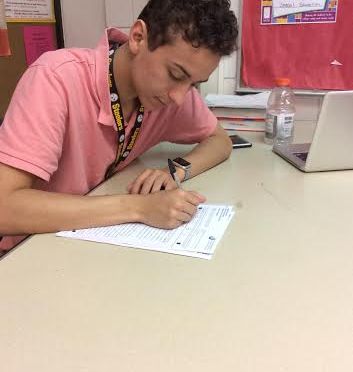
All eyes fixed onto the four-page answer books, hands viciously scribbling essays, racing against the ticking clock, as students attempted to cram all of their thoughts and information between those lines. Pens slammed down onto the table, backs rested against chairs, and students heaved a sigh of relief as they managed to finish the exam with a generous amount of time remaining. This would be the scene taking place in the dance room, and the library, as upperclassmen completed their IB testing.

For the past three weeks, both juniors and seniors have been completing a significant portion of their IB honors or diploma program. All that was learned throughout the course of high school was put to use in these annual exams. Highland is one of only three schools in the Saint Paul Public School District to provide the rigorous college preparatory IB curriculum to their students. The program has been available to Scots students since 1994, providing a more inquiry-based, international, open mindedness, and holistic approach to learning.

The vast majority of students enrolled in honors, or IB, courses have chosen to take on this demanding responsibility which comes with the cost of $40 per exam. Students seeking a less stressful path will chose the honors route and only test in 4 subjects, complete only 5 CAS activities, and give an honors speech based on a topic of their choice. On the other hand, there are also students who chose to challenge themselves by taking the IB diploma path, requiring the completion of at least 6 exams, an extended essay, and 10 CAS activities. For more information about the requirements for honors and diploma, please visit the IB Highland Webpage.

IB exams are shortly coming to a conclusion by the end of this week, May 20th, and now it is time to reflect about our experience. Would one consider this learning experience to be worth it?

Pros of taking the IB honors or diploma exams:

  • On the Common Application, colleges and universities will be able to recognize that you have tested, or that you plan on testing through the IB program, hence they will be more likely to consider trusting that your academic abilities are sufficient enough to handle the rigorous coursework in college.
  • Completing passing or fulfilling high scores on the exams can potentially earn you college credits. Some of these credits will pass as introductory courses or elective credits, which gives you a chance to save money and it also provides students with the liberty to take more classes of their choice. This is particularly true at a liberal arts college, where they would require students to earn courses outside of their major including the arts, social science, reasoning, oral speaking, etc.
  • Some students take the IB exam simply for experience. Past students who have completed the IB diploma have pointed out that the IB exams taken in history were fairly similar to the ones they are currently taking in college. The extended essay itself prepares future college students for the overwhelming research papers formulated in the area of their major. Along with that, each course will be accompanied with some form of internal assessment paper that is also considered as an individual research paper based on the area of their subject.
  • IB exams are similar to finals in college. Throughout the course of the IB program, students will explore various studying methods and find the one that is best for them.
  • The IB program is already known for its rigorous work, therefore devoted students can challenge themselves on another level and bring pride to their school. Teachers are constantly advising their students to test in their enrolled IB courses.
  • The number of students, from minority or low income backgrounds, who decide to test in IB, is beginning to increase thanks to the fee waiver offered to students with free-and-reduced lunch.
  • Passing the exam is not as impossible as it may seem. For exams such as mathematics, you would typically only need to receive a little bit over half of the total points to receive score of 4. Base on the distribution of the scores, IB will scale accordingly.
  • After every exam, Highland students are offered light refreshments including juice boxes, granola bars, fruit snacks, etc. Some students also enjoy the fact that they are excused from class for an extra 30 minutes after the exam is finished.

Cons of taking the IB honors or diploma exams:

  • Not all colleges recognize the International Baccalaureate program so not every college/university will grant college credits for completing IB exams, therefore some people would rather rely on PSEO courses to guarantee transfer credits. It is advised to complete college research before choosing to take the IB exams. Determine whether the college of your dreams will accept IB credits for which subjects and the specified score to achieve.
  • There are students who feel urged to become IB Diploma students just because it is considered to be the highest recognition available to students. Those who complete the program simply to just “look good” are not as likely to take the initiative to apply themselves fully.
  • The exams are certainly extensive and lengthy, requiring over a months worth of studying. Some exams such as the English (Literature) and the History exams consist of about 2 hours of testing for a single day. Students will already grow restless and exhausted after the first hour of testing, and will fail to concentrate with the remaining hour they have left. This year, the IB exam scheduling caused several seniors to end up testing everyday in a single week, thus missing the same classes for consecutive days.
  • Some students are unfamiliar with the formatting of the exams, therefore they come to the examination room unprepared.
  • Failing the exams will not only be considered as a massive waste of time and effort, but it will also be a waste of money.
  • It takes a great amount of responsibility and commitment to participate in the program. Days before the examination period, students will already submerge themselves in an abounding amount of stress. Not only that, students have to balance their studying with regular school work in classes they are not testing in. Those who are not responsible will end up waiting until the days before the exam  to start studying, and will sacrifice their sleep to cram study, which is rather not healthy.

Overall, it is this writer’s opinion that taking the IB exams was worth it. The entire process of practicing for the exams, along with taking the exams, may seem like a whole waste of time and effort (especially if you end up not receiving the score you hoped for), but nothing can replace the sense of ambition and anticipation I have experienced as an IB diploma student.

I remember myself as a junior sitting in the examination room for the Chinese Paper 2. My legs swung back and front, fist clamped to the side of the chair as I nervously opened the examination booklet. All of the fear and anxiety drained from my mind as I was delighted when I was able to fill up three pages with character writing and a decent essay in Chinese. Each character that I was able to recall out of the top of my head made each of the three years I had been Ms. Miao’s student so meaningful. I felt proud that I was able to apply the years of knowledge onto this piece of paper, and I valued this exam as one of my greatest accomplishments.

The IB program not only provided me with a little taste of what college work will be like, but the self reflection that came with it will guide me to avoid the same mistakes I made in high school.

Track and field

Have you ever wondered why people run for fun?  What the significance of track is? Track is what you make of it.

Track and field is a combination of field events such as throwing, jumping, and running: which goes from 50m hurdles – 3600m. Unlike other sports, track is simply a sport that helps you get in shape, and helps you improve skills. Whether it’s from throwing a short distance, to jumping farther than you ever jumped! It’s a matter of commitment and hard work. If you’re not going to put your all into what you do, then it reflects in your races and events.

IMG_0226Track is important to me because it’s very intriguing and lively. Since 5th grade, it has been my favorite sport. It can be quite overwhelming sometimes when you over think about the little things, but you have to keep moving. My past coaches have told me key things that I have kept with me until this day.

“Don’t let the little things knock you down. Sometimes you fall, and when you do you get back up”-Anonymous.

Sometimes when you feel like giving up, it’s better to just think about what you think is the problem, and try to fix it. Giving up won’t make you better, it will only slow you down even more.

Everyone has their own skills, and it takes specific training and strength to bring the talent out of their shell. Each event is not the same, which means more people can try to search what they like best about each one. Being open-minded in a sport like track is good because depending on what sport you play, there is always a better option that you can partake in.

Another key thing with track is setting goals. Some may call it “PR” which stands for personal record. Whether it’s improving a second or a minute, you want to set that up for yourself so not only can you better yourself, but you’re pushing yourself closer to success.

I suggest more people join track no matter what school they go to, because it helps with getting stuff off your mind, improving skills, and getting you fit for your next season, if you play multiple sports. Track and field is for anyone, any age, and is here not only to make you better, but also to help you build a better perspective on skills and exercises.

How to get ready for PROM!!

BEFORE PROM

1: Find a date and buy the tickets ahead of time because the closer prom gets the more the tickets will cost. Make plans with your date and/or friends before prom to take pictures or eat dinner, depending on your school’s plan for prom. You’ll want to take pictures together to remember this night forever!

2: Choose your outfit well in advance. Look in thrift stores or at sales before prom season to find an awesome dress that works for you without completely breaking your budget.

3: Before prom, try and break in your shoes by wearing them around the house a little to prevent blistering and hurting your feet.

4: Make an appointment for a hairdresser well in advance. This is especially important if your school is a big one, or many schools are having prom on the same weekend.

5: Practice your makeup beforehand. You can get a professional to do this, but it may be unnecessary and expensive if you can make yourself up by yourself.

6: Plan your day. Give yourself enough time on the night of prom to fix your hair, your makeup, and to put on your dress. Pack a small clutch to bring with you. Make sure you have your ticket, photo ID, some money, lip balm, and anything else you might need.

7: Lastly, go into prom with a good attitude and fun spirit and don’t forget JUST HAVE FUN!

Do’s and don’ts of babysitting

As an individual that has been a babysitter for multiple years, I have found that there are some things that every babysitter should know. Here is my advice for anyone thinking about babysitting in the future.

  • The main thing about babysitting is that you have to give them as much attention as possible, especially if there is more then one child that you are watching.
  • You also have to make sure every child is treated the same, and if there is any misbehaving you should let the parents know.
  • You should always answer the phone when the parents call at all times, and make sure you have a positive attitude at all times while on the phone.
  • If you’re going to be busy on a day you have to babysit let the parents know ahead of time. The same goes for being late. If you’re running a little late let the parents know.
  • If you plan on taking the kids anywhere make sure you let the parents know before you do so, and if you buy the kids anything make sure you get a receipt to show the parents what you bought for them, or just let the parents know that you brought the child something.

These is some basic advice for anyone who is looking to get into the babysitting world.

Balancing work and school

Like many high school students, you may work part time. A good thing about the experience of working isn’t only that you earn money but it also challenges and teaches you by teaching you new things about yourself.

Before getting a job consider how you will handle juggling your work and school work. While considering this decision talk to a parent and ask questions like: “How can I manage my time to make school and a job work for me?” and “What type of job will work best with my schedule, skills, and personality?”

Once you have a part time job consider some strategies like, starting slowly and not committing to working a lot of hours right way. Also, use your time efficiently, for example, if you have time before your shift starts to do homework do it before because after working you’ll probably be too tired to do anything and it gives you a chance to go to bed earlier.

A job can benefit you by teaching you about commitment, time management, responsibility, and handling money. Also, it helps you explore career directions and reaching your goals too.

Road trip essentials

As we all know, summer is quickly approaching and that means road trip season. Road trips can either be very fun or very boring, it all depends on how you prepare for them. This list of tips and tricks will help you have the best summer road trip experiences possible!

  • Wear comfortable clothing – If you plan on napping or just relaxing, you don’t want to be wearing constrictive clothing.
  • Bring a lot of water – In some rural areas, there won’t be any rest stops for hours away so you won’t have many chances to buy a water or fill up your bottle. It’s also important because if you have car trouble while on the highway, you will want to stay hydrated out in the hot summer sun.
  • Stop at rest stops whenever possible – Even if you don’t need to use the restroom or take a quick nap, it’s good to stop and use the restroom or fill up your water bottle because it’s hard to know when the next time you will be able to stop.
  • Bring snacks – It’s always a good idea to have food with you because good restaurants can sometimes be hard to come by.
  • Bring a car charger – Sometimes, when you don’t have cell service, your phone will roam and that will drain the battery so it is a good idea to always have one on hand.
  • Have a positive attitude – Even though it might be hard to think about having to be in a car with your siblings for a long period of time, you should stay positive throughout your trip because your attitude influences the outcome of your overall experience!

Beats vs Bose

In the world of sound and music, people want the best headphones and the best speakers. There are many really, really good speakers. The bad thing is that all the best speakers are huge, so you won’t be able to take them on the go. Beats and Bose both have found a way to get around that size obstacle: there’s the Beats Pill and Bose SoundLink.

Now, let’s talk about the Beats Pill. It does indeed look like an oversized pill, only with a flat foot on the bottom to keep it from rolling off the table. It’s sleek, slightly hip, and it’s available in a bunch of fun colors. A lot of people get the Beats Pill for its bass, which is totally understandable.

The Bose SoundLink isn’t exactly known for its bold design choices, opting for the more safe and reserved look in nearly every example. When the company does try to go for a more “fun” look, you end up with something like the company’s FreeStyle earbuds which sounded nice, but looked more like a pair of pants from the 1990s than something you wanted to wear on your head. Looking at the SoundLink Mini, let’s just be happy the company decided to keep it simple.

Beats and Bose both are very good, but now let’s talk about which one is better. Beats Pill has a decent bass, while on the other hand Bose SoundLink probably has a better bass then the Beats Pill. The Bose SoundLink mid-bass and the lower midrange is much better, and there is a nice depth to most of the lower range of frequencies. Highs are free of the rolloff that is so common on speakers in this size, but still, they never sound harsh or overbearing even as you push the volume higher. And that reminds me, the SoundLink Mini can get pretty loud; impressively so, considering the size.

So, in the end, if you’re looking for a speaker on the go I would go with Bose.

The best parks with walking paths in Minnesota

Now that the weather is getting nicer, many of us who enjoy walks and want to get more exercise are looking for places to go for walking. There are many walking paths in the Twin Cities. Minnehaha Regional Park, Swede Hollow Park near Dayton’s Bluff, Fort Snelling State Park, and Harriet Island Regional Park, are some of the walking paths that aren’t too far from the Highland Park area. All these parks have history behind them, and today they are used for site seeing, and are calm recreational places for us all to enjoy.

Minnehaha Regional Park is right across the Ford Parkway bridge. It’s known for it’s big waterfall. Minnehaha Regional Park has walking paths along the Minnehaha Creek, it allows you to follow it as it makes it’s way to the Mississippi River. The path is a beautiful, calm environment. Walking along the water can make your walk more exciting. It’s very family-friendly, and pet-friendly, and wildlife is all around. Biking is also available at Minnehaha Park; you can rent bikes for you and your friends and family and biking is a great way to get exercise.

Swede Hollow Park is near Dayton’s Bluff on the East Side of St. Paul. It is near the Mississippi River and Downtown St. Paul. This Nature Park has great views of the city, and the change of noises you hear in the park is remarkable; with all the traffic around the park you wouldn’t expect it to be a very quiet and secluded recreational spot. Swede Hollow has bike paths and walking paths all throughout the park. At the northern part of the park, there is a assemblage of stones arranged in circles that are very cool to see.

Fort Snelling State Park was built in the 1800s and is located by the Mississippi River in Hennepin county. It is a great place to go for a day outside and for a glimpse into the life of our past, involving civil rights and the lifestyle that came with it. Some of the State Park’s attributes include multiple hiking trails along the river, a beach for swimming in the summer, tours, and scenes/displays of how it was like to live daily at this military base in the 1820’s. These scenes/displays include the jobs and standards of men in the military, nurses, families, blacksmiths, and slaves. Fort Snelling offers many different opportunities depending on what you are looking for, and it is great for people of all ages.

photo taken from Saint Paul, Minnesota: The most livable city in America

Harriet Island Regional Park is located along the Mississippi and is near downtown Saint Paul, with a bridge as the connection. Harriet Island is one of the most popular parks in the Twin Cities with its beautiful views and spacious grounds. The park offers great scenery and picnic areas, perfect for a day out. These grounds are known to be great for hosting events such as weddings, festivals, etc. Playgrounds, tents, and many hiking and biking trails are available to the public as well.

Staycation on a budget

Stuck at home with no pocket money this spring break? There’s an easy solution to your problem: a staycation on a budget. This entails adventuring in the Twin Cites with little to no money.

Right now you may be asking yourself, so what exactly is a staycation? Well to answer your question, a staycation is when you explore where you live as if you were someone visiting on a vacation.

Although the Twin Cities are always lively and buzzing, it can be hard to see them like so, especially in early spring. When winter comes to a close, so do most outdoor winter activities (i.e. ice skating, tubing, skiing, etc.) and because it’s wet and muddy out in early spring, it’s not ideal weather for outdoor activities in general.

However, if you’re willing to venture out into the wild and get a little muddy, here are some fun, inexpensive places to go outdoors this spring break.

  • Hidden Falls Regional Park- A more casual park that is great for picnicking and hanging out with friends in Saint Paul. There are bonfire pits, BBQ grills and also bike and hiking trails. This is free.
  • Fort Snelling- A national historical land mark located in Saint Paul. Fort Snelling is a great place to learn about military history, starting before the Civil War, and going up to World War II. The commission price ranges from $6-$10.
  • High Bridge Dog Park- A 7 acre off-leash dog park in Saint Paul. This park is ideal for both dog lovers and dog owners. This is free.
  • Minnehaha Park and Falls- A huge beautiful scenic park filled with paths, bridges, and waterfalls located in Minneapolis. There is also a great restaurant in the park. This is free.

If you’re more of an indoor explorer, here are some inexpensive indoor actives in the Twin Cities.

  • Minneapolis Institute of Arts- A large fine art museum in Minneapolis. The art covers over a 5,000 year time period. They are closed Mondays, open 10am to 5 pm on Tuesdays, Wednesdays and Saturdays, 10am to 9pm on Thursdays and Fridays, and 11am to 5pm on Sundays. Entry is free, but special exhibits require tickets.
  • Walker Art Museum and Sculpture Garden- A large multidisciplinary contemporary art center in Minneapolis. There is also a sculpture garden across the street from the museum that is free. Within the sculpture garden there is a sculpture mini golf course, the price ranges from $9-$19, however, the tickets include free gallery admission. Museum admission fee ranges from $9-$14. The Walker is closed Monday, open daily 11am-5pm, except for on Thursdays when The Walker is open from 11am-9pm and admission is free.
  • Wabsha Caves Swing Dancing- Lively swing dancing and live music every Thursday night at the Wabasha Caves in Saint Paul. Doors open at 6pm and there are swing dancing lessons at 6:15pm. Live music goes from 7pm until 9pm. Entry fee is $8 and the required speakeasy password is “Gus sent me”. You must wear shoes on the dance floor, and try to dress up! On other days of the week there are tours going on (historical, gangster, and haunted) in the caves, however, these tend to be more pricey (around $20). There is also a great waffle and coffee joint outside of the caves.

These are just a few examples of places you could go and explore this spring break. You can also find events going on near you on websites such as http://www.citypages.com/calendar, http://www.minneapolis.org/visitor/calendar/, and www.visitsaintpaul.com/events-calendar/.

Good luck exploring the Twin Cities, and happy spring breakinging!