
Category Archives: Advice/How To

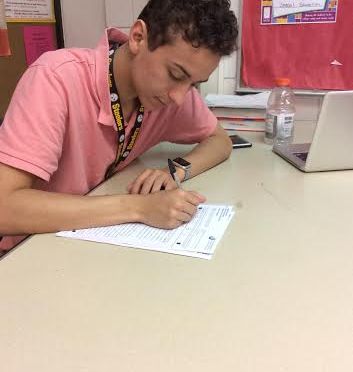
How to Take Good Notes

How To Take Good Notes

Today we are going to share with you a few things that will help you take better notes.

One thing that really helps with remembering the content of what you’re reading is writing a summary. This sounds like extra work but it really helps you understand the material you are taking notes on. When writing a summary start with the main idea; this should be the focus of  what you are writing about. Summaries should only be a couple of sentences so that when reviewing you don’t have to read all your notes. Lastly, in regard to summaries, we suggest writing them for confusing or longer notes, this will help to ensure your comprehension.

Another thing that really helps is to organize your notes is using colors and distinguishing marks. You don’t have to use many colors – maybe one or two at the least. We suggest underlining main ideas or important facts, this will help you study when reviewing your notes. When taking notes you can use colors to distinguish one section from another so it’s easier to look back on. A further method you can use is circling or marking areas that you need to work on to remind yourself what topics to study before a test.

When you take notes, being organized and concise are main focuses. It’s important to have key ideas, so when you go back to study you’re not confused as to what type of questions you’ll be trying to answer on a quiz or homework. Use different symbols (like * or -) to show the difference between headings and points made. You don’t always have to use color, so when you don’t have it, make sure to box and underline to help create borders between sections. Writing in cursive helps a lot because it’s faster than printing, so you’re given more time to make sure your notes give you the information you need.

Overall, notes are very important in our everyday school lives, so taking good ones are key to a successful education. There are many ways to do notes, these are just three ideas to help guide you into improving your own.

A different path for students

As a student grows closer and closer to their senior year of high school, they will have the responsibility of thinking about their future – what they think needs to happen and what would their personal benefit be in doing so? There are some students who think college is absolutely the next step for them after graduating high school, but every student does.

Sometimes, there will be students who have a different mindset about what to do once they have graduated high school. People might not think to go to college because they don’t know what they’re career choice is, even in their senior year of high school.

In any case, there are many different reasons as to why a student does not go on the same path that others follow for the successful future that they have thought about ever since being in high school. Some common reasons that students don’t go to college:

  • Taking a year-off of school: Maybe there are some students who still want to go to college, but just not immediately following their high school graduation. They might consider just taking a year or less off to just relax and do whatever they chose, because they want to get everything such as maturity, a job, or their personal life in order before they go into something even bigger than high school.
  • Struggling to meet the tuition: Some students, even though they’re grades and GPA are good and strong, can’t go to college because of the cost of tuition, either for a private college or public university. The price for some colleges may change each year but as an estimate, a high school graduate who would like to attend college may be looking at tuition costs up to $12,00 a year (in state).
  • Knowing they want to do something else: There will be students who just don’t want to go to college in general, reason or no reason. One important thing to keep in mind is that it isn’t just people who may have bad grades, or such, that don’t go to college. In some cases, there will be a grade A student who has another option in their life to still expand in their field of interest without experiencing the college life. Sometimes, there will be something else that comes along close to graduation that you might have an interest in, and that you could learn a lot from, even though you are not learning from a college classroom.

Don’t feel sorry for the students who don’t follow the path to college, they still have options available to them. Here are some options as to what students not attending college could look into and be intrigued by:

  • Try to help out your community in any way possible. Anything that could better promote your strong and independent place of peace and respect for others that support one another when they need it most.
  • If college is not the place you decide to go, look for an apprenticeship or an internship than can help teach you more about your career choice (if you have decided). The better knowledge you have about your interest, the more you can expand on it and show what you know by presenting your knowledge and skill to the world in any way possible.

Evening High School (Night school)

Evening High School is an alternative educational program designed to provide students with learning experiences in order to complete their required course credits to graduate.  According to the SPPS website, “Evening High School is designed to give students who are behind in credits for graduation the chance to make up those credits.

Students must meet one of twelve criteria in order to attend Evening High School.  Most students qualify due to lack of credits needed towards graduation.”

Classes are offered at two sites: East Side Learning Hub @ Harding, 1526 Sixth St E, 55106 and Gordon Parks HS, 1212 University Ave W, 55104.

Classes meet at Eastside Learning Hub@Harding from 3:00pm – 4:30pm and 4:35pm – 6:05pm.  Classes at Gordon Parks HS are scheduled from 3:30pm – 5:00pm and 5:30pm – 7:00pm.

EHS ( Evening High School) also provides a light snack between 5:00pm – 5:30pm. The classes are really easy and simple. The good thing is that you don’t have night school on Fridays.

To be able to attend Evening high school you need to be 16 years old. For night school, you are only able to miss 2 days; if you miss more than 2 then you will be dropped from the class. Some of the classes you are able to take are: English, Math, Social Studies. For each class you take you earn 1 credit.

Pros and cons of attending a Community College

Community College is an alternate college path, with its cost and resources differing from a traditional four year university. Many juniors and seniors weigh their options carefully, with a community college path being one of them. The questions for prospective students include: What are the differences between universities and community colleges? What benefits would you receive, and what aspects of the system may not correlate with your goals? Is community college a reasonable option for you? The pros and cons below may help some decipher these questions.

Pros

Community College is a less expensive option for college, or the beginning of your college path. With tuition at private universities rising 3-5% annually, the difference between community college and universities is almost 50%. 529 money is often accepted through community colleges as well. This is not the case for public and private schools.

Many people also find community college beneficial for getting their general credits done at a lower price before transferring to a public or private university.

Community colleges are also located in populated areas, in state, providing an easy location to get to, and possibly the opportunity to stay at home through college, instead of paying for a dorm.

Another pro is the class variety in times and topics. There is a selection of general education classes as well as individual career programs where you take a mix of general courses along with courses directed towards your career path. Timing of the classes is very flexible as well, with day classes and evening classes available.

These two factors produce smaller class sizes which helps students get a deeper level of learning with easier access to help from their professors. The flexibility has also been found ideal for things like holding steady jobs, teen moms, sports, etc.

Cons

As you may know, community college is a less expensive option. While it can be used as a tool to save money and help make a steady plan for your future financially, it can also be a place for less motivated students. Some worry these individuals could be a distraction in classes.

Another concern for people is the fact that most community colleges only offer two year Associate Degrees. While credits can transfer to four year schools, not all do, and it is something that needs to be looked into prior to attending community college if you plan on going for higher degrees.

Another thing some have found difficult is the transition from community college to a university due to the increase in intensity of the workload after the first two years at community courses. Some people are willing to modify and piece together a plan with various colleges, but for others it leads to be too messy and stressful.

Lastly, for those who are looking for the “college experience” on campus with things such as activities and clubs, community college may not fit the description of that because they primarily focus/provide the education aspect of college life.

Either path you choose to take, you will be getting college degree, helping you secure more job opportunities in the future. If you know what you want to major in, research programs at community colleges and universities. Compare curriculum and costs. If you aren’t sure what you want do for your future occupation, community college may be a good way to get your general courses done while thinking about your future plans.

Ask J.A.M.

Ask J.A.M.

Hey Scots! High school is a difficult time for the growing teen, and we would like to help others in this intimidating journey through Highland Park Senior High. It’s not easy to talk about your problems face to face with another individual, so we thought of starting an advice column here in the Highland Plaid Line. For our first article, we would like to introduce ourselves so our audience knows who they are spilling their hearts out to. “We” are J.A.M.: Jane Iverson, Alandra Hickman, and Michelle Bourassa.

Hi guys, it’s me Jane. I’m a sophomore. I know that high school can be hard and we are here to help. High school is a time where kids are figuring out who they are and who they want to become. That can be very confusing and hard sometimes, so if you ever need, or just want to talk, we are always here to help. Last year I played golf, and I figured out that wasn’t something I wanted to pursue. In my free time I enjoy reading mystery novels and spending time up north at Lake Superior. During school, when I’m not learning, I enjoy eating smothered burritos and mashed potatoes. J.A.M. believes in helping others and making this a safe environment for them.

I’m Michelle, a sophomore here at Highland. Last year, I wasn’t too thrilled about Highland or school in general. Over the summer, I made a promise to myself to maintain a positive attitude and spread happiness among our community. This is my first season doing cheerleading, and it is definitely the highlight of my day. It works with my loud persona, giving me a platform for all my energy. I love to laugh and make others laugh, so look out for me if you want to hear a funny joke during your day. Life is hard, so I like to try and ease others stress if only for a second. Despite being more of a “jokester,” I also have a very mature mentality. If you want honest advice, come to me. I believe in facing your problems head on before they face you. I hope to help anyone I can this year!

Hey everyone, I’m Alandra! I’m also in my sophomore year at Highland. Everyone has a different high school experience and I’m here to help make it better! High school offers a myriad of things that every person should be involved in. Here at Highland we have great sports programs, Link Crew, and a variety of clubs! Here at Highland I play JV and Varsity volleyball. While playing, I have made a lot of friends and learned so many things not only pertaining to volleyball, but also life. I’ve learned methods on how to juggle sports, homework, and my personal life. These are things that I am more than willing to help you with. We believe that school can be a wonderful place where we as students should be able to express ourselves and have a wholesome high school journey. If you need advice for anything concerning sports or academics I’m always here!

If you would like to talk to us, contact us at our Ask.fm: @askhighlandjam

Seniors in college: Looking back and moving forward

College: for many this is the next big step in their life after senior year. There’s applying for college, applying for scholarships, then graduation comes right around the corner. Students are ready to move on into something even bigger and better than high school.

Every year, Saint Paul Public Schools have new students joining their student body to learn and grow as they prepare for the next step in their lives, which may include college.

High school in general is a whole new experience in a teen’s education. You have the opportunity to join lots of clubs, make new friendships throughout your school years, and learn intriguing skills from many of your teachers in high school. When you get to your senior year, it’s both exciting and scary because you’ve come so far and now you’re almost about to leave something so special that you can never repeat.

I wanted to ask a Senior this year about their thoughts on being where they are and thinking about where they are going. Sam B is a Senior, graduating this year, 2017.

“I’m happy and scared to be a Senior, but I’m also glad it’s my last year of high school.

I do feel, as a Senior, I have a responsibility to guide the underclassmen and help them get to where I am now.

I’m not sure what I plan to do when I’ve graduated, maybe either biology or film, but I do want to study at the U of M.

I’m excited for Senior year because of graduation, our class field trips, and you don’t have to take so many classes, and of course, PROM!

The advice I have for the underclassmen is: Do your homework on time, don’t be nervous all the time, have some fun, and make LOTS of friends.”

Some Seniors have different opinions about their year, and that is common, but sometimes their thoughts about high school change once they reach college.

I connected with a Highland Park Senior who graduated just last year to see his point of view about where he is now.  


James Farnsworth
: is a Highland Park High School graduate of 2016. He was involved with Youth in Government and was a member of various other clubs and activities, including The Plaid Line. unnamed

“College is a big transition for an only child! I am settling into dorm life. I’m getting familiar with the campus of my college. I take four classes which are not so difficult so my schedule balances out nicely.

I go to the University of Minnesota Twin-Cities. I’m enrolled in the College of Liberal Arts but I’m still undecided on a major.

Two of the classes that I take are Oceanography, and Analysis of Argument.  

You must be independent, motivated, and able to encounter different situations and use a variety of problem-solving skills. There are a lot of things that you do on your own in college.

I went off to college because it was pretty much the expected path to take after high school for me. There was never really another thought of what I’d do. I wanted to be certain and positive about moving onto the next stage in my life.”

Students want to do their very best in school so they can keep moving onto something even bigger in the future. Each student has a different path they take in their education depending on what they are interested in doing for their career choice. One thing that students highly suggest to do while in high school is PSEO: Post Secondary Enrollment Options.

PSEO is a program that allows 10th, 11th, and 12th grade students to earn both high school and college credit while still in high school. Many students from Highland Park say that doing this program now in high school will really help you with basic level colleges classes that you would normally start when you have graduated and moved on to college. For more information, visit the PSEO section on Highland Park webpage: http://highlandsr.spps.org/domain/2785

High school is very exciting and interesting. You don’t know what you might get involved with in your four years of school. Then, before you know it, you’ll start to think about college: What do you want to do? Where do you want to go? How soon can I start to apply? The one thing to always keep in mind is what is going to be best for you.

Comparing ways to get to school

Students have a lot of options to get to school in the morning, and this article will be reviewing the pros and cons of each option. The three most popular ways to get to school are: by school bus, biking, and driving. Each of these options have good and bad things about them.

Bussing is a great option to get to school for many reasons. One main reason is that it’s reliable. Unlike biking and driving, one doesn’t really have to worry abut weather because bus drivers are much better trained than a high school driver in terms of heavy weather driving, and biking is pretty much out of the question unless you are willing to get soaked. Bussing also is a great place to talk with your friends that live near you. Another pro about bussing is that you can take it all season, unlike biking unless you own a winter bike.

However, there are also cons about bussing to school. One major con is not being able to stay after school to talk to a teacher, retake a test, or study in the library without having to take an alternate way home. Another con to bussing is that you may have to leave earlier than other options, because the bus stops so many times.

Biking is also a great way to get to school, weather permitting. Biking has mostly the same pros as driving, with a few exceptions. Biking is also a great excercise and can be fun.

Some cons to biking is that we live in Minnesota. Winter lasts ⅔ of the school year which makes it very difficult to bike for most of the school year.

Driving has both a lot of pros and cons. Some pros are being able to leave your house relatively late, compared to biking and bussing. Also, driving gives you the freedom to stop for food before or after school if you’re hungry. You can keep textbooks in your car too, if you don’t want to carry them around all day.

Some cons to driving though are having to worry about parking and paying for gas. Paying for gas can get expensive if you drive to school everyday.

Overall, there are many good options to getting to school. I personally drive, but I have both bussed and biked in years past. It all matters on your personal preference and what works best with your schedule.

Minnesota scholarships

For those interested in college, a main concern is the price. However, there are many scholarships available from Minnesota schools that are directed towards juniors and seniors in high school. It is helpful to know what you need to qualify for one, and the different categories for scholarships to see if you fit into one. In this article you will find a variety of scholarships known for helping students pave their own college path.

Army ROTC Scholarship: The Army ROTC Scholarship is directed towards people planning to serve but want a degree as well. The scholarships are awarded less based on your financial status and more on your academic performance.

For more info: http://www.goarmy.com/rotc/scholarships.html

EMPOWER Scholarship: The EMPOWER Scholarship is directed towards people going into the medical field. Students are selected for the scholarship based on their intended use of the college education, need, high school stats, and personal achievements.

For more info: http://www.allinahealth.org/Courage-Kenny-Rehabilitation-Institute/Programs-and-services/Volunteer-opportunities/EMPOWER-Scholarships/

Minnesota Academic Excellence Scholarship: The Minnesota Academic Excellence Scholarship is directed towards people planning to enroll to a private or public Minnesota university. Selections for the scholarships are made based on applicants who have excelled in multiple school subjects, demonstrating a high success rate with potential for many different career paths.

For more info: https://www.ohe.state.mn.us/mPg.cfm?PageID=150

Minnesota Child Care Grant: The Minnesota Child Care Grant was made to help people, with kid/s ages 12+, financially in order for them to proceed with college while continuing to support their household. To qualify your income must qualify and you must also be a Minnesota resident.

For more info: https://www.ohe.state.mn.us/mPg.cfm?pageID=140

Minnesota Indian Scholarship Program: The Minnesota Indian Scholarship Program is meant to provide financial aid to people who are ¼ or more Native American. You must also be a Minnesota resident. The scholarship amount ranges $4,000-$6,000 per year based on need and education status.

For more info: http://www.ohe.state.mn.us/mPg.cfm?pageID=149

Minnesota State Grant Program: The Minnesota State Grant Program is directed towards low and moderate income families with financial aid. There is no application fee for this specific grant. If awarded with this grant, it is eligible at both universities and community colleges, however it must be in the state of Minnesota.

For more info: https://www.ohe.state.mn.us/mPg.cfm?pageID=138

PFund scholarship: The PFund Scholarship is directed towards members of the LGBTQ community. Scholarships range from $2,000 to $10,000. To be elligible you must live in Minnesota and attend a Minnesota college.

For more info: https://www.petersons.com/scholarship/pfund-scholarship-program-111_157203.aspx#/sweeps-modal

IB Exams pros and cons?

All eyes fixed onto the four-page answer books, hands viciously scribbling essays, racing against the ticking clock, as students attempted to cram all of their thoughts and information between those lines. Pens slammed down onto the table, backs rested against chairs, and students heaved a sigh of relief as they managed to finish the exam with a generous amount of time remaining. This would be the scene taking place in the dance room, and the library, as upperclassmen completed their IB testing.

For the past three weeks, both juniors and seniors have been completing a significant portion of their IB honors or diploma program. All that was learned throughout the course of high school was put to use in these annual exams. Highland is one of only three schools in the Saint Paul Public School District to provide the rigorous college preparatory IB curriculum to their students. The program has been available to Scots students since 1994, providing a more inquiry-based, international, open mindedness, and holistic approach to learning.

The vast majority of students enrolled in honors, or IB, courses have chosen to take on this demanding responsibility which comes with the cost of $40 per exam. Students seeking a less stressful path will chose the honors route and only test in 4 subjects, complete only 5 CAS activities, and give an honors speech based on a topic of their choice. On the other hand, there are also students who chose to challenge themselves by taking the IB diploma path, requiring the completion of at least 6 exams, an extended essay, and 10 CAS activities. For more information about the requirements for honors and diploma, please visit the IB Highland Webpage.

IB exams are shortly coming to a conclusion by the end of this week, May 20th, and now it is time to reflect about our experience. Would one consider this learning experience to be worth it?

Pros of taking the IB honors or diploma exams:

  • On the Common Application, colleges and universities will be able to recognize that you have tested, or that you plan on testing through the IB program, hence they will be more likely to consider trusting that your academic abilities are sufficient enough to handle the rigorous coursework in college.
  • Completing passing or fulfilling high scores on the exams can potentially earn you college credits. Some of these credits will pass as introductory courses or elective credits, which gives you a chance to save money and it also provides students with the liberty to take more classes of their choice. This is particularly true at a liberal arts college, where they would require students to earn courses outside of their major including the arts, social science, reasoning, oral speaking, etc.
  • Some students take the IB exam simply for experience. Past students who have completed the IB diploma have pointed out that the IB exams taken in history were fairly similar to the ones they are currently taking in college. The extended essay itself prepares future college students for the overwhelming research papers formulated in the area of their major. Along with that, each course will be accompanied with some form of internal assessment paper that is also considered as an individual research paper based on the area of their subject.
  • IB exams are similar to finals in college. Throughout the course of the IB program, students will explore various studying methods and find the one that is best for them.
  • The IB program is already known for its rigorous work, therefore devoted students can challenge themselves on another level and bring pride to their school. Teachers are constantly advising their students to test in their enrolled IB courses.
  • The number of students, from minority or low income backgrounds, who decide to test in IB, is beginning to increase thanks to the fee waiver offered to students with free-and-reduced lunch.
  • Passing the exam is not as impossible as it may seem. For exams such as mathematics, you would typically only need to receive a little bit over half of the total points to receive score of 4. Base on the distribution of the scores, IB will scale accordingly.
  • After every exam, Highland students are offered light refreshments including juice boxes, granola bars, fruit snacks, etc. Some students also enjoy the fact that they are excused from class for an extra 30 minutes after the exam is finished.

Cons of taking the IB honors or diploma exams:

  • Not all colleges recognize the International Baccalaureate program so not every college/university will grant college credits for completing IB exams, therefore some people would rather rely on PSEO courses to guarantee transfer credits. It is advised to complete college research before choosing to take the IB exams. Determine whether the college of your dreams will accept IB credits for which subjects and the specified score to achieve.
  • There are students who feel urged to become IB Diploma students just because it is considered to be the highest recognition available to students. Those who complete the program simply to just “look good” are not as likely to take the initiative to apply themselves fully.
  • The exams are certainly extensive and lengthy, requiring over a months worth of studying. Some exams such as the English (Literature) and the History exams consist of about 2 hours of testing for a single day. Students will already grow restless and exhausted after the first hour of testing, and will fail to concentrate with the remaining hour they have left. This year, the IB exam scheduling caused several seniors to end up testing everyday in a single week, thus missing the same classes for consecutive days.
  • Some students are unfamiliar with the formatting of the exams, therefore they come to the examination room unprepared.
  • Failing the exams will not only be considered as a massive waste of time and effort, but it will also be a waste of money.
  • It takes a great amount of responsibility and commitment to participate in the program. Days before the examination period, students will already submerge themselves in an abounding amount of stress. Not only that, students have to balance their studying with regular school work in classes they are not testing in. Those who are not responsible will end up waiting until the days before the exam  to start studying, and will sacrifice their sleep to cram study, which is rather not healthy.

Overall, it is this writer’s opinion that taking the IB exams was worth it. The entire process of practicing for the exams, along with taking the exams, may seem like a whole waste of time and effort (especially if you end up not receiving the score you hoped for), but nothing can replace the sense of ambition and anticipation I have experienced as an IB diploma student.

I remember myself as a junior sitting in the examination room for the Chinese Paper 2. My legs swung back and front, fist clamped to the side of the chair as I nervously opened the examination booklet. All of the fear and anxiety drained from my mind as I was delighted when I was able to fill up three pages with character writing and a decent essay in Chinese. Each character that I was able to recall out of the top of my head made each of the three years I had been Ms. Miao’s student so meaningful. I felt proud that I was able to apply the years of knowledge onto this piece of paper, and I valued this exam as one of my greatest accomplishments.

The IB program not only provided me with a little taste of what college work will be like, but the self reflection that came with it will guide me to avoid the same mistakes I made in high school.

Track and field

Have you ever wondered why people run for fun?  What the significance of track is? Track is what you make of it.

Track and field is a combination of field events such as throwing, jumping, and running: which goes from 50m hurdles – 3600m. Unlike other sports, track is simply a sport that helps you get in shape, and helps you improve skills. Whether it’s from throwing a short distance, to jumping farther than you ever jumped! It’s a matter of commitment and hard work. If you’re not going to put your all into what you do, then it reflects in your races and events.

IMG_0226Track is important to me because it’s very intriguing and lively. Since 5th grade, it has been my favorite sport. It can be quite overwhelming sometimes when you over think about the little things, but you have to keep moving. My past coaches have told me key things that I have kept with me until this day.

“Don’t let the little things knock you down. Sometimes you fall, and when you do you get back up”-Anonymous.

Sometimes when you feel like giving up, it’s better to just think about what you think is the problem, and try to fix it. Giving up won’t make you better, it will only slow you down even more.

Everyone has their own skills, and it takes specific training and strength to bring the talent out of their shell. Each event is not the same, which means more people can try to search what they like best about each one. Being open-minded in a sport like track is good because depending on what sport you play, there is always a better option that you can partake in.

Another key thing with track is setting goals. Some may call it “PR” which stands for personal record. Whether it’s improving a second or a minute, you want to set that up for yourself so not only can you better yourself, but you’re pushing yourself closer to success.

I suggest more people join track no matter what school they go to, because it helps with getting stuff off your mind, improving skills, and getting you fit for your next season, if you play multiple sports. Track and field is for anyone, any age, and is here not only to make you better, but also to help you build a better perspective on skills and exercises.