Category Archives: Books/Art

The ghost in the machine: Is AI killing the artist or just the brush

By: Weston Halgunseth

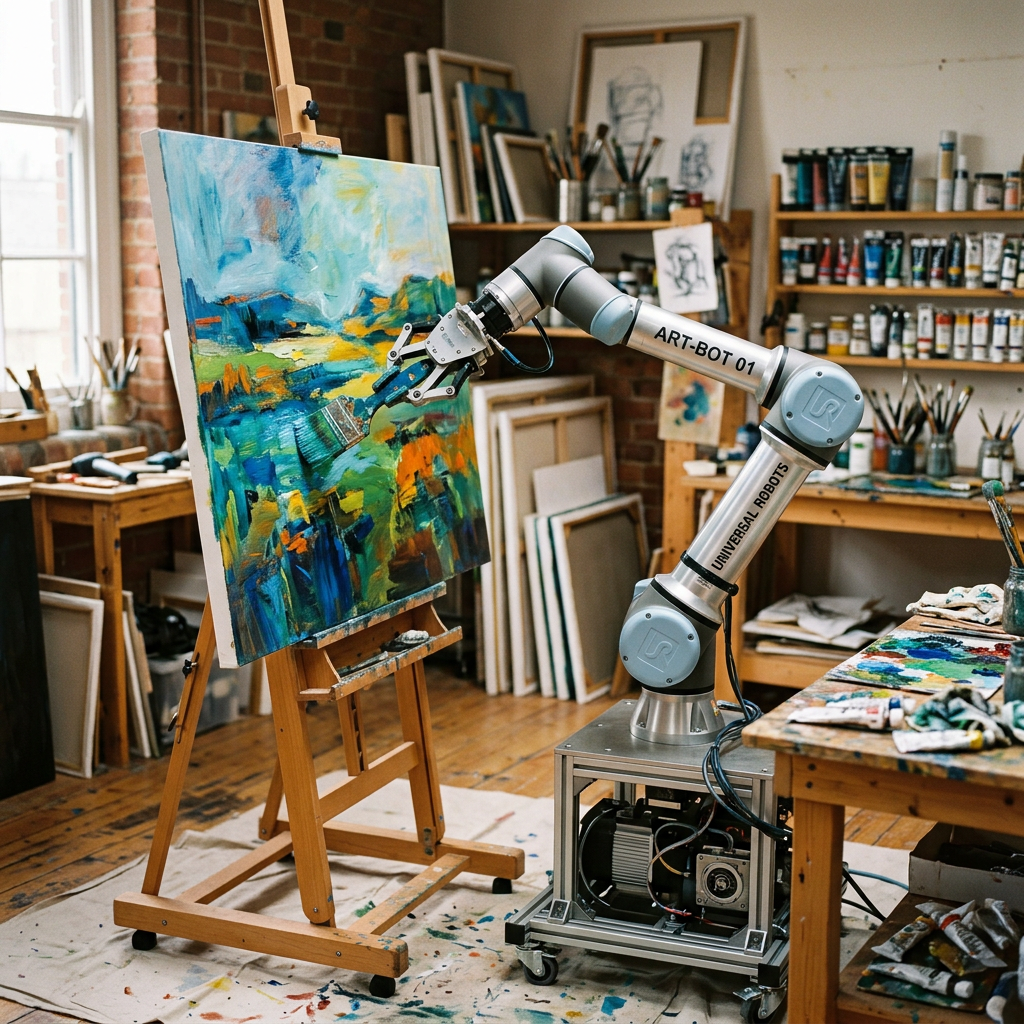
Robotic arm labeled ART-BOT 01 painting a colorful abstract canvas in a studio
A robotic arm creating a colorful abstract painting in an artist’s studio. Image created with AI

Introduction

For centuries art was defined by the muscle ache of musicians, paint soaked clothes, and pencil lead fingers of artists. To create means to physically struggle with concepts and tools. However, in the last few years a new artist has joined which is AI. While many celebrate this as a “new era” others fear we are trading human touch, meaning, originality for mere convenience and speed.

The rise of the machine

The statistics are hard to ignore. Today a vast majority of artists are using AI to generate or do most of the work with stuff like drawing, instruments, painting and books and stories. We have moved from a world where you had to spend months to years learning to play instruments, draw realistically, make complex stories, etc, to a world where you simply type “make me a story about ____, make me a song, etc” into a box.

What we gain vs What we lose

On one hand tech provides accessibility and speed especially with broke people that want to make music but are low on money but still want to learn. Another plus is that if you have a great idea but have no skill to make it, AI can help you express that idea. But the cost is steep. When a computer generates a piece of art, it lacks the element of human experience, emotion and overall just seems dull and boring most of the time, losing the stuff that made art pop.

The devaluation of “the doer”

The most concerning trend I saw is the shift from “doing”. If a machine can create a perfect art piece in seconds what happens to the person who spends hours practicing their art? I’m seeing a decline in dedication in art. As people become more used to the “perfection” of algorithms we risk entering a “post human” art era where everything looks and sounds “perfect, flawless, and downright inhuman”. It feels like there was no emotion or bigger picture when making it and it was just making it to look good.

The robbers

Much of the art AI makes isn’t original because AI uses the internet to learn. If it has to look at other art to get an idea of what art is, what is stopping it from just straight up copying or taking most of someone else’s art to make another “masterpiece”? There has been a lot of hate with this especially with stories and taking ideas and phrases from other texts for their “original” art pieces.

The path forward

We must decide if we want technology to be our pen, brush, pick, etc. or our helper and guide for art. The future of creativity depends on our ability to prioritize human “mistakes” and experiences that only a person can show, over an art piece made just to look good and get praise and fame.

Conclusion

Ultimately, a computer can mimic a heartbeat but it cannot feel the rhythm of the brain’s experiences and the emotions that come with that. As we move further into this digital age we must make a conscious effort to support the artists who are still picking up their art supplies and make sure they don’t fall out of the cycle.

Norse mythology beginnings of each realm explanation: Part II

By: Ro’Mel Bryant-Oliverz

Populization of Midgard, and creation of Humans:

Later, after the gods were so bored, that’s when the gods decided to create humans for Midgard. They took trees or logs in Midgard, and each of the gods gave them an aspect of life. Odin gave Önd which is supposed to be Breath/Spirit, Vili gave Óõr which is supposed to be Mind/Soul/Passion, and Vé gave Lá which is supposed to be physical Senses/Appearance/Blood. They imbued those three qualities into two trunks and created the first two humans Ask and Embla, male and female. Ask came from an ash tree, and Embla came from an Elm tree, hence their names. They wanted a population in the area they defined as the middle, and learned from the dwarves how to create a tool-like life, so they now made more pure beings with personality, drive, and afterlife.

Midgard is a place of safe land, mountains, fields, lakes. It’s meant to be similar to the normal world. The Dwarves likely only got Önd and Lá or the equivalent; made to be less human than humans. 

Alfheim and Elves explanation:

The Elves are the most mysterious and difficult race to pinpoint, but they came before the humans but after dwarves. The elves aren’t said to be created by the Gods but instead are the spirits of the sun, the air, and the growth of nature. And because they were so connected to “The Light”, the gods gave them their own realm, Alfheim. An exact timeline or origin for the elves is not established and they really just appeared. A lot of the elves are up for interpretation, they are usually represented as embodiments of beauty or light, like when called ‘fairer than the sun to look upon” or just being pure beings. They are the only race the gods actually respect enough to invite to their feasts. They are mainly only background characters you know are “above humans” and close to the gods but never actually are involved in any stories. The biggest and really only story of Alfheim was that when Aesir God Freyr was a baby and lost his first tooth the Gods followed the ancient Norse custom of the tan-fé, or Teething gift. It’s when a child loses their first tooth they receive a significant gift. The Aesir gods looked at the newly manifested realm of Alfheim and decided it as the perfect gift for the young god, and they gave him complete control of the realm and inhabitants.

I personally believe the Gods created elves before humans, as more pure beings maybe out of light instead of wood, but created beings that were too pure and boring or slow to evolve, so they just gave them their own realm and let them be, and used that information to create humans out of physical material like wood. 

Jotenheim progression throughout:

Alongside all of this the two Jotun that escaped have still been left alone in their harsh land expected to die, but the two reproduced rapidly. The outskirts went from a desalated wasteland into a rugged, mountainous kingdom filled with multiple emerging branches of the Jotun. Frost Giants, living in the coldest parts, Mountain Giants who looked like the rock and earth they lived on, and Wise Giants, figured like Vafthrudnir who spent his time memorizing the history of the world to outsmart the gods. It stayed harsh, cold, and rocky. It was the polar opposite of Asgard. The Giants built their own fortresses out of snow and ice to keep the gods out. 

Introduction of Vaneheim and the Vanir, and role in story:

Vanaheim and the Vanir knew exactly where each other lived and both lived near the top of the world in the “Upper Realms”, but they lived like two separate superpowers during a war, respecting each other’s boundaries but never hanging out. They represent the opposite side of power, if the Aesir is order, law, and war; the Vanir are natural flow, fertility, and deep magic called Seiõr. While the Aesir built their palaces and power, the Vanir were content in the lush, wild forests and oceans of Vanaheim. Though they knew of each other’s existence, there was a natural barrier, they were like two separate species of Gods.

Eventually a woman named Gullveig wandered into Asgard. She introduced Greed and spoke of seeking out for gold and the power it brings. The Aesir also didn’t recognize her type of mysterious Seiõr magic that she had, since it was different from their order based magic, and they reacted with fear and violence. The gods did something they never did to an outsider before, they tried to kill her. They found something they couldn’t understand or create so they mercilessly tried killing her. In an event called “thrice-burned, thrice-born”, the gods first riddled her with spears and threw her into the fire in the center of Odin’s hall. She stepped out of the flames, reborn, so they threw her back in. Again, she walked out of the fire completely unharmed, and she took a new name Heiõr, meaning “Bright”, or “Clear”. 

She then left Asgard, traveling through humans, giants, and dwarves on Midgard, teaching them the dark arts of Seiõr, spreading its influence. Once Gullveig got home to Vanaheim, and the Vanir heard about how the Aesir tortured her, they were outraged. They demanded “weregild”, or a blood money type payment. Odin and the Aesir refused, and instead of negotiating, Odin hurled his spear over the Vanir army, a traditional Norse gesture for declaring war. 

Vanir and Aesir war how it started and ended:

After war was declared between The Aesir and The Vanir, many things happened and changed. First, Walls of Asgard broke, in the first rounds of the war the Vanir were on top, and used their Seiõr magic to shatter the “unbreakable” wall of the gods. As well as that, the Gods were also no longer just builders and players; they were killers. Losing their innocence, and tying into the theme of the wall breaking. And eventually this ultimately led to the famous hostage exchange, where the Vanir gods like Freyr, Freyja, and Njörd, came to live in Asgard to ensure peace. The Vanir had to send Njörd, the god of the sea, and his two children, Freyr and Freyja. They were the heart of the Vanir tribe. The Aesir had to send Hœnir, a tall, handsome god, and Mímir, the wisest of all the Aesir. The Vanir sent to Asgard were integrated like family, Freyja became the priestess of the sacrifices, and had to teach Odin Seiõr magic. Freyr as well became a part of the family and received Alfheim as a gift eventually. Everyone made The Ritual of the Kvasir, to seal the deal permanently; every single person from both sides gathered around a vat and spat into it, creating a being named Kvasir and an oath.

Eventually the Vanir tribe realized Hœnir was dumb and couldn’t do anything without Mímir whispering in his ear. They decapitated Mímir and sent his head back to Odin, and left Hœnir useless on his own. Odin chose to keep Mímir’s head as a private advisor, rather than seek revenge. And that’s how another war didn’t start. 

Result of Vanir and Aesir war:

The Aesir and Odin took the strategic and long term victory of the war. Instead of getting rid of the other Gods he decided to integrate their best people into the Aesir, merging the bloodlines, and also get taught the mysterious and unknown Seiõr magic that was so deadly. The Aesir were no longer only builders of order, they were now, thanks to the Vanir, also builders and gods of nature. Very importantly, is the introduction of Seiõr magic to the Aesir and Odin. Before the war they really only used physical strength and runes. Freyja had to teach Odin the magic, which Seiõr magic is a form of weird magic that allowed users to see the future and manipulate fate. Odin became obsessed with this magic, and it turned him from the Chieftain builder to the “All-Father” obsessed with knowledge. 

On top of all of this, after the oath and spit into the vat, the being created was Kvasir. He has one of the most famous stories in Norse myth where he was murdered by the Dwarves, and they brewed his blood with honey to create The Mead of Poetry. Anyone who drank this mead eventually became a scholar or poet. Odin eventually stole the mead back for the gods. So the oath and creation of Kvasir lead to the gift of inspiration, art, and literature. 

The Gods, now both the Aesir and the Vanir, started preparing for Ragnarök together. They started focusing on defense, strength, and integration of the Vanir to create more diverse and powerful Gods. 

World Tree structure explanation: 

Alongside the creation of the world outside of all the small conflicts within the realms, came a higher primordial element, The World Tree or Yggdrasil. It is a tree that holds, or is the shape of, the 9 realms, which the world is made out of.

There is a vertical hierarchy, the realms are all ordered either lower or higher on the tree. Near the top are the “Upper Realms”, Asgard at the very top, Alfheim below Asgard but in the “light”, and Vanaheim and the opposite but near equal of Asgard. Near the middle was the “Middle Realms”, Midgard in the very middle with a vast ocean, Jotenheim on the far side but still in the middle, and Svartalfheim meant to be below the earth or surface of Midgard . And near the roots was the “Lower Realms”, Muspelheim deep in the south of pure heat, Nifleheim deep in the north of pure ice and the spring of Hverglemir, and Helheimat at the very bottom, the realm of the dead. 

The World Tree also has three roots with key importance, defining the deepest powers. First is the Root of Law, it sits in Asgard and drinks from Urõarbrunnr. It is the root of destiny. The Norns, Urd, Verdandi, and Skuld who represent Past, Present, and Future water the root with sacred silt. The Well of Urd is a well that the Norns use; it’s basically a pool of Pure Probability. Every day The Norns carve runes into the trunk of the tree, which writes the laws of the universe, and also water the root with the Well of Urds water. This keeps the root and therefore the upper realms stable and ordered in the universe. 

Second is the Intellectual Root, it sits in Jotenheim deep in the frost and mountains. It dips into Mímisbrunnr or Mimir’s Well. While the Law root is about destiny, this root is about ancient memory, what has happened, and the fundamental secrets of the universe. The well is guarded by Mimir, who is so saturated in the wells water that he is the wisest being in existence. 

Third is the Life Root, it sits deep in the frozen and primordial depths of Nifleheim. It dips into Hverglemor, the bubbling spring that existed before the world was made. It is where the eleven primordial rivers that form the Eitr life essence are formed. It is guarded by a massive dragon/serpent named Niõhöggr, who forever gnaws on the root. 

Beings on the world tree explained:

There are also multiple beings that live in the world tree. They would be considered primordial, above the normal world including the gods. 

Starting from the bottom of the World Tree is Niõhöggr, a giant serpent like creature that is infinitely hungry. He spends his entire life gnawing on the third root of Yggdrasil, the Life root. By chewing on the root he is slowly killing the universe. He is the personification of entropy, the idea that everything eventually breaks down and dies. He isn’t a mindless beast, he is fueled by malice. He has a rivalry with the Eagle at the top of the Yggdrasil. He is also one of the few beings that survives Ragnarök. Once the great battle is over, he flies over the battlefield. He is described as bearing the corpses of the dead in his wings. He cleaned up everyone that died in Ragnarök to clear it for a reset. He also goes to a place called Náströnd, a neighboring realm of Helheim. Instead of normal grey quiet Helheim, Náströnd is for the truly vile, oath breakers, murderers, adulterers, etc. It’s a massive and terrifying building made of living venomous snakes that drip poison from the ceiling. Niõhöggr chews on the bodies of these vile people. 

In the middle of the tree is Ratotaskr. He is a squirrel that runs up and down the tree forever passing gossip to the Eagle and Niõhöggr. The Eagle and Niõhöggr may not be able to talk for sure and definitely can’t hear each other, Ratotaskr makes up and/or exaggerates everything to make them angry at each other. It’s believed that if the Eagle and Niõhöggr didn’t have tension towards each other and the tree then the tree may not hold together. 

At the top of the tree is a giant unnamed Eagle, he represents vision, wisdom, and perspective. While Niõhöggr is in the mud of the roots, the Eagle is in the light of the Upper Realms. Since he is at the top of all the realms he can see everything in the nine realms all at once. Also, between the eyes of the Eagle is a hawk named Veõrfölnir. He is meant to be like a zoom lens for the Eagle. If the Eagle already can see everything in all the nine realms, the hawk can see any small details the Eagle might miss somehow. The Eagle is in an eternal rivalry with Niõhöggr, and their tension, fueled by Ratotaskr, holds the balance of the tree. The Eagle is described as very knowledgeable and has sharp insults to get under Niõhöggr’s skin meaningfully. 

Norse mythology beginnings of each realm explanation: Part I

By: Ro’Mel Bryant-Oliveraz

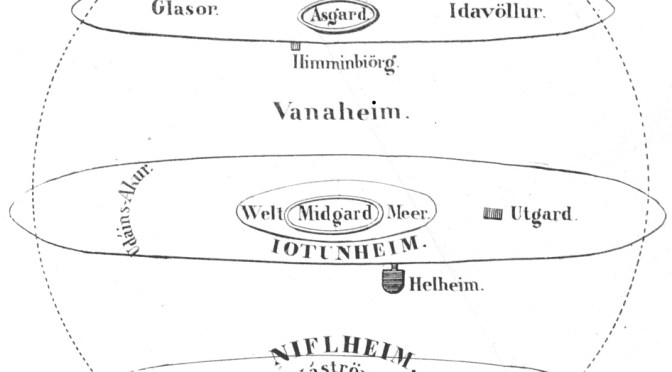
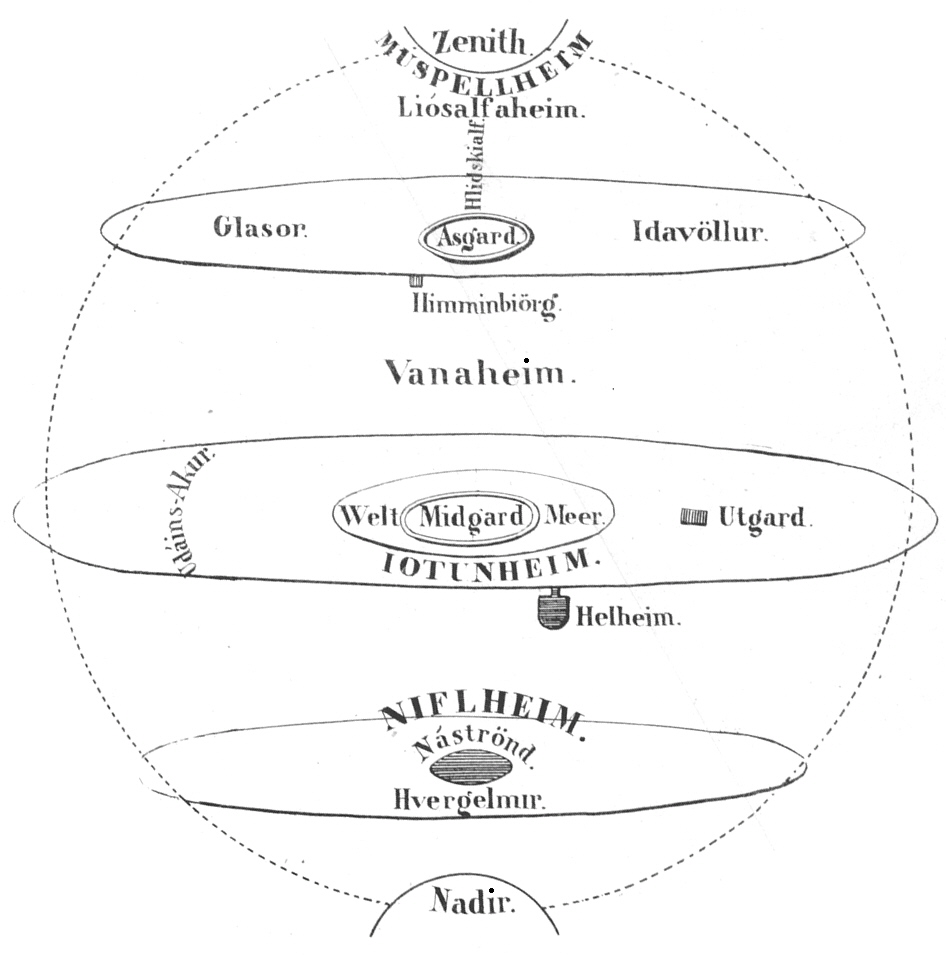
1844. Image extracted from page 039 of Histoire des peuples du nord, et des Danois et des Normands, by WHEATON, Henry. Original held and digitised by the British Library. Via Wikimedia Commons

Norse mythology is one of the most confusing and ambiguous mythologies. Most of the material about it is incomplete, lost, been re-written by someone else with changes, or has contradictions with previous stories. It was practiced by Norsemen, the Viking Age Scandinavians, before their conversion to Christianity. It’s defined by an event called Ragnarök, a prophesied battle where most of the gods and the world is destroyed.

The world is made of 9 realms, and different races. The Aesir, The Vanir, The Jotun, The Dwarves, etc. But how did each of the realms come to be? Who lives there? When did it happen? Who are the major characters and events? 

This is most of the beginnings of Norse Mythology from the creation of the universe to the Aesir-Vanir War, with explanations of the races and realms that came in between. 

The very beginning of everything:

Before anything, before the 9 realms or any being, there was a great void called Ginnungagap. It wasn’t a void as in absolute nothing, it was raw energy with no form. 

On one side of the void was energy of pure heat, lava, volcanoes, and everything hot. Also home to a primordial being called Surtr, a giant who has been standing there with a flaming sword since before time existed, the only being older than everything. He is like the personification of fire itself, and meant to represent the guardian/alpha/omega protecting the primordial realm of the heat and spark of everything. His sword is called Surtalogi. It isn’t made of steel as there were no Dwarves or earth yet, and it’s described as a shining sword that is brighter than the sun. This part of the void was called Muspelheim. 

On the opposite end of the void there was energy of pure ice, cold rivers, darkness, mist, and everything cold, the opposite of Muspelheim. In the center of this place was a roaring, bubbling spring called Hvergelmir. It wasn’t just any spring, it was the source of the eleven primordial rivers that carry the “Eitr”; a venomous life fluid of the universe, into the void. Eitr is the source of the deepest layer of life, being both venomous and the source of life, representing the duality of life. This part of the void was called Niflheim. 

The very first being:

The energies manifested for no exact reason, there was just always cold and heat. Eventually the energies flowed and drifted closer until they merged. The Eitr from Nifleheim flowed into the vacuum of Ginnungagap and hardened. Then the hardened Eitr in the void got heat blown towards it from Muspelheim, and started to drip. After the Eitr continued to drip the drops gathered together, creating the first being Ymir. Ymir is the first ever being and is classified as a Jotun, or a Giant. Not all giants are huge, but Ymir being the first being was massive. Alongside Ymir also manifested a giant cow called Auõumbla. It provided milk for Ymir so it could grow and have energy to manifest offspring by itself. There is no explanation for how Auõumbla manifested, usually it’s just there and is always a balancer or nurturer needed for the raw power. 

First appearance and origin of the first race, Giants/Jotun:

As Ymir kept existing 3 giants manifested from Ymir’s sweat. Since they were born from Ymir, and Ymir was made of melting Eitr, the giants inherited that venom in their blood. A female and male Jotun manifested from the sweat of Ymir’s armpits, while a third multi-headed Jotun manifested from the sweat of Ymir’s feet. This is likely because Jotun can be humanoid or not, and having two humanoids but one non-humanoid one in the beginning explains why they can be so diverse. The multi-headed giant was actually named Thrudgelmir; he later had a son named Bergelmir. 

Aesir gods first appearance and origin:

Also Auõumbla after feeding Ymir eventually got hungry and to get nourishment, she licked ice from Niflheim. Behind the ice revealed a creature named Buri, there is no explanation for how Buri existed but he already was, and was only revealed, not created. Buri also already had a child named Bor upon being discovered. The name Buri actually translates to “Father” or “Provider”, and Bor’s name translates to “Son”, a very literal progression towards the gods, like they are just beings of order, and just planted themselves in somehow. 

Bor had children with one of the female Jotun named Bestla, the daughter of Jotun Bölporn who is an ancient Jotun known for “thorny” elements, like dangerous weird magic. The children from Bestla and Bor were Odin, Vili, and Vé. It’s said the gods’ magic side and ability to do magic came from their Jotun side, Bestla and Bölporn, meaning the Aesir got magical elements and power from their giant half but order and control from the Bor line. 

Creation of the world, Midgard, how, and the consequences for giants:

After a time the Jotun race from Ymir grew too large, and they aren’t destructive, but they are like pure nature or elemental beings that just grow naturally without order. Odin, Vili, and Vé killed Ymir, and created the world out of his body. They used each part of his body for a part of the world. They used Ymir’s flesh for the earth and land, his blood became the seas and lakes, his bones became the mountains, his teeth and small bones became rocks and pebbles, his hair became trees and plants and nature, his skull became the sky, his brains became the clouds, and they used his eyebrows to define a middle area of the world where they could operate and be safe, which was called Midgard. In the process of killing Ymir the entire Jotun race drowned in his blood, besides two Jotun, Bergelmir and his unnamed wife who escaped to the outskirts of the world using something called Lúõr, which is believed to be a primitive hollowed out tree trunk. The gods didn’t hunt them down, but made sure to define the middle safe area far away from them and let them try to survive the harsh outskirts of the world which is very dangerous, and they were expected to die. 

Creation and origin of the Dwarves, and Svartalfheim:

Alongside the killing of Ymir the three gods, mostly Odin, saw maggots come from Ymir’s body as it decayed and decided to create life from it. They gave beings with only movement; the maggots, wit and shape, transforming them. The beings created were Dwarves. In most stories the first dwarves were Norõri, Suõri, Austri and Vestri, in English; North, South, West, East. They are four statue-like beings that don’t actually have the ability to move or talk or anything. They are purely statue-like tools for the gods to be able to hold up the clouds and sky so it doesn’t fall, and define the directions. 

Also in other stories, or alongside them, the first Dwarf was Mótsognir, the lord of the dwarves. It’s said he was the first maggot to receive Wit and he is actually the one who shaped the rest of the maggots into shape and dwarves. And also the second dwarf Durinn, who worked alongside Mótsognir to help manage the smaller work as a small little helper. 

All the other dwarves, which became an entire race, were intended to be created by the gods to be tools. They are very connected to the earth itself, and can forge weapons, armor, or tools much better than anything else due to that connection. They don’t just forge earth’s materials, they can feel them and speak to them. The sun kills the dwarves, turning them into stone because dwarves are essentially living rocks and the sun turns them back into rocks. When dwarves die they don’t have an afterlife like other races, they just go back into the earth.

The gods put them in a “lower” realm, underneath Midgard’s earth technically but its own realm, a dark, cave-like, underworld called Svartalfheim. It is filled with the constant clinks of hammers on anvils and massive underground furnaces, it sounds like a huge constant factory. They don’t have houses but instead Great Halls, which are buildings carved strictly into the roots of the mountains. Everything is made of polished stone, iron, and precious gems. It is a functional luxury. It’s not a horrible place, but it’s like a giant factory underneath the earth. 

Introduction to Asgard:

After creating Dwarves the gods entered the Golden Age, described as a time the gods played golden board games on grass. There is no definitive time but it lasted long enough for the gods to think they “beat the game”. The gods used the dwarves and the new world they created to get anything they wanted. They built their home, Asgard, above the clouds. Asgard isn’t like building a city, they took a massive portion of the world, directly in the center most point of Midgard and the world, and elevated it. Asgard sits on a high plateau called the plain of Iõavöllr, which is so high that it actually pokes above the clouds. From Asgard you can see the clouds below you. Asgard is described to be filled with massive shining halls made of gold and silver that never tarnish. 

Explanation of Bifröst, and origin and explanation of Heimdall:

Since it is so high there is no natural way to get there, so the gods created Bifröst, a rainbow burning bridge of three colors that only the Gods and their chosen can cross. The three colors each represent an aspect. Red for a burning, roaring, magical red fire which is specifically why the Frost Giants and later other giants can’t walk on it. Blue for Air for the heavens and air, symbolizing the bridge’s connection to the sky and its ethereal nature, also it being made of air makes it weightless and why it can float above the clouds. Green or white for Mist or shimmering water, which gives the bridge its shimmer or unstable look, and also signifies it is not a physical object but a manifestation of light and energy that the gods can turn on or off. It starts on the floor of Midgard and stretches all the way to the clouds to the front gate of Asgard. 

The Bifröst is also guarded by the Aesir god Heimdall. He has the most mysterious and weird birth of the gods. He doesn’t have a single mother but was born from The Nine Sisters, who are the personifications of the oceans waves. The Nine Sisters are the daughters of Aegir the sea giant, and Rán the sea goddess. Each of the 9 Sisters are the personification of each type of wave, a surging wave, a frothing wave, a dark wave, etc. It’s said he was born on the edge of the world where the sea meets the land. He was created with the strength of earth, moisture of the sea, and heat of the sun. He is a boundary or liminal being, belonging to the sea, earth, and sky all at once making him the perfect person to guard the bridge that connects those worlds. 

Heimdall even went to Midgard and introduced classes to humans. He created the classes of thralls, peasants, and nobles, further cementing his role as the bridge or boundary being of the divine and the mundane.

Asgard conclusion, story of Hrimthurs:

Asgard is meant to be a place of perfection, above everything, its also a fortress, after building their palaces the gods had a giant named Hrimthurs create an unbreakable wall around the entire realm. 

Hrimthurs was a frost giant that somehow got to Midgard disguised as a man. He made a deal where he only had one winter to build the massive impossible wall, and he had to work alone with no help from any man. Even if it was 99% done, but not 100% it won’t get payment.

The giant’s deal was that he could use his horse, the gods agreed thinking that a horse couldn’t make a difference. But the horse was a beast of legend, during the night it would haul stones the size of mountains, then Hrimthurs could use the stones in the day to build. Loki, a trickster god, transformed into a magnificent mare in heat, and attracted the horse out the woods. Hrimthurs had to spend all night chasing the horse, and couldn’t move a single stone. After he couldn’t finish the wall in time and got no payment, the gods later found out he was one of the Jotnar, and Odin called Thor who swiftly killed him.

An overview of authors from Saint Paul

By: Karl Salkowski

(Image Credit Unsplash)

There are a number of very influential and well regarded authors who are affiliated with Saint Paul, Minnesota. Many of the stories they wrote were based on life growing up in Minnesota and the communities they were a part of. F. Scott Fitzgerald is probably the most famous author from the Saint Paul area, but there are many others including modern authors such as Kao Kaila Yang and William Kent Krueger.  

F. Scott Fitzgerald was born on Summit Avenue in 1896, just a few miles away from Highland Park Senior High school. He is most well known for his novels about the “jazz age.” His most successful work ‘The Great Gatsby’ is still relevant in the modern era over a hundred years after its publication, and is still frequently taught in high schools across the United States. I personally would recommend ‘The Great Gatsby’, because I really enjoyed the way the story and characters’ relationships unfolded.

August Wilson, a Pulitzer Prize winning playwright, lived in Minnesota for over a decade. He has had a long association with the local Penumbra Theater Company located in Saint Paul. His most famous plays are ‘Fences’ and ‘The Piano Lesson’. He is known for writing about the African American experience growing up throughout the 20th century. Three of his plays have already been adapted into films.

Another famous writer, Garrison Keillor, spent much of his career living in Saint Paul, producing the MPR variety show ‘A Prairie Home Companion’ and several books. He is best known for making fun of the “Minnesotan Sensibility”, through his “News from Lake Wobegon,” where “all the children are above average.”

William Kent Krueger is a crime writer who lives in Saint Paul, famously known for having won back-to-back Anthony Awards for best novel. When the Saint Clair Broiler was still in operation, locals would often see him there writing. 

Kao Kaila Yang is one of the most influential contemporary writers in Saint Paul. She is a Hmong refugee and has often written about the refugee experience, and her own family’s story. She writes for all ages, everything from picture books to memoirs. Her most famous work is ‘The Latehomecomer: A Hmong Family Memoir’, which has won several prestigious awards and is highly rated on both Goodreads and Amazon.

‘Twilight’ chapter 7

By: Ivy Dahl

Summary:

Chapter seven of ‘Twilight’ begins with Bella having a nightmare where she’s at La Push, the beach she was at in the last chapter, seeing Jacob transforming into a wolf to attack Edward.

She awakes from this nightmare extremely confused, and with her mind full of questions that won’t let her sleep, so she decides to research on her computer. She starts by typing just one word: vampire. She sifts through websites, many of the things she read seeming like they were just stories for kids. But there were a couple of legends that stuck out to her.

Overwhelmed by her thoughts, Bella decided to go on a hike in the woods outside her house to clear her head. It was dark and eerie outside, just like it had been in her dream and when she came across a fallen down tree log, she sat on it like a bench. She thought in a place like this it seemed more reasonable to believe vampires existed. Everything about Edward aligned with him being a vampire including the way he talked so formally, as if from a different time. Also, his impossible strength and his constant reassurance that he’s too dangerous to be around. And even knowing all this, Bella knew one thing even more: she still wanted to be near him.

With her thoughts finally clear, Bella returned to her house, finished some homework and drifted back off to sleep.

When she wakes up the next morning, she’s in a much better mood because of the clarity from last night. This good mood follows her to school, where she decides to sit outside while drawing since it’s sunny. Mike approaches her and tries to use her good mood to his advantage by hitting on her, but she turns him down and tells him to ask Jessica out instead.

Bella goes to lunch and sees that not only is Edward missing, but his entire family is. She’s so bummed out by this that when Jessica invites Bella to go dress shopping in Port Angeles, she just mumbles an agreement.

When Bella gets home, Jessica calls her to tell her the trip is postponed to tomorrow because Mike asked her out.

The chapter ends with her and her friends leaving for Port Angeles the next day.

Review:

This chapter is supposed to be the big realization about Edward, yet afterwards it doesn’t feature him at all or have any kind of confrontation with him about what Bella thinks she realized. Instead, it just features her talking to her friends at school about stuff that isn’t really related, which makes it fall flat and lessens the impact of it on the plot. I’d give it a 5/10.

This is my last ‘Twilight’ chapter review, and I know there is quite a lot of book left, so if you have a lot of time, I would suggest you read the rest of the book! If you don’t have a lot of time, you can watch the movie.

‘Twilight’ chapter 6

By: Ivy Dahl

Summary-

The sixth chapter of ‘Twilight’ begins with Bella going to the La Push beach with her friends from school, with some other local teens from the Quileute tribe joining their group. One of these teens is Jacob Black, Bella’s childhood friend who she remembers seeing when she used to visit her dad’s house in the summer, because his dad was friends with hers. When Bella mentions that she had invited Edward Cullen, one of Jacob’s friends looks grim before firmly stating that the Cullens don’t come there. Bella thinks back to Edward’s earlier immediate refusal of the beach trip and infers that he’s not allowed there.

Bella and Jacob end up breaking away from the group to go on a walk along the beach. Their conversation shifted towards Jacob telling her about “the cold ones”, a legend from his Quileute tribe. This legend stated that the Quileute tribe descended from werewolves, and that their one natural enemy were vampires, which they called “the cold ones”. The legend then continues that Jacob’s great grandfather made a treaty with a group of vampires who hunted animals instead of hunting humans, saying that if they stayed off Quileute land, they wouldn’t be exposed to society. This obviously immediately reminded her of the Cullen family. Jacob notices how enthralled she is and teases her for it, telling her it’s just a scary story. She half heartedly agrees. When they walk back to the rest of the group, Bella realizes that it’s already time to leave and their conversation has taken up more time then she thought.

Review-

This chapter is mostly just an information dump of hints about Edward’s true form for Bella, and features a long winded story, with little real life action happening to push things forward. This is supposed to be the moment in the book where Bella figures out what Edward really is, which I suppose is technically a climax, but since it’s given through long dialogue, in contrast to all the previous chapters which have been full of action, I’d say it’s kind of underwhelming. One positive aspect is that it introduces an important character, Jacob Black. I’d give it a 5/10.

‘The Leavers’ review

By: Siri David

*Warning: This review contains spoilers

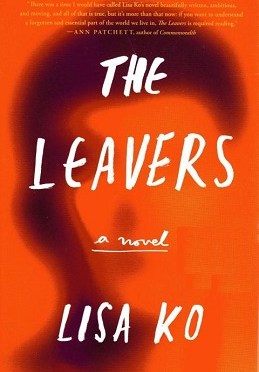
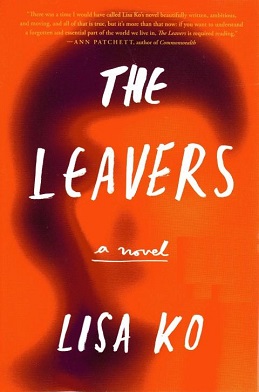
The novel ‘The Leavers’ is written by Lisa Ko. This novel is about a boy named Deming Guo who grows up in New York City with his mom Polly. Polly works at a nail salon and one day never comes home. Throughout the novel we learn about Polly’s backstory and how she gets detained by immigration services, while also learning about how this affects Deming and how his life changes.

In the start of the novel we learn about Deming’s childhood as he grew up with Polly and the struggles they went through. Polly had a hard time making enough money to support her family, so she was frequently taking out loans and trying to work as many hours as she could at the nail salon. All while this was happening Deming is going through school and he hates it. He is a very unmotivated kid and had no desire to learn or go to school. During this time they are living in an apartment with Polly’s boyfriend Leon. Leon’s sister Vivian and her son Micheal are also living with them. This helped Polly a lot as it was easier to find someone to watch over Deming if she was working.

One day when Polly goes to work she doesn’t come home. She is taken by ICE and Deming is left alone with Leon and his family. None of them knew what happened to Polly and they were all left in confusion. After some time Vivian decided to put Deming up for adoption, and he was adopted by a white couple in upstate New York. Their names are Peter and Kay.

They struggle a lot to connect with Deming due to him being adopted as an older kid, but also because he comes from a different cultural background. They try to change Deming to help him fit in more by changing his name to Daniel. This causes Deming to lose his sense of identity as he gets older. He also just feels disconnected because he still doesn’t know what happened to his mom.

Later on in the story when Deming grows up he gets reconnected with Micheal and Micheal helps him get in contact with his mom. He calls Polly and she is shocked to hear from him, we then get her whole side of the story. She was detained and was held by ICE for months and then was sent back to China. Once in China she got married and got a job, and she didn’t tell anyone about Deming. They reconnect and she finally tells her husband and he is shocked.

Deming then flies out to China to meet Polly. They reconnect but at the end of the book decide that it’s best for Polly to stay in China and for Deming to go back to New York, and they go their separate ways.

This novel represents the struggles that immigrants and children of immigrants face everyday. The raw emotions and feelings that Ko explains in the novel is what many immigrants face. Ko has a good way of bringing all perspectives into this book and changing the way I perceived the adoption process and program in America as she showed how unaware and innocuous Peter and Kay were when it came to Deming’s ethnic background.

This is a well written novel that shows problems that are very relevant in our world right now. It will take you into what immigrants face and it is truly heartbreaking. I recommend this novel to all who feel strongly about what’s happening in our nation and want to understand better or make a difference.

Summary and review of the 5th chapter of ‘Twilight’

By: Ivy Dahl

Summary-

The chapter starts with Bella stumbling into class, so dazed that she doesn’t even realize she’s late. As she’s trying to acclimate to the already ongoing class, Eric and Mike invite her to a beach trip. She mumbles an acceptance, barely paying attention.

This same sense of disconnect follows her throughout her morning, coming to an end when her attention is drawn, like usual, during lunch to the Cullen’s table. Edward isn’t sitting there. Now she can peacefully shut her mind off again. She grabs a lemonade and sits with her friend Jessica, who giggles and gossips as usual, until one sentence pulls Bella out of her daze, “Edward Cullen’s staring at you,” she commented.

It turns out Edward had just been sitting at a different table than his siblings today, one that had completely slipped through Bella’s radar. Almost immediately she notices him beckoning him towards her. She mumbles an excuse to Jessica and goes to sit down at his table. The first thing out of her mouth to Edward is that them sitting together is very odd. He responds that if he’s going to hell, he’ll do it thoroughly. He doesn’t explain what he means by this and just continues to say that Bella’s friends are mad at him for stealing her away from them. They then go on to have a conversation where Bella questions Edward about all the strange things that have happened and about what he is. Like always, he refuses to give anything but cryptic warnings and deflection, and lunch ends.

Bella immediately races to class. As she arrives, her teacher is bringing in boxes with equipment to find out their blood types as a biology lesson. Bella feels extremely faint at the mention of blood and leans her head against her desk, lightheaded. Mike notices this and offers to take her to the nurse. Once outside, and halfway to the nurse’s office, Bella sits down on the sidewalk, wanting to rest for a moment. Through her lightheadedness she hears the voice of Edward Cullen asking Mike what’s wrong with her. His voice offers to carry Bella the rest of the way there. Bella looks up, and before she can get a word out of her mouth, Edward scoops her into his arms, carrying her to the nurses office. When they arrive, he refuses to leave at the request of the nurse. He gets her out of the rest of the school day by telling the nurse that she’s sick and that he’s going to drive her home. Bella asks him if he’s going to the beach party that’s happening, but when he learns the beach, La Push, he declines. He drives her home.

Review-

This confusing relationship between Edward and Bella is obviously taking a huge toll on Bella, even to the point where she’s shutting out almost everything around her that doesn’t involve him. That’s a pretty crazy reaction to someone who you’ve barely known for a couple of weeks and regularly shuns you. But on the other hand, if someone single handedly saved me from a car crash, I’d probably think about them a lot too.

Bella also seems to attract danger and disturbances like a light attracts a moth, which is a going trend that makes me grow more on edge going into every following chapter. I’d give this chapter a 7/10.

Chapter 4 summary and review of ‘Twilight’

By: Ivy Dahl

Summary:

In chapter four of ‘Twilight’, Bella begins to dream of Edward Cullen every night for almost a month.

The guy who almost hit her with his car follows her around giving endless apologies, and her brush with danger seemed to revive all the attention on her that had only just died down. Bella returns to her place next to Edward in biology, with him also now ignoring her again.

When Bella arrives at home, Jessica calls Bella and asks her if she would be upset if she asked Mike to a school dance, to which Bella says no, and that Jessica should definitely ask Mike.

The next day, once again, Edward ignores Bella throughout class, but this time he says her name once the bell rings and the classroom is empty. This grabs Bella’s attention and she listens keenly as he mutters an apology for ignoring her, but also insists that it’s better if they aren’t friends. This sparks Bella’s temper, saying that he should have figured that out before he saved her life, since he clearly regretted it. Now Edward, also angry at her response, tells her she doesn’t understand anything. Bella attempts to flee their argument but trips and her books spill out all over the floor. Edward picks them up for her courteously.

Bella continues her day, and after school she finds her classmate Eric leaning against her car awkwardly. He asks her to the school dance, which she evades by telling him she’ll be in Seattle that day. Later that day, she continues this cover up by asking her dad if she can actually go to Seattle, and he agrees.

The next morning, after Bella arrives at school she has a confusing interaction with Edward Cullen, who now has golden eyes, and is offering her a ride to Seattle. Bella reminds him that he told her that they shouldn’t be friends, to which he responds that he’s just tired of trying to stay away from her. Then bizarrely, before leaving, he warns Bella to stay away from him.

Review:

The fourth chapter of ‘Twilight’ has less drama and action then the previous ones, focusing more on fleshing out the building tensions between the characters. Because of this slower pace I’d give it a rating of 6/10. You can buy the book ‘Twilight’ on Amazon.

‘Twilight’ chapter 3 summary and review

By: Ivy Dahl

Summary-

In chapter 3 of ‘Twilight’ Bella drives to school as usual on icy roads, which is a new weather characteristic of Forks, Washington. She’s surprised that she makes it so safely to school, given that she’s usually such a clumsy person with ice. This is resolved when she sees that her dad put snow chains on the tires of her truck after arriving at the school parking lot. This small moment of sweetness is interrupted by the loud sound of a car. She immediately turns to see a van swerving out of control towards where she’s standing. Before she can even react, she’s pulled underneath something heavy and hears the loud bang of the car crash. She looks up and sees Edward Cullen’s face. He was shielding her, laying between her and the car. This is very strange to her since just a moment ago she could recall him standing across the parking lot, staring at her in horror just like everyone else. A large crowd of her classmates gather around her, desperate to see if she’s okay and they begin to call 911.

Bella is rushed to the small town’s hospital with the other guy who was driving the out-of-control car. This is where she meets Edward Cullen’s father, Dr. Carlisle Cullen. He tells her she looks fine and that she’s lucky she wasn’t hurt worse, with which she responds that she was lucky Edward was next to her. He stiffens at the mention of his son being involved.

Afterwards, she notices Edward standing in the doorway of her hospital room. Bella immediately gets up and corners Edward in the hallway, questioning him about how he got to her in time and how he stopped the car. He dismisses her angrily, telling her that he was standing right next to her and adrenaline gave him the strength, and she must have just hit her head if she thought anything different. They both glare at each other before walking away. Her dad then drives her home where she has to make a call to her mom to stop her from freaking out about her accident. She falls into a restless sleep, still completely perplexed by Edward Cullen.

Review-

The third chapter of ‘Twilight’ adds major drama with Bella almost getting into a car crash and (yet again) intensifies the mystery of who Edward Cullen is. It also introduces some members of his family, who seem to be just as suspicious as he is and in-the-know of what’s really going on. I’d give it a 9/10. You can buy ‘Twilight’ on Amazon.