Combine eggs, flour, milk, sugar and nutmeg in a bowl and mix until smooth.
Place butter in a heavy 10-inch skillet and place in oven. As soon as the butter has melted add the batter to the pan and return the pan to the oven and cook for 20 minutes until puffed and golden.
Lower oven temperature to 300 degrees and bake 5 minutes longer.
Remove from oven and cut into slices and serve with toppings.
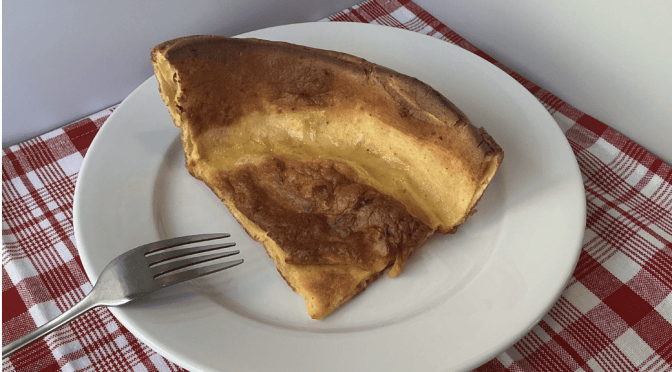
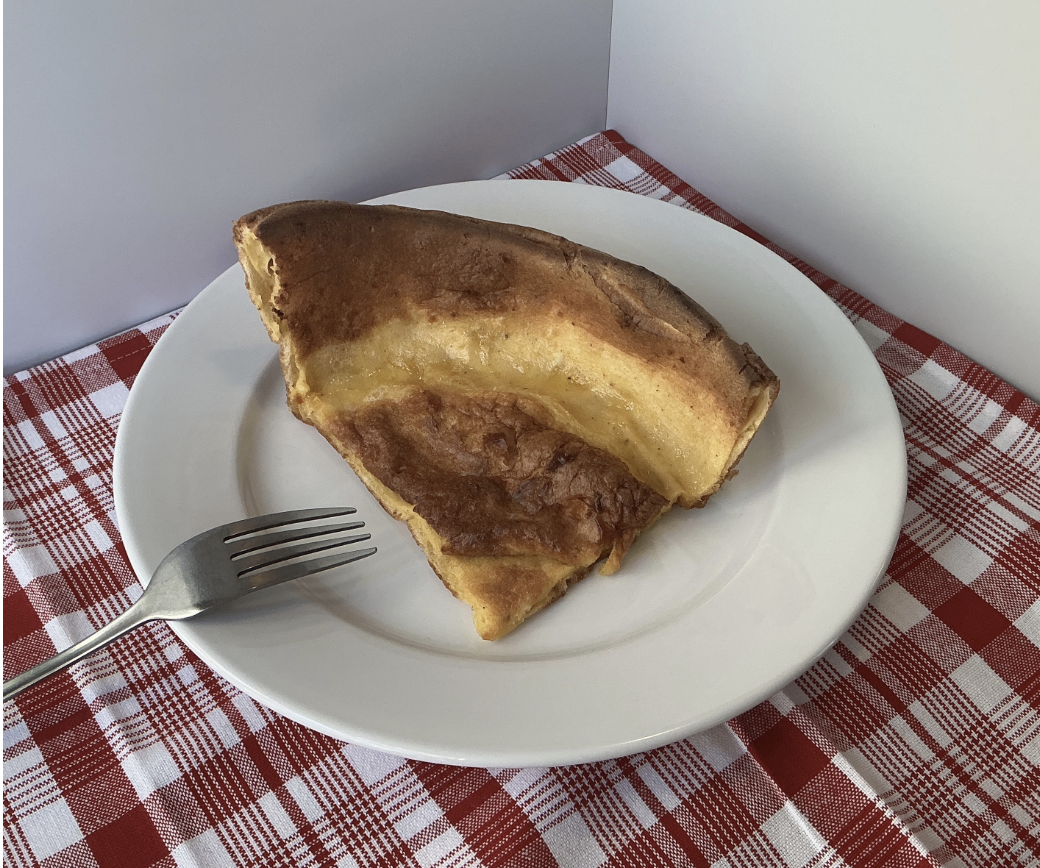
You can put whatever you want on these but they’re like pancakes so I ate some with maple syrup. Some people put powdered sugar on them and The New York Times, where I got this recipe from, also suggests preserves and cinnamon sugar as possible toppings. It tasted just like a pancake that was a bit crispier than usual; I’d say the crust got a good bit crispier than the main body of it though.
This was not a hard recipe to cook at all. The hardest thing for me to do was move the pan into the oven because it was pretty heavy and I was doing it with one hand. It’s definitely a good thing to cook if you don’t want to put too much effort into cooking something and still end up with some pretty good food.
Despite the name this food originated in Seattle, Washington; it also isn’t a baby. It was named Dutch Baby because of a mispronunciation of the word Deutsch, which means German and baby because they were originally served much smaller.
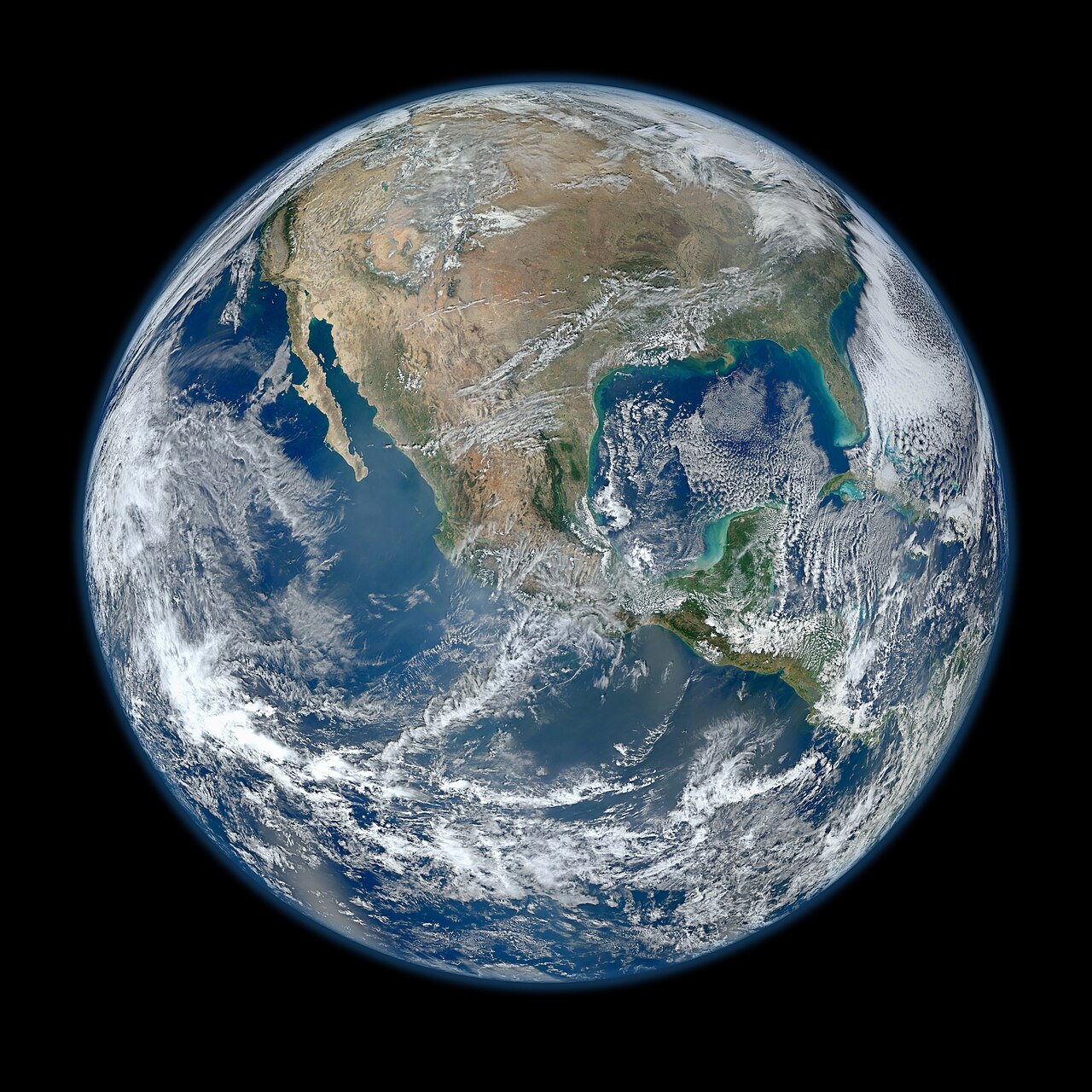
A view of most of North America taken from a low orbit of about 826 km altitude by NASA/NOAA/GSFC/Suomi NPP/VIIRS/Norman Kuring via Wikimedia Commons
Currently, about 266 million people are said to be at risk of hunger, and on the other hand 1.8 billion people don’t have access to a safe and reliable water source. We get our water from nature; it comes from rivers, lakes, etc. We are lucky to have the privilege to be able to use and drink this water, but when our ecosystems are overused, polluted, or damaged, we put our own water supply at risk. If water sources are not taken care of, the water we use could become unsafe, unreliable, or even more expensive. Water is something we need every single day, so when we damage the places that provide it, we are also putting ourselves at risk by making the water unsafe for ourselves.
Another major issue is climate change and the fact that we are continuing to warm the Earth. The world is already getting hotter, so making it even warmer can create even more serious problems. Climate change can affect where clouds and rainfall move. One example is the expansion of the Hadley Cell, which can cause areas like sub-Saharan Africa, the Middle East, and Central America to get less rain.
At the same time, other areas can experience more precipitation, leading to more flooding. At least 21 million people around the world are currently at risk from river flooding, and that number could possibly increase to 54 million by 2030. Floods can destroy homes, farms, roads, and even sources of clean water. For example, severe flooding in Bangladesh affected about 5.7 million people and caused 115 deaths. This shows just how serious flooding can be and how many people can be affected by it.
Healthy ecosystems are also a type of natural infrastructure. This means that nature can do some of the things that we would usually need to build systems for. Forests, wetlands, rivers, and plants can help provide clean water and protect communities from flooding. They can also filter pollution and prevent soil from being washed away. For example, wetlands can absorb and hold a large amount of extra water during a flood. Trees and other plants can also help keep dirt and pollution out of rivers and lakes. When we destroy forests and wetlands, we lose some of this natural protection. As a result, flooding and water pollution can become even worse.
All of this connects to the food crisis around the world. People need water to grow food, and farmers depend on water for their crops and animals. When there is a drought, crops can die because there is not enough water. On the other hand, floods can destroy crops by giving them too much water, and people can end up with less food.
Another issue that is happening around our world right now is the food crisis. In 2024, more than 295 million people in 53 countries and territories are going through hunger. Millions of children also suffered from this because they did not have enough food. There are many different reasons people go hungry. Wars can destroy their farms and make it harder for food to reach people. Food can also become too expensive for families to afford. Climate change can make these problems even worse by causing droughts, floods, heat waves, and severe storms.
In 2024, around 96 million people faced serious food insecurity because of climate-related problems. When farmers lose their crops, there is less food available. This can also cause food prices to go up, making it even harder for families who are already struggling to afford what they need. Water and food are closely connected. Without clean and reliable water, it becomes much harder to grow food. Without healthy ecosystems, it also becomes harder to keep our water clean. Climate change can make both of these problems worse. This is why protecting the environment is so important.
There are things we can do to help. We can protect forests, wetlands, rivers, and lakes instead of destroying them. Farmers can use water more carefully and take steps to protect their soil. We can also work to prevent pollution from getting into our water sources. The Earth provides us with almost everything we need to survive, including food, water, clean air, and healthy land. If we continue damaging the environment, our problems with water and food could become even worse. Taking care of nature is not just about protecting plants and animals. It is also about taking care of ourselves and making sure future generations have a healthy planet to live on.
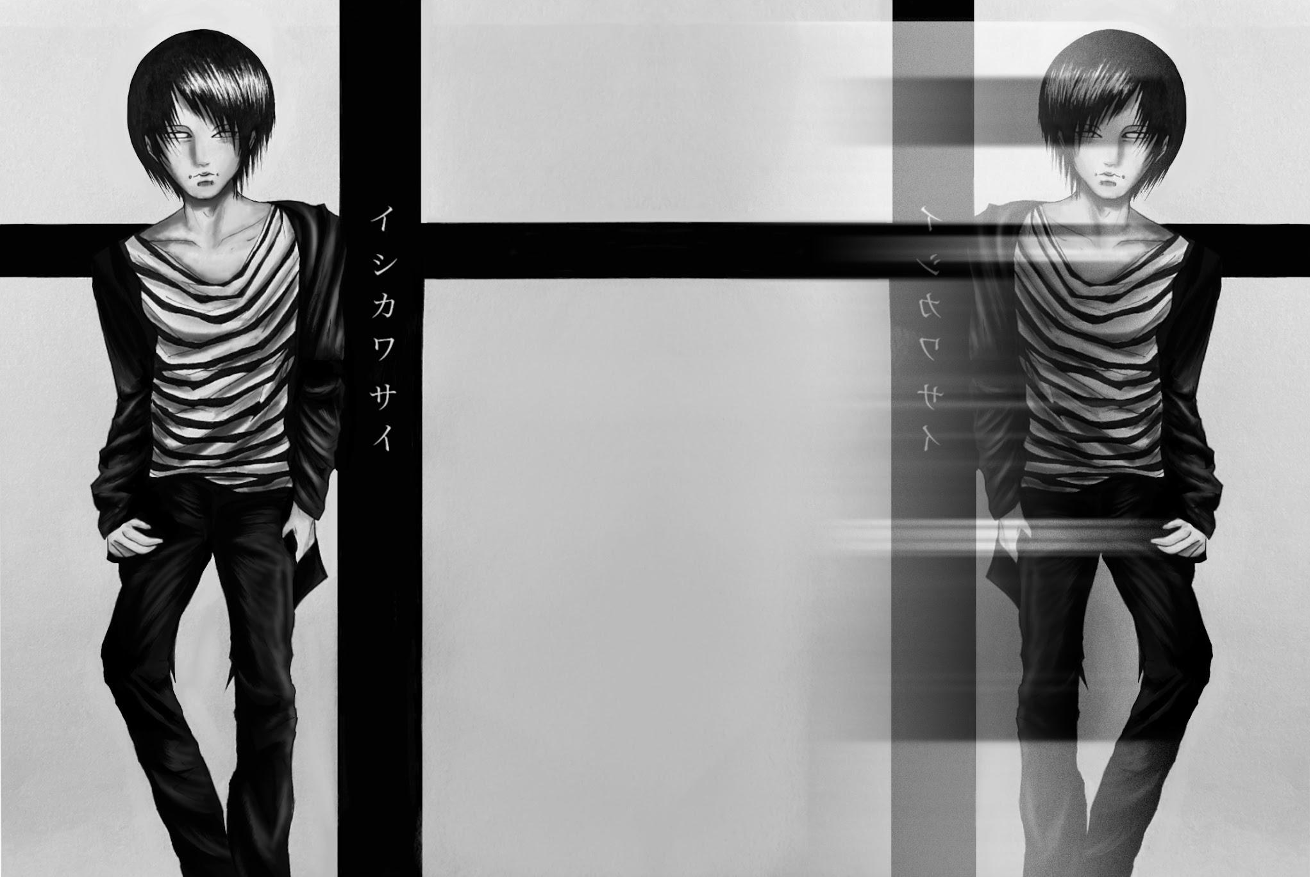
This is a black and white manga illustration showcasing an early design of Sai Ishikawa. The artwork features a mirrored diptych of the character leaning against a black cross, inscribed with vertical katakana characters spelling out his name. A digital glitch effect is applied across the mirrored right side.
A quick disclaimer before you read: I decided to be completely honest and look at this project through a deeply personal, raw, and philosophical lens regarding mental health. It touches on some personal themes, but writing this was a way for me to express how these struggles have shaped my identity.
Trapped in a broken household ruled by trauma, a quiet boy attempts to freeze his emotions, convinced that the world is inherently violent and cruel. But when his cold armor drives him to push away the only friend who ever loved him, he is forced into an existential crisis where he must choose between disappearing into the abyss or finding the courage to face reality.
Set in Tokyo, Japan, the story follows Sai Ishikawa. On a bleak afternoon, the Ishikawa family receives a phone call announcing the death of a family member in prison. Emotionally numb from trauma, Sai blankly watches his family collapse into grief.
As he begins to drown in bitterness, his best friend, Misaki Asakura, becomes his ultimate lifeline. When Misaki attempts to establish healthy boundaries and form new connections, Sai perceives it as a personal betrayal. He decides to leave the relationship and blames Misaki for betraying him.
With nothing left to lose, he resorts to self-destructive behavior. Driven to academic perfection by an emotionally neglectful mother, Sai weaponanizes disdain to mask his alienation.
Later, his path unexpectedly crosses with Misaki in Shibuya. Sai confronts him about the abandonment, but Misaki rejects the blame. He reveals that he was the one left behind. Unable to handle the truth, Sai collapses into a nearby alleyway.
‘Wings That Cannot Fly’ is a project I started in June 2026. It all began with a conversation with my mentor.
Since I cannot imagine more than what I have already known, I have a difficult time in creation. People love abstract ideas — anything that offers them reprieve from a stagnant world.
Because of this, I began to believe that I am not suited to be an artist of any sort. But then my mentor told me, “Inspiration confers creation. Nothing can be created within a vacuum; all the people you deeply inspire must’ve also had their fair share of inspirations.” Additionally, someone suggested that we should create more than we consume — and that’s exactly why I started writing this manga.
Despite being a semi-autobiography, this manga draws major ideas from Osamu Dazai, Franz Kafka, Albert Camus, Friedrich Nietzsche, Fyodor Dostoevsky, and much more. I also draw great admiration from the storytelling and artistic expressions of artists such as Inio Asano, Tsutomu Nihei, and Shinichi Sakamoto.
In a sense, this project has become my emotional outlet — a way to conceptualize my own experiences and flaws in order to understand myself better.
The story that I am writing asks the question, “Knowing that we live in an inherently flawed universe, what is it that we can do instead of succumbing to absolute nihilism?” Well, I cannot provide a definitive answer to that since I am not a psychologist nor a philosopher myself, but I think that we all should try our best to continue to live in spite of our inherent struggles.
This manga does not try to sugarcoat anything; it shows the mundane, the raw ugliness of human nature, and shows experiences that no human should ever experience at such an age. The main reason I wish to create this story is because I want people to know about the truth of living with mental illness. Nowadays, people view mental illness as an inconvenience or simply an incapacity to cope with standard reality.
But to me, mental illness is like a stark reminder of the human condition — the realization that we cannot simply create a life consisting solely of favorable events. It reminds me that this is as human as it gets.
To learn to coexist with our darkness instead of getting rid of it is something truly admirable. Instead of viewing vulnerability as a weakness, we should see it as something beautiful. Because in essence I think that these flaws are essential to our human condition.
The reason I want to propose my idea to the people out there is because I believe mental illness has become prevalent now more than ever. And while my story may not offer a concrete solution for mental illness, it could definitely offer insight into why these things happen. More than anything, I want people to relate to my work.
My wish is for people with similar experiences to find a place where they aren’t judged for how they feel or why they choose to continue to live like this. To feel that they aren’t alone in their struggles — that they deserve to find some sort of belonging in a world that ultimately punishes them for being human.
Since this story is still in the writing process, there are many things that can still change. For example, while I have envisioned the ending, I’m still unsure on how to go about it. There is just so much freedom to it that it makes me anxious.
One thing is certain though; I don’t want to create a happy ending. To do so would mean that my experiences would have been in vain, and ultimately feel undeserving. While not necessarily tragic, the ending will be one where human nature eventually overrides ideology.
Something to keep in mind is that ‘Wings That Cannot Fly’ is not made for everyone. There will be people who reject and disagree with my ideas, and that’s totally fine, because what I’m creating is not meant for the general public. It will be uncomfortable, disturbing, or perhaps even mundane for those comforted.
A students homework by Aaron Burden aaronburden via Wikimedia Commons
Across the country, after-school worksheets and late-night study sessions are slowly becoming a thing of the past. Recent data confirms that there’s been a shift in K-12 education: teachers are assigning significantly less homework than in previous years, and some aren’t even assigning any at all.
According to a survey conducted by the EdWeek Research Center, about 40% of surveyed teachers reported assigning less homework over a two-year period, another 24% stated they do not assign homework at all, and only 3% of educators reported an increase in out-of-school assignments.
There are so many different things that could have caused this shift. About 47% of teachers who cut down on workloads said that students are refusing to complete assignments as the leading reason. Additionally, another 29% pointed to the rise of AI and other digital tools, noting that tech misuse undermines the learning value of traditional homework. Some teachers also have equity concerns seeing as they also play a major role, as 28% of educators recognize that not all students have equal access to quiet study environments, internet access, or parental help at home.
Research highlighted by Edutopia shows that heavy homework loads aren’t very beneficial to a student’s academics, as it causes younger students to feel an increase in stress and burnout. Studies referenced by Point Loma Nazarene University reinforce that while targeted practice can help older students, too many assignments can often backfire on student engagement and mental health.
Educators are beginning realize they should try to prioritize quality, in-class learning over quantity at home, giving students more time for sleep, extracurriculars, and family life. As classrooms change to better understand new technologies and students needs, the era of heavy nightly homework appears to be fading.
When I was in 7th grade, I was a huge procrastinator. When teachers gave me homework assignments, I was much more likely to put them off then do any of it. I’d go home, stay on my computer until bedtime, go to bed late, rinse and repeat. At my very worst, I was ignoring over 35 overdue assignments, wasn’t participating in extracurricular activities and was barely participating in class.
What I have just described is something that many people would consider laziness — I wasn’t getting work done, I wasn’t taking care of myself and, most importantly, there were no obvious signs that I was trying to change, or even cared. But here’s the thing: I was trying to change, and I did care. A lot. So much, in fact, that every afternoon spent on my computer was a desperate attempt to distract myself from how much stress my overdue work was giving me.
That feeling of anxiety is often felt by others that have had similar experiences to me. Most people want to do well and live good lives. Most people care about the work they put in. It’s not an issue of morality, or even work ethic. But then what is the issue? Why can’t so many people get themselves to do work? And is laziness even a thing?
To understand this, we first have to look at where the idea of productivity comes from, and that question is easy to answer. Since the moment America was founded, values of “self-reliance” and “diligence”, rooted in religious beliefs, have always been core principles of society. In fact, they were historically used to rationalize slavery and are still used to justify economic oppression: it was your fault you couldn’t do the work, not the fault of those who were putting it on your shoulders.
Today, we start preparing for our future jobs from kindergarten, and don’t get a break until 65, the average year of retirement. This is in order to make enough money to survive in America, with the average household expenditure costing 80,000, but also because it becomes our only purpose. When how hard we work is tied to our value as people, we live to work instead of work to live. It should not be this way. But what is actually happening in our bodies that causes us to feel that motivation at all?
Our motivation is tied to a host of different things. According to psychiatrists Elenor Simpson and Peter Balsam at the New York State Psychiatric Institute, whether we’re motivated to do something at all is related to the weighing of costs and benefits. This cost/benefit balance can change drastically depending upon how rewarding doing a task feels and the physical/mental state of our bodies.
If you are in an environment that causes you anxiety, being in a constant fight-or-flight mode can significantly impact your motivation. People that have less dopamine in their system also struggle with motivation because completing a task doesn’t feel as rewarding. And if you feel stuck, or overwork yourself, motivation can also crash significantly in the form of burnout.
Unfortunately, most people that suffer from motivation issues aren’t given the help or understanding necessary to get back on their feet, causing a cycle of procrastination that can lead to feelings of hopelessness.
The idea of laziness and a non-stop work ethic ingrained in our culture is detrimental to us as students. We are surrounded by it: from parents pressuring us to work harder and get A’s, from teachers and coaches piling more work on our plates, and from never ending clips on social media of successful people teaching us new strategies and techniques to achieve perfection. Our brains constantly checking off items on an imaginary checklist makes us feel like we can never get a break, and on top of that, phone notifications streaming in force us to always be “on.”
We need to stop being so hard on one another. Equating our bodies’ response to a stressful world as “laziness” only makes things worse. Instead, we should treat signs of toxic productivity seriously so we can stop feeling so burnt out all the time. To paraphrase Harvard Health Publishing, feelings like a false sense of urgency, the inability to relax, and guilt or shame about not accomplishing enough can be combatted with deep breathing, journaling, and examining your relationship with downtime.
Take a break! Make sure to find time in your week to actually relax or do the things you enjoy! Even if those suggestions don’t help, be comforted by the fact that many others are going through the same thing. There isn’t something wrong with you; the whole concept of productivity being tied to self worth just comes from a system that is trying to blame you for its own faults.
When you walk into school you’re greeted by hundreds of other students standing around, talking with friends and such, but if you look at each and every one I’m willing to bet at least half of them are wearing a pair of jeans. Have you ever wondered where jeans came from, or why they were made? Have you ever wondered why they’re blue? If so, let’s talk about that. How did a pair of French working pants become an icon of worldwide casual outfits?
It all started in the town of Nîmes, France and Genoa, Italy when fabric weavers realized workers needed a more sturdy and durable fabric than was available. The names ‘jeans’ and ‘denim’ come from the names of the towns/cities: Genoa (Jea-noah), and Serge de Nîmes (de-Neemes) ‘meaning fabric from Nîmes’.
The first jeans were created with twill woven with two separate color pieces of fabric which is what causes the fading effect you see on jeans. The weft (white inside of jeans) was left undyed while the warp (blue outside of jeans) was dyed with indigo which was, at the time, a fairly new, cheap blue dye (blue dyes being rare before indigo).
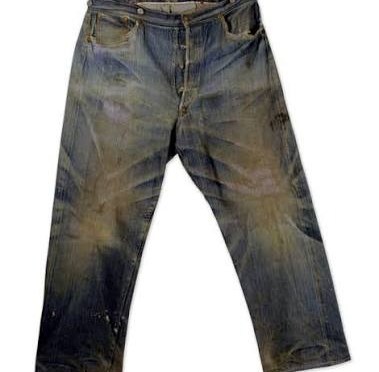
Jeans initially up to about the start of the 20th century were primarily used by European miners and farmers, as they needed durable pants. When workers in the United States of America, primarily farmers, miners and cowboys adopted them as well, the romanticization of the American West became more common. More and more people made the journey across the country, with many adopting the jeans as well.
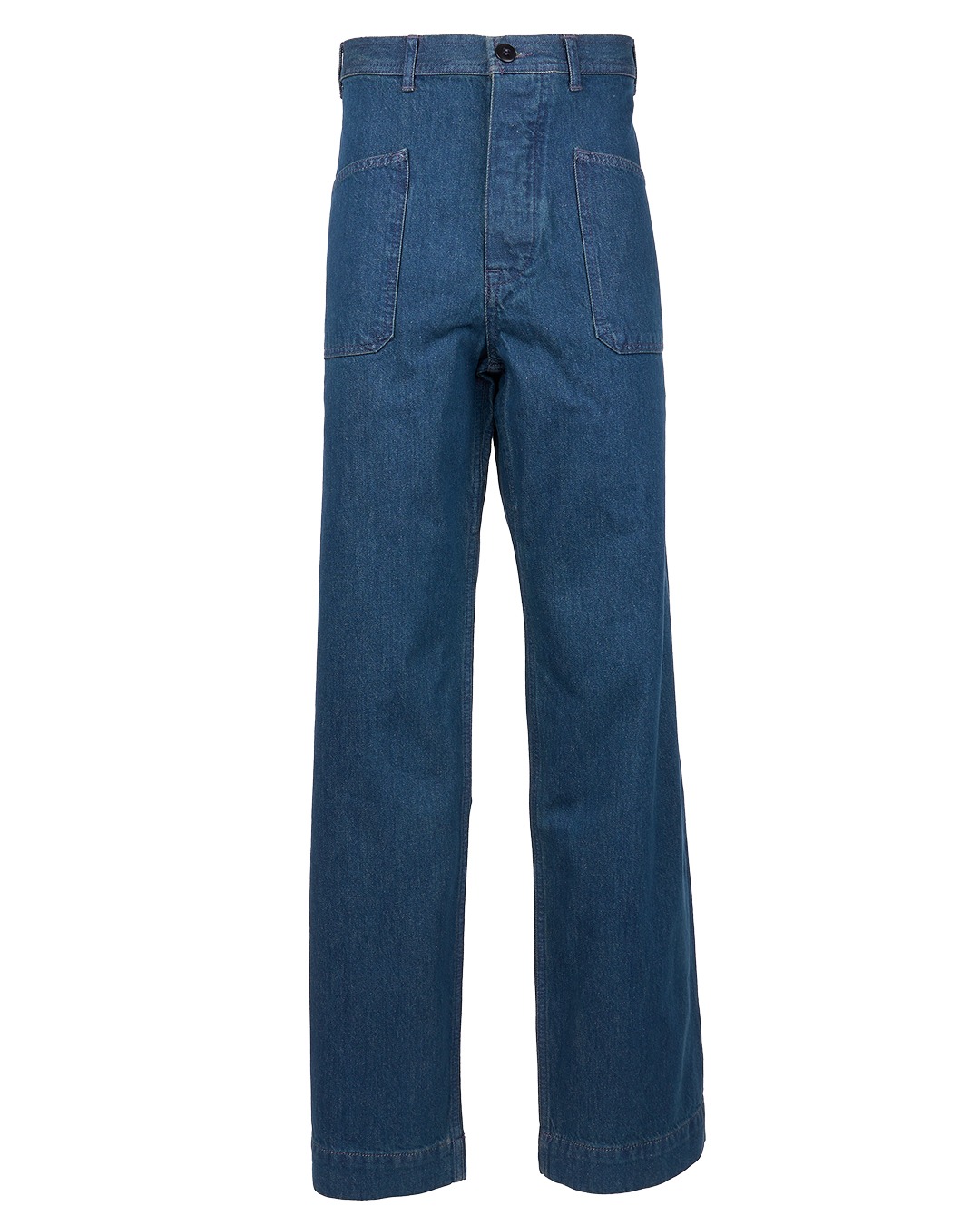
As the Second World War started many sailors brought their favorite pairs of jeans along with them to war. Although production of jeans did slow due to having fewer resources, all the war depictions of sailors wearing jeans made the pants blow up in popularity eventually becoming a staple of American workwear.
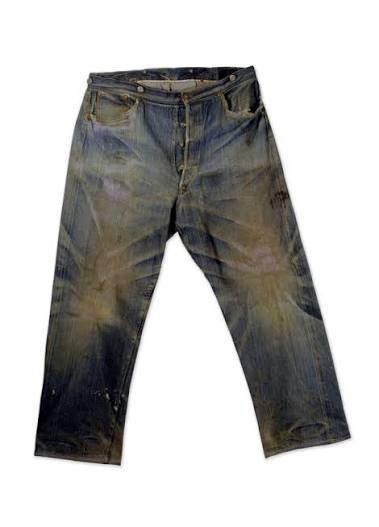
Pair of dungarees used by American sailors in WWII
In the late 1950s jeans were often associated with people who broke the rules of society. Near the beginning of the 1960s lots more people used clothes as more of a self expression; many young people in their 20s wore jeans as a protest against what was okay to wear in society and what wasn’t. Eventually, those groups invented the bell bottom jeans. Bell bottom jeans were a type of jeans that was skinny at the waist but flared out at the bottom, and at the time lots of queer people wore them in protest.
Soon enough, the 1970s came and by that time jeans were seen as more of a regular thing for people to wear, as the popularity had grown so much in the past fifteen to twenty years. The style soon returned to Europe, becoming more and more common across the world. As time went on different groups of people wore different jeans which surged in popularity; communities like hip hop popularized a more baggy fit of jeans, punk and grunge communities made ripped jeans more popular.
This year’s State Fair was the 167th year of the official MN State Fair. It was also the 100th year of the Tilt-a-whirl! We broke another record for attendance on the first day; the record for us to beat next year is 155,185 attendees on the first day. Lots of new foods were brought into the fair’s collection of famous foods to get; some on sticks and some not. The hottest newest foods this year that were getting people to wait in lines for hours were the Pickled Pizza, Bao barbecue, and Hmong corn dogs.
But we also can’t forget the stands with classic fair foods that topped the charts, like Sweet Martha’s Cookies, Fresh French Fry’s and, of course, the Pickle Stand. In the 2026 year of the fair, Sweet Martha’s Cookies raked in 5.24 million dollars, The Fresh French Fry stand made 1.59 million dollars and last but not least, the Pickle Stand made 1.71 million dollars.
Another big hit at the fair every year is all the shows and live music. This year the artists that were playing at the Grand Stand were: Bonnie Raitt, “Weird Al” Yankovic, Jimmy Jam & Terry Lewis, Sierra Ferrell, Tommy James & The Shondells and Herman’s Hermits, Hairball, AJR, Brad Paisley, HARDY, TLC and Salt-N-Pepa with En Vogue, the Amateur Talent Contest Finals, and CeCe Winans. The most attended show was a tie between “Weird Al” Yankovic and the triple threat TLC, Salt-N-Pepa, and En Vogue. They were both sold-out shows, with 14,018 attendees.
Other popular shows at the State Fair this year include Durry, Margo Price, The Sugarhill Gang, Yacht Rock Revue, Nur-D, All-Star Stunt Dogs Splash, and the Timberworks Lumberjack Show. There are more than 100 acts and 900 shows across all the free stages at the fair.
Top attractions to see at the fair include classics like the butter sculptures, crop art, the midway, and all the animals. This year at the fair there was also The American Wheel Honoring America 250. It’s the world’s biggest traveling ferris wheel, standing at 230 feet tall. It has 45 river gondolas, each one themed after a different US president.
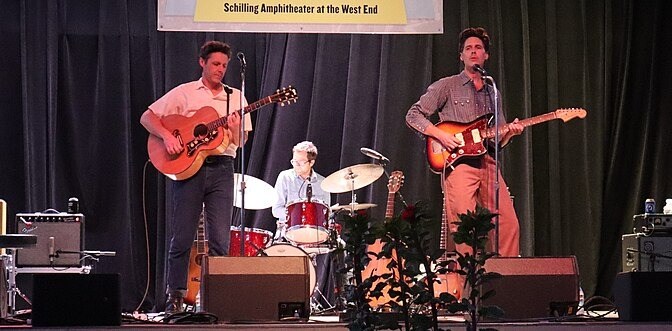
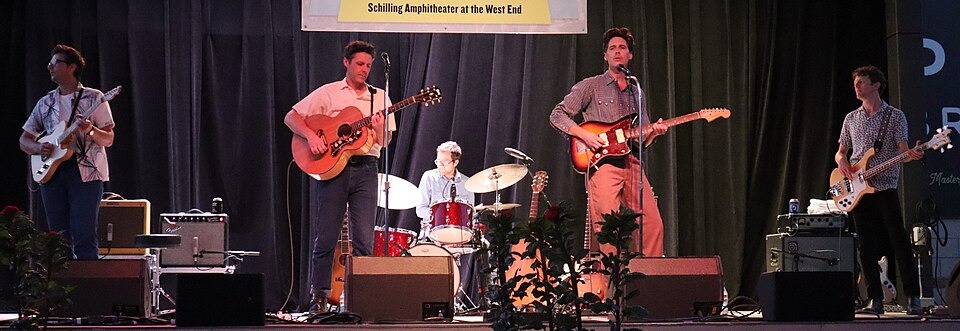
2026 Cactus Blossoms Band Performing at State Fair, by Travellers & Tinkers via Wikimedia Commons
Even though we broke a first day attendance record at the fair this year, it doesn’t mean the rest of the week was bursting full of fair goers. Many attendance trackers for this year said that attendance the rest of the week was significantly lower than the rest of the previous years. About 1.92 million people attended the fair this year, which is slightly fewer than the previous two years. Yes, the overall attendance was low this year, but some certain parts of the fair saw record attendance. The transportation agency of the fair saw record ridership this year due to people getting sick of paying high amounts for parking and also just even trying to find places to park. The buses allow faster and more efficient ways to get to the fair.
Many leaders of the fair staff say that a reason for lower attendance this year is because of the late start of the fair and its overlapping with many school start dates. This year, over half the schools in the Twin Cities started school either before or during the time of the fair, which makes it harder for families and teens to come to the fair on weekdays. But due to this overlapping, it made the weekends busier and full of families with young kids wanting to go to the fair on the few days they could.
Over the course of the ten days at the fair this year, we experienced high temps and high humidity. Even though the fair dates were closer to fall starting, we still had seasonably hot temps. The hottest days were the first Friday to Monday. Those temps reached 90 degrees or slightly above, but also, due to high humidity temps, it made the already hot air feel hotter.
All in all, the 2026 Minnesota State Fair was a hit as always! Hundreds of thousands of visitors walked through the gates every day, and had a blast with both the new and the old state fair staples.
WARNING: This review talks about some major parts of the game’s storyline and characters from the game and has some spoilers.
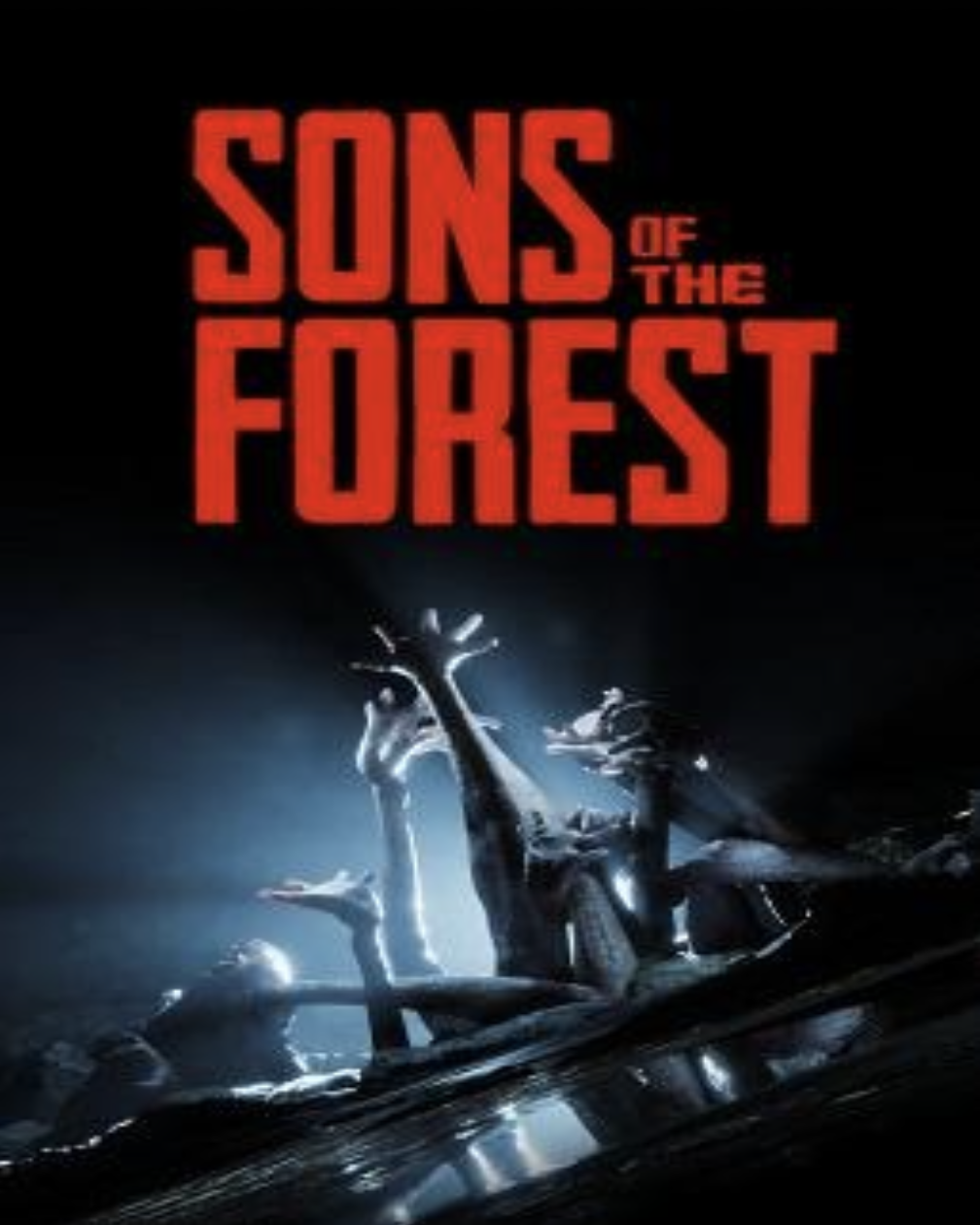
‘Sons of the Forest’ is an amazing horror survival game. The game was made by Endnight Games and first released as early access in February 2023, later releasing fully one year later in February 2024. It’s actually a sequel to an earlier game that’s called ‘The Forest’, but you don’t have to play that to play ‘Sons of the Forest’. ‘Sons of the Forest’ takes everything from ‘The Forest’ and turns it up. The world is way bigger, scarier mobs, higher graphics, and there’s way more things to build. It’s one of those games that grabs you and doesn’t let go because of how thrilling it is.
The story of ‘Sons of the Forest’ puts you in the shoes of a guy named Jack Holt. He’s a journalist and he’s also a personal friend to this wealthy guy named Edward Puffton, who’s the CEO of a company called PuffCorp. Edward, his wife, and daughter go missing on this remote island and Jack joins this team of military contractors that gets sent to that island to go find them. But, things go wrong almost immediately. The helicopter they fly in on gets shot down and you wake up on the island alone, and you’re surrounded by cannibals and mutants. You have to survive and find out what happened on the island. The story has some interesting and creepy lore if you take the time to explore the island and find notes and things that are all over the map.
The two companions you get in this game is what makes me like it. The first one is Kelvin, a soldier from your team who survives the crash but has brain damage and is mute and deaf. He can’t speak or hear you so you have to give him orders on paper and hand it to him. He can gather food, help you build, and just does whatever you tell him to do. The second companion is actually Edward’s daughter, named Virginia, but she’s been mutated by something on the island and has 3 legs and 3 arms. When you first see her in game she runs away, but if you’re patient and don’t try to scare her off, she slowly but surely warms up to you. Eventually she’ll fight by your side with a pistol in one hand and a shotgun in another.
The survival and building aspect in this game is also something I really like. You can build basically anything you want, like small little shelters or big log cabins that have more than one floor. You can collect logs, rocks, sticks, and other types of materials and put things together with a simple and easy building system. It does take time to learn but once you figure it out it gets really satisfying. On top of the building, you also have to keep things like your hunger, thirst, rest, and temperature in check. When it hits winter on the island it’s pretty brutal and if you aren’t prepared then you’ll probably die.
Exploring the caves and bunkers on the island is probably one of the scariest parts of the game. Above ground is actually not that bad and the scenery is pretty beautiful. But the second you are inside either a cave or bunker, everything changes. It gets darker, space gets tighter, and genuinely more terrifying. Some of the mutants that live in these types of places are disgusting and hard to look at, and the lighting makes it so much worse. But the loot you get inside kind of makes up for it. That is if you’re willing to go inside.
Overall, ‘Sons of the Forest’ is a really nice survival/horror game with some deep building mechanics, interesting story, and amazing visuals. Endnight Games really did something with this, right here. It’s one of those games that you still think about even after a while of playing it. I would give ‘Sons of the Forest’ an 8.8/10. It’s exclusively on PC through Steam.
The Official Online Newspaper, Literary Magazine, and Video News of the Highland Park Scots