The fear of falling behind in life

By: Mia Delgado

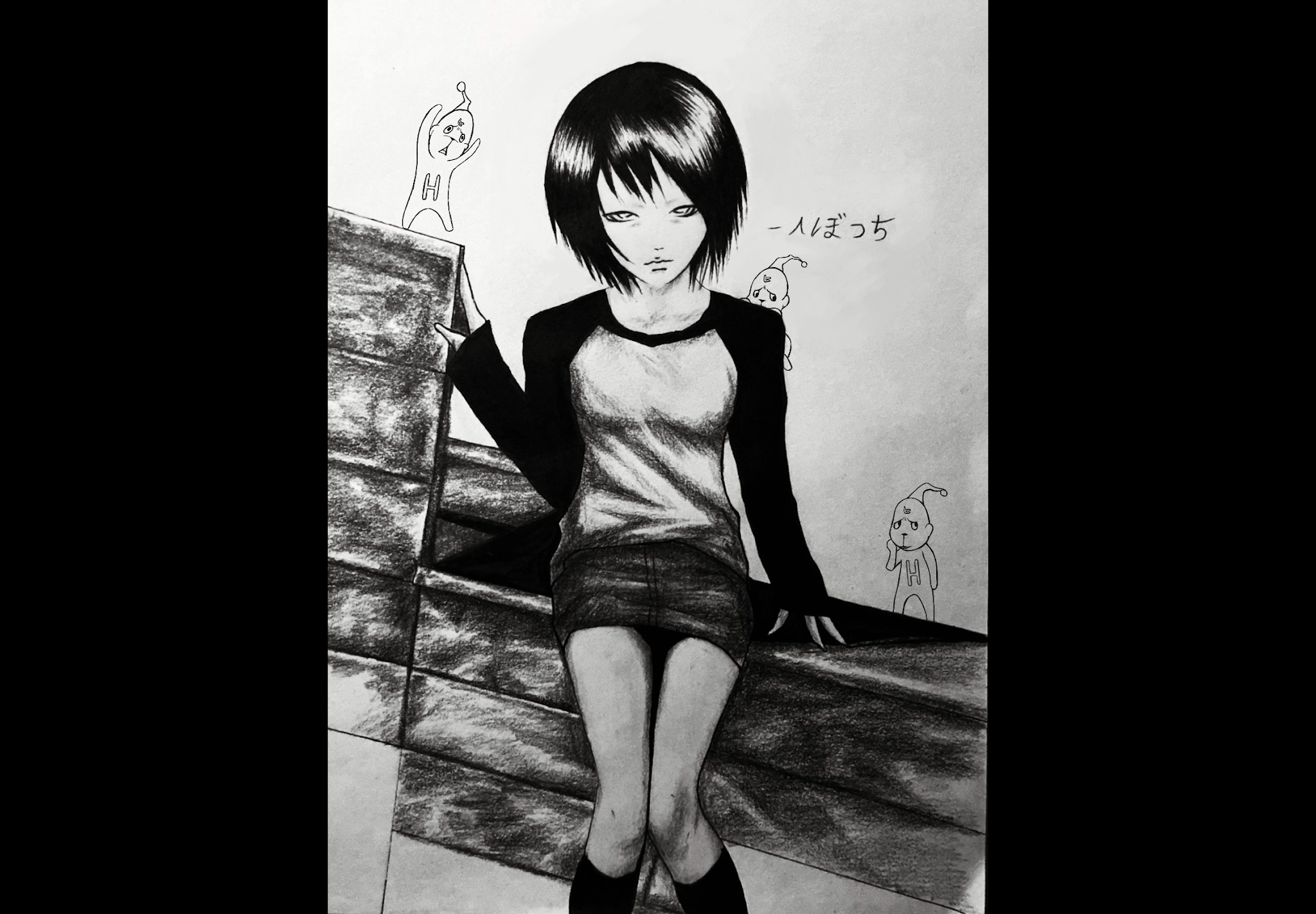
This is a black and white pencil and ink drawing of Misaki Nakahara from the series ‘Welcome to the N.H.K.’ sitting on a stone ledge.

Lately, I’ve been feeling behind in life. I’ve led a lethargic life. I hardly ever go outside, and all I have the energy for is to go to school and go back home.

I go to school, and I go back home.

What concerns me the most is just how fast time passes by once I’ve fallen into this routine. Months go by like nothing. I can’t remember anything I did, and before I know it, another year has passed.

I get hit with this sudden spike of anxiety and urgency because there are things that I actually want to do—and yet, I’ve become so fearful of the unknown, convinced that all I’m heading towards is impending failure, that I don’t even try at all.

This fear of failure stems from academic validation. I have always felt the need to succeed academically in order to determine my own self-worth. And because I’m also a perfectionist when it comes to these kinds of things, I have deliberately created expectations so high for myself that I cannot live up to any of them.

Even hobbies have become performative—I no longer enjoy creating art. And what kind of artist does that make me if I hate drawing?

Being a perfectionist ruins a lot of things because if everything has to be perfect, then you’ll never reach perfection because there is always something to nitpick about yourself.

At the end of the day, the easier path in life is often the wrong one. You may feel a sense of security, but this kind of lifestyle slowly starts to eat away at you.

It’s a terrible feeling to realize that you have failed yourself, and even worse to admit that there’s some sort of comfort in that failure.

You begin to question if you should be following a different path—a more ambitious one—and the answer is almost always “yes”.

But even so, you continue to live in the same way, hoping for change but never actually putting in the effort to change.

But why? Why do we feel this constant need to make up for our shortcomings?

The only reason why we feel behind in life is because social media—and society in general—perpetuate this super fast-paced life.

If once we reach a certain age and we haven’t accomplished a certain thing, we begin to feel shame.

We begin to feel shame for our way of living, knowing that we are not achieving nearly as much as everyone else.

Everyone seems to be so well-adjusted and driven by ambitious goals, which by comparison, makes our own dreams feel insignificant.

We begin to compare ourselves endlessly to people online—measuring our life and  success to people we don’t even know.

We begin to feel insecure if we feel that we don’t have these things. We begin to think, “Oh why can’t I do this? Why can’t I do that? Why is it so easy for people to do these things, these basic everyday things? Why is it so hard?”

The truth is, everyone else is probably just as confused as we are. We can’t really judge them according to our own standards or what is seemingly shown on the outside—maybe they’re also battling their own inner demons, and we just wouldn’t know.

And so we should stop comparing our paths to everyone else’s, because they were never meant to look the same.

There is no straight path to success, and there is not a single way to live.

Even so, we live in a society where following an unconventional path is akin to being unproductive.

And it feels like you’re never doing enough.

Especially when dealing with your own mental health, simply trying your best to stay afloat is heavily frowned upon.

I just hate the fact how people are so reduced to what kind of job they have or how productive they are to society. Because we live in such a capitalistic society, we obviously need money to survive, but when we’re literally being defined by that, they’re no longer seeing us as people but rather machines.

This does nothing but isolate us further from each other.

I believe we do not need to be necessarily productive or have a certain amount of achievements to be worthy as a human being.

You do not need to prove your worth in that way.

True worth is found in accepting that everyone is deeply flawed and equally troubled—and that is comforting. It is comforting to know that despite our differences, we are all fundamentally human.

If anything, it makes you realize your own values and what you actually want to do with your life. I feel that you have to stay true to your values because ultimately, you aren’t guilty for living as you do.

You’d be guilty if you lived the life other people wanted you to live.

And so, as long as I am able to do something that I enjoy, I really don’t care if it isn’t the highest paying job—I just want to be happy and be able to sustain myself.

I want to live a simple life—and I think that is more than enough.

Mining near the BWCA

By: Rowan Guiney

Pose Lake in the Boundary Waters Canoe Area Wilderness. Sunset over Pose Lake, a small lake accessible only by foot. Boundary Waters Canoe Area Wilderness, Minnesota. By: R27182818 at English Wikipedia via Wikimedia Commons

Twin Metals Minnesota LLC was formed in 2010 with the goal of starting a mine in northern Minnesota near the city of Ely. There is one of the largest undeveloped deposits of copper and nickel at that location. The project has been very controversial.

Supporters say a mine would bring important economic growth to the Iron Range. Twin Metal Mines say it would bring hundreds of union jobs and millions of dollars in state tax revenue. Supporters also argue that copper and nickel are used in electric vehicles, renewable energy grids, and everyday electronics, and these mines will strengthen the US supply chain. Supporters also say that the mines would be under strict environmental standards which would protect the environment from the mine.

Opponents include environmental advocates, outdoor businesses, and Ojibwe tribes. They warn that the risks are too high. Since the proposed mine would sit inside the watershed of the Boundary Waters Canoe Area wilderness, critics argue a single spill might forever pollute pristine lakes, and might harm the region’s tourism economy.

Even after a republican controlled congress overturned a 20 year mining ban the project still has an uphill fight to get approved. Tim Walz signed an executive order that stops the project from going forward. Minnesota’s governor elect, Amy Klobuchar, has said mixed things about the project. In 2026, Amy Klobuchar voted against overturning the mining ban, so it looks likely that she will continue governor Walz’s policy. In the 2026 midterms, the DFL took control over both the Minnesota house and senate with significant majorities, so environmentalists have started the push to pass a state law to stop the mines from ever happening.

Who will win Final Life (without knowledge of session 1)?

By: Andrew de Sam Lazaro

You may be wondering, what is Final Life? Final Life is the most recent addition of the ‘Life Series’, Final Life being the 8th main season. In the ‘Life Series’ each player has a set amount of lives and on their last life they become red/hostile. Though we don’t know fully what the gimmick of Final Life is, what we do know is that the infamous boogeyman makes his return.

Now let’s dive into the statistics and see what the chances of each member winning are.

BdoubleO100 (Bdubs)

Bdubs has never won a season of the ‘Life Series’. Bdubs best placement being 3rd Place in the 1st season, 3rd Life. 3rd Life being his only top 5 appearance. He has a total kill count of 13. I expect Bdubs to place somewhere in the middle, and I predict him to finish in 11th place.

Bigbst4tz2 (BigB)

BigB has never won a season, similar to Bdubs, his only top 5 placement also came in the 1st season, 3rd Life where he placed 4th. BigB has a kill count of 7. One thing about BigB though is that he is often the first player with diamond armor which gives him a slight advantage. I expect BigB to finish just below Bdubs in 12th place.

Geminitay (Gem)

Gem has only played in three full seasons, those being season 5 Secret Life, Season 6 Wildlife, and season 7 Past Life. Gem has made 2 top 5s in those seasons, finishing 3rd in both Secret Life and Past Life. She has a total kill count of 27 kills. I believe Gem will finish in the top 5 in Final Life

GoodTimesWithScar (Scar)

Scar was the winner of the 5th season, Secret Life. He has a total of 2 top 5 placements, as he was the runner up in 3rd Life. Although on the surface Scar may seem like a bad pick, as he often loses lives early, we’ve seen him become a much better PvPer in recent seasons, with a total kill count of 56. I predict Scar will be a big factor in helping his teammates and himself reach a high placement. I predict Scar will finish in 6th place this season.

Grian (Grian)

Grian was the winner of the first season of the ‘Life Series’, 3rd Life, and has made a total of 3 top 5 appearances. Grian has a total kill count of 64, and he holds the record high in one season with 22 kills in Past Life. He also has the advantage as the organizer of the series, knowing the gimmick before the other players. I predict Grian will finish in the top 5 in Final Life.

ImpulseSV (Impulse)

Impulse has never won a ‘Life Series’ season, but he seems to always survive for a long time, he has 3 top 5 finishes and a total kill count of 28, with half of them coming in the 4th season, Limited Life. I predict Impulse will finish in 9th place this season and be one of the last players to reach the red name.

InTheLittleWood (Martyn)

Martyn is the official holder of 2 ‘Life Series’ victories in Limited Life (Season 4), and Past Life (Season 7). Martyn is the only player to achieve 2 full series wins. He is an excellent PvPer with a total of 50 kills across all Life seasons. It may seem like he’s a clear candidate for the win, but I believe since he already has 2 wins that he’ll take this season less seriously and finish in 8th place.

MumboJumbo (Mumbo)

Mumbo has participated in 3 seasons, finishing in the bottom 5 in each season he played. Many fans theorize a forgotten series called Second Life happened, where Mumbo dominated and won, after his teammate Hatsune Miku sacrificed herself for him. In Final Life I believe Mumbo will have his best season yet and finish in the top 5 after many disappointing finishes in prior seasons.

Pearlescentmoon (Pearl)

Pearl was the winner of Double Life, and finished in the top 5 in 5 seasons including Double Life. Pearl is skilled in combat and has a total of 24 kills across all main Life series seasons. Although Pearl has been very high placing in the past, in the last few seasons she hasn’t been finishing as high, so I think Pearl will place 7th in Final Life.

Renthedog (Ren)

Ren has never won a season of the Life series but has finished in the top 5 in 2 seasons. Ren has participated in 5 seasons and has a total kill count of 20. I predict Ren will have an underwhelming finish in Final Life, finishing in 13th place out of 15.

Skizzleman (Skizz)

Skizz has never placed in the top 5 in a ‘Life Series’, usually he is one of the first players to lose their final life. Skizz has finished in the bottom 5 in 5 of the 6 seasons he participated in. Skizz has a total kill count of 14. I predict that Skizz, as always, will do pretty poorly in Final Life finishing in 14th place.

Smajor1995 (Scott)

Scott has won 1 main ‘Life Series’, and finished in the top 5 of 5 seasons he participated in. Scott is one of the best PvPers in the ‘Life Series’ with a kill count of 55. I predict Scott will have a very good season finishing in the top 5.

SmallishBeans (Joel)

Joel has won 1 main ‘Life Series’, season 6 Wild Life. He has a total of 3 top 5 finishes and a kill count of 44. In each season of the ‘Life Series’ Joel either does really well or really horrible but in Final Life I think he will finish in the top 5.

SolidarityGaming (Jimmy/Timmy/Tim/Jim)

Jimmy was the first player out in the first 4 seasons of the ‘Life Series’ before finally breaking the curse in Secret Life being the second out. Jimmy more recently in Past Life made his first top 5 appearance finishing in 5th. He has a total kill count of 22 and keeps improving. Although Jimmy was very good last season, I believe he will return to his roots and finish in last place, 15th.

ZombieCleo (Cleo)

Cleo has never won a main ‘Life Series’ but she has finished in the top 5 in 2 seasons of the ‘Life Series’. She has a total kill count of 11 and isn’t usually the most hostile player. Cleo usually has a lot of friends so I predict her to finish in 10th place in Final Life

Alright, I’ve left 5 players in the top five and here’s the order I think they will finish in:

  • -5th Mumbo, he isn’t the best PvPer but I think he will shock a lot of people
  • -4th Scott, pretty normal placement for him, he is a very good PvPer
  • -3rd Joel, he is usually very good on his red life and gets a lot of kills
  • -2nd Grian, although Grian is hungry for a second win he just doesn’t have the skill of who I’ve predicted to win
  • -1st Gem, she is by far the best PvPer in the series and has come very close to winning multiple times

What comes after high school? Exploring your next steps

By: Damon Trent Jr.

As high school students get closer to graduation, one important question begins to come up: What comes next? Whether students plan to attend college, enter the workforce, learn a trade, or take time to explore their interests, there are many paths to consider after high school.

One common option is attending a college or university. College allows students to earn degrees in fields such as business, education, engineering, and healthcare. These degrees can open doors to careers that require specialized education. However, students should research tuition costs, scholarships, financial aid, and admission requirements before making a decision.

Another option is attending a trade or technical school. These programs teach practical skills for careers such as plumbing, electrical work, automotive repair, and welding. Many programs take less time to complete than a traditional four-year degree, allowing students to begin working sooner. Trade careers can also provide opportunities for advancement and entrepreneurship.

For students who want to start earning money right away, entering the workforce is another possibility. Getting a job can help young adults develop communication, teamwork, and time-management skills while gaining valuable experience. Some employers also offer training programs or tuition assistance for employees who want to continue their education.

Other students may choose to take a gap year. During this time, they can work, volunteer, travel, or explore different career interests. A gap year can help students make more informed decisions about their future, especially if they are unsure about their long-term goals. Creating a plan for this time can help them stay focused and productive.

Regardless of the path students choose, preparation is essential. High school students can begin by meeting with school counselors, researching career options, building résumés, and learning basic financial skills. Talking to adults who work in interesting fields can also provide useful advice.

Ultimately, there is no single path to success after high school. Every student has different interests, responsibilities, and goals. The most important step is to explore available opportunities, make informed decisions, and remember that plans can change over time. Graduation is not the end of learning; it is the beginning of a new chapter.

Tips and tricks on outlining your stories

By: Avi Wyler

student writing in notebook during outdoor class
Photo by Thu01b0 Tiu00eau on Pexels.com

Throughout my over seven years of writing stories, I have almost never completed a project. Usually, I find that this is because of my lack of an outline. Without a solid sense of the direction I want my story to go in, I get stuck and often develop really bad writer’s block. This eventually led me to stay away from writing down ideas entirely, because I was so scared that putting them on paper would eventually cause me to abandon them.

Over the summer, I took a story outlining class that really helped me get over this hump. With good outlining, it’s much easier to put your ideas into words and create a well-flowing, thought out story. Not to say that authors that don’t use them don’t make beautiful stories, as well, but if you’ve struggled with writing just like I have, maybe what I talk about in this article will help you like it helped me.

The first thing I want to talk about is a part of outlining discussed in the book ‘Story Genius’ by Lisa Cron. One of the first things you need to do during outlining is write the purpose of your story: your “What if statement?”, why the audience should care and the point of it all. This grounds you in what you’re trying to go for or get across, and gives you a jumping off point for everything else. If my story is trying to make a point about real-world ableism, then I know immediately what kind of story I’m trying to tell. And once you’ve made your what if statement, you have your basic outline.

Next, I want to talk a little bit about character creation (and this part will pull from a bunch of different places). In all stories, you are going to want your character to change, or at least have experiences and a personality that enhances the kind of story you’re trying to tell. Because of this, you’re going to want your characters to have flaws and misconceptions about the world around them. So how do you get those? Well, first off, choose a misconception you know your character has — one that will have a big impact on the rest of the story. Then name it and its meaning; doing so will give you a better idea of how your character will show this belief. Then, you need to figure out what caused said belief to form and what it costs the character. If there is no cost, then there’s no reason for the misconception to change.

I personally never use character traits to identify my characters — instead, I give them values or beliefs and figure out how the character expresses them. For example, I might give a character the value of honesty instead of just branding them as honest — this gives me a jumping off point for other character traits or future decisions. Moreover, a character that values honesty need not be honest, either; they could value honesty in others but not themselves, or value honesty in very specific areas. Working with values first gives you a better understanding of your character‘s why, and often allows for more interesting character development.

Finally, I want to talk about scenes and non-linear writing. The basic idea behind the concept is this: stories are made up of a bunch of scenes that are put together to create a whole. Thus, it’s not important to write your story linearly — all you need to do is create your scenes and find ways to put them together, linearly or not. This concept really opened my eyes; if you use this method of story creation, it’s often a lot easier to deal with being stuck — if you don’t know how to continue a scene, you can just move on to a different one. If you don’t like how your story is flowing, you can go back and add or subtract scenes to make it sound better. During the outlining process, I like to make a list of all the scenes that I want to have on different flashcards. Then, I try different combinations and placements of scenes until I find exactly what I want.

I hope that these few tips help you as much as they’ve helped me. And if you are ever feeling stuck on a story, remember that there are resources out there to help you, from books to articles to the other storytellers in your life. Don’t be scared to look for them.

What are the 5 love languages and what do they mean?

By: Collette Uran and Josephine Feliciano

“What are the 5 love languages?” you might ask, well they are quality time, physical touch, words of affirmation, acts of service, and receiving gifts. The five love languages are five distinct categories that are a concept to express and receive love through. Many different personalities of people find a place in these categories that fit their way of receiving love but some other people have a hard time identifying what category they belong too. There are many tests you can take that have questions to help identify what category you fit into, and many of these tests give what percent you are for each of these categories after going through the questions.

You might be wondering, “Why do people want to know what love language category they are in?” Well, for some people, it’s important for themselves to know because it creates a better understanding of how you receive affection and also how you give it. People that know and understand their love language type are able to communicate better in relationships and boost their connection with one another.

The sun that will glow our day more awesome, that can also give bright on our life, Without him, everything will be Dark, a small love to our beloved Sun.
A small love to our beloved Sun. By: Akash Debnath via Wikimedia Commons

The top most scored love language type is quality time. If you are in this category then you feel most loved and valued when you are spending undivided, focused time with people. Being in the same room isn’t enough, you need to be spending time without distractions with the person. This can show up through times where you just sit and talk with each other or planning a special activity with one another

The love language physical touch is the second most scored love language out of the 5. Physical touch relies on physical affection like hugs, holding hands, and back rubs. If you’re in this category of physical touch you rely more on the safety of being held close or the closeness of holding hands. You feel most comfortable and connected through physical affection rather than just words or gifts. Safe physical touch releases a hormone that lowers stress and boosts the immune system so your emotions are more regulated.

Another love language is words of affirmation. Words of affirmation is the 3rd most scored love language out of the 5. If you’re in this category then it means you feel most loved and connected through verbal or written expressions of affection, praise, and appreciation. You are more sensitive to harsh words and compliments. You most likely value deeper conversations with other people and thrive on short meaningful compliments like “I’m so proud of you.”

The love language acts of service means you either receive or show love through practical things, like doing chores, finishing a project, or taking care of planning. A key thing to this love language is your anticipating their needs and doing it out of love, not just taking care of your chores because that’s your responsibility. It can be big acts, like a house project or planning a trip, or nice small gestures like making dinner or making their favorite coffee.

The least scored love language out of the five is receiving gifts. People in this category feel most loved when given gifts, small presents or trinkets. The thought that someone was thinking about them with a present, warms their heart and makes them feel loved even more. For most people the cost or money value of the gift does not matter, a small hand made gift or snack can have the same emotional value as an expensive item. To someone in this category a gift says, “I was thinking about you when I saw this,” or “I remembered you like this.”

Each of these 5 love languages are equally important and reflective of different personalities. Knowing your love language is important and personal, but if you’re still having a hard time figuring out what your love language is then that’s ok! It’s also important to know that your love language can change and differ between relationships.

Hope this helped you learn a little more about the 5 love languages and maybe help you figure out your own!

Pumpkin pie recipe and review

By: Nils Hilleson

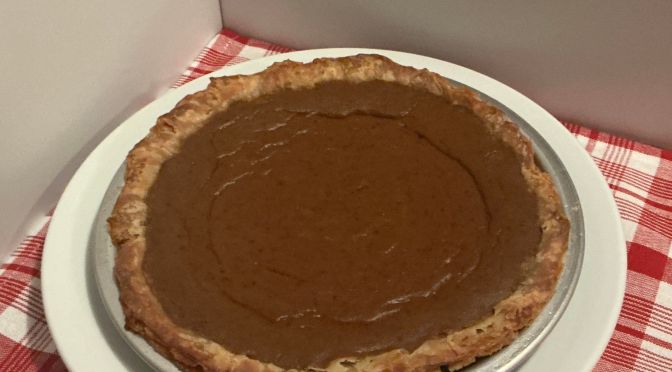
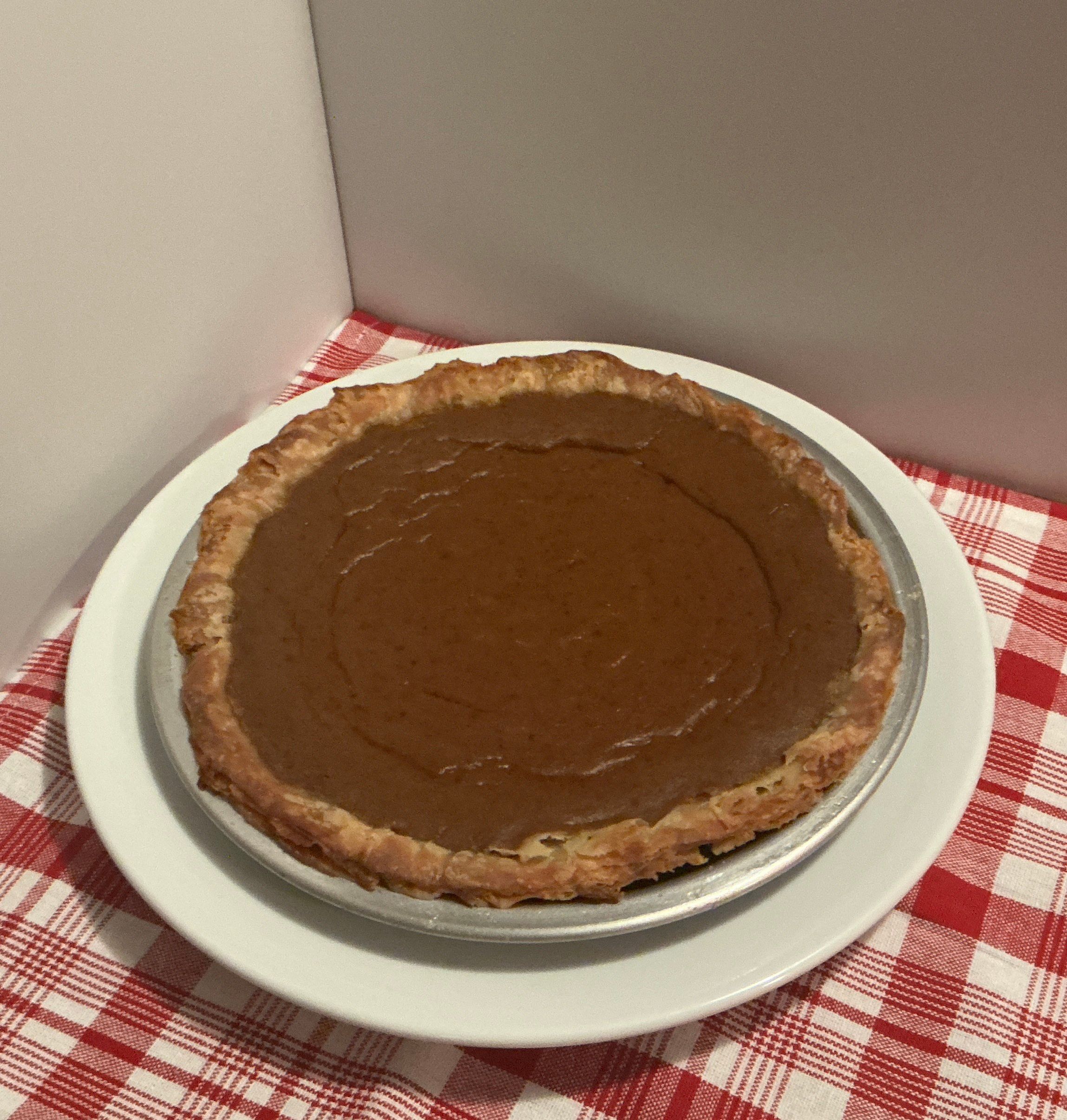
full pumpkin pie on a white plate on a table with a red and white checkered tablecloth

This recipe will make a 9-inch pie

Ingredients:

Crust ingredients:

  • -1 1/4 cups all purpose flour (150 grams)
  • -1/4 teaspoon fine sea salt
  • -10 tablespoons unsalted butter, cold and cut into cubes
  • -2 to 4 tablespoons ice water, as needed

Pie ingredients:

  • -2 cups pumpkin purée
  • -3 eggs
  • -2 tablespoons granulated sugar
  • -2 tablespoons brown sugar
  • -2 tablespoons molasses
  • -1 1/2 cups evaporated milk or heavy cream
  • -1/2 teaspoon ground cloves
  • -2 teaspoons cinnamon
  • -1/2 teaspoon salt

Steps:

Add flour, salt and butter into a bowl and mix by hand, squishing the butter and mixing it together. Add ice water, a tablespoon at a time, until the dough just comes together (You can review a video online to see how the mixing is done).

Place the dough onto a lightly floured surface and gather it into a ball, then flatten into a disk. Wrap it in plastic wrap and refrigerate for 1 hour- up to 2 days.

Roll dough big enough so that it slightly hangs off the edge of the pie pan and place it into the pie pan. Blind bake for 10-15 minutes.

Whisk all the pie ingredients in a bowl and fill the crust.

Bake the pie for 10 minutes at 450 degrees then about 35 minutes at 350 degrees or until set.

Let cool for about 20 to 30 minutes.

When I cooked this the crust came out very hard and chewy. I did cook it longer than it said because I was concerned that the pie wasn’t fully cooked but I fear I might’ve over cooked it. It could’ve also been that the dough hadn’t been mixed properly and I don’t know if either of those are actually what the issue was.

I still quite like the pie as it still tastes good but the crust is definitely a bit disappointing. If I cook this again someday I’ll have to be more cautious with it.

This was a fairly simple recipe but it made a lot of dishes and was a bit annoying to clean up. Overall, it tastes good, just a tad annoying.

The recipe for the crust and the pie are separate:

History of Ogaden War

By: Rowan Guiney

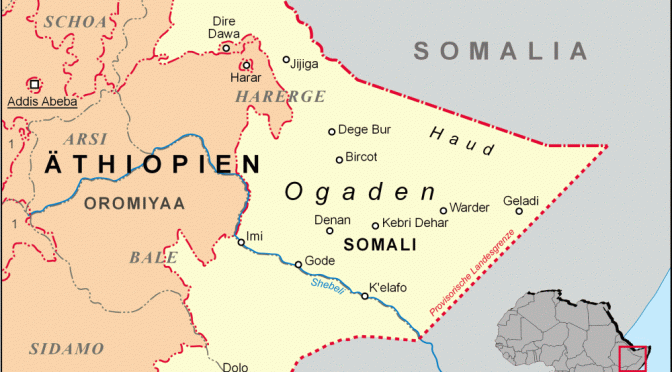
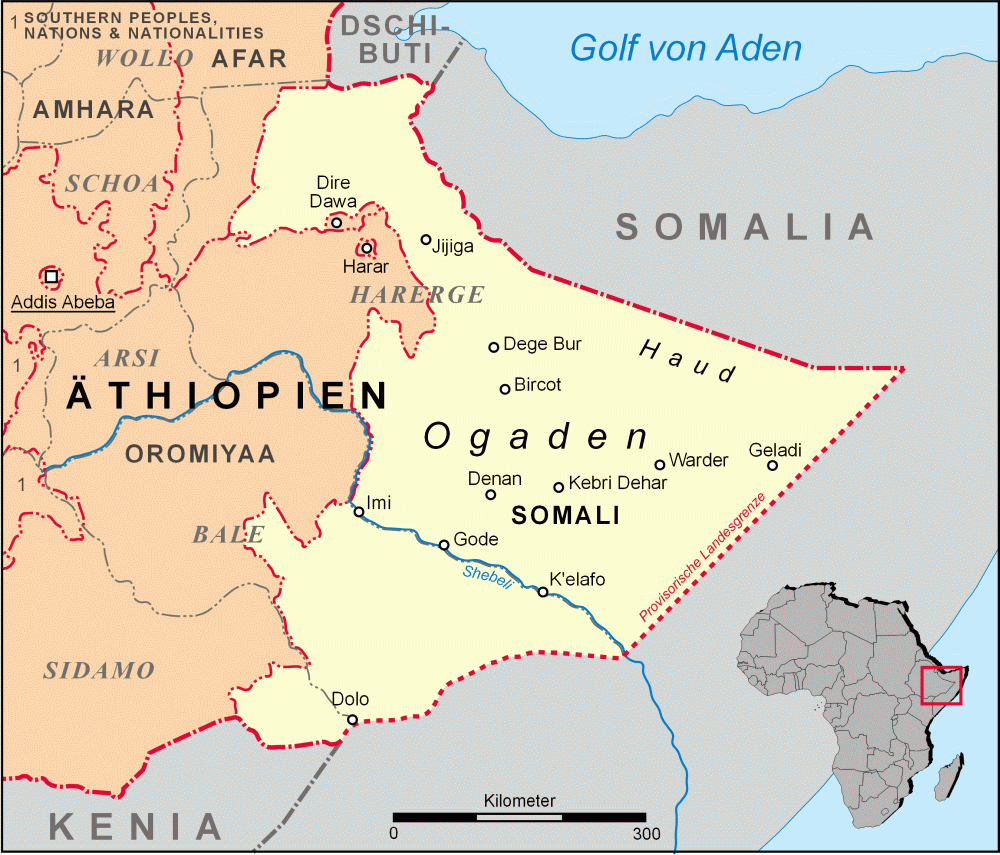
Map of Ethiopia with the Somali region, Ogaden and the Haud – the Provinces prior to 1995 in grey, the contemporary regions in red. By Lencer via Wikimedia Commons

Ogaden

Ethiopia invaded Ogaden in the 1890s and took control but did not have real power in the region. Ethiopia’s empire was invaded in 1935 by Italy and occupied until 1941. In 1948 Britain handed Ogaden to the Ethiopian Empire. Ogaden’s leaders asked for self determination but were denied.

Somalia

Somalia gained independence in 1960, merging British Somaliland and Italian Somaliland. Somalia was democratic until a military coup in 1969 by Siad Barre. Barre led a brutal resume and imposed a scientific socialism model and believed in a greater Somalia.

Somalia had always had ambition to unite the 5 Somali tribes which includes the Ogaden region in Ethiopia, parts of Kenya and Djibouti into one county.

Ethiopia

Ethiopa had been ruled by the Ethiopian Empire until 1974 when Haile Selassie was toppled by a revolution. After the revolution the Derg government took control of Ethiopia.

Ogaden

In 1963 the Ethiopian Empire attempted to collect taxes in Ogaden, and the attempt was met with the first rebellion in Ogaden against Ethiopia, known to Ethiopians as Nasrallah. The “liberation government” was the name for the insurgency; the 300 fighters became thousands.

The insurgents had success until Ethiopia did an anti-insurgency where the unexperienced insurgents stood as little resistance for the Ethiopian army. Ethiopia responded to the rebellion with harsh crackdowns against Somalis, including killing the livestock, firing on watering holes, and forcing Somalis into Somalia as refuges.

A small war between Ethiopia and Somalia started in 1963. The war ended in a stalemate. After the war Nasrallah fell apart

The Western Somali liberation front (WSLF) was formed in 1969 and had many fighters who were a part of Nasrallah. After the Ethiopian Empire fell, there was chaos in Ethiopia with a revolt in Eritrea. Ethiopia was distracted. The WSLF, who had had started activity in the south, saw an opportunity to have a better chance at wining, so they started a full on rebellion. The WSLF had success from 1974-1977 and they were able to push the Derg government into garrison towns.

Pre-war

The Soviet Block including the USSR, Cuba and Yemen, wanted peace and brought both sides to the negotiation table with Fidel Castro. There was no middle ground both sides were willing to agree to.

War

In July, 1977, Somalia launched a full invasion into Ethiopia. Somalia enjoyed early success, taking strategy points like Gode, a key crossing on the Shebelle River, in August, 1977. Somalia took Jijiga, a key city and trading hub in September of 1977. Somalia was able to take 90% of Ogaden

Somalia also attempted to take Dire Dawa but failed. If Somalia had been able to take the city, it would have cut Ethiopia’s supply corridor to the capital Addis Ababa.

After Somalia lost support from the Soviet Block they asked China and the USA for support. USA refused under Jimmy Carter. China sent token aid, but it was nothing that would affect the result of the war.

Ethiopia and Cuba did a counter offensive; Cuban troops where used to do the initial attacks because Soviet generals didn’t trust the Ethiopian troops to succeed. The counter offensive started in January, 1978, by March of 1978, Ethiopia had retaken almost all of the region.

Post war

The war was a strategic failure for Somalia; the loss meant that the dream of a greater Somalia was dead. The Somalian army was demoralized, losing thousands of troops.

The WSLF lost the ability to fight Ethiopia, and its bases were destroyed. Many Somalis who lived in Ogaden were forced out.

For Ethiopia, the victory meant that the Derg government had more legitimacy in Ethiopia, and the war showed how much the Soviet Block would help their allies.

For more information, please visit:

Blue tsunami: Midterm election results

By: Louise Wallraff

Photo by Edmond Dantu00e8s on Pexels.com

Last Tuesday night was an unprecedented win for democrats, with both the Senate and House of Representatives comfortably winning the majority. Even long-time republican strongholds like Kansas, South Carolina, and Texas “turned blue”.

In a time of hyper partisanship, Americans came together to vote against an administration driving up the cost of living, funding an unwanted war, and supporting reckless ICE agents. Although President Trump wasn’t on the ballot, this is a direct rebuke against what his administration has, and hasn’t done, in the past two years.

As of now, the senate is secured 54-44, with democrats winning in many states President Trump won by double digits in 2024. The Mississippi and Alaska senate races still remain too close to call. Wins in states like Kansas where a democrat hasn’t been elected in 94 years, or in Texas where James Talarico won despite Elon Musk spending half a billion speak loud. 

The house is currently 254-165, a majority not seen since the Obama era in 2008, with 16 undecided races. Democrats improved their performance in 99% of the roughly 2,100 counties nationwide compared to 2024, especially in counties with Hispanic voters, as well as young voters. Angie Nixon, a democratic socialist running in Florida with minimal support from her party only lost by two points.

There are many other notable achievements. Georgia elected the United States’s first black woman as Governor, Keisha Lance Bottoms. Michigan elected the first Muslim U.S. Senator, Dr. Abdul El-Sayed. Minnesota elected the first Native American Female Senator, Peggy Flanagan. New Mexico elected the first Native American Female Governor, Deb Haaland. New Hampshire elected the first openly gay male Senator, Chris Papaas. Lastly, there was a record number of women running for congress.

What’s next? Right after democrats started their sweep, news anchors were already discussing the 2028 presidential election and what this means for both parties. This is mainly speculation, as no noteworthy presidential campaigns have been announced.

As for what our nation’s Senators and Representatives plan on doing when they get sworn into office in January, there remains some conflict. While more moderate democrats are arguing for bipartisanship and working with the Trump regime, progressives and anti-establishment democrats support immediately investigating the current administration and passing the policies American voters are asking for.

There is a last minute attempt to elect Chris Van Hollen over Chuck Schumer for Senate Majority leader, as some senators argue Chuck Schumer is far too aligned with the status-quo. Hakeem Jefferies is on track to be the first Black House majority leader, although he is being criticized for the same reasons.

Overall, the record 124 million voters shows that right now people have hope for better futures and want to make their voices heard, we can only hope democrats are able to deliver their promises when they step into office in January.

The problem with modern anime

By: Mia Delgado

This is an image featuring a black and white illustration inspired by Naoki Urasawa’s official promotional artwork for ‘Monster’, featuring the main protagonist, Dr. Kenzo Tenma.

Recently, I have noticed a recurring problem within modern anime. And the thing isn’t just with dialogue, it’s a mix of bad storytelling, a loss of creative passion, and corporate greed that overall, makes the medium unwatchable.

The main issue with dialogue is a direct result of bad storytelling, and is particularly found within modern manga adaptations. Studios and directors have trouble depicting a story without the addition of unnecessary dialogue. For some reason, they believe that the audience would not pay attention to the plot and/or understand without the addition of this dialogue.

The thing is, the dialogue we do get isn’t even good, it is often redundant and takes away more than it adds to the story.

But of course, the amount of dialogue heavily depends on the demographics of the audience. Seinen anime, for example, because it targets a more mature audience, generally avoids this kind of bad dialogue, whereas Shonen and Shojo suffer more from this problem particularly because they are targeted towards a younger audience.

Even then, I still don’t get why they do this. It is as if they believe we are unable to piece together simple plot points and require everything to be spelled out for us. This goes to show just how much our attention spans have shortened over time.

This problem doesn’t only apply to anime, but to entertainment as a whole. If you were to look back to the 2000s and before, you’d find that a lot of anime and entertainment handled pacing differently. Series were much slower, quieter, and a lot more comfortable in telling stories without the addition of unnecessary dialogue.

You could say that they were much more mature, ambitious, and highly experimental compared to newer media.

For example, there is a distinct atmosphere and melancholy that defines shows like ‘Texhnolyze’ (2003) and ‘Monster’ (2004). ‘Texhnolyze’ stands out specifically because of its unapologetic approach; the series relies more on visual storytelling rather than exposition. The first episode features nearly eleven minutes of complete silence before a single word is spoken.

Even though there are long stretches of time that go without dialogue and character motives aren’t always clear, I would still consider ‘Texhnolyze’ to be one of my favorite anime series of all time. That is because instead of spoon-feeding us the plot, it uses color palettes, gritty art design, and ambient soundscapes to establish a mood.

‘Texhnolyze’ was more of an experience rather than a story.

And I think that is something many modern anime fail to do. They try so hard to tell a story rather than letting the viewer experience it. They dismiss the fundamental element of mature storytelling, that being “show don’t tell”.

This results in modern anime often feeling too forced—almost soulless. By relying too heavily on overused tropes, characters feel predictable and boring. I believe this points to a deeper issue within the writing process: many creators seem unable to write complex, multidimensional characters, often leaving them flat and without purpose.

You could say that studios have gotten noticeably “lazier” to create better adaptations. Even with access to better technology, they fail to capture the authenticity of the original work by making unnecessary plot changes simply to save themselves the effort of animation.

A prominent example of this corporate corner-cutting is Studio Pierrot’s 2014 adaptation of ‘Tokyo Ghoul’. The studio essentially stripped away the manga’s essence and psychological depth by cutting major world-building, character developments, and completely deviating from the original storyline.

As a result, the adaptation became a massive disappointment, with fans labeling it the “most disappointing and botched manga adaptation in modern anime history” and as a total disservice to Sui Ishida’s original masterpiece.

One of the most recent cases of this is the 2025 adaptation of ‘Wadance’. Since the production relied heavily on motion-captured 3D graphics, it left the animation feeling rigid, lifeless, and completely devoid of the raw energy found in the original manga. The execution was so poor that the creator himself began to experiment with hand-drawn animation to prove just how much more could have been achieved.

With all of this in mind, it really feels like studios and editors are more focused on creating for an audience rather than creating for the art itself. They are so driven by a fear of how the media will be interpreted that they turn to homogenizing everything, which ultimately results in incredibly bland and standardized animation.

That is not to say that these problems arise out of nowhere; it is obvious that animators work under grueling conditions, strict deadlines, and face low wages. But my point is that it’s quite devastating seeing such an unique art form slowly fade away. Much like the rest of the entertainment industry, anime is losing its distinct visual identity to mass-produced uniformity, trading off genuine passion for commercial profit.