
Tag Archives: anime

The problem with modern anime

By: Mia Delgado

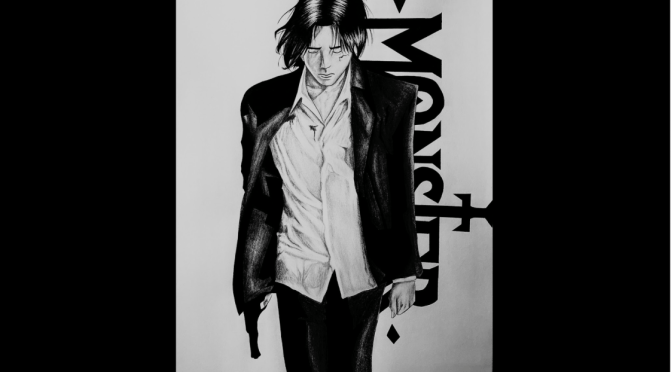
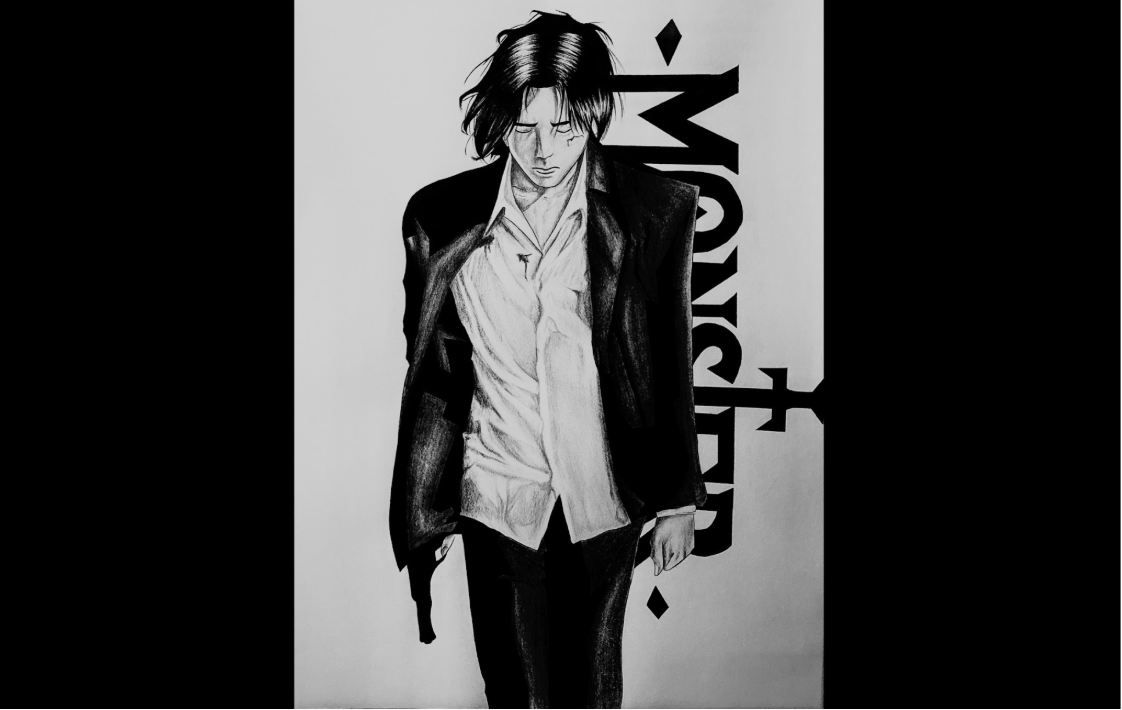
This is an image featuring a black and white illustration inspired by Naoki Urasawa’s official promotional artwork for ‘Monster’, featuring the main protagonist, Dr. Kenzo Tenma.

Recently, I have noticed a recurring problem within modern anime. And the thing isn’t just with dialogue, it’s a mix of bad storytelling, a loss of creative passion, and corporate greed that overall, makes the medium unwatchable.

The main issue with dialogue is a direct result of bad storytelling, and is particularly found within modern manga adaptations. Studios and directors have trouble depicting a story without the addition of unnecessary dialogue. For some reason, they believe that the audience would not pay attention to the plot and/or understand without the addition of this dialogue.

The thing is, the dialogue we do get isn’t even good, it is often redundant and takes away more than it adds to the story.

But of course, the amount of dialogue heavily depends on the demographics of the audience. Seinen anime, for example, because it targets a more mature audience, generally avoids this kind of bad dialogue, whereas Shonen and Shojo suffer more from this problem particularly because they are targeted towards a younger audience.

Even then, I still don’t get why they do this. It is as if they believe we are unable to piece together simple plot points and require everything to be spelled out for us. This goes to show just how much our attention spans have shortened over time.

This problem doesn’t only apply to anime, but to entertainment as a whole. If you were to look back to the 2000s and before, you’d find that a lot of anime and entertainment handled pacing differently. Series were much slower, quieter, and a lot more comfortable in telling stories without the addition of unnecessary dialogue.

You could say that they were much more mature, ambitious, and highly experimental compared to newer media.

For example, there is a distinct atmosphere and melancholy that defines shows like ‘Texhnolyze’ (2003) and ‘Monster’ (2004). ‘Texhnolyze’ stands out specifically because of its unapologetic approach; the series relies more on visual storytelling rather than exposition. The first episode features nearly eleven minutes of complete silence before a single word is spoken.

Even though there are long stretches of time that go without dialogue and character motives aren’t always clear, I would still consider ‘Texhnolyze’ to be one of my favorite anime series of all time. That is because instead of spoon-feeding us the plot, it uses color palettes, gritty art design, and ambient soundscapes to establish a mood.

‘Texhnolyze’ was more of an experience rather than a story.

And I think that is something many modern anime fail to do. They try so hard to tell a story rather than letting the viewer experience it. They dismiss the fundamental element of mature storytelling, that being “show don’t tell”.

This results in modern anime often feeling too forced—almost soulless. By relying too heavily on overused tropes, characters feel predictable and boring. I believe this points to a deeper issue within the writing process: many creators seem unable to write complex, multidimensional characters, often leaving them flat and without purpose.

You could say that studios have gotten noticeably “lazier” to create better adaptations. Even with access to better technology, they fail to capture the authenticity of the original work by making unnecessary plot changes simply to save themselves the effort of animation.

A prominent example of this corporate corner-cutting is Studio Pierrot’s 2014 adaptation of ‘Tokyo Ghoul’. The studio essentially stripped away the manga’s essence and psychological depth by cutting major world-building, character developments, and completely deviating from the original storyline.

As a result, the adaptation became a massive disappointment, with fans labeling it the “most disappointing and botched manga adaptation in modern anime history” and as a total disservice to Sui Ishida’s original masterpiece.

One of the most recent cases of this is the 2025 adaptation of ‘Wadance’. Since the production relied heavily on motion-captured 3D graphics, it left the animation feeling rigid, lifeless, and completely devoid of the raw energy found in the original manga. The execution was so poor that the creator himself began to experiment with hand-drawn animation to prove just how much more could have been achieved.

With all of this in mind, it really feels like studios and editors are more focused on creating for an audience rather than creating for the art itself. They are so driven by a fear of how the media will be interpreted that they turn to homogenizing everything, which ultimately results in incredibly bland and standardized animation.

That is not to say that these problems arise out of nowhere; it is obvious that animators work under grueling conditions, strict deadlines, and face low wages. But my point is that it’s quite devastating seeing such an unique art form slowly fade away. Much like the rest of the entertainment industry, anime is losing its distinct visual identity to mass-produced uniformity, trading off genuine passion for commercial profit.

Why is ‘JJK’ anime trending

By: Ro’Mel Bryant-Oliveraz

‘Jujitsu Kaisen’ is a popular anime that has been trending for a long time, recently at a peak with season 3 releasing, building up to an arc of the story that was arguably the best of the manga.

The base power is Cursed Energy which comes from negative emotions of people, and when high in an area it manifests as Curses, which are entities that threaten society. This is the very base of what ‘JJK’ is about. There are Sorcerers, who are trained humans that harness, control, and manipulate the same energy curses are made of, Cursed Energy, to battle them.

Though, it’s not that simple.

My favorite part is how complicated harnessing and controlling cursed energy as a human gets. All humans have innate techniques which is a unique ability engraved into someone’s brain at birth. It’s a way your brain automatically manipulates cursed energy to use it. There are infinite and endless ways, ranging from straightforward and weak, to straightforward and strong, to very very complicated, to anything in between.

A straightforward but extremely strong one is Satoru Gojo’s Limitless. It lets him manipulate space, that is the default way his brain manipulates CE. Straightforward. But he combines it with an ability to have molecular perception and precision of Cursed energy he was born with called the Six Eyes, allowing him to manipulate space not just basically in ways like having a permanent invisible force field to make him untouchable, but also launching an orb of space that pulls things together forcefully called Blue, and even reversing it to make an orb of space that violently repels things called Red. He even figured out how to combine Red and Blue making Purple, which is an imaginary mass that erases anything fundamentally from space.

Another innate technique is Suguru Getos. Instead of manipulating space his is Cursed spirit Manipulation. A type of technique that can allow you to manipulate cures. Specifically, his technique lets him absorb a curse that he defeated in battle by swallowing them. Once he swallows them and absorbs them he can store them in his body and summon them and use their abilities at will. This is very very powerful, turning the enemies into his own, completely under his control. The only downside is that he needs to first beat the curse in battle himself, then absorb them by swallowing them. He describes the process of absorbing a curse to be very very excruciatingly disgusting and painful psychologically. This eventually led him to a very bad depression until he turned evil. Even though he was one of the strongest and most loyal, his own ability on top of the harshness of life destroyed his mental health completely.

I could talk about the many many characters and their techniques also, everyone’s techniques are just as complicated as each others in completely different ways.

The true beauty of ‘JJk’ to me is the amount of characters and how central everyone is. There is no true main character because the story is about everyone and everything. One extra person being there, no matter how weak, would change the entire outcome. It bounces between eras, showing the current modern era like Yuji, Nobara, and Megumi handling school life chaos in Tokyo, then showing thousand long year plans in the making from ancient sorcerer myths like Sukuna, and Kenjaku. No one steals the spotlight permanently, every character development is through other characters.

‘JJK’ doesn’t hold back with the characters you’ve known from the start from dying. Characters turn evil, get cheated by the system, hated by their families for being different, and even complete noobs to Jujitsu but got pulled in and now have to compete with the best.

The diversity, with humor, tragedy, philosophy, character psychology, unpredictability, and complex themes and power system is why this anime is trending so much.

You can watch ‘JJK’ on Netflix and Crunchyroll

‘NAUSICAÄ OF THE VALLEY OF THE WIND’: REVIEW

By: Charlotte Bistodeau

‘Nausicaä of the Valley of the Wind’ was released in 1984 and was Hayao Miyazaki’s first ever film he did. It’s also the first ever film I watched by Miyazaki followed up by ‘Howl’s Moving Castle’ and the like.

‘Nausicaä of the Valley of the Wind’ is a post-apocalyptic fantasy based in a world covered in plants that make up the Toxic Jungle. Nausicaä is a princess who loves her people of the Valley of the Wind and would do anything to protect them. But she also loves the insects of the Toxic Jungle and knows that harming them would only hurt her people.

‘Nausicaä of the Valley of the Wind’ has got to be my favorite movie and I must have watched it over twenty times. From the writing to the screenplay, I love it all. The story is about a girl, Nausicaä, who is taken as captive and ends up in the middle of a feud between two other empires, Tolmekia and Pejite. In the end, she ends up getting back to the Valley of the Wind and stopping the Ohmu, an insect from the Toxic Jungle, stampeding across the land destroying everything in their path. I love Nausicaä’s character and what she believes. She is strong and caring and she would do anything to protect her people, even if it meant dying.

I also think that my favorite sound track from any of Miyazaki’s films has to be from this movie. All the songs convey different feelings that you can really feel.

I also have to talk about the voice acting. I have watched it in the original Japanese and the English version and I have to say, surprisingly, the English version is better. Nausicaä’s voice in the Japanese version is extremely small and baby like, which doesn’t suit her at all, while in the English version she sounds like an 18-year-old girl, which she is. The audio quality is also way better and also the subtitles on the Japanese version are really bad. For example, there is little emotion and some of the sentences don’t make any sense whatsoever. It’s one of the only films where I like the English dub better.

Overall, I rate this movie a 10/10 but I might be a little biased. The only real complaint would be that they did skip over some parts in the book, which Miyazaki wrote. But it doesn’t take anything from the movie, probably because Miyazaki was the author of the book and one of the directors of the movie.

You can find the movie on Max, Amazon Prime, Hulu, YouTube TV, and Google Play Movie. You can also purchase the Blu Ray/DVD set for 15 dollars at Target. In any case, I would recommend the movie to anyone, young or old.