
By: Rowan Guiney
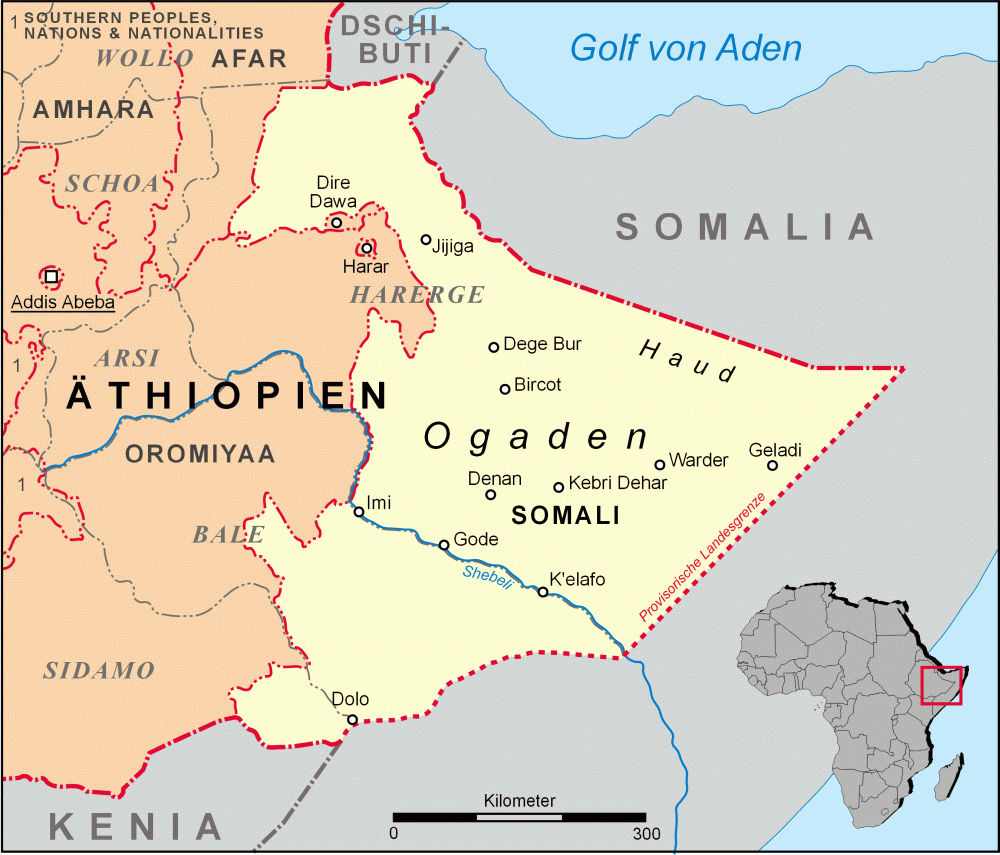
Ogaden
Ethiopia invaded Ogaden in the 1890s and took control but did not have real power in the region. Ethiopia’s empire was invaded in 1935 by Italy and occupied until 1941. In 1948 Britain handed Ogaden to the Ethiopian Empire. Ogaden’s leaders asked for self determination but were denied.
Somalia
Somalia gained independence in 1960, merging British Somaliland and Italian Somaliland. Somalia was democratic until a military coup in 1969 by Siad Barre. Barre led a brutal resume and imposed a scientific socialism model and believed in a greater Somalia.
Somalia had always had ambition to unite the 5 Somali tribes which includes the Ogaden region in Ethiopia, parts of Kenya and Djibouti into one county.
Ethiopia
Ethiopa had been ruled by the Ethiopian Empire until 1974 when Haile Selassie was toppled by a revolution. After the revolution the Derg government took control of Ethiopia.
Ogaden
In 1963 the Ethiopian Empire attempted to collect taxes in Ogaden, and the attempt was met with the first rebellion in Ogaden against Ethiopia, known to Ethiopians as Nasrallah. The “liberation government” was the name for the insurgency; the 300 fighters became thousands.
The insurgents had success until Ethiopia did an anti-insurgency where the unexperienced insurgents stood as little resistance for the Ethiopian army. Ethiopia responded to the rebellion with harsh crackdowns against Somalis, including killing the livestock, firing on watering holes, and forcing Somalis into Somalia as refuges.
A small war between Ethiopia and Somalia started in 1963. The war ended in a stalemate. After the war Nasrallah fell apart
The Western Somali liberation front (WSLF) was formed in 1969 and had many fighters who were a part of Nasrallah. After the Ethiopian Empire fell, there was chaos in Ethiopia with a revolt in Eritrea. Ethiopia was distracted. The WSLF, who had had started activity in the south, saw an opportunity to have a better chance at wining, so they started a full on rebellion. The WSLF had success from 1974-1977 and they were able to push the Derg government into garrison towns.
Pre-war
The Soviet Block including the USSR, Cuba and Yemen, wanted peace and brought both sides to the negotiation table with Fidel Castro. There was no middle ground both sides were willing to agree to.
War
In July, 1977, Somalia launched a full invasion into Ethiopia. Somalia enjoyed early success, taking strategy points like Gode, a key crossing on the Shebelle River, in August, 1977. Somalia took Jijiga, a key city and trading hub in September of 1977. Somalia was able to take 90% of Ogaden
Somalia also attempted to take Dire Dawa but failed. If Somalia had been able to take the city, it would have cut Ethiopia’s supply corridor to the capital Addis Ababa.
After Somalia lost support from the Soviet Block they asked China and the USA for support. USA refused under Jimmy Carter. China sent token aid, but it was nothing that would affect the result of the war.
Ethiopia and Cuba did a counter offensive; Cuban troops where used to do the initial attacks because Soviet generals didn’t trust the Ethiopian troops to succeed. The counter offensive started in January, 1978, by March of 1978, Ethiopia had retaken almost all of the region.
Post war
The war was a strategic failure for Somalia; the loss meant that the dream of a greater Somalia was dead. The Somalian army was demoralized, losing thousands of troops.
The WSLF lost the ability to fight Ethiopia, and its bases were destroyed. Many Somalis who lived in Ogaden were forced out.
For Ethiopia, the victory meant that the Derg government had more legitimacy in Ethiopia, and the war showed how much the Soviet Block would help their allies.
For more information, please visit:
- https://www.marxists.org/history/erol/ethiopia/likke-revolution.pdf
- https://www.nytimes.com/1974/04/19/archives/ethiopian-premier-orders-former-officials-detained-appeals-to-duty.html
- https://thehaileselassie.com/Imprisonment_and_Death
- https://warwick.ac.uk/fac/arts/history/students/modules/hi277/programme/t2w13/hi277_tareke.pdf
- https://web.archive.org/web/20220630201854/https://www.essaydocs.org/keesings-record-of-world-events-formerly-keesings-contemporary.html
- https://web.archive.org/web/20220630201854/https://www.essaydocs.org/keesings-record-of-world-events-formerly-keesings-contemporary.html
- https://www.persee.fr/doc/ethio_0066-2127_2018_num_32_1_1657
- https://crescent.icit-digital.org/articles/the-ogaden-muslims-long-history-of-resistance-and-suffering-under-ethiopian-rule

