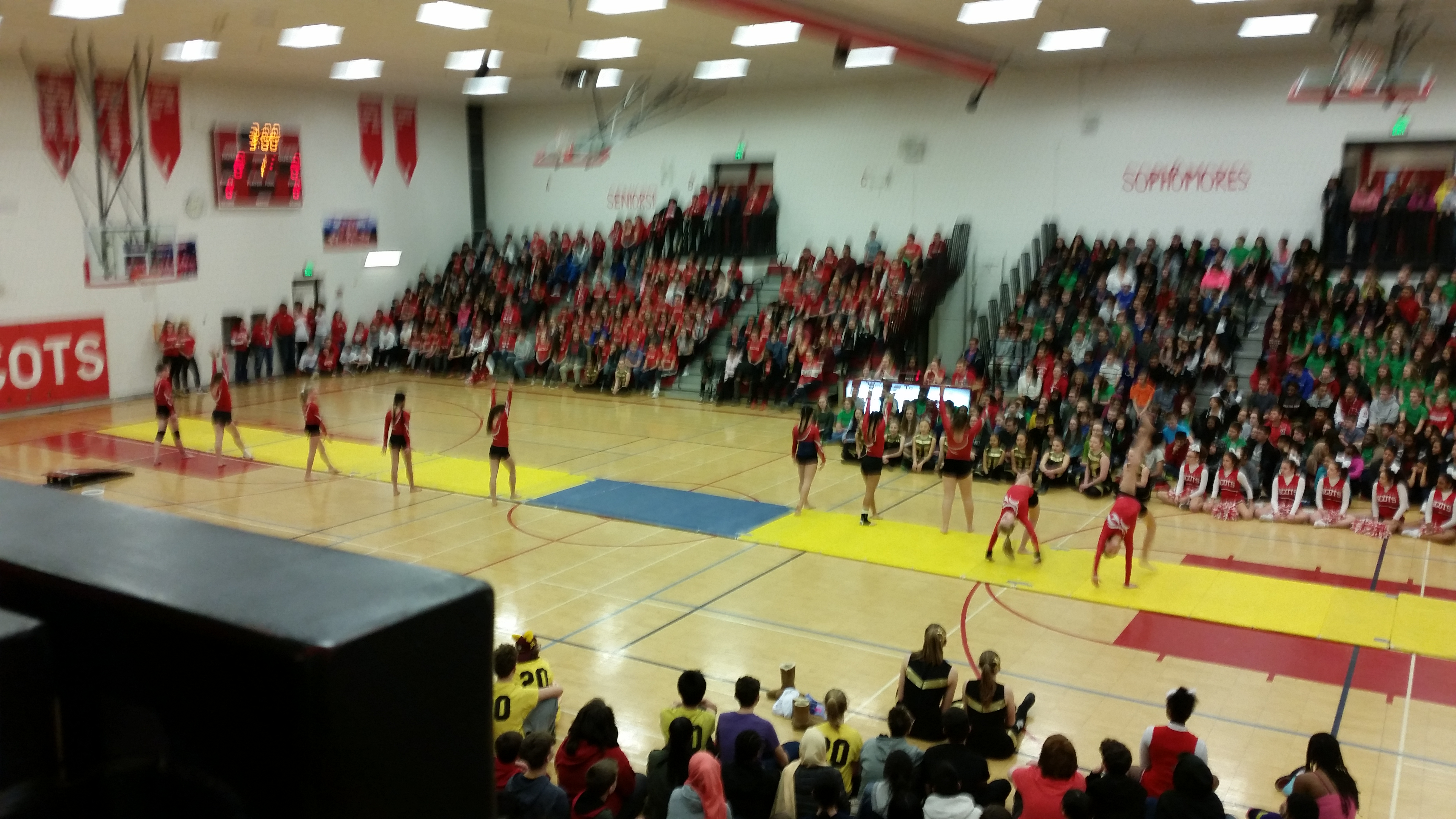
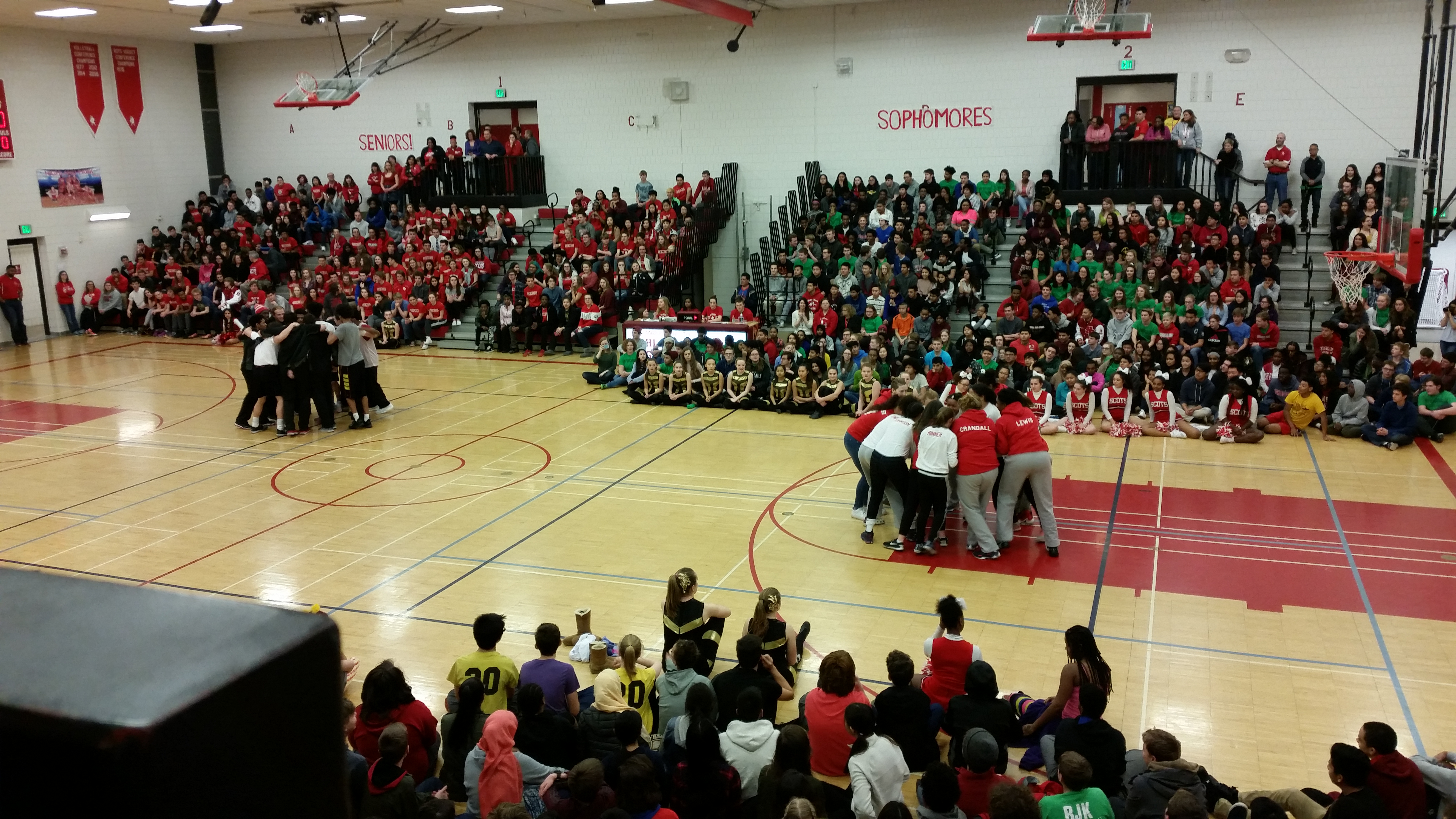
Last Thursday, on March 16th, Highland Park had its annual Spring Showcase. There were many performances including: dance, band, choir, etc. There were also many displays shown within the Spring Showcase. Many families and friends came and looked around, at the displays, before the showcase began.
There were also some school clubs selling things to eat and drink. A.C.C. sold egg rolls, with sauce, in three flavors – chicken, pork, and veggie, and there was also a table selling sodas, cookies, and candies.
The displays that were shown were also created by Highland Park clubs, along with some from the Floral Design class.
A.C.C. had a display with paintings and Chinese lanterns. Anime Club had anime character pins for sale, and many other cut out pictures for their displays. The Black Student Union had a display with “Soup Bowls” and a poster talking about “Super Soups.” The Union Latina had a display explaining their culture, etc, and displayed a hat. Ms. Wedger also had flowers on display from her class, “Floral Design.”
 The performances were also really good! The orchestra played very well, and the dances performed were also very good. There were many different dances performed within the showcase including: IB dances, the A.C.C.’s Hmong Dance and Thai Dance, Union Latina’s dance, and more.
I was lucky enough to be a part of the Hmong Dance this year. It was really fun and enjoyable, and I feel like we did a really good job and had a lot of fun.
The Thai Dance, was also very good, and they did a good job. The clothes were actually sewn by a senior’s (Pajaie) mom, and were really pretty. Pajaie’s mom, and a few other Hmong girl’s moms, came and helped the Thai dancers dress up. This ended up being really helpful because some of the dancers were in other performances.
Everything went by quick though, and there were many families and friends that came and watched. It was a good show, with good food and drinks, and many displays to see.
The Showcase was a huge success! Everyone that came to watch seemed to enjoy it.
Also, to all the performers that performed: You did such a good job!
They also seemed to have had a really fun time.