Category Archives: Getting To Know/History

How likely is it to get robbed in your life?

By: Jimmy Somerville

I am here asking the question: How likely it is to get robbed in your life in America? What are the odds?

According to the FBI website, FBI: UCR, robbery in America happens on average 150 times per year, per 100,000 of the population (in 2007). So the chance of being robbed in one year is 1 out of 667 so 0.0014%. Over a 4-year period, the chances of being robbed is out of 1 in 167 so 0.00598% (There are also many other variables that go into this. If you live in an area with a higher crime rate, the odds of you getting robbed increase, while if you live in an area with a lower rate of crime, the odds of you getting robbed decrease).

The average American lifespan is 78.5 years, so I rounded up to 80 and did the math. The odds of you being robbed while living 80 years in America (assuming you live  somewhere near the average of the average crime rate in America) is 0.11994%, according to my math. So, basically around a 1/10 chance you get robbed living in the average American town over 80 years.

Honestly, I thought the odds would be a little bit higher, but then again, I don’t know that many people personally, that have gotten robbed. I also wonder how much property needs to be stolen for it to be considered a statistic, and I bet some robberies go undocumented or unheard of. Maybe some people get robbed without even knowing it as well.

There’s a lot of information we don’t know, but that’s probably as accurate as we’re going to be able to get.

All of this is based off of data from 2007. Since 2007, the robbery rate has dropped 33% but
most people alive in America right now we’re alive quite a bit before 2007, as the median age in
America is 38.2 years old, so I figured choosing a statistic from an earlier time would be more
accurate for most people. The crime rate is always shifting so it’s hard to tell, but choosing the
statistics from 2007 made sense to me (it may not though).

Thanks for reading!

How AOC went from a bartender to a lawmaker

By: Elizabeth Woxland

Less than two years ago Alexandria Ocasio-Cortez (known by her initials AOC) was a bartender in Manhattan. Today, she is the 28-year-old democratic socialist who unseated 10-term incumbent Democratic Rep. Joe Crowley (this also made her the youngest woman elected to Congress).

A brief bio of AOC, as reported by The New York Times reads:

She was born in the Bronx where half of the residents are immigrants, and 70 percent are people of color. AOC grew up with two working-class parents Her mother was born in Puerto Rico, and her father was from the South Bronx. She went to Boston University, where she studied economics and international relations. After graduation she took up bartending and waitressing jobs. The primary, in June 2018, was Ocasio-Cortez’s first run for office, but she had experience in politics. In college she worked for Democratic Sen. Ted Kennedy of Massachusetts on immigration issues, and she was an organizer for Bernie Sanders’ 2016 campaign. AOC promoted Medicare for everyone, tuition-free college, criminal justice reform and ending private prisons. She also supports immigration reform, specifically abolishing ICE. At the time, AOC argued that Crowley — a 56-year-old white man— couldn’t properly connect with this diverse district.

AOCs journey to become elected to Congress was not easy. According to Business Insider, Crowley had not faced a primary challenger in 14 years. He also had raised nearly $3 million for his re-election campaign and spent about $1 million, while AOC raised just $600,000. Since AOC rejected corporate donations, over 70% of her campaign donations were under $200, compared with 0.78% of Crowley’s.

Yet, AOC put in the time to introduce and make herself heard. Democratic strategists and AOC herself attribute a lot of her victory to her aggressive door-to-door ground campaign. “We won because, I think, we had a very clear winning message, and we took that message to doors that had never been knocked on before.”  In comparison Crowley, who lives in Washington, sent a surrogate to one debate to take on AOC in his place.

AOC won the Democratic Party’s primary election for New York’s 14th Congressional District on June 26, 2018, which soon would lead her to representing New York’s 14th District in the midterms, and becoming the youngest woman ever elected to Congress.

Differences between bipolar disorder and borderline personality disorder

By: Kayla Madison

*Note, this article may have material that could trigger individuals (suicide), therefore, we present a trigger warning here.

Mental health is a big deal, always has been. There are a variety of mental disorders, and while most can seem very similar, the two I’m going to talk about today are almost twins.

Borderline Personality Disorder not only affects your moods, it affects your personality, hence ‘Personality Disorder.’ Borderline Personality Disorder and Bipolar Disorder are both characterized, in part, by major mood swings. The similarity of the two mood shifts having extremely high highs, to very low lows, causes people and clinicians to confuse the two disorders.

Borderline is said to be characterized by: rejection-sensitivity, chaotic relationships, and difficulty in managing emotions. Most people think the stressor is a bad childhood, which can be it, but it could also be other things. If your spouse leaves you, you’ll tend to get depressed and that’s normal, with borderlines though, they are more reactive to relatively minor events and demonstrate contradictory emotions.

Borderline Personality signs:

  • Fear of abandonment; they’re terrified of being abandoned or left alone.
  • Unstable relationships; relationships get intense very quickly and are very short lived.
  • Unclear or shifting self image; there is no clear idea of who you are or what you want. You may frequently change everything about yourself from jobs to even your sexual identity or religion.
  • Impulsive/ self-destructive behaviors; you may start engaging in harmful, sensation-seeking behaviors such as spending money recklessly, doing drugs or drinking alcohol to ‘feel better.’
  • Self harm; suicidal behavior and deliberate self harm is a common factor with mental illnesses.
  • Extreme emotional swings; unstable emotions and moods these moods are intense but tend to pass very quickly.
  • Chronic feelings of emptiness; you feel empty, as if there’s a void you have to fill, you may feel like you’re nothing or nobody.
  • Explosive anger; you may struggle with intense anger and a short temper.
  • Feeling suspicious or out of touch with reality; you lose touch with reality- dissociation. You struggle with paranoia.

Everybody has a mood swing or two but with Bipolar Disorder these are more severe. These cycles can last days, weeks, or even months. These mood changes can interfere with your everyday life such as your job or school performance. During a manic episode you may quit your job or spend huge amounts of money on useless items. During a depressive episode you might be too tired to do anything most days or be full of self-loathing and feel hopeless.

Bipolar Disorder Causes:

  • Stress; stressful life events can be very triggering in someone with genetic vulnerability. These events tend to have drastic or sudden changes.
  • Substance abuse; this doesn’t cause bipolar, it can bring on an episode or worsen the course of the disease.
  • Medication; certain medications, notably antidepressants, can trigger mania, most over the counter medications can as well.
  • Seasonal changes; episodes of mania and depression are sometimes caused by the seasons changing.
  • Sleep deprivation; loss of sleep can trigger a manic episode even skipping a few hours of sleep.

So, what’s the difference? Well, BPD is a personality disorder that causes you to think, feel, act, and relate differently than those without it. Bipolar Disorder is a mood disorder, which is a category of illnesses that causes severe mood changes.

For more information, please visit:

  • medicalnewstoday.com
  • helpguide.org
  • healthmatters.nyp.org

The Mandela effect

The Mandela effect is when a large group of people believe something happened differently than the actual way it happened, or when they think an event happened when it did not.

Several people think the Mandela effect is proof of the world going into an alternate dimension, while scientists believe that it’s proof of how imperfect and dotted our memory can be.

There are multiple examples of the Mandela effect happening. 

The Mandela effect started, and got its name, when Fiona Broome, a self-identified “paranormal consultant” remembers Nelson Mandela dying in the 1980s. Nelson Mandela lived until the year 2013. Fiona Broome remembers the news covering his death and his widow giving a speech. Which, none of it happened. Later, it was found out that multiple other people had the same thought as her and remembered the same things.

The Mandela effect happens because it’s said to be false collective memories. Those false collective memories are then spread amongst a large group of people. Although those “false” memories could also be real, and as you remember, it’s believed that the world goes into parallel universes. So, whatever you remember could be correct but in another dimension.

There are multiple examples of the Mandela effect.

A very common one was where people remember the Berenstain Bears as the Berenstein Bears. It was believed that it was Berenstein Bears and people have evidence of it.

Another example comes from Star Wars. It was thought that Darth Vader said to Luke, “Luke, I am your father.” In reality it’s “I am your father.”

The last one is where people remember the Monopoly man and how he had his monocle. It turns out, he never had one.

What is Seasonal Depression?

Image taken from: https://www.evidentlycochrane.net/preventing-seasonal-affective-disorder-sad/

As the seasons are changing, people are able to do more outside and are less confined to their houses. Many people also find that they have more energy than they did in the winter months.

This could be because of Seasonal Affective Disorder or SAD. It is a type of depression that, according to the Mayo Clinic, is related to changes in seasons. They also say that most symptoms, in people with SAD, start in the fall and continue through the long winter months. In some less common cases, people have been known to be affected in the spring and early summer.

SAD is very common in the United States, according to the Cleveland Clinic, with approximately half a million people suffering from it each year. This is more likely to start in young adulthood, but children and teens could also experience SAD. People who live far north and south of the equator are also found to be more likely to be affected. 

Most of the symptoms are the same as depression. The most common symptoms, according to Cleveland Clinic, are:

  • Sadness
  • Anxiety
  • Increased need for sleep
  • Inability to concentrate
  • Withdrawal from social activities
  • Loss of interest in usual activities 

The treatment for SAD varies depending on the severity of the case. Anti-depressants work in some cases but the most recommended treatment is light therapy and spending more time outside. Light therapy is when a device containing white fluorescent light is placed at a distance of 2-3 feet away from the patient. It is used as a substitute for sunlight, which has been shown to improve the patient’s moods. 

If you have diagnosed with SAD there are multiple things to do to keep your symptoms from returning. One thing to do is to try and spend time outside, even when it’s cloudy, the sunlight will still help. A second thing that is helpful is to eat well-balanced meals with lots of vitamins, even though you body might be craving starchy and sweet foods. Another thing that would help with SAD is exercising for thirty minutes a day, at least three times a week. 

Facts/advice on vaping

Vaping is very popular among teenagers in the United States and many other countries around the world. According to NPR, 5.3 million people are addicted to vaping. Teens who vape are way more likely to smoke cigarettes. 44,000 students who smoke took a survey and 37% who vape are seniors in 2018. The director of the National Institute on Drug Abuse said that teens need to understand the consequences.

Vaping is known to be less harmful than smoking but it is still bad for people. Vaping causes people to get addicted to nicotine or drugs. Regular cigarettes have 7,000 chemical toxins in them but with e-cigarettes it is unknown. Vaping causes lung injuries and death according to the CDC because 60 people have died from it.  

Why do teens still vape when the media says that it’s bad? Teens believe vaping is better than smoking regular cigarettes. They also think it’s easier to vape because you don’t need a lighter. Teenagers like vaping because it doesn’t smell at all and younger people don’t like the smell of cigarettes. They also like vaping because of the flavorings. Teenagers mainly vape because they want to fit in with their friends and they don’t want to feel left out. 

How should teens avoid vaping? Teens should be informed about vaping at a younger age so that they are informed about it. If their parents or teachers explain to them at a younger age about the consequences, teens will have a strong hate towards it as they get older and they won’t want to vape. Teens should be aware about peer pressure because teens pressure each other to fit in. 

If a teen is vaping, what are ways that they can quit and avoid it forever?

Getting to know Ms. Vashisti

Image taken from: https://www.spps.org/Page/36806

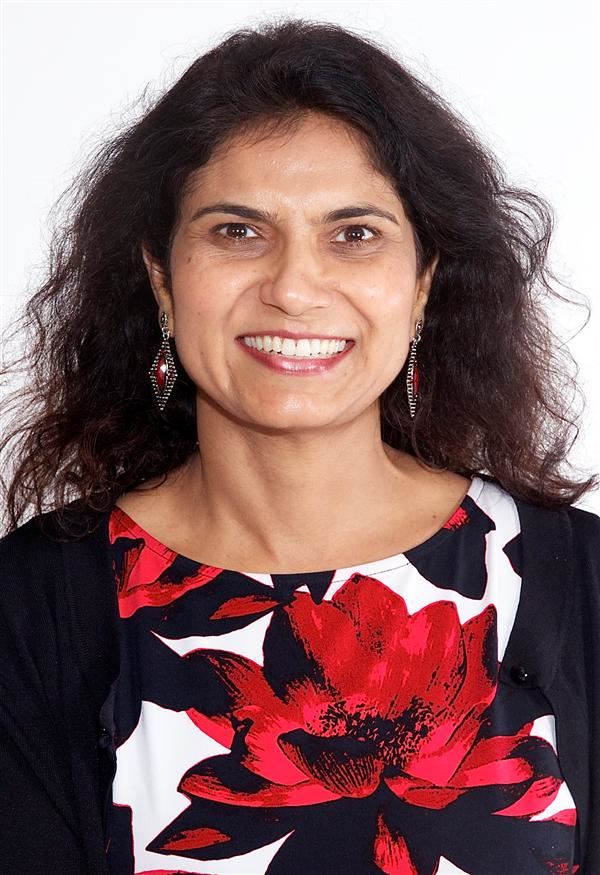
Rashmi Vashisht is a new member of the Highland Park Senior High School staff; she is the assistant principal for 10th graders. Since she’s new to Highland, I thought it would be a good idea to ask her a few questions about herself to get to know our new assistant principal. 

  •  What high school did you attend?

“I attended a high school in India.” 

  • Where did you grow up?

“I grew up in India.”

  • What is your favorite color and why?

“My favorite color is green,” she said. “It’s because the color green gives liveliness, it gives you feeling of good, and it set a very interesting mood.”

  • What do you do for fun?

“I like to travel, dance, walk, and hike.” 

  • How would describe yourself?

“I would say I am a people person and more of a relationship person. I would also describe myself as a person who likes to spend time with family and friends, and I am always eager to learn new things.” 

  • Where is the most interesting place you have been? 

“A place in India, Kashmir, it’s a beautiful valley, a city known for lakes and garden.” 

  • What’s your proudest accomplishment?

Her proudest accomplishment is being a mom of two boys and her job. 

  • If you could live anywhere in the world where would you pick and why?

“I would go with India,” she said. “It’s because I grew up there and all my family ties are there. If I could retire, I would in India.” 

  • What was your first job?

Her first job was at a high school tutoring math kids.

Volunteering at Regions Hospital

In order to volunteer at Regions Hospital you must be at least 15 years old and must sign up at: https://www.volgistics.com/ex/portal.dll/ap?AP=991565722

Once you sign up you will need to make time for an interview. For the interview you will need to have a signed parent consent form, evidence of a screening for tuberculosis (available at the hospital), and your immunization history. During the interview, you will be asked many of the questions that were on the form you first submitted. 

After the interview you will need to complete an orientation electronically and then have a medical screening which they offer at the hospital for free. 

Your first shift will be a training with a team member from the department that you will be volunteering in. After that you must volunteer once a week, but you can definitely volunteer more!

There are 7 different departments that you can volunteer in if you are under 18:

The Bright Corner Gift Shop: You will be able to greet people, help at the register, and help stock and price things. (Shifts are available any day of the week)

The Breast Health Care Center: You must be female in order to volunteer here. You will be able to greet and guide patients to different areas, and help staff with charts and clerical work. (Shifts are only available during weekdays)

Guest Services: You will be at the informational desks helping with directions for transports and escorts throughout the building. (Shifts are available any day of the week)

Materials Services Courier: You will distribute different materials throughout the hospital. (Shifts are only available during weekdays)

Music Volunteers: You will need to be an intermediate/advanced player. You will play music for the guests and patients in the auditorium. (Shifts are available any day of the week)

Overlook Café and Deli: You will be able to help the culinary staff prepare food and bake cookies, and help clean the area. (Shifts are available any day of the week)

Physical Therapy – Inpatient and Transitional Care: You will be able to help transport patients and help the physical staff with other tasks they may need help with. (Shifts are available any day of the week)

Volunteering at the Regions Hospital will be a good experience, especially if you’re interested in the medical field! 

Start of snowmen

Image taken from: https://www.nandq.com/snowmen-in-hats-christmas-cocktail-napkins.aspx

A Minnesotan winter is upon us. You know what that means, hot chocolate, snowball fights, and of course lots of snowmen. When the snow finally sticks it’s what kids like to do. All you have to do is grab some rocks and a few sticks and you’re set.

Building snowman spread as a trend, it was a fun idea to do in the snow. But do you ever think who’s idea was it that started the creation of the snowman? 

If we want to go way back, we can go all the way back to 1380. In 1380, Bob Eckstein uncovered the snowman in his book, History of the Snowman. Eckstein believes however that the first “man of snow” was discovered in the medieval Book of Hours from 1380. It is the earliest known depiction of what a snowman could be. In that book is the first illustration of a snowman.

Some 473 years later, in 1853, a woman by the name of Mary Dillwyn took the first photograph of a snowman. It’s now in the collections of the National Library of Wales.

When they were discovered, snowmen became a phenomenon in the Middle Ages. Snowman used to be made with much thought and skill. They were used to express thoughts and ideas. Snow was free art supplies that fell from the clouds. It became a popular activity and people became famous for sculpting snowmen.

In 1494, a 19-year-old Michelangelo, was asked to sculpt snowman for the ruler of Florence, Italy in the backyard of his mansion.

In the 16th century, there was a snowman festival called the Miracle of 1511. It’s where Belgians filled land with over 100 snowman doing various acts. They were made as a political cartoon which was used to comment on the bad class system of their current era.

Later, in 1870, the French National Guard wanted to make a monument for their independence. With the leadership of Alexandre Falguiere, the men built a 9-foot tall snow women. After it melted it became a national symbol.

The snowman has a long history. Now, instead of them being used as political statements, they are used for child’s play where children like to get out in the snow and make a happy snowman for fun. 

Top Five weirdest phobias

1) Monophobia

2) Ablutophobia

Ablutophobia is the persistent fear of cleaning, washing or bathing and occurs more in children and women than men. It is not a very common phobia.

3) Arachibutyrophobia

Now this I have to say…is a very, very, weird phobia. Arachibutyrophobia the fear of peanut butter sticking to the roof of the mouth. As with all other phobias, the symptoms of arachibutyrophobia involve panic, dread, terror, anxiety, rapid heartbeat and shortness of breath when the peanut butter is wedged on the roof of the consumer’s mouth.

4) Didaskaleinophobia

While a fun little reason to skip class, didaskaleinophobia is actually a legitimate fear of going to school. Commonly known as a “school phobia,” the fear is more prevalent in younger students (ages 7 to 11), and is believed to stem from anxiety triggered by being separated from their parents. It can also be the result of bullying.

5) Heliophobia

The last fear on this list is also a little reference to Howie from the movie Benchwarmers and that is the fear of sunlight. A rare but unfortunate condition. Not only does going out in the sun instigate severe feelings of anxiety and panic in sufferers, but those suffering from heliophobia may also experience fear of bright lights. Most often, the fear or condition is associated with an anxiety about the perceived dangers of the sun.