Editor’s Note: The Plaid Line publishes editorials that contain opinions that are those of the student authors. They do not purport to reflect the opinions or views of the the Plaid Line, HPSH, or its staff.
In Saint Paul there is a very huge risk with heat rising. The number of the hottest days keeps increasing yearly. This is a huge issue. In the past there was an average of no more than seven days a year that reached higher than 91.2^F. By 2050 it is estimated that there will be up to an average of 36 days a year that reach over that temperature of 91.2.
With temperatures rising this fast there are a lot of health concerns for people. Heat exhaustion and heat stroke are things that can happen to the human body when in the heat for too long. These are a few signs of heat exhaustion: getting light headed, weakness, heavy sweating, and muscle cramps are all really common signs. Heat stroke signs are: dry mouth, hot skin, vomiting, confusion, and seizures.
These are really important things that you need to make sure you’re aware of as temperature rises. If these signs are happening try to get into a cooler setting as soon as possible. If that is not possible try putting water on your neck and wrists, because that will help your body cool down faster.
There are a lot of ways, as humans though, we can work to decrease heat rising so fast. Conserving energy is really important. That means doing little things like turning off all the lights when you leave, not letting your water run for longer than needed, and driving less can also help a lot. Doing these things helps conserve energy.
Another thing that can help out a lot is reducing greenhouse gas emissions. This means trying to use renewable energy sources like solar and hydro powers instead of using fossil fuels. Using electrical vehicles can also help out a lot.
Taking little or larger steps like these can really help the environment, and stop the climate from getting so warm so fast. This is a task that takes all of us one community at a time.
Although plastic bags are terrible for the environment, over 500 billion plastic bags are used yearly; 100 billion are used in the USA alone. The average “working life” of a plastic bag is only 15 minutes, and sadly, according to Stillwatermn.gov, only 1-3% of plastic bags are recycled, and less than 10% are reused. This means that the average family using plastic bags in Stillwater, Minnesota will use over 400 a year. Most of these bags are made of polyethylene and can take centuries to degrade. Because of statistics like these many countries are taking action to construct a cleaner future.
California became the first US state to ban single-use plastic bags in 2014. However, this backfired unexpectedly. Instead of consumers switching away from plastic bags, they instead moved toward thick-walled plastic bags. These thick-walled bags not only cost more, but are worse for the environment. According to Nytimes.com, Californians tossed nearly 50% more plastic bags by weight in 2021 than they did in 2014. In response to this loophole, in September of 2024, California banned all plastic grocery bags regardless of thickness, and required consumers to begin paying 10¢ per paper bag if they lack reusable bags as of 2026.
Some countries have already banned all forms of single-use plastic. One of which is Rwanda. According to Undp.org, in 2008 Rwanda became one of the first countries to ban all single-use plastic bags and bottles. Rwanda even goes as far as to search tourist’s luggage for these single-use plastics upon entering the country. The first country to ban single-use plastic bags was actually Bangladesh in 2002.
More and more countries around the world are beginning to ban single-use plastics. So far, over 3.5 trillion plastic bags have been produced, 160,000 are used a second, and worldwide less than 1% are recycled. These plastic bags can take up to 1,000 years to break down, so it is crucial that countries begin to ban and restrict these plastics as soon as possible.
The American school system needs to change. According to Tahoe Expedition Academy the education system we are using today originated from the 1800s.
According to a poll by XQ institute, “93% of respondents feel like high school isn’t preparing students for the future”. The math and reading scores on the NAEP are getting lower and lower.
The Carnegie Unit was introduced in 1906 and became the standard system for education. You earn a credit for completing a class and if you get enough credits you can graduate. Most schools still have the same time in class, ~50 minutes, 5 days a week. The Carnegie Unit was helpful to standardize schools, however it doesn’t account for factors like how good the teachers are or at what speed the students learn.
Another big problem with the current school system is that a lot of students feel disconnected from their life at school. School increases mental health problems in students, making learning more difficult and causing some students to stop trying in school.
High school is the final thing preparing students for the real world of being an adult, but is it really doing a good job at doing that? Most schools in the US don’t encourage students to find their potential.
When students are just listening to a teacher when in class, they only use the left hemisphere of their brains. However, if they are being creative and solving problems they can learn with both hemispheres of their brain.
So, in my opinion, schools are in need of change these days as they still haven’t changed the way they teach from a long time ago.
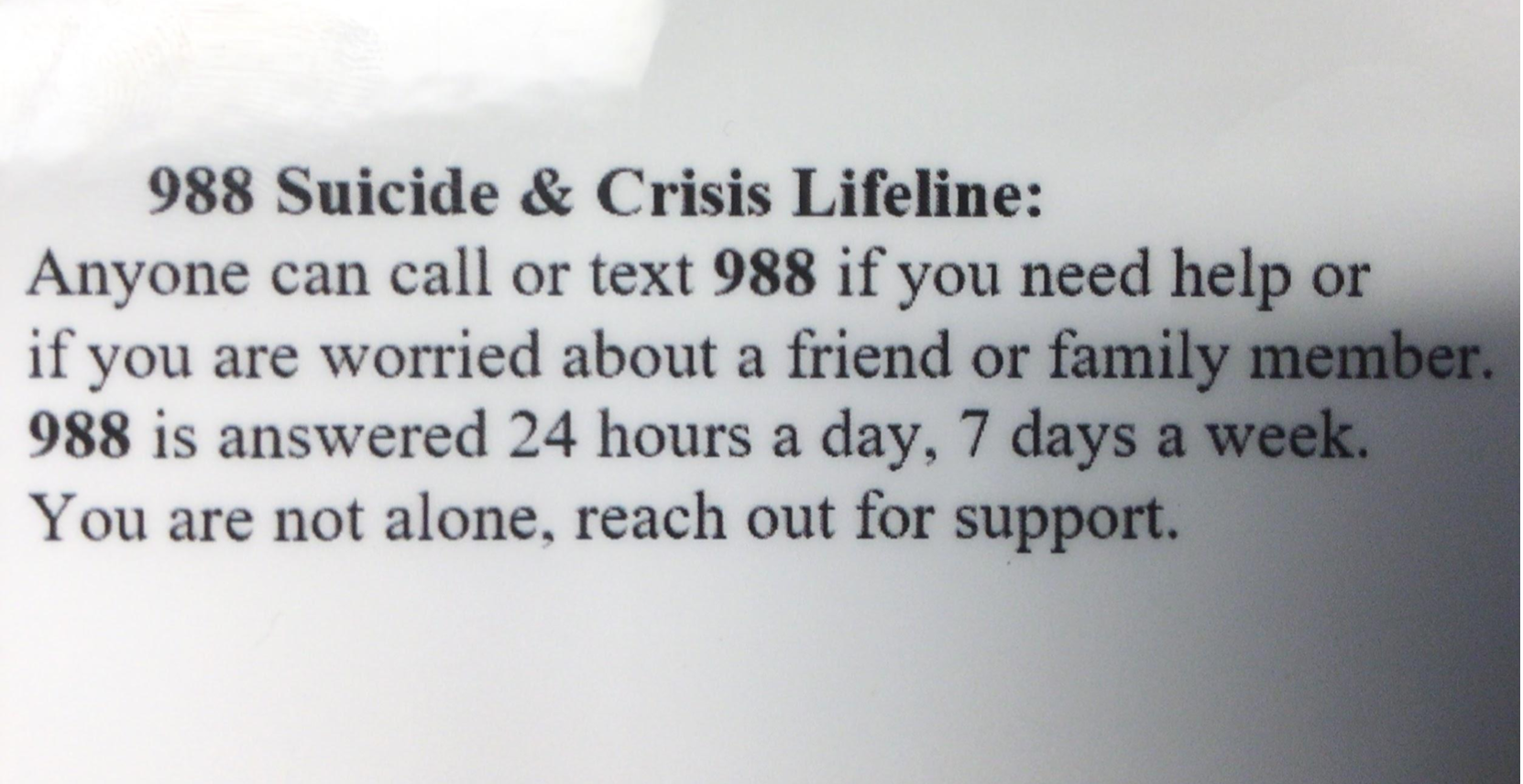
The lack of mental health services in schools is a problem that has an immediate impact on youth and their overall mental wellbeing. Ever since the COVID-19 shutdown, we’ve been in a mental health crisis where diagnoses for mental health disorders have skyrocketed in younger generations. The lack of awareness of this issue can lead to these mental health conditions in youth growing worse and leading to problems later in life and even increased suicide rates. This article will cover how this problem came to be and ways we can help prevent it.
According to Pewresearch.org, just over 55% of public schools in the U.S. provided students with mental health services during the 2019–2020 school year, and that number barely increased in the following 2020–2021 school year. Even fewer schools in this time frame offered any treatment for mental health disorders, with only 42% of public schools offering any services in or outside of school.
Since the COVID-19 pandemic, many psychology professionals have stated we’re in the middle of a mental health crisis. Since returning to school in the 2021–2022 school year, prevalence of anxiety and depression in teens and youth increased by a whole 25% according to the World Health Organization.
Along with these devastating facts, so few youth who really suffer from mental health problems don’t seek help at all, since mental health isn’t talked about or discussed much in school curriculums and there’s so much stigmatism around this topic.
The stigmatism of mental health has been a problem in our society for generations, and we’re just starting to release some of that now. This stigmatism often stems from the belief that mental health disorders are overdiagnosed and the people who suffer from them are just being dramatic or are seeking attention. This is most commonly seen in older generations, as growing up, mental health wasn’t a talked about issue, and psychology was just first starting to emerge as its own valid science.
This stigma of mental health is very invalidating and hurtful to those who really do suffer, and spreading awareness of these inaccuracies can help release some of that stigma and help us understand what others may be dealing with so we can empathize with them and find ways to help them through it.
With the massive increase in mental illness comes the desire to see it treated and for youth affected by these illnesses to thrive again, which sort of forces some of this stigmatism to be pushed back. It’s not a very big step in eliminating the stigmatism around mental health, but understanding how youth are being affected is the first step to change.
Schools not providing enough services and resources to youth is a big problem, but even within those schools that do offer those services, there are many factors that still lead to youth not receiving the help they need and deserve.
Many of these services provided in schools aren’t always known to the students or sometimes they just don’t feel comfortable going to the counselors or professionals. One of the biggest problems within having counseling services is that the professionals often don’t do enough to reach out to youth who are struggling, or they don’t do enough to make meaningful connections so youth feel comfortable coming to them for help. This is one of the leading factors contributing to the uproar in mental illness, as so much goes unseen.
Youth who actively seek help and reach out for themselves are the ones who receive the services provided, but a major aspect of having a mental illness is not understanding how it affects you and not understanding the symptoms fully, which makes it significantly harder for some youth who don’t know or understand their conditions to reach out. Having counselors reach out to youth and try to form connections is a better strategy for helping those kids, as connection with a trusted adult may be just the thing that will help them receive the help they need.
The lack of awareness and available resources to youth who suffer with mental illness is astounding, especially in these years following a global pandemic. If you or someone you know is struggling with mental health issues, put yourself or the other person first. Find ways to help relieve some of yours or their pain, and reach out to someone.
Think about a time when you were younger. Was it at home playing with toys? Being at school with your friends? Taking a late night walk? All of these things are brought back through your memories. Through the bad, the good and the strange they are a part of you and make you who you are today. It’s inevitable that you’ll forget events and things every once and a while; you’re not going to remember everything that happens in your life.
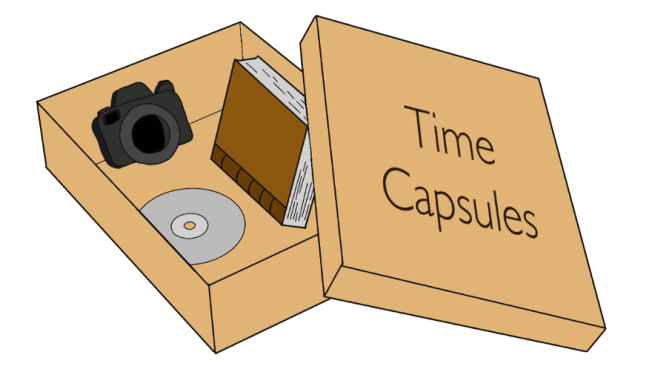
Now imagine that you wanted future generations to learn and know these important parts of your life. Imagine that you have to place your memories in a physical box to be locked away. Now this is what many call Time Capsules.
Time Capsules are essentially mini libraries of goods or information from the past. They don’t take much to make, with only a container with meaningful and relevant objects inside. They tell us a lot of information about the past and about how people lived, their cultures, social norms, etc. The information is limited but broad which makes it valuable.
Many may think of time capsules as boxes that you bury beneath the ground, though they can be, and mean much more than that. One example of this notion are the space crafts known as Voyager 1 & Voyager 2. These spacecraft are specially fitted with a gramophone record used to depict culture here on Earth to extraterrestrials. Anything from music to images and greetings are included on the spacecraft. As time capsules they show a time period of Earth and its own cultures and social norms.
Time Capsules can really be anything as long as they preserve the stories of those from the past. They are important to learn about the past and its path to who and where we are today. While history can be left out to wither, keeping it in preservation is integral. Time Capsules do an amazing job at this, preserving items until they can be maintained in a proper place, such as a museum. Without them, we wouldn’t have as much information in history as we do today; a lot of information is lost to time, and simply keeping it will perpetuate those important values. That is the importance of Time Capsules.
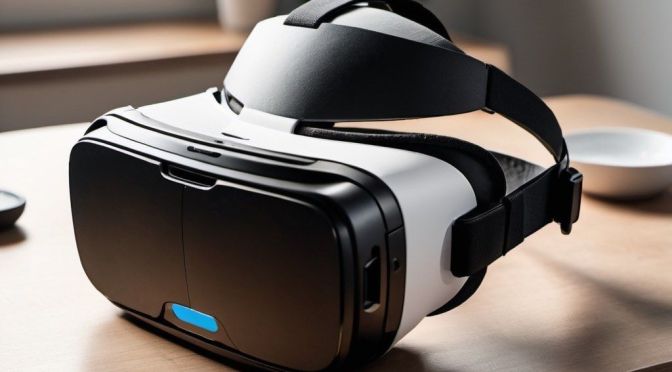
Virtual reality is a multi-dimensional artificial environment for video games. This has transformed our imaginative worlds of gaming into existence through artificial environments that we can interact with using virtual reality headsets.
The purpose of virtual reality being made was to create an immersive experience that can be used to explore an environment that helps to educate or entertain the user that is playing. Because of this, virtual reality has revolutionized gaming by offering a more immersive experience when playing games, allowing players to physically interact with the environment.
Virtual reality transforms traditional gaming by allowing users to engage games with an unmatchable level of realism. Virtual reality games are usually task based games, with challenges similar to real world problems and the players are tasked with finding solutions or opportunities to finish their task for a reward. Other games are based around having you save your own virtual character. Virtual reality also brings opportunities for people to interact online; people have created games online solely to interact with other people.
Virtual reality is an ever-evolving field, with revolutions in the future that may enhance the immersive experiences of players and the potential to change the players’ engagement and gaming experiences of virtual reality. Virtual reality is playable on any electronic device, like phones, tablets, console devices, and pc’s.
In my opinion, virtual reality has drastically changed how gaming is today because we can experience realistic virtual spaces that act and behave similar to the real world. I really enjoy playing VR games because it feels much more immersive than traditional gaming which I can enjoy playing alone, or with friends. Either way, virtual reality is a huge step in gaming and I am really grateful that virtual reality was created because it is an experience that you could never forget.
The Minnesota Timberwolves won their playoff game against the Denver Nuggets on Sunday, May 19th, successfully moving on to the Western Conference Finals against the Dallas Mavericks. While many Minnesotans celebrated at home, bars, or watch parties, a small group of Minnesotans were stuck at the State Capitol working tirelessly to pass as much legislation as they could before the end of the session, which occurred at 12am on Monday, May 20th.
For those who are unaware, Minnesotans are put into state legislative districts, which typically consist of roughly 85,000 people per senate district, and about 42,500 per house district. We elect these leaders, and the current state makeup is 70-64 with a DFL majority in the House, and 34-33 with a DFL majority in the Senate as well. Having such narrow majorities in both legislative bodies makes it incredibly difficult for legislation to pass, because it means you need *every* DFLer on board, or your legislation might die.
Unfortunately, that happens often. I’ll start reviewing this past legislative session with what I consider the *wins* for Minnesotans. Powerful bills challenging oppressive institutions, like the Minnesota African-American Family Preservation Act, introduced in the house by Rep. Esther Agbaje (DFL) gained bipartisan support from DFLers and Republicans alike, including Sen. Bobby Joe Champion (DFL) and Sen. Clare Oumou Verbeten (DFL), and Rep. Walter Hudson (R) and Sen. Jim Abeler (R), who ended up sponsoring this important piece of legislation. The goal of this legislation is to promote family reunification and appropriate social services for disproportionately affected African-American families.
They were also able to work with intergovernmental relations from the Minneapolis City Council and passed worker protections legislation for Uber/Lyft drivers. They also passed HR1989, a billed lovingly nicknamed the “Taylor Swift Ticketing Bill,” which was a bill basically saying that companies like Ticketmaster and AXS must disclose ticket prices with fees included, instead of just revealing right as people pay.
While this may not sound like a lot, you’re right, it’s not. I skipped over some of the really boring stuff, but mostly this year had a pretty blank slate, at least until the last day. The DFL realized they had a lot of work left to do due to some long, unnecessary debates from the Republicans. This leftover work notably included FairVote Minnesota’s Local Options Bill, which guarantees ranked choice voting as an option in local elections across the state. In addition to this, many activists and DFLers across the state were pushing for the Equal Rights Amendment to pass, which had been pushed to the last week of session for a second year now.
The DFL wanted to accomplish all of their legislative goals before that upcoming midnight deadline, so their solution was to make multiple omnibus bills, which means to combine pieces of legislation together and speed up the process. Once combing these omnibuses, they put it into one big omnibus: not so lovingly nicknamed “Omnibus Prime” or the “Megabus.”
This was appalling to Republicans. Despite admitting last year that they don’t read the bills (they accidentally legalized cannabis), now they suddenly care about having time to read this legislation. When Speaker Melissa Hortman (DFL) recognized a motion from Rep. Jamie Long (DFL) for a roll call vote, Minority Leader Lisa Demuth (R) began yelling “Madam Speaker!,” questioning her integrity as she thought she was not following the rules, along with several other Republican colleagues. This yelling went on for upwards of 30 minutes, which successfully left the legislature out of time to pass any legislation on to the Senate.
While I agree that the “Omnibus Prime” package was a lot to deliver on the final night of session, I also believe that Speaker Hortman, who has served in the House for 20 years now, is a reverent leader who knows what she’s doing. She recognized a motion, as she should, and they were going to begin a roll call vote, as they should. Because the *Republicans* didn’t understand the rules, we weren’t able to get nearly as much done this session as we could’ve. Although, despite not having the greatest record this past session, this has been the most productive biennium in 50 years.
My message for Republicans: you do not get to spin the rules just because they aren’t in your favor. You do not get to throw a hissy fit because you don’t want to progress our state. And lastly, the voters in November will look at the TV ads, campaign mailers, and lawn signs for your candidates and legislators and think of the way they acted like toddlers once given a position of power. And best believe they will vote accordingly.
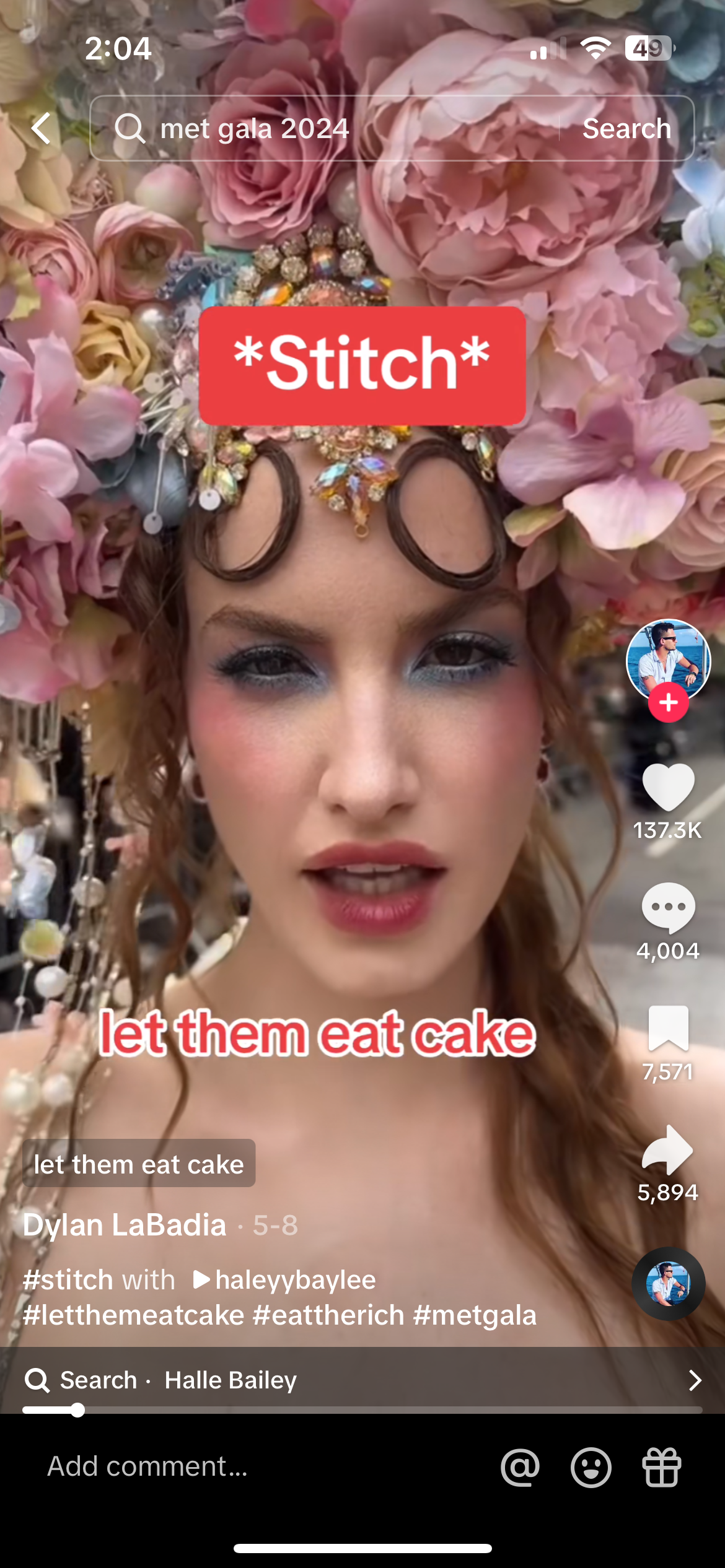
Screenshot of Dylan LaBadia’s repost of Haylee Baylee’s original post
The 2024 ‘Celebrity Blockout’ is a newly formed social media movement that has recently started in the past few weeks to bring awareness about the events that are happening in Palestine, more specifically Gaza. It was mostly formed on TikTok and has now spread to several other social media apps.
The movement initially began when a TikTok influencer and content creator, Haley Kalil, also known as Haylee Baylee, posted a video on her account, featuring her at the Met Gala. In the video, she wears an extravagant outfit with an audio over the video from the 2006 film, ‘Marie Antoinette’, saying “let them eat cake”. The famous sentence was supposedly said by the French queen Marie Antoinette in response when informed of the famines occurring in the country.
The video received severe backlash and angered many people at the lack of awareness about the Israeli-Palestinian conflict and how several celebrities and influencers have remained silent about it or brought awareness about the situation. People on TikTok began posting videos, suggesting that they should begin to block celebrities who have not spoken out about Gaza.
Several popular celebrities have been mass blocked, with some even losing millions of followers. Some of the celebrities that are being blocked include Taylor Swift, Travis Scott, and the Kardashians, with Kim Kardashian having lost about 3 million followers since the Met Gala.
People on TikTok have overall mixed opinions about the Celebrity Blockout, with many standing for it and blocking many celebrities, while others argue that blocking celebrities will not help bring awareness or help the situation in Gaza.
In my personal opinion, I believe that it is extremely important to bring awareness about Gaza or Palestine in general and do as much as we can to help, but I’m uncertain that blocking celebrities is necessarily relevant to helping Gaza.
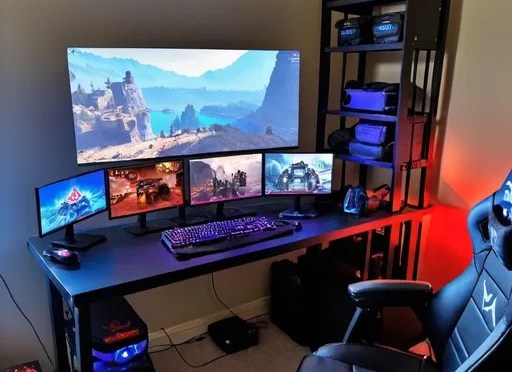
I think that video games are beneficial and will have a positive effect as long as you don’t play for more than 4 hours every day because I also enjoy playing video games a lot and I think they have clearly helped me in my basic everyday life.
Some positive effects of playing video games are that your memory and learning abilities are enhanced. Your reaction time can also be enhanced if you play video games like first person shooters that are necessary to have faster reaction times to beat the opposing players.
Some more positive effects of playing video games are increased problem solving skills, decision making, and multitasking capabilities. Video games positively affect the brain by boosting cognitive functions which will also improve your hand eye coordination along with your spatial awareness because most games will need you to be aware of your surroundings. In a way, video games can be a workout disguised as fun because video games regularly increase and boost brain connectivity.
Some negative effects of video game addiction are vision problems. The most common type of vision problem is eye strain, which can lead to headaches or poor concentration. Video game addiction can also lead to seizures and psychological problems that will occur over time.
Some more negative effects are when video games are overused as a coping mechanism. This really becomes a problem when video games disrupt your normal and healthy life. Excessive video game addiction can also lead to mental health problems such as depression, social anxiety, and a lack of motivation. Video games will worsen the symptoms of a person who already has depression because excessive gaming removes a person from their real life responsibilities, relationships, and emotions, which can result in feeling numb and socially isolated from your life.
Personally, I think that video games are enjoyable every once in a while because I have gone through some of these symptoms due to excessively playing during the weeks. Overall, I think everyone should play video games, even if it’s just a little bit, because this way you can have the benefits of better problem solving, and decision making during stressful situations, and faster reaction times which could potentially benefit you in work or future situations.
You’ve probably seen the social media buzz—Uber and Lyft are finally being held to Minnesota’s minimum wage laws. But how did we get here, and why weren’t they held to these laws in the first place? To find the answer, we have to go back to 2013, when the rideshare companies began operating unregulated in the Twin Cities. Minneapolis scrambled to let them operate legally, drafting amendments to the city’s taxi laws to allow them in; at the time pay was less of a priority than regulation of who could become a driver, as the lack of regulation made it attractive to people who would otherwise find it difficult to find jobs, such as those convicted of assault or other violent crimes.
Things moved fairly smoothly for a while—Uber and Lyft became the default way to get around the city without your own automobile, especially after they were allowed to pick people up at MSP airport.
Uber became the biggest startup in the world in 2019, and even COVID couldn’t stop it. When the pandemic impacted employment, more and more people turned to rideshares as a way to make money; they became an important source of income for students, and disabled people who couldn’t work a full day.
Immigrants also use rideshares as a source of income; according to the Minnesota Department of Labor and Industry, 61% of rideshare drivers in Minnesota are foreign-born. Rideshares allow immigrant workers to find work, skipping over the preconceived notions of hiring managers.
However, this is when issues began to arise—or rather, were noticed. Things like sales tax, meant to be borne by riders, began to be skimmed via “administrative fees.” Uber claimed that there was an option for drivers to charge riders for tolls and other fees, but no option for that ever seemed to have existed in the Uber app. While Uber and Lyft claimed that their drivers made above minimum wage, the truth is that it was actually well under.
At the same time, international strikes were staged by drivers, hoping to bring awareness of what companies were doing to them. A new group of Minnesota drivers, the Minnesota Uber/Lyft Drivers Association, spoke to the state’s Democrats in 2022. They pledged to strike a deal with rideshare companies, and began pushing a bill to set a minimum pay floor.
New York state began an inquiry about a year later; they found that rideshare companies had systematically shorted their drivers out of a collective $328 million via the methods outlined. They instituted a pay floor for drivers in accordance with New York minimum wage—Minneapolis did something similar, ensuring drivers a rate of $1.41 per mile.
This enraged Uber and Lyft, who threatened to leave the city of Minneapolis. They did something similar in Austin in 2016, over fingerprint background checks for drivers—the city council had to revoke the ordinance entirely to make the rideshare companies come back.
Meanwhile, in the Minnesota Senate, Omar Fateh (D), who represents District 62, spent most of 2023 pushing for a statewide minimum pay rate. The Democratic party only has a one-vote majority, and Senator Fateh (D) held up proceedings until the bill was passed—Democrats would be forced to either pass the pay minimum, or work with Republicans to get anything done.
The minimum pay bill passed just under the wire on May 18, 2024. It guarantees $1.28 per mile in accordance with both Uber and Lyft and U/LDA; under Minnesota laws, drivers will now make $15.57 per hour. The rideshare companies have since agreed not to pull out.
However, all is not completely sunny. There’s something to be said about the House and Senate going over Minneapolis’ head and acquiescing to large corporations. To quote Minneapolis City Council member Aisha Chughtai (D), “Preemption is bad. Period. Any and all attempts to undermine local control are bad. It’s a Republican and corporate tactic used around the country. Watching our [Governor Walz] cave to multibillion dollar corporations in insisting on preempting Minneapolis is gross.”
The law, too, doesn’t go into effect until January 1, 2025. How many people will be unable to keep their head above water until then? Will Uber and Lyft manage to alter the terms? We just can’t know. For now, we ought to keep these people in mind for the next year; both the rideshare drivers, whose income is still not safe, and the legislators that made this happen—especially in November, when many of them are up for re-election.
The Official Online Newspaper, Literary Magazine, and Video News of the Highland Park Scots