Category Archives: Editorials/Student Voice

Editor’s Note: The Plaid Line publishes editorials that contain opinions that are those of the student authors. They do not purport to reflect the opinions or views of the the Plaid Line, HPSH, or its staff.

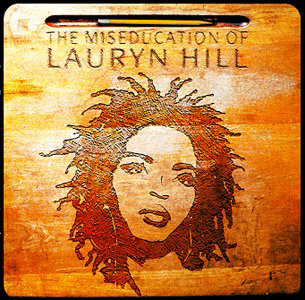
OPINION: Why Lauryn Hill is one of the greatest musicians of all time, even with just one studio album


By: Charlie St. Dennis
When discussing music, and hip-hop in general, debates frequently occur asking who the best of that genre is. Honorific titles spread like wildfire, like “The King of Pop” Michael Jackson, “Queen of Soul” Aretha Franklin, and “King of Rock” Elvis Presley just to name a few. One title that was “given” a few years back was “Queen of Hip-Hop” which was given to Lauryn Hill. While I think this is a fitting title, I think Lauryn Hill should be in the conversation of larger, more broad titles, perhaps “Queen of Songwriting”.

The problem I run into here when having these conversations is that people frequently bring up the fact that Lauryn Hill has only released one album. They say this in an attempt to contradict me, saying she isn’t even eligible for these conversations. I, however, think that’s just another testament of what makes her great.

With a running time of 77 minutes, Lauryn Hill wrote all but one of the songs on ‘The Miseducation of Lauryn Hill’ single-handedly. The album explores a number of different genres, ranging from neo-soul to traditional R&B to progressive rap. The meanings and intentions behind these songs range, as well. Songs like “Nothing Even Matters” and “Ex-Factor” address love, while songs like “To Zion” and “Every Ghetto, Every City” discuss motherhood and reflection on the life you lived. We’ll dive deeper into that…

The album went on to hit No.1 on the Rap charts, and on the Billboard 200 Top Albums. Hill also won 5 Grammy awards, including Best New Artist and Album of the Year, becoming the second Black woman to receive the album accolade, and she became the first artist to win the Best New Artist award for a hip-hop record.

She is deserving of these accolades. There is a reason why the album has sold over 20 million copies around the world. That reason is because this is music that is not only catchy, but resonates with people, whether they can relate to it or not. She showed us that you can rap and make catchy songs, but also be vulnerable. Because she tackled these topics, she brought a sense of openness and emotion to the rap industry, which allowed for artists to emote on record. At the time, Hill was just trying to figure out her life, she was only 23. 25 years later, these testaments still remain true.

Songs like “To Zion (feat. Carlos Santana)” not only feature a catchy beat and an ear worm of a guitar riff, but it also tackles the topic of Lauryn Hill having to choose between continuing her career or starting a family. She says on the record that everyone told her “to use her head, but instead I chose to use my heart.” She continued her career as she recorded the album, while beginning the early phase of parenting her newborn son, Zion. This put an end to the narrative that women had to “make a choice”: Successful celebrities like Serena Williams and Cardi B have seen successes in continuing their careers while also being a mother, and credited Hill for giving them the hope that they can.

Songs like “Every Ghetto, Every City” serve as funky autobiographies telling us about the little girl that grew up to become *the* Lauryn Hill. Songs like “Everything is Everything” stand out because just about everyone can attach it to their life, because we can all understand the philosophy that life moves slow but change does come, which Lauryn references in the song when she says, “after winter must come spring.” She also references civil rights leaders like Betty Shabazz, and makes deep connections to the Civil Rights movement, just adding to the deep hidden meaning behind the song. Interestingly enough, now-EGOT winner John Legend started his career playing piano on this track!

Moral of the story, I love Lauryn Hill. I believe that there is more to a song than what you hear upon first listen, and I think this album is a good testament to that. When speaking about my love of Ms. Hill, people often bring up the fact that she’s only released one album and ask me if I want another one from her.

My answer? No. In just 16 songs, Ms. Hill perfectly sums up life. Her life, my life, and our life collectively as a society. The album is perfect, and even though Ms. Hill may not be (she has had her share of controversy and financial issues over the years), she has achieved with one album what many artists fail to do with ten: perfection. This is the perfect legacy to leave behind.

Your favorite artist wouldn’t be in the game today if it weren’t for Ms. Lauryn Hill. And that’s why she is the greatest of all time.

The pink tax: Yet another case of everyday sexism

By: Lila Dingmann, Serafina Zambreno, and Erin Moore

Over one lifetime, the gender wage gap adds up to $500,000. If women were paid as much as men, the female poverty rate would be cut in half. There is a 44% income gap between senior men and women. However, the wage gap is still denied by a large portion of the world.

Women experience sexism in a variety of forms in their daily lives, yet because they don’t see, understand, or relate to it, many men deny its presence. The gender wage gap is believed to be made up by roughly 50% of men according to an online poll of nearly nine thousand people.

However, it is undeniably true that women make $0.82 for every $1 a man makes and women of color only make $0.79 on that same dollar. This already sets women at a financial disadvantage, but on top of that is something even lesser known than the gender wage gap: the pink tax.

The average price on feminine products is higher in comparison to their masculine counterparts. This includes the unnecessarily expensive prices on period products, birth control, feminine hygiene products, and most items targeted toward women. Products are indirectly made for women when they are decorated with glitter, pastels, flowers, or the color pink–hence the name, “the pink tax.”

In 2010, consumer reports showed that women may pay up to 50% more than men for identical products. Women pay $1,351 more per year because of pricing, which becomes around $2,300 when adjusted for modern inflation, according to a California study in 1994. A study by the New York Department of Consumer Affairs in 2015 found that women’s products had a higher price tag 42% of the time, over double the 18% of the time that men’s products were more expensive.

Companies try to explain this increase away by the fact that women’s products are more expensive to manufacture, however, in many cases, the only difference is the item’s color.

Feminine products are priced 7% higher on average than their masculine equivalents (the smallest difference being 4% found between children’s clothing and the largest being 13% found between hygiene products). Examples of this include the following: BIC “for her” pens were double the price of a gender-neutral pack of pens, a pink wireless mouse was 39% more expensive than an identical blue mouse, a women’s pack of razors was 51% more expensive than the same men’s pack of razors, and a feminine train set costed 11% more.

Services, such as haircuts and dry cleaning also show very similar results: unequal prices.

In addition to being paid less than men, women also must spend more for the same products. This is only a small portion of the daily effects that sexist ideologies have on our everyday lives.

Some companies have recently begun making efforts to end the pink tax, which proves with enough unity and work, we can make a difference. CVS, as of February 2023, reduced the price on period products and decided to cover the sales tax for feminine products in twelve states.

This article was written to spread awareness about the pink tax, as it’s a very prominent financial issue for women, but not enough people know it exists. To combat the pink tax, you can purchase the cheapest versions of feminine products, buy masculine products instead, or speak up when you notice gender-based pricing in a store to leaders and other people in power.

For more information, please visit:

Ranking every species of bear from worst to best

By: Daniel Kendle

If you go up to any random Joe on the street, chances are that they’ll know what a bear is. If you don’t then you’re honestly kind of weird, in my opinion. But for the 1% who’re in the dark, it’s my duty as “Bear Ambassador” of this school to provide an up-to-date list of every species of bear, ordered from worst to best. Because who wouldn’t run out of article ideas after 3 weeks?

This article has a very simple structure: I will be listing bears from worst to best, giving reasons towards their placement and what they could “do better,” so-to-say. I don’t think we’ll be here for long, but I’ll try to be intricate-yet-short in why each species of bear is where it is. Bears are no-nonsense animals; you won’t find a bear wanting to have small talk all of the time, unless you’re a cartoon bear from Europe or whatever.

Whether you’re a Pooh defender or pro-Paddington, all can agree that fictional bear characters in media aren’t actual species, and will not be on this list. I mean, you’ve got bears ranging from books like ‘The Jungle Book’ to TV shows like ‘Gentle Ben,’ and I frankly don’t have the time to talk about everything. Screw you Pooh, I do what I WANT.

Clearly I’m stalling for time, so with the basics out of the way, let this list commence! Here’s every big species of bear ranked, brought to you by Highland’s resident bear ambassador.

Number 8: Sloth Bear

If your favorite species of bear is the sloth bear, you’re WEIRD. Like, maybe you’re in support of the underdog team in sports movies and you just feel bad for it, but who in this astral plane of reality likes sloth bears. Like…there are other bears, guys! At this point I’d rather have someone come up to me and say that their favorite bear is the ‘Paddington’ bear (or spit in my face, sure).

Sloth bears, endemic to India and the areas surrounding it, are one of a few species of bears that are facing extinction. They’re generally more passive than other species of bears, with their diet being focused on insects rather than carrion. This would be fine under normal circumstances, but since the species exists in the same habitat as much cooler animals such as tigers and cobras, seeing a raggedy-looking bear skulking around the woods isn’t that cool.

Number 7: Asiatic Black Bear

This is the shortest “beareview” due to the fact that sloth bears and asiatic black bears are essentially the same bear, with their biggest difference being that the latter’s name is significantly-cooler than the former’s. Besides that difference (and the only reason one is over the other) the bears are essentially the same, just with some geographical differences.

If I researched the species further I’d probably come across ground-breaking information about the density of their toenails and stuff that zoologists ogle over, but time is time, and as such will continue without letting me stop to look into these topics. Speaking of which, let’s move on, too!

Number 6: Giant Panda

Since this pick is so low, this is probably the most controversial choice throughout this list. But here be the gods’ gospel as I, a lowly sophomore, proclaim that giant pandas are pretty alright, really.

First, to get this out of the way, we’ve got to address their name. With a couple of exceptions, giant pandas suffer the worst from something I call “the blunt naming problem.” To summarize, a problem with a lot of animals’ names is that they’re usually named after either very obvious or convoluted reasons, with there being a lack of middle ground. For example, spectacled bears have very strange names, likely from their eye patches kind of-resembling glasses, while giant pandas have such simple names that it becomes somewhat farcical.

The only reason they’re known as “giant” – in my opinion – is because the people who dubbed them needed to differentiate them from the smaller, cuter red pandas. But why the word “giant” comes to mind is strange to me, since giant pandas aren’t very big compared to other bears. They’re pretty small, actually.

But maybe what makes them truly giant is the ridiculous amount of attention given to them around the globe. Along with being China’s national animal, they’ve infested pop culture with their image, being a part of toys, games, a multi-billion dollar animated movie franchise, the like. The only reason I’m harping on this point about consumerism is because they were even added to ‘Minecraft,’ which I hope conveys the reach this stupid species of bears have had. When it comes to that game, it and I have a relationship like a moth to a flame, but nonetheless the only reason I’d mention it in an article about bears is if it somehow boosted my point about pandas having a chokehold on the metaphorical neck of the world. And today that oddly-specific scenario comes true, hooray!

Pandas, as animals, are just kind of okay. Like, they’re cute, but if someone goes around talking about how pandas could deck any other animal on earth, then maybe it’s time someone decks them. Pandas are cute, but they’re the cotton candy of bears. Cuddly, fluffy mammals that just can’t compare to the battle-ready, still-somewhat-cute competition further along this list. Just search up “fierce panda,” like I did while writing this. Most pictures you’ll find are art or logos of panda bears, not the actual species itself. That’s a good way to look at giant pandas, actually: they’re cute, but more of a species for people to gawk at, rather than being a defining species of bear.

Number 5: Spectacled Bears

These are probably the least-known species of the “big bears.” It could be that it’s the only bear on this list in South America, a continent not known for their bears, or maybe the species is very reclusive, very shy from photographers and researchers. Or it could possibly be because they’re really darn uninteresting.

That being said, compared to giant pandas, these fellas are uninteresting not because of their overexposure in the media, or them being too soft and weak to do much of anything, but mostly just because of their lack of attention. As far as bears go, these guys are pretty cool, but due to no one really giving them the light of day I can’t place them much higher than the 5th spot.

To find the best bear, we need to examine bears both as species and in society. Giant pandas are fine, but their monopolization of the world makes them an over-saturated animal to many. Spectacled bears have the opposite issue, for they’re just too obscure for their own good. Not bad by any means, but they just don’t fit the criteria I’ve set out.

Number 4; Sun Bears

Some (few) may be wondering why sun bears managed to claim one of the top spots. It’s simple – while not the “coolest” or “fiercest” bears out there, they manage to fit the standards for what it means to be a good bear.

Sun bears are the last bears on this list that are native to Asia, and they’re probably the most unique bear here, for a couple of reasons. Their tongues are super long, giving them an insect-based diet. They also have a sun-shaped pattern on their chest, hence the name. These features give them a very goofy appearance.

These attributes raise the question: why does this bear top others here? I don’t know, honestly, other than that, while very different from other bears, it still manages to fill the bear quota, in addition to having its own identity.

Number 3: Grizzly Bears

…or “brown bears” as some call them, are probably seen by the public as the “basic bear,” the bear that many can point to when asked to draw one. Their image is recognizably-simple: a large, rotund, furry mammal with sharp claws and brown, shaggy hairs.

In some ways this makes them a tad boring; all of the other bears on this list have some kind of unique attribute that makes them special. Other than being walking tanks in combat, these bears are simple, yeah. Nonetheless their popularity in being such a basic design has proven the naysayers wrong. I’m on the side of those who think that they’re cool. Like, grizzly bears can’t juggle or dance or whatnot, but they get the job done at the end of the day. That job, of course, filling out bear criteria.

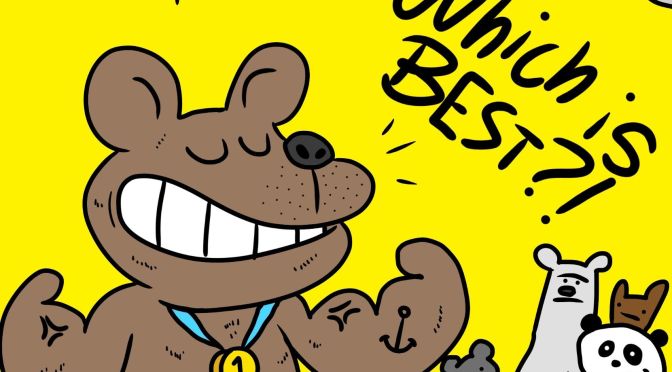
In the picture for this article they’re depicted as #1, and while they’re only the bronze medal in this race, they’re the definitive bear for a lot of people, since their identity is that of just being a bear. Others like pandas and polar bears are characterized by superficial means, like their habitats and fur color. But when you have a bear whose existence is to act as the base-form bear, that’s a good bear in my opinion because it’s the most bear-like bear!

Number 2: Polar Bears

While I like grizzly bears because of their simplicity, I’ve always thought of polar bears as an upgraded version of the former. Everything about them can be seen as analogous to grizzly bears, yet done better. They’re bigger, stronger, live in a unique habitat, and are the largest land carnivores in the world.

The only real downside is that they’re dying out because of global warming, but then again, I have a “survival of the fittest” mentality in life, so it doesn’t faze me very much [this is a joke]. Other than being weaklings against some hot air they’re pretty cool animals, actually. There’s not that much to talk about them, since polar bears are just neat, and I like them. But they’re not the best bear.

Number 1: Black Bears

So, after careful analysis and tedious studies, we (I) can confidently say that, yes, black bears are the best bears, for a simple reason: they have all of the best attributes of the past 3 bears.

They have the icon status of polar bears, the wide-spread range of grizzlies and the uniqueness of sun bears. They’re cute and small-enough for merchandising in the public eye, but not overblown like panda bears are. They have a varied diet and can live in many different environments (something that polar bears can’t do) and don’t look hideous (like sloth bears and their asiatic cousins). This goes to show that, while unique, black bears have all of the best traits of bears.

They are the perfect species here, and are the definitive bear due to straddling both common and rare traits, making for an accessible animal for people to connect to. So yes, in this year’s ‘2024 Bearlympics,’ the judges have tallied that the humble black bear has emerged victorious and is, with every option considered, the single best bear.

Disinformation, divisions, and democracy: Why Joe Biden’s Twitter is damaging political cooperation

By: Jocelyn Knorr

Valentine’s Day coincided with another very important date this year, but the leadup to the Super Bowl wasn’t all excitement. Instead, there was a very odd undertone to the festivity as people on social media pushed one of the oddest conspiracy theories to ever cross the internet.

Speculation surrounding the billion-dollar pop star Taylor Swift is nothing new—I still have distinct memories of the week everyone went crazy over the theory that she and Formula One driver Fernando Alonso were dating—but this has been taken to a new level by proponents of the “rigged Super Bowl” theory. It’s based off of two things. 1) Taylor Swift has a very large audience. When she called on her fans to register to vote in an Instagram post, vote.org, the website she directed them to recorded a 1,226% jump in registration. 2) Since December of 2023, Swift has been publicly dating Kansas City Chiefs tight end Travis Kelce. Since then, she has been spotted at many of his games to cheer him on.

This is where we get into corkboard-covered-in-red-string territory. Because of the link between Swift and Kelce, former presidential candidate Vivek Ramaswamy suggested on Twitter that the Super Bowl was going to be rigged in the Chiefs’ favor. This ensuing attention would facilitate Swift throwing her support behind sitting president Joe Biden, who is up for re-election in 2024. In Ramaswamy’s theory, Swift’s legion of fans would heed her call, and vote for Biden in the next election. Ramaswamy himself has a sizable audience; people began to regurgitate this story across platforms, leading to a significant subset of the American population that legitimately believes in a rigged Super Bowl.

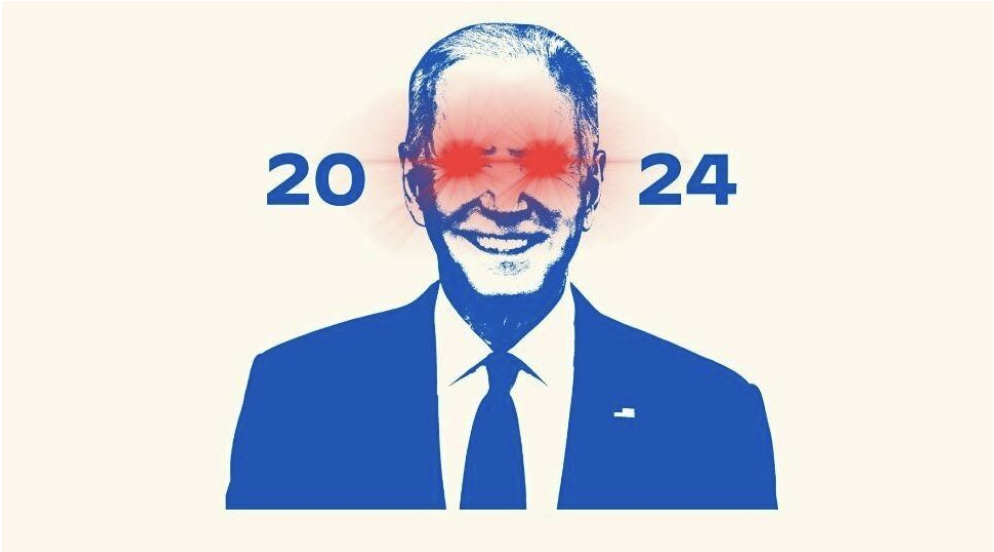
Biden has responded to these accusations by making jokes on TikTok and releasing merch that depicts himself with glowing red eyes. Specifically, he calls this alter ego “Dark Brandon;” a reference to Let’s Go Brandon, a euphemism for “F***Joe Biden.” He’s been using this alter ego to poke fun at the people who believe these theories, most notably by posting “just like we drew it up” as Dark Brandon on Twitter after the Chiefs win.

It may seem all in good fun, but one has to remember that humans are prideful animals. When someone makes fun of us, we tend to discount them out of hand—sour grapes, and all that. This is a largely polarized conspiracy, spreading mostly through the far- and alt-right and even several sitting members of the government. When the leader of the Democratic Party decides he’s going to make fun of these people on a major public platform, he pushes them further away. It jeopardizes our already-imperiled ability to work across the aisle. I’m not saying that we have to agree with the things these people say, but we do need to remember that there are people on the other side of the screen. If we choose to engage, we should do it kindly. It’s like having a coworker who sucks; vent away in private, but don’t humiliate them on Twitter.

Elementary school highlights

By: Cleo Newton        

I used to go to a Chinese immersion elementary school. All the core classes were taught in Chinese, and the only classes that weren’t taught in Chinese were gym, art and science.

Our kindergarten teacher, Li Laoshi, went on maternity leave for pretty much the whole year. She came back to visit some of the time but she wasn’t really there most of the time.

Our sub was named Jia Laoshi, I don’t think anybody liked her. She was really strict, she wasn’t really a good teacher, and wasn’t good with kids. There were times when she would put kids in timeout for really small reasons. She once put the entire class in timeout for 6 min because a couple kids were talking. She set a timer on her iPad and everyone just sat in silence waiting for the timer to go off.

One day, I was coming back from recess and was talking with my friends like everyone else. Class started and everyone was supposed to be quiet, a few people, including me, were still stalking. Jia Laoshi sent me to a timeout. I think it kinda makes sense that I would get sent to timeout for talking during class, but I don’t think it was fair that I was the only one getting sent to timeout. A couple minutes later one of my friends got sent to timeout for the same reason. She sat down on the other side of the room and I waved to her. The teacher saw me waving and immediately sent me to the buddy room. Luckily, there wasn’t anyone in the other classroom at the time.

Elementary school was pretty interesting. Like everyone, I had ups and downs. I don’t think the teachers did a good job helping everyone in the school. I have a friend whose sibling didn’t have any friends at school at all. Their teachers never did anything about it. That friend eventually transferred schools due to bullying in 4th grade.

Teachers also punished some kids unfairly. My experiences in elementary school never got that bad; I had a good time most of the time. I still think that the teachers could have done a better job trying to connect and understand their students instead of jumping to conclusions or punishing them when there was a misunderstanding. Of course, not all the teachers were like this.

Many years have passed since I’ve gone to this school. I still visit during their holidays and celebrations. Many things have changed, like the interior design. Most of the old teachers have left over the years, I only recognize about 3 teachers now including the principal. I plan to visit as often as I can.

Why humans belive in God/s

By: Mira Kaufman

Religion and philosophy have shaped our world but why do people believe in a God or creator and how have we humans continued to have faiths for thousands of years?

According to Nick Perham, on Independent, only 16 percent of the world’s population are considered not religious. This means that 84 percent of the world believe or have religious values passed down into their lives. There are many reasons why 84 percent of our world’s population believes and follows religion, but even so, these questions have been asked for thousands of years, and yet we may never truly have answers.

The first reason for religious practice is heritage. Many families identify with a religion or philosophy, meaning they raise their children through generations with tradition, practice, belief, and followed values. In many religions, followers are not taught to question the system but to follow, allowing beliefs to continue with little interference. In religious families, practices become meaningful even without a belief involved. For example, many Americans celebrate Christmas but would not consider themselves a Christian.

When a person believes in a God/s it comes with a sense of purpose and belonging. This may include the goal for placement in an afterlife. Believing in a given path in life is quite common too. In many religions, followers find comfort in purpose and reason. For many, it is scary to not know why one exists, which is a leading reason for why people believe in god/s to find comfort in their everyday lives.

Another reason is the lack of proof for the answers of the universe. There is no direct proof of God/s existence nor is their proof of no God/s. This gives people the allowance to believe for there is no scientific evidence that they are right or wrong.

People are curious beings all with different values, opinions, and stories. Religions and philosophies shape who we are and tell a story of our society. A person’s spiritual beliefs are a powerful tool to shape their identity. Whether you believe in God/s or not it is essential to see and hear each other’s stories. We, no matter what we believe, are all humans. We must take it upon ourselves to open our minds and find community and respect for each other to keep living on the same earth that we have all these years.

What makes a good villain?

By: Persephone Pond

Villains are what makes a story a story. An opposing force always gets in the way of the hero, creating endless opportunities for character development and fun plots. But what happens when a villain is poorly written? In this article, I’ll be highlighting some of the best and worst ways you can write a villain and some examples of both.

Humanization is a very important factor for a complex villain. A lot of antagonists in children’s media aren’t very humanized because having things clean cut as “good” and “bad” is what is typically done for children, but to really have another level of character for a villain, humanization is essential. This brings the aspect of humanity to a person who’s only really been seen as evil for the length of the game or show and can help the viewer to understand and empathize with this person, or just gain an understanding that the villain is still on the same level as the hero or protagonist.

Motives and backstory are important aspects of any character, but in my eyes, especially villains. Regardless of if the villain is going to have redemption, there needs to be a reason that this person is doing what they’re doing. Often, in villains, the thing that draws them apart from the hero is their outlook on the world and their ideals or philosophy, which impacts their perspective on the world. This determines their actions, which are often viewed as evil or bad. This aspect of a villain is vital to understand why this person does what they do.

And on the topic of philosophy, personally I think if a villain makes you think about another aspect of a common societal, or some other problem, then the writers did a good job. Villains aren’t necessarily only there to oppose the protagonist, but to provide another outlook and challenge the hero’s ideas and try to impose change, even if their methods aren’t the best. This is my favorite part of any villain and I strongly believe having a philosophy makes all the difference in characters of all kinds.

Redemption arcs are very iffy parts of villian stories. There’s nothing wrong with redeeming your villain, oftentimes it makes for a wonderful addition to the story, but there are quite a few ways to screw a redemption arc up. One of the biggest ways is the justification of the villain and their actions through trauma to create this redemption.

Trauma isn’t inherently bad, it often creates a complex backstory for a villain and gives them a good motive, but when the audience is expected to forgive a morally wrong person who’s done bad things just because they had a hard life, it’s a deal breaker. You can write a villain with trauma and have them reveal it, but when we, as an audience, excuse things like murder because one person went through something is just bad writing, and I personally think it’s one of the biggest red flags in a show. This is a very touchy spot in writing any piece of media, but it can, and has been, done very well, and it’s very rewarding to watch a show or play a game with a well written villain.

These are all aspects of writing a character that are incredibly important, and as there are badly written villains all over the place, a well written one is worth the find.

Are high school students working too hard?

By: Jefferson Palma

Here in this day and age it’s normal to give work for students to complete after school which is called homework. Homework is a very controversial thing because people argue that it isn’t necessary while others say that it is.

Finland, for example, is rated in the top ten for being one of the best education systems internationally even though they do not give homework, and have shorter school hours than American schools do.

Typically, in Finland, they require 5 hours a day of school while in the US it’s 7 and a half hours.

According to the Princeton Review, in their Student Life in America survey, more than half of the students reported feeling stressed, 25 percent of students felt that homework is their biggest stress, and 33 percent of their studying time they’ve felt struck, stressed, or anxious.

Homework is without a doubt a huge reason why students feel stress. I personally believe this can affect students’ mental health and it’s too much for students when they already have 7 and a half hours of school to learn and to work.

I personally am a high school student in St. Paul, Minnesota and I believe that in addition to homework, they are making it hard for us because they also do not give us enough breaks in between classes (that includes lunch as well).

Breaks are essential for the brain and it can be bombarded with too much information if they don’t give us a healthy amount of time to rest.

I personally have three core classes all in a row, and my only break is the passing time which is 5 minutes. This means that I need to drop everything I learned from science and switch to my brain to learn in history class in a few minutes.

And I find that I have too much workload in a short amount of time.

Another thing I would like to point out is that they don’t give us enough time for lunch. For the people who’re late, they need to wait more than half of the time in line to get their lunch (and I know this from experience) and I believe it isn’t enough time to eat and talk with your friends.

In the end, I would say, high school students are working too hard because we don’t have enough breaks and we also have to worry about homework.

Positive impacts of social media

By: Aliana Romo

Social media has had a major impact on society since it became more popular in the early 2000s. There’s many different opinions on if social media has had a negative or positive impact for people. Harvard EDU says “In more general terms, these findings suggest that as long as we are mindful users, routine use may not in itself be a problem. Indeed, it could be beneficial.” This means that as long as you have self control when using social media, and not being on it for too long, it could be beneficial for mental health.

Being active on social media is beneficial for learning more about the world and being introduced to new cultures. This is important because without seeing new cultures, it would be harder to learn and understand most things about the world. This overall helps to be exposed to new things. Being able to see posts from other countries makes it easier to be informed. Along with this, social media also helps with the spread of news. Most importantly, news in other countries, or worldwide knowledge. Without social media I would not know most about what is happening in other countries since I don’t watch the news. There’s also many different opinions that really help with seeing other perspectives and understanding both sides point of view.

It is also beneficial for creativity and being introduced to new fashion, ideas, recipes, etc. I mainly use Pinterest to find new recipes and outfit ideas. Personally, I think that this really helps to try out new things and go out of comfort zones. It also helps seeing other people step out of their comfort zones and can be used as a way to help yourself try new things. Along with something more commonly known as trends, which are important for younger generations. Overall, trends help show the evolution of society through history.

Another way that social is helpful, is for staying in touch with family and friends that live out of state or the country. Oftentimes, it gets hard to constantly stay in touch with loved ones that aren’t around as often, although with social media, it’s easy to stay involved in their life and communicate easier. This is also important for getting news to spread quicker around families; in many cases my family has posted on social media to try and get a family reunion together. This has worked many times, and overall a good way to stay in touch.

Social media is positive in many ways, it helps people stay connected with other people and learn new things about the world. Without the use of social media, the world would become very unconnected and out of touch.

Beauty standards

By: Mira Kaufman

Screenshot of Instagram post via caroschaeffler: Berlin,Germany

When were you society’s “beautiful”?

When we look in the mirror we see ourselves through the eyes of society whether we like it or not. We see ourselves with beauty and insecurity, but what if I told you, the person you see in the mirror is quite in fact the high end of beauty standards. Maybe not in 2023 but perspectives change. So if I don’t feel beautiful in society now, then when?

According to Lila Esquivel, on Miami High News, “Today’s standards for women are small waists, long hair, and flawless skin. Girls are required to be this ‘perfect image’ when nobody is perfect.” This includes the expectation for women to wear makeup and stay “looking young”. These beauty standards are especially shared through social media and can lead to eating disorders, loss of confidence, depression, and more.

The average American modeling agencies hire skinny, tall, confident women, who are indeed beautiful but they raise standards for all women. Social media also gives the options of photoshopping, supporting the unhealthy beauty standards shared though society. And yet these standards have only been the case for a short period of time.

Even just 40 years ago the beauty standards in the US were entirely different. According to Amanda Cruz Mendoza, at Sonoma State University, in the 1980s, the stands were “big textured hair, toned body, and bright colored clothes”. In 1900, women were expected to have a thin waist, curvy hips, and to be voluptuous.

The 1800s the US standards changed immensely too. Women in 1860 were viewed as beautiful if they were pale, hairless, and clean. The 1800 beauty standards involved many facial features. They included pale skin, rosy cheeks, straight snap noise, and symmetry.

In the 1700s, women were expected to have round cheeks, blond hair, and broad buttocks with small breasts. This changed from the 1600 Renaissance beauty standards from being goldish red hair.

A common insecurity throughout society today is the size of one’s forehead. Today people cut bangs to cover them up due to the current beauty standard but in the 1500s, European women and men were viewed as beautiful the larger their forehead got. Large pale foreheads, rosy cheeks, and dark brown eyes added onto the 1500s beauty standards.

Throughout time, until quite recently, having fat or a less slim body was something to be proud of too. If you were not thin, it meant your family had money and were able to support themselves, their family and home. The word was called “Plump” and many were jealous of royalty who had the softer shape.

Many other cultures had beauty standards of their own. Starting in 1200, China formed a three inch foot also known as “Lotus feet” beauty standard. They used foot binding, starting as children, to reshape the feet to fit these standards. This is just one example of many and it shows proof of what people do to change themselves to society’s standards.

Next time you look in the mirror, think of all the people that have come before you who were labeled “beautiful” in their own time. Knowing this we can fight unreachable beauty standards together, and change society to a healthier fit for all people. You are beautiful, and if you don’t currently feel beautiful in society, you now know when.