Tag Archives: album

‘U’ – Album review

By: Maple Graham

Version 1.0.0

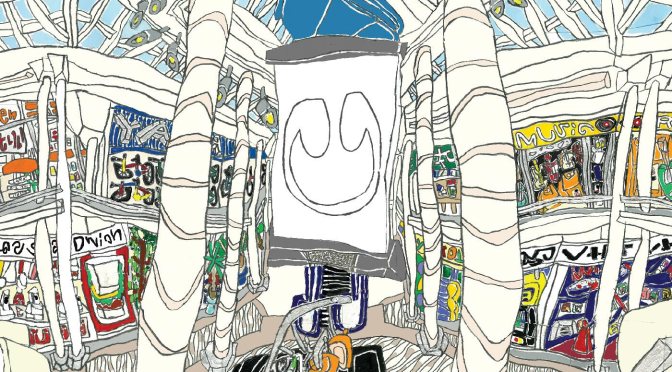
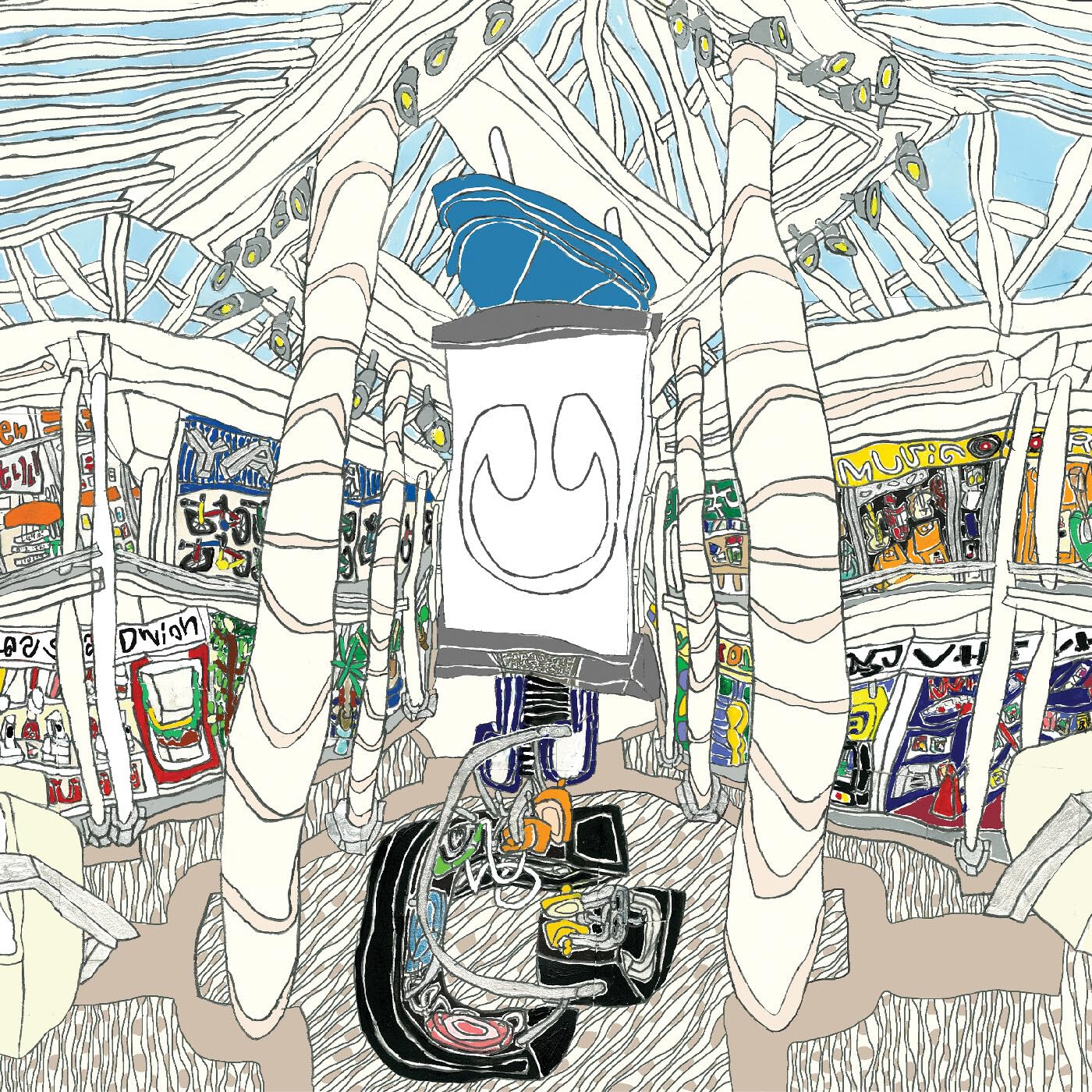
On March 20th, underscores (a.k.a. April Harper Grey) released her third studio album: ‘U’. It’s a short, 9-track, 34 minute album; it never overstays its welcome and is far from uneventful. The focus of the album is the prospect of catching feelings for someone and getting into a relationship with them. Throughout the course of the album, April (who is April herself, presumably presented in a realistic, yet fictionalized manner; all of the things brought up here could’ve happened, but there’s no evidence that this world is non-fictional) and her love interest begin to drift apart, and ultimately, the other person ends up leaving for someone else. This leaves April alone once more—treasuring their former relationship, stating “I’ll wish you well forever, no, this ain’t what I had imagined / That’s just how it happened” during “Wish U Well,” the finale of the album. It’s a playful yet melancholic album; it does what it strives to do without any extra fat around the edges.

The album leans heavily into underscores’ electronic influences, much more than her previous works of ‘Fishmonger’ and ‘Wallsocket’, but still keeps acoustic elements around for a satisfying blend of the two. ‘U’ is also less lyrically dense than ‘Wallsocket’, leading some fans to dislike it as most of the songs can be understood without understanding the references that come with the lyrics. The average person could understand a song like “The Peace” from ‘U’, that being a song about “trying to keep the peace” with someone else despite the relationship being detrimental to both parties—compare that to “Uncanny long arms” from ‘Wallsocket’: a song about a character named Mara getting an epiphany after dying and getting resuscitated during her arm reduction surgery, then cancelling it even though doing so would continue to fuel her obsession with another character present in the album. And no, in that latter example, none of that is explicitly mentioned in the song—instead being prior knowledge you get through a “government” website for the fake town of Wallsocket, Michigan that April set up before the release of the album. Taking all that into account, it’s apparent why a handful of fans felt disappointed at the lack of a story ‘U’ had, but the majority liked the collection of music that didn’t try to be anything more.

The rest of the article will now be my opinions and rough descriptions of the songs within the album—if it interests you at all, I suggest listening to the album yourself instead of letting me spoil the surprises through my review.

“Tell Me (U Want It)” is a solid opening to the album (as well as the third and final single of the album), and it certainly is a lasting first impression. While not revealing ‘U’’s true intensity quite yet, it still fuses a mix of dubstep–esque sounds with an acoustic guitar wonderfully, creating an addicting chorus—then subverting all expectations at the end by stripping away the instrumental sounds, leaving only raw vocals with whistling, synthesized chirping, and a simple kick pattern to compliment it. The lyrics themselves illustrate April’s skepticism towards others, only trusting people if they’re really trying to form a relationship with her, and not just people who want to use her for her status or fame, or judge her for who she is. The song cycles through past people and their flaws: “Livi thinks that I’m in over my head / Dropping old interests, changin’ my hair / Amanda says that I’m not on the right track / ‘You’ll hate looking back,’ I told her, ‘I’m well aware’” being a couple examples from the lyrics. I personally enjoyed this track—giving it a 83/100.

“Music” was the first single released within ‘U,’ and the second song of the album. Losing no momentum attained within the first song, it doubles down on the synthesizers, creating a maximalist hyperpop soundscape that’s hard to get out of your head. This song is about April meeting someone new, and becoming interested in them, with “And I don’t know what to do / Never gelled this well with someone / I just want to catch up to you / And I don’t know where it comes from” being admitted during the second pre-chorus, showing the growing feelings she has, and the foreboding presence of an obsession. This song blew me away from a production standpoint when it first released last summer, and it continues to hold up as one of the best songs on the album, giving this song an 88/100 from me.

Being the longest song within the album, “Hollywood Forever” is a bit of a doozy. Despite its 6-minute runtime, it’s fleshed out well and has frequent switch-ups that aren’t too intrusive. It also progresses and builds on itself, which becomes a recurring theme with the songs that aren’t singles on the project—the only deviation from this is “Bodyfeeling.” It follows April as she can afford “everyday indulgence” through her newfound virality, which is something she didn’t grow up with. During the chorus, the other person tries to reason with her by repeating “And you say, I’m so, I’m so Hollywood? / Well, aren’t we all so, all so Hollywood? / And you think I’m so, I’m so Hollywood? / You gotta let go,” the same argument over and over, that she’s no worse than anyone else. Later in the song; about halfway, April beckons her love interest, saying “Don’t you wanna / Don’t you wanna / Don’t you wanna become famous with me” to get them to adapt to her lifestyle and status. I would give this song an 84/100; it’s ingenious but ultimately a bit long for my tastes.

“The Peace” is the shortest song on ‘U’, entirely made up of underscores’ vocals. I really liked the production on this one, and it’s a shame this song is a bit of an outlier from the other songs on this album. The lyricism depicts April’s crumbling relationship with another person, both falling into old habits like addiction with the other as they “just wanna keep the peace,” and they do so by smoking and spending time together. As stated before, underscores’ vocal harmonies are phenomenal, and I give this a solid 90/100 for both sound and creativity.

“Innuendo (I Get U)” crescendos into easily the best coda of the album—seconded only by “Lovefield.” It was my favorite upon my first listen to ‘U’, and although I’ve grown on the project as a whole, this is still a really fun listen. The lyrics are less than dazzling, that being April believes that the relationship she has is only for sexual pleasure, saying “It’s just like I already know / Well, you don’t gotta say another word / ‘Cause I already know your type of girl / You don’t gotta talk to me / I know what you want from me / It’s finally time for me to get a turn”: she lets the situation escalate before finding out that “[she’s] really not [their] type of girl.” I’d rate this an 85/100 for how carefully crafted this feels, the production is bedazzling and it’s truly something special.

The coda of “Lovefield,” as stated before, is unrivaled on ‘U.’ This is, as April calls it, a “heart to heart” with the person she likes. It’s an interlude of sorts, dropping the playful and affectionately brash attitude and being real for a moment: she’s beginning to lose the grip she once had on that other person, explaining that “Every time I hang with you (You) / We don’t know what we’re supposed to do / God, is this forever, ever? / I’d just forget it, but I can’t, I can’t / You’re just outsidе the Lovefield,” highlighting how it’s beginning to feel like she can’t hold a relationship anymore. She also says “Hand on my shoulder, I recoiled / Is the Lovefield really getting smaller? / I don’t wanna be untouchable anymore” during the bridge of the song, showing her mental vulnerability to any relationship she has, and how she feels herself becoming “untouchable” to the people around her. This song is an 86/100 for me; it’s not the best on the album, but it’s still memorable.

Falling back into energetic electro-pop, “Do It” immediately takes the unguarded atmosphere and shatters it. Being the second single released along with its own accompanying choreography, it’s a change to ‘U’ that isn’t really expected. It feels disingenuous in a way—everything she said during “Lovefield” comes across as a lie, which also sets up the last two songs of the album. Future connections aside, this song is about trying to find a relationship again, with the verses consisting mostly of questions: “What are your prospects? / Do you make your own cash? […] If I left for three months / And I turned my phone off / Would you wait here for me? […] What is my net worth? / How does my song go?” being examples of said questions. April also touches on the detail of “I’m married to the music, the music, baby” at the bridge of the song—she feels like she can’t ever have a meaningful relationship with someone when music is in her life. I rate this an 89/100, this song is one of my favorites and gets stuck in my head often.

“Bodyfeeling” is a minimalist, catchy experience depicting April experiencing negative feelings towards her love interest, noticing “I get a body feeling I never tell you about / I get a body feeling, the one I keep shutting down / I get a body feeling, but I’ll ignore my body for you, for you”—yet pushing them to continue a relationship with them. It has a much less extravagant production, but is still masterfully done—instead of her composition wizardry shining here, it is instead her own vocals. I give this an 80/100 for its rememberability, yet also docking points since its instrumental is slightly lackluster compared to the rest of this project.

The finale of ‘U’ doesn’t disappoint; “Wish U Well” is a song about April breaking ties with the relationship, and either person going their separate ways. April ends up encountering this person by chance in public, seeing her former love interest with another person, and she sees herself in that other person, saying “You’re walking to the corner store, you’re interlocking arms / She looks just like me / In a way, it’s beautiful.” She additionally wishes him well, harboring no hard feelings to him. It’s a slightly melancholic finish, but I don’t think this album could have a better end. Even though it has its strengths, it’s still nothing unpredictable, so I give this a modest 78/100. Don’t be fooled though, this is still a very good song—the entire album is definitely worth a listen if you’re into electronic music.

Overall, I give ‘U’ an 84/100. This was certainly an experience, and though it’s not as polarizing as something like Porter Robinson’s ‘SMILE! :D’ or Patricia Taxxon’s ‘Pix & Bit,’ it’s still a consistent album that feels the perfect length. If you’ve read this far, I highly encourage you to listen to the full album, and the rest of the underscores discography if you haven’t already!
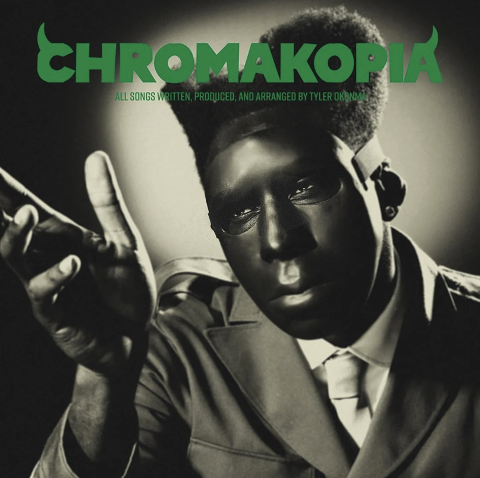
Review and meaning of ‘CHROMAKOPIA’ album by Tyler, The Creator

By: Christine Yang

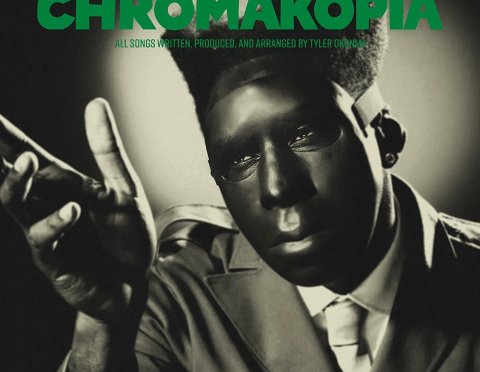
Tyler, The Creator is a rapper and producer distinguished above all other singular qualities by his gravelly voice and an irascible disposition befitting a collision-shop owner. Recently Tyler, The Creator released an album on October 28, 2024, called ‘CHROMAKOPIA’ with 14 songs on it. The album is a blend of hip-hop, rap, soul, and R&B.  

“St. Chroma” (feat. Daniel Caesar) :

“St. Chroma” is about a captivating narrative of Tyler’s personal growth of where he’s at right now, while also revealing a vulnerable side that seeks validation and connection.

This first track has a march sound at the beginning, soon after the opening, Tyler’s voice seems to emerge from the shadows. Later on in the track there’s a transition into the bridge which introduces a completely new dimension with soaring gospel-inspired vocals, contrasting beautifully with the earlier, more ominous tone. Overall, I give this track a 8.5/10. 

“Rah Tah Tah” :

“Rah Tah Tah” is centered around themes of self-confidence and personal boundaries. But it also emphasizes Tyler’s assertiveness in handling conflicts, wanting privacy from the media, and for people in his life to meet certain standards. This track describes Tyler as a figure who is unapologetically himself, navigating fame with confidence and caution while remaining distinct in his approach to life and relationships.

This track has a burst of chaotic energy and showcases Tyler’s signature style of distorted, and aggressive beats. Tlyer’s flow throughout the track is fast and humorous, which gives this up-beating feel to it. I rate this track a 10/10.

“Noid” :

The track “Noid” is about Tyler’s anxieties about home invasions, being hyper aware of people around him, and having a constant feeling of being watched by the media/people in general. Basically, the track is about Tyler being scared for his privacy knowing he’s a well-known music artist, but wishing that wasn’t a problem to people like him (celebrities).

This track has an electrifying and echoing feel, which gives the effect of voices of the anxieties in Tyler’s head. There’s also drums almost throughout the track to make it more up-beat sounding. At the end of the track it slowly gets aggressive sounding (music). I rate this track a 7.5/10.

“Darling, I” (feat. Teezo Touchdown) :

“Darling, I” is about the complexities of love, commitment, and personal freedom. This track touches on themes of aging and self-awareness, with Tyler acknowledging his imperfections and fighting with the idea that the person he loved will never be enough to fulfill all of his needs or expectations in life.

The track includes smooth vocal effects and has a romantic vibe. Even though having a “happy” beat, the lyrics tell the meaning/story that Tyler wants to get across but they’re really repetitive. I give this track a 7.5/10.

“Hey Jane”:

The track “Hey Jane” is about the emotional and psychological challenges of an unexpected pregnancy, between two perspectives (both partners—Tyler and Jane—). “Hey Jane” is an expressive narrative about the weight of choices, the fears of losing freedom, and the struggle to support one another through a big centered moment. 

“Hey Jane” has a slow tempo and minimalistic beats, which creates an intimate space for the dialogue between two characters. This track’s music isn’t “crazy”/overdone which I really like since I can really focus on the lyrics, and not be so overwhelmed. Overall, I rate this track a 10/10.

“I Killed You” :

“I Killed You” is about the deeper struggles of identity, societal pressures, and self-worth within the Black community. This track reflects Tyler’s personal struggles with following beauty standards while also paying tribute to the resilience of Black culture. Through the metaphors and introspective lyrics, the track talks about the broader conversation about Black beauty, heritage, and empowerment.

At the beginning, and close to the end of the track, it has this acoustic guitar feel, and also in the beginning while the acoustic guitar was playing it later transitions into drums. The track has an upbeat but also calming feel to it. I give this track a 9.5/10.

“Judge Judy” :

“Judge Judy” is about living to your fullest and being our truest selves knowing we don’t live forever, and not to judge others’ decisions especially not knowing their personal problems or reasons they did what they did. But on a personal level, it’s about a person that Tyler personally met, named Judy. They became really close since they were being really transparent, and about a year later Judy unfortunately died before Tyler received a letter/message that she wrote for him. The letter/message was about thanking Tyler for everything, and hoping Tyler lives his life without regrets.

In the track, Tyler’s soft vocals guide us through a narrative that feels intimate and personal, inviting us to connect with his experiences and emotions. The track is really catchy, kind of repetitive, and sort of “dreamy”. I will give it a 8.5/10.

“Sticky” (feat. GloRILLA, Sexyy Red & Lil Wayne) :

“Sticky” is a way for Tyler to express his unfiltered thoughts on societal expectations, personal achievements, and sexual freedom. This track underscores the importance of owning one’s identity and navigating life with unapologetic confidence.

This track has this catchy whistle, has a dynamic fusion of styles between rap and experimental sounds (also styles to match the featured artists). The track gives off a cheer and band vibe, with the stomps and chanting. I rate this a 10/10.

“Take Your Mask Off” (feat. Daniel Caesar & LaToiya Williams) :

The track is to address themes of identity, authenticity, and the societal pressures that compel individuals to hide our true selves, but still telling to embrace yourself regardless of those negative pressures. 

“Take Your Mask Off” is gentle but harsh (in a good way), the lyrics and beats/music has this flowy sense. Which allows this strong message (lyrics) to get across the track, and easily be understood. I will give this track a 10/10.   

“Tomorrow” :

“Tomorrow” is the struggle of navigating the tension between Tyler’s personal desires and the societal pressures to start a family and conform to traditional expectations. The track is a deeply introspective exploration of aging, responsibility, and fear of the future.

At the beginning it has an acoustic guitar entrance to the first verse, which is soft and quiet. But throughout the track it still has the acoustic guitar and not “crazy” beats. I give this a 9/10.  

“Thought I Was Dead” (feat. ScHoolboy Q & Santigold) :

The track is about Tyler expressing his desire for privacy, disappointed with those who misunderstood or exploited his persona, and his determination to remain true to himself while being in the middle of the public, also knowing the public is critical with others’ actions. “Thought I Was Dead” is the reflection of Tyler’s journey as an artist but also as a person.

The track has a marching band rhythm, energetic entrance which is an entrance for Tyler’s sharp and tense rap. I rate it a 10/10. 

“Like Him” (feat. Lola Young) :

“Like Him” is about Tyler looking like his father that was absent in his life (not knowing himself), but thinking his father didn’t want to be in his life even though Tyler’s mother just cut his father out due to issues that his father had. The track is basically a message about his struggle of not having a father figure in his life, and also hating that he resembles his father too.

The track gives a kind of retro feel at the middle of the track, but Tyler’s vocals are really soft. At the end, it’s powerful (voice and music) to capitalize his message for his mother. I give it a 10/10. 

“Balloon” (feat. Doechii) :

The track is about the exploration of self-identity, independence, and the complexities of personal relationships. Ultimately, “Balloon” serves as an anthem of empowerment, encouraging listeners to embrace their true selves without hesitation due to society.

“Balloon” has this circus sound to it, and has an aggressive sound close to the end. But throughout the track is smooth (sound wise), even though the track is smooth there are parts in the track that are “loud”, which adds dynamic. I will rate this track a 7/10.

“I Hope You Find Your Way Home” :

This track is about the journey/exploration toward self-discovery and belonging, the track serves as both a reflection on Tyler’s personal evolution and a heartfelt message to others (listeners) navigating their paths.

“I Hope You Find Your Way Home” gives off early 2000s music (at the end) or a “choir” sound (mostly at the beginning). The track involves sounds like growls and barks. I give this track 7.8/10.

Overall, I give this album a 9/10. I really recommend this album or just Tyler, The Creator in general if you really enjoy listening to Childish Gambino, Steve Lacy, Frank Ocean, and Kendrick Lamar.

‘The Land Is Inhospitable and So Are We’ album by Mitski – Background information

By: Christine Yang

Information about the album:

The album ‘The Land Is Inhospitable and So Are We’ was made by the artist Mitski. The album was released on September 15, 2023, which was her comeback and recent album after releasing an album called ‘Laurel Hell’ in 2022. ‘The Land Is Inhospitable and So Are We’ has eleven songs in the album. One of the songs in the album was one of the biggest hits after the release, and the song was “My Love Mine All Mine” with 560 million Spotify streams.

Songs:

“Bug Like an Angel”:

The process of the track, “Bug Like an Angel” has mainly four chords throughout it (chords: d flat major, a flat major, e flat major, b flat major) because the song is about addiction, and Mitski wanted to show it in a musical way that addiction is basically a cycle that you’re just kind of stuck in, it being repetitive over and over which doesn’t end, so the intention behind having the same chords repeating hopefully leads the listener to think what it’s about. Mitski also wanted a little twist/change by having the vocals in the middle of what we think is the chord progression; she wanted that twist to give a feeling of being off balance because the song is about addiction which isn’t a balanced state.

She started creating the song by having a descriptions so it’s easy to paint a picture in the listener’s head; she wanted the picture of someone drinking something out of a glass and which there’s stuff left. While they are drinking out of it, they realized there’s a bug stuck at the bottom of the glass, and because it’s stuck it looks like there’s an angel in the sky. She chose the angel reference so it can set the tone since later on in the song she says something about God and devils, which is supposed to give the listener the option to take two main meanings (positive or negative, pessimistic or optimistic) away depending on what they want out of the song.

After the the description Mitski wanted the protagonist to say something about themselves as an introduction, later on in the song there’s a choir part coming out of nowhere to be the first big emotional moment saying the word “family” with a whole choir out of nowhere, to evoke that sort of intensity with a choir as well. Then it goes back to the corporation and then the second verse, which is a spot to bring another character in and have the protagonist, who we know, point them out saying like, “Hey what’s the matter? You’re looking like a sticker stuck on a floor somewhere”. Which basically means like the person doesn’t look like they’re having a good time, like they look sad, despondent, and that phrase basically brings back to Mitski thinking stickers were so important to her when she was a kid, and how sad it’ll be if some kid’s precious sticker was stuck on a floor and couldn’t get it off. Basically, this brings up how the protagonist faces challenges which make them suffer, and that’s where the “God and devil” reference shows up, saying “is the suffering from God or the devil”, in the third verse. And that’s how the song “Bug Like an Angel” was created.      

“Buffalo Replaced”:

“Buffalo Replaced” is a track that was supposed to give an idea of how the album, ‘The Land Is Inhospitable and So Are We’, is like. The track specifically— Mitski and her producer, Patrick Highland, was really inspired by ‘The Velvet Underground’. While the inspiration was added at the beginning of the song, Patrick also added keyboard sounds at the end too, which added something beautiful at the end, in Mitski’s opinion.

“Buffalo Replaced” might be about being dependent/leeching onto someone, and having struggles without the person that you rely on. 

“Heaven”:

“Heaven” is meant to exemplify the little time someone has with the person they love, and to cherish that time and leave the issues of the world outside the room to enjoy the beautiful love they share, Mitski has stated.

“Heaven” was an old song, but the beginning of the song sounded different than how it is now, because the older version didn’t have the swing that it does currently. Mitski was fine with that version; it just didn’t feel like it stood out as much alongside the other songs she wrote that have the same rhythm, so it sat for awhile until she and Patrick tried to figure out how to make it sound on a record.

The first demo version they did actually was right after they recorded “Be The Cowboy” in Philadelphia. That demo version had more of a Patsy Cline swing to it, which is closer to what it is now. The problem was that the track didn’t really have an album that it fit into or in the ‘Laurel Hell’ album so it sat some more, but eventually made the album ‘The Land Is Inhospitable and So Are We’.

Since the track was such a romantic song, they wanted to do it with a whole orchestra and a sweeping Old Hollywood sound. They found an orchestrator, Drew Erickson, who did works with popular artists. Erickson orchestrated for “Heaven”, and then Mitski’s team recorded the orchestration part.

“I Don’t Like My Mind”:

The lyrics in ‘” Don’t Like My Mind” are literal and self explanatory, which the listeners can get the grip of what the song is about. The song could be about trying to distract yourself from negative thoughts and using stuff to cope with those things; it can also mean you not wanting to be alone with your thoughts due to negativity.

The production process for the demo was made right after she and her team recorded “Be The Cowboy”, and was also recorded in Philadelphia. The track in the song ended up being easy to make because it was similar and the end result was similar to the demo they made way back then. So, her team just kept the guitar track from the demo.

“The Deal”:

The song started by misinterpreting a Maria Mitchell poem, “How Charming is Divine Philosophy”. The poem is basically about how you discover more about the world and you while going on a midnight walk by yourself. One line in the poem, “There’s a deal to be learned on a midnight walk, when you take it all alone” Mitski misread it as, “There’s a deal to be made on a midnight walk when you take it all along” and before she realized the error she made, she thought it was an interesting thought: like what kind of deal can you make on a midnight walk?

The song “The Deal” can mean wanting your life to be like someone else or your expectations of yourself, and being willing to give or do anything for your ideals.

“When Memories Snow”:

Mitski got the idea of the music for “When Memories Snow” by playing the piano and experimenting with chords inspired by a show instrument, Japanese Shō (doesn’t follow the Western traditional music rules), which can be heard at the end of the song. The song has two parts inspired by Western movie soundtracks and British invasion rock. The song also pushed Mitski out of her comfort zone because most of her songs are quiet/soft which is an easy range for her.

“When Memories Snow” could be about putting the past behind you and focusing on making new paths/memories, and how the past will always be there to either drag or lift you up.

“My Love Mine All Mine”:

“My Love Mine All Mine” is about how to love is the best thing Mitski ever did, and how beautiful it is. According to a quote from Mitski, this song is better than any song she wrote, material possession she gained, or achievement. Mitski also wishes that after she dies, that the song leaves behind this beautiful love in the world.

Mitski’s first moment of the creation of the song started when she was carrying groceries and singing “my love, my oh my”, which she used that part and recorded everything, that’s how the song “My Love Mine All Mine” started/was created.

“The Frost”:

For the song “The Frost”, the producer, Patrick, and Mitski knew that they both wanted to draw from ‘Americana’ from classic country, folk, and old time music. This made them think they needed a band that was versed in those genres much more, and they were able to successfully find one. They even got Brooke Wagoner on the piano, who also did piano on Mitski’s album ‘Laurel Hell’ from 2022. Mitski and Patrick knew that they wanted the song to be live or have an acoustic feeling to it, so they had to rehearse with the whole band for a day then recorded all the songs they did together the next day.

The song can mean being left behind or falling out with someone, and that the friendship/relationship being put behind or forgotten, also not being able to move on from that person. 

“Star”:

“Star” was also an old song, but it started when Mitski went to her friend’s house, playing her acoustic guitar and just started messing around with the track. In the beginning it sounded different from what the track is now currently, the first demos her and her producer made were trying to do a “carpenter thing”, and the demo kind of had the type of swing they looked for.

But the demo felt a bit too happy so they tried a different version that was the same chords but sort of more of like “slow core” or “red house painters thing”, which also didn’t work either and they eventually figured out what’s not working is that there were so many chords per phrase.

They switched to adding a drone just the sustained tonic in the start of the song, and that ended up sounding really good so they built off of that so it started simple with just a sustain, and they decided to keep building off of it, and they took inspiration from Scott Walker at the end of the day.

Both, Mitski and her producer, wanted to add a little subtle orchestration to keep building on it, so they had their orchestrator, Drew Erickson, compose for strings that’s just very subtle, and they also took some parts of the orchestration to support the song instead of taking the spotlight.

The song “Star”, describes two people who are no longer in love, but continues to care about each other partly in memory of the love they had.

“I’m Your Man”:

The process of making this song included Mitski writing it on an acoustic guitar. When she wrote the first half of the song she thought the song was short after listening to it so she had to figure out a way to lengthen it, but the problem was that she didn’t want to add other parts (ex. chorus, bridge, etc). Even though she didn’t want the song to change she decided to add choral voices, which required her getting a choir that sang “yo ho”, that was inspired by pirates and gave her a more masculine feeling that basically led to the intention behind the song. That process also gave the name of the song, “I’m Your Man”.

The song is coming from the perspective of a man in Mitski’s head, basically it’s like the voice of a patriarch in your head because “we” all live in and were raised in a patriarchy. The “masculine voices” in your head depends on, not depending on what gender you are, but in a way of interacting with male figures in your life, and all the messaging you’ve received from the culture and the patriarchy around you. And so the song is to give a voice to that “masculine voice” in Mitski’s head to either help her bring into peace with it or free it up a little bit. This also was inspired by the story of the Buddha and how the Buddha was disturbed while being in peace, but how the Buddha was still kind to their “enemy”.

Mitski wanted to try something similar by just letting the patriarch mind to basically say whatever or doing whatever, which is where the song came from and what the song means too. 

“I Love Me After You”:

During the process of “I Love Me After You”, Mitski made a mistake of recording herself of just playing it on an acoustic guitar and singing along. After she listened to the demo over and over, she tried to figure out how the end result track should be, but she struggled of how it should sound.

After she brought it to Patrick, Mitski just wanted the song to just be acoustic guitar and voice since she was so familiar with it which also made her like the song like that. But she knew deep down that the track had potential and how she was just getting in her way, so eventually Patrick convinced her to do the version that it is today. He wanted the song to be like you’re crawling through something slow motion. In terms of making it, they made it faster and slower to get that feeling to see how it can get to that image.

“I Love Me After You” can be about finding freedom from moving on from a failed relationship.