
Tag Archives: Iran

Marjane Satrapi and the impact of ‘Persepolis’

By: Karl Salkowski

(Image Credit Unsplash)

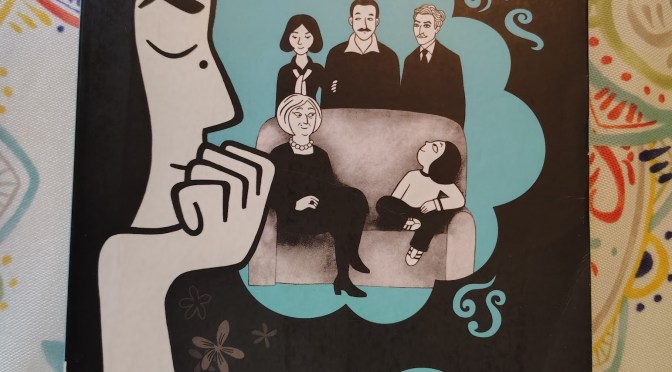
Who is Marjane Satrapi and what is the influence of the book ‘Persepolis’.

Marjane Satrapi was born on November 22nd, 1969, in Rasht, Iran. She grew up in the city of Tehran in an upper middle class family. In addition, her parents were both active leftists against the Shah monarchy. In 1983, at age 14, she fled Iran, moving in with a family friend in Vienna, Austria. She stayed in Vienna for the rest of her schooling, attending the Lycée Français de Vienne. After being evicted from the convent she was forced to move into, she became homeless and lived on the streets of Austria for 3 years. Satrapi decided to return home to Iran due to loneliness, deep depression, and a feeling like she did not belong in Europe.

When Satrapi was 30 years old, in the year 2000, she published an autobiographical memoir about her life, entitled ‘Persepolis’. The novel begins and follows a ten-year-old Marjane Satrapi navigating life following the Iranian revolution. ‘Persepolis’ is critically acclaimed, having been translated into over 24 languages, and selling over two million copies. The book was originally published in French, in France, but was later translated to English in 2003. 

‘Persepolis’ challenges Western views of Iranian people and the revolution, telling a coming of age story from the perspective of someone experiencing the revolution firsthand. The book was hated by the Iranian government, who viewed it as propaganda, supporting modern leftist movements. Still to this day, Marjane Satrapi is unable to return to Iran almost 30 years after ‘Persepolis’s’ publication. 

Just a few years after the book’s widespread success, in 2007, Marjane Satrapi directed and oversaw ‘Perepolis’s’ film adaptation. The film would later go on to share the Jury Prize with a Mexican film titled ‘Silent Light’ at the 2007 Cannes Film Festival. However, the Iranian government would see this award as “an unconventional and unsuitable act,” and the government would later have the film dropped from the Bangkok International Film Festival, a major cinematic event that showcased over 200 films from over 40 different countries. 

I personally really enjoyed the book ‘Persepolis’, and I would highly recommend it. It is one of the most engaging graphic novels I have ever read with some of the most interesting artwork and structure. I could not put the book down, and it is one of my favorite books I have read so far in 2026. I would give this book a 9/10, and I believe everyone should read it at least once.
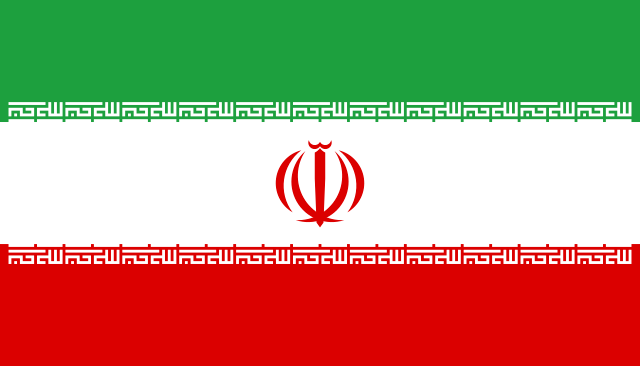
War in Iran and gas prices

By: Merob Geleto

The escalating conflict between Iran, the U.S., and Israel has now exploded into a full-on war, triggered by the U.S.-Israeli strikes on Iranian military sites, air defenses, and government infrastructure on February 28, 2026. The Supreme Leader Ali Khamenei was killed during the opening wave of strikes. There are still on-going military actions, 10 other Middle East countries have gotten involved with the conflict because Iran was targeting US military bases that were stationed in those countries. 

Iran and US tension has been going on for a long time now. This conflict even dates back to the 1950s. In the early 1950s, Prime Minister Mohammad Mosaddegh nationalized the Iranian oil industry. Fearing that Iran may now lean towards the Soviet Union or the loss of oil would destabilize the West, the CIA and British intelligence orchestrated a coup. The US gave power to Shah Mohammad Reza Pahlavi who was a loyal ally to the US and the West. The Shah launched a series of aggressive reforms to modernize the country. This led to economic growth and increased women’s rights but it also involved the use of SAVAK (secret police) to eliminate dissent and rapid westernization. Many Iranians were against this new, pro-Western monarchy. 

The 1979 Islamic Revolution in Iran was caused by economic inequality despite the vast oil wealth, the SAVAK, and the religious backlash. Large-scale protests and strikes broke out across Iranian cities. When the Shah realized he had lost control of the country and the military, he fled into exile. Iran went from a pro-Western monarchy to a theocratic republic. Khomeini, who was exiled during the Shah’s era for saying that the Shah was destroying Iran’s Islamic identity, had come back and became the “Supreme Leader”. Strict Islamic codes were implemented like mandatory veiling for women, banning Western music, and alcohol. Iran was a key US ally and then became a fierce adversary which peaked during the Iran Hostage Crisis. This war was not all of a sudden but was a growing conflict since the Cold War. 

The ongoing conflict in Iran has caused global oil prices to rise, driving gasoline prices to their highest since 2023. The fighting threatens a crucial waterway for global energy shipments, the Strait of Hormuz, which carries about a fifth of global oil supplies. Since the start of this, Brent crude prices jumped from $60-$70 per barrel to over $100. In the United States, the price of gasoline has risen almost 25%. This war will only worsen and so will our gas prices.

For more information, please visit:

Current events (international)

By: Treshawn Ross


English: 
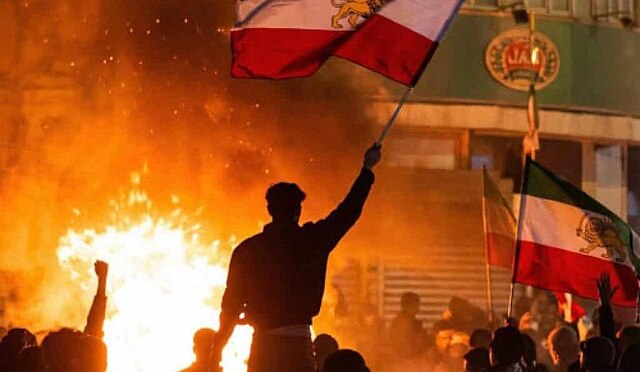
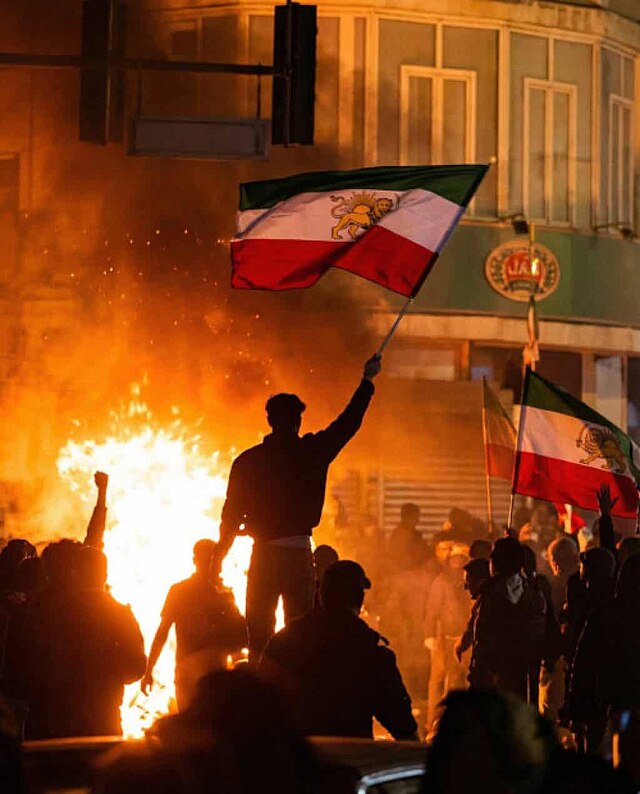
Demonstrator during the 2025–2026 Iranian protests silhouetted against a street fire proudly waving the Lion and Sun flag of Iran. Date 9 January, 2026. Unknown author via Wikimedia Commons

Iran- Major protests against the Iranian regime started in late December of 2025. These protests were largely unviolent and orderly. Many of the protesters were demonstrating because of the insanely high inflation, and the collapse of the Rial which is the currency Iranians use.

The goal of the protests was to remove the Islamic Republic controlling Iran. As a result the Dictator of Iran, Ali Khamenei ordered an internet blackout in the country. This was done to prevent any media being released from the country, as he planned on violently cracking down on the protesters. The response of the government was to massacre scores of protesters and to arrest some of them to hold them for execution at a later date. The estimates say that 30,000 or more people were killed. Previously, President Trump promised to step in if the Iranian regime killed any protesters and in response to the reported massacres he sent an aircraft carrier and military personnel near Iran.

Russia/Ukraine– The Russia/Ukraine war has turned into a slow grind for territory, contrary to the 3 day operation that Russian dictator Putin anticipated. Most recently Putin has ordered drone attacks on civilian infrastructure and innocent people in Ukraine’s Kharkiv region. These attacks killed at least 5 people and injured several others. Putin is ordering attacks on Ukraine’s energy and transport infrastructure in an attempt to cripple the country in the harsh winter months. The battle on the frontlines has been more successful for Russia as they have the manpower to slowly advance despite the casualties.

Israel/Gaza- Israel recovered the remains of the last hostage taken on October 7th, 2023. This allows for more peace talks to occur; the United Nations (U.N.) and many other aid groups push for a phase 2 of peace plans. Netanyahu’s office agreed with Hamas on the new peace deal as all of the demands were met. Hamas is under pressure to disarm to complete the deal which U.S. officials say is close to happening.

For more information, please visit: