Oxford has recently announced “brainrot” as the word of 2024. But what is brainrot? Well, the dictionary defines brainrot as “the supposed deterioration of a person’s mental or intellectual state, especially viewed as the result of overconsumption of material considered to be trivial or unchallenging”.
The term brainrot is not a recent term. The word has been used for over 20 years. Originally, brainrot was used to describe the use of email. According to Theguardian.com, email’s “constant cognitive overload had a more negative effect than taking cannabis, with IQs of participants dropping an average of 10 points.” If email can have such drastic effects, it’s hard to imagine how damaging short form online content and electronic devices such as smartphones can be.
Over the past couple of years more and more information has come to light about the effects of consuming large quantities of short form content. Institutions such as the University of Oxford and Harvard Medical School have found that consuming this content in large quantities can shorten our attention spans, weaken memory, and mess with our cognitive processes.
According to Dr. Gloria Mark, a professor at the University of California, attention spans have drastically shortened over the past 20 years. In 2004 the average attention span was 150 seconds, by 2012 the average was 75, and by 2018 it was down to 47 seconds. This massive decline is partly due to the rise of social media.
According to Theguardian.com, the average Gen Z teenager in the UK has an average screen time of somewhere between 5 ½ and 6 ½ hours every day, with the average adult spending 4 hours online every day.
Doomscrolling is a somewhat newer phenomenon. Doomscrolling is defined as, “the excessive consumption of short-form videos or social media content for an excessive period of time without stopping.” The term began to gain popularity in 2020 partly due to the COVID-19 pandemic.
Doomscrolling is a form of internet addiction. An estimated 31% of Americans doomscroll on a regular basis. This increases greatly among young people with an estimated 51% of Gen Z addicted. Social media plays a significant role, allowing users to infinitely scroll through short form videos uninterrupted.
Multiple medical institutions have found that doomscrolling can worsen depression and anxiety. Overall, doomscrolling and brainrot have contributed to worsening mental health among teens and adults. It might be time to put down your phone.
If you want to learn more about the effects of social media, please go to:
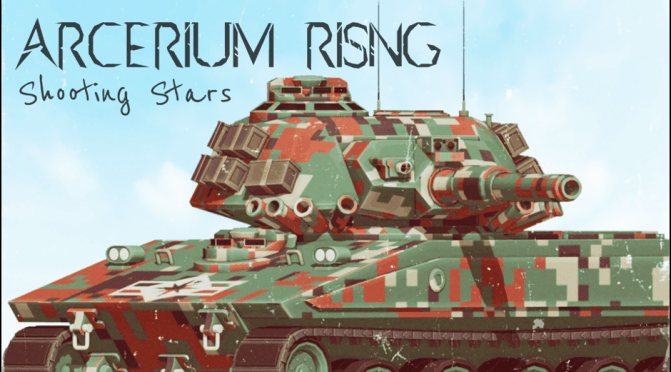
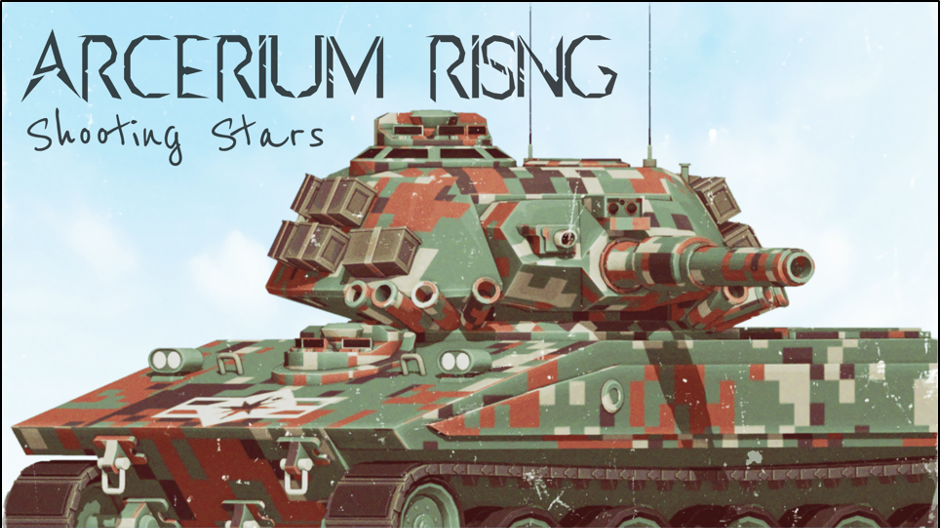
July 5th, 1953, Coalition forces enacted Operation Lone Passage to invade Ostera through the Lapish channel, with a combined force of 150,000 strong. The Kirston airship Spirit of Eve is allowed to be used in the operation, using its ability to launch aircraft during flight to guarantee the Coalition air superiority over Ostera.
“Visual invasion of Ostera during Operation Lone Passage”
With the Coalition landing on the shores of Ostera, Emperor Treijon sends Army Group Aster, to reinforce the Osterans and halt the invasion in its tracks. Prior to the initial landings, the Coalition touched base with separatist groups in the region, who agreed to support their invasion if the Coalition guaranteed the independence of the Lapland regions. With their backing, the Coalition was able to move through the Lapland region with ease, allowing them to strike deep within Osteran territory.
By August 25th, Coalition forces were able to secure the southern coastline of Ostera, but the entry of Jupitan reinforcements led to the halt of their invasion. General Thor, the commander of the Jupitan invasion of Sapan, and the man in charge of Army Group Aster, was sent to the Osteran front to put an end to the Coalition invasion.
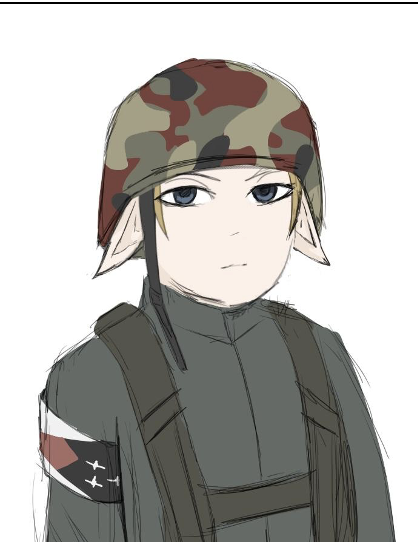
“Photo of a Kirston Soldier with their identification armband”
Fierce fighting between the seasoned Jupitan army and hardened Coalition forces ensued in the cities and forests of Ostera, but as the fighting prolonged into the winter of December, the seasoned Jupitan army began to show its cracks. After years of fighting, the Jupitans became overwhelmed by the extent of its forces, and the new front only caused it to stretch even further.
December 20, 1953, General Thor and his remaining army of 4,000 troops were encircled in the Silver Forest by an encircling Coalition force of 7,000, cutting them off from the nearest Terran stronghold in the region. When Treijon receives news of one of his greatest generals being encircled, he decides that it was time to reveal his newest weapon.
It was to be released on the night of the 24th of December.
SIDE BY SIDE
Gripping the stock of his rifle, the lone Jupitan marches alone in the darkness of the snow covered forest. His comrades had already passed not too long ago.
The sounds of distant gunfire are followed by a haunting roar that fills the forest. They were unlucky enough to encounter the beast of the forest.
Marching through the snow, the Jupitan halts in his tracks, looking back at the creeping darkness of the forest. His gaze met eye-to-eye with the creeping beast.
He closes his eyes as the beast lept from the snow, he tries as hard as he can to fetch a good memory before he can remember no more.
A quick snap of the rifle fells the beast to the snow. Opening his eyes, the Jupitan is met by a singular soldier, on their arm was the flag of Orbesjka. The two soldiers exchange looks, their uniforms may be different, but their goal of survival wasn’t.
The two trek through the forest together, hiding when the roars of another beast fill the night air and resting when needed. When the sun’s basking heat covered the forest, the two soldiers were found back to back against one another, sharing a sigh of relief as the horrors of the night faded away.
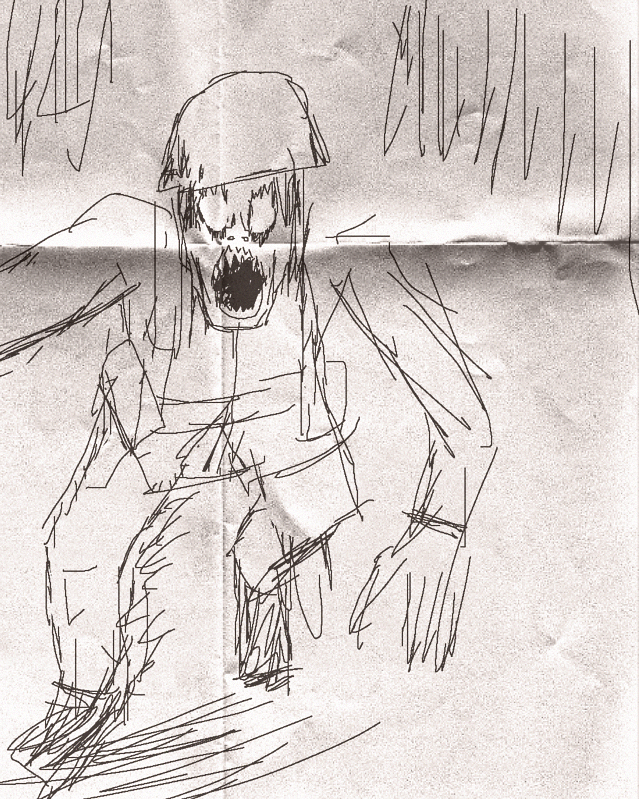
“A soldier’s sketch of the monster following the attack.” c.1953
MAN MADE HORRORS
Treijon green lights the use of a new chemical agent, spiritus, on the Coalition forces encircling General Thor. The chemical agent was designed to turn those affected by it into bloodthirsty monsters, by overstimulating the body with arsoulium.
Arsoulium is often used as a “miracle” drug to slow down the rate of cancer cells while giving its users quick access to their magic abilities, but it is dangerous in large doses. Individuals become unnaturally aggressive and aware of their surroundings, which would be exploited in Jupita’s new weapon.
On the night of December 24, 1953, Jupitan planes released spiritus over Coalition lines in the cover of a snowstorm to avoid the interception of Coalition aircrafts. However the harsh winds of the storm blew the chemical agent towards the encircled Jupitans, resulting in utter chaos on all sides.
The night turned into a bloody affair, as both Coalition and Jupitan forces banded together against their former friends and foes. When day broke, what remained of the two armies in the area were brittle, down to only a couple thousand. General Thor and what remained of his army retreated from the region, leaving only the Coalition being left to clean up the remaining monsters.
The use of such a weapon was horrific in nature, and caused a global outcry against Great Terra, but to Treijon, he saw it as a means to an end.
SIX YEARS OF WAR AND MORE TO COME
At the beginning of the war, it was Great Terra who were the victors of the battlefield, but now, after six years of constant warfare, it was the Tectonic Coalition that began to take their place.
On February 5, 1954, Coalition forces captured the Osteran capital city, Lindel, and established a provisional government as well as forming a Lapland republic on the following day. With the Osterans out of the way, the Coalition pushed eastward into the territories of Hoshira, besieging its capital by June.
“The invasion of Hoshira visualized”
There was a small Coalition invasion of Epreau on the 2nd of May, the Molivians invaded to capture the Epreaun capital, Svarn City. This however was partially successful, the Molivians did take a lot of ground leading up to the capital, and were even able to take some sections of the city, but it all stagnated when both sides limited the use of artillery and aircraft in fear of civilian casualties.
But on the bright side for the Great Terrans, the Jupitan Fall Offensive was successful in taking back the western coastline of Sapan, but this however was a double edged sword. The offensive cost them tons of vehicles, ammunition, and supplies that they couldn’t replenish, but Great Terra knew that the Coalition was also in the same predicament.
“The Fall Offensive”
The Great Terrans were on borrowed time, and that time was going to become way shorter due to a situation happening beyond the Pacific. 1954 was not only an important year of the war, but a very important one for a specific nation, the Vaserian Federation, due to it being election year.
THE NATION ACROSS THE POND
When the war first began, many Vaserians pondered on whether the Vaseria needed to intervene in a conflict so far away, but this has since gone away when Great Terra invaded the neutral states of the Eusonan continent, with many seeing it more of a reason to intervene before it comes close to home.
1954, was the election year for Vaseria, and the war across the pond became a hot issue for its candidates. There were two major candidates on the ballot, Anne Hall, a former decorated officer of the Vaserian Mage Corps during the Great Vaserian War and prominent supporter of the Tectonic Coalition, and Mariane Thoa, an actor turned politician who wanted to keep Vaseria’s ambitions within its borders.
When the votes were accounted for on November 10th, it would appear that Anne Hall had won the election with 56.4% of the votes, which was a huge victory for the Coalition as they now had the industrial powerhouse soon to be on their side, but this win would only embolden the already demoralized Jupitans.
January 30th, 1955, a date which will live in infamy. The Vaserian Federation was suddenly and deliberately attacked by chemical weapons, created by the terror state of Great Terra. The capital city, Sukuyo, and the newly elected queen was the target of these attacks, and although the queen did survive, it left the nation scarred and shying away from matters on the war. Or so it would seem.
(This article was written a week prior to the events transpiring in the ‘Super Smash Bros. Ultimate’ article. Spoilers are also included).
Hey guys, welcome back to JOYSTiCK Reviews, and by golly-gosh, I sure do love being currently alive and free! It’s such a benign feeling; it’s as if I have… rights. Hope nothing changes within the next few days to possibly reverse my current elation.
Of course, the subsequent step to continue this high is to find a way to break apart reality so that way I don’t have to let my mortal form hold my soul hostage from true joy. Now, normally someone like me, Mr. Whatshisname, should go about this through, say (chuckles), the irreparable-breakdown of known physics or whatever, but unfortunately for still-human me, that’s not possible. So, I suppose I’ll have to compromise through virtual simulation. What am I talking about? Why, it’s the video game ‘Portal.’
‘Portal’ is a game released by Valve in 2007, commonly-cited as among the greatest video games made during the 2000’s. The premise consists of the player character being a testing subject for a fictional Portal Gun, allowing the use of teleportation through orange and blue portals (doy). Through this new tool, the object of the game is to complete 19 levels, each with their own puzzles and hazards to overcome.
In the game, portals work as follows: the player gets up to 2 at a time, an orange and a blue portal. They connect to each other, being shot out of the gun to a nearby wall. Then, the player can walk, jump, or fall through. Momentum is carried through if entered through vertical ascension or descension, allowing for further mobility.
In addition to the Portal Gun, you can also pick up and place certain objects, jump, and press buttons. These combined features open up a plethora of concepts that’ll often make you scratch your head at first, then eventually learn and adapt to. ‘Portal’ is one of those rare games who’s mechanics differ from what the human mind is adjusted to in real life; we don’t have teleportation, and the technology present in the game is entirely fictional as of now. This means that any new player will have to take time figuring out the game’s mechanics, which is quite beautiful.
‘Portal’s’ puzzles are great, and it’s clear the developers at Valve had plenty of ideas while making the game. 19 levels doesn’t sound like a lot (and it isn’t, more on this later), but each has intricacies that require full concentration and dedication to figure out the Portal system as a whole. Heck, mastering moving and portal momentum allows skipping some parts of levels entirely, a great way to reward those who put in the work.
I do think that the penultimate level, among another few, are pretty tedious to complete, but it’s always satisfying to reach the elevator at the end of each. The final level, however, is easily ‘Portal’s’ best. To explain, let’s dive into ‘Portal’s’ story; spoilers ahoy!
The game’s plot is simple: you’re a test subject named Chell who awakens deep inside Aperture Science Laboratory. You’ve been tasked to complete 19 puzzles in order to test out their new Portal Gun, with the promise of cake at the end.
As you complete levels, the omnipotent voice over the loudspeaker becomes more and more deranged, if still playful. You also experience various strange moments throughout your misadventures – a couple of stages feature broken, disheveled holes in the walls leading to behind-the-scenes lab equipment. Bloody writing from past test subjects also appears, stating, “THE CAKE IS A LIE.”
Finally, after finishing level 19 the voice attempts to kill off the player in a room of lava, but you escape and explore the rest of the lab’s interiors. Abandoned, you’re taunted by the voice until escaping, reaching a large room where GLaDOS lives: a self-aware AI who’s been the one over the loudspeaker since the beginning. Angered by your escape, you fight, dismantling her “personality spheres” by throwing them in a fiery vat and killing her.
The game ends with the player outside after an explosion, being dragged away by an unknown robot. Credits roll after the reveal that yes, there was cake indeed, and an ending song sung by GLaDOS plays: “Still Alive”.
‘Portal’s’ story is great, if a tad simple. Simple’s not a bad thing, however – plot beats are memorable and interesting, and the game has a sharp sense of humor; very dry and occasionally dark. GLaDOS has quickly become among my favorite fictional characters, let alone video game antagonists. I highly recommend listening to “Still Alive” on Spotify or whatever, because it’s a very experimental and interesting theme for the story’s villain. There aren’t many spoilers in it, except for the fact that the game’s antagonist survives (shocker, I know).
‘Portal’s’ story and gamplay are awesome, but if there’s 1 big drawback, it’s its length. At around 3 hours, the experience is very short, even with additional external content after the credits end. I’m glad there’s a sequel, but the first game’s short time leaves it difficult to enjoy replaying; with its few levels, knowing what to do for each is easy to remember.
Despite this, ‘Portal’ is a fantastic experience, and I completely get the hype for it. For being 18 years old, the package runs well and holds up, even graphically. Hiccups in some puzzles and its runtime lead me to a fitting score of 8/10, which I think is fair.
But that’s that: I’ve been rambling for a while, so I think a nice walk is in order for me! Recently I saw a gingerbread house out in the woods; a visit may be in order for me soon. Until next time my friends, thank you for reading.
Through the many years of the rising popularity of television and film, this led to positive feedback and attention put onto Hollywood celebrities, both actors and directors alike. While there were several good aspects that came along with the fame that certain actors gained from their roles in movies and shows, there was also a lot of negative exposure put onto actors, especially child actors. This oftentimes included instances of sexualization, (financial) exploitation, and unhealthy working conditions, among many other things.
On the topic of child actors, there are so many instances where they have been put on a pedestal and risen to fame, and continuously failed by so many corrupt aspects within Hollywood society. This often involves both the public, as well as their higher ups (directors, older actors, agents, etc.) This can be seen from as early as actress Judy Garland, who is commonly recognized for her role as Dorothy Gale in ‘The Wizard of Oz’ (1939).
In Judy Garland’s experience in her role as Dorothy alone, she was exposed to extreme body shaming from the entertainment industry. Garland was forced into a strict diet as well as medications in order to keep her working longer hours, and to keep her weight down. This contributed to her long-term struggles with substance abuse and her mental health.
Another more recent actress subjected to similar experiences could be Nickelodeon star, Jeanette McCurdy. In her memoir, ‘I’m Glad My Mom Died’, she openly discusses her struggles while involved within the industry, particularly regarding her mental health. She also touches on the financial exploitation she experienced at the hands of her mother especially, which ultimately limited the control she had over the income she was making while acting on Nickelodeon.
While these are only two examples of the problems with child actors in Hollywood, there are so many more actors who were, or are being, subjected to exploitation, sexualization, substance abuse, or body shaming. The experiences of these actors should only fuel the need to establish stricter and safer laws in order to help protect their rights more than what’s currently being done now. With more actors coming out with their own personal experiences of navigating the entertainment industry, I believe that this could further motivate stronger protections and better support systems for child actors in Hollywood.
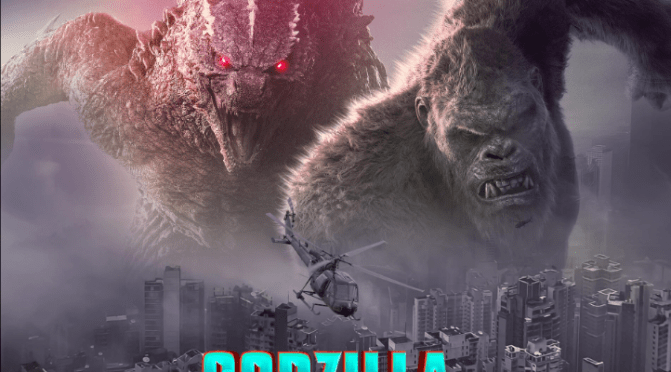
First off, let’s start with those who don’t know let’s recap what’s happened so far: King Kong and Godzilla have fought before, and it was due to multiple misunderstandings. But when Mechagodzilla was created by humans to replicate Godzilla due to the power he carries, that’s when they put their differences aside and fight as one to destroy their enemy. At the end, they separate with Kong going to the Hollow Earth, which is a hidden ecosystem deep beneath earth’s surface, while on the other hand Godzilla stayed on the surface due to the potential threat of humans in his residential area in an ancient monument.
‘The New Empire’ starts off with Kong being chased by a pack of monsters, and he gets cornered, but that doesn’t matter due to the intelligence of Kong, who has set up a trap just in case of emergency. This trap kills almost all the monsters, while the rest fled back to where they came from. That’s when we’re told King’s species is a social one, meaning they like interacting with other kinds of his own, and he has been looking for his kind. There’s an issue though: he hasn’t been able to find anyone like him for a long time.
The humans detect the movement of Kong, and that’s when they decide to check up on things.
A moment later we meet a special girl named Jia who can see and understand Kong’s feelings but feels displaced because she’s at school and not where she’s being drawn to. The reason for this is because “She’s the last living member of the Iwi tribe” who are an advanced tribe that lives in Hollow Earth.
A bit later we see that Kong has left the underground to go to the humans to ask for help. He has an infected tooth that has to be taken out, and the job was perfect for the “Best doctor in town”, who helps him. That’s when Kong decides to leave the surface again, but before he leaves, they decide to follow him into Hollow Earth.
That’s when the humans find out that Hollow Earth goes even deeper where there are many strange things and creatures, and there potentially could be others like Kong.
Will Kong find others like him to keep him company? Will Jia ever find where she belongs? You will need to watch ‘Godzilla x Kong: The New Empire’ if you want to know the answers to these questions. I think it is worth the time and would give this movie a 9/10.
You can watch ‘Godzilla x Kong: The New Empire’ on Netflix, Max and other streaming platforms.
As a sophomore at Highland all students are required to take critical ethnic studies. There is a semester project we do where we have to find a topic with local significance and share our knowledge about the topic and an action plan of how we’re going to get the information out into our community.
For my project, I wrote a poem about being multiracial and how society sets up these stereotypes that create insecurities and mental health issues for multiracial people all over the United States. This is a topic that is really important to me because I am multiracial and for the longest time this was something I was insecure about, so I wanted to bring more light to the topic.
Over the whole semester I have been researching the history of multiracial people. Multiracial people first came to be when European settlers would take Native women as companions, and once settlement increased, marriages and unions between European settlers and Natives became more common. For a long time multiracial marriages were illegal in the United States though. In 1967, the bill Loving V. Virginia was passed which allowed interracial marriage all over the nation.
Along with learning about history I also learned about the current issues that multiracial people struggle with. There are many stereotypes and issues set around multiracial people and these cause a lot of mental health issues. A lot of people imply the idea that multiracial people don’t belong anywhere since they aren’t 100% of a specific racial group. This leads multiracial people to struggle with their identity a lot. The mental illness that is related to this is called imposter syndrome. This is just one example of the effects from the negative ideas people create around multiracial people.
For my poem, I chose to write it about the current issues and not the history of the topic. I wanted to really show how multiracial people feel and the raw emotions that come with it. I also wanted to show how these ideas and ideas around putting people into “groups” start when we are so young. In my poem I don’t state that I am talking about multiracial people because I wanted people to have to think about it. I want them to think about who they think is affected in our society like this. After they read the poem there is context behind it that is shared. For example this article.
*Warning: This book contains graphic descriptions of violence, includes depictions of sexual assault, and contains characters that may be considered to represent anti-semitic stereotypes.
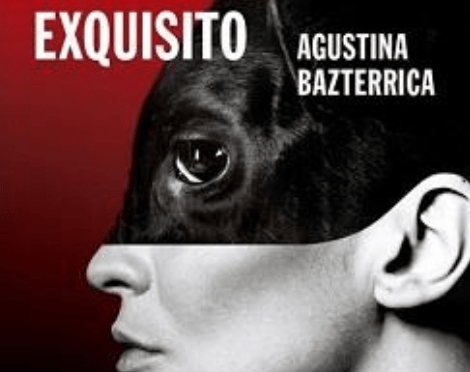
‘Tender is the Flesh’ is a horror novel by Agustina Bazterrica. The story takes place in a dystopian society where a disease causes humans to be unable to consume animal products or flesh anymore. Not that long after the event, the human population turned to cannibalism for an industrialized replacement of animal meat. This is referred to as “the Transition”.
Humans are bred for consumption identical to how animals were and are referred to as “heads”. The majority of the human product in first world countries is advertised as “special meat”, and the Transition is easier on those who have the privilege to not have to think about where and how they got their meat.
The protagonist is a man named Marcos who works directly in the industry who struggles with his relationship with his wife after the death of their baby. At his job, Marcos was given a first generation pure female head as a gift.
The novel aims to comment on the bleakness of real life society with how the Transition impacted marginalized groups first and the hardest. The message wasn’t that eating meat is bad, but it prompts the readers to consider their own internal ethical conflict and how we oftentimes think around discomforting knowledge and try to disregard it.
The story parallels the real life horrendous aspects in the meat processing industry. Not only do slaughterhouse workers operate in physically dangerous environments, the mental toll of having to constantly disconnect with what they are doing leads to emotional dissonance, and the abusive workplace causes slaughterhouse workers to often turn to maladaptive coping mechanisms according to the National Library of Medicine. The majority of slaughterhouse workers are people of color both in the book and in real life. Slaughterhouse employees are mostly migrants in real life, making up 70% of the workforce in the UK.
I recommend Bazterrica’s novel to anyone who enjoys splatterpunk horror in particular, but I would say that it’s relatively grotesque with its descriptions, and some readers might find it excessive enough for the book to be put down.
The 1950’s fashion was glamorous, elegant, and well-groomed, with a clear divide between men’s and women’s styles. New materials like nylon, polyester, and spandex were introduced, as well as designers like Christian Dior, Coco Chanel, and Cristóbal Balenciaga.
The women in the 1950’s usually wore their hair in a bouffant, which is one of the most iconic styles of the 50’s.
They had a variety of clothing, including dresses, skirts, pants, blouses, and sweaters but the most popular style for women in the 1950’s was the “New Look” characterized by a cinched waist, full skirt, and a feminine silhouette, often associated with the iconic gray felt poodle skirts that emerged with white Bobby socks and saddle shoes; a style that was popularized by Christian Dior.
1960-
Art by Charlotte Bistodeau
The 1960’s fashion scene was diverse and broke many traditions, with styles influenced by youth culture, space exploration, and Eastern cultures. It was characterized by a variety of styles , including tailored skirts, mini skirts, and bold prints. The First Lady, Jacqueline Kennedy’s, style influenced early 1960’s fashion. Tailored skirts with stiletto heels, shift dresses which were simple, and geometric dresses were popular as well. Evening gowns, which were full-skirted gowns with low or boat necklines, worn for evening events, and capri pants were also popular options for women and girls.
Whether hair was curly, straight, or wavy, volume and height were the main goals making the hairstyle beehive the most popular updo.
1970-
Art by Charlotte Bistodeau
In 1970’s the fashion was a mix of styles that included hippie, disco, and punk. The most popular style in the 1970’s was the disco look, characterized by tight, shiny clothing like spandex and jersey wrap dresses, platform heels, and bold accessories, particularly popular in the mid-to-late part of the decade. This style was embraced by both men and women.
Some of the popular hairstyles that were worn with the disco look were the shag an unstructured, layered, and textured style that was popular with actors and musicians. Also popular was feathered hair, a style that was made famous by Farrah Fawcett and features brushed-out hair on the sides to create volume.
1980-
Art by Charlotte Bistodeau
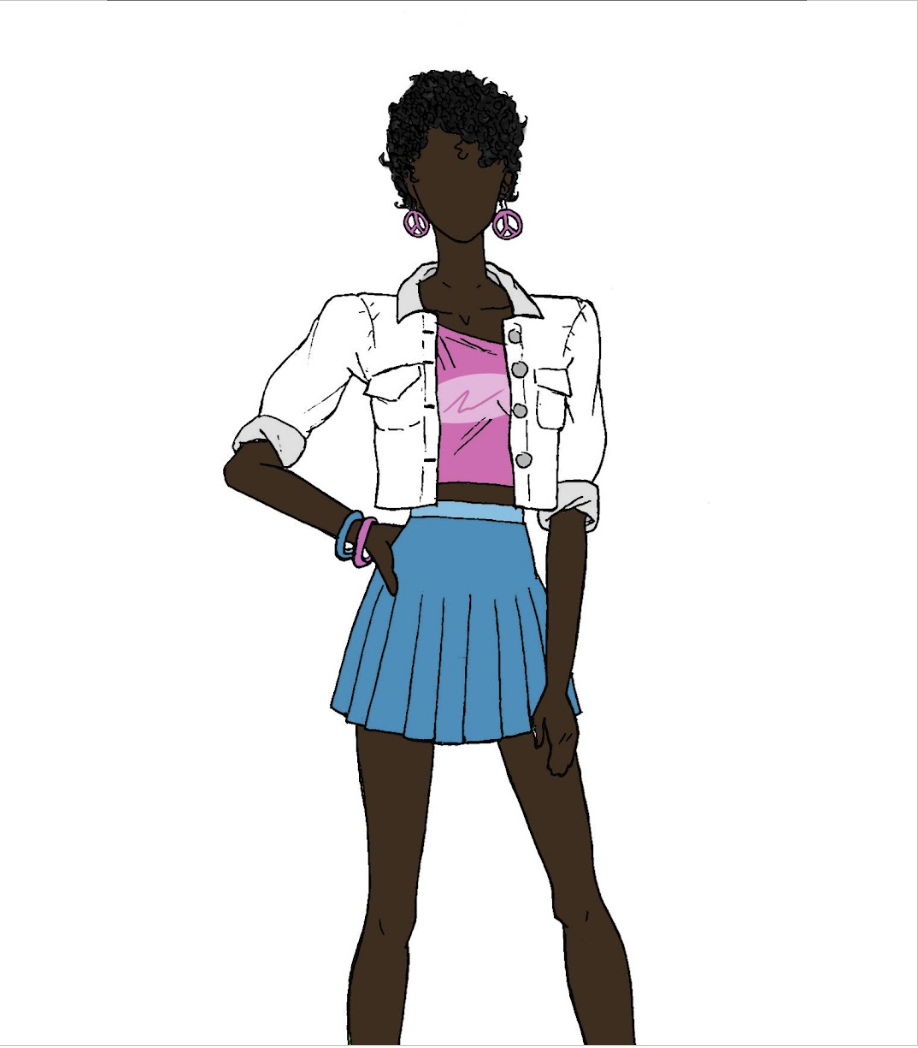
The 1980’s fashion scene was a decade of bold fashion including bold colors, volume, and experimental styles. The most popular style in the 80’s was a “bigger is better” aesthetic which was characterized by bold/neon colors like neon pink and lime green; these colors were popular in clothing and accessories. Big hair, shoulder pads, bright makeup and over-the-top silhouettes were also part of “bigger is better”.
Some other popular fashion trends were leather jackets, studded and spiked jackets inspired by punk rock; denim jackets which were often wore with patches and pins; mini skirts, often made from Lycra or leather; and leg warmers, made popular by the films Fame, Xanadu, and Flashdance.
The most popular hairstyles worn with these styles were big voluminous perms, mullets, Jheri curls, and high ponytails.
1990-
Art by Charlotte Bistodeau
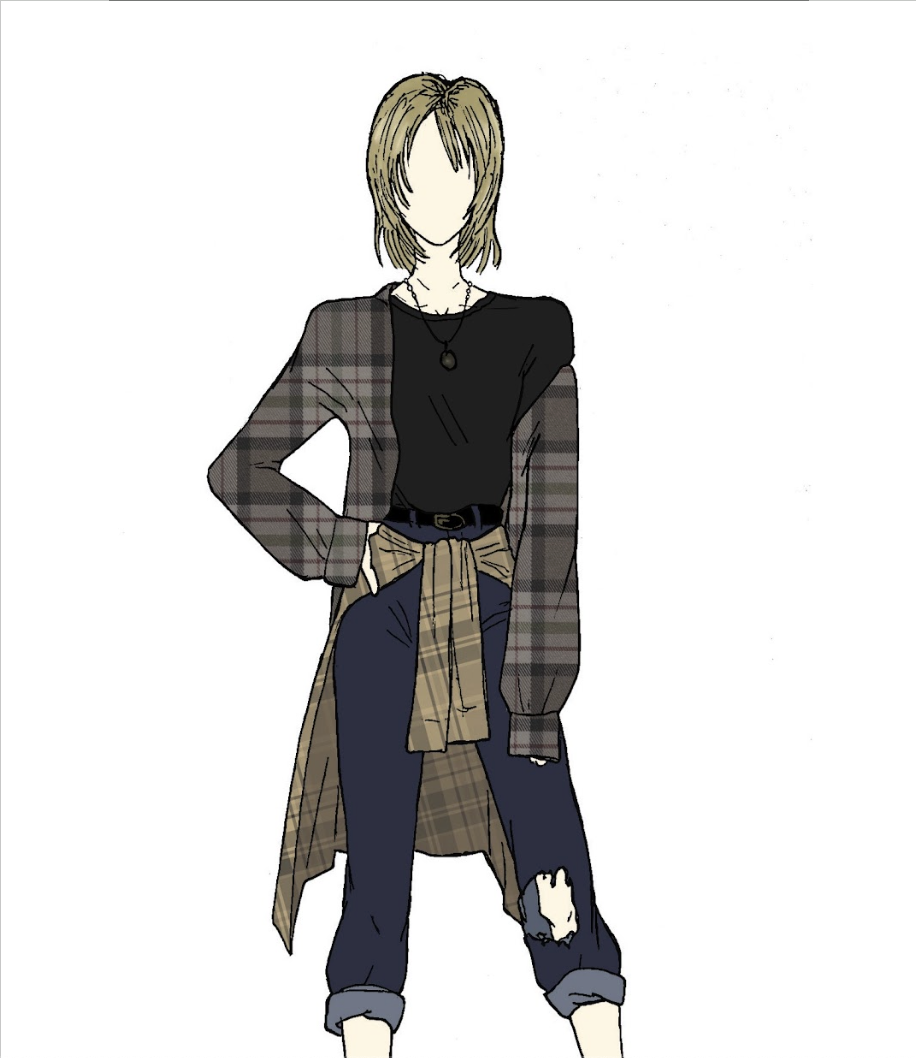
The 1990’s fashion was diverse and rebellious with many styles and trends. The most popular styles being grunge, influenced by bands like Nirvana and Pearl Jam leading to a casual chic look of flannel shirts, ripped jeans, and rugged boots and the minimalist look, which was marked by mini skirts, blazers, clean lines, and simple elegance that included preppy prints (for reference, see the movie ‘Clueless’ made in the mid 1990’s).
Lastly, Hip-hop culture influenced the style of the time, with baggy pants, baseball caps, and XXL T-shirts. This style was characterized by baggy clothing, sportswear, and sneakers. Hip-hop artists like Tupac Shakur and The Notorious B.I.G became style icons during this era, popularizing trends that influenced a generation of fans.
“The Rachel,” a layered, face framing haircut made famous by Jennifer Aniston’s character on the TV show ‘Friends’ was considered the most iconic 90’s hairstyle. Some other popular hairstyles were bouncy curls and hair accessories such as scrunches, butterfly clips, and hair beads.
2000-
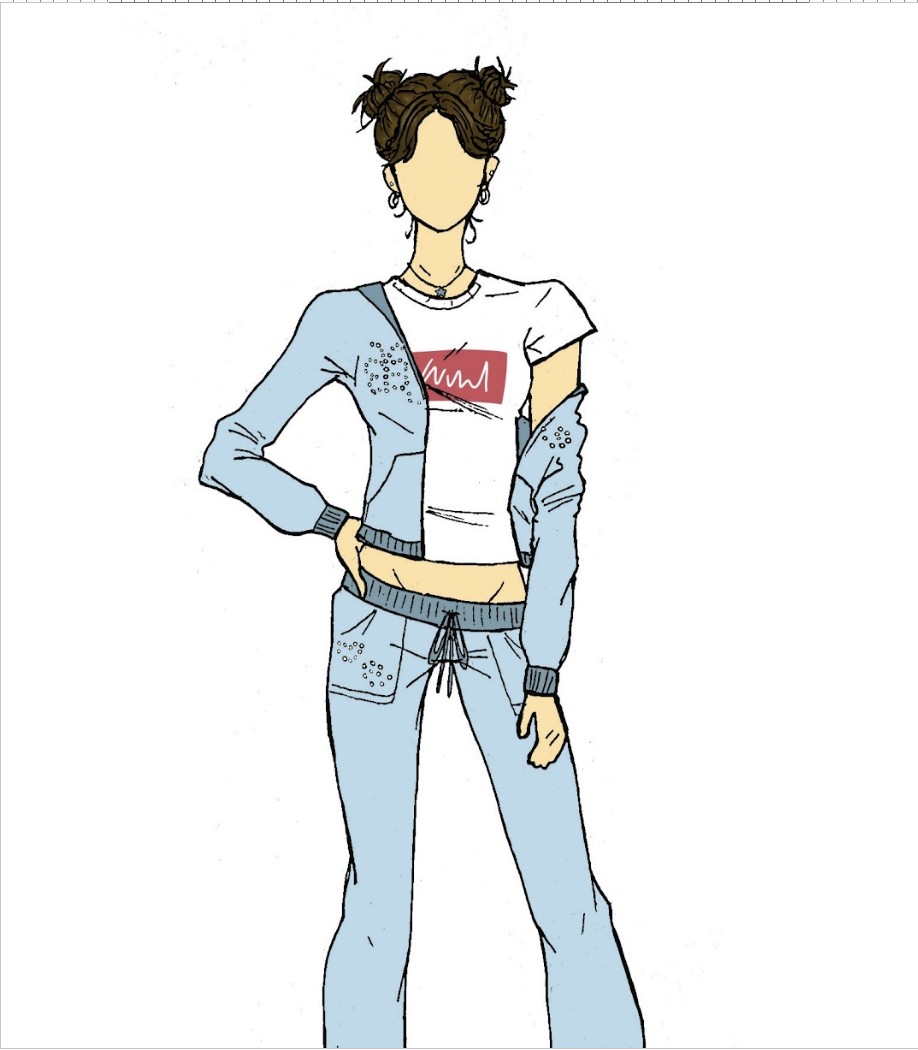
Art by Charlotte Bistodeau
Fashion in the 2000’s was characterized by a mix of styles including prominent low-rise jeans, baggy clothing, graphic tees, hip-hop influenced looks, capri pants, trucker hats, dresses over jeans, velour tracksuits, a mix of bright colors and metallic accents, with a heavy emphasis on designer bags. Trends were often inspired by music subcultures and a global mashup of vintage styles making it widely recognized as the Y2K aesthetic.
Popular hairstyles in the 2000’s were zig-zag parts, spiky buns, side-swept bangs, and the most iconic one was the pouf hairstyle.
2025-
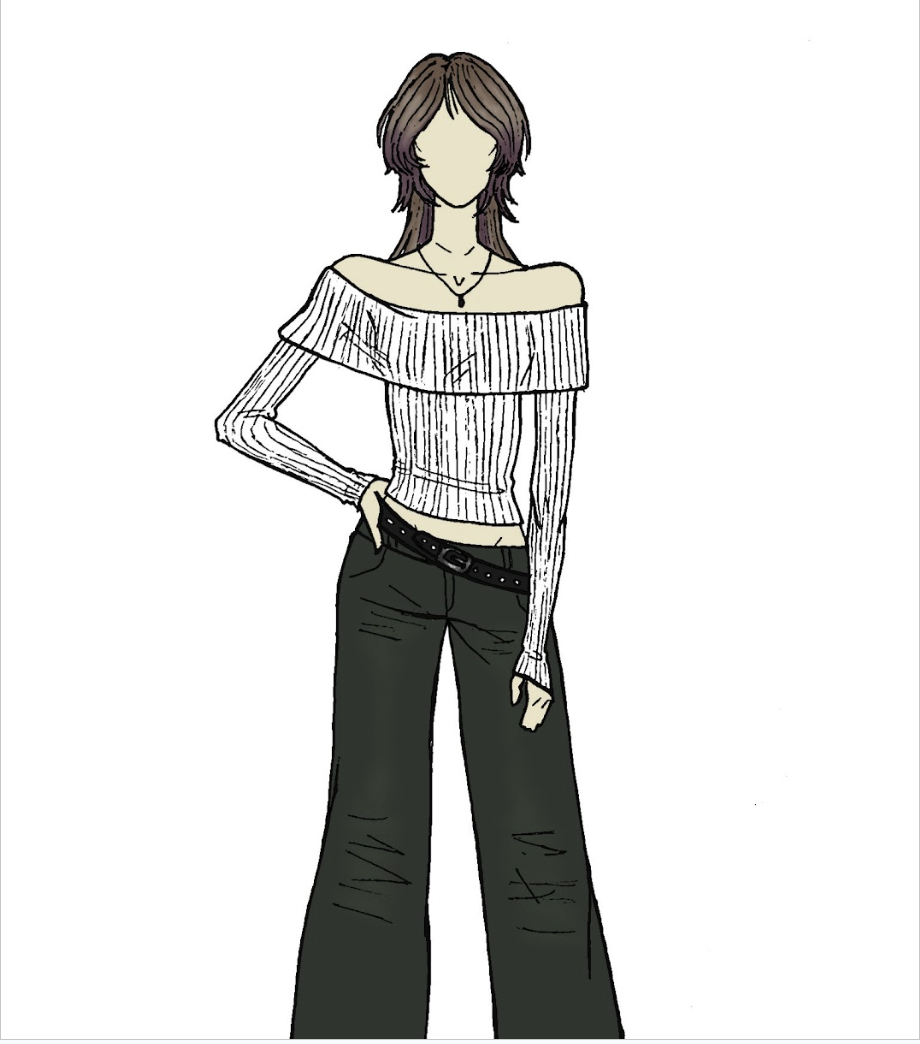
Art by Charlotte Bistodeau
Fashion trends now haven’t changed much from the 2000’s except for being more modernized. Many popular fashion trends currently are baggy clothing, asymmetrical patterns, belts, bomber jackets, denim skirts, low-rise jeans, cargos, jerseys, and lots of accessories. Some of the most popular/well known styles are grudge, coquette/preppy, old money/quiet luxury a minimalist style creating an expensive look, acubi, and Y2K staples which include low-rise jeans, bubble skirts, and other Y2K styles which are popular with Gen Z.
There are many popular hairstyles but the most popular ones are curtain bangs, slick back hairstyles, butterfly cut, wolf cut, jellyfish cut, and layers.
In the educational world today, much is made about artificial intelligence (AI) and how it could be used by students to cheat in their classes.
By using AI, students are able to create work with far less effort than if they did it themselves, creating a well warranted fear amongst teachers that their students may be using AI to cheat by passing off AI generated work as their own. Not only is this academically dishonest, it actively hinders the student’s education. This fear among educators has been exacerbated by the increasing difficulty of differentiating work made by AI from that made by students.
Personally, I have never used AI to cheat, though I will admit to having intrusive thoughts of doing so from time to time. This thought comes up whenever I am struggling with an assignment, telling me that I could perhaps earn the same grade more easily, without doing any work.
The reason I’ve never given in is not out of a fear of being caught or some compulsion to blindly follow rules, but because I know that by doing so, I would be hindering my own education. I wouldn’t be gaining the knowledge or skills that I would have if I were to do the assignment myself. This mentality is what has prevented me from giving in to this urge. But this made me realize that students who do use AI are doing so because they don’t value their own learning, only valuing the grade they earn in the class.
I was curious about what other people’s mentalities toward this were, so I asked some of my friends the following question: “If you could have AI do some or all of your assignments, knowing that there was no chance you would ever be caught, would you do so, and why?” Their responses intrigued me.
Some people told me that no, they wouldn’t use AI in any cases, because they wouldn’t learn without doing so. This is similar to my mentality, and everyone seemed to agree with this in at least some of their classes. Some friends of mine stated that they would do so for certain classes, since they thought that those classes’ material didn’t matter for their planned careers. In other words, they saw no value in these classes other than to pass them, moving them closer to graduating.
How does this happen, that these students don’t see any value in their learning except to pass a test, to get good grades, to get into college, and to start their career? They aren’t born this way. Young children have an endless amount of questions on their mind. They are naturally curious, ask deep questions, and annoy their parents by constantly asking “Why?”
By contrast, High School students only seem to see school as a transaction to get to where they want in life, and gain the information taught for the purposes of passing a test and getting an “A”. What happens that takes this natural curiosity out of our students between when they start elementary school and when they get to high school? What drives these students to use AI to pass their class, while they are missing out on learning and skills they would gain by doing their work on their own, missing out on the answers to the deep questions they asked when they were a child?
I think the answer is that our education system, and society as a whole, emphasizes grades above all else. If I could use AI and get the same grade, why not do so? Yes, I would be missing out on learning, but that doesn’t matter if all that I care about is my grade. In the above hypothetical, there are no consequences for using AI. One could get an A without doing any work on their own. In order to choose not to do so, a student would need to value learning, knowledge, and curiosity in and of themselves in order to get the most out of their education. Unfortunately, what is usually valued most by parents, educators, colleges, and society as a whole, is simply a letter on a piece of paper or computer screen. And in many cases, the allure of that letter grows to outweigh or even destroy any value one may have placed on what it is supposed to represent.
The Official Online Newspaper, Literary Magazine, and Video News of the Highland Park Scots













 Plaid Line + PRIZM + Scottie News