Category Archives: Getting To Know/History

The history of Smokey the Bear

By: Grace Wright

Smokey the Bear started in 1941 in California because during World War II many of the able bodied men were off fighting. So, when wildfires started breaking out, there was no one to really fight against them; many communities had to fight them themselves or just let them burn. Protecting the national forests and other parts of the country became a big concern because many of these wildfires were damaging them. 

People thought using this worry would help people find something else to focus on instead of the war and also that it would actually get people to help. So, they started the CFFP, Cooperative Forest Fire Prevention. They started posting different slogans like “Forest Fires Aid the Enemy” “Our Carelessness, Their Secret Weapon”. This helped people get motivated to help because they made it seem like the wildfires would make the US look weak, which would allow the war to come closer to home.

They did this for a while without a mascot until Disney came out with the movie ‘Bambi’. They got the rights to use the animal from the movie for a year to help their campaign. Once the year was up they would have to find a new animal. They soon decided that nothing would fit better than a bear. On August 9, 1944 Smokey the Bear was authorized by the Forest Service. They soon started making posters and his popularity became huge.

A couple of years later they soon had a real life Smokey the Bear mascot. During a wildfire in New Mexico a baby bear was found after getting burned in a tree. They took him to Santa Fe to hopefully recover. He soon took over the country and many people loved him. He went to the National Zoo in Washington D.C. to live until he died.

Smokey the Bear’s iconic saying “Remember only you can prevent wildfires” proved to be very useful. It stayed like this for a few decades until they found research that said that some wildfires actually are useful for certain types of forests, so they changed it to “Only you can prevent wildfires”.

Smokey the Bear is very popular to this day, you can find his saying pretty much anywhere. It is also very popular in smaller towns to have a sign that shows the fire hazard for the day and him standing with it. Overall, Smokey the Bear is a very iconic symbol and he did celebrate his 80th birthday in 2024. 

For more information, please visit:

The history of Trolli

By: Maya Song

Trolli is a long standing candy manufacturing company known all across the world. It was founded in Germany in 1948 by Willy Menderer, which was then passed down to his son, Herbert Mederer in 1981. The company is now operated by the Mederer group which acquired the company in 1998.

The company expanded its reach to the United States in 1982, which introduced their product to a whole new population. Places such as Asia, North America, and Europe all saw the potential of this brand and invested in helping it grow. The fact that Trolli was given the opportunity to sell its products internationally really helped the company reach the status that it holds today, as one of the world’s biggest candy manufacturing companies ever.

They reached their highest accolade in 1993 when their famous sour glow worm won the Candy Kettle Award, a highly prestigious award that other famous companies like Ferrero, Lindt, Nestlé, and Haribo have won.

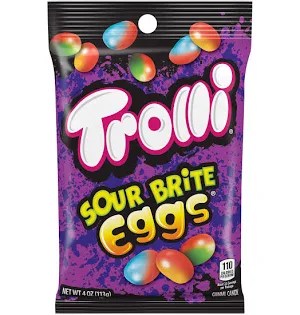
Some of their bestsellers include the sour brite crawlers, peach rings, and my personal favorite, egg gummies. Trolli is well known for having very creative flavors and designs as well as experimenting with sour flavors. The company does not sit on their laurels but constantly comes out with new things for consumers to try. They provide a variety of different gummy candies and have become a very successful and popular company due to their innovation.

While there are a plethora of other candy manufacturing companies around the world that compete with Trolli, Trolli will always be one of the originals. Trolli has remained one of the most successful ones out there for nearly 75 years, while it continues to grow its brand and followers.

In my personal opinion, I truly love Trolli gummies, especially the gummy eggs. I think that they are definitely worthy of their status, and it is always a guarantee to fulfill a sweet craving.

The impact of music on mental health

By: Kate Tabor

Image created using ChatGPT

We all love music, and it turns out that it’s for a good reason. Many studies have shown that music can have a positive impact on your mental health (and even your physical health, if only by a bit). Here’s how.

Music helps distract us from our thoughts and lowers our stress. Listening to music can lower stress hormones, as well as blood sugar and heart rate, both of which are things that spike when you’re stressed. If you want to block out the world and forget about whatever problems you’re dealing with at the moment, listening to songs that share a different story is a good way to do that.

Not only can it help with stress, it can help you name your emotions, and manage them better. If you’re feeling off, but don’t know why, try listening to classical music. It sounds silly, but hearing a melody without lyrics helps you project your own feelings onto the music, without the music already having a feeling or meaning.

Even without classical music, songs can often help us figure out what we’re feeling as well. I can’t count how many times I turn on one of my favorite songs casually, and even though I’ve heard it a million times before, a lyric sticks out to me and I just think wow, where are the cameras hidden? Music can help you place your feelings, and also feel seen in those feelings.

Music builds community. It brings people together. Music festivals, radio shows, Spotify playlists, etc. A popular app around my age group a bit ago was an app called Airbuds Widget, where you can share what you’re listening to with your friends. I’ve made so many friends based on just recognizing that we both listen to the same artist.

Music can also boost your mood when you’re feeling down, which I find to be especially true. Everyday, I hop in my car after school and turn my favorite playlist on, and I immediately feel better.

Even just half an hour ago, I was unmotivated to start writing this article, but I sat down, put my airpods in, and got to work. Music has a huge impact on me, and I’m sure many others, on how motivated I feel.

Music can be a great tool, even when we don’t realize it.

For more information, please visit:

History of R&B music

By: Fletcher Pike

Photo by Nascimento Jr. on Pexels.com

Many might know about the popular music genre of R&B, popularized by several artists such as Lauryn Hill, Michael Jackson, and Whitney Houston. But some might not know of the history of this music genre and how it became so popular today. In this article, I plan to go over the basic history of R&B, and some notable figures who influenced this unique genre of music.

In the 1920s-1930s, a large number of African Americans migrated to urban cities and industrial areas such as Chicago, Los Angeles, and New York City, which created a brand new market for music such as jazz or blues music. “Race music” was the term that was used to initially describe music that was made by African Americans, but the term later acquired a racist interpretation.

In 1949, writer Jerry Wexler substituted the label “rhythm and blues” which would later become the title of R&B music, as R&B stands for rhythm and blues.

Ruth Brown (Jan. 12, 1928- Nov. 17, 2006), also known as “Miss Rhythm”, was a popular R&B singer who released music throughout the 1950s. After the release of her first recording, “So Long”, she became one of the most notable female R&B singers of the 1950s. She brought many pop genre elements to the R&B genres, which influenced many artists in the future.

In the 1960s, African American made music shifted from its primary theme of blues music and shifted to more gospel styled music. “Soul” was the title that many African Americans called this style of music in 1964, which captured the emotional value of this genre.

Since then, R&B has evolved to adapt more modern elements, especially in the 90s and 2000s, with artists such as Mary J. Blige, Aaliyah, Lauryn Hill, and Alicia Keys bringing modern-pop elements to the R&B genre.

The genre itself can be usually characterized by its combination of many different genres, such as blues, jazz, pop, and gospel, with slow rhythms and emotional lyrics. 

I hope that this article taught you about some of the history of the R&B genre as well as some of the different artists that popularized this genre. 

If you want to learn more about the history of R&B music, check out this link: https://www.britannica.com/art/rhythm-and-blues

The Northern Cities Vowel Shift

By: Maggie Hong

Image created using Canva AI

If you think the Midwest isn’t an important part of the English speaking world, think again. The largest change to the English language since the time of Shakespeare is happening right here, in the upper Midwest.

Think of a typical Minnesotan accent. Someone might say ‘bayg’ instead of ‘bag’, or ‘melk’ instead of ‘milk’. These aren’t just regional pronunciations; they are markers of a big change to the way we speak English.

When we pronounce words like ‘bag’, ‘milk’, ‘cat’, and ‘bit’, we form vowel sounds using a certain position of our mouth. All our vowel sounds, though they were in use for centuries before, were firmly established during the Great Vowel Shift throughout the 15th century. They’ve remained mostly the same since. Now, in cities surrounding the Great Lakes region, they are changing.

Vowels are organized in a sort of carousel, corresponding to where in the mouth they are pronounced. Vowels like the one in ‘bat’ are pronounced near the back of the mouth, while ‘bot’ is pronounced at the bottom of the mouth. When one vowel moves out of its spot, say from the back to the bottom of the mouth, the rest follow it. The vowel which was pronounced at the bottom of the mouth moves to the front, the one from the front moves to the top, and so on.

In the northern cities, this began with the vowel in ‘bat’, known as the trap vowel. The trap vowel, which was pronounced in the middle of the mouth, began to get longer, now sounding like the vowel in ‘yeah’ or ‘mia’ and resulting in the Midwestern pronunciation of ‘bayg’. As the trap vowel moves up, it occupies the space once held by the ‘kit’ vowel. ‘Kit’ moves down, now being pronounced with the vowel in ‘dress’, and resulting in the Midwestern pronunciation of ‘melk’. This continues until every vowel sound has shifted.

The resulting set of pronunciations defines the Midwestern accent. And although English speakers around the world have accents, the Midwestern accent is the most significant because it is a chain shift. In the British or Australian accent, vowels move one at a time. The change is small. In the Midwest, they shift in a chain reaction, each move prompting another. No such chain shift has occurred on a large scale since vowels were first established in the 15th century. So, the next time you hear someone say ‘melk’, you are witnessing a historic moment for the English speaking world: the Northern Cities Vowel Shift.

For more information, please visit:

The most popular mall in America

By: Isabel Strack

Image generated with securly.com

The most popular mall in America is the Mall of America. This mall has endless options to shop with 520 stores. There are also many different places you can eat with 50 different restaurants.

They have great entertainment including a movie theater, an aquarium, escape room, Crayola Experience, and an amusement park inside the mall. The amusement park has 24 rides including a roller coaster that goes around the enclosed atrium of the mall. The aquarium holds 1.2 million-gallons and has sharks, stingrays, giant sea turtles, and many other creatures. There is a glass tunnel that can go from one end of the aquarium to the other, which is around the same length as a football field.

The Mall of America is huge so in case you ever get lost they have these directories that show you where to go.

Here are some more facts about the Mall:

  • The Mall of America can also be called the MOA.
  • The MOA is the largest mall in the U.S. it has more than 2,779,242 million feet of shops, entertainment, and restaurants.
  • This mall is one of the most visited tourist destinations in the world, as it annually attracts over 40 million visitors.
  • It first opened in 1992, which was on the site of something previously called Metropolitan Stadium, where the Minnesota Vikings and Twins teams once played.
  • Around 4 out of 10 visitors that go to the Mall of America are tourists. Almost more than twice as many people as the world’s largest amusement park, the Magic Kingdom at Walt Disney World have visited the MOA.

Some of the original plans for this mall included an indoor submarine ride and a convention center, but all of these plans later were eliminated due to cost. It was co-developed by the Ghermezian family who lived in Edmonton, Canada. This family also developed the largest shopping mall in North America called the West Edmonton Mall.

The MOA is very large so if you’re visiting it might be nice to request a free visitors kit before you go.

For more infromation, please visit :

What is the EA-6B Prowler?

By: Yohan Lee

The EA-6B Prowler is an Electronic Warfare aircraft and was built by Northrop Grumman. The Prowler uses an A-6 Intruder airframe and was used in the Navy and Marines.

What is Electronic Attack?

Electronic Attack is used for tactical jamming and is also called Electronic Warfare or EW. The EA in EA-6B Prowler stands for Electronic Attack. The Prowler can disrupt enemy radar and radio communications. What makes the Prowler unique is that it can jam ground signals like mobile phones, garage openers and most importantly, improvised explosive devices or IED. Since it can jam IEDs and prevent them from detonating it makes the troops on the ground much safer with a higher success rate on their missions. The Prowler was so powerful that the Pentagon made sure that no U.S. aircraft carriers went into battle without the Prowler. “Since the Prowler technology was so advanced, the Pentagon had the technology and pilots classified,” said Capt. David Woods.

History

During the Vietnam War there were many anti aircraft weapons and the U.S. kept losing planes to them so Northrop Grumman made the A-6B Prowler to have 4 seats instead of 2. There would be 1 pilot and 3 electronic warfare officers, or EWO.

Naval Air Station Whidbey Island is known to be the home of Electronic Warfare. NAS Whidbey Island would receive the first EA-6B Prowler in 1971. The EA-6B Prowler was first put into squadron VAQ-129 for Fleet Replacement testing, then VAQ-132, or the Scorpions, for deployment. Then, later on, they would deploy the EA-6B Prowler to Vietnam in 1972.

But the first EA-6A was first brought to the Marines for Electronic Attack in December 1965. The EA-6A is an A-6 Intruder and unlike the EA-6B of having 4 seats, it has 2 seats. The avionics for Electronic Attacks were much smaller than the EA-6B Prowler. The Navy took 3 EA-6A from the Marines and made it into the EA-6B. Once the EA-6B Prowler was made, the Marines retired the EA-6A and serviced the EA-6B Prowler.

The Navy first retired the Prowler on May 27th, 2015 and transitioned the Prowler to the E/A-18G Growler which is an F-18F Super Hornet with more advanced jamming. The Marines retired their Prowler in March 2019 and also transitioned to the Growler. 

Not only was the Prowler deployed in the Vietnam War but it also was deployed in Syria, Afghanistan, and Iraq. The Prowler was also deployed in the Invasion of Grenada and Operation El Dorado Canyon. During Operation Desert Storm, 39 Prowler were deployed in the Gulf War and fired up to 150 HARM-88 missiles, and came back with no losses.

Avionics

  • AN/ALQ-218 Tactical Jamming System Receiver
  • AN/USQ/-113 Communication Jamming System
  • At the top of the tail is an antenna that receives radar and radio signals.

Armament

The Prowler can have up to:

  • 4x AGM-88 HARM Anti Radiation Missiles
  • 5x 300 Gallon External Drop Tank
  • 5x AN/ALQ-99 Tactical Jamming System External Pods
  • AN/ALE-43 Chaff Dispense System Pod
  • AN/AAQ-28 Litening Pod

Aircraft Specification

  • Length: 59 feet
  • Height: 16 feet
  • Wing Span: 53 feet
    • Wing Folded: 25 feet
  • Maximum Take off Weight: 61,500 pounds
  • Thrust: 11,200 pounds per engine 22,400 total
  • Airspeed: Max .99 or 659 mph / cruise .72 Mach or 481 mph
  • Maximum Range: 850 nautical miles
  • Service Ceiling: 40,000 feet
  • Crew: 4
  • Engine: 2x Pratt & Whitney J-52-P-408 Turbojet Engines

For more information, please visit:

How ‘Sesame Street’ changed education

By: Kara Fini

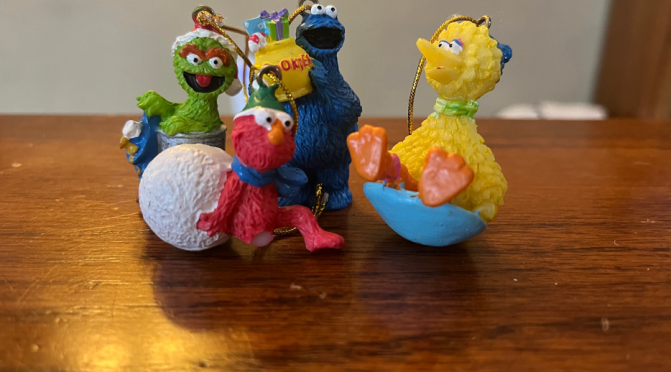
In 1969 ‘Sesame Street’ was aired on television. It was the first time that there was an educational show for all children and its impact showed.

Before ‘Sesame Street’ was created most children were exposed to cruel shows meant for adults. A study done by the University of Michigan showed that the average American child had seen 16,000 deaths on TV before they turned 18.

Although there were children shows on TV like ‘Mr. Roger’s Neighborhood’, they were meant for middle class children and gave an advantage to middle class children who knew more before they started school. The founder, Joan Ganz Cooney, observed that and wanted there to be a show where children of every class would be able to start school on a more even playing field.

When ‘Sesame Street’ first aired, it was an almost immediate success. Children who watched the show were seen to have higher knowledge in math, reading and writing before they started kindergarten. The impact was so big in some parts of the US that districts had to change their elementary school curriculums because too many kids had already learned what they were trying to teach them. It wasn’t only educational learning, but social and emotional skills too.

‘Sesame Street’ gained some backlash for its diverse cast and hard topics that it covered. It took a very long time for it to be aired on TV, but ‘Sesame Street’ never backed down from this backlash. They wanted to have a television show that all kids would be able to see someone like them in. They introduced more puppets that came from different backgrounds and continued to cover heavy topics like childhood poverty, natural disasters, death and racism.

‘Sesame Street’ paved the way for tons more educational shows and showed us how you can turn a harmful thing like television into something beneficial.

If you want to hear a more detailed explanation on how ‘Sesame Street’ changed education, a history day project made by Maeve Callahan-Schreiber is available on YouTube from the YouTube channel ‘The Better Angels Society’ with the title “Sunny Days: A Turning Point In Children’s Television”. Maeve is currently a 9th grader at Como Park Senior High School, and represented SPPS at the National History Day in June getting second for Junior Individual Documentary.  

5 types of love languages

By: Seng Yang

Image created with Gencraft

Love languages are the different ways people feel loved. There are 5 specific types of love languages and most people respond to more than one. Here are some explanations of the 5 types of love languages.

The first love language is quality time. This love language refers to expressing love primarily through dedicated, focused time spent with your partner, prioritizing their undivided attention and presence above other gestures. People with this love language usually value spending meaningful time with their partner, putting away distractions like phones but overall just engaging in shared activities, conversations, or simply just relaxing together can be more important than grand gestures. Some examples would be: active listening, focus on quality not quantity, importance of one-on-one time, regular date nights, engaging in meaningful conversations, craving undivided attention, and asking thoughtful questions that carries on the conversation.

The second love language is physical touch. This love language refers to someone who feels most loved and connected when they receive physical affection from their partner, like hugs, hand-holding, cuddling, kisses, or other forms of non-sexual touch. People with this love language deeply value physical closeness and feel most loved when their partner initiates affectionate touch. Some examples would be: kisses to show love and desire, resting head or face on shoulders, squeezing hugs, slow dancing, and playing with their hair.

The third love language is gift giving. This love language refers to someone who primarily expresses and feels love through the act of giving presents, where the thoughtfulness behind the gift is more important than its monetary value, signifying that they feel most loved and appreciated when they receive a thoughtful present, no matter how small or how much it costs. The focus is on the effort put into choosing a gift that shows you were thinking about them, not just the price tag, as even a little something thoughtful can be greatly appreciated. Unfortunately, many people mistakenly believe that this love language means someone is only interested in expensive gifts, but it’s more about the thought behind the present. Some examples would be: giving flowers, a book by their favorite author, a personalized item, a handmade craft, and a thoughtful handwritten note/letter.

The fourth love language is words of affirmation which is by far the most common love language around the world. This love language refers to someone who feels most loved and appreciated when their partner expresses affection through spoken or written words of praise, encouragement, and compliments, making them feel valued through verbal affirmation. People who have this love language deeply value hearing kind words, compliments, and expressions of love directly from their partner. The positive affirmations help them feel secure and validated in the relationship. Some examples would be: “I appreciate that you…”, “I love you”, “I’m proud of you”, “Thank you for…”, and compliments about their outfit, hair, or appearance.

The fifth and last love language is acts of service. This love language refers to someone who wants to be shown love through intentional actions that make your partner’s life easier, like doing chores, running errands, or performing small tasks that demonstrate you are considering their needs and want to help them out. People with this love language feel most loved when their partner takes initiative to do helpful things, not just saying nice words. To express this love language, you would need to pay attention to your partner’s specific needs and preferences to perform acts of service that are truly meaningful to them. Some examples would be: cooking meals, planning a surprise activity, preparing breakfast in bed, making their favorite treat, holding the door open, tying their shoelaces, making their morning coffee, or doing things for them without them having to ask.

‘Girlhood (it’s complicated)’

By: Kumari Wijetunge

Official poster of Girlhood (it’s complicated)

‘Girlhood (it’s complicated)’ is an exhibit that you can see at the Minnesota History Center that will be up from September 7, 2024 to June 1, 2025. This is an extremely well put together and powerful representation of the impacts made by women throughout history with themes like education, fashion, work, and politics. The exhibit explores how girls over the years have navigated growing up in a society that underestimates our voices and abilities.

The exhibit counters traditional narratives of girlhood by highlighting the struggles and complexity of girls’ lives. It emphasizes that being a girl is much more than society paints it to be but instead involves navigating multiple roles and identities. Through a collection of over 100 historical artifacts, personal diaries, and interactive displays, ‘Girlhood (its complicated)’ shows how girls have contributed to society in significant ways, often breaking down barriers that were set before us.

One of the main themes of the exhibit is girls’ access to education and how it has evolved over centuries, with many girls fighting for the right of education. The exhibit shows the historical struggle and the events that led to girls and women securing educational opportunities.

The work of girls and young women is also shown in the exhibit and how they balanced family responsibilities like chores with personal ambitions and activism. Artifacts like clothing, diaries, and toys highlight the way girls have navigated their roles in the household and beyond.

‘Girlhood (its complicated)’ also features an exclusive section dedicated to girls and women in sports, specifically basketball. This part of the exhibit showcases the growth of women’s sports and the stories of female athletes who empowered others. Through photographs, personal stories, and trophies, visitors can learn about the history of women’s sports and the ongoing fight for equality.

Throughout the exhibit visitors reflect on their own experiences and perceptions of girlhood. Overall, ‘Girlhood (it’s complicated)’ is a powerful reminder of how important it is to recognize the different experiences of girlhood throughout history and the present. By interacting with artifacts and stories, visitors can leave with a greater appreciation for the resilience and strength of girlhood.