Category Archives: Getting To Know/History

The cruel inter-workings of psychology!

By: Maeve Brady

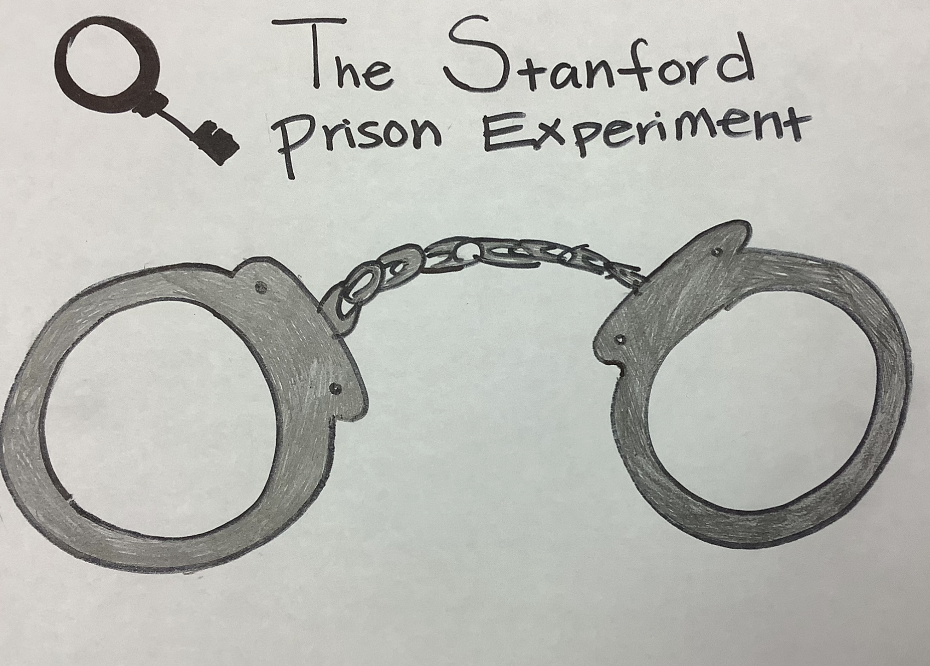
Psychology, it’s an amazing study of human behavior and cognitive functions, and, within this wide branch, there is so much to discover. That brings me to today’s topic, psychology experiments. More specifically speaking, notable psychology experiments. Now, you may have heard of popular experiments such as the Stanford Prison experiment and/or the Milgram experiment, which was an experiment with the intention of questioning people’s ability to adhere to an authority figure under who they assume to be someone in power. But, besides the most renowned ones, how about the ones barely anybody talks about? Are they considered notable or worthy? Today I will be explaining a very complex and appalling experiment, also known as the MK-ULTRA Project. I will try my best to explain all aspects of it and how it is notable to psychology.

First of all, what even was the MK-ULTRA Project? Well, the MK-ULTRA Project was a very bizarre experiment and the horrors of it run deep throughout history. The project was developed by the Central Intelligence Agency, also commonly known as the CIA. The CIA was a federal service tasked with enhancing national security through analyses of intelligence. Or in other words, the main foreign intelligence service of the United States. To be more specific, this experiment was primarily run by a chemist named Sidney Gottlieb, although Allen Dulles, the head of the CIA, agreed to let the procedures go through. This experiment was primarily based around the experimentation on humans and how they react.

This experiment had horrid intentions. In fact, the primary intentions of this experiment was to develop procedures, drugs, and/or some type of methods that would be capable of weakening an individual’s ability to resist, which would result in easier confessions due to this sort of “brainwashing” so that during an interrogation, they could easily get people to confess. It was a project just overall based around psychological torture on its participants. In order to figure this sort of “truth serum” out, experimenters would inject participants with drugs, usually this drug would be lysergic acid diethylamide, also known in the abbreviated form as LSD. They had hopes to discover at what point humans would break and essentially lose control of their cognitive abilities to adhere to authority figures. The ones that were experimented on varied from place to place.

Now, the majority of Gottlieb’s experiments were funded at universities and research centers, and others were conducted in American prisons and detention centers around the world. Typically, the ones being experimented on were people such as soldiers and most commonly prisoners. Prisoners were typically more popular because they were willing to operate in exchange for extra recreation time and were operated on. But, what makes this even more horrific is that many of the subjects had no idea they were going to get experimented on, and were unsuspecting people. And, adding on that fact, they tended to prey on the most vulnerable of people.

This experiment went on for a long duration of time, starting around November 18, 1953 and it was officially halted in around 1963 to 1973. This halt was due to the discovery by the CIA Inspector General staff of what was truly going on. Along with the discoveries of how dangerous and just morally wrong it was, as the subjects were given psychoactive drugs and other toxic chemicals.

Now, this experiment stemmed not only from new fascinations, but it also stemmed from fear and a continuation of the Nazi lead experiments through the duration of World War II. In 1933, Hitler was appointed chancellor of Germany, and with his Nazi party helping him to suppress opinions and political enemies, he created a dictatorship. Due to previous hate of Jews along with Hitler using the Jews as scapegoats for Germany’s misfortunes after World War I, many Jews were persecuted. Eventually, this led to Jews being sent to concentration camps in an effort to exterminate them. During the 1940s, Nazi scientists worked in the concentration camps, which were usually filled to the brim with Jewish people, along with other camps containing the Roma people and other prisoners of war. In these camps, along with the starvation and other cruelties they brought to victims’ lives, they also did interrogation experiments.

To really give you a picture of how unethical some of these experiments were, we must discuss Operation Midnight Climax. Operation Midnight Climax was a notorious LSD experiment conducted by the CIA. In 1955, George White oversaw this experiment by first decorating a room to look homey and unsuspecting, then he let everything play out. Paid people would lure unsuspecting people to the scene and then they would be drugged by LSD as George White watched behind a two way mirror. 

Now, the results of the experiment are hard to find. This is because in the 1970s, most of the evidence for the experiment was destroyed. Along with the fact that this experiment was kept secret for most of it due to the fear of peoples’ criticisms.  Although there are similar experiments to this such as the Stargate Project, this project also focused on the study of psychic phenomena. Though similar to the MK-ULTRA Project, its results were dismissed and only proved that the methods were harmful, and killed many. 

Thank you so much for following me along as I explain this intriguing experiment to you! I hope you also found this experiment intriguing and brought you a valuable critical thinking experiment!

For more information, please go to:

Gates: A legacy of giving

By: Teagan Mack

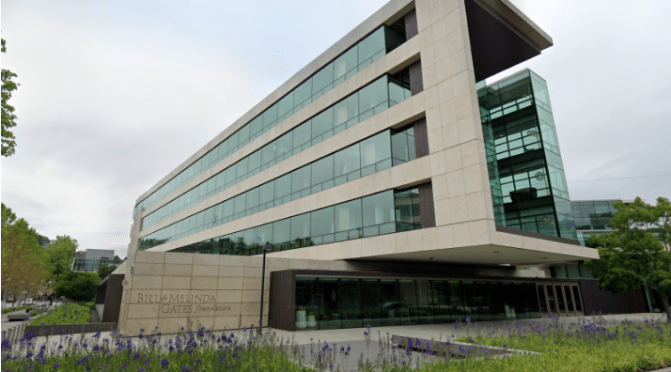
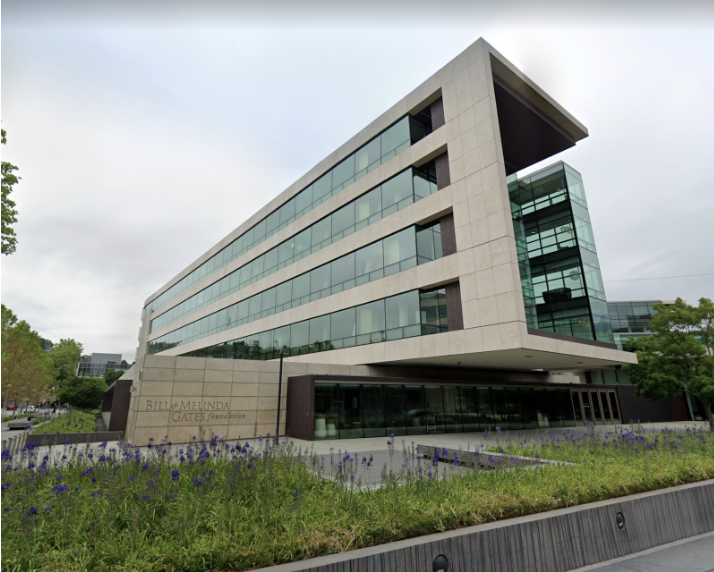
Photo from Google Earth

When most people hear the name Bill Gates, they think of Microsoft, billions of dollars, and tech innovation. But more recently Gates and his former wife, Melinda French Gates, have been recognized for something completely different: Giving away their money, and not just a little bit. They’ve committed to giving away the vast majority of it with the time they have left.

Together, they founded the Bill & Melinda Gates Foundation, which focuses on solving global problems that affect millions. Their work goes from improving healthcare in the world’s poorest countries, to funding public education here in the U.S. Their foundation has grown into one of the world’s most influential charitable organizations.

Interestingly, Bill and Melinda Gates have made it clear that their children won’t inherit the majority of their wealth. Gates said that he wants his kids to have the freedom to follow their own paths, all while not being handed a vast sum of money. He believes giving them a small portion will be suitable for them to live comfortably while motivating them to work hard, find their purpose, and contribute to society as they please. He says the rest should go toward helping those who don’t have the same advantages.

One of their top priorities is global health. The foundation supports efforts to fight diseases like malaria and HIV, deliver life-saving vaccines, and enhance healthcare systems in places where medical help is hard to come by. Their goal for healthcare is to make long lasting changes that help communities become healthier and more self-sufficient.

In the U.S., the foundation is heavily invested in education, maily public schools. They fund programs that strive to improve graduation rates, increase access to college, and support students from underserved communities. For Gates, education is a key to unlocking opportunities and reducing inequality.

Melinda has been a strong advocate for women’s rights. Through the foundation and her own enterprise, she helps contribute to projects that empower women and girls, whether it’s through education, healthcare, or economic support. She speaks out about the need to close gender gaps around the world.

After 20+ years in the Gates Foundation Melinda took a step down from Co-Chair to focus on her charity Pivotal Ventures and other charities. Melinda stated “The time is right for me to move forward into the next chapter of my philanthropy.”

In 2010, Bill and Melinda Gates joined forces with Warren Buffett to create “The Giving Pledge”, a public commitment by billionaires to give away at least half of their wealth. Gates went even further by saying he wants to donate nearly everything and eventually drop off the list of the world’s richest people entirely.

For more information, please visit:

History of Earth Day

By: Grace Wright

Over many decades Americans were using inefficient cars leading to major air pollution. Many Americans were oblivious to this because they were told it was the smell of success and major corporations didn’t want them to know about the environmental or health issues.

Changed started with Rachel Carson; she published a New York Times bestseller ‘Silent Spring’ in 1962. It helped raise awareness to the public about how damaged the environment is and how it’s going to start affecting the public’s health.

Senator Gaylord Nelson from Wisconsin, had always been concerned about the impacts that were happening to the environment. But it wasn’t until he and many others saw the effects of the oil spill in Santa Barbara, CA in 1969.

This started anti-war protests, and Senator Nelson wanted to use the energy of the protests to help even more of the public understand what was happening. The way he thought this would work best would be teach-ins on college campuses.

Nelson recruited Denis Hayes, a young activist, to help organize the different campus teach-ins. They chose April 22 because it was between finals and spring break to help get more students to come.

The first Earth Day was on April 22, 1970. Hayes was able to promote the event across the U.S. to 20 million Americans which was only 10% of the population at the time. They took to the streets to help show the impact of what 150 years of industrial growth had done to the environment.

After the first Earth Day was the creation of the U.S. Environmental Protection Agency. They put through many environmental laws, started the Environmental Education Act and the Clean Water Act. Earth Day has now been happening for 55 years and over 1 billion people worldwide have participated in it.

What can do to help keep our environment clean and healthy? Don’t litter or if you see trash pick it up. Practice not letting the water run while brushing your teeth. You can donate to different organizations to help support the efforts too.  

For more information, please visit:

History of the National Parks

By: Grace Wright

Logo of the United States National Park Service

March 1, 1872 was the day Yellowstone National Park became officially approved by the U.S. congress. The founding of Yellowstone National Park helped start the wave of new parks in over 100 different nations and 1,200 parks.

After Yellowstone became a National Park there were many different monuments and new National Parks, but the issue was that depending on where it was located, it was managed by many different government departments; this made things complicated. The 3 departments involved were: the Department of the Interior, the War Department and the Forest Service of the Department of Agriculture.

On August 25, 1916 an act was signed by President Woodrow Wilson creating the National Park Service. It was a new department responsible for protecting the 35 parks and different monuments that the Department of the Interior was responsible for. It wasn’t until 1933, when an executive order transferred 56 monuments and military sites from the two other departments, that all of the National Parks fell under 1 department These steps have been most important to help build the National Park Systems we know today.

One person who was very important to these steps was Theodore Roosevelt. He was known as the “Conservation President”, he impacted the system well beyond his life. When he was president in 1901-1909 he doubled the number of parks known. He established 5 parks in his time, Crater Lake in Oregon, Wind Cave in South Dakota, Sully’s Hill in North Dakota, Mesa Verde in Colorado, and Platt in Oklahoma. Some of these are not here today but they have still made an impact.

The National Park system in the U.S. includes 400 areas that cover more than 84 million acres in the 50 states but also the District of Columbia, Guam, Virgin Islands and many more.

The National Parks still strive to meet the goals of protecting the diverse cultural and recreational resources, being an advocate and helping to preserve our natural world. The National Park Service employs more than 20,000 people and they care for 400+ National Parks and monuments. 

For more information, please visit:

Girl Scout Cookies

By: Sylvia Yannsdottir 

Image taken by Drmies on Wikimedia Commons

We all know Girl Scout Cookies, and we all love them too. They’ve become a well known classic in the United States. They are available to be purchased in January through April every year, and without fail they are always in high demand. Every year, Girl Scouts sell approximately 200 million cookies to Americans, each box costing $6-7, and in total worth an estimated $800 million. It is the largest girl-led entrepreneurial program in the world.

Aside from how much everyone loves buying the cookies, being a part of Girl Scouts is such a great thing for young girls. As of today, Girl Scouts of the United States has over 2 million members. Being a part of Girl Scouts helps young girls develop so many skills, like community engagement, confidence, leadership, and more. Selling Girl Scout Cookies provides great opportunities for practicing communication skills, managing money, and being part of a community. 

Girl Scout Cookies were originally home baked by members with their moms, simply volunteering to be involved in the community. It wasn’t until a few years later, in 1917, when the first box of Girl Scout Cookies was sold. Ten years later, it became normalized for Girl Scouts to go door to door throughout a neighborhood to sell the cookies. 

Nowadays, if you go out to a local grocery store during the spring, you’ll often see a Girl Scout Cookie booth. Typically a few young girls will be standing behind the booth while a few adults will be around for supervision as they sell out of cookies quickly. 

Girl Scout Cookies remain very consistent. Especially by maintaining the consumers favorite flavors every year, like Caramel deLites, Thin mints, Adventurefuls, and my personal favorite, the Lemonades. Typically, you don’t see new flavors getting introduced. 

Overall, Girl Scouts have made a huge impact across the United States in the past 100 years, and in a way, the cookies have brought so many people together. If you haven’t already gone out and bought a box, I highly recommend that you do! Not only would you receive a nice treat, you’d also be supporting the opportunities of so many young girls.

The history of Smokey the Bear

By: Grace Wright

Smokey the Bear started in 1941 in California because during World War II many of the able bodied men were off fighting. So, when wildfires started breaking out, there was no one to really fight against them; many communities had to fight them themselves or just let them burn. Protecting the national forests and other parts of the country became a big concern because many of these wildfires were damaging them. 

People thought using this worry would help people find something else to focus on instead of the war and also that it would actually get people to help. So, they started the CFFP, Cooperative Forest Fire Prevention. They started posting different slogans like “Forest Fires Aid the Enemy” “Our Carelessness, Their Secret Weapon”. This helped people get motivated to help because they made it seem like the wildfires would make the US look weak, which would allow the war to come closer to home.

They did this for a while without a mascot until Disney came out with the movie ‘Bambi’. They got the rights to use the animal from the movie for a year to help their campaign. Once the year was up they would have to find a new animal. They soon decided that nothing would fit better than a bear. On August 9, 1944 Smokey the Bear was authorized by the Forest Service. They soon started making posters and his popularity became huge.

A couple of years later they soon had a real life Smokey the Bear mascot. During a wildfire in New Mexico a baby bear was found after getting burned in a tree. They took him to Santa Fe to hopefully recover. He soon took over the country and many people loved him. He went to the National Zoo in Washington D.C. to live until he died.

Smokey the Bear’s iconic saying “Remember only you can prevent wildfires” proved to be very useful. It stayed like this for a few decades until they found research that said that some wildfires actually are useful for certain types of forests, so they changed it to “Only you can prevent wildfires”.

Smokey the Bear is very popular to this day, you can find his saying pretty much anywhere. It is also very popular in smaller towns to have a sign that shows the fire hazard for the day and him standing with it. Overall, Smokey the Bear is a very iconic symbol and he did celebrate his 80th birthday in 2024. 

For more information, please visit:

The history of Trolli

By: Maya Song

Trolli is a long standing candy manufacturing company known all across the world. It was founded in Germany in 1948 by Willy Menderer, which was then passed down to his son, Herbert Mederer in 1981. The company is now operated by the Mederer group which acquired the company in 1998.

The company expanded its reach to the United States in 1982, which introduced their product to a whole new population. Places such as Asia, North America, and Europe all saw the potential of this brand and invested in helping it grow. The fact that Trolli was given the opportunity to sell its products internationally really helped the company reach the status that it holds today, as one of the world’s biggest candy manufacturing companies ever.

They reached their highest accolade in 1993 when their famous sour glow worm won the Candy Kettle Award, a highly prestigious award that other famous companies like Ferrero, Lindt, Nestlé, and Haribo have won.

Some of their bestsellers include the sour brite crawlers, peach rings, and my personal favorite, egg gummies. Trolli is well known for having very creative flavors and designs as well as experimenting with sour flavors. The company does not sit on their laurels but constantly comes out with new things for consumers to try. They provide a variety of different gummy candies and have become a very successful and popular company due to their innovation.

While there are a plethora of other candy manufacturing companies around the world that compete with Trolli, Trolli will always be one of the originals. Trolli has remained one of the most successful ones out there for nearly 75 years, while it continues to grow its brand and followers.

In my personal opinion, I truly love Trolli gummies, especially the gummy eggs. I think that they are definitely worthy of their status, and it is always a guarantee to fulfill a sweet craving.

The impact of music on mental health

By: Kate Tabor

Image created using ChatGPT

We all love music, and it turns out that it’s for a good reason. Many studies have shown that music can have a positive impact on your mental health (and even your physical health, if only by a bit). Here’s how.

Music helps distract us from our thoughts and lowers our stress. Listening to music can lower stress hormones, as well as blood sugar and heart rate, both of which are things that spike when you’re stressed. If you want to block out the world and forget about whatever problems you’re dealing with at the moment, listening to songs that share a different story is a good way to do that.

Not only can it help with stress, it can help you name your emotions, and manage them better. If you’re feeling off, but don’t know why, try listening to classical music. It sounds silly, but hearing a melody without lyrics helps you project your own feelings onto the music, without the music already having a feeling or meaning.

Even without classical music, songs can often help us figure out what we’re feeling as well. I can’t count how many times I turn on one of my favorite songs casually, and even though I’ve heard it a million times before, a lyric sticks out to me and I just think wow, where are the cameras hidden? Music can help you place your feelings, and also feel seen in those feelings.

Music builds community. It brings people together. Music festivals, radio shows, Spotify playlists, etc. A popular app around my age group a bit ago was an app called Airbuds Widget, where you can share what you’re listening to with your friends. I’ve made so many friends based on just recognizing that we both listen to the same artist.

Music can also boost your mood when you’re feeling down, which I find to be especially true. Everyday, I hop in my car after school and turn my favorite playlist on, and I immediately feel better.

Even just half an hour ago, I was unmotivated to start writing this article, but I sat down, put my airpods in, and got to work. Music has a huge impact on me, and I’m sure many others, on how motivated I feel.

Music can be a great tool, even when we don’t realize it.

For more information, please visit:

History of R&B music

By: Fletcher Pike

Photo by Nascimento Jr. on Pexels.com

Many might know about the popular music genre of R&B, popularized by several artists such as Lauryn Hill, Michael Jackson, and Whitney Houston. But some might not know of the history of this music genre and how it became so popular today. In this article, I plan to go over the basic history of R&B, and some notable figures who influenced this unique genre of music.

In the 1920s-1930s, a large number of African Americans migrated to urban cities and industrial areas such as Chicago, Los Angeles, and New York City, which created a brand new market for music such as jazz or blues music. “Race music” was the term that was used to initially describe music that was made by African Americans, but the term later acquired a racist interpretation.

In 1949, writer Jerry Wexler substituted the label “rhythm and blues” which would later become the title of R&B music, as R&B stands for rhythm and blues.

Ruth Brown (Jan. 12, 1928- Nov. 17, 2006), also known as “Miss Rhythm”, was a popular R&B singer who released music throughout the 1950s. After the release of her first recording, “So Long”, she became one of the most notable female R&B singers of the 1950s. She brought many pop genre elements to the R&B genres, which influenced many artists in the future.

In the 1960s, African American made music shifted from its primary theme of blues music and shifted to more gospel styled music. “Soul” was the title that many African Americans called this style of music in 1964, which captured the emotional value of this genre.

Since then, R&B has evolved to adapt more modern elements, especially in the 90s and 2000s, with artists such as Mary J. Blige, Aaliyah, Lauryn Hill, and Alicia Keys bringing modern-pop elements to the R&B genre.

The genre itself can be usually characterized by its combination of many different genres, such as blues, jazz, pop, and gospel, with slow rhythms and emotional lyrics. 

I hope that this article taught you about some of the history of the R&B genre as well as some of the different artists that popularized this genre. 

If you want to learn more about the history of R&B music, check out this link: https://www.britannica.com/art/rhythm-and-blues

The Northern Cities Vowel Shift

By: Maggie Hong

Image created using Canva AI

If you think the Midwest isn’t an important part of the English speaking world, think again. The largest change to the English language since the time of Shakespeare is happening right here, in the upper Midwest.

Think of a typical Minnesotan accent. Someone might say ‘bayg’ instead of ‘bag’, or ‘melk’ instead of ‘milk’. These aren’t just regional pronunciations; they are markers of a big change to the way we speak English.

When we pronounce words like ‘bag’, ‘milk’, ‘cat’, and ‘bit’, we form vowel sounds using a certain position of our mouth. All our vowel sounds, though they were in use for centuries before, were firmly established during the Great Vowel Shift throughout the 15th century. They’ve remained mostly the same since. Now, in cities surrounding the Great Lakes region, they are changing.

Vowels are organized in a sort of carousel, corresponding to where in the mouth they are pronounced. Vowels like the one in ‘bat’ are pronounced near the back of the mouth, while ‘bot’ is pronounced at the bottom of the mouth. When one vowel moves out of its spot, say from the back to the bottom of the mouth, the rest follow it. The vowel which was pronounced at the bottom of the mouth moves to the front, the one from the front moves to the top, and so on.

In the northern cities, this began with the vowel in ‘bat’, known as the trap vowel. The trap vowel, which was pronounced in the middle of the mouth, began to get longer, now sounding like the vowel in ‘yeah’ or ‘mia’ and resulting in the Midwestern pronunciation of ‘bayg’. As the trap vowel moves up, it occupies the space once held by the ‘kit’ vowel. ‘Kit’ moves down, now being pronounced with the vowel in ‘dress’, and resulting in the Midwestern pronunciation of ‘melk’. This continues until every vowel sound has shifted.

The resulting set of pronunciations defines the Midwestern accent. And although English speakers around the world have accents, the Midwestern accent is the most significant because it is a chain shift. In the British or Australian accent, vowels move one at a time. The change is small. In the Midwest, they shift in a chain reaction, each move prompting another. No such chain shift has occurred on a large scale since vowels were first established in the 15th century. So, the next time you hear someone say ‘melk’, you are witnessing a historic moment for the English speaking world: the Northern Cities Vowel Shift.

For more information, please visit: