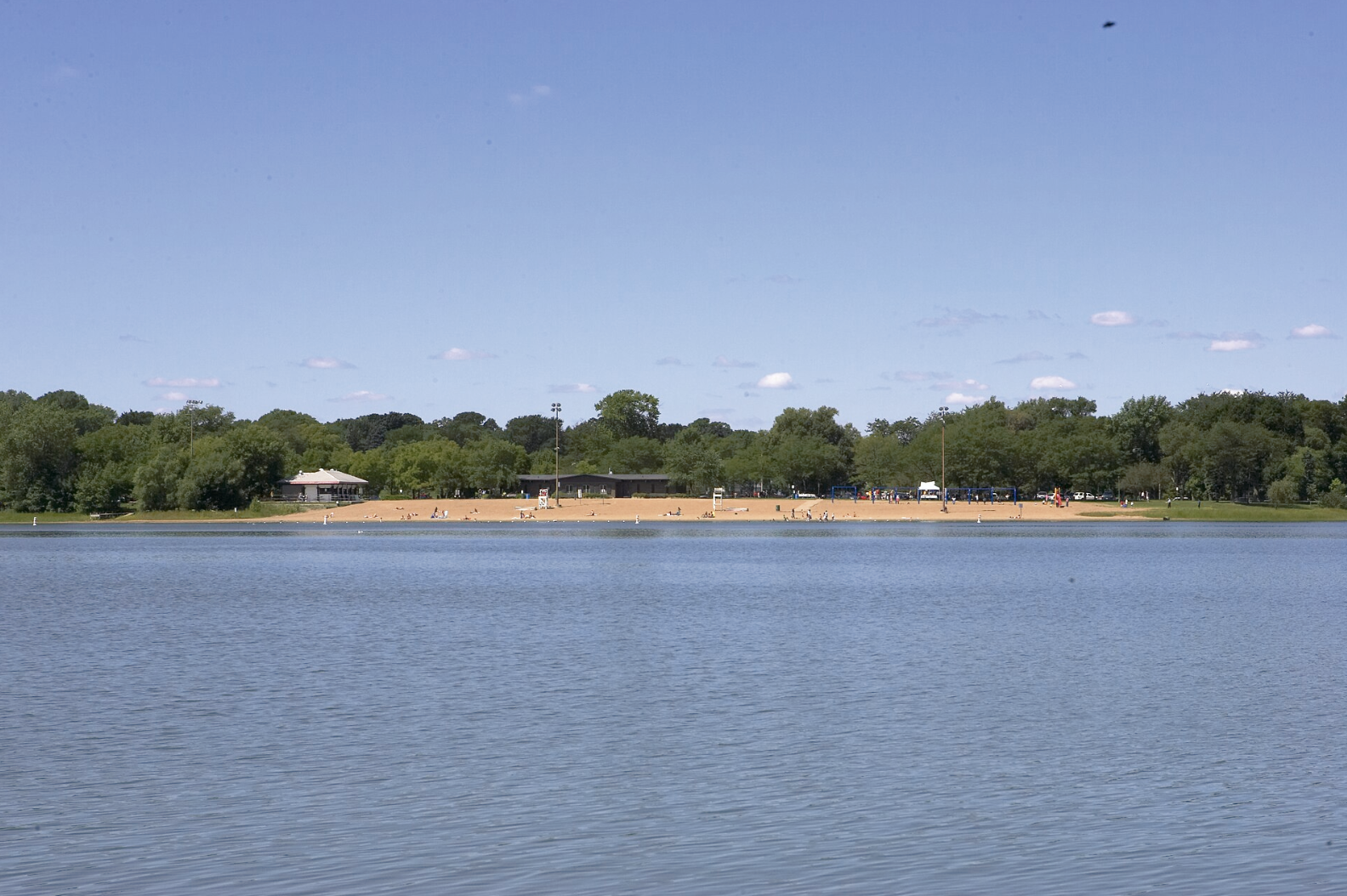
When summer finally arrives in Minnesota, everyone will know what to do: pack a bag and head to the beach in Minneapolis. We have several urban beaches such as Lake Bde Maka Ska, Lake Nokomis, and also Cedar Lake. All of these lakes offer a place to cool down when it is unbearably hot out with temperatures always fluctuating and sometimes breaking records across the state. One thing is for sure, beaches will be crowded, but will we actually see record swimmers this year or will it be another average summer?
If you think about it, hot weather means more crowded beaches of people wanting to escape the heat when the forecast is constantly in the high 80s and 90s. Staying inside with the air-conditioning feels nice but is sometimes very boring for people on summer break or for families looking for free activities to do, or anyone trying to cool off that wouldn’t have AC. The cities urban beaches are go to destinations.
However, predicting or even thinking about a record-breaking swimming season isn’t as easy as just looking at the forecast for the next week or two. For records to break, a lot of environmental science is also at play and the extreme heat just adds to it .
Even though hot weather draws people to the sandy beach, it also creates one of the most known problems in all of these urban lakes: toxic algae and bacteria. Minneapolis lakes are pretty, but they are also delicate ecosystems. When temperatures rise in the cities, there are often heavy summer rain storms which wash city pollution and other chemicals into the lakes. Nutrients like phosphorus overflow into the water and this mix of extreme heat and runoff can cause quick blooms of toxic algae.
We’ve already seen this happen with a lot of lakes in Minneapolis. The parks and recreation board has had to give out a ton of safety warnings and temporary closures to popular swimming areas, including around Lake Nokomis, due to water safety issues. If you swallow the water or even touch the water with the algae it can cause serious skin irritation, rashes, eye irritation, and severe stomach issues. So even if it’s hot out, and there’s one of these warnings, the beach’s swimmers will drop to zero.
Another key factor is that how many people work at these beaches? The city works really hard to keep everyone safe but hiring staff to be lifeguards has been a really big problem in the last couple of years because there’s been a big shortage of people wanting to work as lifeguards. This is because the beaches usually have to limit how many lifeguards they have, and sometimes they won’t have any making the beach closed, or swim at your own risk. This leads to large crowds gathering at just a few specific beaches because there are no lifeguards.
My final verdict is that we will most likely see higher than average crowds relaxing on urban beaches this summer. People are eager to escape the heat, but this won’t mean that there will be more than average people swimming. If we get enough cool breaks throughout the summer, we will likely see more people swimming because there will be less algae in the water, but if the heat remains being up and staying up, this will cause more algae. This will mean that people will be stuck on the sand and not in the water.
WARNING: This review talks about some major story parts and characters from the game and contains spoilers.
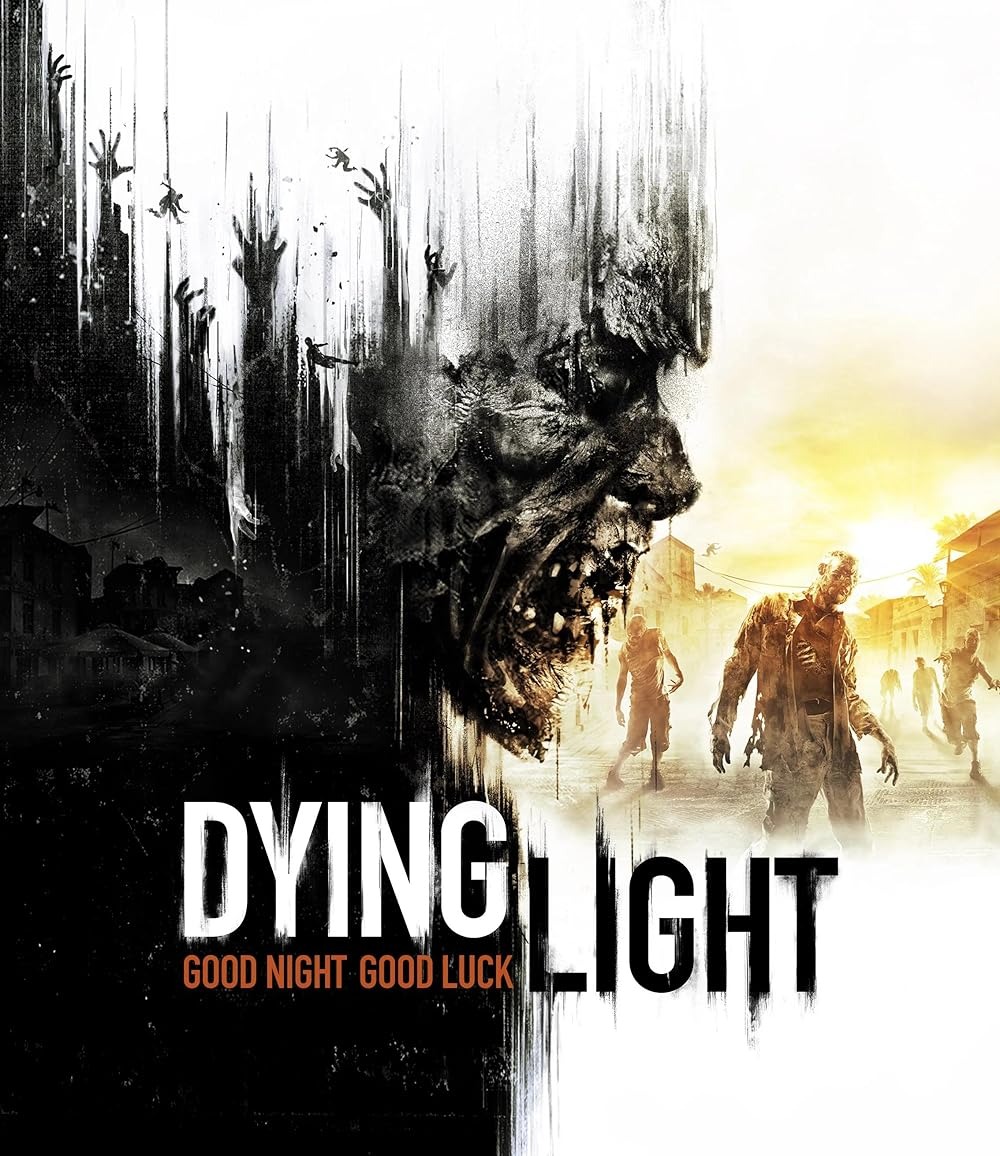
‘Dying Light’ is one of the best horror/zombie survival games I have ever played. The game was made by Techland and first released in January of 2015. Even though the game is over a decade old it still feels fun and exciting compared to other games that have been released recently.
The main way to get around the game movement wise is parkour although, you can unlock a grapple hook later on in the story. Dying Light mixes parkour, fighting, survival, and horror together in a really nice way. It keeps you interested, basically glued to the game the entire time you’re playing. Well, at least for me.
The setting of Dying Light takes place in a city called Harran after a zombie outbreak happens. You, the main character, play as a man named Kyle Crane. He works for the GRE as an agent and gets sent into the city to track down a colonel gone rogue named Suleiman who stole a file very important to the GRE. But the life he sees in front of him changes him and he starts to go against the GRE because they planned to weaponize the Harran virus and bomb the city once their intentions were revealed to the world.
The main campaign of this game is emotional, serious, and captivating at times. There are many characters Crane meets in the game, but my favorite character is Jade Aldemir. Jade is smart, brave, and very strong. She helps Crane with many things in the story and always tries to look out for him. That’s why it hurt when she sacrificed herself and gave the antizin to Crane instead of using it on herself near the end of the game.
One of the best things about the game is the movement system. You can run across the roofs of buildings, climb them, jump over walls, and swing around the city if you have the grappler hook. The parkour makes the game feel somewhat real as if you’re actually doing the parkour yourself. Even moving around when you’re not doing missions is fun and thrilling. I think this key part of the game makes it stick out from other games in the same genre.
The combat in this game is also top notch. At the start, your choice of weapons are not good: like pipes and planks. But later in the game, you can collect different things and craft new and better weapons like swords, electric bats, and strong hammers. Fighting zombies can go from almost impossible to really easy depending on your choice of weapons. Some are fast and strong while others are slow and weak. So, you might have to pick the right weapon for each type of zombie.
The scariest part of the game to me is during nighttime. During the day zombies are still dangerous but you’re able to make your way fairly easily enough. But at night, stronger zombies called Volatiles come out. They are faster, stronger, and can kill you in seconds compared to a normal zombie during the day. The game during the day compared to during the night is different. You run through the dark streets that are somewhat lit facing way stronger variants of zombies that chase you down. I like this aspect of the game because it gets your heart racing and induces fear.
The graphics are also really nice in this game even though it’s over a decade old. The detail in the city, how abandoned it feels, Techland really brought it to life. The sound effects are also amazing. Like the zombie growls, the music of the game, and background sounds of the city. All these combined together makes the feeling more intense.
Overall, ‘Dying Light’ is an amazing horror/zombie survival game with thrilling parkour, exciting combat, and a strong and emotionally heavy story that will keep you glued to your seat. Techland did a great job mixing all the action and horror together. Even after all the time the games been out, it is still worth playing to this day.
I would easily give ‘Dying Light’ a 9.1/10. It’s available on PC, Playstation, Xbox, and Nintendo.
In ‘The Sage Of Six Paths’, Hagoromo, filtered his power in a way humans can use. He didn’t want them to use it for violence so he invented Ninshu. Ninshu is taking the Chakra of everyone that can use Chakra, and sharing it with each other. This allowed humans to connect spiritually and mentally fully without speaking. This was meant to be very peaceful. Since humans lie with words, Ninshu allowed people to connect using their spiritual and physical energy and share their whole lives by just feeling and with no words. Ninshu is more ancient but it’s how all the rest are based on.
Ninjutsu
Is a way to convert Chakra into physical things using specific hand motions to manipulate the Chakra into specific shapes. It’s the most common and versatile use of human Chakra. This system was discovered by Indra, one of Hagoromo’s sons. He discovered that the Chakra people use to connect through Ninshu, can also be molded into certain shapes to create a reaction. He discovered certain hand signs trigger certain reactions. He also discovered the first Chakra Transformations, Lightning and Fire.
Chakra Transformations
It is Ninjutsu, but certain Ninjutsu require certain Chakra transformations, which everyone has an affinity to specific ones. The Chakra Transformations are Fire, Lightning, Wind, Water, and Earth. Everyone has a natural affinity towards one at birth, and can learn another through skill. The highest level ninjas, like Jonin, can usually use 2, but it’s possible to master more through sheer skill and knowledge.
In order to use for example, a fireball jutsu, you would want to have a natural affinity to the fire nature transformation. If your natural affinity was water, you could still learn fireball jutsu, but it’s much harder than for someone with natural affinity to fire. That applies to every jutsu that is specific to a transformation of Chakra.
Shape Transformation
While Chakra Transformations change the properties and elemental quality of Chakra, Shape Transformation focuses on manipulating the form, size, and movement of the Chakra. It molds the Chakra into specific physical manifestations without changing the elemental nature.
The most famous example of Shape Transformation is The Rasengan, created by Minato Namikaze. It is a ball of Chakra that is spinning in multiple conflicting directions at once at extreme speeds, giving it maximum chaos and tearing power. He also fully compressed that into a perfectly stable, compact sphere so it wouldn’t explode. Because it is a pure shape transformation any of the nature transformations can be integrated into it.
Taijutsu
Doesn’t require any coding with hand signs. Instead of projecting Chakra outside the body, you’re using it to enhance your body. You take your Chakra and instead of weaving it into a shape you are just expressing it on your body. This was likely discovered by Asura, the second one of Hagoromo’s sons, instinctively by doing physical labor and integrating Chakra in his body.
There are 8 Inner Gates on every human that try to limit the human body from using too much of its Chakra on its own body since your body will tear itself apart through overexertion. They can be bypassed if you know of them and through obscene physical training.
Genjutsu
Is taking the natural connection that Chakra has through Ninshu, and hacking that connection. Instead of connecting someone to “feel” them, you send your Chakra into their nervous system to override their Five Senses. For example, a basic genjutsu is making someone see you when you’re not there. You used the connection of getting into their brain, and corrupted it, making them see or feel things that aren’t real. This was discovered by Indra after purposefully corrupting his father’s Ninshu, it is the opposite of Ninshu.
Fuinjutsu
Is using Chakra to write complex formulas. That creates a logic gate that the universe has to follow. For example, being able to store massive objects in a tiny space. A common use is storage scrolls. A ninja writes a formula on the scroll, touch weapons, and the weapons are stored in the scroll. This usually requires a lot of Chakra control or quantity to handle complex formulas, or very very high IQ to condense those formulas to the minimum.
Senjutsu
Is not an invention of humans in any way. It is from the planet itself. Humans aren’t even the most native beings on earth, there are ancient Toads, Snakes, and Slugs that have lived for thousands of years. They can connect to nature energy much easier, since they have lived on earth much longer. For humans specifically, it’s adding another component to your Chakra rather than forming it. Instead of only the physical and spiritual energy to make Chakra, you also need to add Natural Energy, which creates Senjutsu Chakra. Though that is not easy at all, and very dangerous.
Earth energy is infinite compared to the Spiritual and Physical Energy in one person’s body, but you have to perfectly balance and only pull in the same amount of natural energy you need. It’s like trying to get a drop of water in a cup that you dip in an ocean. When a human is successfully able to integrate nature energy in their body they become much stronger, have enhanced senses, and can manipulate and feel the earth itself. When you achieve that state you are called a Sage.
Kekkei Genkai
Also known as Bloodline Limits, it is the ability to combine two Chakra Transformations to create something new. You cannot learn how to do this through skill or training alone, even if you mastered all nature transformations. You need to have a genetic mutation for the ability to do it.
Examples are Lava Release, being a fusion of fire and earth. There is also Magnet Release, being a fusion of wind and earth. As well as Boil Release, being the fusion of Fire and Water.
Dojutsu
Are also Kekkei Genkai. It is when a Kekkei Genkai manifests in the user’s eyes. The three Great Dojutsu belong to The Uchiha clan with the Sharingan, The Hyuga clan with the Byakugan, and a myth that nobody has really seen, wielded by The Sage of Six paths, called the Rinnegan.
The Sharingan
Allows the user to see Chakra flow, track high speed movement, and copy ninjutsu or taijutsu. The Sharingan has levels that unlock based on intense emotions like trauma. It starts as the first 3 tomoe stages, they all allow you to copy techniques, track movement, and cast genjutsu, getting better at the amount of tomoe.
The Uchiha also have The Mangekyo Sharingan, that unlocks when the Uchiha experiences the trauma of losing someone very close to them after having the tomoe Sharingan.
Upon activation the Mangekyo grants a unique ability. Examples are the Amaterasu that casts a black fire that can’t be put out, or Kamui that can teleport yourself or objects to a different dimension.
The Mangekyo also grants the Susano, which is a spectral avatar made of dense, pressurized Chakra. It surrounds the user like an indestructible suit of armor and moves perfectly in sync with their thoughts and actions. It’s the ultimate defense with its massive, near destructible, instinctive shield for the user. And also the ultimate offense because it is linked to the user’s thoughts and actions, and each Susano can manifest a unique weapon like swords, bows, shurikens or spears that can cut through anything almost.
The Susano only unlocks when the Mangekyo is present in both eyes. The drawback of the Mangekyo is that when you use it you go more and more blind, until you are fully blind.
The Eternal Mangekyo Sharingan unlocks when two users of a Mangekyo Sharingan that are very closely related, put their eyes into the other’s eyes. The EMS grants the ability to use the Mangekyo Sharingan without going blind. It also grants the Perfect Susano, which makes the Susano mountain sized, and grants the most amount of armor and body.
TheByakugan
Grants near 360 degree vision, telescopic and x-ray vision, and the ability to see Chakra flow and target the Chakra pathway system in fine detail. With near 360 degree vision the user can see everything around them besides one tiny blind spot at the back of their neck. With telescopic and X-ray vision they can see through solid walls, smoke, and several kilometers away with mastery. With Chakra pathway perception they can see the entire Chakra network and the 361 Chakra points in people’s bodies. This allows them to target those points to cut off and specifically damage Chakra to shut down or overload a body.
TheRinnegan
It was only wielded by The Sage Of Six Paths, Hagoromo. A human can only awaken it by combining the Chakra of his two sons, Indra and Asura, who have reincarnations. The primary ability is the Six Paths Technique which grants 6 distinct, reality warping abilities. 1: is the Devam Path that grants control over gravity forces. 2: isThe Asura Path that mechanizes the user’s body into cybernetic armor and weapons. 3: is the Human Path that can rip out human souls to read their mind. 4: is The Animal Path that summons massive, immortal, mythological or distinct creatures. 5: is The Preta Path that can absorb any form of pure Chakra or ninjutsu. 6: is the Naraka Path that can summon the King of Hell to interrogate enemies or instantly heal damage.
With the acceleration of content since the Twisted AI update, many are speculating what could be added next into ‘Dandy’s World’. The Toon of the Week events will admittedly take up a lot of the developer’s time, but those will be staggered to make up for other updates. The summer event is also speculated to happen this year, but it hasn’t been confirmed. What’s left is a decent chunk of time developers can use for other things, and fans have been wondering what could possibly be in store.
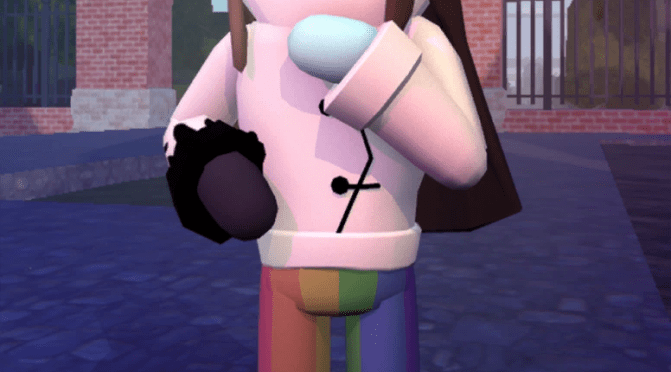
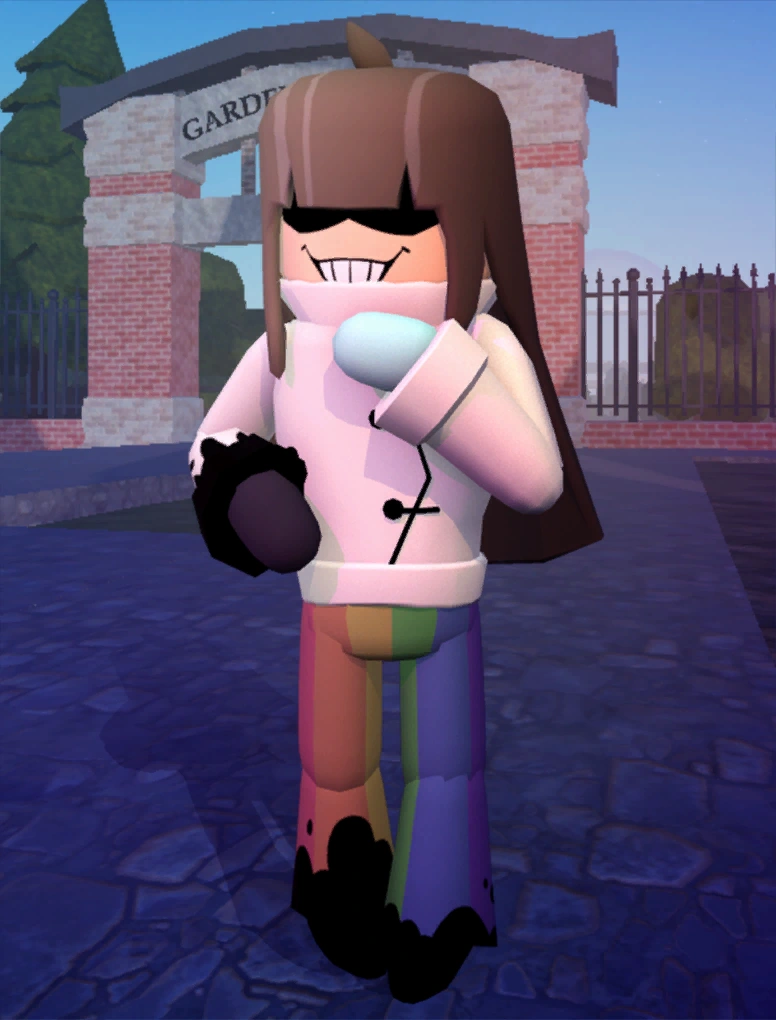
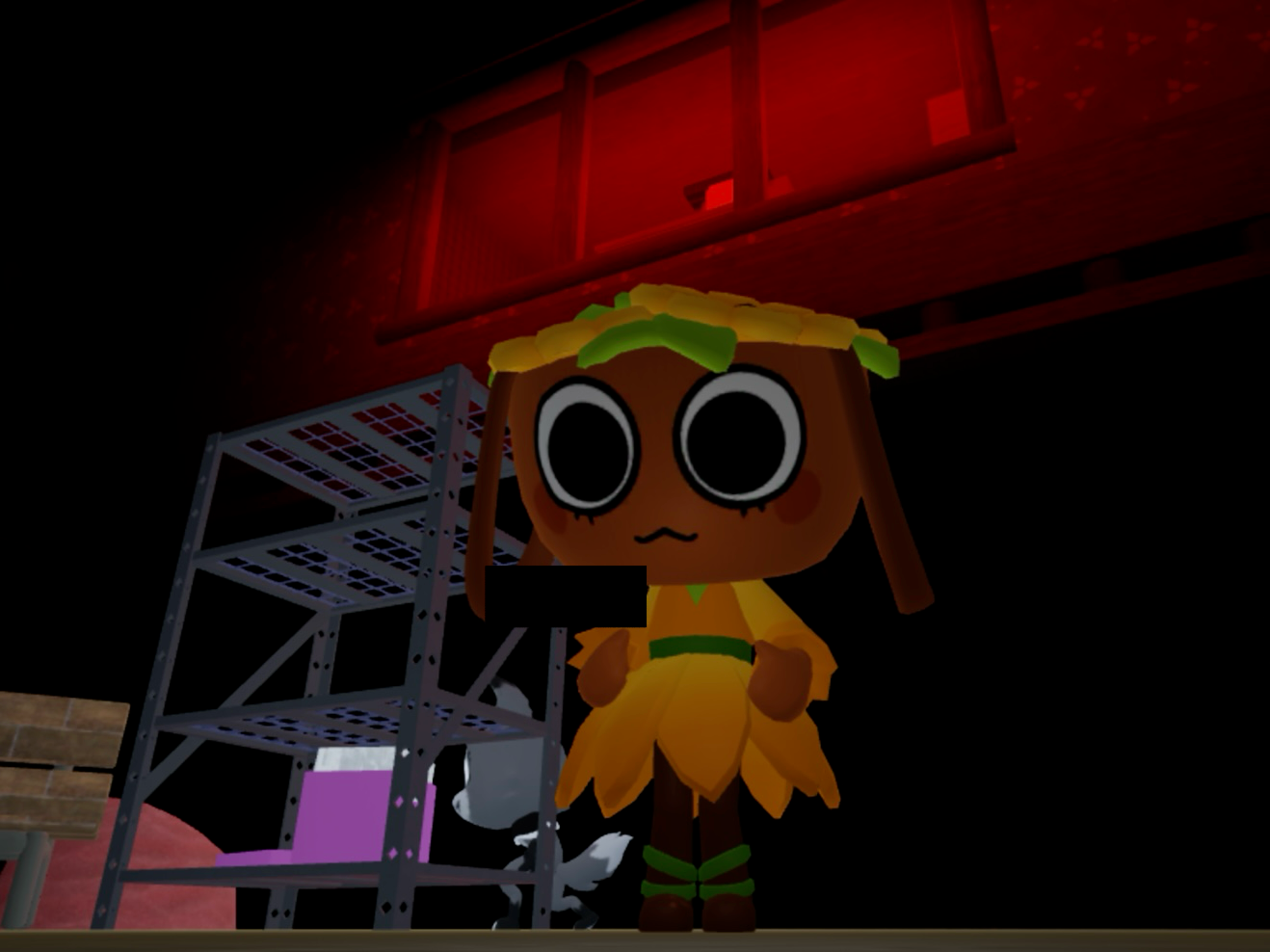
A fan theory—one that I have come to believe—has been circulating around: an upcoming Lethal variant of Delilah, a fictional co-founder of Gardenview and Dandy’s World. While not confirmed nor denied, there is still a myriad of possible evidence linking this theory to the game which I will be going over from the most to least trivial. If true, this would make her the first enemy in the game to not be a Toon, and the third Lethal.
Firstly, within her portrait, Delilah has ichor stains all over her clothes, and her skin is also mostly covered. She could be possibly hiding parts of herself corrupted by ichor, and therefore masking her symptoms. It is entirely possible that she gained powers from the ichor, making her the most powerful staff member within Gardenview. However, this could just be a byproduct of working extensively with the substance.
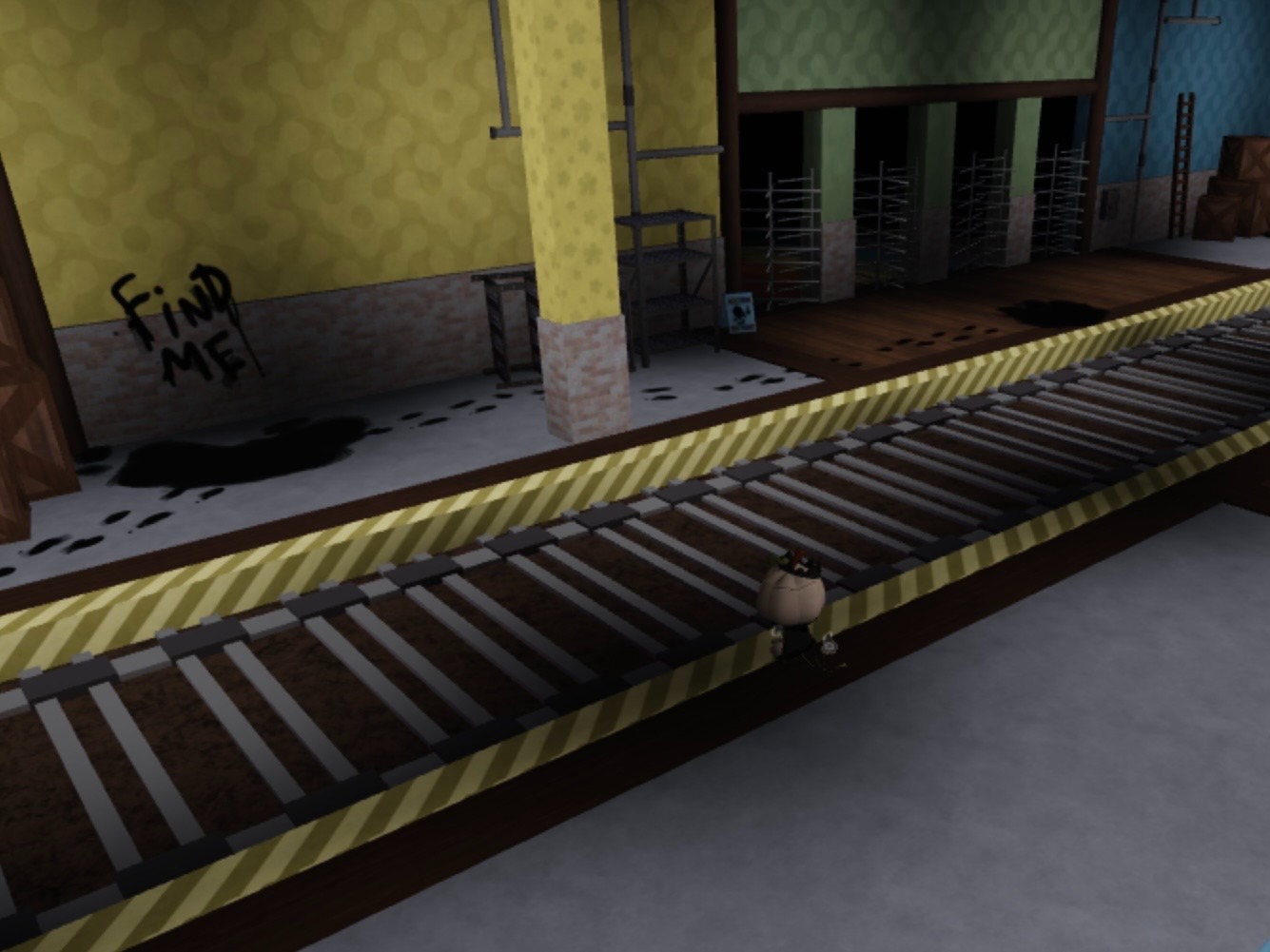
Secondly, there are many things around Gardenview that hint at another character lurking within the shadows of the game. There is various graffiti stating “find me” within various areas, and paired with footsteps that resemble a human’s: signifying some sort of hidden character is present; one that isn’t seen through the Toons. One of which is even located within a hidden office of Delilah’s, which can be inferred from past camera footage taken within that room.
The most glaring evidence (and the most obscured) is a hidden room within Shelly’s floor. During a blackout, when the lights go out, a single red light stays on in an adjoining room. It is elevated, almost like a lookout room. There’s no figure visible, but that light in that inaccessible room hints at another presence within the facility that is not yet known, Delilah or otherwise.
A piece of evidence I was going to leave out, but ultimately decided to keep: ‘Dandy’s World’s’ naming convention. Both Lethals in the game, those being Dyle and Dandy himself, both start with the letter “D.” Though this may seem like an excessive stretch at first, they are the only Toons that have this trait. This could be mirrored onto Delilah, however Devan, Dandy’s toon handler, seems to nullify this argument. Additionally, Delilah’s last name, Keen, is oddly parallel to the attention span mechanic within the game, but this could just be another coincidence.
Who is Marjane Satrapi and what is the influence of the book ‘Persepolis’.
Marjane Satrapi was born on November 22nd, 1969, in Rasht, Iran. She grew up in the city of Tehran in an upper middle class family. In addition, her parents were both active leftists against the Shah monarchy. In 1983, at age 14, she fled Iran, moving in with a family friend in Vienna, Austria. She stayed in Vienna for the rest of her schooling, attending the Lycée Français de Vienne. After being evicted from the convent she was forced to move into, she became homeless and lived on the streets of Austria for 3 years. Satrapi decided to return home to Iran due to loneliness, deep depression, and a feeling like she did not belong in Europe.
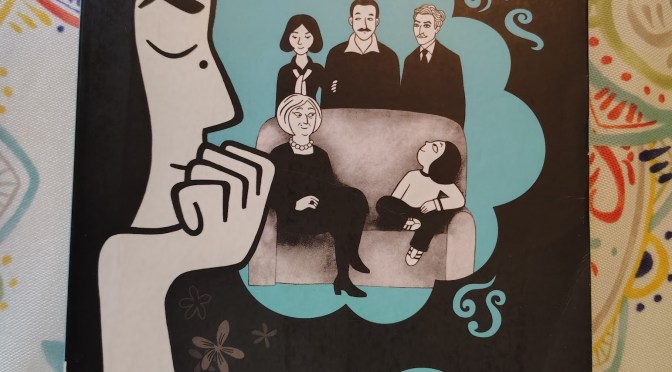
When Satrapi was 30 years old, in the year 2000, she published an autobiographical memoir about her life, entitled ‘Persepolis’. The novel begins and follows a ten-year-old Marjane Satrapi navigating life following the Iranian revolution. ‘Persepolis’ is critically acclaimed, having been translated into over 24 languages, and selling over two million copies. The book was originally published in French, in France, but was later translated to English in 2003.
‘Persepolis’ challenges Western views of Iranian people and the revolution, telling a coming of age story from the perspective of someone experiencing the revolution firsthand. The book was hated by the Iranian government, who viewed it as propaganda, supporting modern leftist movements. Still to this day, Marjane Satrapi is unable to return to Iran almost 30 years after ‘Persepolis’s’ publication.
Just a few years after the book’s widespread success, in 2007, Marjane Satrapi directed and oversaw ‘Perepolis’s’ film adaptation. The film would later go on to share the Jury Prize with a Mexican film titled ‘Silent Light’ at the 2007 Cannes Film Festival. However, the Iranian government would see this award as “an unconventional and unsuitable act,” and the government would later have the film dropped from the Bangkok International Film Festival, a major cinematic event that showcased over 200 films from over 40 different countries.
I personally really enjoyed the book ‘Persepolis’, and I would highly recommend it. It is one of the most engaging graphic novels I have ever read with some of the most interesting artwork and structure. I could not put the book down, and it is one of my favorite books I have read so far in 2026. I would give this book a 9/10, and I believe everyone should read it at least once.
BEJALVIN is a cybergrind, hardcore electronic duo—made up of Craig and Gunkman—characterized by their unapologetically harsh and abrasive music. They hail from Minneapolis, and while widely unknown among most people, they still have energy that I’ve not experienced from any other music. Since hearing them on their North American Devastation tour, I’ve come to appreciate their unique style, and I’ve since listened to their entire main discography: ‘BEJALVIN’ (the self-referential album), ‘BEJIBLE,’ ‘BEJUBSTEP 3’, and the most recent ‘PLANETARY DEVESTATION’. I’ll be giving my opinion on these main 4 albums only.
With ‘BEJALVIN’ being their first work, it’s no surprise that I find it to be the most lackluster of their main releases—however it’s promising, and you see a glimpse of their future style within the album. It’s uniform throughout: no interludes or prolonged breaks for one to catch their breath. My favorite song from this album is “CRUNCH,” as it’s by far the most sonically violent. But make no mistake—this album is consistent with itself, and “CRUNCH” doesn’t deviate from the main listening experience.
‘BEJIBLE’ is quite a few steps up from their debut album, split directly down the middle and dividing it into two “sides” similar to a vinyl. This is directly stated within “WORST SONG EVER” when Gunkman states “I guess this side of the record’s over now / If you got this […] on vinyl, flip that […] over / If you don’t got this […] on vinyl that makes a lot more sense ’cause we never pressed this […],” during the fade-out of the song. The first side is noticeably more lulling, with a 5 minute opening track—”SYS612 (Bejalvin’s Lament)”—sounding nothing like their usual selves, and then hitting the listener with a wall of noise a third of the way through “BORN MONEY SWAG DIE.” The second side is less polarizing; I find the first side of the album to outshine the second half, but only because of the initial fakeout. The work as a whole is extremely cohesive, with most songs segueing into one another. This trend only continues in their future works.
‘BEJUBSTEP 3’ is the most cohesive of all the albums: it can play front to back with no pauses, and could’ve been released as a giant 19 minute song without any issue. This album features a staggering amount of features and guest artists—only one song out of the 7 track album is made entirely by BEJALVIN. This album also comes with a “full album visual experience” on their YouTube channel, which fits the music perfectly, yet I would not recommend it to anyone who’s sensitive to rapidly flashing lights. This most likely pushed them a bit further into the limelight, and exposed them to fans of the other people they collaborated with.
‘PLANETARY DEVASTATION’ is the most recent release of the duo, and their longest. Clocking in at 33 minutes, it’s intense and is practically an extension of ‘BEJIBLE.’ Fast-paced, loud, and oddly coherent—their effort is clearly shown here through the constant meshing of genres and quick mood changes. Not a single song directly shares a theme, aside from the interlude “SMOKING KILLS” and the following “SPACE ALIEN GANGSTALKERS,” in which the duo compare substance abuse with getting abducted by aliens. Other themes of the songs within the album include shoplifting within “SHOPLIFTING,” dissing Yung Gravy and demanding a grand total of 100 dollars from him within “YUNG GRAVY,” and scrolling on social media within their song “X.” It’s dark comedy combined with noise—something I’ve come to enjoy from them.
In all, BEJALVIN is not for everyone, but they admittedly have refreshing views when it comes to music and self-expression. Additionally, during their live shows, they’re both extremely energetic, even when the crowd is really small, and they make music with a clear passion. I think that anyone who enjoys experimental music should listen to them at least once!
Energy drinks are important to me because they help me feel more awake and focused. They all taste different and some drinks are more healthier than other drinks. Here is a ranking that I made on some of the energy drinks based on their taste and energy.
1. Red Bull 8/10
Red Bull tastes pretty sweet to me and it has a fruity taste like a mix of citrus and berry. The carbonation is pretty strong and it has a fizzy and sour taste. I would give Red Bull an 8/10.
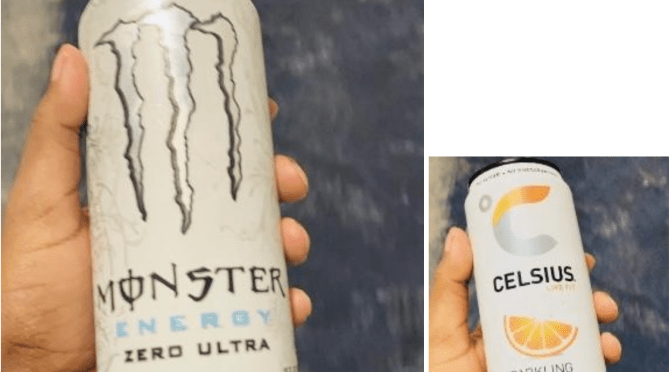
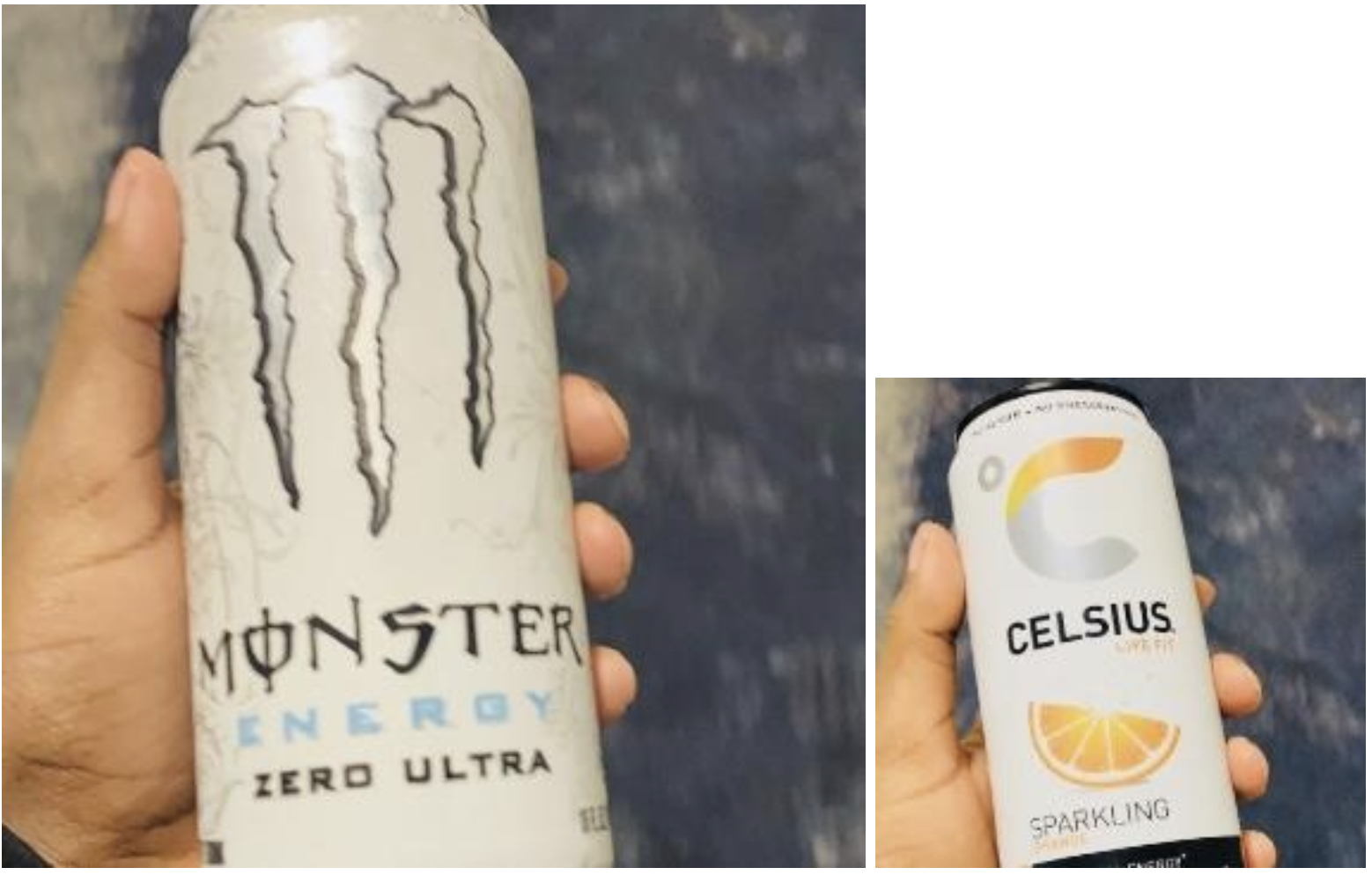
2. Monster Energy Zero Ultra 10/10
Monster Energy Zero Ultra tastes like a lemon and lime soda. It’s not too sweet and it has nice carbonation. I like that it doesn’t have a hard sugary or syrupy aftertaste. I would give it a 10/10
3. Celsius Sparkling Orange 9/10
Celsius Sparkling Orange tastes like Sunkist but with less sugar. It tastes like fresh orange juice, and it’s pretty refreshing to me. I would give it a 9/10
4. Bang Blue Razz 8/10
Bang Blue Razz tastes like those blue raspberry candies and cotton candy. I find it very sweet and it also has a strong artificial flavor that stays in your mouth after drinking it. And for that, I’m giving Bang an 8/10.
5. Rockstar Energy Fruit Punch 6/10
Rockstar Energy Fruit Punch tastes like sweet fruit punch. It’s very sweet and syrupy with a hard artificial aftertaste that I don’t really like. So, I’m giving it a 6/10
My Favorites, Monster Energy Zero Ultra and Celsius Sparkling Orange are my top picks because they taste pretty clean, they’re both refreshing, and they’re both not overly sweet and don’t have weird aftertastes.
The Official Online Newspaper, Literary Magazine, and Video News of the Highland Park Scots