Category Archives: Editorials/Student Voice

Editor’s Note: The Plaid Line publishes editorials that contain opinions that are those of the student authors. They do not purport to reflect the opinions or views of the the Plaid Line, HPSH, or its staff.

Should St. Paul schools be uniform wearing schools?

Should St. Paul schools be uniform wearing schools? If so why or why not?

Today I went and interviewed some of my fellow classmates during school about this topic, asking them different questions.

The first person I interviewed was Junior Bonfil.IMG_0280

My first question was, “Should students in St. Paul wear uniforms?”
He answered with “No, they shouldn’t.”

My second question I asked him was, “Why shouldn’t they have to wear uniforms?”
Junior said, “Because people don’t have to wear them and it’s like you’re not free when you wear them, it’s like you’re stuck following people.”

One of my other questions was, “How do you personally feel about this topic?”
He answered with, “Not good to have them, they don’t represent us the students.”

My last and final question was, “How do you think school uniforms affect other students?”
He answered with this particular answer, “Uncomfortable because it doesn’t bring the sparkle in us.”

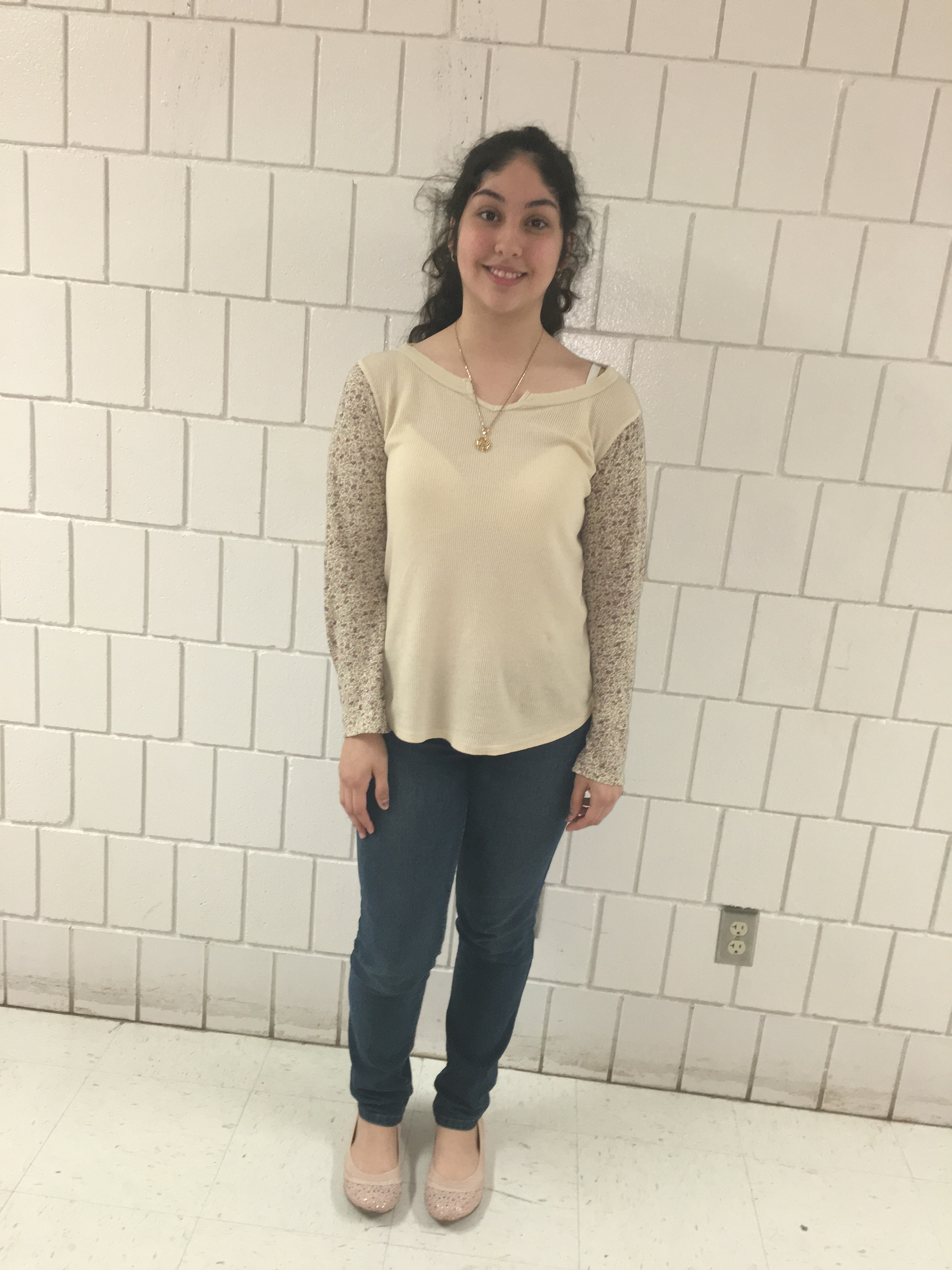
The second person I interviewed was Zuani Marilyn Venture.IMG_0279

I asked her if students in St. Paul should wear uniforms and she said no.

My next question was, “Why shouldn’t they?”
She answered, “People should wear whatever they want.”

My third question was, “How do they feel about this topic personally?”
Zuani answered with one word “Disturbing.”

My last question was, “How would it affect students?”
She said, “They wouldn’t feel that they can express who they are. They would just look like everyone else.”


My opinion personally is that students should not have to wear uniforms because dressing how you want is apart of being unique and one of a kind. People need to be heard and seen how they want, and wearing uniforms would make them alike and as they say “an original is better than a copy.”

Busing

I am a junior at Highland Park Senior High School and I have something to say about the school’s busing. Why is it that I don’t have access to a school bus for transportation to and from school when my friend that lives roughly 5 minutes away from me has access to a bus?

One day I took the school bus to her house from school and noticed how close the bus route is to my house. That got me thinking, especially since there was only like 10 students on her bus. Given the location of my house, and available room on the bus, it shouldn’t be too much of a problem to add another stop to the bus route.

The way I get to school is by getting dropped off by my mom, and I get home from school by taking the city bus. I don’t have to just take 1 bus, but 2, and riding the city bus is not free. I know the school sells bus cards, but who has $80 to buy a bus card?

My overall point of writing about this topic is to make it known that a few changes should be made to the busing routes to make it more convenient for students and their guardians to get to school.

A personal what?

I have a question, who actually took time to do their personal project?

After asking 10 different sophomores, 8 out of 10 said that they had.

The IB MYP Personal Project is a project completed by sophomores at Highland Park Senior High. It is an opportunity to express a personal interest as well as the development of a student’s writing and thinking skill. The project consists of three parts: journals, a paper, and the product. The paper is typically due in the middle of February and the final product is presented in a showcase around spring. The full completion of the project overall takes a year.

The project is first introduced to students at the end of their freshmen year. This gives them the chance to explain and decide what they actually want to do for their project. Then later at the beginning of sophomore year, students are assigned an adviser who will help them and lead them through their project. Each adviser is assigned about five students. This gives them (the advisers) a better chance to actually sit down one-to-one with each student to keep them on track. Each student gets the chance to meet with their adviser three times before actually completing and turning in their project.

Now that you know about the project, let’s ask a few of our HPSH sophomores about it. I asked 10 students (the same 10 from the beginning of the article) the following question: Do you think you were provided with enough help? Here are some of their answers:

Danasaja: “No I didn’t {Receive help}. I had to ask other students.”

Mohan: “Little help on the journals, but I did fine on the final paper.”

Sydney: “There was not  enough structure, but yes, enough help was provided.”

Even though there wasn’t a lot of positive feedback, the project does help us prepare for being independent for our adult lives. The project can become time consuming when we have other homework to focus on.

After taking a poll from the same 10 students, 6 out of 10 were proud of their final products. Even thought it wasn’t favored, many were proud of their final product.

SPPS school weather

On Tuesday, February 2 Saint Paul Public Schools did not cancel school.  There is no specific policy in place about closing schools due to snow as there is for cold weather days.

The district specifically states that if the temperature is projected to be -35 degrees, with windchill, school will be cancelled. This is very specific. The district snow policy states that if school buses cannot get through the streets, and it is extremely dangerous for the bus drivers to get to work, then school will be cancelled. This policy is more vague and can be left open to interpretation.

On the 2nd, there was at least 12 inches of snow that had fallen.

The Saint Paul Pubic School district has come close to canceling school this year, but has not yet done so. There was one day, specifically, that was -30 degree windchill, but the district decided that it was not cold enough and that kids needed to go to school.

I feel that it is crazy that it has to be a -35 degree windchill for school to be closed. I think that -20 or -25 is a more appropriate temperature.

When the district does not close school, and it is super cold, kids don’t want to come to school. Class sizes are impacted, and teachers then have to change their plans because half of their students don’t come to school. This ends up affecting overall student learning because there ends up being just a wasted day.

Wage rage

Have you ever noticed how much professional athletes get paid compared to the average American doing manual labor? The highest paid American athlete in 2015 earned around $300 million dollars in 2015, meanwhile the minimum wage is $7.25. Minimum wage jobs like fast food cooks, cashiers and dishwashers are daily, hard working, manual labor jobs and the benefits usually aren’t great. Professional athletes like boxers, basketball players and football players do their job occasionally and get paid millions of dollars and the benefits are endless. 

I believe that this is quite a big problem. Workers who do hours of labor get paid very little and have to support themselves, and maybe even a family while earning just over $15,000 dollars annually. This seems quite unfair compared to athletes who have weekly games where they do their job and get paid millions for very little labor.

Now, I do understand that you have to be in excellent shape to be a professional athlete, and there are some risks while playing these sports, but it doesn’t seem fair that they are being paid millions of dollars when many manual labor jobs also include those risks. For example in order to be a quick and efficient waiter/waitress you do have to be in shape as well.

These jobs do require different skills and different types of hard work but the difference in the amount they get paid is far too large. Now, of course I do not think minimum wage jobs should earn millions of dollars but neither should professional athletes.

Diversity in the media

2016 has marked the second year in a row where the major nominees for the Oscars have been all white. Even President Obama has put his two cents into the conversation, “Are we making sure everyone gets a fair shot?”

But it isn’t just the lack of representation for African Americans. According to the LA times, it has been 54 years (since 1957) since a Latina person has won an Academy Award. However, white actors are being applauded when playing Latino and Asian characters.

But this isn’t a new issue. Ever since the film industry has started, it has been white dominated. Maybe people have been giving more attention to diversity in media recently because of the popularity Black Lives Matter has been given, and the resurgence of topics being brought to popular media because of social media. Obviously the hashtag #oscarssowhite has brought together many people with similar ideas to solidify what they want to see in the media. According to a study done on 18 top Hollywood companies done by NPR, 94% of the CEOS were white, and 100% were male. The overwhelming white dominance in the film industry both cuts away important stories that can be told through a minority’s perspective, but also takes away opportunities from talented people of color and LGBT people.

African Americans have been going against Hollywood by making their own films and TV networks. Although African Americans have made strides in diversity, African Americans have repeatedly been given stereotypical roles. Like being a maid or a slave.

Other minorities like Asians and Latinos have been given stereotypical roles as well. Asians are usually given roles that are related to being smart and not speaking English. Latinos are also treated like African Americans and Asians in that they often are portrayed as servants or people who can’t speak English.

LGBT members are rarely given diverse roles in popular film, they don’t go far from the flamboyant feminine gay men. Like roles in Modern Family and WIll and Grace. However more diverse LGBT roles are now being seen in popular series such as Orange is the New Black. 

Indigenous people are possibly the most stereotyped for example they are often portrayed as being “blood thirsty savages” and of being red face. Their plight has been gaining more attention due to the push by the Native community to change the logo of the Washington Redskins.

It’s important to have roles for minorities that aren’t just stereotypes. Dejra Bishop, a 15 year old sophomore at Highland Park Senior High, talks about diversity, “It feels good because I’m not just stereotyped as something bad. Black people can be good characters as well.”

Know what you are consuming

If you cannot read the nutrition facts on what you’re eating should you really be consuming it?

If you were asked to name off what commercials you have seen for food products what would you say? Fruit Loops? Pop Tarts? Gushers? Cereal that contains a lot of sugar? McDonalds? Burger King?

You can probably only think of commercials that contain sweets or processed food. The number of commercials for unhealthy foods that are broadcast is crazy compared to the number of commercials that are seen containing fruits and vegetables.

Does the government care more about making a profit off food or keeping us healthy?

We’re not only paying for the food we’re consuming but also paying it off in doctor bills later on.

The meat industry, and how they’re promoting unhealthy foods to kids, has a large impact on how the people in America live. Below are some facts about the food industry.

NUTRITION FACTS IN THE MEAT INDUSTRY
In 2012 they tested chicken feathers to see what was found in their system (chicken feathers would be equivalent to us testing our finger nails) They found caffeine, antihistamines, and even prozac (an antidepressant). Prozac was added to the chicken feed because apparently stressed out chickens produce ‘tough meat.’ One person in America eats up to 200 lbs of meat yearly, causing us to have twice the obesity rate, more chances of having cancer, diabetes, and heart disease.

Not only can the meat industry be bad for your health, but it can also be bad for climate change. If the meat production cut back half of its amount it would be as if we were garaging all vehicles. Two acres of rainforests are cleared each minute to help raise and feed cattle. 35,000 miles of America’s rivers are polluted with animal waste. It takes 2,500 gallons of water to produce one pound of meat, but only 25 gallons to produce a pound of wheat.

America’s government spends $38 billion a year on the meat industry, but only .04% of their money is spent on fruits and vegetables.

PROMOTING UNHEALTHY EATING TO KIDS

Have you ever noticed that when you see a Burger King commercial the healthy foods are not advertised? They sell veggie burgers and salads, but the only things you see on TV is the Original Chicken Sandwich or their fries.

Another example is commercials that contain breakfast foods for children.  Instead of them advertising healthy foods like fruits, yogurt, or eggs they promote Pop Tarts, Cocoa Puffs, and Taco Bell breakfast.

We are so used to having such unhealthy and processed foods laid out for us, we find it so difficult to come in contact healthy foods when they’re really right in front of us, although they just might be hiding behind a greasy Big Mac. $1.6 billion is spent on advertising unhealthy foods to children. Children see 15 unhealthy food commercials a day.

Companies make a larger profit selling a more processed food. The more food is processed the less healthy it is, and the less filling it is. Just because the packaging food comes in has one health claim it DOES NOT mean the food is healthy.

In 2006 20% of kids were classified as ‘obese.’ There was a promise made to change the marketing of food, a year later they did a study to see if it had changed and 80% of the food commercials were what the Department of Health and Human Services believes should only be eaten once in awhile. In 2013 80% was still the same. It is proven that the more kids watch TV the more unhealthy their food preferences are.

Our ever-warming planet

Did it feel warmer than usual to you last year? Well you’re not the only one. 2015 has officially gone down as the warmest year on record since 1880 when they first started keeping track of global temperatures. Not only was 2015 the hottest year on record, it was also a part of a 39 year streak of above average temperatures. What’s the cause of these crazy numbers? According to the third U.S National Climate assessment “The global warming of the past 50 years is primarily due to human activities, predominantly the burning of fossil fuels.” The burning of fossil fuels produces carbon dioxide and natural processes cannot fully absorb those gasses so the rest of it ends up going into the atmosphere. All of this has many harmful effects on ecosystems, biodiversity, and of course us humans.

In December, the 2015 United Nations Climate Change conference was held in Paris and the 195 participating countries agreed to a global pact named the Paris Agreement. These countries agreed to reduce emissions to try and reduce the greenhouse gasses in our atmosphere. This agreement is to be adopted through these countries’ legal systems and by doing so, they are then required to try to reduce their emissions. Many people have said that this is a big step to help the rising temperatures.

This may seem like a daunting task to many, but I believe that we already know the solution to these problems. Renewable energy resources like solar, wind, hydropower, and geothermal energy are the greatest alternatives to burning fossil fuels. The earth does not have infinite amounts of fossil fuels, and burning them is just damaging our planet. Thankfully there are is an infinite amount of renewable energy resources and these will not damage the planet.

Another problem with fossil fuels is that  those sources are spread out and some countries don’t have any. Renewable sources can be found anywhere, and most countries have at least one.

Therefore, I believe that if the world would start to switch over to these renewable energy sources, and continue to reduce the burning of fossil fuels, global warming might slowly become something of the past.

The Superintendent and SPPS

On Tuesday, January 5, 2016, Jon Schumacher, Steve Marchese, Zuki Ellis, and Mary Vanderwert were sworn into Saint Paul Public Schools, (SPPS), school board.

The four new board members easily won their seats back in November with support from the St. Paul DFL Party, (Democratic-Farmer-Labor Party), and the SPPS teachers’ union. Both groups have become increasingly unhappy with Silva’s superintendent performance since she was elected in 2010.

Starting day one, the new school board majority addressed many concerns that had plagued SPPS. They demanded quick and efficient action to be taken on improving school safety and student achievement, among other goals, in a document titled “Proposed action Time-frame for 2016 SPPS Board Priorities”.

The first action expected would be to have the Superintendent publically present the proposal for the School Climate plan in February. Continuing after that, the proposal would go under revision until August. Taken aback, Superintendent Valeria Silva said, “I’m not upset about the (agenda) … but the reality is I don’t like surprises,” she said.

Silva continued to challenge the new board’s aggressive timeline of proposals on Tuesday. Silva said “Contract negotiations and mediation rules could interfere with their goals. The plans also must align with the district’s budget.”

These proposals were written by the four new board members and SPPS board veteran, John Brodrick, who has been with district since 2014.

The new board members’ number one priority on their list of proposals was to make SPPS schools more safe and welcoming to prospective, new, and current students. This is a specific point of emphasis as in the 2015-2016 school year alone, there has been at least seven reported acts of violence in SPPS schools. 

Due to the disruptions, numerous students have been suspended. It’s been reported that the district decided not to allow expulsion as of 2012, (with a few exceptions). This rule resulted in over 1,000 suspensions during the first quarter of the school year.

That means 9.22% of SPPS students were suspended the first quarter of the 2015-2016 school year. That’s the highest suspension rate in five years. In 2009, suspension rate was about 7%.

“I remain steadfast in my belief that suspensions and expulsions, while at times necessary, do little to foster a restorative culture in our schools.” – SPPS Superintendent Valeria Silva

The teachers’ union took Silva’s administration to deliberation over their next working agreement, threatening to strike if they don’t get their way on school climate and safety. Their demands included a $100,00 budget to focus on school climate and safety. Silva commented the plan would cost up to $11 million a year. It’s been reported she has created a new department of administration that would exclusively address school climate. She explained she hopes the department will spend the next year researching possible situations.

“Kids are feeling really unsafe and are not feeling at ease at school anymore,” says a Highland Park Junior.

Parents, students and teachers alike are becoming frustrated with our Superintendent. Parents like Doug Hartmann, a Como father, told Pioneer Press, “I’ve been frustrated as a parent. I’m not convinced the superintendent is doing enough to take it seriously.”

A leader who doesn’t “like surprises” or insists on spending valuable time on making color-coded presentation boards rather than solving the problems of SPPS.

“I don’t know what we can do to solve it,”-Superintendent Valeria Silva

It being the violence in our schools, the drop in testing scores, and the students falling behind because she is not willing to accept suggestions to counteract these problems.

Hopefully, the school board will be able to address the serious issues facing SPPS, and in the future, Superintendent Silva will be able to come to a place of understanding that will allow her to work in conjunction with the board.

Gun violence

In the United States there have been many cases of violence, specifically gun violence, including mass shootings. Statistics from articles on The Brady Campaign website state that in the United States, just in a year, an average of 108,000 people in America are shot in murders, assaults, suicides/suicide attempts, unintentional shootings, or by police intervention. According to the website Heeding God’s Call, the U.S. has more gun homicides annually, 10,000, than any other country.

The debate over gun control in the U.S. has been stirred up over the recent mass killings. What is gun control? Gun control is the government regulation of the manufacture, sale, and possession of fire arms.

Even with all the shootings in the U.S., many people are against gun control. According to Smartgunlaws.org people claim “that they need guns for protection or for their safety.”

Opponents of gun control laws argue that Americans have the right to bear arms. They say that gun control laws would prevent individuals from defending themselves and their property lawfully. They also support the rights of hunters, sport shooters, and recreational gunmen. One of the most common laws that these groups cite is the Second Amendment of the U.S. Constitution. This 27-word passage has the famous phrase “the right of the people to keep and bear arms shall not be infringed.” The argument that gun control opponents make is that the right to own and use weapons is an undeniable personal freedom guaranteed by the Constitution.

Proponents of gun control believe that stronger gun laws can prevent the needless loss of life. Even individuals who support gun rights acknowledge that certain people should not be permitted to own guns. Current gun control laws prevent criminals, mentally ill individuals, and children from owning guns.

Unfortunately, there have been instances where young people and deranged gunmen have obtained weapons and used them to commit mass murders. Also, others argue that there are too many criminals that can still purchase a gun legally and then go and commit crimes.

Even though thee controversy of gun control has become a big issue recently, there will always be a debate regarding the issue of having guns, until they make laws that most people will agree on. This is something that will be very difficult to do however, since everyone will always have an opinion on whether they believe people should or shouldn’t be able to have guns.

I think gun control should be more heavily enforced, as more guns fall into the hands of the wrong people. I feel as though there is no need to carry an armed weapon, and there is just too much violence with guns. I also feel as though people don’t really use guns for protection purposes, instead they simply have them so that they can feel more powerful, and this is not a good reason as to why people should have guns. These are some of the reasons why I think gun control laws should be enforced more.