
By: Mia Delgado
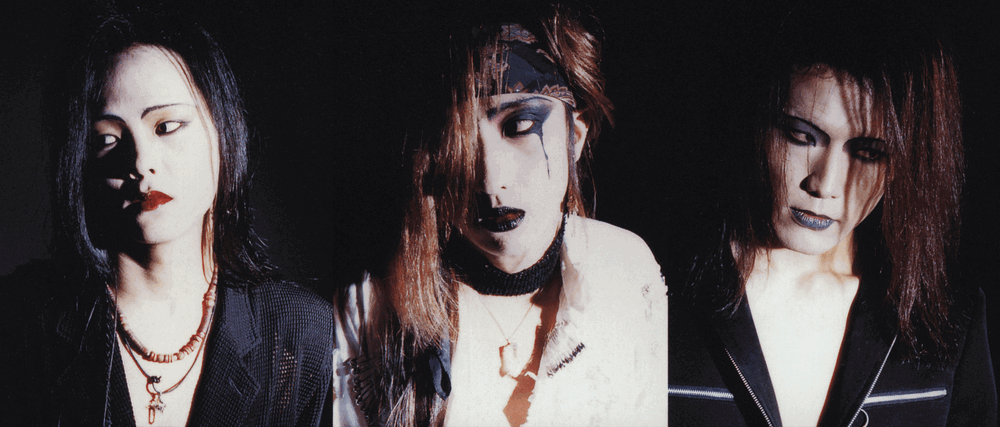
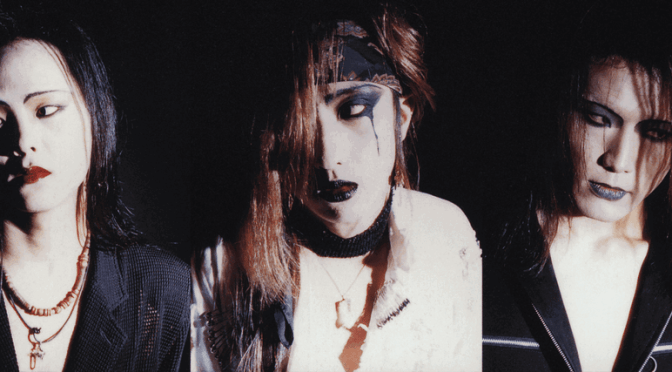
There is a fascinating corner of the Japanese music scene that rarely gets talked about — that being Visual kei — in this article, I will explore its history and later on delve into one of its subgenres, Nagoya kei.
First of all, what exactly is Visual kei? Visual kei, also known as V-kei, is a Japanese musical movement that emerged in the 1980s — where the looks of a band are equally as important as the music.
The movement is characterized by its use of elaborate androgynous and flamboyant fashion, dramatic makeup, and extravagant hair styles — unique characteristics that made it easily recognizable among other Japanese musical movements from that time period.
At first, Visual kei was heavily rooted in glam rock, goth rock, punk, and metal. It started off as an underground movement with pioneers like X Japan, Buck-Tick, D’erlanger, Dead End, and Color.
It wasn’t until the 2000s, though, that the scene began to experience worldwide status through anime conventions and internet culture. This international exposure inspired other artists and formed non-Japanese Visual kei bands.
And yet, despite this expansion, Visual kei remained as a niche subculture — even to Japanese people— rather than a mainstream global phenomenon.
Coming up with a universal definition for the term Visual kei has proven to be quite difficult. It’s hard to define what Visual kei is, as it is a term only applied to the artists, not the fanbase. It’s debatable whether or not one can consider themselves “Visual kei”.
Identifying whether or not a band is Visual kei, is if the band themselves claim to be a part of the movement.
Something that is also discussed is whether or not a Visual kei band whose origins are not from Japan, can actually be considered to be Visual kei, as the term Visual kei is firmly tied to Japan.
Though classifications are nuanced, these bands are mostly defined as “Visual kei-influenced”.
The same goes for wanting to dress in Visual kei. One cannot label their fashion simply as Visual kei, as Visual kei refers to the entire movement, the music, the performers, etc.
One way you could call it is by its subculture such as “Kote kei” as it makes it easier to identify what kind of fashion exactly, or you could simply label it as “Visual kei-inspired”.
What makes Visual kei compelling is that it is not defined by a singular genre. Instead, there is a wide variety of subgenres that make up the movement. Such subgenres are: Kote kei, Tanbi kei, Nagoya kei, Oshare kei, and many more.
Here are a few examples of some of the subgenres:
Kote kei: Dir En Grey
Kote kei emerged in the mid-1990s. It is characterized by a dark, gothic, and often theatrical aesthetic. The sound is typically emotional and aggressive, drawing from goth rock and heavy metal.
Tanbi Kei: Versailles
Tanbi kei emerged in the mid-1990s as a subgenre heavily inspired by historical European aesthetics, particularly Baroque, Rococo, and Victorian eras. Their music frequently incorporates elements of classical, symphonic, and neoclassical music.
Nagoya kei: Merry Go Round
Nagoya kei emerged in the early 1990s as a darker, gloomier, and more music-focused subgenre of Visual kei. The music is heavily influenced by Western punk, gothic rock, and British punk rock.
Oshare kei: An Cafe
Oshare kei emerged in the early 2000s as a brighter, more colorful, pop-influenced subgenre. They typically play an upbeat style of pop-punk or pop-rock.
While there are obvious variations in styles, I want to focus solely on Nagoya Kei and why it matters so much to me.
Nagoya kei is a regional subgenre and aesthetic that developed in the early 1990s. It is a term that was originally associated with bands that emerged from the city of Nagoya or that were from other places in the Aichi prefecture.
However, the term soon became less about the geographical location of Nagoya and more about a shared aesthetic. It began to define any band that embraced the same dark, subdued style of Kuroyume.
The subgenre peaked into two waves: the first one being from 1993 to 1996, and the second being from 1998 to 2004. Silver~Rose and Kuroyume were widely recognized as the pioneer bands that created the Nagoya kei subgenre of Visual kei.
Yet, unlike other subgenres, Nagoya kei never truly made it mainstream, mainly because its elements directly opposed the requirements needed for mainstream appeal.
During the 1990s and early 2000s, Japan’s music industry was highly centralized in Tokyo. Because of this, Nagoya kei became deeply isolated from industry executives who commercialized the genre.
Nonetheless, the foundational bands of the genre chose to remain in the Aichi prefecture, which allowed them to build their own distinct and independent subculture.
Nagoya kei is known to have a reputation built off of its interconnectivity and emotional instrumentation. They have the unique and defining trait of “recycling” disbanded band members to form newer projects.
Bands in this scene tend to favor musical depth over the extravagance of fashion found in other scenes, which is another reason for why it never reached mainstream popularity. In most cases, the overall appearance of a band directly impacts their success.
Unlike the bright, extravagant, and theatrical costumes of mainstream Visual kei, Nagoya kei fashion tends to lean towards a more understated, subtractive, and casual aesthetic. Members often wear simple dark clothing that is influenced by modern punk and gothic aesthetics.
Ultimately, Nagoya kei significantly shaped the visual kei movement by introducing a darker, more music-centric alternative to the visually extravagant scene — a shift that is particularly true for the second wave. The sound of this specific era leaned more towards a literary, poetic, and melancholic atmosphere described as “only appreciated by real music lovers”.
By the late 1990s, most mainstream Visual kei bands reached a breaking point: iconic pioneer groups experienced massive disbandments due to tragic losses of their members.
As of 2004, Nagoya kei bands had either broken up, relocated to Tokyo, or transitioned towards modern heavy music, causing the original scene to fade.
However, it did not vanish entirely; in the decades that followed, a new wave of Nagoya kei and Visual kei bands began to emerge, keeping the movement alive.
For my final thoughts on the scene, I wanted to share a list of my favorite Visual kei bands, along with some personal reflections on the music itself.
- emmurée
- gibkiy gibkiy gibkiy
- GPKism
- Madmans Esprit (an example of a non-Japanese Visual kei band)
- deadman
Nagoya kei is a subgenre of Visual kei that I have recently discovered and I am still looking for newer recommendations. The first Nagoya kei band I ever listened to was deadman, and one of my most recent is gibkiy gibkiy gibkiy.
As part of one of the most recent generations of Nagoya kei, gibkiy gibkiy gibkiy has definitely brought hope for future generations of the genre. Fun fact: they are actually a band forged completely out of “recycled” band members from previous prominent groups.
I would consider them to be my favorite Nagoya kei band ever, though that is only because emmurée — who is my actual top favorite — isn’t technically from Nagoya. It’s a common misconception, but emmurée is one of the few bands who are frequently given the “honorary” Nagoya kei classification simply because of their dark aesthetic and sound.
The reason I am drawn to the subgenre is because their sounds are so intense, unfiltered, and raw that I become emotional just from listening to them. They have the incredible ability to combine gritty instrumentals with raw emotional vocalization, creating an atmosphere that is both ugly and beautiful at the same time.
And perhaps that’s why I enjoy being a part of the Visual kei community in the first place. They are able to vocalize and instrumentalize feelings so well to the point it becomes comforting. At least, that much is true for most of the fandom.
I also think that Visual kei is exceptionally good at bridging linguistic barriers; even though the music and lyrics are in a foreign language for most listeners, the meaning and interpretations of it remain universal.

