
By: Andrew de Sam Lazaro
Have you ever wondered why there is a small piece of fabric at the top of your shirts? What’s the purpose of them? Why do we associate them with wealth or status?
Collars first began to pop up in the mid 15th century; they were worn by clergy in the Church in order to keep their tunics from rubbing against their skin causing irritation. Since shirts were undergarments for most of history the collar was the only part of the shirt showing when the clergy wore them. Eventually collars became a symbol of purity and humility.
This caught the attention of nobles, or royals, who adopted collars making them much more elegant and caused them to be a symbol of status. Royals wore ruff collars with pleats and lots of small details. The bigger and more ruffs a collar had the higher the status of the wearer was.
Ruffs soon became less and less popular for their impracticality and people adopted collars much more similar to what you might see today. People kept wearing collars in order to protect their necks, but this did mean the collar often got very dirty. All the way back in the 18th century washing clothes was a much harder job than now; people needed to use washboards and very expensive labor. In 1827, Hannah Montague invented the detachable collar – it was a collar that you simply buttoned around your neck. Since the collar wasn’t attached to a shirt you wouldn’t have to do nearly as much work to wash them.
In the First World War soldiers found traditional stiff collars inefficient and instead adopted softer collars. War imagery made the soft collars much more popular around the world, as soldiers who people looked up to were wearing them.
And so, modern day collars are still on shirts because people see them as a symbol of many different things like status and occupation.
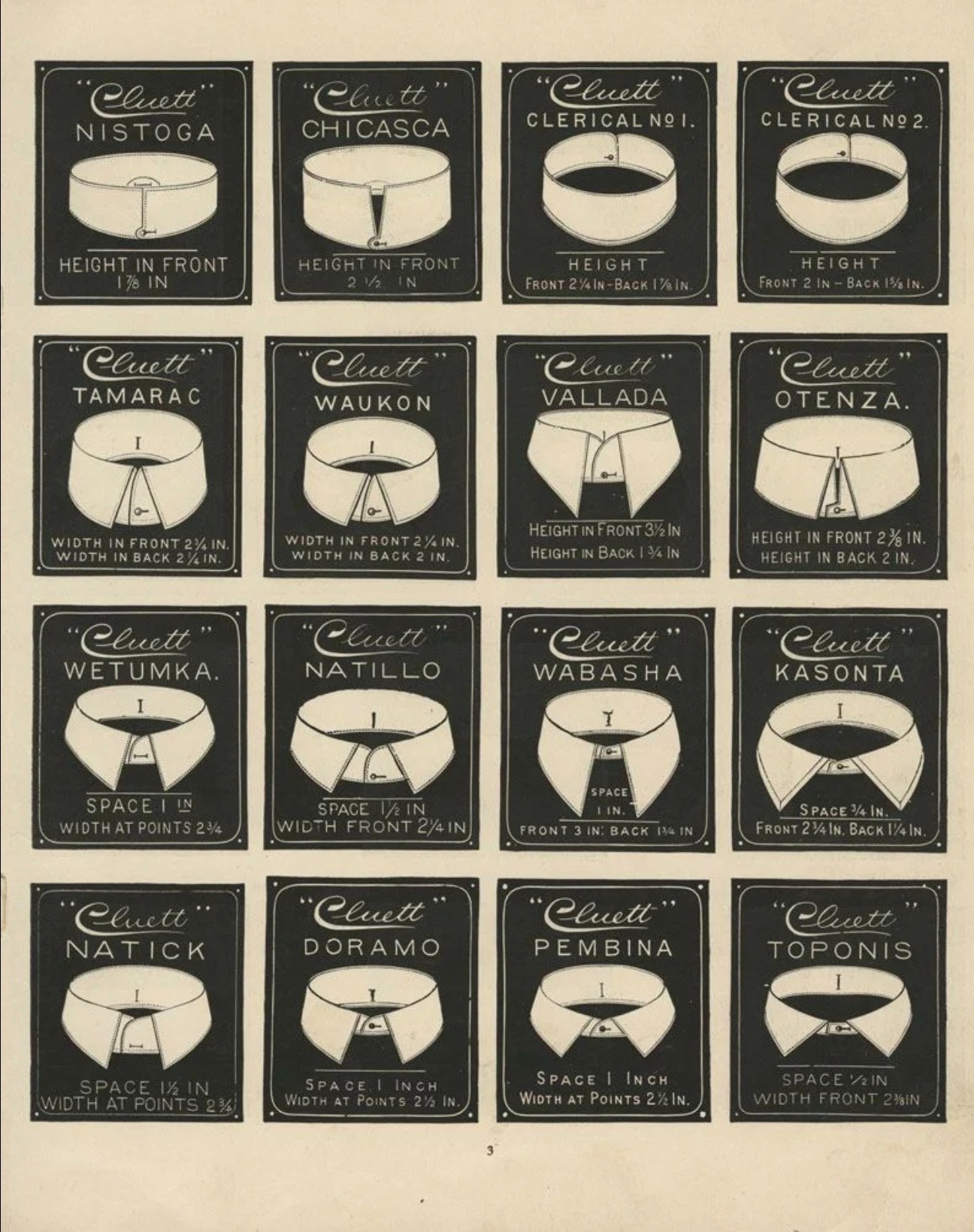
Types of collars chart:
For more information, please visit:

