Should the use of interpersonal devices—like phones—-be allowed in schools? I feel like that’s a question we’ve all asked ourselves at one time or another. Maybe not in that exact wording—but, well, you know what I mean.
In our modern world, life thrives on the use of digital technology. We can use digital devices to communicate with our friends, family, literally anybody. There are around 7.753 billion people on this earth. With a few key types and a click of a button we can easily communicate with them. Maybe we’ve gotten desensitized to that, especially with the younger generation, but let me remind you, a hundred years ago, this would have been impossible to even think about. Now, it’s our reality. That’s pretty amazing.
So, what does ranting about the use of modern technology have to do with my topic? Well, cell phones have many uses besides the opportunity of being socially connected. They can be used for organization, note taking, access to educational apps, and new and unique learning opportunities tailored to each student’s needs. There’s really no one size fits all for everyone, especially when it comes to learning.
Now, we have a whole labyrinth of information on the internet waiting to be discovered, with new takes on information and data from people all around the world. The ability to discover new perspectives and the opportunity to expand students’ minds and stray from the dusty old textbooks and worksheets. Isn’t that what learning is about? Why not take advantage of that?
But, I also understand how cell phones can easily be misused in a learning environment. From distractions and cheating, to bullying, the use of cell phones can have a very negative impact on students’ daily lives. It all comes down to trust. When executed the right way, it can be a fresh and a helpful new way to develop new ways of learning.
I’m not saying I prefer this one way or another. Each point has its advantages and drawbacks. I mean, distance learning was done on devices. Some students thrived on it, some people didn’t. That’s fine.
Instead of policing and trafficking use of all personal devices, recognize that some people can handle their devices responsibly and some genuinely need it (emergencies, to notify a guardian, personal problems, rescheduling something, etc.), while some people may have trouble focusing on learning with it. That’s okay, because everyone learns differently and has different challenges.
How can we achieve that? Well, there’s really no fair way to make it a rule one way or another. Despite what I just wrote, you can’t really allow one student to be on their phone and ban the other student from using it. What you can do is teach students to be responsible with their personal devices, to be respectful when using it, to be responsible with sharing content, and realizing when it’s time to put it away. I know it might not seem like it, but it’s just another life lesson you need to teach in school.
So, what do you think? Should we encourage personal digital devices in school settings or completely veer away from it?
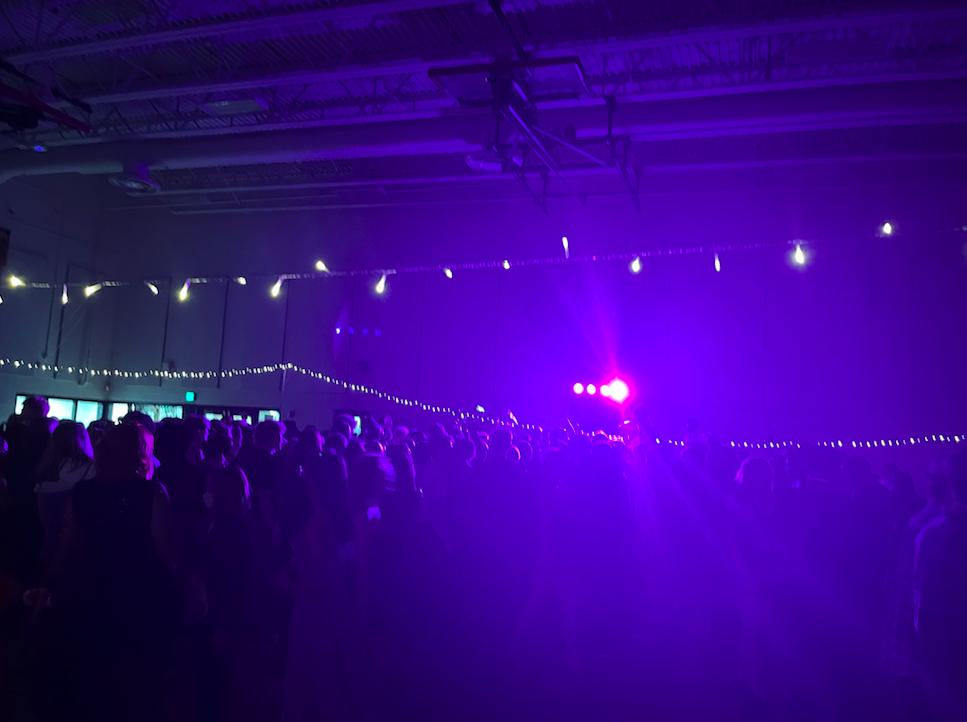
Highland’s homecoming dance was a few Fridays ago, and one obvious challenge for any school dance is accommodating for the various age groups and genre preferences that come with having a school with hundreds of students.
But how well was this done?
To answer this question, I asked students what they liked and disliked about the song selection, and to rate it on a scale of 1 to 10.
One student said, “I really liked that they had some Spanish songs in there, but I wasn’t a huge fan of the rap ones.”
This brings up another huge issue for picking songs; the language barrier. Knowing and understanding the words to songs is often a big factor of whether or not you like them. There is no real option but to play songs in multiple languages, which they did, and it seemed to go over pretty well with everyone.
Another student said, “I liked that there was a variety of songs. My favorite was the dance pop songs, especially the classics like ‘I got a feeling’. I didn’t dislike many songs they played and they switched up the style a lot, so I will give it a 8/10.”
The last person I talked to said this, “I was expecting more slow music, but a lot of it was energetic and exciting. Even though they played a lot of music that I didn’t like, a lot of people seemed to enjoy every song they played. It wasn’t kids music either, it was the kind of music people our age actually listen too. I especially liked the hip hop ones like ‘Love Sosa’ and ‘Pop Out’. Overall they played something for everyone and did a nice job balancing different tastes. 7.5/10.”
I completely agree with this last one. It seems like overall there was a nice variety of music for all different genre preferences. Even if you aren’t a fan of pop music, they never played more than one or two without changing it up and playing something different. This made it so everything felt unique and everyone could dance to a song they liked often no matter what kind of music they liked.
They really did a good job with the balancing. I didn’t talk to anyone that didn’t enjoy at least 5 different songs they played, and there wasn’t a single song that any of them strongly disliked. Obviously, there were songs they were less fond of, but to keep everyone happy you have to play things that some people don’t like as much.
Overall, I am impressed they were able to keep so many people with different tastes happy, so I will give the playlist a 8.5/10.
The transition from high school to college is a big one, and there are some major differences between the two that will be talked about in this article.
One of the first major differences between high school and college is that throughout high school, you rely on your counselors and teachers to organize your schedule.
Once you get to college though, you will have to create your own schedule. You will have to arrange your classes to fit your agenda, and organize your schedule according to other things going on in your life.
Another difference between high school and college is the amount of time you spend in classes. In high school you will have back to back classes for around six hours a day, Monday through Friday.
Once you get to college you’ll only spend around twelve to sixteen hours in class each week, and usually you’ll have breaks in between classes. Some days you may only have one class, depending on how you create your schedule.
The workload and testing in college is also a lot different than in high school. In high school, your teachers will assign you homework, and remind you of when the homework is due. There will usually be tests that cover smaller amounts of material, where you will have to recall and understand information that you have been taught. If you are absent during a test, there are usually make-up tests available as well.
In college, you may not be assigned homework, but you will have a substantial amount of notes and studying to do outside of class. You will have to use what you have learned in your lessons, and apply it to different situations on the tests, which will usually cover larger amounts of materials. Since these tests cover larger amounts of material, they will be more infrequent. There usually aren’t make-up tests either.
One final major difference between college and high school is the financial part of it. You can go to high school for free, and most of the textbooks you need will be provided for you by the school.
Once you get to college, if you live on campus, you will have to pay for housing and dining, and you will also have to buy your own textbooks. Some colleges require computers as well.
The bottom line is that once you get to college, you will have a lot more freedom, but with that freedom comes more responsibilities. You will have to learn how to manage your time and money, and how to stay organized, all while balancing your school and social life.
If you would like to read more about the differences between high school and college, please use the links below:
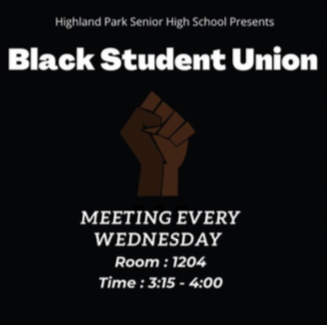
Image taken from: HPSH BSU Instagram page (@hp_bsu)
Jo and I have talked to many friends and wondered ourselves about getting involved at Highland. When we looked for more information, we realized there were so many different places to learn more, but most information was spread out. Thus, we decided to write this article so there could be one place to find almost everything you need to know about clubs at HPSH.
Adoptee Club Adoptee Club is a place for adopted children, and their siblings, to come together and discuss their unique experiences and perspectives. This club met for the first time this year on October 12th, at 7:45. They meet in room 2204. (Ms. Kallestad’s room.)
African Students Association HPSH African Students Association is a club for African students at Highland to play games, talk, and learn about African culture. However, this club is not exclusively for African students, according to their interview in HP News. ASA meets from 3:15-4:15 every Thursday after school in the CCRC.
Asian Culture Club The Asian Culture Club is open to everyone—People of Asian descent, friends, and those just looking to learn! Club meetings are held every other Friday from 3:00-4:15, starting September 30th. Meeting location is room 3210; snacks are provided.
Black Student Union Black Student Union (otherwise known as BSU) is a club focused on diversity, cultural awareness, and support within the Black community. The Black Student Union holds meetings every Wednesday in room 1204 between 3:15 and 4:00.
Book Club Book Club is, well, what it says on the posters. At the beginning of each month, books are voted on, and the winning book (YA, usually tying into a social issue of some kind) will be read throughout the course of the month. This month’s book is I Hunt Killers, by Barry Lyga. Meetings are held in the library; the next one will be Tuesday, October 25.
Climate Justice Club Climate Justice Club focuses on educating students about climate change, making an impact in our community to improve the environment, and fighting for a healthier Earth. Their meetings are held at 7:45am in room 2314. CJC meetings will be the first and third Tuesday of each month.
Debate
Contrary to popular belief, debate is a sport—the art and science of speech and civil argument. Debaters are given evidence for two sides of an issue, and it is up to them to fit things together and think up rebuttals on the fly to their opponent’s remarks. If you debate all throughout high school, Augsburg University might even offer you a scholarship! Debate meets on Wednesdays and Thursdays from 3:15 to 4:30. It’s held in 2220, Mr. Hayes’ room.
Girls Alliance Association Girls Alliance Association, or GALA, is a girls empowerment group set on providing a supportive community for the girls of HPSH that educates and advocates for important women’s issues such as health and inequality. GALA meets in room 2203, on the second and fourth Fridays of every month, at 3:15.
Gender Sexuality Alliance The Gender-Sexuality Alliance is a club for those in the LGBTQ+ community, allies, and those questioning their gender, sexuality or romantic orientation. Individuals come together for support, conversation, and a place to discuss the ins and outs of being in the community. Meetings are in room 2208 every Wednesday after school.
The Good Club The Good Club meets every other Wednesday from 7:45-8:10am in room 2208. The Good Club describes themselves on their Instagram account as “a club who strives to help our community and world by learning and taking action. It’s a good way to meet new people, get involved in the community, and get service hours!” Their next meeting is on October 26th at the usual time.
HOSA Otherwise known as the Highland chapter of the Healthcare Occupational Students of America, HOSA is a club for those who want to go into the medical services in the future. It offers lectures from real medical professionals, first-aid lessons, and an introduction to many tools and terms you’ll be using in the professional world. It meets next on October 20th, at 7:30. Meetings are conducted in the nurse’s office.
Jewish Culture Club Jewish Culture Club is for Jewish and non-Jewish students alike to learn more about Jewish culture. Meetings are every other Thursday at 3:10pm in room 2202. In their first meeting, they had snacks, made cards for Rosh Hashanah, and introduced themselves. If you’re interested in learning more about Judaism, be sure to check it out.
Knit and Crochet Club Knit and Crochet Club is a club for anybody who wants a quiet space to knit, crochet, and make friends. From beginners to experts, everyone is welcomed! Meetings are after school on Mondays, in room 1215
Model UN Model UN is a club where students, by roleplaying a delegate from a particular nation, can simulate the functions of the real United Nations in miniature. This will help students develop their research skills, comprehend international relations, flex their problem-solving muscles, and understand the complex issues that affect our globe. If you are interested in learning more, please contact Ms. Rise, in 2201.
Muslim Student Association The Muslim Student Association is a club by, and for, students who are practitioners of Islam; those who want to learn are also welcomed. The club holds prayer services and celebrates holy days together. Club meetings are every Monday, from 3:15 to 4:15. They are held in room 1204.
Robotics Robotics is a club for technologically and STEM-minded students to get together and build a robot! Participants will then compete in competitions that can even go up to the national level. In the first half of the year, meetings will be held on Tuesdays. In the latter half—once the season picks up—meetings will be Tuesdays and Thursdays. They meet in the wood shop.
Science Club Science Club meets in room 2305 at 7:45 every other Wednesday (their first meeting was on September 21st). Science Club is for learning more about various aspects of science and discussing it with others also interested in it. Members of the science club also write for The Nucleus, a science journal. Want to check out The Nucleus? Their website is: thehighlandnucleus.weebly.com.
Student Council Student Council is open to anyone, and is for those interested in helping the school community and being part of decision making for school events. For example, in the first meeting of student council, they voted and decided on the spirit week themes and the homecoming dance theme, and in the second meeting they sorted grade shirts and held signups for handing out shirts, the pep rally how-to video, and selling homecoming tickets. They meet around once a month, and will hold their next meeting on November 1st at 3:10 in room 2214 (Ms. Becker’s room).
Theatre Club Highland’s Theatre Club is for students interested in performing or helping with the various productions put on by HPSH throughout the course of this year. Currently, the plays ‘Clue’ and ‘The Children’s Hour’ are in rehearsals, performing in early winter of 2022. To join Theatre Club for tech crew, or later performances, contact Ms. Nancy. Later in the year, Theatre Club will have winter one acts, a spring musical (‘Addams Family’), and a spring play, all of which require zero experience for auditioning.
For more information, be sure to check out HP News, club fliers in the hallways, club social media accounts, and listen to the announcements in advisory! If we missed any clubs, the previously mentioned sources would also be great places to find information on those.
Suppose you’re a student at Highland High School, a school building under the Saint Paul Public School system, and your main interests and hobbies consist of reading manga, graphic novels, and picture books.
There are many available systems that make the libraries enjoyable and accessible to the students. Systems such as the book return policy, different librarians working to make sure that students enjoy their experience, and so on.
The librarian working at Highland, a wonderful librarian working to keep our school library system working continually for students.
She works very well with the school, trying her hardest to give the students satisfactory and organized books to their liking. Even though she often pulls through with very satisfactory layouts, the materials and resources given to her are very limited.
The library receives very little funding from the school district, and has a very limited amount of Title 1 funding. The money it does receive is from a combination of district library services, and Parent Student Teacher grants, or PTSA grants. Even though these resources are available, the librarian expressed how it is not enough to get the school to the recommended amount of books for students across the district.
Some of the main problems the librarian encounters are books often being taken without being checked out, some books never being returned, and some being returned in worse quality than initially rented out. She’s a team of one – basically, drastically understaffed – and often finds it hard to balance her home life with school, considering the limited amount of staff.
Although she faces these many challenges, she acknowledges that the Manga section is the most popular section in the library and tries her hardest to make the best decisions on which manga’s to bring for the students.
As we take a closer look and indulge ourselves in the manga section of the library, you find a wide variety of selections that would satisfy any anime watcher or manga fanatic.
As you can see in the picture below, it’s a very popular and wide section of books that are rented out quite frequently. From a personal perspective, it’s very admirable how organized and clean the Manga section is, despite being handled by many teenage students every day.
Now one may wonder, how can this section be expanded? Does it have enough options? Will the books be accurately displayed within their genres, as well as book titles and descriptions?
The answer is; Yes. The books are all carefully placed and fruitfully organized, and with the money from the school, they have bought and put together a wonderful collection for many students to enjoy.
A few things to note: Always be mindful of returning your books punctually and in respectable quality, so as to keep the Manga section enjoyable for all who visit. It’s a cool, calm and collected little corner of the library that is kept in wonderful quality by our Librarian Ms. Rahman. It’s a small space that can be used to read your newly purchased books, or that you can recover from your stressful day.
With all hands in unison, working on growing and improving our library, we can accurately and truthfully say that the Manga section, as well as the whole of our library, is aptly and kindly taken care of.
Grades are looked at in many different ways. Some people consider them a good thing, while others feel the opposite way. This article will be sharing information about how grades, and the grading system, are both positive and negative, and how they impact students.
Pros
There are many benefits to the grading system that can help students in their academic careers. One of the main purposes that the grading system serves is to give students feedback on their assignments and tests. This feedback can help students to improve their work, and learn more about themselves, and their learning style.
Grades also help teachers understand where their students are at in their learning levels. This can give teachers an idea of who might need some extra help, and who understands the assignments.
Another benefit that grades have is giving students a goal, and something to work for. This teaches them important skills they’ll need for their future, such as setting a goal, and making a plan to achieve this goal.
Another way that grades prepare students for the future is by teaching them how to use the feedback they receive.
One final positive about grades is that they are almost universally used, and this makes them fairly easy to understand.
Cons
Although the grading system does have many positive aspects to it, there are some negative parts to it as well.
One of the main downsides to the grading system is that it can cause students a lot of stress and anxiety. Students have a lot of pressure to have good grades from not only parents and teachers, but themselves as well. If students receive a bad grade, this can lower their self esteem and confidence.
According to UOpeople.edu, in a survey, 80% of college freshmen said that their self-worth was connected to their grades. This means that they felt that whatever grade they got determined if they were good enough or not.
Earlier, it was mentioned that students can have pressure from their parents to get good grades. This is because many parents consider grades a reflection of how much their child is paying attention, and/or trying in school. They may punish their children if they receive a bad grade, and this can lead to a strained relationship between a parent and child.
One final downside to the grading system is that it doesn’t necessarily represent a student’s understanding of a topic accurately. Everyone is different, and has different ways of learning and understanding information.
Many students will attempt to memorize information that will be on their next assessment, but don’t actually understand or learn what they are memorizing, and forget a lot of the information after the assessment.
Conclusion
The bottom line is that the grading system has many different positive and negative impacts, and there are many differing opinions of whether it is a good or bad thing. There is solid evidence and strong arguments for both sides of this question, but the answer may never be decided.
If you would like to read more about the pros and cons of the grading system, feel free to check out these website:
As a freshman sometimes I feel like things can be tough and people are also going to be a lot more tough on you, especially since it’s your first year attending and experiencing high school. And it’s understandable that that’s how your parents and your teachers are because it’s showing how much they care about you and how much they want you to succeed in the future.
When I first came to Highland with all the students and everything, I felt like it was completely different; there were more students and different faces. I also felt like it was much more different for me because it was more different than middle school. There was more space around the building and I felt like and it would be very confusing for me to find places. I would have to walk around the building a few times just to find where I needed to get to.
One thing that I really didn’t like about orientation was that they weren’t really any help to me because when I got to school the first day, I still didn’t know where I was going. We we rushed through the building and didn’t really get the chance to find where our classes would be.
One thing that I like about the high school though, is that it is different, not a bad or good different, but different than in the middle. I was very scared at first to be coming into high school because I was very scared of growing up and I felt like I was growing up too fast.
I also thought that I wouldn’t like meeting some new people and I was very scared that people weren’t going to like me, especially the older kids.
But, other than that, so far everything has been going okay and well.
In December of 2021, the Saint Paul Board of Education decided to make the change from Highland’s typical seven-period bell schedule to a four-period block schedule, alternating classes every other day.
This new schedule provides more elective opportunities, less time spent transitioning between classes, more focused class time, and more time focused on a singular subject.
However, this new schedule decreases break time, classes are no longer daily, and you have to spend more time in classes where you have nothing to do or don’t enjoy. This has been an exponential change for all involved, though staff will be impacted most of all.
Teachers have had to completely rearrange their typical plans and scheduling for assignments, lessons, and summatives due to this new version of scheduling. “Planning for block scheduling was one of the things that kept me awake at night this summer,” Mr. Martin commented to his class of Algebra 2 students on the schedule for math assignments this school year.
I’ve had the privilege of talking to many students, all with varying opinions on the change. For example, while Jo Knorr, a freshman, finds the longer class times makes it harder to focus on the topic being discussed, Ash and another student, wishing to remain anonymous, found the longer periods made it easier for them to focus.
“So I’ve had time to adjust to the block schedule as my previous school also used it, but before that, I had a schedule consisting of seven classes per day. That schedule felt so much better because classes were shorter, everything felt more fun, and it felt like things were completed more quickly. Now, our lunch is shorter and there’s no free time. It feels like way too much,” said Ava Bird, another freshman that recently moved into the area.
Overall, opinions are mixed on the topic, though from those I’ve talked to on the topic an overwhelming majority is against the change. It’s only been a week of this new schedule so far though, so opinions may change, and both pros and cons will become more apparent. It is likely that by the end of the year, the school will have managed to adjust to this change and will be more comfortable with the 8/2 schedule. Hopefully, by then, it will be easier for students and teachers alike.
On Friday, May 27th, Highland Park Senior High hosted Agriculture Day. The weather was lovely but the sun was strong. There was a nice breeze too.
At the event there were so many stands, like a spot where you could make a tiny flower bouquet and many different stands to learn about nature and wildlife.
Even our lovely club Union Latina had a stand with different Latino snacks and drinks. They had chicharrones, bags of chips, and Valentina and lime to add to the snacks. They were also playing some great music on a loudspeaker.
There was also a mini petting zoo with chickens, a lamb, three snakes, two horses, and lots of adorable dogs. One of the horses was wearing a cute little unicorn horn. At one point, one of the chickens escaped, but thankfully they got it back in the cage. The snakes were circling around on peoples shoulders and passing them around to the high schoolers, it was really cool. The lamb was really calm and super friendly to everyone. The dogs were very well behaved and so lovely.
There were lots of students running the stands and telling lots of info about their nature topic.
We also welcomed the middle schoolers and elementary schoolers to join for a bit to see all of the cool sites. Some of the high school students were helping keep track of the younger kids. I had a lot of fun and I ended up going with almost all of my classes. Ultimately, the whole event was a lot of fun and I think many people really enjoyed it.
If you are interested in participating in Ag day in the future, Ms. Wedger is the teacher in charge. She helps manage the students organize the event and planning took place in her Ag leadership class.
The Official Online Newspaper, Literary Magazine, and Video News of the Highland Park Scots





 Plaid Line + PRIZM + Scottie News