Category Archives: News

Acclaimed Author Makes One Stop in Minnesota – At Highland Park Senior High

Jay Asher had no idea how much of an impact his book would have on students when he originally wrote it as a response to the suicide attempt of a close relative. In fact, his book was originally not received well, as it was rejected 12 times, to the point that he likened every rejection letter to a breakup, noting to HP students, “If I was going to get through this rejection process, I was going to have to make a game out of it.” His good humor and resilience kept him moving forward and he was eventually signed on by a publisher. Since then, Asher’s book has become a call to action for an anti-bullying campaign. This year, he has launched a tour called 50 States Against Bullying and is visiting a school in each state. Highland Park was honored to be the Minnesota school.

Asher’s book, Thirteen Reasons Why, deals with suicide and a lot of issues that teens face in their time in high school. Today, Asher offered wise words to Highland Park students. With regard to the people that we see at school every day, Asher stated, “A lot of what you know about them is just what you’ve heard about them.” There is a quintessential truth to this statement, as gossip and rumors can become commonplace in high school, so often accepted as truth that they lock high school students in an ongoing battle to be who they are amid the overpowering idea of how others perceive them. Asher’s character faces a similar dilemma. Hannah Baker has a series of vicious rumors that circulate about her, rumors that, according to Asher, “change how they see her and then change how they treat her and eventually how she sees herself.” Although Asher never meant to challenge how we treat each other, his book seems to reminds high schoolers of their power and influence in the lives of each other.

Asher’s book resonates with different teens in different ways. That is one of the reasons why it is such a powerful story. At his presentation, Asher shared many of the responses that he had gotten. Many cited the book as a life changer; some realized that they weren’t alone in their struggles, while others pledged to open their eyes to how they treat people and work for others.

It isn’t hard to see why Asher’s book was such a success. His presentation was loaded with wit and humor, and he seemed to connect with the struggles of high school students that often seem overlooked especially by adults. On behalf of Highland Park students and staff, thank you Jay Asher for choosing our school and for all your work to bring awareness to bullying and suicide.

Follow Jay on Twitter @jayasherguy and visit his blog at jayasher.blogspot.com  (As he said, “This is how we can all stay friends when I go home.” )

IMG_2681

Above: Jay Asher speaks with Highland Park students at the assembly

Friends of Highland Arts (FHA)

By Maeve Gimpl

we-value-the-arts
Image source: http://audubonpto.org/home/arts-reach-starts-this-week/

Friends of Highland Arts (FHA) is a newly launched organization here at Highland that supports both curricular and extra-curricular arts education. Visual, cultural, musical, literary, and performing arts will be supported. FHA believes the arts are a great way to create a stronger community for students, families, teachers, and volunteers.

This new non-profit organization will reach out to the middle and elementary schools in Highland in an effort to support arts programming and to facilitate older students mentoring younger middle school and elementary aged children. The vision is to create a unique Highland Park arts identity.

FHA will also strive to develop community partnerships and funding for arts education. In addition, the organization will provide exciting volunteer opportunities for parents to get involved.

Mrs. Colleen Zuro-White and Mrs. Anne Gimpl (my mom) developed the organization as new parents to Highland Senior last year. Conversations and early reports indicate a great deal of support and enthusiasm for the organization. Highland Park Senior High School’s IB Coordinator Ms. Charlotte Landreau has agreed to serve on the board. After asking what FHA is hoping to accomplish in the near future, Mrs. Gimpl replied, “Right now, Friends of Highland Arts is in its beginning stages. We want to get the word out and create some enthusiasm for our awesome arts programs!”

CALLING ALL THOSE WANTING TO SHOW OFF THEIR EXCELLENT DESIGNING SKILLS: Friends of Highland Arts is looking for a logo to represent their organization. Stay tuned for more info on the HP website.

Questions? Comments? Email friendsofhighlandarts@gmail.com

Prezi presentation “FHA Overview”(https://prezi.com/fwblhccnm3-l/fha-overview/)

Great Decisions Conference for HPSH students was a field trip to the real world

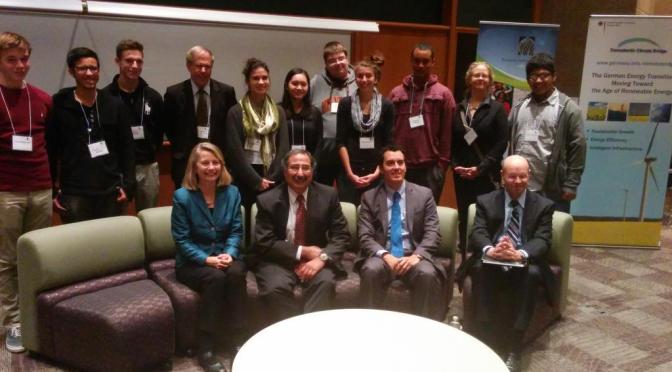
Nine students from Kari Rise’s IB Geography class were able to attend the 7th annual Great Decisions Conference last Friday. Each year, this conference tackles issues that have global relevance. The topic for 2014 was energy independence. Speakers ranging from experts from the University of Minnesota and the Star Tribune to foreign affairs specialists of Germany, Mexico, and Canada brought their voices to the panel.

Discussion about energy independence began with an overview from foreign relations expert Tom Hanson about foreign policy and America’s history with oil. His speech was particularly startling because it introduced the politics surrounding energy, an issue that many of us, especially as high school students, do not even think about.

Part of learning about energy independence was understanding the complexity to any subject. While all the speakers were highly educated, they had different, and sometimes opposite, opinions. As many spoke of the economic and political benefits from obtaining oil in the US, others spoke to their concerns about the environment or the lack of sustainability in continuing current patterns. For some, the United States has made incredible progress in a positive direction because of their increased energy independence. Oil ties countries together politically. 80% of China’s oil comes from the Middle East, causing lifestyle in China to hinge on the political stability of the Middle East. The US does not have this issue, as only one third of our oil is imported. On the other side, localization brings into play the environmental impact. It is important to remember that the reserves of oil will not be able to sustain increasing energy needs forever. Respected intellectuals and members of the public presented on each side of the debacle.

To Highland Park students, one of the most intriguing facets of the conference was Hector Castro’s presentation on Mexico. Hector Castro described a progressive situation in Mexico. Since the election of President Enrique Peña Nieto, the Mexican government has instituted sweeping structural reforms, including 21 new laws. Regarding energy, laws were adopted to try to decrease the monopoly of the government petroleum and electricity companies of PEMEX and CFE. The presentation was thought-provoking because of the efficiency of the Mexican government. HPSH students commented on the contrast with the difficulty in passing legislation that the United States government often faces.

This wasn’t the only opportunity to compare and contrast. Energy dependence is a problem that many countries have had to face. As Mario Ingo Soos, Deputy Consul General of Germany in Chicago, explained, for Germany, the solution to becoming independent was turning to renewable energy sources. About 27% of their energy is from renewable sources. When faced with the same dilemma, the United States has resorted to a dramatic increase in local hydraulic fracking. Both ways have been successful in reducing international dependence, but each have a very different set of outcomes and consequences. It was interesting to see the different methods of solving a problem.

Every day in school, we learn the skills that we need in our future, but our education in the classroom doesn’t always enter into current events or share in the concerns of the “adult world.” It felt refreshing to be aware of something that matters and to take part in contributing ideas. Our choices with energy are going to shape future generations and being informed is critical.

IMG_0777

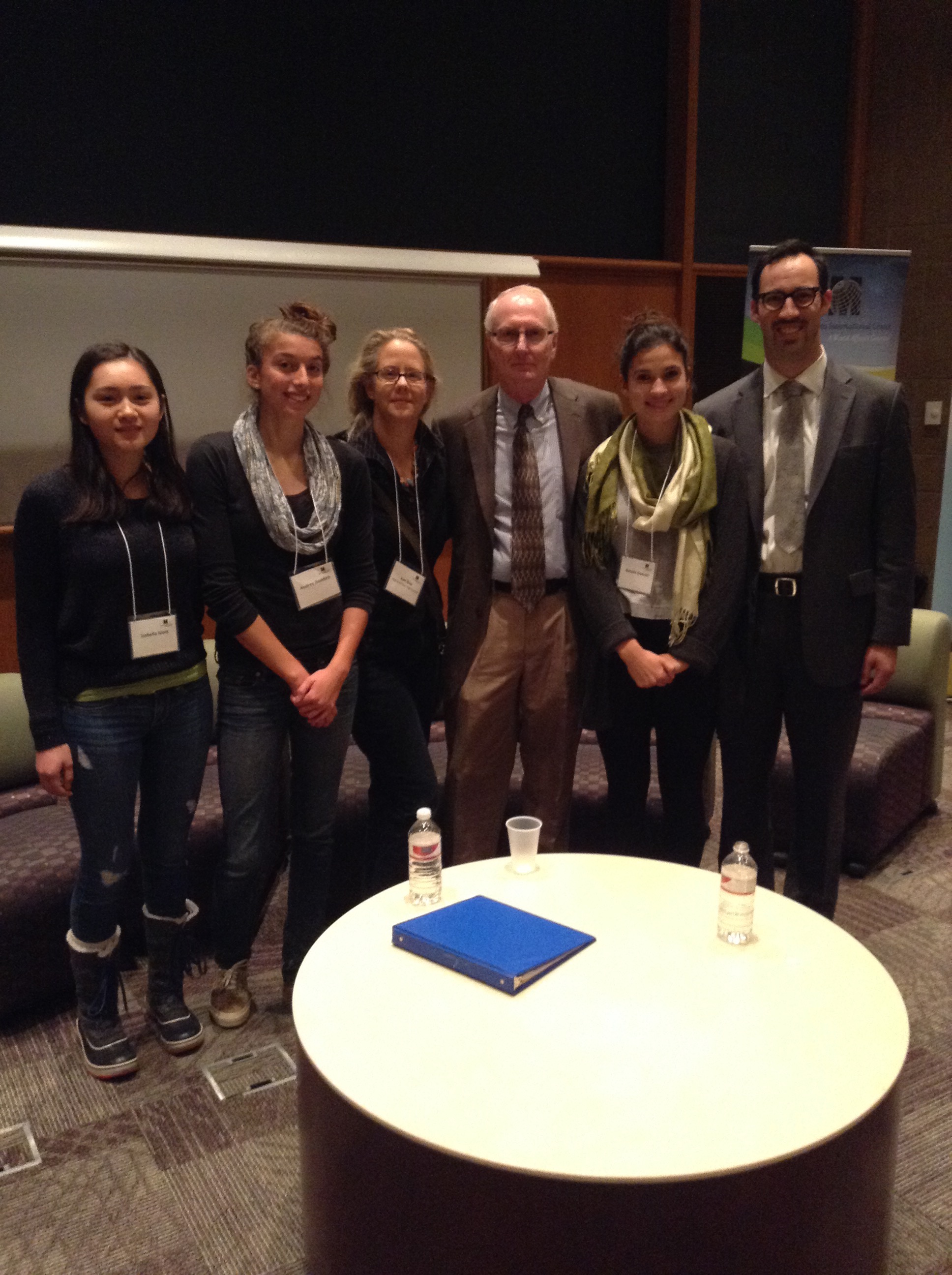
(Above) Several geography students who attended the conference pictured with Kari Rise, HPSH IB Geography instructor, Mario Ingo Soos, Deputy Consul General of Germany in Chicago and Carol Engebretson Bryne, President of Minnesota International Center

(Below) Students with Star Tribune energy reporter David Shaffer, and Dan King, US Department of Energy.

m2_7


Highland Wellness Committee event: Work experience showcase

Co-Written By: Izzy Rojas

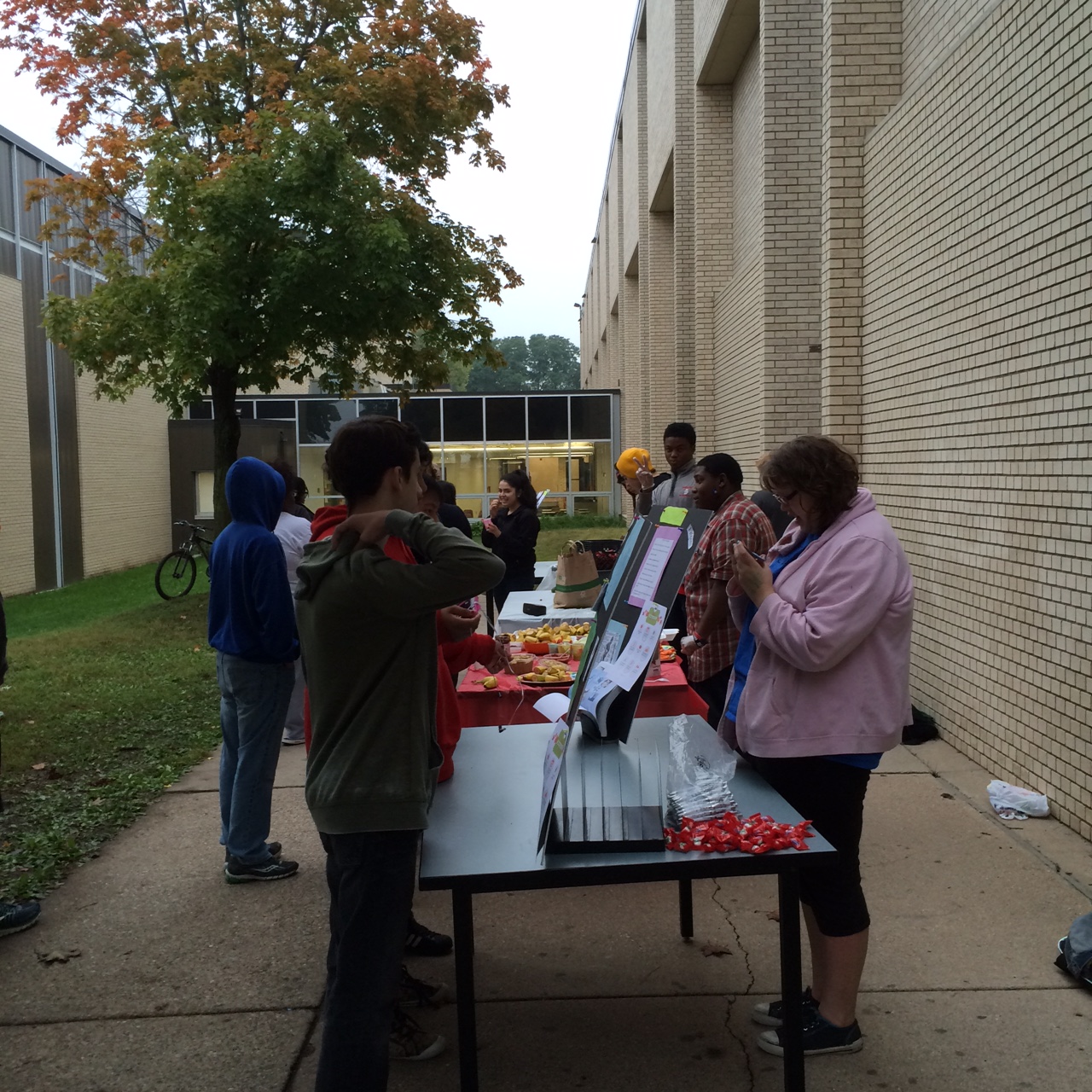
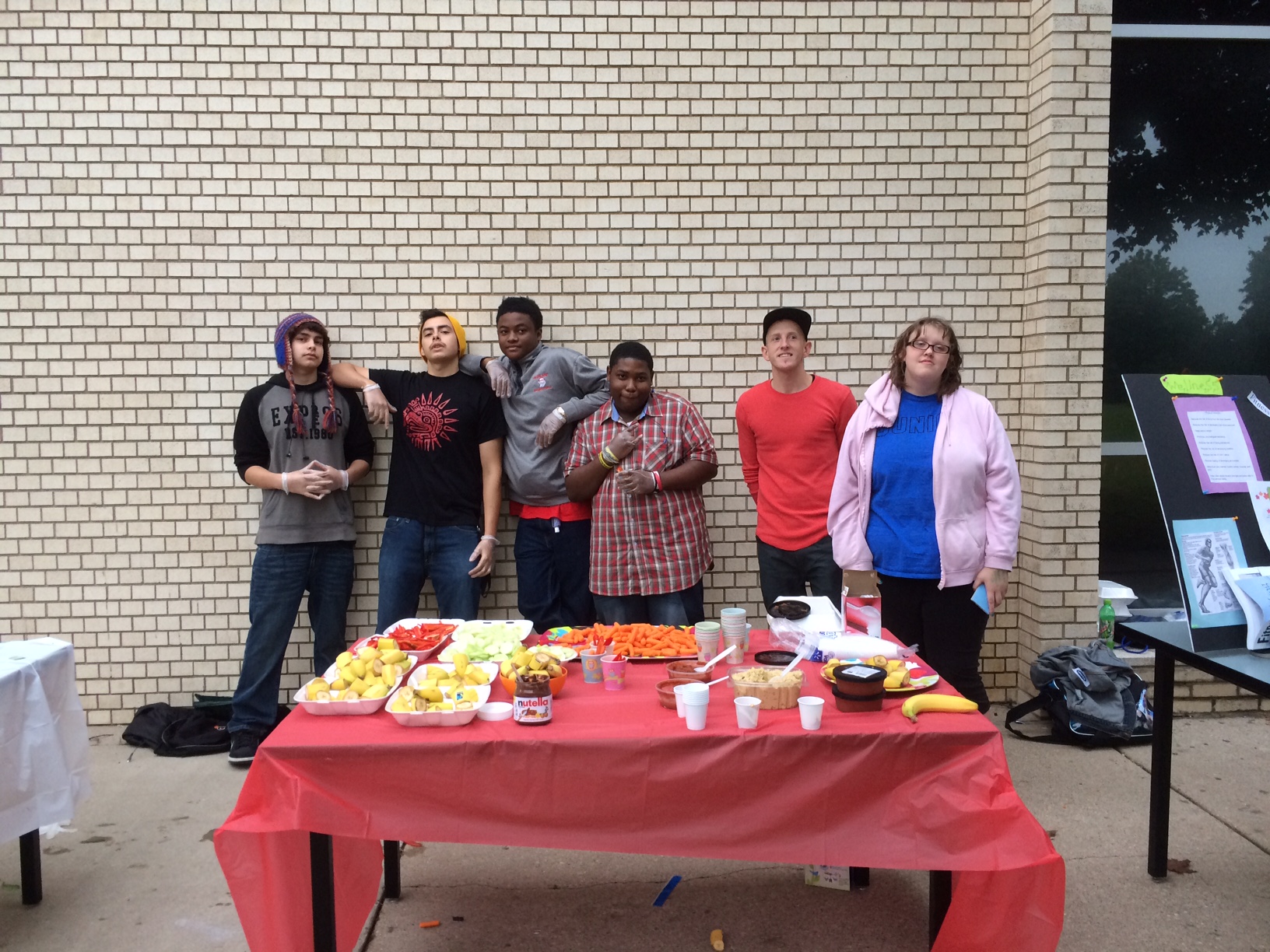
Today in the community garden, the Highland Park Wellness Committee conducted an event showcasing the work experience program coordinated by Mr. McCann. Several booths were set up as part of the display, including: fresh vegetable stand, produce trivia, work experience program information, and a soccer/physical activity circle. There were also tours of the garden by Ms. Rise. Many classes came down to participate in the event and to support the hard work that the students have done over the last year.

One class in particular that came to the event was Ms. Ketterling’s Horticulture class. The Horticulture class is connected with the agriculture department here at Highland, and is a new class offering this year. “The Horticulture class is all about learning about plants and the environmental factors that effect the proper growth of the plants. We go from learning about soils, to different non-soil media, propagating plants sexually and a-sexually, light requirements, things like that”, said Ms. Ketterling. Horticulture students also do AP-Bio level labs, measuring things like porosity and textures of soils.

It was a great event, ending with tours and fellowship in the garden. Below are some pictures of the morning:

IMG_1809

IMG_1810

IMG_1811

IMG_1813

IMG_1815

IMG_1818

IMG_1828

IMG_1839

IMG_1842

History Day students prepare for D.C.

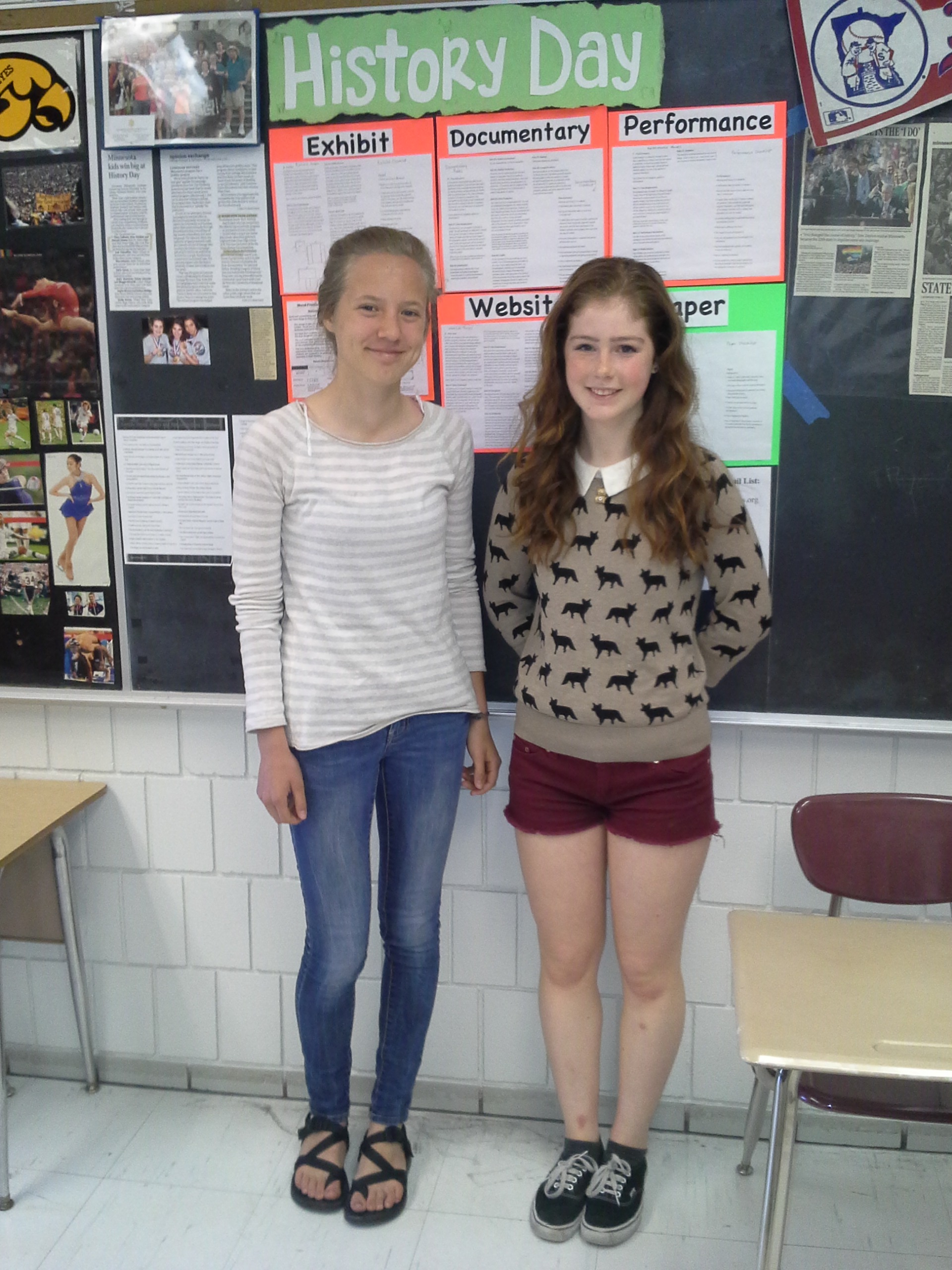
The National History Day tradition at Highland Park will continue as freshmen Samara Kroeger and Tessa Newman-Heggie advance to Nationals in Washington D.C. This is the fifth year that Highland Park has sent students to the National History Day Competition.

At Sate History Day on May 3rd, Samara placed 1st with her individual website, titled “Toxic Time Bomb: Love Canal, Superfund and the Establishment of Environmental Rights and Responsibilities”. Her project also received the Environmental History topical prize. Tessa’s individual documentary,“Violations of Rights in the Obedience Experiments: How Stanley Milgram Shocked the World”, received 2nd place.

Both Tessa and Samara have participated in the Minnesota State History Day competition in past years. According to Samara, “I was really happy because this was my fourth year doing history day, and I’ve been improving every year. So I finally achieved my goals.”

They leave for Washington, D.C. on June 14th. The girls are excited to see landmarks and museums, and of course, to go running together in our nation’s capitol. They are happy that they will be able to experience a high level of competition and meet students from all over the world.

Tessa and Samara NHD (2014) 2


From right: Samara Kroeger and Tessa Newman-Heggie


Pediatric Sleep Medicine: Evening Event with Dr. John Garcia

john_garciaThe Highland PTA (Parent Teacher Association) is hosting an event tomorrow evening (Tuesday May 6th) in the senior high school auditorium at 6:30pm . “Dr. John Garcia, a pediatric sleep specialist at Gillette Children’s Specialty Healthcare. His topic is “Pediatric Sleep Medicine: Informing High School Policy.” Any parent, particularly parents of teenagers, knows that sleep (when, how much, how regular) is a crucial component of daily life. The talk, sponsored by the Highland Park Senior High School PTA, is free and open to the public.” 

With Saint Paul Public Schools considering altering school start times for the 2015-2016 school year, this event is of particular interest. Hope to see you there!

Staff editorial – Phthalates, the controversial chemicals with the weird name

Cosmetics have become a prominent part of American culture, so much that few of us stop to think of the repercussions of constant usage, or even consider what exactly we are welcoming into our bodies. When I surveyed 280 Highland Park students, 79% admitted to not reading the labels before buying or using a cosmetic or beauty product. This is basically condoning the use of potentially harmful chemicals in our cosmetics. Now is the time to get informed and to stop this mindless consumption.

One particular group of chemicals, known as phthalates, have been in the news a lot lately. Of the students I surveyed, 95% responded “no” when asked whether they knew what phthalates were. Many have never heard of them, but everyone is likely to come in contact with them daily. Although these chemicals have been banned from products in the European Union, phthalates are still used heavily in American products. A study by U.S. Centers for Disease Control and Prevention tested 2,500 individuals and found 97% had molecules of at least one type of phthalate in their bodies.

Phthalates are a group of chemical compounds that are clear and oily, and used in almost everything from children’s’ toys to blood storage bags in hospitals.  Phthalates, or “plasticizers”, soften the texture of plastics and cosmetics. They also cling to skin, which allows products to last longer and retain scent or color for more time. A rule of thumb to go by is that basically any product with a fragrance, be it deodorant, perfume, body wash, or lip-gloss, is likely to contain phthalates. Of the students I surveyed, 95% said they use cosmetics or beauty products including shampoo, deodorant, and lotion on a daily basis.

So what could this cost us? Research on phthalates is varied. Phthalates are a possible carcinogen, meaning that research shows that they are related to cancer. They increase the amount of breast cancer cells in women’s’ bodies and they are endocrine disruptors that offset hormone balance, causing early puberty and breast development in girls. Two pediatricians, Dr Shanna Swan, an epidemiologist, and Doctor Howard Snyder, a urologist at Children’s Hospital in Philadelphia both studied baby boys and the relation of chemicals to abnormalities in their hormones. Dr Swan found that baby boys that had more reproductive organ problems and low sperm and testosterone levels consistently had mothers with higher levels of phthalates in their urine at the time of pregnancy. These developmental problems relate to reproductive organs, and low sperm and testosterone levels in adult men as well. Dr Snyder links hypospadias, a condition that has tripled in the last forty years, to chemicals, especially phthalates.

On a container, phthalates are labelled as DEHP, DBP, DMP, MEP, and most commonly, DEP. However, even if none of these chemicals are listed on the product, it may still contain phthalates due to loopholes in the law regarding product ingredients. Companies are not required to state ingredients in their trademark “fragrance,” so there is no way of determining if a product is completely phthalate-free.

According to the Food and Drug Administration and the Consumer Product Safety Commission, there is not enough solid scientific evidence that points directly at immediate negative outcomes of phthalates to spur legislation. Companies say that phthalates are relatively safe and pose no health risk. A prime concern is that if phthalates were banned, a substitute would have to be developed that would be new and untested, which could potentially be even more toxic. Furthermore, companies insist that phthalates are not harmful unless used in high dosage, and the small phthalate content in their products isn’t truly harmful. However, in 2008, congress passed a bill that outlawed phthalates in children’s toys, which seems to indicate differently. This legislation doesn’t seem to support the notion that phthalates are entirely safe.

The phthalates debate has still not yet been ended with conclusive data. Regardless, it is good to be informed. Because of the controversy, it would be safest to choose products that do not contain phthalates. It falls to the consumer to decided what they do and do not want in a product. Say no to phthalates by not buying products that clearly contain phthalates, at least not until more conclusive research is done.

Also, remember that phthalates are not the only potentially unsafe chemicals that find their way into our cosmetics. As the consumers, we have the power to change this.

To learn about skin products with safe ingredients visit: http://www.ewg.org/

Staff editorial – A world debate in Minnesota: Mining and the environment

NOTE: The following article won 3rd place in a contest put on by Young Reporters for the Environment.

It might seem as though the controversy over proposed sulfide mining plans in the Northeastern region of Minnesota doesn’t directly affect high school students. But in reality, this is the generation that will be feeling the effects of any decisions made, so it is crucial that we are involved in this process.

Recently, PolyMet, a Canadian corporation hoping to begin mining in 2016, released the Environmental Impact Statement of the proposed mine. The environmental review has received over 40,000 comments on a public comment thread. For those in support, the resulting economic growth and job creation are incomparable, while those opposed raise concerns about the environmental impact.

Sulfide mining, also known as hard rock mining, is the extraction of minerals like Minnesota’s vast reserves of copper, nickel, cobalt, and platinum from sulfide ore. Polymet workers estimate that the Duluth Complex in Northeastern Minnesota’s Mesabi Iron Range has 4.4 billion tons of minerals. The plan projected by PolyMet is to reuse existing infrastructure from Erie Plant, a 1957 taconite processing facility.

The proposed mine is in an ideal location of economic need. As stated by Ely resort owner Joe Baltich at a public hearing of the Polymet proposal, “I’m in the tourism industry, and I certainly don’t want to shoot myself in the foot. But we’re losing businesses right and left. We have 360 properties that are for sale, and no one is buying… We’re going to lose our schools, our grocery store. We’re going to lose everything, and it’s my hometown.” Baltich, and many others, support the mining project because they believe it could mean increased jobs and a revitalized Minnesotan economy. PolyMet estimates that mining could generate 360 jobs, and hundreds for construction workers, for 20 years. The University of Minnesota-Duluth calculated the mining would produce over 550 million dollars per year, clearly an economic stimulant.

Proponents of Minnesotan sulfide mining also emphasize the positives in obtaining metals locally, reflecting a problem that the United States as a whole faces: dependence on foreign minerals. Mining nationally has been promoted to reduce international dependence, and allow us to more closely monitor conditions for miners and for the environment where the metals are extracted, which are often unsafe due to few regulations. This Minnesotan mine could be a step away from foreign dependence and towards a self sufficient America.

But it isn’t this simple. The Great Lakes contain 18% of the world’s fresh water, and mining could be a threat to this valuable resource. 99% of the rock that is unearthed is waste rock or sulfides. When the sulfides are exposed to air and water, the waste could be subject to acid mine drainage, which would create sulfuric acid. This acid could be a potential pollutant for water, as well as for wildlife and fish. Water is difficult to contain and to treat, and the interconnected water systems in Minnesota are a concern if any pollution were to occur. Minnesota isn’t the only state that has undergone mining turmoil. “Other states have suffered because their leaders saw dollar signs when they should have seen question marks. Leaders believed promises that the mines wouldn’t pollute, but ignored all the times those promises had been broken,” stated Friends of the BWCA Executive Director Paul Danicic, in a Minneapolis Star Tribune editorial, referring to pollution in Colorado, Montana, and South Dakota mines. According to the project Mining Truth, there has not been a single sulfide mine that has not polluted.

Furthermore, environmentalists claim the PolyMet plan is riddled with gaping holes. The water treatment after the project could last for 500 years or longer in cases of high levels of pollution. Scott Helgeson of Bloomington spoke at a public hearing on January 28, stating, “What prevents [PolyMet] from going bankrupt 30 years from now and saying, guys, we just can’t pay the bills anymore. Are we insane?” Helgeson’s concerns echo those of taxpayers across the state. The cost of cleanup after the mining is complete could thrust Minnesotans into an economic deficit. For some, the risk of a costly cleanup outweighs the prospect of economic thriving for twenty years.

Of course, the economic gain could be very substantial, but here’s the question Minnesotans are asking: is any amount of money worth putting natural beauty at risk? The solution isn’t clear cut. Minnesota is undisputably host to a plethora of natural minerals, something Minnesotans should be able to harness to economic advantage. However, we need to know how to do this correctly, without environmental harm as a stipulation. Mining could leave Minnesota’s next generation–our generation– in an economic deficit. So we need to be involved. Aaron Klemz, communications director for Friends of the Boundary Waters Canoe Area, in a personal interview March 10, stated,

“When regulators know that tens of thousands, and hundreds of thousands of people are watching their decision-making process, they make better decisions, because they have to actually know that they will be held accountable for what’s happening. Part of it is about being involved in the process, and part of it too is making sure the DNR understands that Minnesotans want to preserve our water for the next generation, because it is probably our greatest natural resource.”

The Minnesotan debate is bringing to the surface decades of dispute that pit mining against the health of the environment. Japan, Spain, Peru, and Indonesia are only a few examples of the many countries dealing with mining pollution. Our world depends on minerals to make products, and countries need the money from this international trade. Together, we are going to have to work to find a balance to eventually obtain them in a safe manner, or risk trashing our environment.

Minnesota is going to be a leader, but whether for a successful or destructive sulfide mining project or an environmental victory, is a choice that Minnesotans are going to have to make.

IMG_1425

(Boundary Waters photos courtesy of Karl Boothman)

Star Tribune article featuring HPSH seniors (Link)

Jeremy Olson of the Star Tribune wrote an article about the Minnesota Student Survey which included interviews with five HPSH students. Seniors Nguyen Lu, Caroline Hewes, Tarik Kidane, Sofia Cerkvenik, and Andrew Chung spoke about their experiences in high school related to alcohol, drugs, and other social constraints. The survey provided interesting insight into the practices of high school students all across Minnesota. Congratulations to the HPSH students who had the chance to be interviewed!

http://www.startribune.com/lifestyle/240962981.html