Category Archives: Books/Art

How books have gained popularity from social media

By: Kaylen Fuentes

During the pandemic, leading up to now, I’ve noticed an increase of people (whether it’s on social media or in real life) who have started reading or picked it back up again, and I believe this is because of social media or trends on social media.

To test this I interviewed several people to see the ways these students started reading because of social media or that can make a connection between reading and social media. As well as or how much (or little) they read because of social media.

I asked every student I interviewed the same question. “What impact do you think social media has had on books and reading for you personally?”

Chloe Rocha: I have seen suggestions for books on social media, and the internet has made me want to read those books more. I usually add them to a list of books I want to read and I’ve been trying to read more.

Trevor Kristjanson: I think social media has hurt the amount I read because, usually when I’m reading I decide to stop reading because of my phone. But I also get most of my book recommendations from social media so it also allows me to read more. I also think the popularity of books and how much they are talked about on social media makes me want to read them more because those popular books are popular for a reason.

Manny Ochoa-Reeve: I don’t think social media has made me want to read more, I don’t read much and I never read before I was active on social media or now.

Alexa Ramirez: I feel like reading has been glorified, especially on TikTok. Books have been incorporated into style and aesthetics as well. So, I think I’ve seen a lot of people with style and trends I want to follow and a lot of times books are incorporated into that lifestyle. So, those people with those styles make me want to read it because it made those people look cool.

3 out of the 4 people I interviewed believe that social media has had an impact on the reasons they read.

Part of why I believe social media has seen a rise in the popularity of books is because now there is such easy access to books on the internet, with online libraries, ebooks, audiobooks, etc. According to statista.com, there were over a billion ebook users worldwide in 2021 alone.

An example of a social media platform that has boosted reading is TikTok. When quarantine began there was a trend in a side of TikTok, called BookTok. Where a bunch of readers were able to give each other book recommendations, book hauls and talk about their favorite and current reads. As of September 2022 the hashtag #BookTok has 80.3 billion views on TikTok.

TikTok has helped to boost many book based platforms through BookTok as well, like Goodreads, that has gotten more popular throughout the pandemic and quarantine. Goodreads is an app where people can rate the books they are currently reading, mark books they want to read, review books, and see what friends recommend and review. According to statista.com, the number of people on Goodreads stands at 90 million.

Another reason why I think that books have gotten more popular off of social media is authors of certain books becoming more active on platforms like TikTok, Instagram, and Youtube. An example that comes to mind is John Green. John Green is known for his books ‘Looking for Alaska’, ‘The Fault in Our Stars’, and ‘Paper Towns’. As of now, John Green has 1.8 million followers on Instagram, 2.1 million on TikTok, and his YouTube channel with his brother has 3.47 million subscribers.

Part of why I think authors have started posting on social media is about promotion. John Green, among other authors, have books that came out years ago, but they still get comments and questions about them daily on social media. This gives them a chance to promote his books while still answering questions. Many authors I’ve noticed who have social media, and post frequently, incorporate all types of things to post. From following trends, to talking about their personal life, which I think makes them more likeable and relatable to others.

I think social media has overall done a lot for growth in books and authors, but I do think that some toxicity lies behind it. Romanticizing reading has been something that’s increased and I’m happy to see an increase in readers but I think unrealistic expectations have been set about reading through social media. Social media shouldn’t dictate whether or not you do or don’t read a book, but certain books are popular for certain reasons. But overall, I think books gaining popularity through social media can be a good thing as long as you can stick to your own opinions and don’t let other dictate what you think of certain books.

Review/summary of ‘Living Dead Girl’

By: Stephanie Caballero

Warning: Before reading please note that this book involves topics such as sexual assault, pedophelia, eating disorders, and abuse. Only eating disorders and abuse are discussed in this review

This review/summary includes spoilers.

‘Living Dead Girl’ by Elizabeth Scott is a young adult novel. We follow the story of Kyla, known as Alice, through the book. Alice is 15 and currently living with her abductor. Alice was taken at the age of 10 by Ray. Ever since that day, she has had to forget her entire life before Ray.

During her time with Ray Alice has to endure many types of abuse. To keep the appearance that Ray likes she has to maintain a frail body and less than 90 pounds.  Alice struggles to keep that weight as she is a growing 15-year-old.  When she is able to go out she sneaks food that ends up being thrown up.

Alice’s appearance matters a lot as it’s what keeps her from being punished or killed by Ray. She is to maintain a child’s body, shave every hair that grows on her body, and stay feminine. The punishments she received for not being to his liking were things such as standing for days or being starved.

Alice (Kyla) is not the first Alice; Ray has abducted many other kids/teens before her who he also named Alice. Most Alice’s end up dead after the age of 15-16 then he gets a new Alice. 

Although Alice is given much freedom and opportunity to escape, one thing keeps her from not doing so, is her family. From the moment when she was kidnapped to now, Ray has always had power over her by telling her that if she escapes he will kill her entire family.

Alice is given false hope by Ray by saying that he has never had a favorite Alice but her. He tells her that soon he will get a new Alice which makes Alice (Kyla) happy even if it means she will die. As the time approaches for a new Alice, Alice begins to grow excited, she is happy that he will capture a new girl and that she won’t have to play into Ray’s fantasy anymore. She says to Ray that she will find him a new Alice and will shape the future Alice to be as perfect as she is. 

Alice finds a little girl who she thinks will be perfect to play into Ray’s fantasy. She begins to hang out with her at the park every day more and more to try to get closer to her. When Kyla and Ray are about to capture her, Kyla begins to remember everything she went through which causes her to not want to give the little girl up.

In the end, Kyla ends up stopping Ray, leading to both his and her death. Kyla is at peace with herself in her final moments, not regretting her decisions and finally going against Ray.

I enjoyed this book and would recommend it to people who enjoy reading graphic things and about crime. Once again, please note that this book does involve topics such as sexual assault, pedophelia, eating disorders, and abuse. This book is a tough one to read, but definitely worth it.

Overall, I would give it a 8/10 as I liked how at the end Alice accepted that what she went through was difficult and that she didn’t need to put someone else through it. I would have given it a 10/10 if we had gotten more background about Ray and his past victims. 

A review of ‘Cinder’ by Marissa Meyer

By: Julia Sikorski Roehsner

*Warning – minor spoilers

Readers of ‘Renegades’ or ‘Heartless’ by Marissa Meyer may be familiar with ‘The Lunar Chronicles,’ written by the same author. ‘The Lunar Chronicles’ is a series of sci-fi fantasy young adult books based on Grimms’ fairy tales.

There are four main books in the series—‘Cinder,’ ‘Scarlet,’ ‘Cress,’ ‘Winter’—along with an accompanying book of short stories (‘Stars Above’), a villain backstory novella (‘Fairest’), and two graphic novels (volumes one and two of ‘Wires and Nerve’).

The first book, ‘Cinder,’ is a loose retelling of the classic story ‘Cinderella’ set in a futuristic version of planet Earth, focusing on New Beijing. Technology has advanced, and hover cars and androids are parts of daily life.

The future is not without its strife. On the faraway moon dwells a more developed race of humans, the Lunars. Earthens live in constant terror of the Lunars, as the Lunars are capable of manipulating human bioelectricity.

As well, in an eerie reflection of today’s COVID-19 virus, a plague known as letumosis has swept across the world, and a cure has not yet been developed.

Within this tangled web is a single girl by the name of Linh Cinder. Cinder knows nothing of her past and is forced to live with her abusive stepmother, who despises the fact that Cinder is cyborg—parts of her body replaced by metal and wires. One of the few bright spots in Cinder’s otherwise dismal life is her talent in mechanics.

Cinder’s world changes when the soon-to-be-emperor of the Commonwealth stops by her repair booth asking for help. Kai doesn’t know that Cinder is a cyborg, and has no reason to believe that she’s any less than a “normal” human. Impossibly, the prince and the outcast begin to fall in love.

Unfortunately, nothing is that simple. After Cinder’s kind and gentle stepsister, Peony, contracts letumosis, her stepmother volunteers Cinder for antidote testing, a certain death sentence for Cinder. Yet Cinder discovers that she is inexplicably immune.

Meanwhile, Prince Kai is struggling to balance his nation’s needs and the demands of the ruthless Lunar queen. The last thing he wants to do is marry the power-hungry Levana, but with her tantalizing offer of a letumosis cure, for the good of the Commonwealth Kai can’t justify saying no. Even if it means risking his life. If only he could find the mysterious Princess Selene, the rightful heir to the Lunar throne who supposedly died years ago, but is thought by some to be alive and in hiding.

I quite enjoyed ‘Cinder.’ I was a little overwhelmed at first by the plunge into Cinder’s world, but as the reader is introduced to characters and their motivations, the story breaks itself into bite-sized, understandable pieces. The protagonists are likable, and it was easy for me to sympathize with them from the beginning.

I also liked Meyer’s writing style. It’s not overly complex, but it also isn’t simplified to the point of being boring. It was interesting to have the story mainly focused on one character, but to hear from multiple points of view. I found the writing to be appropriate for a fantasy novel with a teenage cast and a young adult target audience.

The plot line of ‘Cinder’ definitely drew me in, but as a reader who generally doesn’t see what’s coming next, I found many of the major plot twists far too predictable. Guessing them before they were revealed certainly didn’t ruin the story for me, but the surprise was obviously lacking. I would mainly attribute the predictability of ‘Cinder’ to it being Meyer’s debut novel.

In the first book of ‘The Lunar Chronicles,’ Marissa Meyer weaves a story of love and war, tension and heartbreak, and leaves the reader desperate to find out what happens next. I give it a four out of five star rating.

The Manga section at Highland High School

By: Maya Breininger

Suppose you’re a student at Highland High School, a school building under the Saint Paul Public School system, and your main interests and hobbies consist of reading manga, graphic novels, and picture books. 

There are many available systems that make the libraries enjoyable and accessible to the students. Systems such as the book return policy, different librarians working to make sure that students enjoy their experience, and so on. 

The librarian working at Highland, a wonderful librarian working to keep our school library system working continually for students.

She works very well with the school, trying her hardest to give the students satisfactory and organized books to their liking. Even though she often pulls through with very satisfactory layouts, the materials and resources given to her are very limited. 

The library receives very little funding from the school district, and has a very limited amount of Title 1 funding. The money it does receive is from a combination of district library services, and Parent Student Teacher grants, or PTSA grants. Even though these resources are available, the librarian expressed how it is not enough to get the school to the recommended amount of books for students across the district.

Some of the main problems the librarian encounters are books often being taken without being checked out, some books never being returned, and some being returned in worse quality than initially rented out. She’s a team of one – basically, drastically understaffed – and often finds it hard to balance her home life with school, considering the limited amount of staff.

Although she faces these many challenges, she acknowledges that the Manga section is the most popular section in the library and tries her hardest to make the best decisions on which manga’s to bring for the students.

As we take a closer look and indulge ourselves in the manga section of the library, you find a wide variety of selections that would satisfy any anime watcher or manga fanatic.

As you can see in the picture below, it’s a very popular and wide section of books that are rented out quite frequently. From a personal perspective, it’s very admirable how organized and clean the Manga section is, despite being handled by many teenage students every day.

Now one may wonder, how can this section be expanded? Does it have enough options? Will the books be accurately displayed within their genres, as well as book titles and descriptions?

The answer is; Yes. The books are all carefully placed and fruitfully organized, and with the money from the school, they have bought and put together a wonderful collection for many students to enjoy. 

A few things to note: Always be mindful of returning your books punctually and in respectable quality, so as to keep the Manga section enjoyable for all who visit. It’s a cool, calm and collected little corner of the library that is kept in wonderful quality by our Librarian Ms. Rahman. It’s a small space that can be used to read your newly purchased books, or that you can recover from your stressful day. 

With all hands in unison, working on growing and improving our library, we can accurately and truthfully say that the Manga section, as well as the whole of our library, is aptly and kindly taken care of. 

For more information, please visit:

‘The False Prince’ – Review

By: Abisola Dosunmu

In a kingdom named Carthya, war is coming. To bring the divided people together, a nobleman named Conner devises a plan to find an orphan boy who looks enough like the king’s son, (who was thought to be lost at sea) and may be the last link to the royal family, as the entire royal family—king, queen, and heir— all recently died under mysterious circumstances. His plan includes three orphans, one of which is a cunning thief named Sage. Sage knows Conner’s plan is far from honorable—yet he’s forced to play the part of his puppet as his life hangs in the balance. Yet as more lies unfold, and more blood is shed, one lie becomes more important than the rest and all of it comes down to a single question.

Who’s really the puppet?

‘The False Prince’ is the first book in a five book series written by Jennifer A. Nielsen, and the name of the series is called the Ascendance Series. I read the books for the first time in 8th grade, and now they are one of my favorite books to read. From the fleshed out characters, to the humor, to the cliffhangers and the various twists and turns, once you start this book, you can’t put it down.

The book immediately introduces us to Sage, a clever and wily orphan, trying to steal some meat from the market to share with the other boys at the orphanage. He is quickly apprehended by Conner and loaded into Conner’s wagon along with the other orphans he’s found, Roden, the athletic one, Tobias, the smart one, and Latamer, the sick one.

When they finally stop the wagon, Conner reveals his plan to the boys. He’s trying to find the orphan boy who looks and acts enough like King Eckbert’s youngest son, Prince Jaron, who had been missing for the past four years. His plan is that whoever is named to be Prince Jaron can stop the country from going to war. The boys have two weeks to learn everything there is to know about being a prince, and then to be able to fool the king’s court into thinking they’re Jaron.

After that, Conner tells them that any boy who wishes to abstain from his plan can do so, and Latamer, being as sickly as he is, decides that he can’t be the fake prince because of his condition. Conner tells him it’s fine and he can return to the wagon, and Sage immediately senses something is wrong and tries to warn Latamer. Before he can, Cregan swiftly shoots Latamer with an arrow, killing him before he even reaches the wagon. The boys now understand that it’s too late to back out of Conner’s competition.

Sage is soon trapped in Conner’s deadly win or lose all game with the two other boys, just to have a chance to be Prince Jaron. The downside? The price of losing the game may be his life. As Sage moves from being a rundown orphan, to having the chance to be a king, and have everything at his fingertips, he’s racing against enemies, trying to save his life, his past, and most importantly, his country.

I definitely think this series is worth reading if you’re into medieval fantasy. I loved the humor, the fleshed out characters, the plot twists, the main character, and the way the book kinda threw you off and made you work to get to the conclusion.

I would rate the book a 4/5. The only reason I won’t give it a full review is that it’s not really a book that’s short and ties itself up quickly, which I understand kinda turns off some people from certain books (and I definitely had trouble putting all of my attention on the book, but it was worth it).

A review of the ‘Vinyl’ trilogy

By: McKenzie Welch

Many well known titles come from the dystopian genre, such as ‘The Hunger Games’ and ‘Divergent’. ‘Vinyl’, ‘Radio’, and ‘Siren’ by Sophia Elaine Hanson are a part of a self-published set of additions to this prevalent sector of novels. The ‘Vinyl’ series features action, adventure, romance, found family, and a critique on something that exists in the society that we live in today.

The ‘Vinyl’ trilogy takes place in a self-created world, featuring countries such as Revinia and Tovaire.

Hanson adds a creative twist to music, making it so that song is practically intertwined with the words on the pages of the novel. Essentially, the people of Revinia have earpieces, dubbed “singers”, that play music throughout all hours of the day and night. These monotonous pieces are meant to implement control over the citizens of the country.

Ronja Zipse, our main character, is a citizen who struggles greatly with her singer, mainly because she works so hard to resist the music playing in her head. The description of the world makes it seem very drab, as there is no individuality; everyone thinks the way that the conductor has decided is best.

Of course, most dystopian novels are not complete without a rebellion, and the Anthem (the name of the rebellion in the book) is a prevailing aspect throughout all three novels. The Belly, where the rebellious members of the Anthem live, is a place where people can forge friendships, find family, and make a life for themselves right underneath the people whose lives are continuously being stolen away by repetitive music notes.

I cannot connect to any type of media, whether it be shows, movies, or novels, if I am not connected to the characters. The main characters were well fleshed out in this trilogy. These characters were named Ronja, Roark, Henry, Evie, Iris, and Terra, and they all had their own traits, relationships, and backgrounds that made them who they were.

Because the characters were all so different, it was easy for me to find a character who I could see myself within, which I generally believe makes a book more interesting to read. That character for me was Iris, who was shy, sensitive, but also stronger than you would ever know just by looking at her. The characters also gave representation for the LGBTQ+ community, as there were multiple same-sex relationships between both background characters and main characters.

All in all, even if I could not directly connect to a character, I still found myself sympathetic towards them, which shows that Hanson created loveable characters that made the novel itself more enjoyable.

Overall, I ended up rating the book 3.5/5 stars. My reasoning for this is that, although I enjoyed the plot and the characters immensely, in my opinion, there were still areas that lacked. For example, there were relationships between characters that felt as though they were either underdeveloped or as though they were created out of convenience. I personally feel as though the relationships would not have been so lackluster if characters had been paired with others outside of their own circle of friends.

Also, there was the beginnings of a love triangle that never matured into anything more. If you’re going to add a trope into a book, be sure that it actually evolves into what it’s supposed to be.

Finally, the writing style was, at times, not captivating to me. Although there were some typos and mistakes, it was not bad by any means, especially when you take into consideration the fact that this book was self-published, but there were moments throughout my reading where I wasn’t able to keep my mind solely focused on the words on the page.

However, there were other times where the writing descriptions were extremely vivid and kept me enthralled in the story.

So, in the end, I believe that there are things to critique throughout the novels, but, if you like representative dystopian novels that implement new twists on things often perceived as mundane, I would recommend the ‘Vinyl’ series to you.

‘Looking For Alaska’ book review

By: Alexa Ramirez

*Warning: contains spoilers

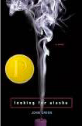
I didn’t think I cared much about ‘Looking for Alaska’ until I was coming across its last pages. I first encountered this book when my friend told me she was reading it, and I thought the smoke filled cover looked cool. She had recommended it to me and I ended up finding and buying it at a buy one get one half off sale at Barnes and Noble.

Looking back on that small action, I can’t believe I hadn’t known just how powerful this book’s hold would be on me.

The book takes place at a boarding school in Birmingham, Alabama, where a very bright group of 4 high school kids, that come from many different places, and social classes (who would technically be considered outcasts), live at the school and go on many adventures in their time there.

In the story, the main protagonist, Miles, who comes from a life of mediocrity in Florida, falls in love with the mysterious and unpredictable Alaska, the only girl in their group. The book follows their romance through thick and thin, as well as his journey with Takumi, the Colonel, and Laura, the other three members of their group, while they show him the complete opposite of what his life was in Florida.

In most of the books I’ve read, the takeaways are all very similar; all including lessons about how to better enjoy the life that we as humans lead here on earth. But a lot of my questions don’t include any of that. Obviously, I do live with the human curiosity most have about how to live life to what they consider its fullest, but since I was young, there hasn’t been a day that’s gone by that I haven’t had some kind of curious realization about life after death. For a long time it has been something that has scared me, and in all honesty, after reading the book it definitely still does, but now for different reasons.

In the book, Alaska struggles with many things. Her upbringing caused her to grow with a struggle with irrational decision making, impulsiveness, and arguably suicidal thoughts. She also (among many others at the school) struggles with a drinking and smoking addiction. All of these were causes of her death in the story when she drunkenly got in a car crash that the Colonel, one of her closest friends at the school, believed to have been a suicide. This left them all to cope with a loss that weighed an unimaginable ton on them all and inevitably raised the question of what happened to her after death.

This provided me not only with answers to many of my questions, but many new questions of my own. I grew up with the fear that if someone in my life died, I would never be able to cope and would live a miserable and clouded rest of my life. But this book really proved that although grief isn’t something linear, it is periodic. Though it took Miles and friends weeks to even comprehend her death, it was evident that it didn’t destroy them. They continued their studies, some even studying how it was that she died, and growing together from all of this.

One of my favorite of Miles’ quotes was “She didn’t leave me enough to discover her, but she left me enough to discover the great perhaps.” It really showed me how much he wanted to know her, and how he was not getting to do that really doubled his grief. This quote really showed me how much Alaska’s death matured him, and concludes the internal conflict he faced throughout the whole story.

This “great perhaps” that he was seeking throughout the story really mirrored and brought into the light something very common for teenagers and anyone struggling with their mental health. I think for a lot of teenagers (myself included) or people in general, we all become very guilty of chasing this life of constant excitement and productivity which is something that in a healthy way, can arguably be good for a person’s motivation. But for many, it can quickly become an unhealthy hyper focus that really just clouds us of all the good things that really are happening all around us.

I think the life of mediocrity, that was his life in Florida, was something hard for him, but when all the grief was going on at the boarding school, it became something comforting to look back on. I think the constant sense of wanting more really stood in the way of him enjoying his life in Florida and is what pushed him to try to start over his life. In my opinion, Alaska being his door to the long awaited “great perhaps” and that all of a sudden being ripped away was a crucial part of his development, and a crucial part in the life of any reader who shares this mentality.

This book helped me realize that a life without mediocrity will never be caused by a person, a place or one specific event. The great perhaps is the way you view the things that happen to you; it’s all internal. This book led me to believe that the great perhaps is anything you do with intention that gives all of the big things and little detail of your life purpose.

A final important thing the book taught me was how important diversity of religion can play into someone’s perspective on life. In the book, Miles takes a religion class taught by an older teacher who he looks up to as a mentor, and the main three religions they learn about are Christianity, Islam, and Buddhism. Many of the stories he learns from these religions provide good perspectives on life that I hadn’t heard prior to reading the book. At one point, he read a Sufi story that goes against many peoples ideas of heaven and hell and how getting into either can become really transactional. It backed up the book’s essential effect on me about how crucial intention is, and that no matter what religion or spirituality, practicing with intention will give you back the most in return without you even knowing it.

Another interesting point he took from the Buddhist, was the story of Banzan and the main takeaway is that there is no best or worst, there only is what there is and after realizing that he grew enlightened. This point was especially striking to me because although I agree with a lot of Buddhist ideas, this wasn’t one of them, but I appreciate being able to read and expand my perspective to different ideas, something key to growing from reading.

These are all just a few reasons that contributed to my love for this book. But they were examples I thought were important for an outsider’s perspective to get a clue into how strategic and smart I think John Green’s writing was when writing this book. A recurring theme in this book that I took away from the story was intention, and I think that is truly the best way to describe the writing. Intentional. It was carefully thought out and put together, and although I just spoiled most of it, I really recommend allowing this book to impact you as a reader the way it impacted me.

‘Angela’s Ashes’

By: Julia Swee

Warning *Spoilers*

‘Angela’s Ashes’ by Frank McCourt is a historical memoir about a poor and troubled, Irish Catholic family in the middle of the Great Depression. The main character is based on Frank McCourt’s life, as he grew up in multiple different homes and came across many different circumstances along the way. Frank’s family consisted of his mom Angela McCourt, his dad Malachy McCourt, his little brothers, and one sister. The first brother Frank had was Malachy Junior, and then came Michael, Oliver and Eugene, and then Alphie.

As the story begins, Frank is a young child, and does not yet know the horrors of real life until he experiences his little sister Margaret’s death. She dies as just a little baby, and this absolutely crushes his parents. His dad is a raging alcoholic, and is rarely ever there for the family, never providing for them, and leaving them with no money as he spends it all on his drink. 

As Frank recounts his life in Ireland, he mentions different historical events and incorporates traditional Irish folklore into his stories. Frank mentions his favorite childhood story, “Cuchulain”, and develops a deep connection with the folklore character.

As Frank and family grieve over the loss of their sister Margaret, the depression hits them hard, as they struggle to find a steady place to stay. As they settle in the same place that Angela’s mother lives, they are struck with more unlucky circumstances as Frank’s little twin brothers, Oliver and Eugene, pass away from famine. This only sends the family into deeper depression, as they now have three missing children. 

As Frank begins his schooling, he feels the pressure and impact of the strict Irish Catholic culture. Frank is forced to succumb to the ways of the religion and its extreme values. A part of the religion values the act of confession to a priest, which plays a big part in the book as Frank relies on confessions to relieve his guilt for many things.

Although there are good priests who listen to Frank and his issues, throughout the novel Frank comes to notice how uptight and selective the church is of their people. When the church comes to play in Frank’s education, he feels as if he’s being controlled, which leads him to distrust his higher ups in both the church and school. 

As Frank grows with age, he uncovers secrets of his family, the church, and the world around him. He loses his innocence as he tries to figure out the right ways to go about life, leading him to eventually go off on his own.

He pockets money from his job selling magazines to save for a trip to America, where he believes he will find his passion in life. Frank uses many different anecdotes throughout his story to calm the truth of how truly horrific his childhood was.

In the end, Angela’s Ashes gives the reader a detailed and inspirational true story about a young boy navigating the scary world that Limerick, Ireland was at the time of the Great Depression. As the story comes to a close, with Frank finally finding his people in the great country of America, the reader is left with closure for Frank, and hope for a future of success. 

Irish writers 

By: Thalia & Abi 

There were 5 remarkable Irish writers who impacted Irish culture and influenced writers today.

The first Irish writer is James Joyce. James Joyce was born on February 2, 1882. He was a poet, noelist, and a short story writer. One of his most famous works was his book ‘Ulysses’ that was published in 1922. This book is a modern version of ‘The Odyssey’. As a poet, Joyce was one of the best avant-garde writers. Joyce made an impact on Irish culture by being a part of the avant-garde movement. The avant-garde movement is a reference to art. The term means “that any artist, movement, or artwork pushes the boundaries”. James Joyce died on January 13, 1941.

The second remarkable Irish writer is C. S. Lewis. C. S. Lewis was born November 29, 1898. He was a novelist and a scholar. C. S. Lewis taught at Oxford University and he became a renowned Christian apologist writer. To support his faith, he used his logic and philosophy. C. S. Lewis is also known for writing the fantasy series, ‘The Chronicles of Narnia’. This series has now been adapted into many films. His motivations and his impact on Irish culture both had to do with religion. He restored a Christian version of humanity along with the idea of reason, and he demonstrated how Christianity could help individuals who wanted answers in life. C. S. Lewis died on November 22, 1963.  

The third remarkable Irish writer is Jonathan Swift. Swift was born on November 30, 1667. Jonathan Swift was a satirist writer and an essayist. Satire writing is a type of social commentary that uses irony, exaggeration, and other literary devices to make fun of people, traditions, or simply anything that they want to comment on. An essayist is someone who writes essays for publication. Jonathan Swift is most known for ‘Gulliver’s Travels’, which mocks English customs and politics of the day. According to the website Britlitsurvery2, Swift paved the way for political writers of the 21st century. Swift helped find a way to connect with his audiences and educate them about the economic conditions of their country through his satirical writing. Swift died on October 19, 1745

The fourth Irish writer is William Congreve. Congreve was born on January 24, 1670. Congreve was also a satirist writer like Jonathan Swift was. He was also a playwright and poet. Congreve’s most famous plays are ‘The Double Dealer’, ‘The Way of the World’, and ‘Love for Love’. According to Britannica, William Congreve is known to have shaped the English comedy of manners through his satirical portrayal of the way of the sexes. He was also known for his influence on the comedy of manners style of that period. Congreve died on January 19, 1729. 

The fifth and final Irish writer is Oscar Wilde. Wilde was born on October 16, 1854. Wilde wrote many things including epigrams, which is the “One-Liner” of literature, journalism, drama, short stories, and criticism. Wilde was most known for his novel ‘The Picture of Dorian Gray’ (1891) and for his comedies of manners ‘Lady Windermere’s Fan’ (1892) and ‘The Importance of Being Earnest’ (1895). Oscar Wilde involved himself in two movements. One of which was the Aesthetic movement which believed “that art in its various forms should not seek to convey a message to instead exist beautifully”. The second movement that Wilde was involved in was the Decadent movement which was similar to the Aesthetic movement. The Decadent movement believed that “creativity was more important than logic”. Wilde died on November 30, 1900.

For more information (and picture sources), please visit:

‘Divergent’ book review

By: Ella Sutherland & Lauren Kottke

Book summary: (contains spoilers)

In the book ‘Divergent’, the population is separated into 5 different groups or “factions” within a contained city (this was the only city not affected by a war that happened earlier). Abnegation, which is selflessness, Amity, which is kindness, Candor, which is honesty, Dauntless, which is bravery, and Erudite, which is intelligence are the factions.

There is a girl named Tris, and she is a part of the faction Abnegation. She has always felt as if she doesn’t belong in that faction. At 16, everyone in this society has to take a test that helps them choose which faction they want to live in for the rest of their lives.

When she turns 16, and goes to take the test, her result is different from other people’s. Her result was inconclusive, which, in this society, means Divergent. People are afraid of Divergents because they can not be controlled like everyone else. Since she is Divergent, she fits into 3 of 5 factions. Abnegation, Dauntless, and Erudite.

At the choosing ceremony, she is scared because she doesn’t know which one to choose because the test was supposed to help her decide. She ends up choosing Dauntless because she has always felt a connection to it.

In order to be a part of Dauntless, she has to pass a series of tests that are both physical and mental. In the very beginning she is doing really bad at the training and she is falling behind. But if you do not pass these tests you will get kicked out and become factionless, which is like being homeless.

She starts training at night, and early in the morning, so that she has a better chance of making it. She starts to get noticed by one of the instructors named Four. He helps her train and win fights.

The whole group goes out into an abandoned amusement park and plays Capture the Flag, but with guns that simulate the feeling of a real gunshot. Four chooses Tris to be on his team first and everyone thought it was out of pity, but she ends up winning it for the team.

After that she started training even harder and she just barely passed the first test. The second test is a test about your mentality. You are put into a simulation that simulates your worst fears. For the first time going into the simulation, it usually takes a person around 30 minutes to get out. The only way to get out is to stop panicking and come up with a solution on how to move on from that certain fear. For Tris though, it only took her 4 minutes to get out, because she realizes that the simulation isn’t real. She realizes this because she is Divergent and cannot be controlled.

At first, Four isn’t very suspicious, but every time she goes in she gets out really really fast and the way she’s getting out isn’t practical. He then asked her what her test results were. She gets scared that he knows, but she sticks to her story and says that her result was Abnegation.

After she starts moving up in the ranks, her friend, Al, starts moving down and he becomes threatened. One night when she is coming home from seeing her brother, her friend attacks her and tries to push her off a cliff. Four sees this and helps her and brings her back to his room. The next day her friend tries to apologize but she doesn’t accept his apology.

After that incident, she becomes closer with Four and she eventually tells Four that she is Divergent. He helps her because if she were to go into that final test and do what she’s been doing the whole time the government would find out she is Divergent and kill her.

He helps her and she passes the test smoothly. That night though, they put “trackers” on all of the people who passed. But they weren’t really trackers; they contained a serum that controlled them. Tris though couldn’t be controlled because she is Divergent.

The next morning everyone is being controlled so she acts like she is too. They all go to Abnegation because that is who is running the government, but Erudite wants to be the ones in control. So the Dauntless is being controlled by Erudite, to kill the people of Abnegation if they don’t comply.

Tris realizes what’s going on, and finds Genine, the leader of Erudite. She tries to get her to shut down the program, but when she doesn’t, she injects the serum into her and makes her shut it down.

Tris, Four, and a couple other people take the train to the end of the border and climb the fence to get out of that place.

Our opinions:

Ella: I really liked the book. I liked how she was different and was like the person who kinda saves it all. And I loved her and Four. I gave it 5/5.

Lauren: I enjoyed the book. I like how the whole time she was saving everyone she was also finding herself. Tris and Four were also a great part of the story. I give it a 4/5.