All posts by HPSH Plaid Line

iPhone VS Android

By: Semaj Carter & Jhari Boayla

Android:

So, we all know about the debate about whether iPhone or Android is better. This debate has been going on for almost a decade and I’m going to show the good qualities of Android.

Firstly, the phones have more storage and the battery life lasts a lot longer than iPhones. The newest iPhone is the iPhone 14, which has the same qualities as the iPhone 13. According to an Apple developer, “The iPhone 14 features the same A15 Bionic chip that powered the iPhone 13 Pro and iPhone 13 Pro Max.” This means that the iPhone 14 isn’t that different from the iPhone 13 and there was no point in making a new one except for exploiting money from people.

Android doesn’t have a lot of good features, but it does have reasonable upgrades and isn’t as expensive as an iPhone. The creators of Android did not shut off older models as soon as they released a new phone to get people to spend more money on a phone that’s practically the same as the older model, just like Apple has done, and is still allegedly doing.

The iPhone’s price is ridiculous, just like every other Apple product that they release; the price range is usually over six hundred dollars and that’s a lot for a small box.

The developers explained how there is no difference between the two phones and therefore there was no point in an upgrade. Most ‘Android’ products get an upgrade with different features, but the developers are having trouble with the camera quality.

Although there are a lot of statements that support both sides of the argument, this is my reasoning why I think ‘Android’ is better. I hope this helped you become more knowledgeable about Apple products.

iPhone:

I feel like most people feel like and think that iPhones are better phones than Android. Most people from this generation, I would say, have iPhones and only a few people have Android. I would say that some things about the iPhone are good, but some things don’t go to an extent like how Android can.

iPhones are popular, almost everyone has one. It’s something that most people in this generation have because Apple is a brand that I would say is ‘popular’ to most, I would say it is because it’s been out for years now and the company is very successful in what they are doing. There are a few things that I don’t like about iPhones. I would say you should upgrade to a new iPhone every two years because you can’t do certain things.

Some of the things I do like about the iPhone are: Facetime, iMessage games, and Face ID. Facetime because it’s a way to stay in contact with family. iMessage, is good because it’s really easy to use. Face ID is nice because if you forget your password, all you need to do is show your face.

So, even though the iPhone is missing some of the things the Android has, it still has some nice things going for it.

*NOTE: This article is kind of biased and does not completely rely on facts, but instead more on the authors’ opinions.

ACT vs SAT: Why do we take them? Are they necessary?

By: Maya Breininger

The infamous ACT/SAT exams date back to 1959, and have been used to summarize a student’s academic ability. The question is: Is this an accurate measurement of a student’s capabilities, or is it a grueling task that we just assign to high school students?

A study done in New York City addresses the high levels of chronic stress high school students face daily. It tells us how mentally damaging the repetitive cycle of school can be for young students, and about how the system is fit to teach students who all learn the same way. The cycle of learning a topic, memorizing it, and writing down the information on a test is the daily stressful learning system that students endure every day.

Although there are many studies done suggesting that this is the most efficient and effective way to reach large audiences of children, there are opposing studies that express how vital it is to have interactive assignments that immerse the kids in the material.

Now, what does this have to do with the ACT/SAT exams?

Well, first you have to ask yourself a few of questions – What are the contents of the exam? Are the pages of multiple choice questions of topics that were briefly discussed during class time the best way to assess a student’s academic value? Are the “core class” sections of the test – made to prepare you for very specific and non-diverse career paths – truly reaching into a student’s brain and obtaining its full potential?

Disregarding the repetitive nature of the test, along with the questionable measurement of educational properties, the way that these test scores are used can be very harmful for individuals.

Now, anyone can argue that the tests are used by many colleges and universities as tools to filter their applications, but is it accurate? Can it harm the individual?

SAT scores – according to the website Collegeboard.org – are used to make decisions about admissions, by comparing students based off of their scores. This indirectly states that a 3 hour exam can accurately capture the knowledge of an entire student. By using the same sections and decisions, colleges assess who can make it through applications.

Consider these components the next time that you have a conversation about the SAT scores, or form an opinion of a person for refusing to take them. Besides the fact that your score could deter your dream college from your application, it’s also a good idea to survey the contents of the SAT, and find out if it’s worth an entire year of stress to young high school students who might not even all learn the same way.

Now that you’ve read this article, can you confidently state that SAT and ACT exams are an accurate assessment of student knowledge? Should a decision made in 1959 about the rules of education affect how colleges view your application information?

The way I see it, it’s not an accurate assessment of the whole student, and there are lots of better ways for colleges to determine if a student is a good fit for their school.

For more information, please check out these websites:

Systematic abuse in USA women’s soccer:

By: Mia David

On Monday, October 3rd, 2022, a report was released by former Deputy Attorney General Sally Q. Yates. It showed the National Women’s Soccer League (NWSL) and U.S. Soccer Federation’s (USSF) inability to provide a safe environment for their players.

This report includes 200 interviews that investigators conducted. This investigation started long before this month. About a year ago, NWSL players Sinead Farralley and Mana Shim came forward about inappropriate behavior from former coach Paul Riley.

Paul Riley was let go by the Portland Thorns and was able to get a new coaching position five months later for the team Flash. Riley is not the only coach to be passed around the organization with little to no punishment for their actions.

According to CBS News, the report focuses on Riley, Christy Holly of Racing Louisville, and Rory Dames of the Chicago Red Stars. It goes into depth regarding the coaches’ actions and what their individual teams did in response.

This report talks in depth about how these coaches and other coaches are allowed to move from one team to another. They do this without any repercussions regarding their past behavior on other teams.

“Abuse in the NWSL is rooted in a deeper culture in women’s soccer, beginning in youth leagues, that normalizes verbally abusive coaching and blurs boundaries between coaches and players,” the report reads.

The report goes on to highlight the steps that U.S. Soccer will take to address the recommendations in the report. These recommendations end up being a total of 172 pages.

According to ESPN, these recommendations include implementing an office of participant safety to oversee the USSF’s conduct policies, publishing soccer records from SafeSport, mandating a background check of all employees, and more.

The NWSL and USSF have had problems with systematic abuse since they were first formed. However, this report coming out is being seen as a turning point. These organizations and abusive coaches are being forced to face the consequences.

Review of Haiku sushi restaurant

By: Alexa Ramirez & Kaylen Fuentez

For our review, we’ll be going to the Japanese bistro, Haiku. They serve a number of things such as sushi and hibachi, which is what we decided to order. We ordered their Kappa Maki rolls, Onion soup, as well as their Chicken Hibachi.

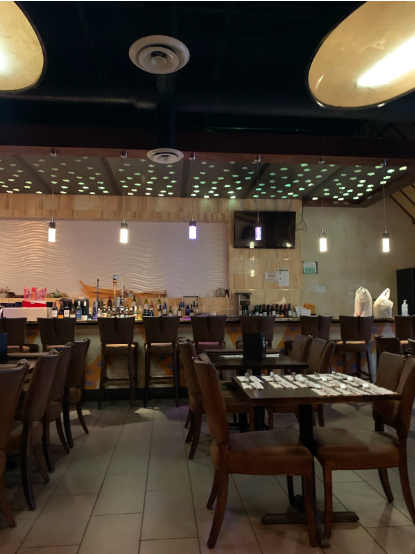
Inside the haiku restaurant

The first thing we noticed when we arrived was the ambiance; it was very calm, it wasn’t too busy, and was fairly quiet. They had slow, quiet music playing in the background and yellow dim lights throughout the restaurant.

We were checked on 2 or 3 times before our food was served, our glasses of water were filled frequently, and we were checked on while we were eating to make sure we had everything we needed.

It also didn’t take long for our food to come and we were able to get our checks quickly.

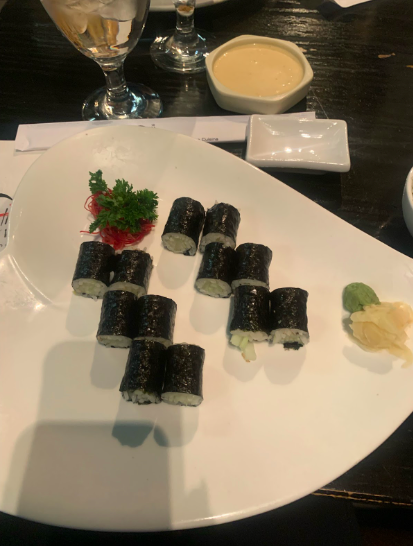
The order of the Kappa Maki

We ordered 3 dishes: an order of Sushi, Hibachi chicken, and we each got an order of Onion Soup.

The Sushi Roll we ordered was the Kappa Maki (cucumber) roll. It was priced at $5 for 6 rolls, a very reasonable price, and came with a few additive elements such as soy sauce, wasabi and ginger. The sushi rolls consisted of cucumber, seaweed and white rice wrapped on the inside. These rolls were delicious, and tasted very fresh. This order, aside from being super delicious for non vegetarians, being a delicious vegetarian option was definitely a bonus. We rate the cucumber roll a 4.5/5 stars and would definitely get it again.

Another thing we ordered was the onion soup, which was priced at $3. Aside from the actual soup, inside there were mushrooms and scallions. The soup was very savory, tasted really good, and was a nice warm appetizer, especially on a cold day. We’d rate the onion soup 4⁄5 stars as well.

The Hibachi Chicken order

The next order we received was the Hibachi Chicken Junior, which was the smaller version of the regular Hibachi Chicken. It cost $12.95, and was served with chicken, fried rice and veggies. The chicken was cooked to perfection and perfectly balanced savory and sweet sauce flavors. The fried rice was warm, savory, and overall my favorite part of the dish. The cooked zucchini paired well with these two, and really tied the dish together. All of the dish’s components were spectacular and deserves a 5/5.

Overall, the excellent service, kind waitresses, the welcoming ambiance, and delicious food they serve really push Haiku over the top. This restaurant has so many delicious dishes to choose from and is friendly to all people hoping to enjoy this amazing place. We wouldn’t hesitate to recommend this restaurant and rate it a 5/5.

Best places to visit in Minnesota in the fall

By: Addison Strack

There are many beautiful places to visit in Minnesota during the fall, and in this article I will be talking about a couple of the many places to visit.

The first destination I will be talking about is Minneopa State Park. This park is located in Mankato, Minnesota, and while it is beautiful year round, it is especially stunning in the fall.

The park contains a double waterfall that leads into a 39-foot drop over a gorgeous cliff. There are also 4.5 miles of trails within the park that are surrounded by trees that turn beautiful and vibrant colors during the fall. It is a great place to visit to take a hike and get some fresh air.

Another popular destination to visit in Minnesota during the fall is Taylors Falls. Taylors falls is a small town northeast of the Twin Cities. It is surrounded by bluffs and cliffs, and has many fun activities to offer.

You can head to Interstate Park in Taylors Falls to canoe, kayak, hike, and enjoy amazing views. The Taylors Falls Scenic Boat Tour is another great option to experience the beautiful scenery.

There are also many restaurants in Taylors Falls that serve delicious and high rated food. The Drive In serves classic American food like burgers, fries, shakes, and root beer floats. It is a perfect place to stop and enjoy a delicious meal.

If you’re looking for more beautiful views, you should check out Split Rock Lighthouse, in the small town of Two Harbors. The lighthouse is located on a rocky cliff over a lake. Behind the lighthouse is a forest that turns bright yellow, orange, and red in the fall to add to the beautiful landscape.

A fourth, and final place that I’m going to be talking about is Cuyuna, which is about 2 hours northwest of the Twin Cities. Cuyuna is a city that has a ton of fun activities to offer.

There are beautiful and charming cabins that were built in Cuyuna Cove that offer a great place to stay during your visit. These cabins are close to the Main Street in Crosby, which has many restaurants and shops.

Cuyuna Country State Recreation Area is also near Cuyuna Cove. Here you can swim, kayak, paddle board, canoe, snorkel, and more in the gorgeous clear lakes. You can also explore the beautiful mountain biking trails near Cuyuna Cove as well. Overall, it is a great place to visit to enjoy the outdoors, and explore the city.

Clearly, there are many beautiful places to visit in Minnesota in the fall, and I have only named a few. If you would like to read about more places to visit, feel free to check out the websites below.

Minnesota Wild and Chicago Blackhawks face off in the first NHL game in Milwaukee in 29 years

By: Ann McMullen

On October 2nd, Minnesota and Chicago’s NHL teams faced off at the Fiserv Forum in downtown Milwaukee.

Although this was a preseason game, it was still of great importance to the teams, the fans, and the league as a whole. According to the Blackhawks’ president of business operations, over 80% of ticket sales were to Wisconsin residents, despite Milwaukee’s close proximity to Chicago.

Some fans are hopeful that a Milwaukee arena hosting a game could be the first step towards a professional hockey team there, while others are just happy to see the sport successfully spreading to other major cities.

Either way, considering this was the first NHL game in Wisconsin’s biggest city, in nearly 30 years, Milwaukee citizens and travelers alike enjoyed lots of festivities surrounding the game. These included exclusive merchandise, tailgating, and discounts on lots of local food and drinks.

The game itself was spectacular as well — from a Wild fan’s standpoint, at least. Minnesota scored 3 goals, beginning with two short handed ones in the second period of play. The final goal was scored midway through the third period, with both teams at full power.

Fans from both sides enjoyed watching Wild goalie Marc-Andre Fleury play the entire game, as the highly acclaimed athlete actually played for Chicago the previous season. Fleury was able to block all 12 shots from his former team, leading the Minnesota Wild to a shutout and their fourth consecutive win of the preseason.

Despite disappointment regarding the score from some Blackhawks fans, this “home-away-from-home” game was a great success. Whether or not a professional hockey team is ever implemented in Wisconsin, I hope the National Hockey League will continue to host games in other major cities in North America, and beyond, and further expand the sport’s fan base.

Halloween and other autumn festivals: Origins and customs

By: Julia Sikorski Roehsner

Halloween. Also known as All Hallows’ Eve or All Saints’ Eve, this popular holiday is celebrated annually on October 31st. Festivities include dressing up in costumes, trick-or-treating, hosting parties, and carving pumpkins.

Most people know what it is. But does everyone know its roots?

Halloween originates from the Celtic Samhain festival. The festival was a way for the Celts to celebrate a new year, marking the beginning of the winter season. They believed that the souls of the dead returned to visit the living.

The Celts would build large bonfires to sacrifice animals and harvest to their deities, and to ward off evil spirits. Sometimes they would don costumes or masks – both often made of animal components – to avoid recognition by ghosts. Prophecy was also an important event.

After the Romans conquered the Celts, they wove into Samhain their own festival of Feralia. This was meant to commemorate those who had passed away, as well as honor the Roman goddess of harvest and fruit trees, Pomona.

All Saints’ Day was introduced into the mix by Pope Boniface IV, and was a festival to honor Christian saints and martyrs. It was originally established on May 13, but was later moved to November 1st. The day before was made All Hallows’ Eve, and the day after made All Souls’ Day (a celebration similar to Samhain).

All Hallows’ Eve eventually evolved to become today’s Halloween.

Due to strict, colonial Protestant beliefs in New England, Halloween might not have gained traction in the United States if it weren’t for immigration. In the mid 1800s, large numbers of immigrants journeyed to America, including those from Ireland seeking refuge from the Irish Potato Famine. With them came their Halloween traditions.

By the 20th century, Halloween was a popular national holiday in the US.

Today, hearing “Trick or treat!” on the night of October 31st is common in countries such as Ireland and Canada, and of course the United States. However, Halloween isn’t a central autumnal holiday all across the world.

Día de los Muertos originated in Mexico, and is celebrated there and across Latin America. Translated as the Day of the Dead, this annual holiday also begins on October 31st, but lasts until November 2nd. It has ties to pre-Columbian Mesoamerican rituals, where food and supplies were provided by family members to help the dead reach their final resting place, Mictlán.

Similarly, today’s Día de los Muertos is meant to honor the dead, who are believed to return to the world of the living during the holiday. Common activities include building ofrendas (decorated altars for the dead), tidying and visiting gravesites, and dancing.

Another mid-autumn holiday is Guy Fawkes Day, primarily celebrated in Great Britain. Other names include Bonfire Night or Fireworks Night. It occurs every year on November 5th. The day is meant to commemorate Guy Fawkes’ failed assasination attempt on King James I in 1605. Fawkes was caught and executed for high treason, and the English lit bonfires to celebrate the survival of their king.

The modern holiday involves setting off fireworks, lighting bonfires, burning effigies of Guy Fawkes, and attending parades.

The celebrations of Halloween, Día de los Muertos, and Guy Fawkes Day help people around the world say goodbye to the dying days of October, and welcome in the last months of the year.

For more information, please visit:

What is spirit week? And how was it for HPSH?

By: Domingo Basso

So, our school, Highland Park Senior High, has this thing called spirit week at certain points in the year.

Actually, first allow me to explain to you what exactly this “spirit week” is. Spirit week is a time of year for schools to be a little more festive and have some fun with some little event or spin on the norm every day of the week. Such as: wearing all white clothes to school one day or wearing pajamas. Spirit weeks usually last… well one week (hence the name) and are usually active before an event at said school.

Another thing to note is that most high schools have their spirit week on the week of homecoming ,and ends with a pep rally on the Friday of that week, followed by the homecoming dance later that night. 

In Highland Park Senior High’s case, spirit week had the following events each day: Monday was pajama + stuffed animal day, Tuesday was Twin day, Wednesday was Cultural pride day, Thursday was class color day, and finally, Friday was RED OUT day. 

The whole concept of spirit week was first really put into use in the year of 1952. The first spirit week was known as “Friendship Week” at Palo Alto High School and later on in the 1960s it was renamed to what we know it as today: “Spirit Week”

Finally, to close off this article, let’s see the opinions of some students around Homecoming Spirit Week of 2022.

I interviewed four students and this is what they all said: 

The first student said: “Mid.” And after having this person elaborate a little more they proceeded to say that it wasn’t all that good because “There wasn’t a no backpack day,” and “it was so bad that I can’t even remember any of the themes from that week” (By the way this same person didn’t know what the theme of most of the days even were).

The second student said :“Kinda boring,” and after making this student also elaborate more, via the use of a very friendly message including their address and a picture of their immediate family, they proceeded to say that it was because “None of the daily events were all that interesting or engaging.”

And the third student had this to say about spirit week: “It was alright, Friday was cool because of the pep fest but some of the other days barely anyone participated in spirit week.”

Finally, the fourth student said: “Yah I like spirit week.” Not much to say there they simply found spirit week enjoyable.

Overall, I’d say spirit week was alright. Last year was better though, because the events were more interesting.

 For more information, please visit:

James Webb achievements

By: Reed Morris

The James Webb Space Telescope (JWST) launched on Christmas Day, 2022. At a cost of over 10 billion dollars, a project of this magnitude MUST have a worthwhile outcome. The JWST has only been operational and in position for three months, but has already surpassed expectations. 

Throughout the launch process, deployment, and calibration, everything went perfectly. All 300 some single points of failure deployed without issue, and the telescope was finally up and running by July of 2022. The first set of images was released on July 12th, showing the world what NASA’s bleeding edge technology could do. 

The first image released by NASA was a much more advanced and detailed version of Hubble’s deep field. The deep field is pictured below.

While this picture might seem like any other picture of space, it contains some of the most spectacular sights in our known universe. This image contains the farthest intergalactic objects humans have ever observed. It also shows many instances of gravitational lensing, where massive galaxy clusters warp space enough to bend the light from galaxies behind, to amplify and focus their light. 

This deep field is fascinating in many ways. First off we have to talk about its size. While this image seems large, the area that Webb viewed to take this picture was roughly the size of a grain of sand held at arm’s length. Another very interesting aspect about this deep field is the time it took to capture the image. While Hubble took weeks to capture a lesser deep field, James Webb took just hours to capture the spectacular image pictured above. With that sort of efficiency and processing power, the future of space exploration is in Webb’s pocket. 

One of the most important aspects of Webb that I mentioned a lot in my previous article is its ability to peer back in time further than we’ve ever dreamed. While we currently live just around 14.5 billion years after the theoretical Big Bang, the above deep field displays light captured back to under 1 billion years after the Big Bang. Webb’s large mirror and intense infrared capabilities allows us to view the warped and stretched light that has been traveling for eons through cold empty nothing, just to be absorbed by Webb’s censor and displayed in the spectacular deep field. 

As Webb continues to explore deeper into space and further back in time, keep an eye out in the news and here for further exploration into the James Webb Space Telescope’s achievements and discoveries. 

The pros and cons of students being allowed to use personal devices in school

By: Abisola Dosunmu

Should the use of interpersonal devices—like phones—-be allowed in schools? I feel like that’s a question we’ve all asked ourselves at one time or another. Maybe not in that exact wording—but, well, you know what I mean.

In our modern world, life thrives on the use of digital technology.  We can use digital devices to communicate with our friends, family, literally anybody. There are around 7.753 billion people on this earth. With a few key types and a click of a button we can easily communicate with them. Maybe we’ve gotten desensitized to that, especially with the younger generation, but let me remind you, a hundred years ago, this would have been impossible to even think about. Now, it’s our reality. That’s pretty amazing.

So, what does ranting about the use of modern technology have to do with my topic? Well, cell phones have many uses besides the opportunity of being socially connected. They can be used for organization, note taking, access to educational apps, and new and unique learning opportunities tailored to each student’s needs. There’s really no one size fits all for everyone, especially when it comes to learning. 

Now, we have a whole labyrinth of information on the internet waiting to be discovered, with new takes on information and data from people all around the world. The ability to discover new perspectives and the opportunity to expand students’ minds and stray from the dusty old textbooks and worksheets.  Isn’t that what learning is about? Why not take advantage of that?

But, I also understand how cell phones can easily be misused in a learning environment. From distractions and cheating, to bullying, the use of cell phones can have a very negative impact on students’ daily lives. It all comes down to trust. When executed the right way, it can be a fresh and a helpful new way to develop new ways of learning.

I’m not saying I prefer this one way or another. Each point has its advantages and drawbacks. I mean, distance learning was done on devices. Some students thrived on it, some people didn’t. That’s fine. 

Instead of policing and trafficking use of all personal devices, recognize that some people can handle their devices responsibly and some genuinely need it (emergencies, to notify a guardian, personal problems, rescheduling something, etc.), while some people may have trouble focusing on learning with it.  That’s okay, because everyone learns differently and has different challenges. 

How can we achieve that? Well, there’s really no fair way to make it a rule one way or another. Despite what I just wrote, you can’t really allow one student to be on their phone and ban the other student from using it. What you can do is teach students to be responsible with their personal devices, to be respectful when using it, to be responsible with sharing content, and realizing when it’s time to put it away.  I know it might not seem like it, but it’s just another life lesson you need to teach in school.

So, what do you think? Should we encourage personal digital devices in school settings or completely veer away from it?

For more information, please visit: