Tag Archives: environment

Why are our winters getting warmer?

By Hannan Mohammed

Image by Kenneth Allenvia Wikimedia Commons

In recent years, you may have noticed that our fall season has become much warmer, and so has our winter season as well—snow comes later in the year, and according to an article by NPR, the 2023-24 winter season saw the 48 lower states in the U.S. had their warmest winter in 130 recorded years. And in the U.S., winter is the season that’s warming faster than any other. However, why is this change occurring?

The main cause of these warmer seasons is climate change, and in particular, global warming. While Earth’s climate has changed across time, with ice ages and warmer periods, this current global warming is caused by human activity; specifically, how we add heat-trapping gasses to the atmosphere. When we do this, we produce gases such as carbon dioxide that come into the atmosphere and trap more of the Sun’s energy on Earth, which is warming up the planet. According to NASA, Earth’s average surface temperature has increased by 2 degrees Fahrenheit since the late 19th century, caused mostly by carbon dioxide emissions.

As these average temperatures rise, the coldest season is being affected the most. According to the Climate Reality Project, average winter temperatures across the 48 contiguous states have increased by 3 degrees Fahrenheit since the pre-industrial era. Because of this, many areas are beginning to see warmer winters overall. But how else is climate change affecting winter weather?

One of the other effects of climate change on winter, besides warmer overall temperatures, is that there’s more precipitation during the season, which can either be rain or snow. This happens because a warmer atmosphere can hold more moisture within; this excess moisture is released from the atmosphere as precipitation.

Another effect of climate change on winter is that severe winter storms, such as ice storms and blizzards, are becoming both more frequent and more powerful. This happens because there’s increased energy in the atmosphere from the Earth’s general warming, which can make these events more volatile. Furthermore, a powerful air current called the jet stream is starting to change easier. Because it can influence weather patterns, its shifts may lead to sudden changes in both temperature and precipitation.

For more information, please visit:

Environmental Racism in Minnesota 

By: Alice Rapacz & Cameron Garcia-Nelson

Image created with Canva

Environmental racism is a big problem in Minnesota. Environmental racism is when neighborhoods of color and indigenous neighborhoods are at a higher risk to environmental harm. These neighborhoods are at a 91% risk of above air pollution guidelines. There are many neighborhoods here in Minnesota that are affected like the Rondo neighborhood and the East Phillips neighborhood. The harmful pollution can come from factories, waste facilities, construction, and vehicles. White neighborhoods have much better health compared to neighborhoods of color and indigenous neighborhoods. The pollution causes people to have asthma-like symptoms and heart disease. Nitrogen dioxide is what pollutes the air and causes people to have these symptoms.

For my final capstone project in my Critical Ethnic Studies class, my partner and I decided to do our project on environmental racism because it is a very real and current issue that affects people all over Minnesota. For the project it contained our final product, a paper, and an evaluation of what we learned from our project and the class.

For our final project, we decided to do a website that would be able to inform Highland Park students, staff, and community about environmental racism. We did a lot of research learning about what environmental racism is, who is affected by it, how, and so much more. We read stories from people who suffered from the harmful pollutants in the air and how their health was at risk due to it. We learned about different forms of pollution and what areas they affect. We put all this information on our website so that people reading it would be informed. 

Here is the link to our final capstone website. There is some of the information above and so much more so that you can be educated on about environmental racism. We also included how you can help and make an impact on changing this issue. 

Empty nets and a dying ocean

By: Maya Vossen-Nelson

Image created with Canva

The ocean absorbs large amounts of heat without a large increase in temperature. Given this property, the ocean has always played a central role in stabilizing Earth’s climate system, but in the past 100 years humans have created a climate that produces heat at an intensity that has overwhelmed the ocean. According to the US National Oceanic and Atmospheric Administration (NOAA), the most telling sign of the overworked oceans is that over the past 100 years, the average global sea surface temperature has increased by approximately 2.2 degrees Fahrenheit each decade. This is significant because a large amount of heat needs to be absorbed by the ocean for water temperatures to rise even slightly.

According to NASA, 90% of global warming is occurring in the ocean. The ocean is not able to keep up as efficiently as it used to and is creating devastating consequences. 

When the ocean temperatures begin to rise, this is an indicator of extreme levels of carbon and methane in the atmosphere that are trapping solar rays and damaging the ozone, thereby trapping heat in the Earth’s atmosphere. The levels of carbon dioxide dissolving from the atmosphere into the ocean have become so high that the water has become acidic.

Fisheries and fishing boats are reporting more frequent marine heat waves and whole fish community die-offs. At the very least, in response to the warming sea temperatures, many fish populations are migrating to colder waters. This has become so noticeable that many fishing businesses are being forced to change their fishing strategies and some are even considering calling it quits.

A perfect example is the seafood industry on the east coast. Boston NPR station, WBUR, reports that “The Gulf of Maine is warming faster than most of the world’s oceans. As a result, iconic New England species like cod and lobster have shifted north or moved deeper into the ocean in search of colder water.”

Without any interventions, it will only be a matter of time before the world’s fishing industry is turned on its head.

History of Earth Day

By: Grace Wright

Over many decades Americans were using inefficient cars leading to major air pollution. Many Americans were oblivious to this because they were told it was the smell of success and major corporations didn’t want them to know about the environmental or health issues.

Changed started with Rachel Carson; she published a New York Times bestseller ‘Silent Spring’ in 1962. It helped raise awareness to the public about how damaged the environment is and how it’s going to start affecting the public’s health.

Senator Gaylord Nelson from Wisconsin, had always been concerned about the impacts that were happening to the environment. But it wasn’t until he and many others saw the effects of the oil spill in Santa Barbara, CA in 1969.

This started anti-war protests, and Senator Nelson wanted to use the energy of the protests to help even more of the public understand what was happening. The way he thought this would work best would be teach-ins on college campuses.

Nelson recruited Denis Hayes, a young activist, to help organize the different campus teach-ins. They chose April 22 because it was between finals and spring break to help get more students to come.

The first Earth Day was on April 22, 1970. Hayes was able to promote the event across the U.S. to 20 million Americans which was only 10% of the population at the time. They took to the streets to help show the impact of what 150 years of industrial growth had done to the environment.

After the first Earth Day was the creation of the U.S. Environmental Protection Agency. They put through many environmental laws, started the Environmental Education Act and the Clean Water Act. Earth Day has now been happening for 55 years and over 1 billion people worldwide have participated in it.

What can do to help keep our environment clean and healthy? Don’t litter or if you see trash pick it up. Practice not letting the water run while brushing your teeth. You can donate to different organizations to help support the efforts too.  

For more information, please visit:

The reductionist’s approach to climate change will be our downfall 

By: Maya Vossen-Nelson

To fight climate change, the world is shifting away from gas only cars and turning to electric vehicles. The alternatives to gas only cars are hybrid cars, which use a combination of electricity and gas to fuel the car, and electric cars, or EVs, that run on only electricity. Electric vehicles are essential to limiting the effects of climate change, but the shift to electric vehicles must be done smartly. Right now, the reductionist’s approach is creating climate crisis solutions that lack the very instrument that they are trying to achieve: sustainability.

In practice, reductionist thinking analyzes complex problems by breaking them down into more simple parts. The solutions that arise from this thinking lack complexity and they negate how change to an isolated part affects the system as a whole.

Reductionist solutions often show up in politics as a quick solution to a large problem, and yet are dysfunctional.  In 2022, California announced that by 2035, all new passenger cars, trucks and SUVs sold within the state will be zero-emission vehicles. This absolutism policy fails to address how the world’s current production of EVs cannot support such a rapid shift while upholding ethical and climate obligations. 

EVs and hybrid cars use rechargeable lithium ion batteries to power the vehicle in place of gas. Lithium and cobalt are metals that make battery subunits that are essential components to the efficiency and operation of these lithium ion batteries.

Unfortunately, the acquisition of lithium and cobalt used in the production of electric vehicles is not sustainable or humane. Nearly 70% of cobalt is mined in the Democratic Republic of Congo where workers rights and laws are nearly non-existent. The relaxed worker regulations enable child labor in dangerous mines and without safety equipment. The children who are forced to mine with their hands are constantly poisoned by cobalt and many are killed from mining accidents. Mining cobalt also produces hazardous tails and slags that can leach into the environment causing further negative impacts on nearby communities. These issues will increase over time without intervention especially given that according to the Washington Post, cobalt mining is expected to increase 2,000% by 2040.

Without lithium ion battery recycling there is not enough mineable lithium to supply all electric vehicles, phones, and other products. According to the U.S. Geological Survey, the Earth has 88 million tons of lithium but only ¼ is available to mine. That number may change as technology advances. There could be 2.8 billion EVs produced from 22 million tons of lithium and there are 1.4 billion cars on the road as of January 2023. The growing population and growing amount of other products that rely on lithium and cobalt needs to be considered.

With the extensive use of lithium ion batteries and the attached humanitarian issues with cobalt mining in the Congo, the world cannot stop producing gas-only cars until there are plans in place to prioritize resource diversification to rely less heavily on lithium ion batteries. A more holistic approach must be part of the discussion surrounding the electrification of the automotive industry for EVs to make a sustained impact on the course of climate change.

Widji Leaders

By: Siri David

Photo by Thirdman on Pexels.com

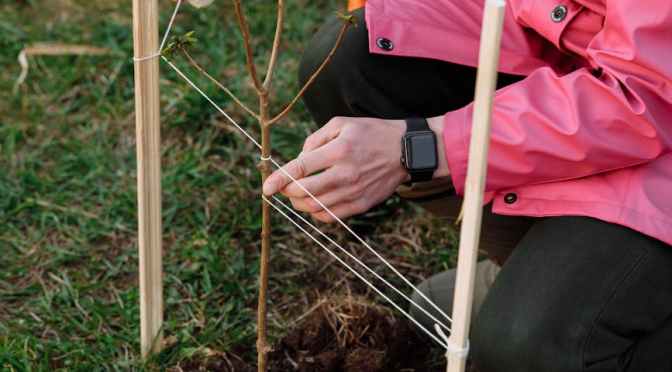
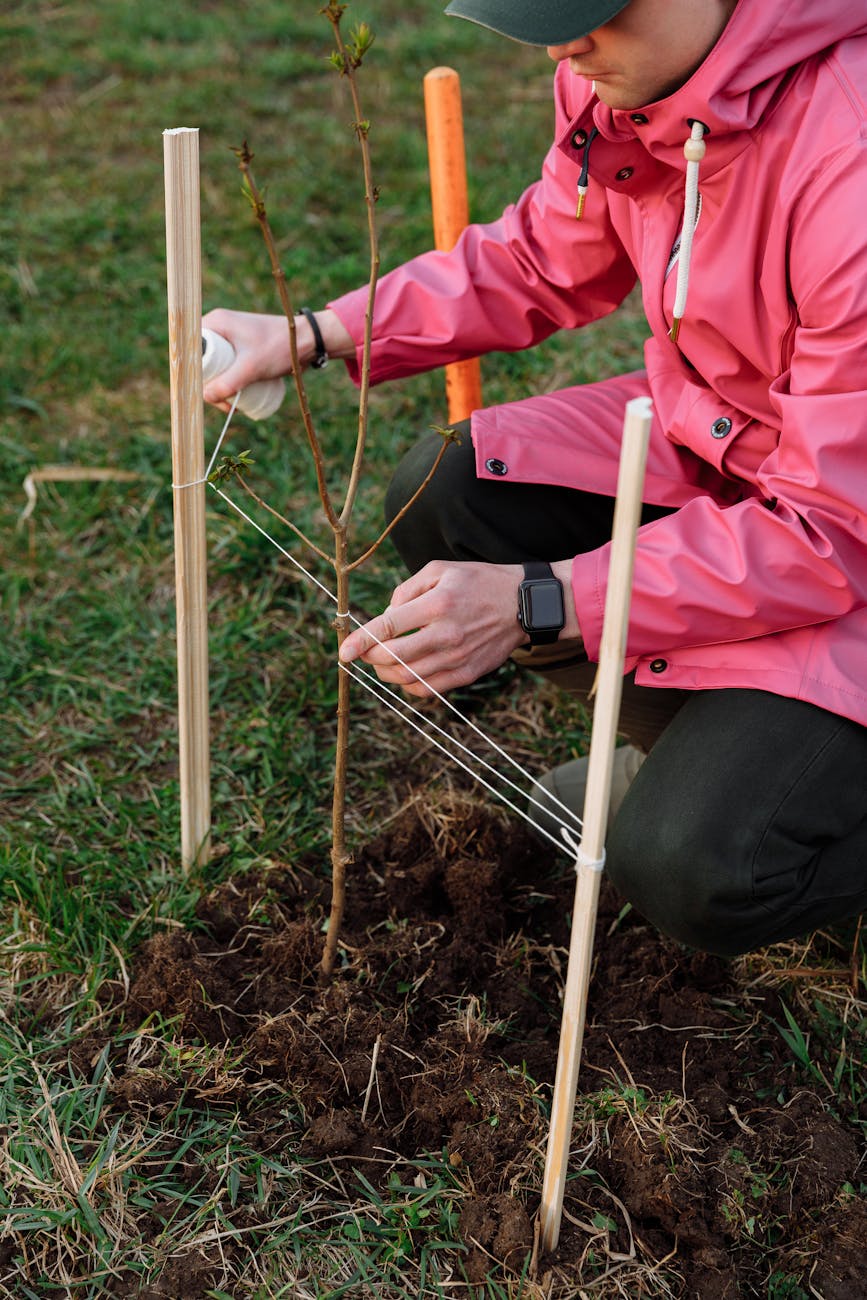
In the beginning of November some friends and I went to Crosby farm in Saint Paul. While we were there, we planted trees. The organization we do this with is called Widji Leaders. Widji is a YMCA summer camp that focuses on getting kids into the environment while, teaching them life skills. They lead backpacking all over the western part of the country and canoeing trips all over the Boundary Waters and Quetico. During the winter they want to keep kids outside and teach them how to help the environment.

We met at Crosby Farm at nine and worked until 12. We planted a total of 60 trees in the forest.

They shared a step-by-step process of how to plant them and how each step will help the trees grow. We covered the trees in a biodegradable plastic to protect them from animals who will eat the growing trees. On top of the plastic we would put mesh so that way birds wouldn’t land on the plastic and fall inside and get stuck.

We were also taught about the environment down by the Mississippi River. We learned about how the water affected soil and caused it to become a lot softer. That area of land also goes through a lot of harsh weather including flooding, rain storms, hail, and intense winters. This means that the trees that are growing have to go through a lot to survive, and not all of them do.

There are so many steps you can take to help better the environment in your community. There are so many organizations that do volunteer work where they clean up areas that have larger amounts of trash or areas that are just clearly struggling more within the environment. Along with that there are also places you can volunteer to help plant trees like I did. Doing these tasks might not seem like a big deal, but if you look at where our environment is heading you realize anything can help.

Climate change’s effects on Alaska

By: Siri David

Photo by Tomu00e1u0161 Malu00edk on Pexels.com

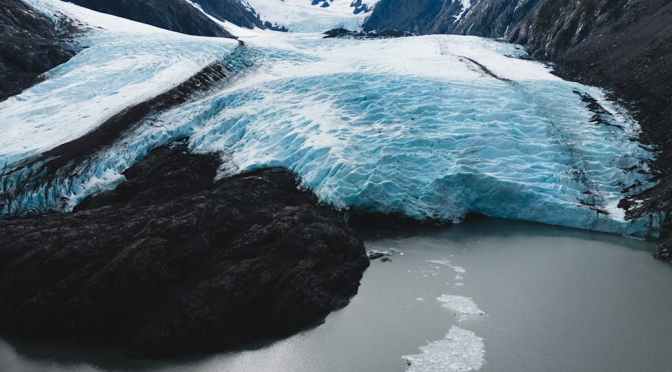
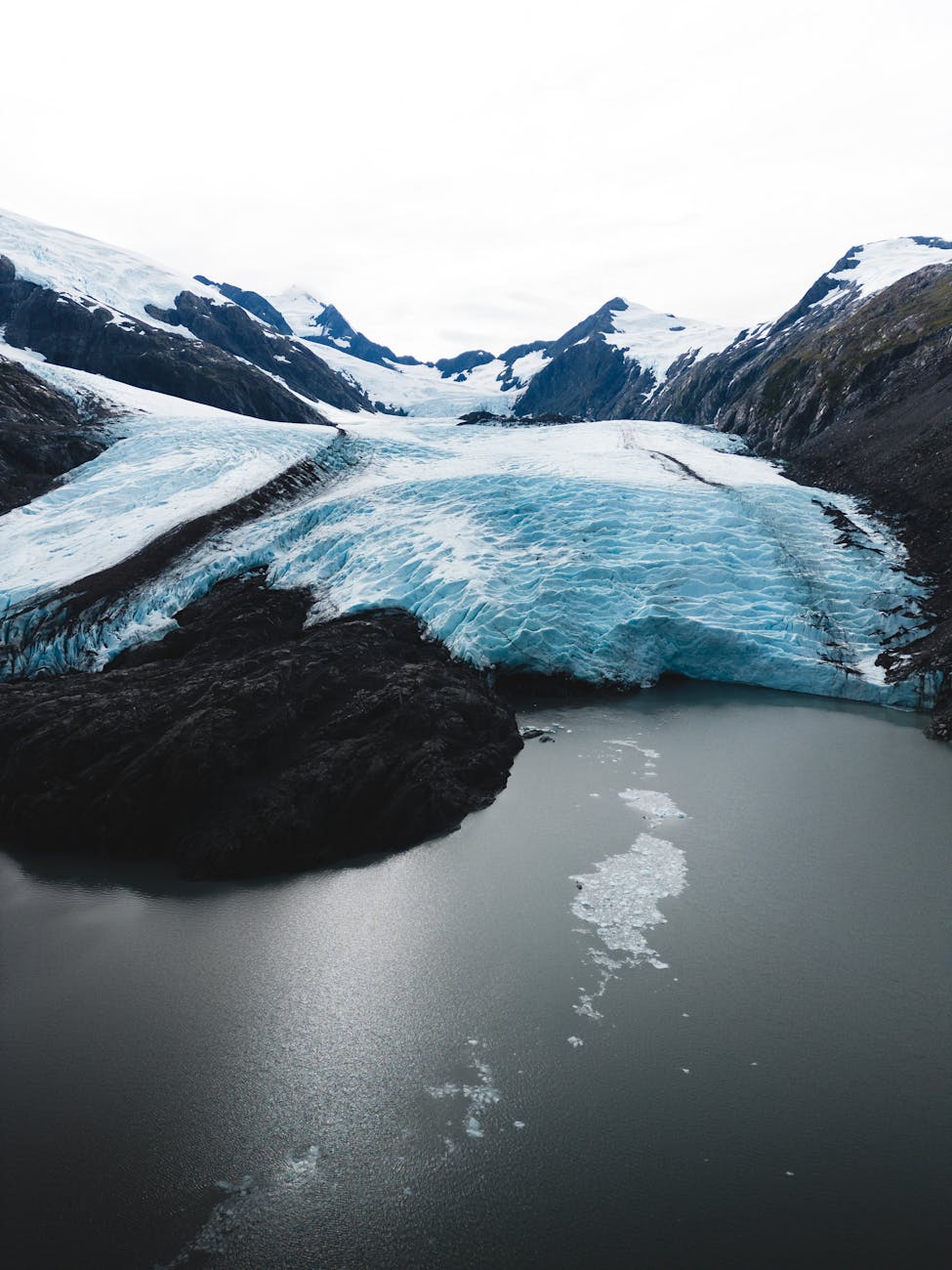
Alaska is a prime example of climate change and the effects from it. Alaska has been facing these effects for more than 50 years. The environment there is changing everyday and there is only so much time left to be able to save it.

The state has warmed 3 degrees Fahrenheit, on average, in the summer and 6 degrees in the winter. This seems like a small change but it is actually a lot, and makes a big difference. The state has seen a lot of changes like glaciers shrinking, shores eroding, wildfires, and insects breaking out. These are all effects of climate change, and effects that are likely to continue rising.

These things are happening because of the earth getting warmer. Since the late 1700’s the amount of carbon dioxide that humans put into the atmosphere has increased by 40 percent. Along with that, heat trapping greenhouse gasses also increase at a fast rate. Both of these things cause humidity to increase which causes more rain in areas but can also cause droughts in other areas.

More carbon dioxide being put into the atmosphere also affects the oceans. Carbon dioxide mixed with water forms a carbonic acid which means that the ocean is more acidic. The ocean temperature has also been getting warmer which is why it feels like countries that are really cold face the most effects of climate change.

Whether it feels like it or not the world is suffering and we need to help it. There are a lot of big and little things we can do to help the environment and specifically Alaska. The smaller things include turning off lights when you leave a room, not letting your water run for longer than needed, and trying to walk/bike places more.

A larger thing you can do to make a difference is donating to organizations that work to clean up trash and the environment. If you don’t have the money for that you can personally work to clean up your community.

Something that I think really really does help is speaking up about it and staying updated on what is happening. Along with that, I think teaching people about what is happening to one of the most beautiful states in our country is so important and something we should all take action to fix.

For more information, please visit:

Risks of rising temperatures

By: Siri David

Photo taken by me

In Saint Paul there is a very huge risk with heat rising. The number of the hottest days keeps increasing yearly. This is a huge issue. In the past there was an average of no more than seven days a year that reached higher than 91.2^F. By 2050 it is estimated that there will be up to an average of 36 days a year that reach over that temperature of 91.2.

With temperatures rising this fast there are a lot of health concerns for people. Heat exhaustion and heat stroke are things that can happen to the human body when in the heat for too long. These are a few signs of heat exhaustion: getting light headed, weakness, heavy sweating, and muscle cramps are all really common signs. Heat stroke signs are: dry mouth, hot skin, vomiting, confusion, and seizures.

These are really important things that you need to make sure you’re aware of as temperature rises. If these signs are happening try to get into a cooler setting as soon as possible. If that is not possible try putting water on your neck and wrists, because that will help your body cool down faster.

There are a lot of ways, as humans though, we can work to decrease heat rising so fast. Conserving energy is really important. That means doing little things like turning off all the lights when you leave, not letting your water run for longer than needed, and driving less can also help a lot. Doing these things helps conserve energy.

Another thing that can help out a lot is reducing greenhouse gas emissions. This means trying to use renewable energy sources like solar and hydro powers instead of using fossil fuels. Using electrical vehicles can also help out a lot.

Taking little or larger steps like these can really help the environment, and stop the climate from getting so warm so fast. This is a task that takes all of us one community at a time.

Plastic bag bans

By: Karl Salkowski

Although plastic bags are terrible for the environment, over 500 billion plastic bags are used yearly; 100 billion are used in the USA alone. The average “working life” of a plastic bag is only 15 minutes, and sadly, according to Stillwatermn.gov, only 1-3% of plastic bags are recycled, and less than 10% are reused. This means that the average family using plastic bags in Stillwater, Minnesota will use over 400 a year. Most of these bags are made of polyethylene and can take centuries to degrade. Because of statistics like these many countries are taking action to construct a cleaner future.

California became the first US state to ban single-use plastic bags in 2014. However, this backfired unexpectedly. Instead of consumers switching away from plastic bags, they instead moved toward thick-walled plastic bags. These thick-walled bags not only cost more, but are worse for the environment. According to Nytimes.com, Californians tossed nearly 50% more plastic bags by weight in 2021 than they did in 2014. In response to this loophole, in September of 2024, California  banned all plastic grocery bags regardless of thickness, and required consumers to begin paying 10¢ per paper bag if they lack reusable bags as of 2026.

Some countries have already banned all forms of single-use plastic. One of which is Rwanda. According to Undp.org, in 2008 Rwanda became one of the first countries to ban all single-use plastic bags and bottles. Rwanda even goes as far as to search tourist’s luggage for these single-use plastics upon entering the country. The first country to ban single-use plastic bags was actually Bangladesh in 2002.

More and more countries around the world are beginning to ban single-use plastics. So far, over 3.5 trillion plastic bags have been produced, 160,000 are used a second, and worldwide less than 1% are recycled. These plastic bags can take up to 1,000 years to break down, so it is crucial that countries begin to ban and restrict these plastics as soon as possible.