Tag Archives: education

Montessori to high school      

By: Charlotte Aver

Photo by Kaique Rocha on Pexels.com

Last year I was in a Montessori public middle school, making it my 9th year in a Montessori school. I had 4 teachers and their names were Christine, Kyle, Brooke, and Amy; they had told us to call them by their first names. This year I have had teachers tell me that under no circumstances am I or any other student to call them by their first name. This amongst many other things is something that has been a culture shock to me coming from a Montessori school.

One of the most different things is how our day is structured. At my Montessori school we would have meetings in the morning and midday, in between we would have lessons and a work time to finish all of our work. In the afternoon we would have occupations which are essentially the same as electives. Something that made this conventionally odd schedule possible was that my graduating class of 8th graders was only 16 people and we had all known each other since 3rd grade. Here in high school there are bells separating the day, and A days and B days. We also have upwards of 200 people in one grade.

The classroom at my Montessori school was much smaller than anything at this school. We had three connected rooms, and a modular, and that was our whole middle school. We only had enough chairs and tables for half the middle school class to sit at once which meant that we would sit on the floor for the majority of the time. This obviously is not true for high school, and I am incredibly thankful for being able to sit at tables and chairs.

In our classroom we also only had four iPads and a Mac book, this made it excessively hard for us to do some of the work that was assigned to us. In high school, every student has their own iPad.

We also ran a farm stand and had our own farm at my old school. We would work throughout the year to make our own money as a class. At the end of the year we would use the money we made to go on a trip at the end of the year.

The transition was quite jarring but I feel as though I have adjusted quickly. Almost everything is different from Montessori to public High school except for the essential idea that you are learning. There are pros and cons to each way of learning: not enough students, too many students, no technology, too much technology. Which ever way you were taught it all evens out in the end.

AP and IB: A comparison of two accelerated programs

By Hannan Mohammed

Most high school students in America have heard of either the Advanced Placement program or the International Baccalaureate program, and many students take classes in these programs as a way to either earn college credit or to be better prepared for college with rigorous courses. However, many students also wonder what makes these programs different from, or similar to, one another.

There are two main differences between these two programs, which are their goals and what they emphasize: Advanced Placement emphasizes college-level courses to prepare students for success in higher education, while International Baccalaureate emphasizes global citizenship and a well-rounded education to prepare students for life beyond college.

But how do these two main differences show up? The differing emphases these two programs have reflects in how/where they were created, and the classes/curriculum.

Origins

While both the AP and IB programs originated in the same time period of the 1950s-60s, they were created in different countries and for different reasons as well.

In the 1950s, after the end of World War II, there was a gap between high school graduation and college graduation in the U.S.; the Ford Foundation created the Fund for the Advancement of Education, conducting two studies that found that high schools and colleges should work together to let high-achieving students work at a higher level. A pilot program was launched in 1952, and the College Board started administrating the Advanced Placement program in 1955.

From the 1970s through the 1990s, the College Board continued to expand its reach across America, including making efforts to include low-income students and using Pre-AP initiatives to prepare middle school students to take AP courses and exams in high school.

These efforts to reach more students and give them more access to higher-level classes that can prepare them for success in college and higher education reflects the AP program’s goal of closing the gap between high school graduation and college graduation by preparing students with college-level work.

The IB program, on the other hand, originated in Geneva, Switzerland in 1962, with English and French as the official languages. Originally, the first IB exams were taken in 1970; students from 12 schools in 10 countries took exams in the IB Diploma Programme, the first curriculum of the program.

Over the course of the 70s, new requirements were added, such as the Extended Essay in 1974, and IB conferences were held in The Hague, Geneva, and London, where 32 countries were represented. As the IB program continued to expand across the world, more curriculums were added: the Middle Years Programme in 1994 for students ages 11-16, the Primary Years Programme in 1997 for students ages 3-12, and the Career-related Programme in 2012 for students ages 16-19.

Each of these programmes are meant to give students a well-rounded education from a young age, prioritizing a global perspective with world languages and drawing attention to how students interact with the world in different ways, which reflects the IB’s goal of global citizenship.

Curriculum

The second way that the major difference between the AP and IB programs is shown is the structure of the curriculum and requirements to pass.

To start, the AP program offers about 40 different courses in basic subjects such as the arts, math and computer science, English, history and social sciences. However, these classes are more in-depth with specific focuses. For example, taking an AP History and Social Sciences course could mean taking a class that focuses on African-American studies, psychology, human geography, or even macroeconomics, depending on what a high school might offer. This is one way the AP program’s goal of college-level education is reflected; through highly-focused classes that are similar to courses you might take in college.

In the May of each year, AP exams are administered to students to show their mastery of what they learned. For most classes, this includes multiple choice questions and free-response questions. Most exams take around 3 hours. Then, students are given a score of 1-5.

The scores on the exams are important, since this can determine whether a student can earn college credit for the class; most colleges require a minimum score of 3-4 before awarding credit.

The IB program has a different structure; for students going into IB high schools in America, 9th and 10th graders are required to participate in the Middle Years Programme, which is meant to prepare them for either the Diploma Programme or the Career-related Programme. Most 10th graders are required to complete the Personal Project, which gives them a chance to explore their own interests and develop research skills.

After 10th grade, students can either go into the Diploma Programme (taking and testing in 6 IB classes), the Career-related Programme (the same requirements as the DP with the CP core and career-related studies), or to take regular high school classes and test in a few IB classes.

The IB DP courses can either be standard level (SL) or higher level (HL), and while they’re more broad compared to AP courses, they reflect the program’s emphasis on global citizenship by offering a more well-rounded education. In addition, DP students also have to complete a Theory of Knowledge (TOK) class, an Extended Essay, and Creativity, Activity, Service (CAS). These extra requirements are meant to give students a chance to take their learning beyond the classroom and apply it to themselves or others, which reflects the program’s goal of helping students to succeed beyond higher education.

The IB exams are often taken in the spring of each year, which consists of internal assessments (fieldwork, laboratory work, investigations), which come from the classroom, and external assessments (essays, structured questions) which come from the IB program itself. These exams can take most of the day, and are scored from 1-7. These scores, along with completing TOK, the Extended Essay, and CAS, count towards completing the DP or the CP. Some colleges accept IB exam scores, but they are not as widely accepted as AP scores.

This curriculum structure reflects the IB’s goal of being well-rounded by giving students a broad range of subjects and it reflects the goal of success beyond higher education by giving them a chance to apply their education to themselves and the world.

Conclusion

The Advanced Placement and the International Baccalaureate programs share some similarities as programs that help high school students be more prepared and successful in higher education. However, their different goals of college preparation vs. preparation for global citizenship are reflected in their origins (AP starting in the US and IB originating internationally) and their curriculums of focused, in-depth classes (AP) and broad classes that can be applied beyond school (IB).

For more information about either of these programs, please feel free to visit their websites here:

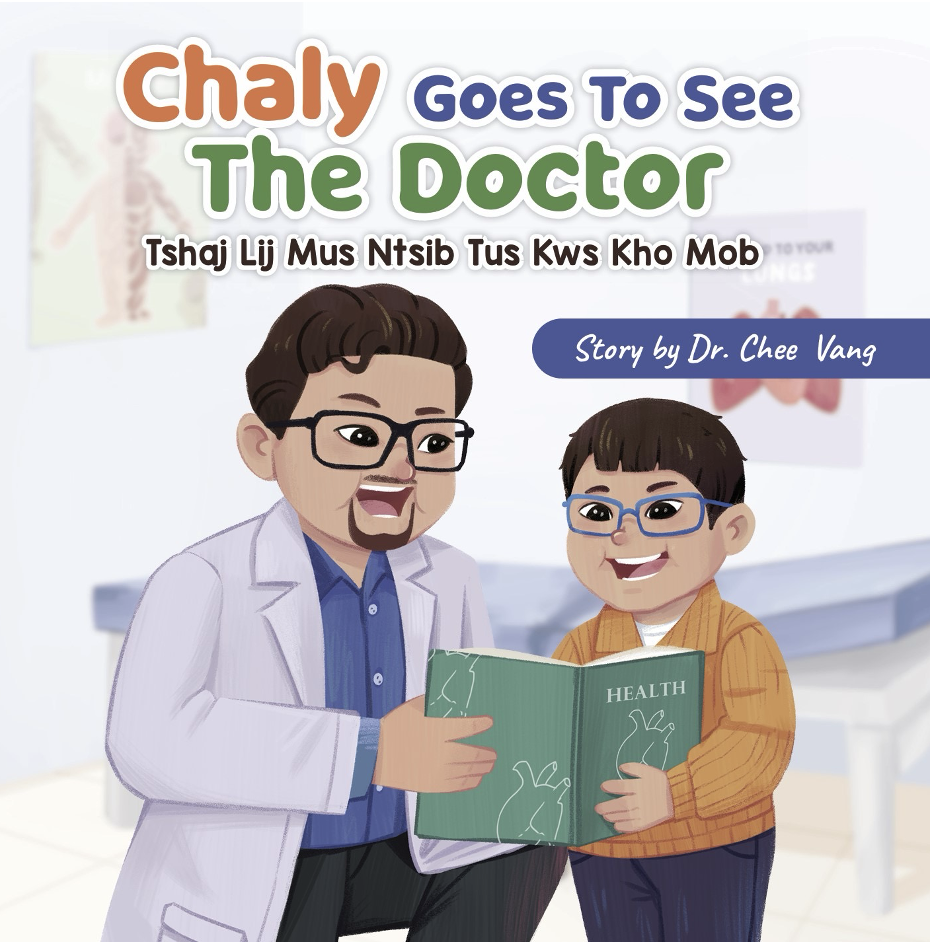
‘Chaly Goes to See the Doctor’ by Dr. Chee Vang: Book review

By: Jooney Freddieson & Aalovely Lor

Before we start with the story, let’s talk about the author— Dr. Chee Vang.

Dr. Chee Vang is not only an author, but a family practicing physician in the Hmong community. He graduated from Highland Park Senior High, soon pursuing his career in medicine.

He made history as the first to write a bilingual children’s book in both Hmong and English about health for children. This helps reflect his passion and commitment to medicine and preserving the Hmong language.

Through the book, Dr. Chee Vang offers medical guidance, as well as bridging cultures and generations.

He serves his community by providing both medical care and helping young Hmong children/teens reconnect with the language that’s beginning to get lost.

This book is more than the first Hmong/English bilingual children’s book, but also a meaningful way to contribute to health education and preservation of culture.

At the beginning of the book we’re introduced to Chaly, a young boy who expresses his nervous feeling about visiting the Doctor for a checkup.

It’s a relatable opening that helps capture the reader’s attention, especially children who have similar experiences when going to the doctor’s.

As the story progresses, we follow Chaly through all the different steps of his medical examination.

He’s first introduced to the nurse who takes his vital signs, and that includes multiple steps like taking his temperature and blood pressure.

The nurse makes sure to explain each step carefully to give Chaly and the reader a sense of understanding.

Eventually, Chaly meets Dr. Chee Vang who performs a physical examination. Through the examination, Dr. Chee Vang takes time to answer Chaly’s questions and builds both trust and communication.

He uses models and diagrams as an easy-to-understand method to help Chaly learn how the body works. This is not only helpful to Chaly, but it also can provide a way for young readers to follow along.

At the end, Chaly realizes his outlook on visiting the doctor’s has changed completely. His fear from the beginning ended with confidence and he understands that it doesn’t have to be scary because the doctors are supporting them, not hurting them.

Chaly’s journey educates and prepares the readers for what to expect during a medical visit, breaking down each step and introducing medical roles in a memorable way.

This also teaches young people to advocate for themselves and communicate openly with their healthcare professional. These lessons are important for children, especially those with language barriers or cultural differences.

Although this book was designed for readers between the ages of 5 and 18, its education goes beyond the age range.

It includes Hmong translations on each page, becoming a language learning tool for everyone as well. This is important for Hmong families because younger generations begin to lose their fluency in the language they speak.

As a Hmong teenager, I (Aalovley) continue to struggle with losing touch within the language I grew up speaking. Reading this book had an unexpected impact on my vocabulary when speaking Hmong. The words helped me reconnect with my culture, and more importantly, I was able to share this book with my younger siblings. I taught them what I learned, and that helped reinforce the vocabulary/language in all of us.

We highly recommend this book for Hmong families who are seeking help with their language/further education on health knowledge because these aren’t everyday things we learn.

‘Chaly Goes to See the Doctor’ is more than just a children’s book, but also a tool for learning and reconnection. It builds relationships between doctors/patients, between cultural generations, and for kids or teenagers like us. It gives us a path back to parts of our culture we may have lost along the way.

If you or someone you know might be interested in the book, here are resources where you can find it and support Dr. Chee Vang:

Libraries in Minnesota:

  • Hennepin Public Library System
  • Saint Paul Public Library system
  • Washington County Public Library system

Libraries in Wisconsin:

  • Marathon County Public Library of Wausau
  • Appleton Public Library of Appleton

It also can be purchased on Amazon: (includes paperback, hardback, and ebook)

The differences between private and public schools

By: Jooney Freddison & Aalovely Lor

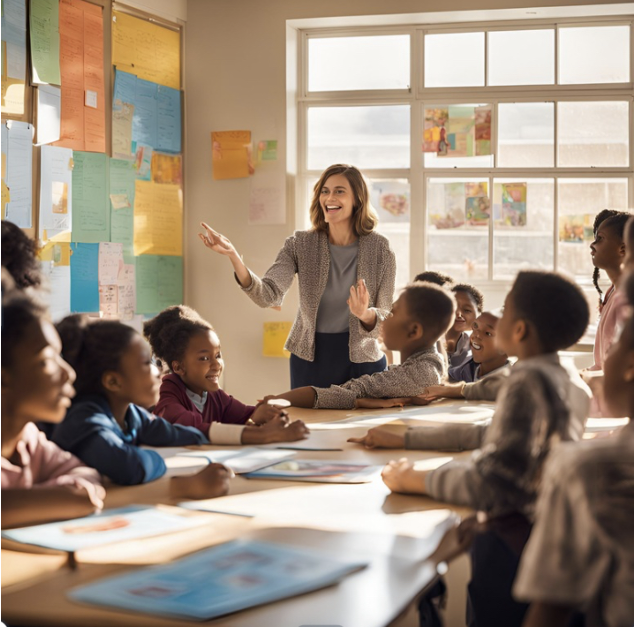
Picture generated by Canva AI

There are many differences between a private and public school. Both schools aim to provide education, but sometimes it’s hard distinguishing how they’re any different besides the cost.

There are key differences in class size, curriculums, teacher quality, extracurriculars, funding, and education experience.

Funding and Cost

Public schools are funded by the government through taxes, allowing students to attend for free within a specific district. The government provides fundings based on the student enrollment number and district property taxes.

Private schools however are funded by tuition fees which are paid by attending students’ families. Tuition cost can range from a few thousands to as high as $50,000 per year, depending on what institution. A friend of mine (Jooney) went to a Catholic private school and she paid $25,000 per year.

Private school’s tuition costs make them less accessible to families with lower financial status but scholarships and financial aid are possible.

Because the students’ families are more involved, there’s more regular/comfortable communication between teachers and parents compared to public schools.

Requirements for Enrollment

Public schools require no entrance exams or interviews and are typically obligated to accept students within the school district.

Private schools have a selective admission process containing interviews, academic performances, and entrance exams.

Previous report cards, teacher recommendations, and test scores/records are often required in many interviews as a part of the application process.

Class size and student ratio

According to Usnews.com, private schools have smaller class sizes, typically having a class size of 12-20 students. Public schools have bigger classes, typically consisting of 25-30 students.

The average student to teacher ratio in public schools can typically be 20:1 or 30:1.

Larger classes can make it harder and challenging for teachers to give individualized attention to students.

Private schools are smaller with a student to teacher ratio as low as 10:1 or 15:1.

This allows teachers to allocate individualized attention to students. It also allows teachers to get to know their students’ learning ability/challenges better as well as build a better relationship.

Smaller classes also tend to help students achieve better academically and have greater engagement in class.

Diversity and Accessibility

According to Nces.ed.gov, another difference is diversity.

Public schools have a more diverse student body because they’re open to all students of the local community, leading to a greater diversity in ethnicity, race, learning ability, and social class.

Diversity helps students learn more about different cultures and social skills.

According to Foothillcds.org, public schools are required to provide services such as gifted and talented programs to meet student needs. They also have teachers who help with one-on-one support for students with disabilities.

Private schools have less diversity due to their tuition cost and selective admission process; they often select and only admit students with certain backgrounds of specific academic successes.

A huge difference between the schools are the dedicated special education teachers. Private schools typically do not provide these services because of their limited spots.

Curriculum and Educational Choices

Public schools use a regulated curriculum for all their students and they are obligated to follow curriculum guidelines set by the state or the educational institution board.

Public schools are also required to administer standardized tests which measure student’s academic performances.

The core subjects like Math, English, Science, and History are mandatory which limits the flexibility of curriculum.

According to Nca.school, private schools aren’t obligated to follow mandatory programming, funding, and services. This gives them the freedom to adopt curriculum that go beyond the standard public school.

Private schools may offer curriculum that focus on specific values, such as religion/belief, arts, or a foreign language.

Private school teachers are often stricter in terms of academic expectations. There are higher expectations for class participation, homework completion, and behaviors.

Dress codes also tend to be more strict; many private schools require a uniform and a student may face consequences for getting a dress code violation.

After acquiring knowledge about the difference between public and private schools, the right choice depends on a child’s individual needs and a family’s educational wants/values and financial capacity.

Effects of phones on people’s education

By: Chloe Rocha

The phrase “It’s because of your phone” is something that is commonly heard amongst adolescents. In some cases, that phrase can apply, but in others it is not necessarily accurate.

This phrase however, can apply to the education of kids during school. Cell phones have been something that is used in our day to day lives because they provide convenience and also connectivity. But at the same time they can also be proven to be a distraction while in the classroom.

There have been proven to be many negative effects of cell phone use while in the classroom, and according to an article by ‘Why Edify’, these are the top 10 reasons:

  1. Distraction
  2. Cyberbullying
  3. Academic dishonesty
  4. Social isolation
  5. Physical health issues
  6. Sleep disruption
  7. Privacy concerns
  8. Inequality
  9. Reduced physical activity
  10. Addiction

Distraction:

Decreased focus and attention in the classroom can occur because students become distracted by their phones, whether it be social media, or playing video games. These platforms are made by design to hook the user and keep them entertained. This can also be known as “doom scrolling” in some situations.

Cyberbullying:

In some cases students use their cell phone to send hurtful messages. Many adults don’t know how big of an impact cyberbullying can be and how frequently it is seen in classrooms. Nearly 42% of kids have been bullied online, according to an article by Annapolis, MD. When these children experience cyberbullying by their own classmates, it can cause them to be fearful or anxious about going to class and in the long run can have harmful effects on their education.

Academic dishonesty:

It is a very well known fact that AI has been evolving and also becoming more frequently used during people’s day to day life. Specifically in class, students have become more reliant on using AI to guide them in their class work. A global survey, that was conducted by Statista, showed that 86% of students used AI in the year of 2024. Students may also cheat during exams or assignments, simply because they have access to the answers or the information on their phones.

Social isolation:

When students use their phones excessively, it can cause them to spend less time interacting face-to-face with their own peers. Face-to-face interactions are crucial during a child’s adolescence because it allows them to develop many crucial social skills. Some of these skills include empathy, effective communication, the understanding of nonverbal cues, peer dynamics, and forming a strong sense of identity.

Physical health issues:

When cell phones are used excessively, they can begin to cause physical health problems, such as poor posture, eye strain and many other health issues.

Sleep disruption:

Cell phone use before going to bed can cause disruptions to people’s sleep patterns. When sleep patterns are disrupted, it can lead to fatigue and also a decrease in their academic performance. Sleep is important because it improves your brain performance, your mood, and also your health.

Privacy concerns:

Students may share their personal information or photographs and this can raise concerns about their privacy.

Inequality:

In many classes, a digital divide can be formed among students because not everyone may have access to a cell phone. This can cause students to feel left out from their peers.

Reduced physical activity:

This issue applies to both in school and out. During school, cell phones can discourage students from engaging in physical activity during recess or during their breaks. Outside of school, when a child has access to a cell phone, they often don’t release their energy in a physical way, like going outside, instead they go on their phones while in the house.

Addiction:

As mentioned before, many apps on your phone are by design very addictive. Mobile apps can stimulate the release of dopamine and this leads to the formation of habits. Some very popular apps that you may use that are also addictive are Facebook, Instagram, Snapchat, Youtube, and TikTok.

For more information, please visit:

Public education in America is severely underfunded and under appreciated

By: Evie Beaumaster

With a new president there are many new laws and budgets that affect education for millions of people in the United States. Donald Trump is the new president of the United States and he has a lot to say about education and how much money is spent on it and how the government should be allowed to interfere with education.

In the fiscal year of 2025 the budget request for K-12 education will be 82.4 billion dollars. However, only 52 billion was approved in this past year. This budget comes from the US Department of Education and can be accessed on their public website. There are 95,852 public schools in the United States in 2025, and while that may seem like a lot of money for so few schools, that budget is shockingly low for how much money our public school system needs in America. The cost per student per year is about $17,280. Students are usually in school for 13 years and usually a year or two of preschool. This budget is very low for the 50 million students that attend public school in America.

Compared to the budgets of other things that get government funding, education is among the lowest. In comparison, the US military, as a whole, gets 15% of government spending. The highest category for government spending is Social Security, which gets 21%. Education is only the fourth highest spending category out of the 11 categories.

The quality of education is also an area of concern among Americans. The White House also recently released a presidential action that asked for the end of schools indoctrinating their children with “[R]adical, anti-American ideologies while deliberately blocking parental oversight”. The action then goes on to say that children are forced to assume different identities and “wonder if they were born in the wrong body”. This shows how the government we have in place doesn’t think of education first, it thinks of “radical” ideas that children may pick up in school. According to article 19 from the Universal Declaration of Human Rights “Everyone has the right to freedom of opinion and expression; this right includes freedom to hold opinions without interference and to seek, receive and impart information and ideas through any media and regardless of frontiers”. This article shows that children’s ideas and personal beliefs are a human right and it doesn’t matter if they are picked up at school.

The school system in America is currently being set up for failure and it is heading towards a dark place of censorship and terrible underfunding.

Recently, President Trump has vocalized his plans to dismantle the Department of Education. This would be a very bad thing if passed by congress. According to their website, The Department of Education oversees many things concerning the education system including, the federal role in education, annual performance reports, and promoting the quality of education. The education department is also responsible for making the budget for public schools. When President Trump was asked about this he said “We are ranked number one in cost per pupil, so we spend more per pupil than any other country in the world, and we are ranked at the bottom of the list”. This is a really bad sign because other countries may spend less money on education but that could be because in other countries a lot of education is paid for privately. Trump also added that he “wanted the states to run schools”, meaning that the education budget would not be coming from the federal government but from the state government which would not actually have enough money to properly sustain the school system.

Public schools in the US are often shunned and called terrible, but maybe it’s not the people that are to blame; it’s the funding—- or the lack thereof. This overall will be a very bad thing for students because this education system will be effecting the whole world. Millions of people go through these public schools, and it will educate the future generations that will eventually lead this country.

For more information, please visit:

The real reason some students use AI

By: Nathaniel de Sam Lazaro

In the educational world today, much is made about artificial intelligence (AI) and how it could be used by students to cheat in their classes. 

By using AI, students are able to create work with far less effort than if they did it themselves, creating a well warranted fear amongst teachers that their students may be using AI to cheat by passing off AI generated work as their own. Not only is this academically dishonest, it actively hinders the student’s education. This fear among educators has been exacerbated by the increasing difficulty of differentiating work made by AI from that made by students.

Personally, I have never used AI to cheat, though I will admit to having intrusive thoughts of doing so from time to time. This thought comes up whenever I am struggling with an assignment, telling me that I could perhaps earn the same grade more easily, without doing any work. 

The reason I’ve never given in is not out of a fear of being caught or some compulsion to blindly follow rules, but because I know that by doing so, I would be hindering my own education. I wouldn’t be gaining the knowledge or skills that I would have if I were to do the assignment myself. This mentality is what has prevented me from giving in to this urge. But this made me realize that students who do use AI are doing so because they don’t value their own learning, only valuing the grade they earn in the class.

I was curious about what other people’s mentalities toward this were, so I asked some of my friends the following question: “If you could have AI do some or all of your assignments, knowing that there was no chance you would ever be caught, would you do so, and why?” Their responses intrigued me. 

Some people told me that no, they wouldn’t use AI in any cases, because they wouldn’t learn without doing so. This is similar to my mentality, and everyone seemed to agree with this in at least some of their classes. Some friends of mine stated that they would do so for certain classes, since they thought that those classes’ material didn’t matter for their planned careers. In other words, they saw no value in these classes other than to pass them, moving them closer to graduating. 

How does this happen, that these students don’t see any value in their learning except to pass a test, to get good grades, to get into college, and to start their career? They aren’t born this way. Young children have an endless amount of questions on their mind. They are naturally curious, ask deep questions, and annoy their parents by constantly asking “Why?”

By contrast, High School students only seem to see school as a transaction to get to where they want in life, and gain the information taught for the purposes of passing a test and getting an “A”. What happens that takes this natural curiosity out of our students between when they start elementary school and when they get to high school? What drives these students to use AI to pass their class, while they are missing out on learning and skills they would gain by doing their work on their own, missing out on the answers to the deep questions they asked when they were a child?

I think the answer is that our education system, and society as a whole, emphasizes grades above all else. If I could use AI and get the same grade, why not do so? Yes, I would be missing out on learning, but that doesn’t matter if all that I care about is my grade. In the above hypothetical, there are no consequences for using AI. One could get an A without doing any work on their own. In order to choose not to do so, a student would need to value learning, knowledge, and curiosity in and of themselves in order to get the most out of their education. Unfortunately, what is usually valued most by parents, educators, colleges, and society as a whole, is simply a letter on a piece of paper or computer screen. And in many cases, the allure of that letter grows to outweigh or even destroy any value one may have placed on what it is supposed to represent. 

Learning styles

By: Nathaniel de Sam Lazaro

Image created with Canva AI

As a student at Highland, you have probably heard a teacher at some point talk about your “learning style.” We are told that there are three learning styles, visual, auditory, and tactile, and that everyone prefers one of these as a method of learning.

Visual learners like to see things to understand them, auditory learners prefer to have things explained to them through audio or text, and tactile learners like to understand things using physical objects and things they can touch and feel. We are instructed to take tests to determine our learning style.

Supposedly, understanding our learning style will help us in school by allowing us to understand how we learn. It will help our teachers teach us as well, by catering to our preferred method of learning.

We are made to assume that the concept of learning styles, and these tests to determine them, are backed up by science. But in fact, they are not.

The idea of learning styles gained popularity in the 1970s, at a time when psychology was focused on individual differences between people. The idea was that people learned in different ways, and that these differences could be split into different categories of learning. Since then, at least 71 different models have been created of learning styles. And none of them have stood up when held to scientific scrutiny.

A recent study by the University of Michigan broke down many of the problems with learning styles. It found that nearly everyone experiences traits of the various learning styles at different times. For example, they found that nearly everyone learned to ride a bike best tactilly, that is, by the physical act of doing such. Furthermore, the same person can exhibit different “styles” at different times, and when learning different things.

The larger, fundamental problem was that there was no evidence that teaching to a learning style had any impact on student’s ability to gain knowledge and skills.

The American Psychological Association estimates that nearly 90% of teachers still believe in the myth that teaching to a learning style improves learning and academic performance. In addition, 29 states, including Minnesota, still require teachers to be taught about the supposed benefits of learning styles. Only one state, Massachusetts, educates teachers on the fact that this theory has been disproven by various studies.

I think it is time that we stop telling teachers about these debunked theories, which waste time and effort in teaching and learning. It may even be detrimental, prescribing students specific strategies rather than allowing us to determine what works best for us.

The stressors of post-graduation

By: Gabriella Bell

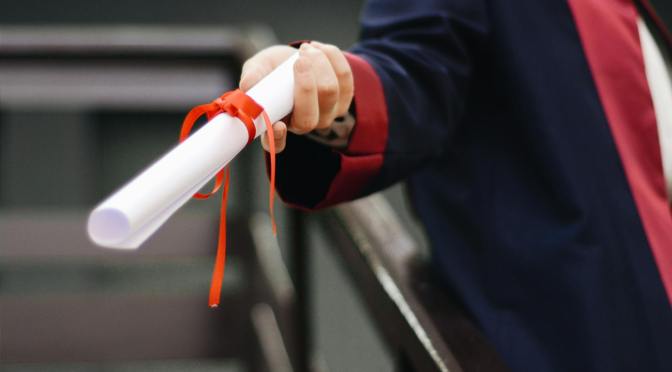
Photo by Gu00fcl Iu015fu0131k on Pexels.com

High school graduation is one of the most significant accomplishments during the early years of life. Some people continue their education through college acceptance and attendance, while others may put their energy directly into their career or family after graduation. Although everybody’s post-graduation journey may differ, this doesn’t make any path less important or invalid than the personal choices of others. Not everyone necessarily desires to attend college in its entirety and may prefer to search for short-term or long-term career paths as an alternative choice. Many people also tend to choose taking a few years off of being in school in order to regather themselves prior to pursuing an extended education.

Gap years are extremely common for those who want to continue their schooling, although there are several negative stigmas associated with them. Instances of this could include the impressions surrounding the “laziness” of the people making this choice, but this is untrue.

Another negative stigma often stems from the fear of parents for the future of their child which can often be observed through implications that they will never attend college if they take a gap year. For a lot of people that choose to take gap years, this is false, and with the proper motivation and positive environment, they often do attend and achieve further education if they choose to do so. Regardless, even if they eventually choose not to go to college, this is valid and should be accepted and supported by the members of their family.

Through surrounding yourself with positive influences, and motivations, this can prove to be a lot easier of a transition. Pressure from family members, friends, or even peers can be a major factor in raised levels of stress for people as they move closer to graduation. These outside pressures often leave people extremely unmotivated and stressed, which may impact their overall decisions regarding higher levels of education, or other life choices.

One of the big reasons that gap years are popular among high school graduates is financial responsibilities. This may be through some of the major financial responsibilities of future college students which could include the high costs of student loans, text books, and possibly even rent, which could come in the form of rent for apartments, student dorms, or family homes. This is often why many take time off to pursue a career and save money in order to support themselves and their educational choices successfully, which also increases motivation leading to college graduation. Although gap years can help improve this, financial stability can be a major stressor for many people, which can also impact their motivation to eventually attend college. With the proper support and people surrounding them, this can set them up for success, and help them achieve their goals.

If you are a high school student close to graduation, one of the most important things you can do is surround yourself with a positive support system, which can be found within family, friends, teachers, counselors, or even classmates. This will help to assist you in whatever choices or challenges you encounter following your post-graduation journeys, and set you up for success. Do not be afraid to ask for help during this period in your life. If you are a parent or friend, all that can be said is to be there for your child or friend in order to help support their goals and to be a positive source of support and encouragement to help them succeed.

Why you should join robotics

By: Nathaniel de Sam Lazaro

Credit: Team 2823 the Automatons

On September 24, 2024 the robotics team had our first meeting. We had many new members join and check out the team, and overall it was a huge success. However, we are always welcoming new members and would love for more people to join (especially new freshmen). In this article I will explain some important details about the robotics team and why you should want to be a part of it.

Our robotics team is part of a larger organization called First Robotics Competition, or FRC. FRC is a worldwide competition with thousands of teams. Every year, these teams compete by designing robots to compete and win a game. The game is revealed at the start of each calendar year, and this begins “build season,” which lasts about two months before competitions start. Highland normally competes in two competitions, one is in Duluth and the other in Minneapolis. If the team does well enough in these competitions, we get to go to the world championships in Houston, TX.

In the fall, we prepare for the competition season and welcome new members to the team. This year, we are competing in the MiniTrials, which is a smaller early competition that takes place in the fall.  New members design a robot to compete in a smaller game, with older students serving as mentors. This allows new members to gain important skills ahead of the competition season this winter.

The robotics team allows students to gain useful skills in engineering, programming, business, and many other things. It helps you gain important skills of working on a team, being a leader, and solving problems. It is also loads of fun, and you get to go on the trip to Duluth for the competition and see your work pay off.

The robotics team meets every Tuesday, and often Thursdays and Saturdays in the woodshop, room 0154 after school. We hope to see you there, as we are always welcoming new members.