Category Archives: News

People’s thoughts on Punch the monkey

By: Sofia Patricio Mateo and Evelyn Solano Ruiz

We went and asked some people what they thought about Punch the monkey. He was the monkey that was being bullied by other monkeys in Japan. Because he was abandoned by his mom he had a stuffed animal he was attached to. There was a video that people saw online where they learned about him.

Image of Punch-kun kissing his plush in Ichikawa Zoo by Daiei Onoguchi via Wikimedia Commons

The great Jesse Jackson 

By: Sema’Jae Tate

Image by: Brianmcmillen via Wikimedia Commons

Jesse Jackson was an African American male born in Greenville, South Carolina on October 8th, 1941. He went to a racially segregated school, Sterling High School and Jesse said growing up with the Jim Crow segregation law he was taught/told to go to the back of the bus and use a  separate water fountain. He had to accept it and it was rough.

Jesse Jackson was also bullied growing up because of his out- of-wedlock birth. He said “Being bullied growing up motivated me to succeed.” 

After he graduated high school in 1959, he rejected a contract from a minor professional baseball team so he could attend the University of Illinois on a football scholarship, but after his second  semester at the predominantly white college, Jesse Jackson transferred to North  Carolina A&T, a historically black university. He said the reason he transferred was  because “Racial prejudice prevented me from playing quarterback and limited my playing.”   

At A&T Jackson played quarterback and was elected student president. He became active in local civil rights protests against segregated libraries, theaters and restaurants. During that time, he graduated with a B.S. Degree in 1964.

He then attended the Chicago Theological Seminary on a scholarship. He left the seminary in 1966, three classes short of earning his master’s degree, to focus full-time on the civil rights movement.

He was ordained a minister in 1968 and was awarded a Master of Divinity degree by  Chicago Theological Seminary in 2000, based on his previously earned credits and  his subsequent work and life experience. 

In 1965, Jesse Jackson participated in the Selma to Montgomery march, where he met and worked alongside Dr. Martin Luther King Jr. He subsequently joined the SCLC and despite everything that was going on  Jesse still wanted to push harder to make a difference.

After King was assassinated, it was a tragedy, but things couldn’t just stop there so Jesse Jackson started his own organization People United to Save Humanity (PUSH),  focusing on economic empowerment and, later, political advocacy.

Jesse Jackson died on February 17, 2026.

The life and legacy of Rondale Moore

By: Fred Gallatin

English: Purdue Boilermakers wide receiver Rondale Moore. Date: 26 August 2019
Source: YouTubehttps://www.youtube.com/watch?v=mFseeuoyBAs. Author: FOX Sports. Via Wikimedia Commons

In a society where negative mental health impacts the lives of millions, it is easy to assume that money, fame, and achievements will keep these issues at bay. However, this was not the case for former Minnesota Vikings wide receiver Rondale Moore.

Born five weeks premature in New Albany, Indiana, Moore was the youngest of four children born to a single mother. Financial struggles and family issues highlighted his childhood, but he found an outlet in sports. At just 5 foot 7, Moore faced both mental and physical adversity throughout his athletic careers in both football and basketball.

Eventually, Moore chose to dedicate himself to football, a decision that led his family to move to Louisville, Kentucky. While navigating the uprooting of his life, Moore led Trinity High School to an undefeated season en route to earning Kentucky’s Player-of-the-Year title.

Highly sought-after due to his passion and freak athleticism, Moore chose Purdue University, in his home state of Indiana. As a true freshman, he was thrust into the national spotlight and did not disappoint. He recorded 114 catches, 12 touchdowns, and 1,470 yards in the ultra-competitive Big Ten conference.

In addition to dominating on the field, Rondale excelled in the classroom, graduating from Purdue in just three years. Teammates, coaches, and professors gushed over Moore’s work ethic, passion, and dedication in all aspects of his life.

After earning his degree, Moore declared for the 2021 NFL Draft. He was chosen in the second round by the Arizona Cardinals and cruised into the starting lineup. His lifelong dream had been accomplished, but he was not yet satisfied. His dedication drove him to expect perfection from himself whenever possible.

After his rookie year, injuries began severely affecting Moore. Although most were minor, he suffered a severe knee injury after being traded to the Atlanta Falcons in early 2024. After fighting through a grueling and isolating rehabilitation process, Moore earned another chance with the Minnesota Vikings in 2025.

In his first preseason game with Minnesota, while returning a punt, Moore was awkwardly tackled and pinned, bending his knee at an excruciating angle. He had completely torn his ACL, ending his 2025 campaign before it even started. The heartbreak caused by consecutive season-ending injuries is uncharted for most people, and was yet another difficult obstacle for Rondale.

After trudging through adversity, working for everything, and dedicating his entire life to football, Moore felt further from fulfillment than ever. Although dreading the hard work and emotional challenge, he chose to endure another rehab cycle in hope of returning to the field at some point.

After supporting his teammates from the sidelines in crutches for the second year in a row, Moore entered the offseason alone, in pain, and hopeless. His lifelong, seemingly invincible flame was flickering.

Back home, nursing his ACL, Moore could no longer bear the emotional and physical burdens of his injuries. On February 21st, 2026, Rondale Moore was found dead in his hometown of New Albany, Indiana. His cause of death was a self-inflicted gunshot wound. He was only 25 years old.

Rondale’s death left a void in the lives of teammates, coaches, fans, and family members. A contagious smile, competitive atmosphere, and high character followed Moore wherever he went. Additionally, he was a star in his community, purchasing a house for his mother and leading youth football camps around Indiana.

Although a tragic story, Rondale Moore’s legacy will be one of determination, grit, and hope. He will be remembered for his character and will, without a doubt, be honored by Trinity High School, Purdue, and the 3 NFL teams who were lucky enough to work with him.

Mental health is not something that should be ignored. Moore’s story demonstrates that wealth, fame, and achievement do not correlate to true happiness. Resources are out there for everyone, and it is important to seek help before hopelessness becomes overwhelming. Moore will be a motivation for many, and his tragic passing will serve as a reminder that mental health matters.

988 Suicide & Crisis Lifeline:

Anyone can call or text 988 if you need help or if you are worries about a friend or family member. 988 is answered 24 hours a day, 7 days a week. You are not alone, reach out for support.


Minnesota snowfall

By: Simon Pluger

Scientists in Minnesota and around the world use WMI or the Winter Misery Index to show how severe that year’s winter season was after finding out how much it snowed and what the temperature was. Scientists give those certain categories a number ranking that determine where that year’s winter falls on a scale of moderate to severe.

Last year, the 2024/2025 winter season was called mild in the index chart. It was actually shown that it was one of the easiest and calmest winters that we’ve had in decades. The snow was very inconsistent. It would snow 7 inches one day and it would all melt and then it would be a 40° day for the next week and a half. 

But this year, the 2025/2026 winter is already a lot different. We have had snow, cold weather, and the snow has stayed making this winter a lot more wintry than last year’s. Even if we end up with only 10 or 15 more inches of snow than last year, the big difference is that the snow will have actually stayed and not just until January like last year when we had the weird 50° days that melted everything in January. We’re now in March and there’s still snow on the ground this year.

The weather has been so steady that the temperatures have stayed and the snow is piling up and not melting, which for some people could be really annoying because they like spring or for some people that could be really enjoyable because they like looking at the snow.

I like winter, but this just shows that Minnesota winters can be very unpredictable and just because last year’s winter wasn’t that cold, and there wasn’t that much snowfall, doesn’t mean the winter after that is the same.

For more information, please visit:

Current events (international)

By: Treshawn Ross


English: 
Demonstrator during the 2025–2026 Iranian protests silhouetted against a street fire proudly waving the Lion and Sun flag of Iran. Date 9 January, 2026. Unknown author via Wikimedia Commons

Iran- Major protests against the Iranian regime started in late December of 2025. These protests were largely unviolent and orderly. Many of the protesters were demonstrating because of the insanely high inflation, and the collapse of the Rial which is the currency Iranians use.

The goal of the protests was to remove the Islamic Republic controlling Iran. As a result the Dictator of Iran, Ali Khamenei ordered an internet blackout in the country. This was done to prevent any media being released from the country, as he planned on violently cracking down on the protesters. The response of the government was to massacre scores of protesters and to arrest some of them to hold them for execution at a later date. The estimates say that 30,000 or more people were killed. Previously, President Trump promised to step in if the Iranian regime killed any protesters and in response to the reported massacres he sent an aircraft carrier and military personnel near Iran.

Russia/Ukraine– The Russia/Ukraine war has turned into a slow grind for territory, contrary to the 3 day operation that Russian dictator Putin anticipated. Most recently Putin has ordered drone attacks on civilian infrastructure and innocent people in Ukraine’s Kharkiv region. These attacks killed at least 5 people and injured several others. Putin is ordering attacks on Ukraine’s energy and transport infrastructure in an attempt to cripple the country in the harsh winter months. The battle on the frontlines has been more successful for Russia as they have the manpower to slowly advance despite the casualties.

Israel/Gaza- Israel recovered the remains of the last hostage taken on October 7th, 2023. This allows for more peace talks to occur; the United Nations (U.N.) and many other aid groups push for a phase 2 of peace plans. Netanyahu’s office agreed with Hamas on the new peace deal as all of the demands were met. Hamas is under pressure to disarm to complete the deal which U.S. officials say is close to happening.

For more information, please visit:

The life cycle of stars

By: Hannan Mohammed

Did you know that stars have a life cycle the same way that humans do? While stars can live for millions or even trillions of years—much longer than a human’s lifespan—they have their own stages of life too; they grow and die like us. So, what is the life cycle of a star?

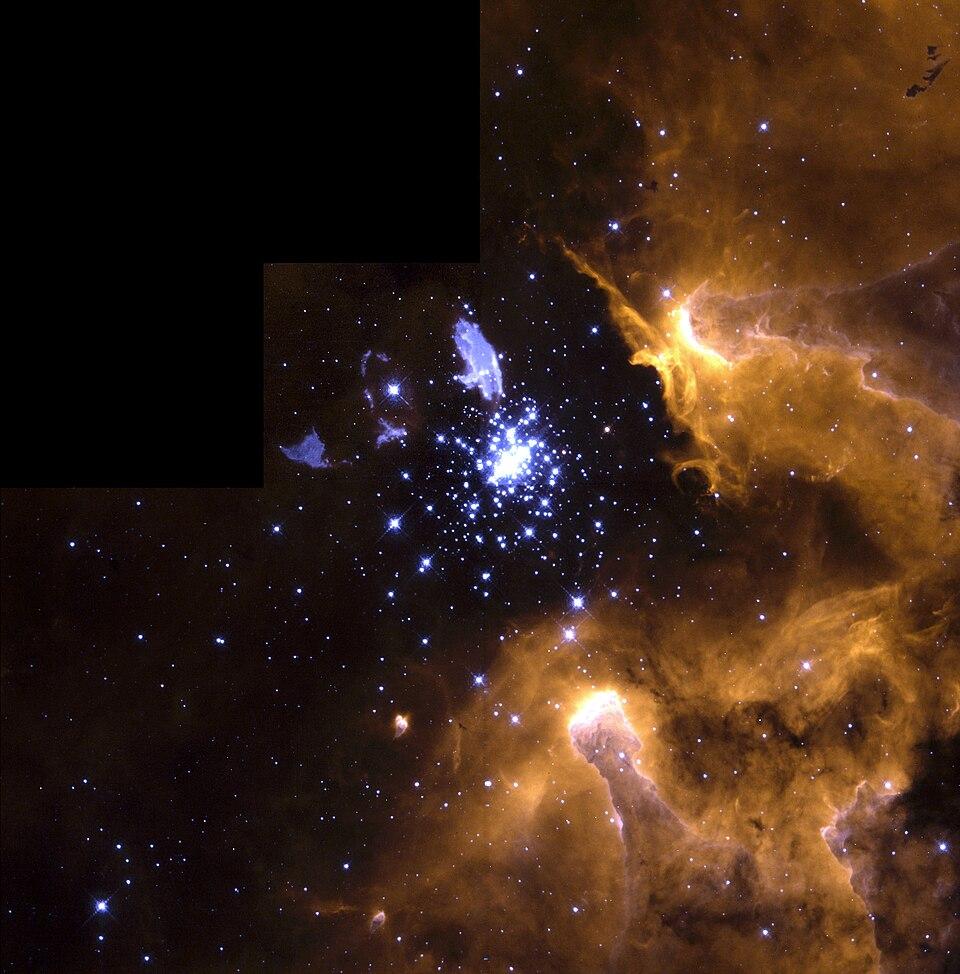
To begin with, all stars start in large clouds of gas and dust called molecular clouds, or nebulae. These clouds can range from 1,000 to 10 million times the mass of the Sun and they can span up to hundreds of light-years. In these clouds, gas clumps together due to the low temperature, and these clumps collect more matter and gain more mass, which strengthens their gravitational force. However, some of these clumps will collapse from gravity while friction heats the matter up, leading to the formation of a new star, called a ‘protostar’. Several of these protostars can be formed in one molecular cloud.

Image by NASA via Wikimedia Commons

After the protostar’s creation, most of its energy comes from the heat released due to its earlier collapse. However, the mean temperature of the star isn’t high enough for nuclear fusion to occur yet. This is called the T-Tauri phase, lasting for around 100 million years before the star enters its longest life stage: the main sequence.

In the main sequence phase, the star’s core temperature is high enough for nuclear fusion to occur by the higher temperature and immense pressure squeezing the nuclei of hydrogen atoms together to form helium. The energy released from this process heats up the star and prevents it from collapsing due to gravity. The Sun is currently in this phase.

A star’s mass determines its lifespan; lower-mass stars will burn longer and thus, live up to trillions of years. Higher-mass stars, however, require more energy to keep itself from collapsing, and so they burn faster and can live up to only a few million years. A star’s mass can also determine how it will die later on.

For all stars, the beginning of the end of a star’s life begins when their cores no longer have any hydrogen to fuse into helium. The core will start to collapse due to the lack of energy balancing gravity’s tendency to pull matter together, while the star starts to puff up from the increased temperature and pressure. From this point, however, the mass of a star is the main determining factor in how a star will die.

With a lower-mass star, its core will fuse helium into carbon as its atmosphere expands, and it either becomes a subgiant or a giant star. Eventually, all of the star’s outer layers will blow away, create a cloud of dust and gas called a planetary nebula, and leave behind its core, now called a white dwarf. Its size is about the same as Earth’s, and it’ll cool down over billions of years.

Higher-mass stars, however, will have a more explosive end. A higher-mass star’s core will begin to convert carbon into heavier elements like oxygen and magnesium after running out of hydrogen to fuse into helium, which becomes its fuel. While converting more elements produces energy for the star, this isn’t a permanent solution. In a few million years, once a star starts fusing silicon into iron, it will run out of fuel in just a few days since it will lack the energy required to fuse iron into a heavier element.

The core collapses until forces between the nuclei push and rebound, causing a shockwave that moves outward from the star and creates an explosion called a supernova. The explosion moves the star material far away into space, leaving behind the core, which can either implode into a neutron star or become a black hole.

Image by NASA via Wikimedia Commons

For more information, please visit:

🍁 Why leaves are nature’s changing fashion show.

By: Canaan Nonnemacher

Have you ever wondered why, after being perfectly green all summer, trees suddenly explode into bright red, yellow, and orange colors every fall? It’s not magic, it’s science, and it’s a critical way trees prepare for the cold weather ahead.

The Color Change Explained

During spring and summer, leaves act as tiny food factories for the tree. They are filled with a green chemical called chlorophyll, which is essential for photosynthesis, the process of using sunlight to make food (sugar). Because there is so much chlorophyll, it completely covers up all the other coloring chemicals, or pigments, in the leaf, making everything look green.

As summer ends, the days get shorter, signaling to the tree that it’s time to stop food production and get ready for winter. The tree stops producing new chlorophyll, and the existing molecules quickly break down. This disappearance of the green pigment reveals other colors that were hidden all along.

The Colors That Were Always Hiding

As the green fades, the yellow and orange colors, created by pigments called carotenoids, become visible. These pigments are always in the leaf but are simply masked by the strong green chlorophyll.

However, the deep reds and purples are created by a different pigment called anthocyanin, which is not present during the summer. Anthocyanins are made in the fall when the tree seals off the leaf stem, trapping sugars inside the leaf. When these trapped sugars are exposed to bright sunlight, they create a brilliant red color. Scientists believe this red acts like a protective sunscreen for the leaf while the tree quickly pulls out and stores all the important nutrients before the leaf falls.

Why Trees Drop Their Leaves

The color change is the first part of the tree’s survival plan for winter. The main reasons trees shed their leaves is to save water and prevent damage. Leaves constantly lose a lot of water. When winter comes and the ground freezes, the tree’s roots can’t suck up new water. By dropping its leaves, the tree avoids drying out and enters a state of, like a long sleep, to conserve water until spring. Additionally, being leafless prevents heavy snow and ice from building up on branches, which would otherwise cause them to break.

Thus, the spectacular colors of fall are a clear sign that the tree is being smart, preparing for a long, cold winter rest

Why are our winters getting warmer?

By Hannan Mohammed

Image by Kenneth Allenvia Wikimedia Commons

In recent years, you may have noticed that our fall season has become much warmer, and so has our winter season as well—snow comes later in the year, and according to an article by NPR, the 2023-24 winter season saw the 48 lower states in the U.S. had their warmest winter in 130 recorded years. And in the U.S., winter is the season that’s warming faster than any other. However, why is this change occurring?

The main cause of these warmer seasons is climate change, and in particular, global warming. While Earth’s climate has changed across time, with ice ages and warmer periods, this current global warming is caused by human activity; specifically, how we add heat-trapping gasses to the atmosphere. When we do this, we produce gases such as carbon dioxide that come into the atmosphere and trap more of the Sun’s energy on Earth, which is warming up the planet. According to NASA, Earth’s average surface temperature has increased by 2 degrees Fahrenheit since the late 19th century, caused mostly by carbon dioxide emissions.

As these average temperatures rise, the coldest season is being affected the most. According to the Climate Reality Project, average winter temperatures across the 48 contiguous states have increased by 3 degrees Fahrenheit since the pre-industrial era. Because of this, many areas are beginning to see warmer winters overall. But how else is climate change affecting winter weather?

One of the other effects of climate change on winter, besides warmer overall temperatures, is that there’s more precipitation during the season, which can either be rain or snow. This happens because a warmer atmosphere can hold more moisture within; this excess moisture is released from the atmosphere as precipitation.

Another effect of climate change on winter is that severe winter storms, such as ice storms and blizzards, are becoming both more frequent and more powerful. This happens because there’s increased energy in the atmosphere from the Earth’s general warming, which can make these events more volatile. Furthermore, a powerful air current called the jet stream is starting to change easier. Because it can influence weather patterns, its shifts may lead to sudden changes in both temperature and precipitation.

For more information, please visit:

About comets

By: Hannan Mohammed

Image by Philipp Salzberger via Wikimedia Commons

What are comets?

Comets are bodies made of ice covered in dark organic material, including dust. These comets are leftover from the dawn of our solar system about 4.6 billion years ago, and it’s speculated that comets may have brought water and organic compounds to Earth and other planets.

There’s a belt of icy bodies beyond Neptune where dark comets orbit the Sun around Pluto. Some of these comets are pushed closer to the Sun from gravity in other orbits, and they take around 200 years to orbit the Sun. These are called short-period comets, and their appearances are easier to predict. However, there are also long-period comets; these comets come from a region called the Oort Cloud about 100,000 AU (astronomical units) away from the Sun. Long-period comets can take about 30 million years to complete just one orbit around the Sun.

But how are comets structured? Each comet has a nucleus that’s a few miles wide; this part contains ice, frozen gases, and some embedded dust. As a comet orbits around the Sun and gets closer to it, the comet heats up and develops its own atmosphere, which is called a coma. As the comet heats up, the ice in the nucleus becomes a gas and makes the coma grow in size, and the coma can extend to thousands of kilometers. Pressure from sunlight and solar winds can also blow gas from the coma and dust away, creating a trail or a ‘tail’ on the comet.

Notable Comets

Image by NASA/Kuiper Airborne Observatory via Wikimedia Commons

A particularly famous comet is known as Halley’s Comet, which has been observed for around 2,000 years. It’s named after English astronomer Edmond Halley, who accurately predicted that the comet would return in 1758, thus proving that comets orbit around the Sun and don’t pass through the solar system once, which was a popular belief beforehand. Halley’s Comet takes 76 years on average to orbit the Sun, which makes it a short-period comet. It was last seen from Earth in 1986, and it will likely be next seen in 2061.

Image by International Gemini Observatory via Wikimedia Commons

One notable comet right now is the 3I/ATLAS comet, which NASA first made observations on in July 2025. It is named after the ATLAS (Asteroid Terrestrial-impact Last Alert System) telescope that first recorded the sight of the comet. It doesn’t follow a closed orbit around the Sun, and its origins are outside the solar system, making the comet interstellar. The 3I/ATLAS comet reached its closest point to the Sun on October 30, 2025, at which point it became too close to the Sun to observe. However, it’s expected to reappear on the other side of the Sun in early December 2025, and it will be able to be observed again.

For more information, please visit: