Dragons have a reputation of being evil but that’s not always true. There are many differences between Eastern dragons and Western dragons.
Western dragons
Western dragons are known for being destructive and dangerous, and overall malevolent. According to Schudio.com, they can be described as “dinosaur-like fire-breathing animals”, though some are also poisonous. Many Western dragons are described as having scaly bodies, a spiky tail, 2-4 legs, and bat-like wings. Their main source of food is usually sheep, cattle, and humans.
It’s often said that they live on land, in caves, with a large horde of treasure, but according to Onlydinosaurs.com, they can also live in marshes, the forest, the sea, the mountains, or even a volcano.
Some Western dragons include Hydra (from Greek mythology), Vouivre (French mythology), and Jörmungandr (Norse mythology), and many more.
Eastern dragons
Eastern dragons are known for being kind and caring. They can be described as wise and beautiful. Their physical appearance is quite different compared to Western dragons as well. Eastern dragons look kind of like very large snakes with deer antlers, eagle talons and tiger paws (for both front and back legs), a mane, and a camel(-like) head. They may not have wings like many Western dragons but they can still fly. According to Schudio.com, Eastern dragons are known to have the ability to spit water. It’s much rarer that you hear of them breathing fire.
They don’t eat humans; they eat swallows. Eastern dragons can be found in lakes and in the skies.
These dragons are seen as symbols of good luck since the rain they bring helps with the growth of crops and other plants.
Many Eastern dragons are seen with a pearl in its jaws. Depending on what culture the dragon is from, Storymuseum.org says this pearl could represent a couple of different things: wealth, wisdom, and/or power.
Some kinds of Eastern dragons include Ryu (Japanese mythology), Yong (Korean mythology), and DiLong (Chinese mythology). These are just a few of many other different kinds of Eastern dragons.
The most apparent difference between Eastern and Western dragons is their demeanor. Western dragons are portrayed as an evil being while Eastern dragons are seen as a symbol of good fortune and are highly respected.
After reading this, I hope you’ve learned a few new things about the differences between dragons.
Think about a time when you were younger. Was it at home playing with toys? Being at school with your friends? Taking a late night walk? All of these things are brought back through your memories. Through the bad, the good and the strange they are a part of you and make you who you are today. It’s inevitable that you’ll forget events and things every once and a while; you’re not going to remember everything that happens in your life.
Now imagine that you wanted future generations to learn and know these important parts of your life. Imagine that you have to place your memories in a physical box to be locked away. Now this is what many call Time Capsules.
Time Capsules are essentially mini libraries of goods or information from the past. They don’t take much to make, with only a container with meaningful and relevant objects inside. They tell us a lot of information about the past and about how people lived, their cultures, social norms, etc. The information is limited but broad which makes it valuable.
Many may think of time capsules as boxes that you bury beneath the ground, though they can be, and mean much more than that. One example of this notion are the space crafts known as Voyager 1 & Voyager 2. These spacecraft are specially fitted with a gramophone record used to depict culture here on Earth to extraterrestrials. Anything from music to images and greetings are included on the spacecraft. As time capsules they show a time period of Earth and its own cultures and social norms.
Time Capsules can really be anything as long as they preserve the stories of those from the past. They are important to learn about the past and its path to who and where we are today. While history can be left out to wither, keeping it in preservation is integral. Time Capsules do an amazing job at this, preserving items until they can be maintained in a proper place, such as a museum. Without them, we wouldn’t have as much information in history as we do today; a lot of information is lost to time, and simply keeping it will perpetuate those important values. That is the importance of Time Capsules.
Each person possesses a different combination of learning styles, and identifying your styles can be very helpful in helping you improve comprehension and knowledge retention.
In this article, I will tell you the top four primary learning styles, and their characteristics to help you figure out which ones best fit you, and how you can adapt to them.
The four main learning styles are:
Visual learner
Visual learners are people who prefer to learn in a more visual format. They learn best with drawn-out charts, maps, and videos. Visual learners tend to remember things they see rather than hear, such as remembering people’s faces rather than their names. If this is you, here are some tips to help you adjust.
Color code your notes and planners: Using different colors to better understand what you are learning can help with organization and memorizing.
Making mind maps: Amind map is a technique used when you put down all the things you’ve learned and make connections between them. This can help you visualize the relationship between the things you’re learning.
Watch videos: For visual learners, watching videos rather than reading textbooks can help with illustrating complex concepts visually.
2) Auditory learner
Auditory learners learn better when listening. They may prefer listening to lectures, and audiobooks, and contributing to discussions. Here are some tips to take advantage of being an auditory learner.
Recite: Reciting things can help to better remember and comprehend.
Listen to audiobooks and podcasts: Listening to audio recordings on the related subject is a way to absorb and retain the information.
Music: Listening to music preferably without lyrics is a good way for auditory learners to focus when doing assignments or studying.
3) Kinesthetic learners
Kinesthetic learners, also known as tactile learners, learn best through hands-on activities. They prefer to actively engage in the material, such as performing experiments instead of listening and watching, that’s why most usually have difficulty sitting for long. They have a strong sense of touch and tend to remember information they physically experienced.
Tips for kinesthetic learners:
Interactive learning: Things such as online simulations, education, and making models allow kinesthetic learners to be comfortable while also learning something.
Use gestures: Incorporating gestures in learning can help kinesthetic learners symbolize the concept by acting it out to help with memory recall.
Take breaks: Allow yourself to take breaks during homework and studying by going on a short walk, or stretching. Doing so allows you to be focused and engaged.
4) Reading/writing learner
Reading/writing learners learn better when the information is in written word/text. They retain information better with textbooks, articles, and written instruction.
Here are some tips for reading/writing learners:
Rewrite/reread: Rewriting and reading text in your own words helps with understanding.
Flashcards: Creating flashcards with questions on one side, and answers on the other side. You can write it down yourself or use apps such as Duolingo. Quiz yourself regularly to test your knowledge and memory.
Take detailed notes: Writing down key points, and definitions when reading, and studying assignments.
Pay attention to your natural techniques and methods that seem to work best for you whether it’s being a visual, auditory, kinesthetic, or reading/writing learner.
Don’t limit yourself to one learning style, the majority of people have a combination of the styles. Once you identify the learning styles that fit you, adjust your study habits and learning strategies accordingly.
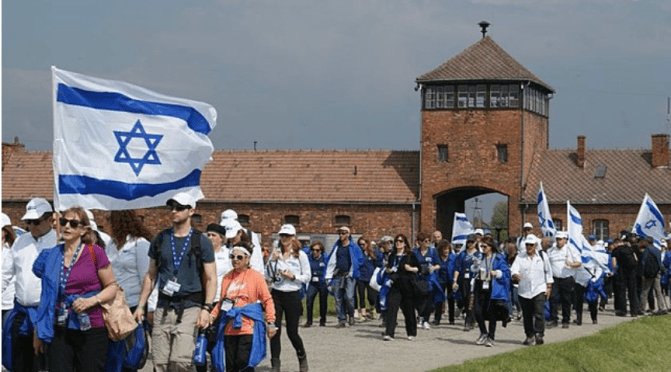
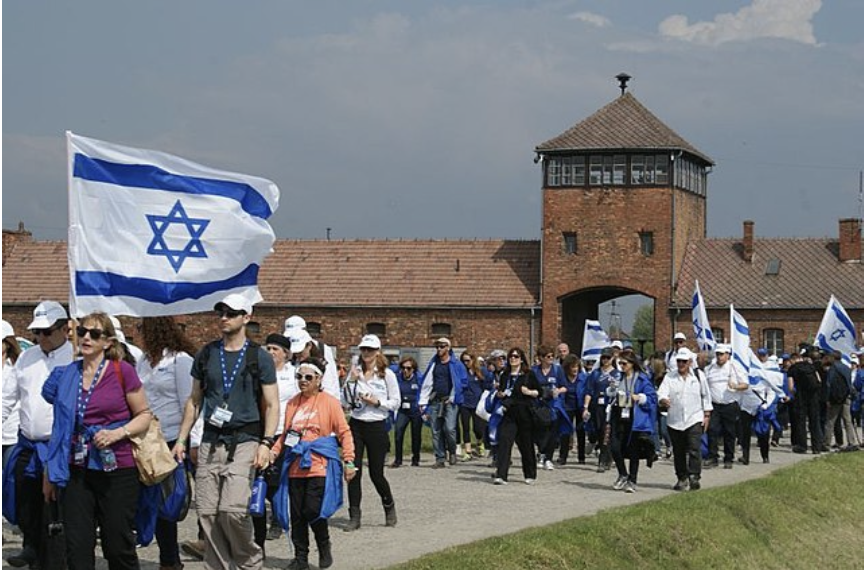
March of the Living, 2016. Photo taken from Wikimedia Commons
Yom HaShoah is a Jewish religious and secular holiday honoring over six million Jewish people killed in the Holocaust and the Jewish ghetto uprisings in Poland. Created in the 1950s by the Knesset, it falls on the 27th day of Nisan in the Hebrew calendar—in 2024, that was May 6th. Holocaust Remembrance Day in Europe is celebrated on January 27th, the anniversary of the Auschwitz liberation by Soviet troops, but this was thought to be too focused on the accomplishments of other people; the Knesset chose to solemnize a date belonging solely to the Jewish people.
In North America, it is celebrated in several ways; many synagogues run public educational programs and hold talks by survivors, and the Mourner’s Kaddish is always recited, occasionally in addition to other prayers. Typically, the lights are dimmed and each member of the congregation lights a candle ceremonially. The names of the six million victims are sometimes read aloud, emphasizing the scale of the slaughter. The poetry of Holocaust survivors Primo Levi and Paul Celan are read on occasion.
Outside of North America, a march is held yearly at Auschwitz-Birkenau, the largest of the death camps—called the March of the Living, it is testament to the fact that we are still here. In my opinion, this belies a core part of Yom HaShoah that many non-Jewish people may miss when looking in from the outside. Yom HaShoah is celebrated today to force us to recall a tragedy that otherwise may be lost to history. This is history, yes, but it had a massive impact on our world today—in 1933, an estimated 9.5 million Jewish people lived in Europe. Nearly two-thirds of a population was wiped from the face of the earth, two-thirds of a community is missing today. Jewish culture is all about survival in the face of resistance; everyone from the Roman Empire to Nazi Germany has tried to eliminate us, but we have survived. We honor those lost, and turn our faces towards the future; ready to weather whatever comes next.
May, 1943. Operation Torch, the Allied tank invasion of North Africa, has just come to a close. Now, they are staring down the barrel of a much larger invasion—the Nazis have occupied Europe entirely, and are threatening to make the jump to the UK, too. It’s only obvious where the Allied forces will land; the Allies hold the strategic port of Tunis, and it’s only logical to make the landing from there. As such, Mussolini and Hitler have predicted an invasion, reinforcing the island with 100,00 troops. If the Allies make the landing there, they will surely be rebuffed; the task is now to divert the troops, and make sure that they’re expecting the landing anywhere else.
Enter Ian Fleming, personal assistant to Rear Admiral John Godfrey and future author of the James Bond novels. In 1939, he penned a document called the “Trout Memo;” it outlined several scenarios and strategies that may be applied when in need of a way to deceive the Axis Powers. At the time, the Trout Memo was considered outlandish, and it was shelved. However, in 1942, this memo was picked up by one Lieutenant Charles Cholmondeley. He was inspired by a suggestion in the Trout Memo—using a planted corpse with fake documents to lure German U-Boats towards mines—and the Turner crash—an American officer had died in a plane crash in 1942 after the engine failed over neutral Spain; forensic analysis of the classified documents he was carrying had indicated that they were copied by the Nazis—to write up his own plan. The plan was thus; a fresh corpse of service age, preferably deceased via drowning, would be obtained. He would be dressed in a uniform, forged documents attached to his person, and be delivered via submarine to Spain, where the fake information would be passed on to the Nazis.
This plan was accepted after a few minor alterations, and Cholmondeley was put in contact with Lieutenant Commander Ewen Montagu, the Navy liaison to Military Deception. Together, they sourced a body, procured from a coroner that Montagu knew from his lawyer days. The provenance of this body is highly disputed. Historians generally agree that the man was Glyndwr Michael, an unhoused man who came to London from Cardiff for work and died after eating rat poison. However, there is a small minority contingent that believe the body used was one of the men from the HMS Dasher, an aircraft carrier that took a hit in March of 1943. Either way, the body was used without the knowledge, and certainly not the consent, of the family.
With the corpse secured, Cholmondeley and Montagu set to work creating his new identity. A common surname, a rank of high enough importance to be carrying classified information, and a department that could direct inquirers to Naval intelligence all coincided, creating Captain (Acting Major) William “Bill” Martin. Next, they had to equip him with documents of the sort one might realistically carry on one’s person, reinforcing the illusion that this man was real. A fiancee was invented for Martin, by the name of Pam; a photo was provided by Jean Leslie, a secretary at MI5. Personal correspondence was also included, along with pocket change, stamps, and a medallion of St. Christopher. This was unusual in officially-Anglican England, but the justification was that Spain was mostly Roman Catholic—if the administrators handing the body saw him as a member of their community, they might be more inclined to trust him, and therefore the information he was carrying.
The deception itself took the form of personal correspondence between Lieutenant General Sir Archibald Nye and General Sir Harold Alexander. Several drafts were done, but were found unsatisfactory—eventually, they got Nye himself to write the letter, indicating that the British Army were to land at Greece, and their cover target was Sicily.
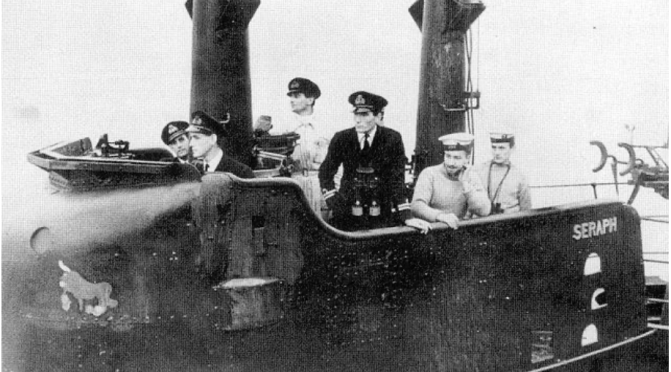
With all their ducks finally in a row, Cholmondeley and Montagu passed the corpse off to the crew of the HMS Seraph, a submarine used in covert operations. Acting Major Martin was launched on April 30th, surfacing in Huelva later that same day. Vice-consul of Spain Francis Haselden had been briefed beforehand, and knowing that the security of British diplomatic telegraphs had been breached, stressed the importance of the documents and how swiftly they had to be returned to British soil. Martin himself was autopsied and buried with honors, while his briefcase was passed along to Cadiz; there, it caught the attention of Karl-Erich Kühlenthal, one of the top agents in the German spy network. From Kühlenthal, the documents were passed onto Berlin, and eventually made it onto the desk of Hitler himself. Convinced that the documents were legitimate, German high command transferred their troops from Sicily to Greece in late May.
No official estimates of the impact of Operation Mincemeat have ever been undertaken, but casualties on both the Allied and Axis sides were few, owing to the small amount of troops that remained concentrated on the island. Most notably, the invasion led to the fall of Mussolini’s dictatorship and the return of leadership to King Victor Emmanuel III, who pulled out of the war afterwards. Captain Martin’s memorial in Spain has since been amended; it now indicates that the deceased’s name was Glyndwr Michael, serving under the name of William Martin. A short service, indeed, but one that saved countless lives.
In the United States, dogs are the most owned pets with over 65 million households in the country having at least one dog. There are thousands of different dog breeds, from Chihuahua’s to the English Mastiff, all with unique characteristics and personalities. These are the top 10 most popular breeds to own in 2024.
10. German Shorthaired Pointer
Starting at #10, we have the German Shorthaired Pointer. These sweet dogs are known for their playful and energetic nature, while being great hunters and runners. They are extremely affectionate and intelligent animals and are easy to train. Females are typically 45-60 lbs, and males are a little larger at 55-70lbs. If you’re looking for a dog to take on hikes and runs while being great with small children, the German Shorthaired Pointer is for you!
9. Rottweiler
At the number 9 spot we have the well known Rottweiler. Rottweilers have great characteristics such as having lots of confidence, being calm, courageous, and devoted pets. These dogs are definitely large animals with weights ranging from 77-130lbs. If you want a true “man’s best friend”, a Rottweiler might just be the perfect dog for you!
8. Beagle
Coming in at 8 is the well known small scent hound, the beagle. These adorable dogs are curious, intelligent, friendly and gentle. Their coats are typically tri-colored, made up of white, chocolate brown, and tan fur. They don’t get much larger than 24 lbs and are the perfect size for kids and families. Beagles are loving and loveable pets and are the perfect addition to any household!
7. Bulldog
Next we have Bulldogs at #7. Bulldogs are British dogs from the mastiff breed type and are also known as the English Bulldog or British Bulldog. They have a smaller statute, but can weigh up to 55 lbs! They are friendly, docile and willful animals, and are known for their large heads with folds that are sure to make you fall in love! They are typically white with some shade of brown and red patches on their heads and backs. These dogs are great companions and can even be used as guard dogs!
6. Dachshund
Dachshund (wiener dog) is at number 6 on this list for most popular dog breeds. These dogs have many great qualities like being playful, lively, active, and independent. These dogs are perfect for apartments and small houses, and are up to 11 lbs for the miniature dachshund, and up to 32 lbs for standard dachshunds. They are considered one of the most low maintenance dog breeds, and are perfect for anyone looking for a smart and sweet dog.
5. Poodle
In the number 5 spot, we have the poodle. Poodles are a breed of water dogs and are split up into four different varieties: Standard Poodle, Medium Poodle, Miniature Poodle and Toy Poodle. All of these poodles are intelligent, trainable and faithful pets. They have a wide range of colors and sizes, and are great animals for families!
4. German Shepherd
At number 4, German Shepherd is one of the most popular dog breeds. This comes at no surprise based on their protective, confident, brave and loyal characteristics. These dogs are usually Black and tan, and are considered a breed of working dogs. German Shepherds are also known as police dogs, and are extremely smart and caring dogs. They are great with small children and their exceptional characteristics make them one of the most favorable dog breeds.
3. Golden Retriever
Golden Retrievers take the well deserved number 3 spot on the list. These happy, friendly dogs are reliable, kind, trustworthy animals and are the “stereotypical” family dog. They can come in different shades of gold, from almost white to dark golden. These dogs are great with children and other dogs, and would be great for all families!
2. Labrador Retriever
Coming in at number 2 is the Labrador Retriever, also known as Labs. Labs have similar characteristics to Goldens, but are a little more relaxed. They are gentle, even tempered and trusting animals. They are pretty low maintenance dogs, and can be black, yellow or chocolate. Labs are great companions and easily trainable so if you’re looking for a lifelong best friend, a lab is for you!
French Bulldog
Finally in the #1 spot is the French Bulldog. Frenchies have been listed as the number one dog breed for almost 3 years in a row for their sweet loveable qualities. Frenchies are a French breed of companion dogs and also classify as a “toy” dog for their small appearance. They are playful, easygoing, alert, sociable, and extremely affectionate, making them amazing pets for people at any age and any household. They can have different coat colors from black to white, and are suitable for families with or without children!
Overall, all of these amazing dogs have their own unique qualities that make them the perfect addition to any household. With different looks, sizes, personalities and strengths, anyone can find the perfect dog breed for them and see why these amazing animals are known as “man’s best friend”!
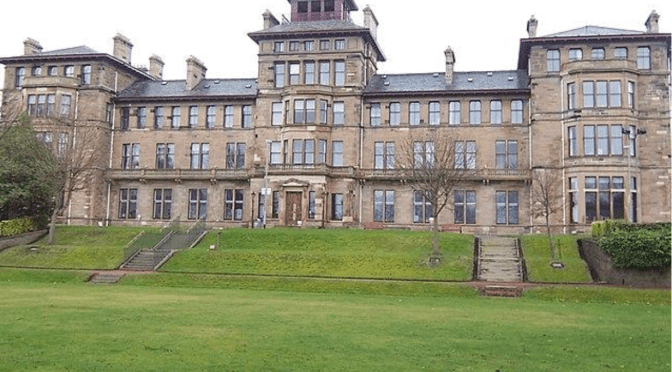
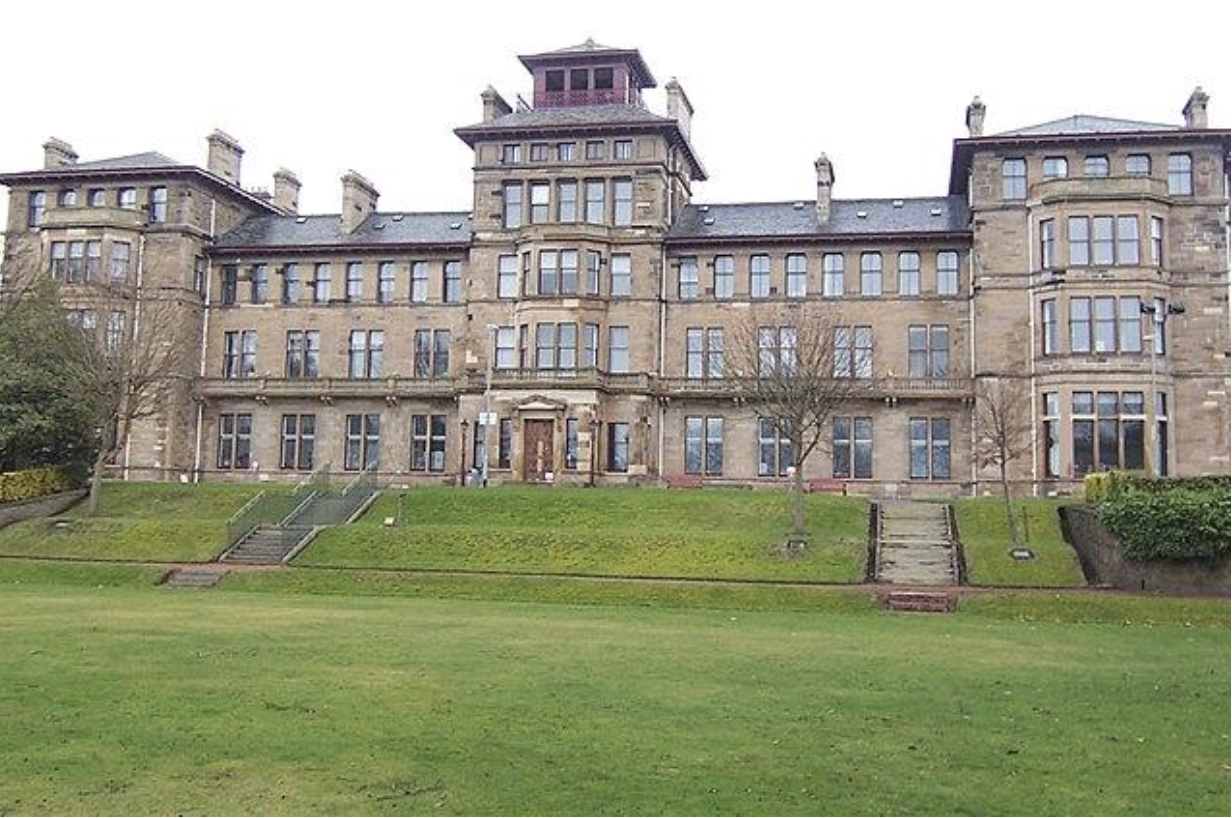
Picture of Craiglockheart Military Hospital where most of the research conducted by Dr. W.H.R. Rivers. Image from Wikimedia Commons
Post-traumatic stress disorder is a mental disorder stemming from major trauma. The brain is unable to process the event or events all at once, and stores it subconsciously, processing the event in small bits when reminded of it, called “flashbacks.” These are all things we know now—and yet war, one of the most common factors that lead to the development of PTSD has existed at least since we’ve had the written word. So, how did we get here?
Many people think of PTSD as first being discovered around the First World War, but we have records of it going back as far as Ancient Greece; there is an account by Herodotus of a young soldier at the Battle of Marathon going completely blind after witnessing the slaughter of one of his comrades. This matches up with several other accounts in later years, up to the Vietnam War.
In the 1850s and 1860s, “soldier’s heart,” became a concept off the back of the Crimean War and the American Civil War. It was characterized by difficulty breathing, elevated heart rate, and high blood pressure, but psychological symptoms have also been reported. The doctor pioneering this research, Jacob Da Costa, believed that the body affected the brain, however, so this line of inquiry was not seriously pursued. This condition had some of the textbook effects, such as nightmares and irritability, but it was blamed on “hard service;” the rough conditions soldiers worked in, going for long stretches of time without adequate food or proper sleep.
The first serious look at PTSD from a psychological perspective came about in 1915, with the carnage of the First World War. This was the largest war fought in human history so far, and the scale of human suffering increased accordingly—millions of soldiers and officers were sent back from the front lines because of the symptoms they had developed, deemed “unfit for service.” The medical consensus at the time was that being near the artillery guns, a terrifying new piece of weaponry, was disrupting the “circulation of the nervous system.” Officers were sent to “convalescent hospitals” to regain their strength through rest, before being sent out into the carnage once again. Enlisted men, deemed lesser, were given no support at all.
However, W.H.R. Rivers, a respected psychologist, had a different idea. He gained control of Craiglockhart Hospital in 1915 and began putting his own treatment regimen in action—he spoke with the officers there about the events that had caused their distress, remarkably similar to talk therapy utilized today. He also allowed the men to explore the city and encouraged recreational pursuits. This allowed the affected officers to build a conception of life and themselves outside of their trauma, another vital part of modern PTSD treatment.
In the modern day, various methods of treatment have been used to aid in recovery, but the most common and successful are built off of Dr. Rivers’ body of work. Cognitive behavioral therapy and group discussion therapy seek to give the people affected an outlet for their emotions and discourage unhealthy beliefs about themselves, and narrative therapy is used to help people process the inciting event within the greater context of their lives.
However, medical ideas have evolved since the Great War—we now understand that war is not the sole risk factor, and indeed any trauma can lead someone to be affected by PTSD. SSRIs, most commonly used to alleviate the symptoms of depression, have also shown promise when applied in the treatment of people with PTSD.
Trauma can be unpredictable, and for a very long time it left people’s lives burnt to the ground. But modern medicine has made great strides in helping people pick up the pieces.
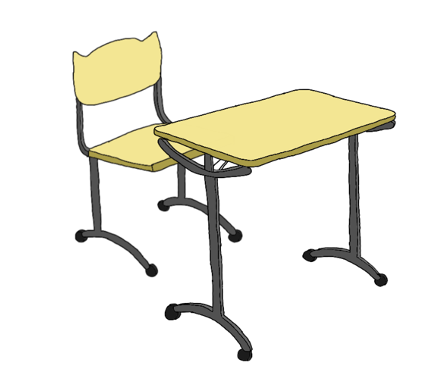
Imagine a school environment. What do you envision? A white board? A teacher? A computer? While those are parts of the school environment, you may be forgetting a common object that’s found within a classroom. Whether it be long lectures or taking tests, the common school desk plays an important part in our education today.
Over the years, school desks have developed alongside youth education. Originally invented in 1880, the desk was created by John D. Loughlin in Ohio. The first iteration created by Loughlin was known as “The Fashion Desk”, and was quite popular across the United States due to some of its aesthetic aspects. The American Desk has evolved since then, becoming the wraparound desk and the simple chair plus table set.
As of today, school desks have evolved in their own way to accommodate students and teachers needs. Across the world, students and teachers require different needs, and this is evident within their school desks. For example, in Finland, their classroom furniture is unlike the hard tables and chairs that we’re used to. Instead of the rigidity of the wraparound desk, schools in Finland mix a combination of comfortable chairs with movable tables. These aspects of their classroom allows for an easier collaboration between students and simpler applications of planned activities. Compared to American Education, Finland has a much more relaxed approach to learning, and this is reflected by their choice in desks and collaborative tables.
Taking a look at another country with different education standards, India is on the other side of the spectrum. In their classroom, students are expected to listen and follow their structure without interruptions or questions. To accommodate these standards, Indian school desks are made up of a long table accompanied by two school chairs. These desks are always made to face the front of the room and teacher to allow for more concentration. Through this, students are able to place their focus on the teacher and their education as a whole.
While being common throughout many classrooms, not all classrooms come along with desks. Many countries around the world face economic problems and are unable to properly provide facilities and school furniture. Some of the countries, such as Kenya, Nigeria and Uganda have overcrowding issues in classrooms, and these problems only become more exasperating. Though, not everything needs to have proper school furniture to function. Youth are still able to learn through the efforts of their teachers and their own efforts towards their education. In this instance, desks aren’t a necessary item and their absence in this instance shows that a classroom only requires a teacher to function.
Desks are an important part of the classroom and they help reflect on the style of education presented by their teachers. Though no matter the type of desk, the atmosphere of the classroom and the teaching style of the teacher, this is always true: Education is always prevalent no matter the environment that surrounds it. School desks are just a small part of a student’s days that help accommodate them towards the needs of their education system.
The human brain is very complex and fascinating, it is capable of numerous cognitive processes that shape how we think and how we act. One fascinating thing about our mental function is the inner monologue, also known as the “voice inside your head,” or “inner voice, ” it’s where we can hear our thoughts and have conversations within our mind with ourselves.
We might see a lot of depictions of inner monologues when reading first-perspective books, or when a show/movie shows a character thinking to themselves.
However, some reports show that about 30 – 50% of people don’t have an internal monologue. The absence of an inner monologue, known as “aphantasia” can lead to various questions surrounding the complexity of the human mind, and why some people don’t have an inner monologue.
While the exact reasons are not fully known, research has found many factors that may contribute to it. A potential factor could be a correlation between the dorsal stream and the ventral stream, The dorsal and ventral are two language tracks that help form sounds. A research conducted in 2019, shows that the development of inner speech is based on how your dorsal stream is developed.
Cultural and environmental factors can influence how your brain processes different information in your early years. People who don’t develop a strong inner monologue in childhood may simply never get it later in life.
Genetics also play a role in the lack of an inner monologue. Research found that aphantasia can run in a family. This implies that there are some hereditary factors that lead to the lack of an inner monologue.
Having no internal monologue doesn’t indicate a person having mental challenges. People with aphantasia have no issues with their memory, nor do they have trouble thinking and problem solving, they simply just view the world differently.
Even though the reasons for not having an inner monologue are not fully understood yet, factors such as the brain cognitive function, environmental factors, and genetics appear to play a role.
‘Masters of the Air’, an Apple TV original series and spiritual successor to the wildly successful ‘Band of Brothers’, has been taking the internet by storm. One of the plot beats has the Tuskegee Airmen, African-American pilots, turning up to save our main characters. It’s a great moment—but the Tuskegee Airmen were real, and their story is much more fascinating than the TV version.
The Tuskegee Airmen were the first Black pilots in the US military. The 99th squadron was created during WWII in 1941, to be trained on single-engine pursuit planes. The NAACP and organizations like it had been lobbying for the US military to allow Black people to become pilots for ages, but disavowed the segregated approach as they considered it to perpetuate prejudice and discrimination. Nonetheless, Franklin D. Roosevelt had the 99th Pursuit Squadron created as an all-Black pilot unit of the US Army Air Corps, today known as the US Army Air Force.
Their base of operations opened on July 19th, in Tuskegee, Tennessee—the first class graduated the following March. Tuskegee was chosen specifically because of the civilian piloting infrastructure already in place, as well as the high levels of skill those civilian pilots showed on aptitude exams.
These airmen were further trained in the then-French colony of Morocco before their first mission; on June 2, 1943, they carried out a strafing attack on an Italian island in the Mediterranean. Three more squadrons quickly followed, eventually forming the 332nd Fighter Group. The 332nd fought in many air conflicts of the European theatre, and later historians would note it as one of the most successful fighter groups of the war; they earned two Presidential Unit Citations, one for the longest bomber escort mission to Berlin and the other for discovering a secret German destroyer in the Italian harbor of Trieste.
Tuskegee Airfield also produced the second-ever group of Black airmen, the 477th Bombardment group. These pilots flew the B-25 double-engine bombers seen in ‘Masters of the Air’. However, equipment and personnel shortages plagued this unit, and V-J day came to pass before it could be officially deployed.
As a whole, 992 pilots graduated from the Tuskegee Airfield program, talented pilots each and every one. These men were lauded as heroes, but outside of the war, many never spoke of their experiences—there are many stories of families never knowing the truth of their relative’s military service until long after their deaths. However, the legacy of the Tuskegee airmen is not to be forgotten soon, in part because of Executive Order No. 9981, signed by Harry S. Truman, enacted because of these brave airmen and leading to the eventual desegregation of the US Army.














 Plaid Line + PRIZM + Scottie News