Category Archives: Getting To Know/History

What is the X-59?

By: Yohan Lee

Imagine flying at the speed of sound and cruising over public places whilst not hearing the sound barrier over you. Well, today I’m going to talk about the X-59 and the history of it.

The X-59 was built by NASA and Lockheed Martin. They both came together to try to build a supersonic aircraft that is quiet when flying over you. The X-59 development began in 2016 and the first machined part was made in 2018, then was revealed to the public on January 12, 2024. The X-59 was built in Lockheed Martin’s Skunk Works facility in Palmdale, California.

What is supersonic? Supersonic is a loud sound of an object going over 700 miles per hour. Think of a whip and whipping it. That crackle is exceeding over 700 miles per hour. That crackle is a mini sonic boom. But the X-59 just can’t fly at 700 miles per hour or Mach 1. The X-59 can fly at Mach 1.42 or 940 miles per hour. When the X-59 flies over you at Mach 1 you would only hear a tiny thud. That little thud is about 75 db or just below a jet flying over you at 1000 feet which is about 106 db.

The reason why NASA and Lockheed Martin are trying to quiet the sonic boom is because it’s illegal to fly supersonic over the public for 3 main reasons. They don’t want to startle people thinking we’re going to war, it might kill someone or an animal (out of shock or knocking them over), and it can cause property damage as in breaking windows.

So, how can the X-59 achieve going over Mach 1 while barely hearing the sonic boom? Well, it starts with the nose of the aircraft. The X-59 has a sharp nose that cuts through the air making the aerodynamics much better and thus making the X-59 fly faster. The same goes for the delta wings. The reason why the X-59 has delta wings is because it reduces the effects of the shock waves and makes the sonic boom a quieter sonic boom thump.

The X-59 engines are the f414-GE-100 which are the same engines that are used for the F/A-18E/F/G. But the gears are the same gears that the F-16 uses.

The X-59 comes about 100 feet in length and 30 feet in width. The nose takes up half of the size and since the X-59 nose is long you can’t see much throughout the window. So, that’s why the X-59 is equipped with a camera at the end of the nose to see in front of the nose and to see the other side. The X-59 is equipped with 3 screens, one of them is the camera and the other two are for your basic flight instruments which tell what your plane is doing. Since the X-59 just came out, a lot of stuff is still classified.

So, how can it change aviation? Well, NASA and Lockheed Martin are planning to make a quiet supersonic plane and redesign it to be a commercial plane so we civilians can fly over Mach 1 at 700 miles per hour. For a regular flight from a 737, it takes 5 hours to get to California to Florida flying at a speed of 587 miles per hour. But when you’re flying the X-59 it would only take 3 hours flying at 700 miles per hour.

Why are NASA and Lockheed Martin working together to make the X-59? NASA has its team called QUESST which brings Lockheed Martin and NASA together, and under QUESST is The Quiet Crew. The Quiet Crew is a group assigned specifically to design and fly the X-59. Lockheed Martin collects data and helps build the X-59 since NASA doesn’t own many F-16s and F-18s, and again, the X-59 uses the F-18’s engines and F-16’s gears.

Before NASA had an idea to make the X-59 and convert it to a commercial airplane, the Concorde was the first ever super sonic commercial airliner. The United Kingdom and France made the Concorde in 1969. There were only two airliners who flew the Concorde and it was British Airways and Air France. The Concorde unfortunately retired on November 26, 2003, due to high maintenance and fewer people flying the Concorde since each ticket cost $10,000. Plus, the Concorde was super loud which caused many people to not like the Concorde. The Concorde could fly 2 times faster than the speed of sound or 1,354 miles per hour due to the Concorde having 4 Rolls-Royce/Snecma Olympus 593 engines. Something interesting is that the X-59 and the Concorde had some similarities. They both had a long and sharp nose, delta wings and had stabilizers.

NASA said that the X-59 is going to come out in mid-2030 and hopefully in the future we will have a supersonic commercial airplane. And this is why the X-59 is going to change aviation.

For more information, please visit:

Lawyer X

By: Baarika Suresh

In an effort to try to bring certain legal cases to light, this is the 1st of a possible series of articles on cases that deal with legal ethics.

Cover of a book that was written about this case

A scandal like no other, Lawyer X was a royal commission in Victoria, Australia created to examine the actions of Nicola Gobbo and the Victorian police working as a lawyer and acting as a registered informer. The police fought hard to keep Gobbo’s identity a secret and she was a target for the clients she defended, but also did not want to jeopardize their high profile convictions. The scandal took many years to play out, and left the premier of the time, Daniel Andrews, with no choice but to call a royal commission into the events.

In response to the royal commission judgment by Ms. Margaret McMurdo it was revealed that Lawyer X received 3 million dollars plus other payments from Victoria Police for providing information about her clients whilst she was representing them. McMurdo found that police “tolerated bending the rules to help solve serious crime” and that the police claimed that the reason they waited to get legal advice on Gobbo was because “they did not want to be told they could not use Gobbo the way they intended”.

The fact that Gobbo was representing her clients while also informing about them clearly violates attorney client privilege, making most of the cases an unfair trial. She made a name for herself during the Melbourne gangland killings, but was first registered as an informer when she was just a law student, giving the police information about her drug dealer boyfriend/housemate. She was also a registered informer on a colleague who she claimed was laundering money.

This brings the question of ethics to mind: Where is the bar set that violating attorney client privilege is ok? In response to the royal commission, policies were discussed requiring those who might come into the possession of legally privileged information, to be approved by the Victoria Police ethics committee before being registered as an informer.

In total, the royal commission heard from 82 witnesses, including over 50 police officers during the 129 days of hearings. The full transcripts of the royal commission are available online.

For more information, please visit:

The architecture of Clarence Wigington

By: Karl Salkowski

Highland Water Tower

Clarence Wigington is one of the most beloved and respected architects in the Twin Cities area. He worked primarily between 1920-1940. During that time he designed over 60 buildings which still stand in Saint Paul. He designed a variety of buildings including: golf clubhouses, fire stations, park buildings, airports, and a majority of Saint Paul public schools. Some instances of his work you might recognize are the Highland Water Tower and the Harriet Island Pavilion. In 2000 after a restoration, the Harriet Island Pavilion was renamed the Clarence Wigington Pavilion in his honor.

Clarence Wigington was born in Lawrence, Kansas, but his family soon moved to Omaha, Nebraska where he grew up. He was born in 1888 and lived until 1967. After Clarence graduated from high school at the age of 15, he went to art school before ultimately working for the American Institute of Architects. In 1910, 2 years after he started his own office, Wigington was listed as one of only 59 African-American architects, artists, and draftsmen in the country. Wigington became the first African-American municipal architect, and served as Saint Paul’s senior architect for 34 years.

Wigington designed many buildings as senior architect. Some of the schools and famous places he designed include: Como Park Elementary, Randolph Heights Elementary, Como Park Zoo, and the Roy Wilkins Auditorium.

His most famous architectural design is undoubtedly the Highland Park Water Tower. Along with 3 other Wigington buildings, the Highland Water Tower is on the National Register of Historic Places. The Highland Water Tower was built in 1928 for only $69,483 which equates to around $1,281,173 today. The Highland Water tower could hold nearly 200,000 gallons of water, and has been left nearly unaltered since its construction. Although the Highland Water Tower is no longer in service, the tower is still open to the public 2 times a year during Highland Fest, and the second weekend in October.

Many of Clarence Wigington’s designs are still beloved by the public over a century after they were built. Wigington made a considerable contribution to the architecture of the Twin Cities area, and certainly to that of Highland Park. His architecture has continued to be adored by many throughout the city.

For more information, please visit:

The history of McDonald’s

By: Ian Larson

Photo by Jaskeerat Singh on Pexels.com

McDonald’s has become the largest fast food chain in the world through all of its many successes and challenges.

According to Britannica, the first ever McDonald’s drive-in restaurant was opened in San Bernardino, California in 1940 by Maurice McDonald and Richard McDonald, who were brothers. Then, in 1948 they changed the idea of the restaurant to have the purpose of selling lots of food for cheap.

They later made 10 more restaurants because of the success they had. They also created a system that they called the Speedee Service System, which had an area for self service.

In 1961, a milkshake mixing machine distributor, Ray Kroc, decided to buy out the McDonalds because he saw that the idea for the restaurant was good and could be improved on.

Ray Kroc began standardizing McDonald’s restaurants so that they could be run the same way. The McDonald’s company had many changes over the next few years.

The McDonald’s mascot that we know and love today, Ronald McDonald was introduced in 1963. Ronald McDonald was a clown, which was a slightly controversial decision because of people being scared of clowns and this being marketed to kids.

In 1968, the iconic Big Mac was added to the menu all over the world. The Big Mac later became McDonald’s second highest selling choice on the menu, only behind french fries.

McDonald’s introduced the drive-through window to their restaurants starting in a McDonald’s in Arizona in 1975, which was a great success for the company and would become a staple of McDonald’s restaurants in the US and Canada.

McDonald’s was growing so fast in the 1990s that it quickly became the most popular family restaurant because of how cheap the food was and the fun environment for people of all ages.

McDonald’s did face some challenges and criticism. Many people associated McDonald’s with the increase in obesity around the world. McDonald’s tried to counteract this by creating vegan burgers called McVegan and McPlant.

After all of this, McDonald’s is still expand to this day and isn’t showing any sign of stopping soon.

History of Greyhounds

By: Cleo Newton

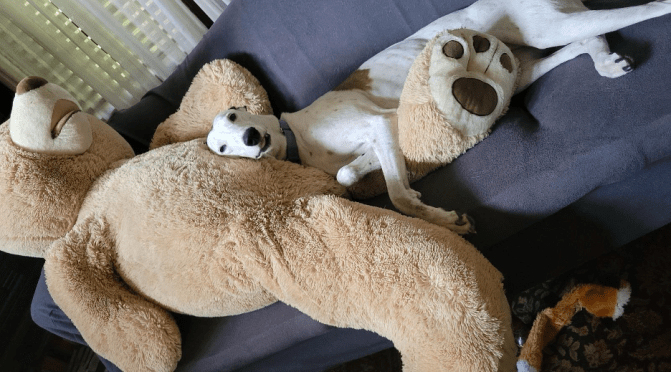
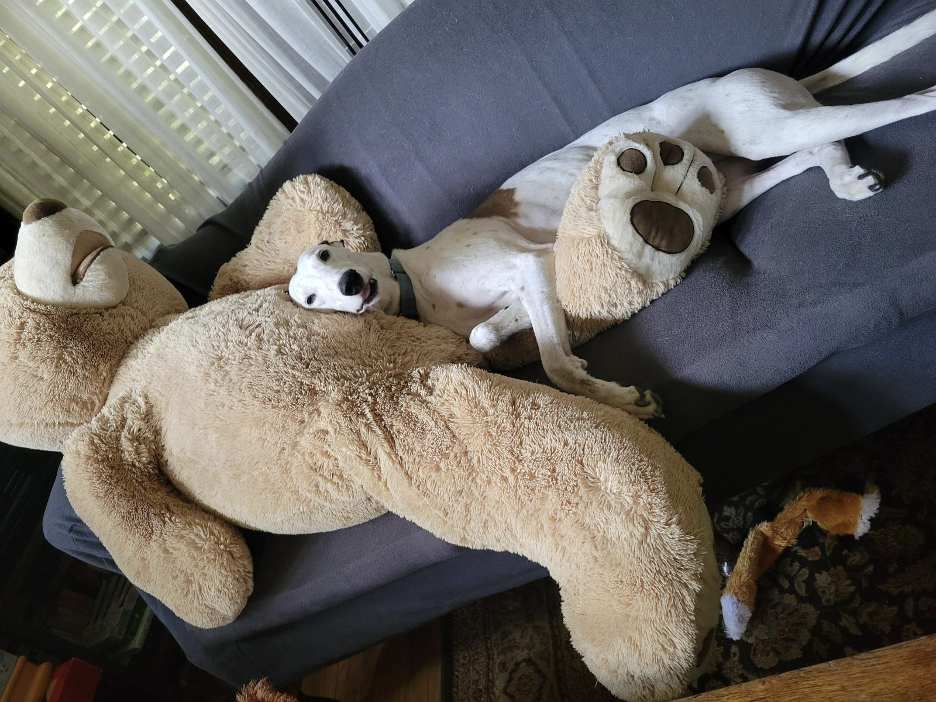
Greyhounds have been around for a very long time. They have around 8000 years worth of history.

According to Gapsa.org.au, Greyhounds are the oldest purebred dog breed dating back to the time of Pharaohs. They have shown up in the ‘Bible’, and in Greek and Roman mythology. This breed was very much admired and respected, and only royalty and people of noble status were allowed to have them.

Many famous historical people have owned this breed of dog such as Queen Elizabeth I and Christopher Columbus. Even Shakespeare wrote about them in ‘Henry V’.

Greyhounds almost went extinct in the Middle Ages during times of famine. Luckily, they were protected and saved by clergymen who bred them for nobility. King Howel of Wales made killing a Greyhound punishable by death in the 10th century. If commoners were found owning a Greyhound, they would be severely punished and unfortunately for the dog, it would get its toes lawed, which would include removing the middle toes, to stop it from hunting.

Greyhounds have a high prey drive which is why people use them hunting (unfortunately even today). Greyhounds are the fastest domesticated dog and based on Dailypaws.com, they can run at speeds up to 40-45 mph. Those who hunt with Greyhounds prefer to own ones with brindle, fawn, red, or black fur.

It’s the complete opposite for nobles though. They favored the ones with white and spotted fur. This was so that if their dog was to ever escape, it would be easier to spot it in a forest.

It wasn’t until around the 1700s that Greyhounds became a dog that not only nobility were allowed to own. Did you know that every purebred greyhound can be traced back to just one dog back in the late 1930s, King Cob? King Cob was born in England in 1839. He was the first dog available for public stud service as stated by Racecourse.co.uk.

According to Ngap.org, Greyhounds started being used for racing in 1919. I think that Greyhound racing is not a sport that should be supported, many of them die in the process.

After reading this article, I hope you’ve learned a few things about my favorite breed of dog and maybe even considered adopting one yourself.

Iditarod

By: Kara Fini

The Iditarod Race is an annual Alaskan sled dog race held early March. It starts in Anchorage and travails nearly 1,000 miles through the Alaskan terrain all the way to Nome, Alaska. Each team starts with 14-16 dogs, a musher and sled. A musher is the human who directs and helps the dogs throughout the race. There are 3 required stops, one 24 hour stop and two 8 hour stops. During these the dogs get medical care and a check to make sure they can keep going.

Before Alaska was settled by Russia, Native Alaskans found that sled dogs were the most efficient way to get to places because of the harsh climates and rough terrain. Russia settled in Alaska in the early 1800s and found native sled dog trails. They decided it would be a good place to set up a fur trading post.

When Alaska was bought by the US from Russia, most of inland Alaska had not been explored except by the Natives currently living there, but once gold was discovered, people came rushing in from all over in hopes to become rich off of their finds. The three major places where gold was found were in Hope, Nome and Iditarod.

As miners and traders spread across Alaska they realized that the Natives’ way of using sled dogs was the easiest way to transport mail and tools to the miners in the areas. They created a path leading from Skagway up to Nome that later changed to be Seward to Nome because many people reported it was less dangerous. Along the trail up to Nome there were road houses where mushers could sleep and get food for them and their dog.

In 1925 a diphtheria epidemic broke out in Nome causing many people to fall ill. Being a small secluded town, there was no serum to help there, but in Anchorage there was a serum. They needed to get it to Nome quickly. They were able to send it partially there by train but there was still quite a way to go, so they used mushers and sled dogs on the Iditarod trail to send it the rest of the way to Nome. It took only 5 days after departing Anchorage to arrive at Nome. This run is the most historic part of the Iditarod Trail.

Throughout the next several decades, the trail saw little to no use with the gold industry declining, and airplanes being able to deliver mail.

In 1973 a race along the Iditarod started to honor the history of the gold rush and bring awareness to the Iditarod Trail. This race has continued every year since then with tons of people coming every year.

How children get to school around the world

By: Karl Salkowski

Children are raised differently around the world, but one experience that most kids share is school. How you get to school can vary greatly between students. Whether you bike, walk, take public transportation, carpool, or hike through the mountains, everyone arrives at the same destination.

According to Saferoutesinfo.org, “In 1969, 48% of children 5 to 14 years of age usually walked or bicycled to school.” This has dramatically decreased since then, and has fallen to only 13%. In 1969 89% of children who lived within a mile of school walked or bicycled. Now only 35% bike or walk. This decrease has been happening steadily over the course of the last 50 years. As more vehicles are on the road, biking and walking become inherently more dangerous. More and more parents see walking/biking to school as unsafe which may lead them to instead drive their kids to school. This feeds into the cycle.

However, not everywhere in the world is like this. For example, the city of Oulu, Finland has recently become one of the most pedestrian and bike friendly cities in the world. They did this by greatly increasing the amount of bike infrastructure, and plowing the bike paths immediately after the snow falls. According to BBC, “In one of Oulu’s biggest schools Metsokangas, more than 90% of the children get to school by bike or on foot.” Although the average for the city schools overall is 50%, it’s still incredibly impressive seeing that it’s the 4th most northern city in the world.

Biking to school in the middle of the winter may seem difficult, but it’s nothing compared to how strenuous of a journey some kids in China had to go through. Some kids had to hike almost half way up a mountain to get to school in Gulu Village, China. From 2005-2011 students in the Gulu Village would have to hike 3-5 hours to reach a school that stood atop the mountain. They had to take a windy path that is filled with many twists and bends. The narrowest part of the trail is 40 centimeters.

The school was first made of mud, but the principal Shen Qijun through support of the people living below transformed it into a somewhat safe building complete with five classrooms and a restroom. Soon the school lacked funding, and it was decided to relocate down below in the village. This is only a small glimpse into the different challenges school kids face around the world.

How did homecoming become a tradition in American high schools?

By: Nathaniel de Sam Lazaro

This Friday, students at Highland Park Senior High will gather for pep fest. Chants of “Go home freshmen” will roar through the gym. The nominees for homecoming royalty will march out onto the gym floor, hoping to be the ones who get to sit on their grade’s respective throne. That night, students will gather for the homecoming dance, and the next day Highland will have their annual homecoming football game.

But this tradition is not unique to our school. If you went to every High School in America, most of them will have similar traditions to these. Many colleges and universities have homecoming celebrations, too. Homecoming is an American cultural tradition, present in High School movies and TV, so ubiquitous that we often don’t consider how this tradition began.

While more associated with High Schools today, homecoming actually began as a college tradition. Three different schools claim to be the originator of homecoming. Many news outlets, including a piece on the history of homecoming from Active.com, give credit to the University of Missouri, which invited alumni back to their school to “come home” for a football game in 1911. The next year, they continued to do so and have for every year since.

However, there are other claims. The University of Illinois claims to have invented homecoming one year earlier, hosting their first “homecoming” in October of 1910 against their rival, Chicago. This homecoming was an experiment but was so popular that it returned the next year, and continuing ever since except for 1918 when it was canceled due to the flu pandemic (Illinois did host a homecoming in 2020, but it was scaled back and reworked).

Accolades however, for inventing homecoming may belong to Texas’s Baylor University.

The Baylor Alumni Association claims that Baylor has the oldest homecoming, which occurred in the fall of 1909 when alumni were surprised to receive invitations back to their alma mater for a special football game. However, Baylor didn’t call this homecoming at the time, referring to it as “good will week”, and wouldn’t host their next homecoming until 1915, and it only became an annual celebration in 1934.

High schools soon adopted homecoming as a tradition, starting in the 1930s. They adapted the tradition in some ways as well, inventing homecoming court and changing the opponent of the football game from the school’s biggest rival to a team the school would likely beat, keeping high spirits during the festivity.

Highland’s homecoming game this year will be at Humboldt High School at 1 PM on Saturday, September 21st. We will be playing against Harding. Before the game you can enjoy the Powerpuff game at 9 AM and tailgating at 10:00 AM, both at Highland.

Eastern dragons vs. Western dragons

By: Cleo Newton

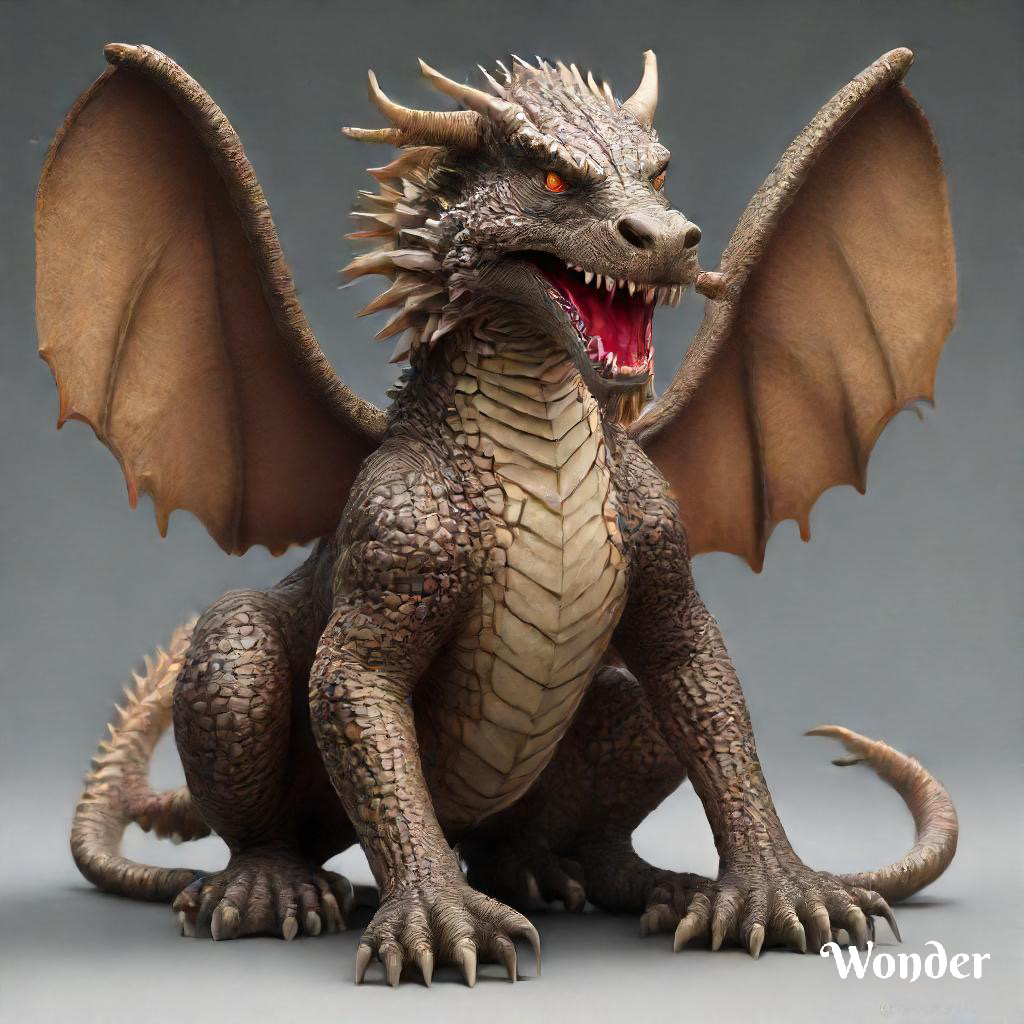
Image created with Wonder AI

Dragons have a reputation of being evil but that’s not always true. There are many differences between Eastern dragons and Western dragons.

Western dragons

Western dragons are known for being destructive and dangerous, and overall malevolent. According to Schudio.com, they can be described as “dinosaur-like fire-breathing animals”, though some are also poisonous. Many Western dragons are described as having scaly bodies, a spiky tail, 2-4 legs, and bat-like wings. Their main source of food is usually sheep, cattle, and humans.

It’s often said that they live on land, in caves, with a large horde of treasure, but according to Onlydinosaurs.com, they can also live in marshes, the forest, the sea, the mountains, or even a volcano.

Some Western dragons include Hydra (from Greek mythology), Vouivre (French mythology), and Jörmungandr (Norse mythology), and many more.

Eastern dragons

Eastern dragons are known for being kind and caring. They can be described as wise and beautiful. Their physical appearance is quite different compared to Western dragons as well. Eastern dragons look kind of like very large snakes with deer antlers, eagle talons and tiger paws (for both front and back legs), a mane, and a camel(-like) head. They may not have wings like many Western dragons but they can still fly. According to Schudio.com, Eastern dragons are known to have the ability to spit water. It’s much rarer that you hear of them breathing fire.

They don’t eat humans; they eat swallows. Eastern dragons can be found in lakes and in the skies.

These dragons are seen as symbols of good luck since the rain they bring helps with the growth of crops and other plants.

Many Eastern dragons are seen with a pearl in its jaws. Depending on what culture the dragon is from, Storymuseum.org says this pearl could represent a couple of different things: wealth, wisdom, and/or power.

Some kinds of Eastern dragons include Ryu (Japanese mythology), Yong (Korean mythology), and DiLong (Chinese mythology). These are just a few of many other different kinds of Eastern dragons.

The most apparent difference between Eastern and Western dragons is their demeanor. Western dragons are portrayed as an evil being while Eastern dragons are seen as a symbol of good fortune and are highly respected.

After reading this, I hope you’ve learned a few new things about the differences between dragons.

The importance of time capsules

By: Trump Vang

Think about a time when you were younger. Was it at home playing with toys? Being at school with your friends? Taking a late night walk? All of these things are brought back through your memories. Through the bad, the good and the strange they are a part of you and make you who you are today. It’s inevitable that you’ll forget events and things every once and a while; you’re not going to remember everything that happens in your life.

Now imagine that you wanted future generations to learn and know these important parts of your life. Imagine that you have to place your memories in a physical box to be locked away. Now this is what many call Time Capsules.

Time Capsules are essentially mini libraries of goods or information from the past. They don’t take much to make, with only a container with meaningful and relevant objects inside. They tell us a lot of information about the past and about how people lived, their cultures, social norms, etc. The information is limited but broad which makes it valuable.

Many may think of time capsules as boxes that you bury beneath the ground, though they can be, and mean much more than that. One example of this notion are the space crafts known as Voyager 1 & Voyager 2. These spacecraft are specially fitted with a gramophone record used to depict culture here on Earth to extraterrestrials. Anything from music to images and greetings are included on the spacecraft. As time capsules they show a time period of Earth and its own cultures and social norms.

Time Capsules can really be anything as long as they preserve the stories of those from the past. They are important to learn about the past and its path to who and where we are today. While history can be left out to wither, keeping it in preservation is integral. Time Capsules do an amazing job at this, preserving items until they can be maintained in a proper place, such as a museum. Without them, we wouldn’t have as much information in history as we do today; a lot of information is lost to time, and simply keeping it will perpetuate those important values. That is the importance of Time Capsules.