Category Archives: Getting To Know/History

Root beer rankings and a brief history

By: Nils Hileson

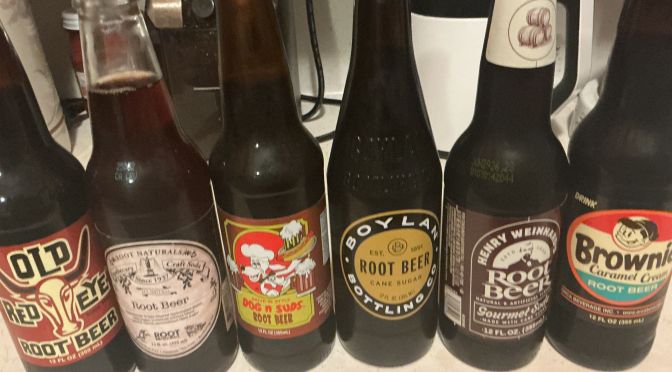
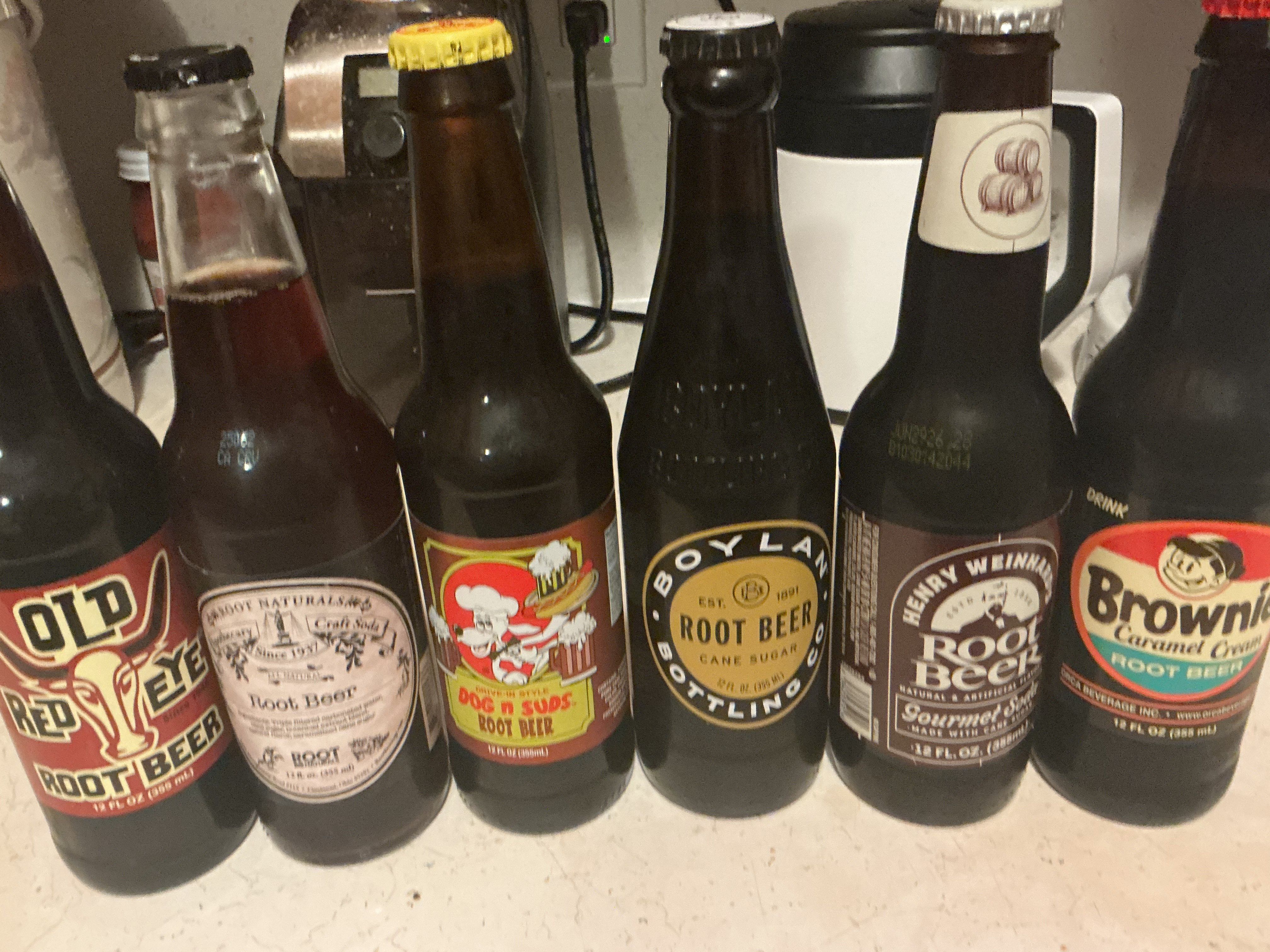
Bottles of root beer tried

Root beer was made in the 18th century by Charles Elmer Hires based of a tea that has similar ingredients. Root beer is commonly made with sassafras root, wintergreen, sarsaparilla and other natural ingredients. It also has a lot of sugar and caramel coloring in it commonly. Its name is derived from the root ingredients used to make it and beer was added to the name just to appeal to miners.

For a time root beer was sold as a syrup or powder to be added to sodas before it became a popular soda itself. I myself like root beer quite a bit so I decided to try six different root beers and rank them from worst to best.

Brownie caramel cream root beer: this one is the worst not because it is particularly terrible but because of how disappointing it was. I was expecting actual caramel flavor but it just tasted like watered down root beer. Very disappointing.

Henry Weinhard’s root beer: not very sweet nor did it have much spice. Didn’t have much flavor for a root beer, so it’s ranked low.

Old Red Eye root beer: had a nice amount of spice for a root beer but was lacking in everything else. Was very watery and kinda disappointing.

Root Naturals Apothecary craft soda: a little less sweet than a normal root beer but had good levels of spice. A fine choice for a root beer.

Drive-in style Dog n Suds root beer: had quite a bit of sweetness, and a little less spice than the others I’ve had. I prefer my root beer to be pretty sweet so this root beer was good.

Boylan Bottling Co: definitely the best root beer out of all of them. The spices they used were different from a normal root beer’s but it was a welcome change of taste. They also used cane sugar, which I’m not sure how much that changed the flavor, but I think it made it better. Didn’t taste watered down at all.

For more information, please visit:
History of UFO sightings

By: Karl Salkowski

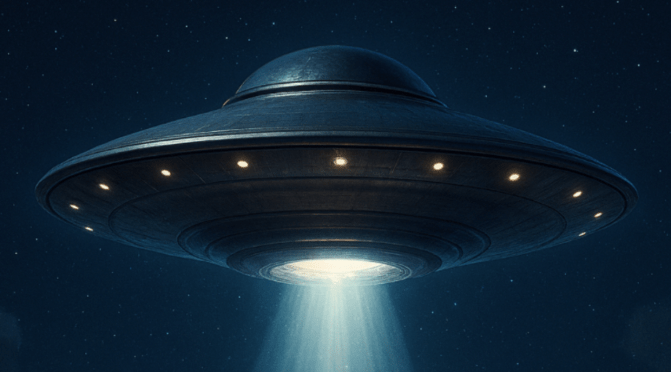
Image created with Chat GPT AI

UFO stands for Unidentified Flying Object. According to the Oxford dictionary, UFOs are described as mysterious objects seen in the sky for which, it is claimed, no orthodox scientific explanation can be found.

UFO sightings have been reported throughout all of recorded history and across the world. There are many accounts of unexplained aerial phenomena throughout 500-1500AD. Many paintings and depictions of these flying objects still exist, including strange symbols and imagery. However, it’s likely that most of these medieval UFO sightings were just natural atmospheric phenomena such as comets, auroras, or rare cloud formations.

The US is home to many UFO sightings, with some of its most famous dating back to the 1950s and 60s. During the beginning of the United States’ rocketry initiative, UFO sightings began to spike. This includes several famous sightings and initiatives such as the Roswell UFO Incident, Project Blue Book, and the Robertson Panel.

The Roswell UFO incident took place in 1947 and was one of the first in a series of new sightings. A ranger from Roswell, New Mexico, found a 200-yard-long wreckage near a US Army airfield. The local newspaper reported it was an alien spacecraft, although the military declared the wreckage was only a weather balloon.

As sightings of UFOs increased in the 1940s and 50s, the United States Air Force began investigating these reports. In 1952, this became Project Blue Book, and it recorded over 12,000 sightings between 1952 and 1969.

In 1952, the United States created a panel of scientists to investigate these sightings. This panel was known as the Robertson panel, named after its head, H.P. Robertson, a physicist at the California Institute of Technology. This panel determined that over 90% of sightings were astronomical and meteorological phenomena and that there was no evidence aliens exist.

Within the last 20 years there has been a massive decline in these sightings. As smartphones with high-quality cameras continue to become more and more present, grainy images and blurry photos just don’t cut it anymore. Overall, most UFO sightings can be explained by either military tests or just various natural phenomena.

For more information, please visit:
St. Paul – A safe haven for gangsters

By: Treshawn Ross

John Dillinger

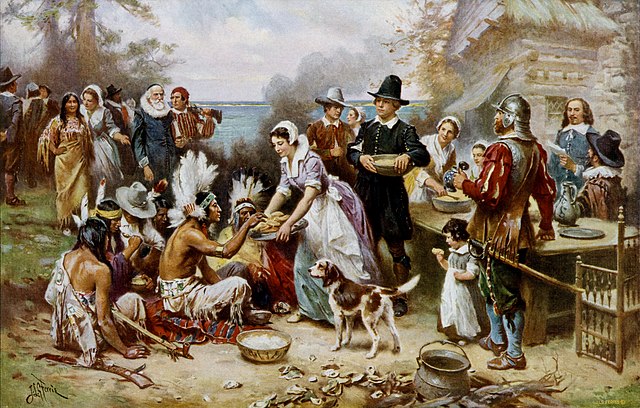
In the early 1900’s to 1935 St. Paul was known as a safe haven for gangsters and criminals.

How it started– This system was known as the “O’Connor Layover Agreement”, named after the police chief at the time (John O’Connor). The key conditions of this agreement were that the criminals had to check in with police when they arrived in the city, they had to pay bribes to city officials, and lastly they agreed not to commit major crimes in St. Paul during their stay.

Gangsters who thrived under the O’Connor system– John Dillinger and “Babyface” Nelson both hid in St. Paul after their numerous bank robberies. Alvin Karpis and his gang of kidnappers also used St. Paul as a hideout. The bootlegging kingpin of the city Leon Gleckman used St. Paul not only as a hideout but a headquarters from the St. Paul Hotel.

The degradation of the O’Connor system- In 1930 Chief O’Connor retired from the police force. This left Tom Brown as his successor. Tom Brown portrayed himself as a righteous lawman who would fight crime; this allowed him to obtain the vacant police chief position. Tom Brown disposed of the O’Connor system. Instead of upholding the previous order, he allowed violent crimes by the gangsters hiding in St. Paul to go unpunished. This inevitably raised the city’s crime rate and brought more attention.

The Fall- After a famous shootout with the Karpis gang, Tom Brown was demoted after being questioned by the public and the mayor about how the gang escaped. He still retained a high office in the police department and after numerous scandals relating to the John Dillinger and Karpis gangs he was put under investigation. He was publicly disgraced but faced very little punishment. The FBI then began to hunt down the murderous gangs in the city, killing John Dillinger and many of his associates. Alvin Karpis was arrested for his crime and he served his sentence in Alcatraz. Many other corrupt officers were laid off and this led to reform and less corruption in the St. Paul police force.

Who is Nobel Laureate María Corina Machado?

By: Karl Salkowski

Photo courtesy of Adobe stock

Maria Corina Machado is a Venezuelan politician and activist. She was born on October 7th, 1967, in Caracas, Venezuela, and served as a member of the National Assembly of Venezuela from 2011 to 2014. Maria directly opposed the governments of previous Venezuelan president Hugo Chávez and current president Nicolás Maduro. Maria has advocated heavily over the last two decades for democratic reforms and human rights across Venezuela.

Nicolás Maduro took office in 2013 and has been serving Venezuela since. The 2024 election is widely believed to have been fraudulent in order to extend Maduro’s regime, as he had already become widely unpopular among the common people. Political scientist Steven Levitsky called the official results “[O]ne of the most egregious electoral frauds in modern Latin American history.”

Maria had been an outspoken critic of Maduro since the beginning of his presidency, and due to this, she was banned from competing in the 2024 presidential election. Despite facing persecution and having to go into hiding, she decided to stay within Venezuela to organize opposition efforts and continue rallying for what she believed in.

Maria believes in classical liberalism. She focuses on individual freedoms, free markets, and limited government, which directly oppose the views of the previous presidents. Maduro created a more authoritarian government, attempting to take away individual freedoms in order to extend government power.

She was nominated for the Nobel Peace Prize due to her consistent effort towards creating a safer and freer Venezuela. She resisted authoritarianism and fought to build a more democratic and fair government. She has made a commitment to non-violent resistance and strived to restore freedom and democracy in Venezuela.

Maria gained international recognition and support for her action in Venezuela. She has won many other awards, including the Sakharov Prize for Freedom of Thought and the Václav Havel Human Rights Prize. These awards are given to people who defend human and civil rights and lead and mobilize nonviolent resistance.

Overall, María Corina Machado was awarded the Nobel Peace Prize due to her unwavering support of democracy and her dedication to providing human and civil rights to all.

A history of Halloween

 By Hannan Mohammed

Today, Halloween is known as a holiday for people to dress in their scariest costumes and go door to door trick-or-treating, asking neighbors for candy to take home with them. Some people may even carve pumpkins into jack-o’-lanterns to celebrate the holiday. But, how did Halloween and its ways of celebrating it come to be, and what was this holiday originally?

Sanhaim

Originally, the holiday of Halloween was known as Sanhaim, a pagan festival celebrated by the Ancient Celtic people. According to an article by BBC, this festival was celebrated about 2,000 years ago, usually on November 1. This was also the first day of winter for the Ancient Celts, and so this festival was also seen as an important transition in the year. According to the World History Encyclopedia, this holiday may have even represented the Celtic New Year.

This holiday was seen as the day in the year where a gap between our world and the spirit world was open, so that the spirits of the dead could cross over into our world. And, according to the World History Encyclopedia, these spirits could pass freely through to the human world and be either good-natured or harmful.

To celebrate this festival, the Ancient Celts would wear their own sort of costumes made from animal skins and heads, a little similar to what we would wear today, and priests (called ‘druids’) would light large bonfires to offer animal sacrifices.

Hallowed Evening

Over time, the popularity of Sanhaim spread across Europe, becoming especially well-known in Ireland. However, Christianity was also spreading by the 5th century, and one way that the Catholic Church attempted to convert the Celts was to incorporate pagan holidays into their calendar.

To do this, All Saints’ Day was moved to November 1 by Pope Boniface IV in the 7th century, incorporating elements of Sanhaim into the holiday. Because of this, the day before became known as the ‘Hallowed Evening’. As the centuries passed and All Saints’ Day became more widespread, this name was shortened to Halloween, and more traditions that we associate with the holiday today became more prominent:

Carving Pumpkins

The holiday tradition of carving pumpkins to create jack-o’-lanterns came from Ireland, centuries ago. Using turnips rather than the pumpkins we use today, Irish people would carve scary faces into the turnips in order to ward off a spirit called Stingy Jack.

A famine in 19th century Ireland forced the immigration of millions of Irish people to the United States, and they brought this tradition with them, making this Halloween activity more well-known. Over time, pumpkins became more widely used as they were easier to carve than turnips.

Image by Lirazelf via Wikimedia Commons

Souling

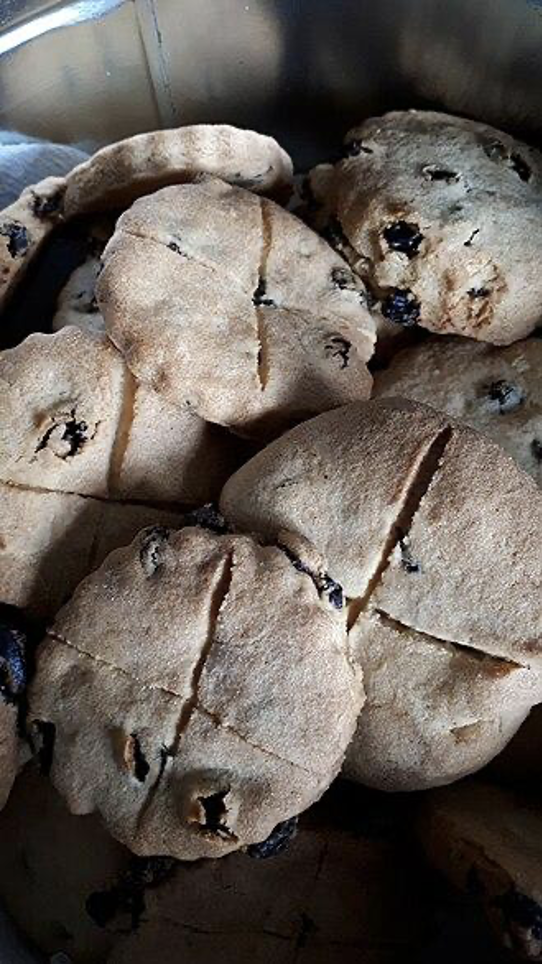
Trick-or-treating used to be an activity called souling, and it originated in medieval England as a tradition to take part in on All Saints’ Day. To participate, people would go door to door exchanging prayers for food. By the Victorian era, the food that was most often exchanged was a pastry called a ‘soul cake’. Today, people often exchange a greeting of ‘Trick-or-treat’ for pieces of chocolate and candy.

Image by Malikhpur via Wikimedia Commons

Conclusion

Overall, the holiday of Halloween was first celebrated by the Ancient Celts as the festival of Sanhaim, and the holiday was incorporated into the Catholic calendar as the ‘Hallowed Evening’. Over time, the spreading popularity of this holiday and other traditions such as souling and carving turnips and pumpkins turned this into the Halloween that many people celebrate today.

For more information, please visit:
AP and IB: A comparison of two accelerated programs

By Hannan Mohammed

Most high school students in America have heard of either the Advanced Placement program or the International Baccalaureate program, and many students take classes in these programs as a way to either earn college credit or to be better prepared for college with rigorous courses. However, many students also wonder what makes these programs different from, or similar to, one another.

There are two main differences between these two programs, which are their goals and what they emphasize: Advanced Placement emphasizes college-level courses to prepare students for success in higher education, while International Baccalaureate emphasizes global citizenship and a well-rounded education to prepare students for life beyond college.

But how do these two main differences show up? The differing emphases these two programs have reflects in how/where they were created, and the classes/curriculum.

Origins

While both the AP and IB programs originated in the same time period of the 1950s-60s, they were created in different countries and for different reasons as well.

In the 1950s, after the end of World War II, there was a gap between high school graduation and college graduation in the U.S.; the Ford Foundation created the Fund for the Advancement of Education, conducting two studies that found that high schools and colleges should work together to let high-achieving students work at a higher level. A pilot program was launched in 1952, and the College Board started administrating the Advanced Placement program in 1955.

From the 1970s through the 1990s, the College Board continued to expand its reach across America, including making efforts to include low-income students and using Pre-AP initiatives to prepare middle school students to take AP courses and exams in high school.

These efforts to reach more students and give them more access to higher-level classes that can prepare them for success in college and higher education reflects the AP program’s goal of closing the gap between high school graduation and college graduation by preparing students with college-level work.

The IB program, on the other hand, originated in Geneva, Switzerland in 1962, with English and French as the official languages. Originally, the first IB exams were taken in 1970; students from 12 schools in 10 countries took exams in the IB Diploma Programme, the first curriculum of the program.

Over the course of the 70s, new requirements were added, such as the Extended Essay in 1974, and IB conferences were held in The Hague, Geneva, and London, where 32 countries were represented. As the IB program continued to expand across the world, more curriculums were added: the Middle Years Programme in 1994 for students ages 11-16, the Primary Years Programme in 1997 for students ages 3-12, and the Career-related Programme in 2012 for students ages 16-19.

Each of these programmes are meant to give students a well-rounded education from a young age, prioritizing a global perspective with world languages and drawing attention to how students interact with the world in different ways, which reflects the IB’s goal of global citizenship.

Curriculum

The second way that the major difference between the AP and IB programs is shown is the structure of the curriculum and requirements to pass.

To start, the AP program offers about 40 different courses in basic subjects such as the arts, math and computer science, English, history and social sciences. However, these classes are more in-depth with specific focuses. For example, taking an AP History and Social Sciences course could mean taking a class that focuses on African-American studies, psychology, human geography, or even macroeconomics, depending on what a high school might offer. This is one way the AP program’s goal of college-level education is reflected; through highly-focused classes that are similar to courses you might take in college.

In the May of each year, AP exams are administered to students to show their mastery of what they learned. For most classes, this includes multiple choice questions and free-response questions. Most exams take around 3 hours. Then, students are given a score of 1-5.

The scores on the exams are important, since this can determine whether a student can earn college credit for the class; most colleges require a minimum score of 3-4 before awarding credit.

The IB program has a different structure; for students going into IB high schools in America, 9th and 10th graders are required to participate in the Middle Years Programme, which is meant to prepare them for either the Diploma Programme or the Career-related Programme. Most 10th graders are required to complete the Personal Project, which gives them a chance to explore their own interests and develop research skills.

After 10th grade, students can either go into the Diploma Programme (taking and testing in 6 IB classes), the Career-related Programme (the same requirements as the DP with the CP core and career-related studies), or to take regular high school classes and test in a few IB classes.

The IB DP courses can either be standard level (SL) or higher level (HL), and while they’re more broad compared to AP courses, they reflect the program’s emphasis on global citizenship by offering a more well-rounded education. In addition, DP students also have to complete a Theory of Knowledge (TOK) class, an Extended Essay, and Creativity, Activity, Service (CAS). These extra requirements are meant to give students a chance to take their learning beyond the classroom and apply it to themselves or others, which reflects the program’s goal of helping students to succeed beyond higher education.

The IB exams are often taken in the spring of each year, which consists of internal assessments (fieldwork, laboratory work, investigations), which come from the classroom, and external assessments (essays, structured questions) which come from the IB program itself. These exams can take most of the day, and are scored from 1-7. These scores, along with completing TOK, the Extended Essay, and CAS, count towards completing the DP or the CP. Some colleges accept IB exam scores, but they are not as widely accepted as AP scores.

This curriculum structure reflects the IB’s goal of being well-rounded by giving students a broad range of subjects and it reflects the goal of success beyond higher education by giving them a chance to apply their education to themselves and the world.

Conclusion

The Advanced Placement and the International Baccalaureate programs share some similarities as programs that help high school students be more prepared and successful in higher education. However, their different goals of college preparation vs. preparation for global citizenship are reflected in their origins (AP starting in the US and IB originating internationally) and their curriculums of focused, in-depth classes (AP) and broad classes that can be applied beyond school (IB).

For more information about either of these programs, please feel free to visit their websites here:

September is suicide awareness month. Why is it essential for you to know about suicide?

By: RJ Johnson

September is suicide awareness month. Why is it essential for you to know about suicide prevention month? Because it helps raise awareness about an issue that is very much preventable, and it teaches you to look out for this specific behavior.

Forty-nine thousand three hundred sixteen people committed suicide in 2023, and 9% of high school students have reported attempts this year; that’s just what’s been reported. Many people don’t share their attempts or mention them at all. Overall, suicide is the eleventh leading cause of death, but it is the fourth leading cause of death for ages 35 to 44 and the second leading cause for ages 10 to 34. Think about that for a second. The second leading cause of death in teens and young adults is PREVENTABLE.

You’re probably asking yourself, “Well, what can I do to help prevent it?” If you have family or other loved ones who are showing signs or symptoms, check in on them! Ask them genuinely if they’ve thought about committing suicide. While it might not be an easy question to ask, it’s essential.

Now, “What are some signs that someone might be thinking about suicide?” Great question. Some of the more significant signs include withdrawing from friends, saying goodbye, and giving away essential personal items. But that’s just some of the big ones. If they stop doing an activity you know they love, you should check in on them.

Studies show that most people who attempt to commit suicide, or do so, tell someone beforehand, whether it’s directly or indirectly. Even if they tell you not to tell anyone, it’s crucial to tell a trusted adult or someone who can help. Even if it’s not a close friend, but you’re worried about them, report it and they’ll make sure they’re okay.

Suicide is a significant problem that is preventable. One way to help prevent suicide is by checking in on loved ones when they show signs and telling a trusted adult who can help. You might save someone’s life.

For more information, please visit:

Halloween and the Changing Leaves: Why Fall is one of the most popular seasons in America

By: Charlotte Aver

Photo by Pixabay on Pexels.com

When you ask someone what their favorite season is does it feel like the answer is always fall? This is probably because fall is the most commonly liked season in America. According to a CBS News poll in which 45% said that their favorite season is fall.

Why is fall one of the most liked seasons in America? Is it the abundance of pumpkin flavored things or the spooky season and Halloween? Don’t forget about fall colors, apple picking, pumpkin carving, and Thanksgiving. Could it also be the ingrained predisposition to like fall that is brought upon as children? Maybe it’s a combination of all of these things bundled together into a nice fall themed package.

According to Katherine Lively, a sociology professor at Dartmouth University, we are predisposed to like fall as children. “As children, we come to associate fall with going back to school, new school supplies (and) seeing friends. It’s exciting, for most. We still respond to this pattern that we experienced for 18 years.”

Another reason why fall is so popular is because it can be a time to start anew as Yasmine Saad, PhD and licensed psychologist, said “Temporal landmarks divide life into distinct mental phases. They allow us to put in the past negative experiences and propel a fresh outlook.” Fall is also a time of order and structure making it a relief to people dislike the chaos of summer.

“Depending on where you live, fall usually means the end of swimsuit season. People tend to feel more comfortable about their bodies and appearance in the fall because they’re wearing more or bulkier clothing,” Dr. Levy says. That, combined with the social acceptance to indulge in Halloween candy and decadent fall foods, means “there’s less body shame and pressure to diet in order to maintain a picture-perfect, beach-ready body,” as Levy also explains. This is yet another reason why fall is so popular and a relief for plenty of people. Fall is also a time when eating goes beyond just fuel for your body, it becomes a time that families and friends come together to eat.

In addition to a childhood predisposition towards fall, there are plenty of fun activities that are purely fall related and you can’t do any other time of the year. You can go to an apple orchard and pick apples, drink apple cider, and get some nice warm cinnamon donuts. According to a poll, 51% of Americans’ favorite thing about fall is the leaves changing colors, and in New England it is incredibly popular to visit purely for fall colors. Between 3 and 4 million people go to New Hampshire alone to see fall colors.

When discussing fall you can’t forget about Halloween and spooky season. Halloween is one of the most commonly celebrated holidays in America and on Halloween night you can certainly tell by the sheer amount of decorations and trick or treaters. Leading up to Halloween there are plenty of things to do to start feeling the spooky atmosphere, you could go to a pumpkin patch and carve a pumpkin or go to a haunted house. You could also go to a coffee place, chain or local, and get one of the most popular seasonal treats, the Pumpkin Spice Latte. In some states there aren’t distinct seasons therefore, no true fall, even so PSL’s and Halloween are just as popular and celebrated.

Overall, fall is one of the most popular seasons and honestly, what’s not to like? From colorful leaves to Halloween, pumpkin spice lattes and apple cider, there is truly something for everyone. So the next time someone asks your favorite seasons I hope the answer is ‘fall’.

For more information, please visit: