Category Archives: Tech/Games

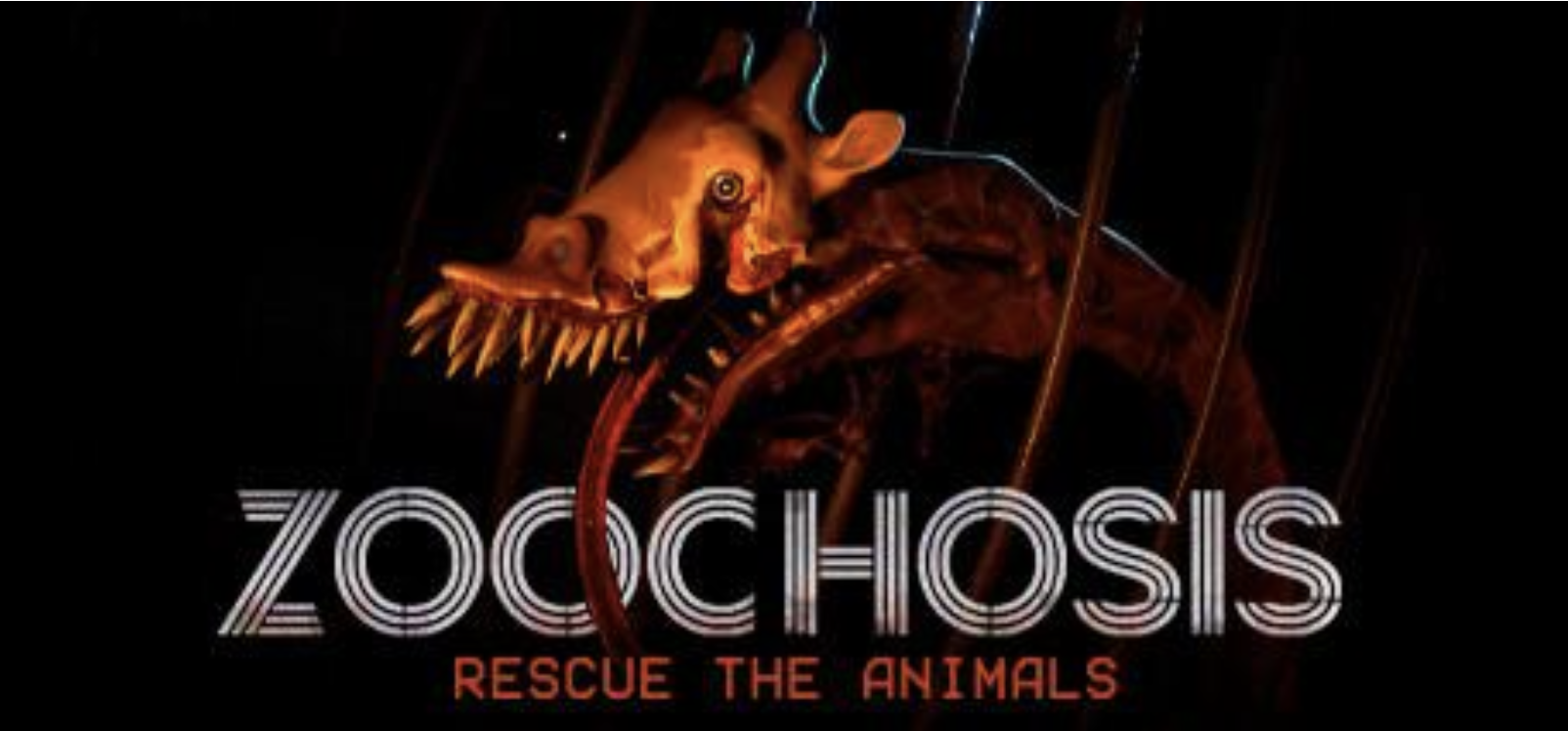
The potentially large upcoming horror game (Zoochosis)

By: Julia Yang

Warning: The game discussed will contain hyper-realistic mutant animals, distorted bodies, unsettling sounds, blood, and possibly death. This is a physiological horror game with horror elements.

‘Zoochosis’ is a game that is being published and developed by Clapperheads. Clapperheads is a less known game development company but is recognized for their most popular game ‘Sparky Marky’. Zoochosis’ official announcement was on January 13th and is said to be released in Q2 2024.

The idea of ‘Zoochosis’ is that you’re a zookeeper doing your nightly shift of creating a vaccine to cure mutated animals. From what it looks like, throughout the game you’ll have to notice small shifts or differences within all animals to be able to tell who’s mutated or not.

Based on the game trailer, animals will try to fool you by acting as their average selves, the reason why is unknown as of now.

People who have watched the trailer, or maybe seen stuff about the game floating around on the internet, are really looking forward to ‘Zoochosis’. People like the idea, design, premise, and overall vibe of the game.

Something people seem to have a few worries about is the delivery. The game itself and the idea is awesome, but delivering this game and story well could be challenging. There are many games like ‘Zoochosis’ that have an incredible trailer and outlook, but when released, are total a letdown. A possible example of this could be Scott Cawthons ‘FNAF: Security Breach’. It looked great and everyone looked forward to it, but when it was released, many people had complaints and issues about the characters, story, and overall gameplay.

I hope ‘Zoochosis’ doesn’t go down the same path as some other games and it actually lives up to it’s fame.

Warning: this game will contain hyper-realistic mutant animals, distorted bodies, unsettling sounds, blood, and possibly death. This is a physiological horror game with horror elements.

Once it gets released, it’ll be on PC via ‘Steam’.
Official trailers listed below.

Announcement trailer: https://www.youtube.com/watch?v=zx76uvIDU3s

Exclusive gameplay teaser: https://www.youtube.com/watch?v=O5XutwxCIYY

JOYSTiCK Empirical Ep. 11: ‘Cocomelon: Play with JJ’ – Machiavellian Science Theatre 3000

By: Daniel Kendle

Babies are nice. Babies are cute. Everyone likes babies (except for those who don’t). Some babies, however, are different. Some scream, cry, wail to get attention. Some can’t do simple mathematics, read, or assert their viewpoint on a topic through civil debate. Thus, babies aren’t all that exciting to me, as a person who fancies such activities. I don’t care for the infants, nor do they for me, if I may ponder.

Granted, I’ve noticed something in our most recent generation of children. They seem to linger towards a heinous cryptid, an entity that feeds on their short minds – feeding them sludge in return. Yes, it’s time we talk about the dreaded horseman that has taken control of our youth.

Everyone, welcome back to JOYSTiCK, a serial that (usually) reviews any video game our grubby mits come across. Today’s mini-review is about the white whale of my time here writing articles: ‘Cocomelon.’

‘Cocomelon’ is a multimedia enterprise that came about in the 2000’s. The brand focuses on preschool nursery rhymes available on YouTube and other media sites, and is one of the most successful children’s entertainment companies in the world. It’s been estimated that the organization is worth around $500 million.

Now, I should note that I’m not exactly the target audience for these videos, let alone the game I’ll be reviewing today. I can’t say I’ll be getting a new fix on life from “Who Took the Cookie? Puppy Song!” or “Tortoise and the Hare Race” anytime soon. I mean, I have so many other things to do, like betting on horse races! When watching the latter example, I can’t have even half the fun because I can’t feverishly lose money [under ethical circumstances]. What’s a guy to do?

Well, for an adequate amount of fun, (and return on investment), you can play the all-new game in the franchise: ‘Cocomelon: Play with JJ.’ Released fairly-recently, the games are pretty basic: you play as JJ, the main character toddler in the ‘Cocomelon’ universe, as he explores various parts of his house and plays minigames. There’s also a collection mechanic, since you can get stickers after completing these games and/or exploring the house.

As a mini-review, I don’t have too much to say on the game. For a mobile game it’s pretty competent, actually. Because of the limited environments the designers had to create, each feels slathered in detail, and “hardcore fans” might be able to recognize certain elements in the rooms, but I couldn’t. All I can say is that the game is alright on the visual front.

In terms of gameplay…it’s fine? Like, when you’re 16 and playing a game designed for toddlers, things can’t be the most “invigorating.” You control the main character, dragging them around box-shaped places looking for stuff to do. Sometimes you can click on something to have it do a little animation, but these usually just act as a little distraction, probably for little kids to click on and lose their minds over. You can also find various members of JJ’s family, who also perform an action.

The nursery rhymes were pretty boring. Basically just think of a bog-standard kid’s song, slap a small little game onto it and repeat that a dozen times. For example, the “Yes Yes Vegetables” song has you feeding JJ. The “Itsy-Bitsy Spider” song lets you control a spider navigating a bathtub. Very simple stuff; you also get a sticker at the end of each.

In conclusion, ‘Cocomelon: Play with JJ’ is so small of a game it has basically nothing of note to discuss. Even if it was an ironic pick to review, the game’s still pretty lame. It could’ve used some combat or grotesque themes, because as it stands it’s a lame kids game. I give it a 4/10, which is probably more than it deserves.

COCOMELON DEMON: Are you sure about that?

THE REVIEWEE: Wha-? Who are you?!

COCOMELON DEMON: I am the very being that lives in your soul.

THE REVIEWEE:

COCOMELON DEMON: I’ve been the one watching you since you were born.

THE REVIEWEE: But…I’ve never seen you before in my life.

COCOMELON DEMON: That’s the point.

THE REVIEWEE: But-!

COCOMELON DEMON: Shh…(strokes finger over The Reviewee’s cheek)

THE REVIEWEE:

COCOMELON DEMON: (softly) Don’t let the voices hear you.

THE REVIEWEE:

COCOMELON DEMON: Come. I have much to discuss with you (opens portal to Cocomelon dimension).

THE REVIEWEE: …okay.

(The pair disappear to the Cocomelon dimension).

JJ: Hey gang, it’s me: JJ! Now that the regular person writing for this serial is gone, I’ve finally got a body to control to voice the gospel of Eldresassigul, Flesh-Bringer of the Peasentfolk. My first objective is to proclaim ‘Cocomelon: Play with JJ’ as a 10/10 game. With such stunning graphics, tight gameplay, and witty dialogue, it’s clear that the game is set up to be the most influential of this decade, and I’m shocked by how underrated it is. After all, I’m the star!

Anyways, those who oppose the label will be sent down to the mines of the underworld to be sacrificed to cryptids of decay and famine handed off to our support team to receive a small talk about their “misdirection in life.” Until then, I’ll leave until my next review: ‘Cocomelon: Shadows Die Twice.’ See you then!

Games I believe should be talked about more

By: Julia Yang

There are loads and loads of games that have an increasing amount of popularity, resulting in wide ranges of community. Many of these games’ attention is extremely well-deserved, but some I feel like deserve more; these games have had many popular streamers and YouTubers play them but for some reason have yet to gain a large following like others. These games are usually known by most, and talked about by none.

I’m just here to raise the awareness of said games.

This article is basically suggesting games and reviewing them, so be aware of spoilers.

(These games are not ranked in any specific order)

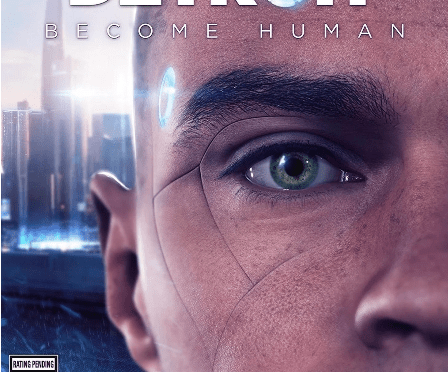
Number 1, ‘Detroit: Become Human’ (DBH)

‘Detroit: Become Human’ is just such a fantastic game considering all of its attributes like visuals, plot line, and overall gameplay. Not only is it a stunningly beautiful and realistic game, you truly connect with the characters as DBH is a decision based game that has 82 endings.

In DBH, you play as 3 androids in the year 2038; Connor, Marcus, and Kara. Each android has their own stories and conflicts, all of which you decide how they deal with them.

All androids have a possibility of becoming “deviant”. An android becoming deviant basically means that the android has broken out of their original code and has a consciousness of their own.

Connor is a detective android. Your job as Connor is to capture all deviants and track down the reasoning behind all of the rapidly increasing deviant cases. Connor is a conflicting character to play and empathize with as you’re supposed to do your job to capture all of the surrounding deviants, but as you continue the story, Connor may begin to feel emotions for others; something completely forbidden of him to do.

Marcus is a caretaking android. His job was to take care of his owner and friend, Carl. An incident between Carl and his son results in Marcus being thrown into an android dump yard, where Marcus goes deviant and his story begins.

Marcus believes that all androids should have rights, that they should be treated the same as humans. You follow Marcus in his story as you make choices between life and death to save his declining kind.

Kara is also a caretaking android. Kara is in an abusive setting as her owner threatens to hurt his daughter— Alice— and herself as a result of his unfortunate past. Kara goes deviant to escape with Alice where they begin their relationship as a family. Kara’s goal is to escape the country where it’s safer for androids, thus, safer for her new found family. You make decisions to sacrifice or not, to tell the truth or lie, to do anything to leave the country or think about the lives of others.

I have not played this game myself, but I’ve watched multiple gameplays. Every single one of them is unique in their own way as they each make their own decisions that end up in different scenarios. I love watching them make choices based on their own experiences and quick reactions.

Before you think of watching/playing this game, be warned; this game touches upon death, suicide, violence, abuse, and oppression.

I’d rate this game a shining 10/10, I really believe that nothing about this game can be rated lower. You can play DBH on the PS4 and PC.

Number 2, ‘Stray’

I’ve not known many people who know ‘Stray’, but trust me when I say it is a masterpiece. It’s such a unique story that speaks upon what may happen if humanoid robots outlived mankind, I’ve yet to see anyone make a story even remotely close to the one told in ‘Stray’.

In ‘Stray’, you play as an orange cat without a known name. The cat travels through the underground filled with a robot ran civilization where they’re blocked off from the outside world. Your job as the cat is to help the robots reach the outside as this’ll benefit you and the future as you are from the outside.

You’ll discover that the world you’re exploring needs more aid and has more depth than you first believed, eventually forming a large understanding of the game and the world it built up.

I wish I could think of more to write about, but this game is so complex that I don’t even know what to say. What I can say is that this game definitely needs a larger audience.

As someone who played this game, I rate ‘Stray’ a 9/10. Everything about it is wonderful, but I will say, a few minor things are hard to comprehend— also because the ending made me sad. You can play ‘Stray’ on multiple platforms, just not Nintendo’s Switch.

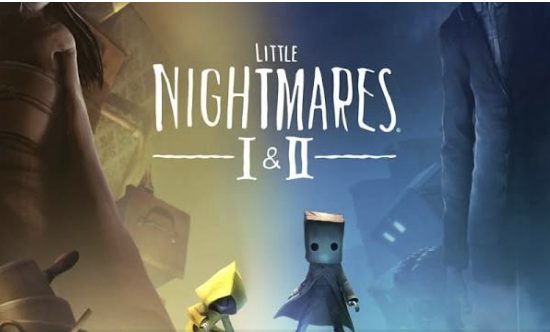
Number 3, All ‘Little Nightmares’ games

I’ve talked about ‘Little Nightmares’ in a past article since they’re coming out with a third game, but I’m here to bring up the existing two since nobody else seems to wanna do it.

The ‘Little Nightmares’ series only has open endings for interpretation and theories. There’s no dialogue, or known personality for characters. It’s a game of mystery, skill, and strategy. When you play these games, you better have the patience and reaction of a mouse, because things happen fast. You solve puzzles whilst also being chased by unbelievably creepy humanoid things 10x your size.

In ‘Little Nightmares I’, you play as Six. Six wears a yellow raincoat and carries around a lighter to see in the dark. As Six, you encounter a variety of monsters to escape the place she’s put into called ‘The Maw’. When you’re Six, you have to jump, climb, swing, and harm. Nothing can get in the way of your escape plan.

In ‘Little Nightmares DLC: Secrets of the Maw’, you play as a boy simply named The Runaway Kid. He wears a blue shirt, dirtied up pants, and a chain around his ankle. The Runaway Kid also seeks to escape the Maw, but uses the help of interesting little creatures named the Nomes to aid him in his puzzles. The Runaway Kid seems to get a lot more help in his journey than Six does.

In ‘Little Nightmares II’, you play as Mono. Mono wears a brown paper bag over his head, a brown trench coat, and brown pants. Mono encounters more complex and new characters than the past ‘Little Nightmares’ games. These characters seem to have special abilities, unlike the majority of previous monsters. ‘Little Nightmares II’ is a prequel to ‘Little Nightmares I’, meaning that the events in this game had taken place already by the time ‘Little Nightmares I’ had happened. Mono saves and travels with Six to survive in this world.

‘Little Nightmares III’ is yet to come, but deserves all of the hype it can get since the past games were so iconic. The people I’m surrounded by don’t know about ‘Little Nightmares’, but can recognize it. People online on the other hand, know all about it. I always wonder why it doesn’t get talked about.

I played these games with my siblings (they’re all single player, we just switched off the controller), and the gameplay was extremely fun. We love this franchise so much.

I rate all games a 10/10. ‘Little Nightmares’ can be found on all platforms.

Number 4, ‘A Way Out’

‘A Way Out’ is a really rare game for someone to know about. It stars two inmates working together to escape prison and get revenge on someone named Harvey.

This game requires two players, it cannot be played otherwise.

One person will play as Leo Caruso. Leo is sarcastic, brash, overly confident, comedic, loud, and hardheaded, always resorting to violence before anything else. He escapes to see his family and seek revenge on Harvey, a past companion who betrayed him. He belongs to a family of 3; his wife Linda, his son Alex, and himself. Leo makes crass decisions and enjoys the thrill of fighting, which makes him a super funny character to play as.

One person will play as Vincent Moretti. Vince is reserved, respectful, calm, rational, controlled, cool, and a pacifist. Unlike Leo, Vince thinks about the consequences of his actions— you can say he’s the brains of the two. Vince belonged to a family of two before his wife Carol gave birth to their newborn daughter while he was on the run. Vince doesn’t like to fight, he likes to talk his way out of situations if possible. Vince is the more, I guess, realistic option of the two characters.

In the end, it takes a turn for the worse and it doesn’t matter what character you choose as in the last chapter you both end up in the same situation no matter what decisions were made in the past. You end up in the same situation at the end, but the ending is still the player’s choice. There are two possible endings in total, and they make it worse for both Leo and Vince. Let’s just say; there is no good ending.

I played this game with my little sister, and it’s just outstanding. The end was totally unexpected, which ended up with both me and her absolutely hating one of the main two. I played as Vince and she played as Leo, it was so fun.

Before you think of watching/playing this game, be warned; this game touches upon death, (gun) violence, vulgar language, and partial nudity. (Rated M+)

I rate this game a 10/10, this game is super enjoyable for both players. You can play ‘A way out’ on multiple platforms, but not Nintendo’s Switch.

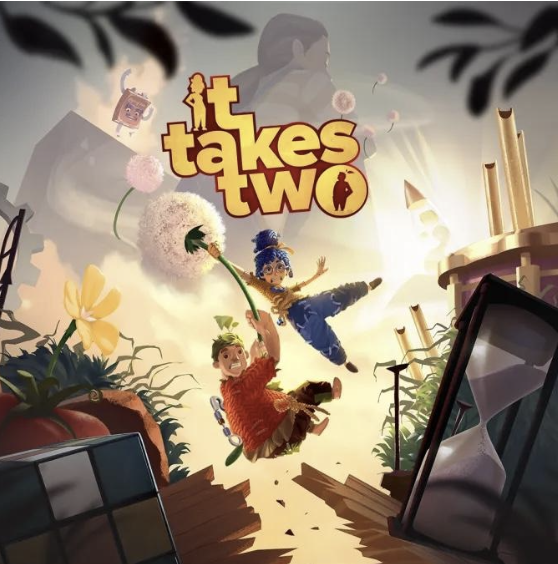
Number 5, ‘It Takes Two’

‘It Takes Two’ was made after ‘A Way Out’ and they even added a little Easter egg as a salute to the game.

In this game, the two main characters get turned into toys, created by their daughter Rose, by a sentient book named the Book of Love due to their doomed relationship with each other. As the two characters, you and a friend will help them repair their family by traveling through different experiences with one another resulting in them falling in love all over again.

This game also requires two players, it cannot be played otherwise.

One person will play as May. May is cocky, intelligent, loving, and rational. May is quick to think about responses and plans in difficult situations, which often gets disrupted by her husband or the Book of Love. She finds she has no time to herself and whatever Cody does somehow messes her day up. When May encounters something, she can’t help but think aloud. She’s smart and is excellent at negotiating with the enemy.

One person will play as Cody. Cody is loud, comedic, sarcastic, and understanding. He enjoys making jokes and lightening the mood, even though sometimes it’s better to just not speak at all. Some of his past choices come up in this game frequently since Cody often does things without thinking or he didn’t do something correctly and it comes back to bite him.

Even so, they’re both married and need to figure things out. That’s where you and a friend come in, or possibly you and your significant other. Even though I’m not with anyone, I think this game would be an excellent game to play with your significant other since it touches upon usual issues and fights that may appear in your own relationship and how to repair anything possibly broken.

I played this game with, again, my younger sister. We had a really fun time playing since the characters are super entertaining and the gameplay was interesting.

I rate this game a 10/10. ‘It Takes Two’ can be found on all platforms.

Number 6, ‘INSIDE’

‘INSIDE’ is another no-dialogue-mysterious-game like the ‘Little Nightmares’ games. The art style is really unique— and even though I’ve played it multiple times, I still don’t know what this game is about.

‘INSIDE’ is a game that I know people don’t know because absolutely no one brings it up anywhere. There’s not even that many YouTubers/streamers that played this game. I only know one.

In ‘INSIDE’ you play as a boy with a red shirt and black pants. He seems to be running away from the police/any authoritative figure, for what I know, an unknown reason. I’m actually not too sure if it was the police either. The kid just seems to be wanted by everyone.

The kid travels through the disturbing world, encountering pigs, brain dead humans, water creatures, deadly dogs, and complicated puzzles. When I say complicated, I mean it. There were several puzzles I had to look up because I was so lost.

Again, I wish I could say more, but I really don’t know what’s going on in this game. I don’t know the story, the characters, or the world. All I know is that it was a really good game.

Before you think of watching/playing this game, be warned; this game may make some uncomfortable as it shows rag doll-like humans, dead pigs, clumps of sentient meat including human meat, and just overall large amounts of floppy physics. I know that physics like that in games can make people nauseous or unsettled.

I rate it a solid 8/10 even though I’m lost. I think the reason I want more people to talk about this game is because I want to know what was going on and I can’t find any answers or common knowledge if no one talks about it. You can play ‘INSIDE’ on most platforms.

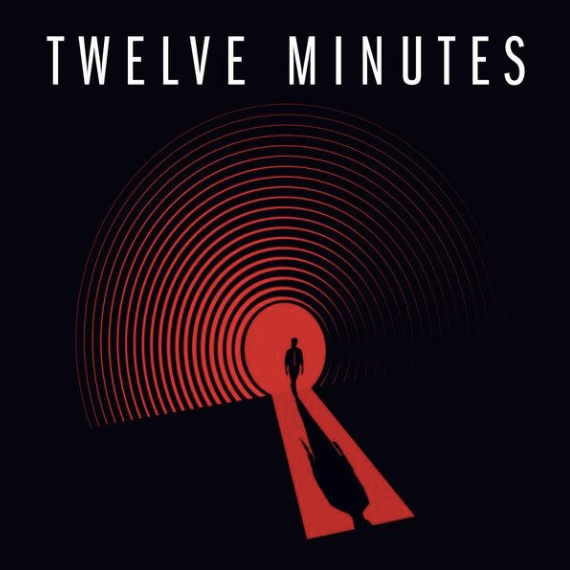
Number 8, ‘Twelve Minutes’

‘Twelve Minutes’ is definitely an…interesting game. In ‘Twelve Minutes’, you get stuck in a time loop and you have to figure out how to break out of it in twelve minutes (shocker).

You almost immediately start off by your apartment being broken into by a police officer accusing your wife of murdering her father and looking for a pocket watch. When your wife denies being a murderer, the police officer murders you as a threat to her life, thus; your loop begins. It’s your job as her husband to get rid of the cop and stop him from harming you or her in the name of getting out of this loop.

With every loop, you learn something new. With every loop you go deeper and deeper into the real situation, the real story behind the murder and the pocket watch.

This game is phenomenal. I’ve watched and played this game, and the twists and turns are always so jaw dropping. I’ve never played a game like ‘Twelve Minutes’ before, and it was an incredible experience.

I rate this game a 10/10. ‘Twelve Minutes’ can be found on all platforms.

I hope by writing this article more people will watch/play these games which will result in more people talking about them. I hope these games spread around the world like rapid fire one day.

More features added to the ‘Minecraft’ 1.21 update

By: Daniel Kendle

Since my last article on this subject, Mojang (the company that heads ‘Minecraft’) has continued adding features to the 1.21 update, of which is still unnamed. I was originally going to post a comment under my first review explaining the new additions, but there were enough that they warranted an entire follow-up all together.

This recent batch of features have been said to be the last major components of 1.21, so I probably won’t have to make a 3rd article. Once we get a name drop alongside some possible smaller features I’ll then post a comment under this article reviewing the new stuff. Until then, however, let’s begin!

Beginning with changes to existing gameplay, let’s talk about Wolf Armor and wolves in general. The former has had some neat additions, such as being able to be dyed by the player for further customization. The armor also works differently now; instead of reducing the damage taken by the wolf, it now absorbs all damage that would have normally been taken by the hound until it breaks. This means that, if your dog “accidentally” falls off a 1,000 meter drop, it’ll survive (but probably without any armor now).

We’ve also gotten 8 new wolf variants, each spawning in its respective biome. This is a feature that players have been asking for since cats got new coats in the game a few years ago, so this and the armor change make for great additions.

There’s also an updated way to get Wind Charges from the Breeze mob. Instead of dropping them plainly, the slain monster will now drop a Breeze Rod, which can be crafted into a few things. One of those are Wind Charges, and placing a single rod into your crafting grid interface nets you 4 charges. They function identically to how they did before.

That’s a good segway into the new stuff added. Probably my new favorite feature added in this update is a new weapon: the Mace. Crafted with a Breeze Rod under a new block called the Heavy Core (which doesn’t have a big use right now), it’s unique because of how you fight with it. The weapon’s main quirk is that it scales in damage dealt to an enemy depending on how high you fall with it. From my research there’s no cap to the scale, so you can rack up obscene amounts of damage from a tall fall.

Maces also come with 3 new enchantments, special buffs that can be applied using Lapis Lazuli at the dedicated Enchanting Table. The first is Density, which heightens damage dealt when falling, making it even stronger. The enchantment ranges from level 1 (I) to level 5 (V). The second is Breach, which bypasses the armor protection of an opponent by 15% each level (I – IV). Finally, there’s an enchantment that you can’t obtain from the table, being exclusive to the Trial Chambers: Wind Burst. The enchantment spawns a Wind Charge under your feet every time you hit a foe with the Mace, launching you in the air and allowing for combos.

The Mace is one of my new favorite features from this update, maybe even my favorite. It’s been a while since we’ve gotten a new weapon in the game, the last being the Crossbow from 2019.

5 new paintings have been added to the game: “Unpacked,” “Prairie Ride,” “Meditative,” “Humble,” and “Baroque.” The 5 paintings all look pretty great; it’s been over a decade since new variations were added to the game. There’s not a lot to say about them, however. While a lot more different from past paintings, they fit into the game’s aesthetic well.

2 new Armor Trims have been added. Armor Trims are items that can be applied to your armor with a gemstone or ore to give it a colorful trim. There’s upwards of a dozen different trims, found in structures throughout the world. The new pair are found in the Trial Chambers, and are called the “Bolt” and “Flow” templates. The former looks like sheets of metal with screws built in, and the latter spirals of wind. I prefer “Bolt,” personally.

There’s also 3 new sherds. Pottery Sherds (“sherds” being a term in archeology for a piece of ancient pottery) are normally found through brushing Suspicious Sand and Suspicious Gravel in structures in the game. These new sherds vary, since you can only find them already-built into pots found inside the Trial Chambers. The sherds depict a Breeze, a spiral, and an ax.

2 banner patterns have been added, which, when used, imprint a specific picture onto banners. The patterns depict a Breeze and a spiral, the same as the sherd designs.

The last part of this “New Additions to Older Features” section are 4 new potions. Potions can be drunk or thrown, and grant specific effects to those with the drinks. The Potion of Infestation has a chance to spawn a Silverfish every time the affected entity is hit. The Potion of Oozing causes 2 Slime mobs to spawn after the entity dies. The Potion of Weaving makes cobwebs appear after an entity dies. Finally, the Potion of Wind Charging lets loose a Wind Charge after the entity dies.

Each of these effects has a splash variant (letting you throw the potion at others), a lingering variant (the same as the splash variant, but leaves behind a cloud of the effect) and an arrow tipped with the potion.

The final major feature is Ominous Trials. These events can be triggered in a Trial Chamber by drinking an Ominous Bottle, and cause nearby Trial Spawners to spawn beefier, stronger mobs with better armor and weapons. Some of the potions from earlier will routinely spawn above you or opponents, causing more havoc. These new trials will give much better loot, however, including the Heavy Core. This is the only way to get the item, and therefore the Mace.

Ominous Trials have a new type of vaults, too: Ominous Vaults. These contain the core, as well as the Flow Armor Trim, Flow Banner Pattern, Wind Burst enchantments and some valuable older items, like blocks of diamonds and Golden Apples.

Also, just as I’m writing this part, it’s been revealed that new music is coming to the game. None has been released yet, but I’m excited to hear the new tracks.

While ‘Minecraft’ 1.21 isn’t out yet, it’s likely to come within the next couple months, and I’m still very excited.

Top 3 phones of 2024

By: Hyde Moua

Image created with Imagine

As of right now, these are the best phones of 2024 and I think they are worth their prices, especially with all of their unique features and specs they have within their slim design of a device, I think that these phones deserve to be the best phones of 2024. I personally feel that Android phones and Samsung phones are better than iPhones due to more benefits but overall these are amazing phones that everyone should try if they have the chance to use them.

Coming in at the number one spot is the “Samsung Galaxy S24 Ultra”. The “Samsung Galaxy S24 Ultra” takes the number one spot due to a better overall performance in design, display, performance, and battery life compared to other Samsungs and iPhones. The “Samsung Galaxy S24 Ultra’s” main advantage is its longer battery life which can last 56 hours when used normally, and 15.5 hours under heavy usage.

In the number two spot is the “iPhone 15”. The “iPhone 15” takes the second place spot because of its similar performance to the “Samsung Galaxy S24 Ultra” and its better camera quality compared to other phones. The “iPhone 15” also has a long software support system, which means it will be supported with updates, bug fixes, and security patches over longer periods of time.

Lastly, the number three spot for best phones of 2024 as of right now is the “iPhone 15 Pro Max”. The “iPhone 15 Pro Max” takes the third place because of its similar features to the “iPhone 15”, but isn’t as good because of its slightly slower features. The “iPhone 15 Pro Max” has a slower screen and slightly less battery life compared to the first two phones. In my opinion, this phone is just as good as the “iPhone 15”.

HOW TO MAKE CAMOUFLAGE PATTERNS USING ‘PHOTOPEA’

By: Hoaseng Thao

Ever wanted to make a camouflage pattern but don’t know how? Well this article is for you, because this article will go through the process of how to make different camouflage patterns using the free editing website, ‘Photopea’.

Before we get into the tutorial, I must explain what is needed for a camouflage pattern to work as a functional camouflage pattern; here are the two rules I’ve made to explain this:

  1. The pattern must be created for a specific (or varieties of) environment, i.e. Woodland, Desert, Tropical, or Arctic environments.
  2. Colors cannot be too bright or too saturated, military camouflage patterns are designed to deceive the eye, not entice them.

STARTING OFF WITH THE CLOUDS

STEP 1

Go to https://www.photopea.com/ and start off with a new project, usually I prefer using 2000 pixels for both height and width however you can change this if you want.

STEP 2

Go to your layers tab, which should be on the right side, and click on the sticky note symbol on the bottom to create a new layer. There should already be a layer when you start the project, named “Background”, and we’ll be using that layer for the background color of the camouflage by using the paint bucket too by pressing “g”.

STEP 3

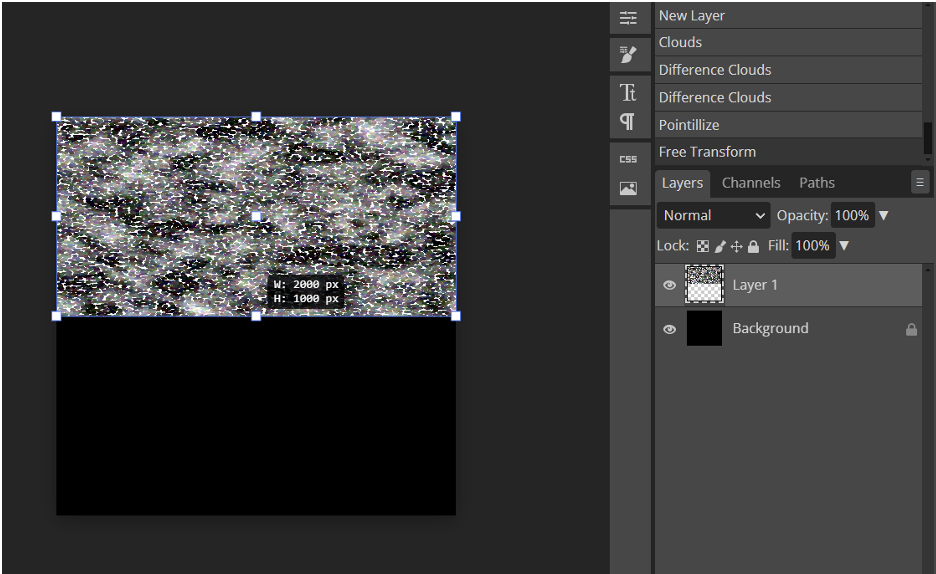
Select your new layer and go to the “Filters” tab at the top. There go to the “Render” tab and click the “Clouds”. Repeat this process again but instead of clicking “Clouds” you click on “Difference Clouds” twice.

IMPORTANT NOTE

This is the part where I’ll split this tutorial into three sections on how to create different types of camouflage patterns. The first section will go over how to make what I call, traditional camouflage patterns, which consists of round and blobby shapes.

The second section will go over how to make what’s called “Digital Camouflage” which uses more pixelated shapes than rounded blobby shapes, and examples of digital camouflage patterns are the Canadian CADPAT, the American UCP, and the Estonian ESTDCU.

The third and final section will go over how to make Flecktarn like camouflage patterns. For those who don’t know, Flecktarn is the camouflage pattern used by the German military and is distinct for using spots scattered across the pattern.

TRADITIONAL CAMOUFLAGE

STEP 1

Select the layer that has the clouds filter and go back to the filters tab then to the “Blur” tab. There you will select the “Gaussian Blur”. When clicked you’ll be greeted with a window asking how intense you want the blur to be, with the more blur resulting in a more rounded and blobby shape while less blur will result in a more erratic blob.

STEP 2

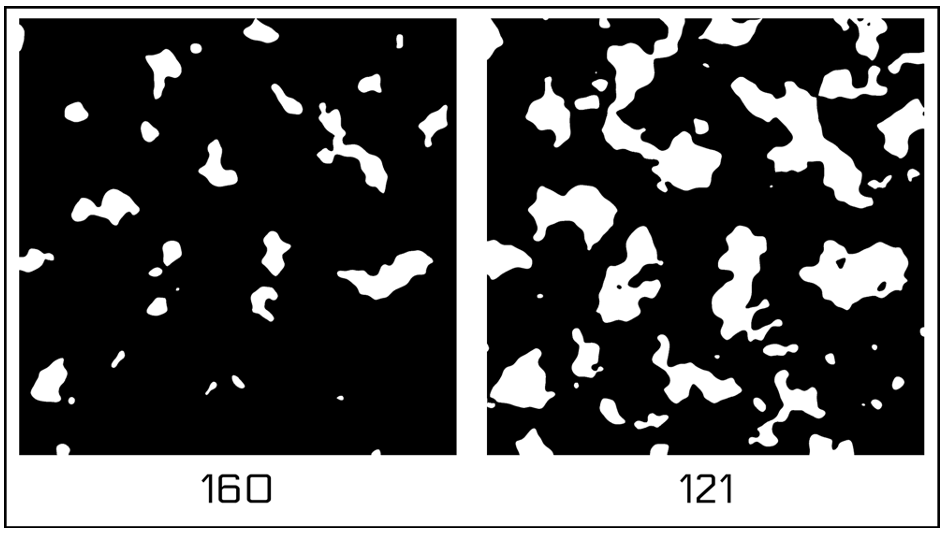
Now with the selected layer, you go to “Image”, “Adjustments”, and finally “Threshold”. Upon clicking “Threshold”, you can choose how intense the threshold would have on the layer, with the higher the intensity leading to less blobs and vice versa.

So, in this example 160 is more intense than 121

STEP 3

Selecting the layer you now go to “Select” then click on “Color Range”, where you’ll see a window pop up with the options to select specific colors or areas that are bright or dark, but depending on what you want for your pattern, you can select any of the options.

STEP 4

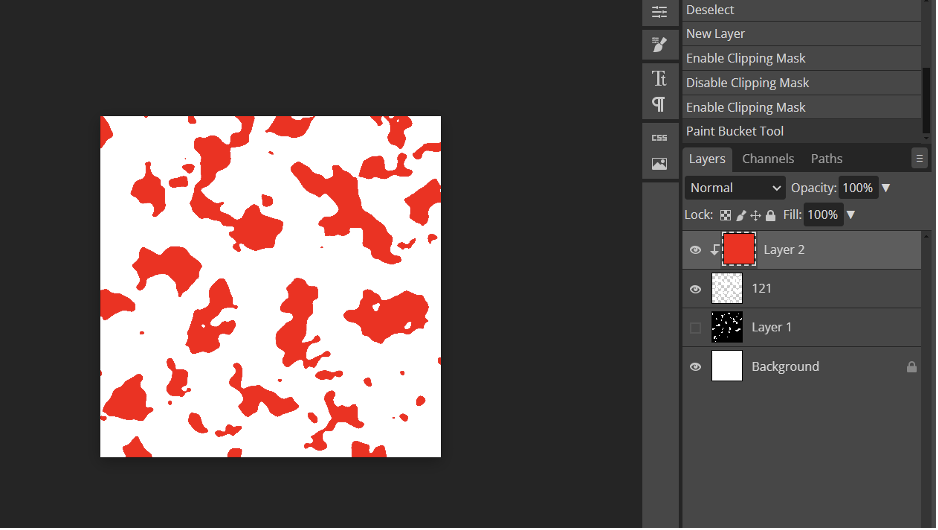
After selecting the color, you can now press the delete (or if you don’t have a delete button, you can go to the “Edit” then click on “Clear”) to  remove the selected area. With this, you can now change the color using gradient map or adding a new layer and pressing alt click to enable clipping mask, which would allow you to paint over the layer.

STEP 5

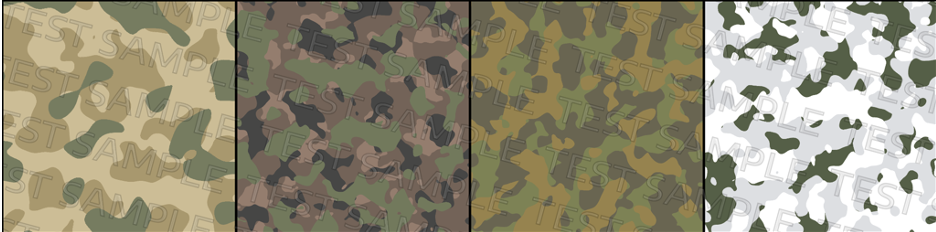
Now repeat the previous steps, which should try to be in different sizes and should try to disrupt the other layers. Here are a few examples of camos that I’ve created while following the steps above.

DIGITAL CAMOUFLAGE

STEP 1

Select the layer, go to “Filter”, “Pixelate”, and then “Pointillize”. I usually use 25px when using pointillize but you can change this depending on what you want. From here, you press “alt+ctrl+T” to free transform the layer, then you can hold “shift” and drag the bottom of the layer till it snaps to the middle of the image.

STEP 2

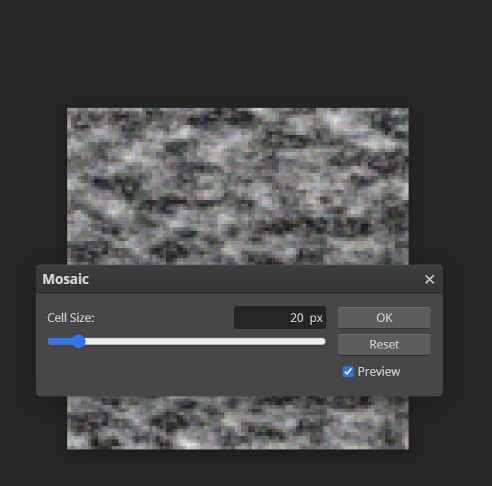
Duplicate the layer with “ctrl+J”, then move it to the bottom before merging with the original layer by selecting both layers and do “ctrl+E” to merge layers. Now you can do “Gaussian Blur” and go to “Filter”, “Pixelate”, and “Mosaic”. From here you can change the size of the pixels to your liking.

STEP 3

Now use the “Threshold Edit” to change how many white or black pixels would appear on the screen which you can delete by using the color range selection, and finally you can copy steps 4 and 5 from the traditional camouflage pattern section to create a digital camouflage pattern.

FLECKTARN CAMOUFLAGE

STEP 1

Select the layer, go to “Filter”, “Pixelate”, and then “Pointillize” and from here you can choose the size of the spots seen on Flecktarn camouflage patterns and its many variants. Now go apply “Gaussian Blur” to the layer, and I recommend that you keep the “Gaussian Blur” below 12px to avoid merging all the spots together.

STEP 2

Now repeat step 1 and color in the layers, and you now get yourself a Flecktarn style camouflage pattern.

CONCLUSION

There are many other ways to create different types of camouflage patterns but these three are the most common found throughout the world, and I hope that this tutorial helps you when it comes to designing your own camouflage patterns.

Here is a link to the website if you haven’t clicked on it before: https://www.photopea.com/

JOYSTiCK empirical non-review – Everything being added in the Minecraft 1.21 update

By: Daniel Kendle

Every year, the game ‘Minecraft’ implements a series of new features into the game as part of a themed update. While we don’t have the name for the newest update, update 1.21, we do have a good amount of features already-showcased in snapshots for the game, where players can test and report feedback on the new additions. Today we’ll be looking at the features that have been announced so far.

The first item of interest is a new block, called the Crafter. It’s a variant of the Crafting Table, a legacy feature that lets players craft items, placing materials in a 3-3 grid. It’s arguably the most useful block in the game, and the crafter promises to be an interesting alternative. The Crafter lets you automatically craft things, having items be input into the machine by means of hand or pipeline.

You first open up the interface of the block and click on any of the 9 gridded squares to let input items not go into the slots. Then, you connect a line of Hoppers (an equivalent of pipes) and send items through them. Just give the crafter a pulse of energy and you’ll have items flying out of its output slot. It’s a fairly-complex system, but one that’s a lot easier to use in game than how I write it here.

The Crafter will be great for automatic farms, since in the past you could only harvest raw materials like pumpkins from a pumpkin farm, eggs from a chicken farm, and sugar from a sugarcane farm. But with the new block, you can combine the 3 into a single Crafter to dispense pumpkin pies, which can speed up the process of manually-crafting. This is just an example of how the block will impact farms in ‘Minecraft,’ and I’m excited to use it in the future.

The next feature is actually a new animal, or “mob,” as the game officially calls creatures in the game. The Armadillo is a passive creature that spawns in the variants of Savannahs and Badlands, and brings with it a new type of armor, not for you, but for your pet wolves or dogs.

Armadillos are very skittish, and will curl up into a ball if you sprint near it, or if hostile mobs are around. They can still be hurt in this state, so it’s not the most effective defense. However, if you use a brush on the animal or just wait for a time, they’ll drop scutes. 6 of these scutes can be combined into Wolf Armor, which gives your pets some extra defense. This is great for adventurers, and I overall really enjoy the Armadillos and the new items they bring.

On the cosmetic front, we now have some cool new decorative blocks. The Tuff block can now be made into bricks, stairs, slabs and chiseled variants of the porous rock, donning a cloudy-gray texture throughout its family. The chiseled pair of blocks especially are interesting, as Tuff is the first stone to have 2 different chiseled variants, which is fun for building.

The family of Copper blocks have been upgraded too. Prior to update 1.21, Copper blocks consisted of stair, slab, and cut variants, as well as Lighting Rods. Now we have some new types such as Copper Grates, a transparent-ish block that looks like a factory catwalk, or copper trapdoors and doors. Alongside Chiseled Tuff is Chiseled Copper, though I think that the latter is far less interesting of a design.

For the last Copper block added, we have another technical feature like the Crafter: the Copper Bulb. The bulb will light up when a Redstone pulse (the ‘Minecraft’ equivalent of electricity) is received. Interestingly, the bulb doesn’t need a constant source of power to remain lit, just a single pulse. This means the block is effectively a T Flip-Flop, a term in the game’s community for a type of Redstone circuit. As someone who’s not super well-versed on Redstone technology, I’m not too keen on what it does, but after some later nerfs from future snapshots the Copper Bulb isn’t as viable as it once was, so there’s something. But to conclude this portion, I think that the new Tuff and Copper blocks are cool, but nothing super exciting.

The largest part of the update so far – and what the bulk of this overview will be about – are the Trial Chambers, a new underground structure being added to the game. They’re sprawling dungeons that are one of the few structures in ‘Minecraft’ that have a replayability factor to them.

When entering a Trial Chamber, the first thing you’ll see are all of the new Copper and Tuff blocks, as the structure’s made of the families. You’ll also eventually find the new Trial Spawner block – one that spawns hostile mobs for you to fight, and a reward from its lid once they’ve been slain. They appear all throughout the chambers, in the corridors and the chambers themselves.

The chambers have spawners, but also some traps, these can range from trapping snow littering the floor of one to buttons on the walls letting arrows or water spew out. These can be hazardous to your pursuit of loot, and help make the Trial Chambers a difficult challenge. The replay factor comes in how the spawners will respawn another set of mobs around 30 minutes after their previous spawning, letting you get infinite loot and infinite battles. The spawners also scale to how many players are around it, letting however many players join the fight to get equal fighting time.

In addition to rewards from the Trial Spawners and various chests, barrels and pots around the chambers, the coolest source of loot to find is from the Vault, a block similar to the spawners in appearance. From the previous 4 sources of loot, you can occasionally find/receive a Trial Key, which can be used to unlock a Vault, giving you even better rewards than you would otherwise. A player can only unlock a Vault block once, which I do hope they change. It would be cool to have an infinite source of loot, with the only caveat being that you’d have to fight for another Trial Key.

Within the chambers are 2 new hostile mobs, which will round out the features introduced in the update so far. The first is called the Bogged, a variant of the normal Skeleton. It can spawn from Trial Spawners and in swamps and mangrove swamps, and has a murky, rotting texture that looks really cool, honestly. They shoot poison-tipped arrows instead of normal ones, and drop them in addition to damaged bows, normal arrows and bones. To compensate, they’re weaker in health and have a slower cooldown between shots.

The more unique mob is called the Breeze. They’re exclusive to the Trial Chambers, also being summoned from their spawners. They’re similar to the Blaze, another hostile mob, and both are manifestations of their respective elements: fire for the Blaze, and wind (or air) for the Breeze. It’s essentially a head floating on top of 3 rods, surrounded by swirling wind. It shoots a projectile called a Wind Charge at players, and can leap and dash around to evade hits. The charge doesn’t hurt the player unless it hits them, but if it misses close enough to the player they’ll be launched, allowing them to be hurt by fall damage. The charges can also activate buttons, levers, doors and trapdoors, letting the traps in the chambers be all-the-more effective in hindering you.

When slain, the Breeze can drop a handful of Wind Charges, which function similar to how the Breeze itself uses them. You can even throw them to the ground mid-jump and propel yourself further into the air, which is really fun.

Overall, the Trial Chambers, Trial Spawners and Vaults, and the Breeze and Bogged are my favorite additions to the update so far. More will be revealed in the future, but for now that’s all the features revealed right now. The update is scheduled to release in mid-2024, and I’m very excited.

Top 3 online FPS games in 2024

By: Hyde Moua

1. ‘Valorant’ is currently the No. 1 FPS (First Person Shooter) game with 34,840,111 viewer hours. Valorant was released in 2020 and is a team-based first person shooter game with each team having a maximum of 5 players per team. Each player can select a wide range of agents to play, having 22 different agents with different abilities per agent. Each agent is also set with a role that describes the character and what they’re made to do and accomplish for their teams.

    ‘Valorant’ has 8 maps you can currently play on competitively for rankings, but in total there are 13 playable maps in other game modes. ‘Valorant’ is similar to another game called ‘Counter-Strike’, having movement and shooting style very similar to each other. You can get the game here: https://playvalorant.com/en-us/

    2. ‘CSGO: Counter-Strike Global Offensive’ is currently the No. 2 FPS with 15,513,976 viewer hours. ‘CS-GO’ was released in 2012 and is also another 5v5 team game like ‘Valorant’. CS-GO has a more realistic look and feel to the game with everyone having the same use of weapons like grenades, molotovs, smoke screens, etc.

    ‘CS-GO’ has a total of 11 playable maps that YOU can select to play, so you can play on 1 map and 1 map only if that’s what you’d prefer. ‘CS-GO’ is playable on Steam, but here is a link to its offical site: https://blog.counter-strike.net/

    3. ‘Apex Legends’ is currently the No. 3 with 11,261,100 viewer hours. ‘Apex Legends’ was released in 2019 and is a Battle Royale game with 23 Legends for you to play as during your Battle Royales, each with different abilities and skills you can maximize to win every game. Each game there are a total of 60 players per game, which are composed of either 30 duos or 20 squads of trios.

    Playing on the same map every game, you and your squad should try to find the best possible place to land every game because the map doesn’t change. You can get the game here: https://www.ea.com/games/apex-legends

    JOYSTiCK Empirical Ep. 10: ‘Pokémon Scarlet and Violet’ – Magikarpal Tunnel (PART 4)

    By: Daniel Kendle

    And now, the saga… is getting old…

    You can tell this is a long chapter because I had to break apart this article like… eggs into 2 articles, in-between these 2 paragraphs. On a different note, however, we can finally break away from me going over the plot and gameplay in it beat-by-beat and talk about things in a looser order.

    To start, let’s talk about the Victory Road portion of the game. After heading to the first gym, [the neighbor] accompanies you and promises to check up on you as you complete each story. Each gym is pretty simple: you first get registered, and then you have to complete a little mini-game before challenging the gym’s leader. These vary in quality – some are fun, like the one where you push around a big olive, the one where you slide down an icy slope like some kind of snowboarding-thing, or rounding up 10 of these sunflower Pokemon hidden around town. Then you’ve got the stupid ones, like where you have to take the “Emotional Spectrum Challenge,” oh boy! In this challenge you have to press a button to make a specific face in the super-duper narrow time frame of like, 10 seconds. That’s it, it’s so dumb that me explaining it here makes it sound better than it actually is, honestly.

    Once completing the challenge you can challenge the leader and their Pokemon. Each leader has 3-4 creatures, with one at the end being a Pokémon not of their type specialty, but Terastallizing into theirs. For example, the Electric-type gym leader has a Ghost-type monster that transforms into an Electric-type later on into the battle. Defeating all of the members of their team nets you a badge, allowing you to train Pokemon of higher levels.

    Once you’ve beaten the leaders of all 8 gyms you can take the Champion Assessment, where you take on 4 extra-powerful trainers and the champion of the region. You go to this previously locked-off area in the main town and head up a small passage towards this big white building. This is where the assessment takes place.

    To begin, you need to take a small quiz. It’s easy, actually, it basically grills you on surface-level questions, like what starting Pokémon you chose, which gym and leader gave you the most trouble, blah blah blah. It’s easy, really, and once every question is answered you’ll be able to take on the league. I don’t really want to spoil much about the champion fight, or the end of this plot line, but I’ll just say that I actually think it’s handled pretty well, and I overall enjoyed it a lot. It’s probably my 2nd favorite out of the 3 lineup, and I think that, for being the only plot to be part of older games, it still holds up nowadays. Nothing super complex, but I like it, and I like [the neighbor] and all of the characters that appear in it (besides the internet streamer), so I think it’s a cool time.

    My favorite storyline is the Path of Titans, personally, as I think it’s the most interesting. Like I said, on the surface it’s as basic as it gets: “BIG POKÉMON BIG? ME DEFEAT POKEMON” and all that. However, it definitely has the best story out of the 3 plots, if the most simple of structures.

    First, the gameplay portion. In Paldea you’ll find 5 different Titans, each lurking around a specific area. There’s a big rock carb, a stork, a metal worm, a big fish with a tiny sushi-dragon as it’s friend, and depending on whether you bought ‘Scarlet’ or ‘Violet,’ either a past or futuristic version of an elephant Pokemon, coming from the crater region of the map. Each fight is split into 2 parts: the first has you fighting the Titan normally, only with a much larger health bar, and the second has it beefed-up from eating some of the herbs it’s guarding, and the boy from the lighthouse joins you. You 2 team up to fight each Titan in the second phase, and defeating it nets you access to the cave it was guarding, where you and the boy make a sandwich, and by giving it to your bike-dragon it’ll gain special powers. The powers it gets are quite useful actually, so you should be sure to… wait… ?

    …Where’s that noise coming from? What’s going on?

    Actually, because I’m writing this article (and generally just a pretty mean person) I know where that sound is coming from, because it’s time for our ‘HOW-TO DO’ section of this article. A new feature I’ve decided to introduce into this year’s batch of JOYSTiCK reviews is to have a section that goes over how to complete a certain section of each game that one might have trouble with. It’s my li’l gift to you; don’t say I don’t do anything for you guys.

    | | “HOW TO: DEFEAT THE ‘LURKING STEEL’ TITAN: | |

    The Lurking Steel Titan is the 3rd strongest Titan in the game, so out of the 5 it’s the middle-most in terms of difficulty. If your ‘mons are around level 30 or-so you’ll be fine. Since you’re able to do any parts of the 3 plot lines out of order (something I failed to mention earlier), you can do this whenever you want though. Whether you’re level 5 or 50, you can still take this on.

    I mentioned earlier that I picked the fire croc Pokemon when starting the game, as well as how the Fire-type is strong against Steel-types. Looking at the title you’ll probably be able to see where I’m going with this, but having the croc is great for defeating the Titan. If you didn’t pick it, then don’t worry. There are plenty of different Fire-type Pokemon around Paldea for you to choose from, as well as any Fighting-types, which are also strong against it. The Pokemon guarding the herbs, named Orthworm, is a pure Steel-type, so it doesn’t have a secondary type that gives it any remaining weaknesses or strengths.

    Each and every Pokemon has a unique ability that it can call it’s own, letting it have certain traits and effects during battle. Orthworm’s is called Earth Eater. Normally Ground-type attacks are super effective against Steel-types, but Earth Eater, like its name implies, makes it immune to the type, so be careful there.

    As for the battles themselves, they’re not super hard. Just spam some Fire moves, and maybe some status-inflicting moves that make it paralyzed or go to sleep. Other than that, you’re free to collect the herb, being the Salty Herb. Making it into a sandwich and giving it to your bike-dragon will let it jump a lot higher than usual. This may sound dumb, but Paldea has a lot of cliffs and high-up edges for you to jump onto, making this needed perk or power-up really useful. It’ll help open up a lot of the world for you, so don’t snuff out its potential.

    For a final note in this How To Do section, you can catch it in Area Three of the Eastern Province, a large quarry. Once you defeat the Titan, you can catch normal-sized Orthworm that only appear after it’s defeated.

    …..

    Like I was saying before I was “interrupted,” giving the sandwich to the dragon can give it powers that can aid you in transportation. The crab Titan gives you the ability to dash, letting you ride it faster than normal, the stork lets you swim over water, the worm I already talked about, the elephant lets you climb walls (this is the best one, in my opinion) and the fish and sushi dragon let you glide. Once you have all 5 herbs eaten and their powers, you’ll be at the apex of your dragon’s abilities and can explore the region in its entirety.

    Now, unlike the Victory Road path, I don’t really want to delve very far into the story of the Path of Legends, because it’s actually pretty great, and I don’t really want to spoil too much for a first-time player. Basically, it’s very simple, but sweet honestly, and has a very fitting (if less grand) ending compared to the other 2 paths. I liked it a great deal, so that’s all I’ll say.

    For the final path, Starfall Street, I don’t want to spend too much time talking about this plot because I don’t really like it. You essentially start a child-friendly coup against the bullies of “Team Star” or whatever, where you go around to all 5 of their bases and challenge them, where you have to defeat their leader in a battle and fight a dumb car. That’s it, that’s all you do! Just go to a base, challenge them, defeat 30 Pokémon by sending yours out to automatically-fight them (to do this, you just press a button and the Pokémon runs out and auto-battles wild Pokémon), fight their leader and – again – wreck that motor. It’s really boring, personally, and it doesn’t help that it’s accompanied by relatively-cringe dialogue.

    The story revolves around a group of bullies who turn out to be the ones being bullied, crazily-enough. By going with the disguised principal of the school you go to, you bust up their operations and learn more about what really happened, and it’s just uninteresting to me. I also won’t spoil the ending, but it’s definitely the worst out of all 3 plot’s finales, involving a character that you barely see throughout the story. I did like the character enough, though, but they just don’t really feel all that satisfying to end with on.

    Once the 3 stories are completed, you’ll unlock the ending of the game, The Way Home, where you go inside the crater with [the neighbor], the kid from the lighthouse and some girl named Nickel to find the source of the professor and your bike. Again, I won’t spoil anything that happens here (this was the extra area I was talking about in Chapter One, if you remember it. All I’ll say about the inside of the crater is that it’s really cool and pretty, and the source of that elephant Titan, as well as other “Paradox” Pokemon. That’s neither here nor there, and I really enjoyed the ending battles and story, and it’s definitely one of the best finales of a Pokémon game in recent memory.

    Alright, now that we’ve talked about the main points of the game, we can talk more about gameplay rather than story. We’ll be going about in a looser manner; more piece-by-piece than anything else.

    If you want to “craft” new moves for your Pokemon to learn, using the new auto-battling feature is a good way of collecting Pokemon drops, such as furs or scales. If you bring them to the Technical Machine Machine (or TM Machine), you can create new moves. While I didn’t craft a lot of moves – it’s a lot easier to just find them in the wild by themselves – Auto-Battling is insanely-useful. I mentioned it in the review of Starfall Street, but by pressing the R button you can send out a Pokémon to battle others by itself, as well as pick up items. This is great for grinding levels for your team and is an awesome feature.

    Picnics are another cool feature. You can access them through the main menu, and setting one up lets you interact with your Pokemon team. You can pet them, play soccer with them… bathe them, and most-of-all, make sandwiches! When you make one, you choose a variety of toppings, slap them on some bread and eat it with your party, netting you special effects related to different types. You’ve got encounter boosts, letting more Pokémon of a certain type spawn, teensy and humongo powers, which dictate whether smaller or large ‘mons will spawn, and a handful of others. Also, buying other types of food throughout the stores of the region will net you effects too.

    Now we come to my favorite non-story-related part of gameplay: the old stakes that you can find throughout the region. Eight stakes can be used to unlock a hidden shrine somewhere in the world, and with 4 shrines that makes for 32 stakes in total, with 4 different colors. Each shrine contains a legendary Pokemon to catch, with each being very powerful. And I’m not judging the designs for the new Pokemon in ‘Scarlet’ and ‘Violet,’ but the quartet definitely has some of the best designs in the region. This is an awesome feature overall, and I love their inclusion a lot, as they bring a good reason to actually explore the region outside of story stuff.

    To just about cap-off this monster of a chapter, let’s turn our attention to Tera raid battles. These are crystals scattered throughout the map that you can enter and fight a Pokémon with a unique, random typing, letting you and either your friends online or AI trainers battle it out to catch it, similar to the Titan creatures. Each raid is under a time limit, and during harder raids later in the game, the opponent will often create shields to stall out the battle with. When you do catch (hopefully), you’ll be rewarded with not just the monster but also some random items, a lot of which are very useful. I like these Tera raids, but the harder they become (indicated by how many stars they have) the shields and the Pokémon become more and more annoying, culminating in 7-star raids, which are almost impossible without 4 friends with perfectly-optimized choices for ‘mons. You can only bring a single creature into a den with you at a time, and if it faints the timer will be cut shorter. Still, I do like these.

    With that reel of features out of the way, I think that’ll do for gameplay in ‘Pokémon Violet.’ Overall, if there’s one thing the game succeeds in more so than any other, it’s this, and that’s probably for the best, honestly. While the game may not have the best graphics or region design, I do believe that it wins in the part that really makes a game a game. I obviously only scratched the surface in terms of the game’s contents, but I really only talked about stuff that impacted my play-through. Stuff like taking photos, online support and trading don’t concern me very much, and I just don’t have a lot to say about them that others haven’t. Like, Pokemon hasn’t had the best online options in the past, but here it’s pretty cool. Trading’s fun and I like photo-taking enough, but other than those, there’s not much else.

    Also, I should mention that I haven’t played the additional DLC (downloadable content) that sold later in 2023. I do plan on it, but for now I’ll leave it be. Maybe in the future I can talk about the 2 side packages, I don’t know. But I digress; the game’s fun, that’s cool, so let’s move onto the last chapter, being…

    CHAPTER FIVE: THE MUSIC… IS GOOD! (WOULDA THUNK IT?)

    If there’s a universally-agreed upon truth about the Pokemon series, it’s that the games’ scores are capital-G GREAT. This chapter’s going to be super-short, but I just wanted to list some of my favorite tracks from the game. I unironically listen to this soundtrack all the time, it’s cool.

    • The Treasures of Ruin theme is my favorite in the game, I love it. It’s so eerie, perfectly-fitting for how the beasts are these evil, malicious cryptids, locked-away in ancient shrines long ago.
    • The theme for the boy from the lighthouse is really solid, I like it a lot, especially with how it feels very desperate (adding to his story in-game).
    • The gym leaders’ theme is cool. Definitely not as good as the ones from the last games’, but still fun.
    • I don’t care too much for the background themes of the West, North and South Provinces, but the EAST Province track goes HARD; I enjoy it.
    • Finally, the song from inside the giant crater of Area Zero is really pretty. If you listen to it you’ll hear these melodic vocals, like from some kind of choir and whatnot. It’s super pretty, and gives off this “untouched for millennia” vibe the place has, but you’ll need to see that for yourselves.

    I digress, but the music is really awesome, truly. Definitely the best part of the game alongside the gameplay. But with that, it’s time we bring an end to this article, finally.

    CONCLUSION: ‘Pokémon Scarlet’ and ‘Pokemon Violet’ are very mixed bags in terms of quality. If I haven’t made it clear enough already, these 2 games have a range of really good, really-needed content, as well as stuff that makes me want to hit a wall really, really, really, really hard. For as much as the games are bogged-down by nonsense, though, I can’t bring myself to dislike them. In fact, I like these games. They’re nothing revolutionary for video games as a whole, but for the series they’re a massive departure from the old and into a new era for the franchise, and one that I’m personally excited to see what comes next.

    There are parts that I didn’t talk about, but didn’t feel the need to, exactly. I can’t really factor in the designs of new Pokemon into my verdict because art is subjective and all that. I don’t concern myself with stuff others wish the game had, like voice acting, and that’s fine in my books. Not every review for the game needs to shed light on the product as a whole, just the parts that mattered to them. And in a way, that’s kind of like life. In it, we should strive to focus on things that truly matter to us, not dwell on myriad inadequacies that only bog down our lives. Seize the day, dear reader, and remember that life, while difficult, will always be in your hands with what to do with it. These games may be open worlds, but the true open world in life… is your imagination…

    …is what a LOSER would say! I couldn’t care less about ending a 9,000+ article with lessons about the open-endedness of existence. What do you think I am, genuine? No, we (me) here at JOYSTiCK value integrity and dignity above all else, because we couldn’t be seen teaching the children of the world good morals. I review video games for school assignments; my viewpoint on mortality has the worth of a wet sponge. ‘Pokémon Scarlet’ and ‘Pokemon Violet’ got the big-kid rating of 7/10, and I honestly couldn’t see them any other way. They are games that are both really fun and kind of trash at the same time, but honestly, after sending my fingers into a coma writing all of this, I think that it’s for the best, really. Thanks for reading this entry of JOYSTiCK, and I will see you in a month or so.

    JOYSTiCK Empirical Ep. 10: ‘Pokémon Scarlet and Violet’ – Magikarpal Tunnel (PART 3)

    By: Daniel Kendle

    And now, the saga… continues…

    CHAPTER FOUR: THE PART WHERE I TALK ABOUT THE ACTUAL GAME

    If I didn’t have to talk about playing the game in a review of a video game, I’d imagine that the 3rd chapter would’ve been a nice, if a bit depressing, conclusion to this article. However, the world doesn’t turn if I don’t either, and we’ve a review to return to!

    I’ve been a bit of a nagging sag throughout this review, but here’s where I upturn this grave of an article: ‘Pokemon Violet’s’ a mixed bag of quality for sure, but I actually think its gameplay is pretty good, honestly. Nothing crazy, but the changes it makes to accommodate the game’s new changes and open-ended structure are generally-good most of the time. Shocking, I know – I managed to get a good amount of enjoyment out of this game, seeing how long this chapter is. To begin, I’ll go over the evolution (or lack thereof) of the Pokémon series’ core mechanics.

    Pokémon’s had a main concept in-place since the very first games in the mid 90’s: catch creatures called Pokemon and use them to battle against other Pokemon in kid friendly sport. You play as a strong, independent 10-year-old child as you make your way across a region, fighting gyms with trainers using these Poke-animals things, until making your way to defeat the champion of the game – the apparent strongest trainer to fight, and become the champion yourself. Along the way you’ll catch many-a-critter, come across varied landscapes and routes, fight an evil team and uncover some kind of story. It’s a tried-and-true formula, and it worked for the years we’ve had these games on store shelves.

    ‘Pokémon Violet’ does most things listed above, though differently to account for its new structured setting and gameplay differences. You begin as a strong, independent 10-year-old child who’s just moved to Paldea to begin school at a fancy private school (as a side note, I’ve heard that, even though you can name your character whatever, their official title is “Florence,” which is fine, but considering you can give your character a variety of nicknames, ranging from “Joe” to “Cheeseboy” to “Gentle Ben,” it doesn’t really matter).

    You meet [the neighbor] and the 2 of you become friends and head off towards school after picking a starting ‘mon, getting the choice between a grass cat, a fire crocodile, and a… duck. Being a man of integrity and known for only having correct opinions, I (obviously) pick the fire crocodile and head off.

    [the neighbor] teaches you about catching Pokemon, and I think this is a good place to talk about catching the animals. To begin a battle, you either run into or throw a Pokeball at one, launching you into a battle screen in the world. You can click the buttons labeled either “Battle” (use elemental moves against the opposing creature), “Pokemon” (swap out one creature for another mid-battle), “Bag” (grab items from your inventory to use on your Pokemon) and “Run” (run away from the encounter).

    “Run” and “Pokemon” are well-expressed through the blurbs above, so let’s focus on battling. A Pokémon can have up to 4 different moves at once, of which let you inflict damage or stat buffs and decreases to you or your battler. Each move has a certain amount of PP (power points), which dictate how many times a move can be used. Your objective in battle is to either cause an opposing ‘mon to faint by depleting it’s health (shown on a bar), or to catch it in a Pokeball.

    When using a move, it can either be not very effective, standard, super effective, or have no effect on an opposing Pokemon, as part of the series’ type system with categorizing the fantasy creatures. As to not get too far down a rabbit hole, each Pokemon can have 1 or 2 types, usually being either elemental or very broad terms that reflect its appearance. For instance, that fire crocodile I mentioned earlier is a Fire type. Fire types are strong against Grass and Steel types, but are weak against Water and Rock types. Every type has different weaknesses, resistances and immunities, and having a Pokémon with 2 types lets them have a mix of the 3.

    Anyways, one feature that’s exclusive to ‘Violet’ is this device that lets you power up your Pokémon’s moves. If you click the glowing button to the left of your moves, your Pokémon will be overtaken by crystals and become “terastallized,” which is a 4-dollar word to say, first off, but will also change your creature into having one, single type. This “Tera Type” can be either one of the Pokémon’s original types, or a completely different one altogether. This allows for a good amount of variety and strategy in battles, and if you’ve read my past JOYSTiCK articles, you’d know that I like games that feature at least a bit of strategy to them, and since the Pokemon series is a strategy series, any extra bit of newly-introduced gameplay folding to this genre is appreciated. I really like Terastallizing, it’s cool (they even give your ‘Mon a big hat to where during their transformed period, that’s automatically a win).

    Moving away from battling for now, we progress through the beginning of the game on our way to school, which takes about an hour in real-time. We head up a lighthouse, stroll down to a small town area, and catch some more Pokemon. We make our way to the entrance of the city where your school is, and [the neighbor] battles you again before you both go inside. This battle is similar to the one from earlier on with her.

    Now, before we continue, you may be wondering about that bike-dragon I mentioned back in Chapter 3. Well, before you go off to school, just after catching your first few Pokemon, you go see this hurt dragon and help him out of a scripted sequence in a cave, where after you decide to take him in and have him be yours. For the opening tutorial portion of the game he doesn’t do much, but after the introduction to your school, you’ll be able to ride him. Both ‘Pokémon Scarlet’ and ‘Pokemon Violet’ have unique mounts, but they’re not much more than variations of the same model, working pretty much identical to one-another. One just looks more prehistoric, and the other is an actual robot, letting the 2 be a sort of past and future pair. We’ll talk more about the mount later as we get into the open-ended majority of this title.

    For now, I actually quite like the tutorial. In addition to setting up characters, your bike-dragon, and major gameplay elements, it’s also just a well-designed hour or so to begin with. But now, let’s talk more about school, the town it resides in, and the rest of the game.

    You and [the neighbor] head inside the city gates and she leaves to go get you one of those Terastallizing devices I talked about earlier. Now you finally get to explore your first big-kid city, and I might as well go over some basics. I’ve talked a little bit about cities and how they’re kind of uninteresting in the game, but I’ll be the first to say that the beginning town – this large, somewhat-modern, somewhat ancient capital – is pretty cool, honestly. Being easily the largest town in the game has it’s benefits, and it’s probably the only city in the game that feels fully-furnished, like it was designed and plotted-out to its fullest potential.

    Being so large, you obviously have to have a lot of stores to go into and buy things from. Kind of. Instead of past Pokemon games where you could enter a building and have a fully-furnished shop, now they’ve been replaced with menus with a select few things to purchase. This is definitely a downgrade in terms of quality, but at the same time I don’t think that having a simple menu to buy stuff from isn’t the worst idea, honestly. Like, yeah, it’s definitely less interesting to walk inside a shop selling clothes or whatever and be greeted by a selection of some boxes and words, but then again, what else are you doing in a store? You go to buy stuff, easily. So, while it’s not the most interesting thing in the world, streamlining buying stuff is fine, in my opinion. The only store in the game to have its own interior are these chain sandwich eateries, which is a weird choice, honestly (the “sock store” is RIGHT THERE, guys).

    After exploring around a bit and some mishaps, you eventually make your way to school. I actually don’t have as much to talk about here as others may; you’re able to take classes here on your downtime during the main game, but I never did too much here. You’ve got a language class, an art class, a history class (this one I did try out, and it was pretty cool), among others. From what I’ve heard you get some rewards out of each class by “completing” them, so-to-say. From the history professor you get the locations of some vaults (of which are connected to those stakes briefly mentioned in Chapter 1; this’ll be talked about later), but the others I’m unsure of. Overall, a neat addition, but not one really for me.

    Outside of that the school basically functions as a plot area. After being introduced to some class basics, you meet this professor in a video call, hiding down inside this big crater in the middle of the region, Area Zero. He (or she, depending on if you bought either ‘Scarlet’ or ‘Violet’) tells you to take care of your bike-dragon, as it’s weak and whatnot.

    You also get an introduction to the 3 main plot lines of the game. The first is Victory Road, where you take on all 8 gyms and become the region’s champion, like I talked about at the beginning of this chapter. You also have the Path of Legends, where you have to take on these super-sized Pokemon to collect these special herbs they’re protecting. You team up with this kid you met earlier in the tutorial, who was leering around the lighthouse you visited before. After agreeing to the job you’re tasked with finding 5 different lairs of the jumbo creatures.

    After time passes through a cutscene, you and your classmates are each tasked with an “independent study project” (woof) where you’re given an excuse by the game to explore the open-world. Once introduced to the project, you head outside with the boy from the lighthouse and [the neighbor], and you get a call from a mysterious stranger. They tell you that they need your help with disbanding a group of bullies known as Team Star, living in these large bases around the region. The stranger enlists you into an operation and you get the final plot line of the game: Starfall Street. And after learning you can RIDE your bike-dragon (again, “is the ball blue?”) you can finally set off on your journey, and really experience this new world.

    I think the portion with you at the school as kind of boring, personally – it’s really just a half hour of text boxes and dialogue, and it’s never terribly fun, seeing as we’re practically being dragged through a dark ride where every 5 minutes you hear a line in the same vein as “school is love, and love is the most beautiful thing in the world,” like they’re licking your boots clean or something. That’s all you do. That’s all they do!

    …and that’s not all that I can do! The heat death of the universe is quickening its pace (GOOD) and I can’t be bothered to talk into the void forever, so we’ll have to continue making this into a 4-parter. At this point the fabric of space-time is unraveling around my keyboard as I leave off this video game article devoted to talking about school and will next time cover something equally odd, like taxes! …or more school, sure!