Category Archives: Entertainment

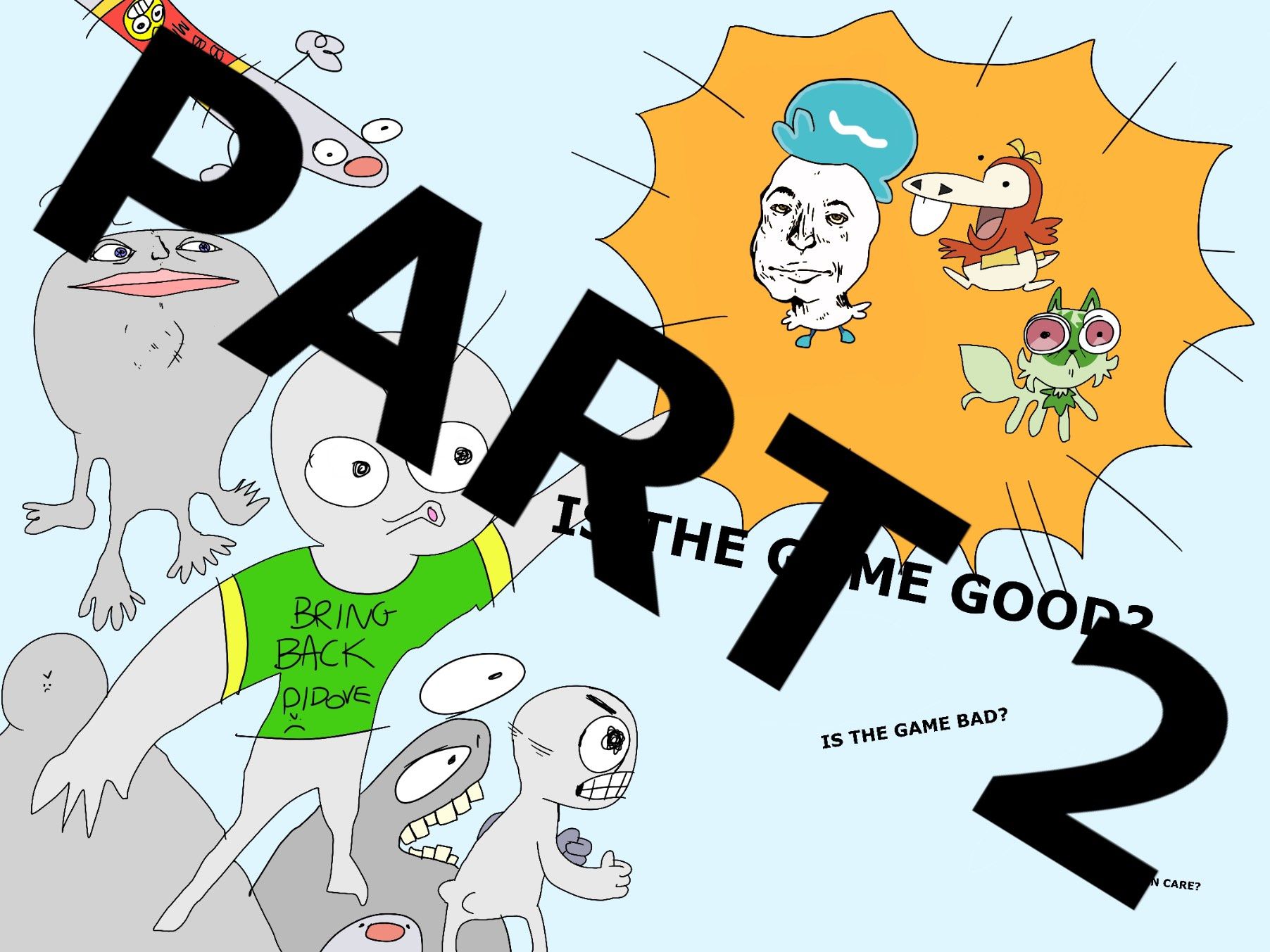
JOYSTiCK Empirical Ep. 10: ‘Pokémon Scarlet and Violet’ – Magikarpal tunnel (PART 1)

By: Daniel Kendle

Let’s start off with a metaphor. Again.

Okay, so you’re at home one day watching TV, and you get the sudden urge to do something productive with your life. So, you naturally head on over to the kitchen to try and create the next great American dish, only to open up the sugar jar and have a rabid weasel pop out. Oh, the horror! It bites you in the upper-most vertebrae (somehow) and runs away.

Being immortal (and the subject of an already-strained metaphor), you magically-shrug off the blistering wound and pop off the lid to the salt shaker and out pops one of those fake rubber snakes magicians use, except replace “fake” with “real” and “rubber” with “blood-driven.” It – again – bites you and also runs off (?).

At this point you’re feeling hopeless, and in one last ditch attempt to eat you open up your patented… bean drawer, and see it: a shining beacon of light, being a glistening can of ‘Jean’s Beans’ is waiting on the shelf. ‘Huzzah!’ You think to yourself, ‘I have found the light at the end of a tunnel of suffering!’

But… Why is your kitchen like this? This new flat you bought has weasels and walking snakes in it, yet also contains some normal stuff too, like beans. Why is that? Why aren’t there either just normal kitchen items instead of animals, or some kind of hydraulic torture device instead of beans? Why are there genuinely good parts of this kitchen, yet also stuff that inflicts great pain onto your physical body? Why is this kitchen so lopsided in terms of quality?

…..

‘Pokémon Scarlet’ and ‘Pokémon Violet’ are the (relatively) most-recent games within the franchise of the same name. Being the first truly “open-world” entries in the 28 year-old series, the games have garnered a very desicive reaction. Selling over 10 million copies in just 3 days, they’ve become one of the fastest selling games in recent memory, but with that success comes the large amount of generally-negative reviews and returns of the product.

But why? Why do these 2 games carry such a degree of inconsistency? We’ve had controversial ‘Pokemon’ games in the past – especially on the Nintendo Switch – but none to this scale. These games are different from past entries in not just their contents, but their reception.

So, to solve this mystery, it’s time we take a deep look into the pair. This is my first open-world game (I’ll explain what that means soon) that I’ve reviewed here, and I want to give it my all. I’d like to go in-depth into every meaningful mechanic and element of these titles that I cared about.

The only part I’m not touching is the story, because I’m not really the kind person to talk on that matter; I don’t focus a lot on a game’s story in my articles because I just don’t care as much about plot in games as I do gameplay, personally. I just don’t think I’m fit to speak on the matter. However, I will be mentioning story beats whenever needed to explain something better.

So, with introductions out of the way, let’s put on our detective caps and sleuth our way into ‘Pokémon Scarlet’ and ‘Pokémon Violet:’ the most middling experiences I’ve had in a while.

CHAPTER ONE: THE PROSPECT OF AN OPEN REGION – ON THE HALF SHELL

I think that we need to start by having a look at past games in the franchise, and how they’ve tackled their regions – the fictional settings where the games take place in. We’ll also briefly glance at the linearity in previous ‘Pokemon’ so we can therefore talk more about ‘Pokemon Scarlet’ and ‘Pokemon Violet’s’ region, and how being open-world implements new changes and impacts the series. I’ve had to rewrite this entrance a few times now, but I think this’ll help paint a good picture of the most subversive part of these games.

Most ‘Pokemon’ games since the very beginning have released 2 versions, which is why I’ve been discussing the newest games as a unit (I personally bought ‘Pokémon Violet,’ however, so I’ll just be talking about that game for the rest of the article). Each game in a pair is structured about the same, with minor differences between each, such as the types of Pokemon that you can find there. Pokemon exclusive to each version of the pair of games are called version exclusives, a whole sort of “is the sky blue” kind of label.

The regions, however, generally stay consistent between the pairs of games. To summarize, a region in these games is basically a fictionalized landmass where the story takes place in, usually being vaguely based off of real-life areas. For instance, the first games in the series, ‘Pokemon Red’ and ‘Pokemon Blue,’ have their regions based off of the Kanto region of Honshu, Japan, the biggest island making up the country (funnily-enough, the region in the games is also called Kanto, the only time in the series where the IRL and fictional locations are under the same name).

Regions before ‘Pokemon Violet’ were made up of 2 main types of locations: routes and towns. Towns are what you think: locations with buildings, roads, the like. Routes were the connecting lines; small or large paths that contain the Pokemon for you to actually catch and train with to use for battle. Combined, they formed a structured path for the player to follow as they went about their journey.

However, different games varied in their linearity. From generations 1-5 of games, routes and towns were usually very complex: structured trails and cities that had lots of depth to them, and routes especially were essentially point A to point B concepts, but had branching cutoffs and split paths. They weren’t maze-like, but instead each route in a game was a deeply-layered and invigorating experience. That’s not even to mention extra unique locations in routes or towns, such as towers or ruins, which often had even more content of their own.

Then, in generations 6-8, it felt like some major shift happened – for the worse. Routes eventually turned into small, short, simple paths that almost-never tried to divert off the main trail. You could even traverse an entire route in a matter of seconds; THAT’S how bad it got. No cool extra locations, barely-to-no unique mechanics… if there’s one thing to take away from the regions of newer games, its that they’ve become far more cramped, dumbed-down experiences.

This goes for towns as well: before they could reach giant sizes, but even smaller settlements were still full of lore and content, stuff to see and do. Now some “towns” were merely 2 houses right next to each other. Both acting as copy-pasted mirrors of one-another. It was miserable.

But with ‘Pokemon Violet,’ we’ve now gotten the exact opposite: a large, sprawling map to traverse in any way we desire. But now that we’ve gotten some history out of the way, how does this new formula impact the region design? How does ‘Pokémon Violet’s’ region stack up against both past and modern region design?

To start, routes aren’t actually a thing anymore! After a few minutes of slow buildup, we’ve now got “areas” instead, which are basically ways to split up the north, south, east and west parts of the map. Each directional province has multiple areas, and each is usually different from one another. For instance, “South Province, Area One” is a humid meadow-y land, with twisting hills and a small marsh. Meanwhile, “South Province, Area Two” is an olive orchard, with aged, beige grass and populations of olive trees.

Then there are areas that aren’t just called “Area #.” For instance, the western Province of the island has multiple Areas, but also a desert called Asado Desert. There’s a lake called Cassaroya Lake. There’s a foggy wood called Tagtree Thicket. I could list more (including one I’ll save for later), but we’ll talk more about the entire region itself for now.

In comparison to past ‘Pokémon’ games, this new region’s a lot more realistic-looking than others. Past games’ regions had mushroom forests, electric caverns and the like, whereas Paldea (apparently the name of the island) is lacking those. We’ve instead got [relatively] average roads, a quarry, some grasslands, a mountain, stuff like that. Nothing out of the ordinary for these games, but it’s missing a lot of the mystical locations of prior titles.

And that segways into a problem I have with Paldea as a region: it’s very bland. Unlike other open-world games which usually have varied landscapes and memorable places, ‘Violet’ instead has mostly biomes, with towns occasionally. In the game, there’s a set of 10 sights that operate similar to our world’s wonders of the world, though when you go to one they’re literally just a big waterfall or some rocks or whatever, it’s boring. The whole world is boring, actually, and that’s one of ‘Pokemon Violet’s’ biggest problems.

In terms of landmarks and locations, you’ve got these watchtowers that give you a nice view of the surrounding area, as well as some assorted items. They also function as waypoints for you to zip to at the press of the button. These are alright; most games with a sizable setting have things like these, and it’s no different here. You’ve also got 4 lighthouses in the 4 corners of the island that function almost-identically.

And really, besides towns and squad bases (something we’ll take a look at in the “gameplay” section of this article) that’s kind of… it? Like, you’ve got some ruins with unique collectibles and ‘mons, ancient stakes to find and pull out of the ground (another prospect for “gameplay”), and… bridges, but overall the world’s pretty empty with its main attraction being its biomes. But other than having different species of Pokemon and maybe some geographical variation, they don’t really do a lot of other stuff. I think having geographical differences of biomes impact gameplay would be super fun, honestly.

For instance, maybe in the mountains you could be stuck in a permanent light snow that causes fog to appear. You could bring a Pokémon that could breathe fire and the fog could dissipate, revealing items you couldn’t find before. Or, maybe the desert could be filled with quicksand, and you could traverse it normally, or breeze across it with a critter that could dig around and surf you across the sand.

The franchise did something like this before with HM’s, moves that you could teach your Pokémon to bypass certain roadblocks preventing you from continuing the game. These were generally annoying nuisances, so we don’t want a repeat of that. They were annoying because you had to replace a move first to teach a creature the HM, so instead of prohibiting the amount of moves you can have, just have a Pokemon meet the standards required (ex. fire-breathing, “diggable”) in front of your team. You could also just ignore the benefits provided and play the game normally.

To end this section, we’ve talked about the emptiness of the region and the missed opportunities with Areas, so let’s talk about cities. In ‘Pokémon Violet,’ there are a good few towns to its name, each pretty different from one another. You’ve got a small olive-farming town, a super-modern city, a multi-leveled waterfall town, one with cool art pieces and natural sights, and so forth. Each town has multiple shared buildings: a place to heal your team of ’mons, a battle court, some shops, and the gym. We’ll look deeper into the latter later.

I’m generally mixed on how I feel about the towns in ‘Violet.’ On one hand, they generally look alright and all feel unique from one another, normally for the better. On the other hand, they’re pretty void of content. One port town has an auction area, which is cool. Another has a game where you roll this giant olive into a goal, and you’ve got some other sparse games to try out in a couple others, but besides those you don’t have much to do in them. They’re pretty, but are mostly just set dressing for the story.

In the end, Paldea is fairly-okay, with some alright sights but very dry amounts of stuff to do. It doesn’t sustain itself enough to provide content after beating the game (or during it, to be frank), and almost-definitely needed some more time in the oven before the game’s release to add more. It’s a good start, but an okay final product.

This may be the end of going over Paldea in general, but stay tuned as PART II will delve into graphics and glitches in the game.

The 2024 Grammys overview

By: Calla Fragassi

Image created with Craiyon,com

The Grammys is an awards show that takes place once a year in the United States. It is hosted by The Recording Academy and recognizes the achievements of artists in the music industry. They are one of the four EGOT awards in the performing arts industry (Emmys, Grammys, Oscars, and Tonys) and were first presented on May 4, 1959. 

There are at least five nominees for each of the awards, and the big four Grammy categories are: Record of the Year (awarded to singer, producer, mixer, recording engineer, etc), Album of the Year (awarded to singer, producer, recording engineer, etc), Song of the Year (awarded to songwriter and singer of the song), and Best New Artist (awarded to a new artist who released music in the last year that established their spot in the music industry).

The Recording Academy also announced three new Grammy categories this year: Best African Music Performance, Best Alternative Jazz Album, and Best Pop Dance Recording. 

The Grammys this year took place Sunday, February 4, 2024 and there were many memorable moments at the show. There were 94 different categories for Grammy Awards, and this is a list of the winners and nominees of each of the 4 main awards:

Record of The Year

Winner: “Flowers – Miley Cyrus

Nominees: “What Was I Made For?” – Billie Eilish

      “On My Mama” – Victoria Monét

      “Vampire” – Olivia Rodrigo

      “Anti-Hero” – Taylor Swift

      “Kill Bill” – SZA

     ” Worship” – Jon Batiste

      “Not Strong Enough” – boygenius

“Flowers” by Miley Cyrus was written as a response to Bruno Mars’ “When I Was Your Man,” and reached 1 billion plays after 112 days of being released.

Personally, I think the song is great and it was fun to compare it to “When I Was Your Man,” but I do think it became very overplayed in a short amount of time. The message behind the song promoted individuality and that you should put yourself first but after a couple of listens, it became very repetitive. I think it deserves the recognition, but not Record of The Year”over a song like “Kill Bill”. 

Album of The Year

Winner: ‘Midnights’ – Taylor Swift

Nominees: ‘World Music Radio’ – Jon Batiste

      ‘Guts’ – Olivia Rodrigo

      ‘The record’ – boygenius

      ‘SOS’ – SZA

      ‘The Age of Pleasure’ – Janella Monáe

      ‘Did you know that there’s a tunnel under Ocean Blvd’ – Lana Del Ray

      ‘Endless Summer Vacation’ – Miley Cyrus

‘Midnights’ is Taylor Swift’s most recent new album, which was released in October of 2022.

I really enjoyed the album, specifically songs like “Lavender Haze”, and “Snow on the Beach”, and even though I preferred SZA’s album ‘SOS’, I definitely think she deserved the spot for Album of The Year because of how big the album was when it first came out, and the anticipation of her new music that came with it. 

Song of The Year

Winner: “What Was I Made For?” – Billie Eilish

Nominees: “Vampire” – Olivia Rodrigo

     “Kill Bill “- SZA

      “Flowers” – Miley Cyrus

      “Dance The Night Away” – Dua Lipa

     ” Butterfly” – Jon Batiste

      “Anti-Hero” – Taylor Swift

      “A&W” – Lana Del Ray

“What Was I Made For?” was first released in the ‘Barbie’ movie that came out this past summer.

The lyrics and meaning behind the song is very heartfelt and I believe it is a song many people can relate to. Out of all of the songs that were nominated for this award, I would say I think it definitely deserves the spot and the title of Song of The Year. It was the one song that stuck with me the most after watching the ‘Barbie’ movie with 45.6 million streams on Spotify. 

Best New Artist

Winner: Victoria Monét

Nominees: Jelly Roll

    The War And Treaty

    Noah Kahan

    Coco Jones

    Ice Spice

    Fred again

    Gracie Abrams

As for the Best New Artist category, I hadn’t heard of Victoria Monét until after the Grammys. This could have happened for multiple reasons, but I have heard and listened to music from every other artist except her.

I personally think Noah Kahan should have won the Best New Artist award. He released multiple different songs that took over social media and the radio like “Stick Season”, “Dial Drunk,” and other songs with features like Post Malone, Mumford and Sons and more. I’m sure Victoria Monét is deserving of the award, but I would have loved to see Noah Kahan win as well. 

The Grammys this year were a hit, and there were many highlights and a big record was set. This year, Taylor Swift became the artist with the most Album of The Year Grammys with previous wins from her albums ‘Fearless’ (2010), ‘1989’ (2016), ‘Folklore’ (2021) and ‘Midnights’ (2024). Miley Cyrus also won her first Grammy this year after being in the music industry since 2006.

The Grammys had multiple different performances by popular artists like Olivia Rodrigo, SZA, Billie Eilish, Dua Lipa, Travis Scott, Tracy Chapman, Luke Combs and more. The Grammys were extremely successful this year, and we can’t wait to see who will win awards next year!

Book review about a boy’s and girl’s worst nightmare called ‘5 to 1’ by Holly Bodger

By: Jefferson Palma

Image created with Craiyon,com

*Warning: Spoilers below

Have you ever heard of a dystopian world where a gender’s role plays an important part to your whole life?

The book called ‘5 to 1’ is an outstanding story that depicts this sort of life but in a poetic way.

It is a book in verse that is quick and captivating to read and uses outstanding ways to visually emphasize words.

‘5 to 1’ refers to the unbalance in both genders. Implying that for every 5 boys there’s only 1 girl. And to make it fair, the boys have to win each trial to ultimately win a girl for a richer and better life.

There are two perspectives in this book that depicts both main characters’ thoughts about the trials and tribulations they endured.

The author has some interesting ways of keeping a secret of Kiran’s plan throughout the story to keep the reader interested.

On page 9 it says, “I’m a puppet strung up in a box hanging over a theater of heads. Of faceless people,” which really shows the interesting idea Bodger wrote to illustrate the main character’s feeling of not being a human and more of being a property.

Although the book was quick and interesting to read, there were some flaws that would be better to change.

Both characters were very likeable, but I found myself not very immersed by the fact that the characters’ only thoughts were that they didn’t like their situation. It felt as if their thoughts were very repetitive and I felt a bit uninterested.

Another flaw I would like to add is that the book was lacking some details for the settings. I didn’t really get the idea of what it’s like in the book because of it.

In other words, there could have been some changes to improve the book more, otherwise I would recommend it to anyone who’s interested of a dystopian future with a bit of romance in the mix.

My final rating is 3 out of 5 stars.

‘Operation Mincemeat’: How the hit West-End musical interrogates our ideas of history

By: Jocelyn Knorr

‘Operation Mincemeat’ is the invention of musical comedy group SpitLip, (comprised of David Cumming, Felix Hagan, Natasha Hodgson, and Zoë Roberts). This bombastic little show has enraptured audiences in London and beyond. But much more lurks beneath the surface of this West End sensation, and it would be a disservice not to bring it to light.

‘Operation Mincemeat’ is nearly inescapable if you’ve ever interacted with the theatre corner of the internet; countless people post photos in front of the yellow-illuminated Fortune Theater, or the yellow curtain dubbed the “spaghetti curtain” by fans.

The soundtrack—blending 1940s instruments with modern, almost Beyoncé-esque pop music—has over 10,000 monthly listeners on Spotify.

And the story’s certainly more than enough to capture the imagination—it’s a true story harkening back to the Second World War about a crack team of intelligence experts and administrators who made a man out of thin air, an identity to legitimize a commandeered corpse left on the shore of Spain, carrying documents implying a future Allied incursion into occupied Europe via Sardinia and Greece. These forged plans made Italy redirect its troops to the areas it thought would be affected, while the Allies were free to march into Sicily. The war movie practically writes itself; and thanks to SpitLip, it has. But, it also contains some clever expectation subversion that you might not find unless you’re looking.

The typical conventions of a movie from the “war story” genre are as follows; our protagonist, an often incredibly self-assured man, gets his mission from an authority figure, assembles a team, and sets out to do what he has to do. Typically, the mission has some kind of crisis in the final hour. ‘Operation Mincemeat’ follows this convention very well—our cocky, self-assured young protagonist (Ewen Montagu) receives a mission from an authority (Colonel Bevan, the man running the War Office. He tasks his agents to come up with a plan that will reroute Axis troops away from Sicily), assembles a team (takes Charles Cholmondeley and Jean Leslie under his wing, a nervous, socially-awkward man from R&D and a young woman desperate to do more for the war than make tea, respectively) endures a third-act crisis (mistakes in the orders regarding the forged paperwork) and achieves his goal in the end.

But there’s alterations to it, especially in the case of our protagonist. Monty starts the play by talking Charles into letting Monty hijack his plans, and turns out to be so self-centered that he’s writing a movie about himself and his involvement in the incredibly top-secret plan. He’s accomplishing this via smuggling eyes-only files out of MI5 headquarters and handing them over to his brother, a suspected Russian spy. By taking the typical flaws of the war story protagonist and exaggerating them, a magnifying glass is held up to the whole genre.

There’s also the fact that it takes place within the War Office. The characters are safe behind their desks; they are in the privileged position of experiencing the glory of being part of the war without actually having to risk their lives. This is reflected upon by Colonel Bevan, who speaks almost with guilt about the fact that they are the ones making the strategic decisions, but the young men of England are the ones who will suffer the consequences. This is unusual for the war story genre that ‘Operation Mincemeat’ parodies and operates within, but the musical shows incredible sympathy towards the civilians and regular soldiers who are put in harm’s way.

Another aspect in which ‘Operation Mincemeat’ shows this sympathy is regarding the corpse that’s key to the plot. Monty brags about how easy it was to get and how the fact that the man it used to be was “just some tramp,” means less paperwork—but rather than impressed, the team is horrified, both at the idea of using someone’s dead body without permission and the callous attitude he seems to have about it. It would be easy to crack another war joke here, to satirize the British military or the common view of military men, but they don’t. Every step of the way, they choose to remind us that he used to be a man, and the unauthorized use of his corpse is a violation.

This culminates in the final lines of the musical, where they tell us the man’s real name and what his story was; Glyndwr Michael, a young man from Wales who came to London when he fell on hard times. By exhibiting this sympathy and extending  a hero’s remembrance to everyone, the whole musical drives home the fact that everyone has value, everyone deserves to be honored as contributors to history—even those who served without knowing it.

Everything we know about the upcoming Little Nightmares Game: ‘Little Nightmares III’

By: Julia Yang

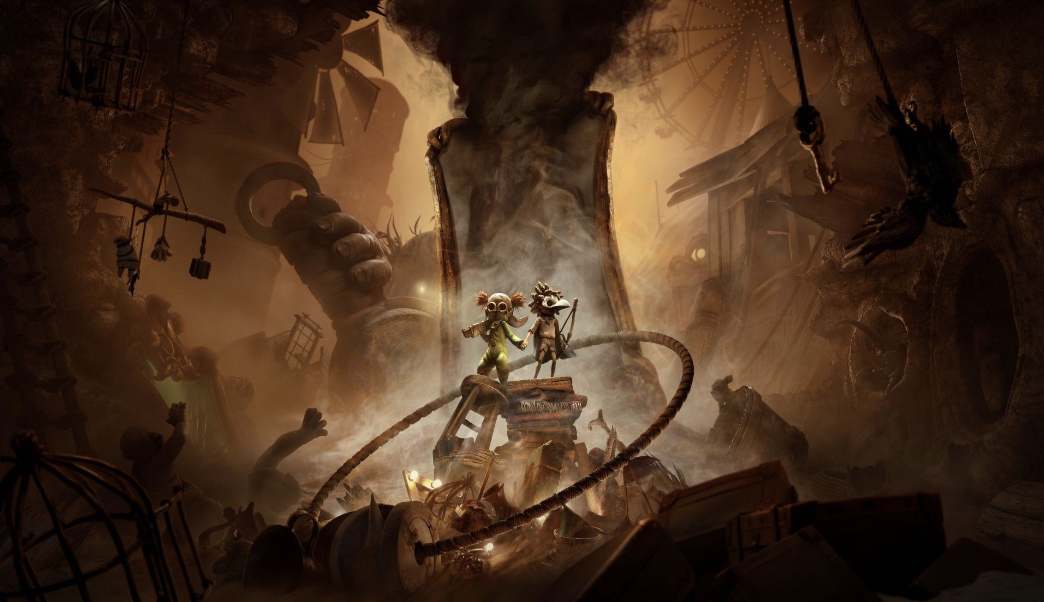
Official image of game from Bandai

Are you a fan of ‘Little Nightmares’, or just interested? Well, you’re in luck, today I’ve decided to explain the situation to you in full form! Shall we?

As of last year, ‘Little Nightmares III’ was revealed with a new trailer as part of Gamescom Opening Night Live 2023.

Unlike ‘Little Nightmares I’ and II, ‘Little Nightmares III’ seems to take away our beloved girl in a yellow raincoat: Six. Fans are mildly upset about this news as they’ve grown so attached to Six, but are ecstatic nonetheless and can’t wait for this game to come out.

Instead of Six and Mono, this third game stars two completely new characters: Low and Alone. Low seems to be a dark skinned boy with a white plague mask, beige shirt, grayish brown shorts, a blue cape, a bow and arrow, and a colorful bracelet around his ankle. Alone has paler skin with ginger hair and wears a green jumpsuit, a brown helmet, goggles, and a belt around her torso to hold a wrench. Low and Alone are two children exploring the place called ‘Nowhere’.

Here’s the official description for ‘Little Nightmares III’:
“Embark on a new adventure in the unique world of Little Nightmares.

In Little Nightmares III, you follow the journey of Low & Alone, as they search for a path that could lead them out of the Nowhere.

Trapped within the Spiral, a cluster of disturbing places, the two friends will have to work together to survive in a dangerous world full of delusions and escape the grasp of an even greater threat lurking in the shadows.

For the first time in the franchise, face your childhood fears together with a friend using online co-op, or solo with an AI companion.”

Yes, you read that right. For the first time ever in the ‘Little Nightmares’ games, you’re able to play with a friend in co-op! Fans are extremely happy about this news, as they expected ‘Little Nightmares II’ to be co-op with Mono and Six but were let down when they announced it was still a single-player, and Six would be controlled by AI.

I will link all trailers, the quick sneak peek gameplay, and the Bandai Namco website for ‘Little Nightmares III’ below.

‘Little Nightmares’ doesn’t have a release date, but is expected to be released this year in 2024. So, be ready, and be excited, for the brand new game!

Official Bandai Namco ‘Little Nightmares III’ Website:

https://en.bandainamcoent.eu/little-nightmares/little-nightmares-iii

Official ‘Little Nightmares III’ Trailer

https://youtu.be/XFHOsobwFrA?feature=shared

Gamescom Opening Night Reveal Trailer

https://youtu.be/UjrtoFazU1U?feature=shared

‘Little Nightmares III’ Necropolis Gameplay Walkthrough:

https://youtu.be/zrMLhz17l-Y?feature=shared

Breaking down the cost of each part of a McDonald’s burger will surprise you

By: Oak Berg

Image created with Wonder

Breaking down the cost of each part of a McDonald’s burger will surprise you.

The main ingredient, the beef patty, is the main reason of the cost. the meat might taste good to some people and might taste bad to others, which changes the overall taste of the burger. the patty is around 15-20 cents adding up to the total price

Fresh lettuce and tomatoes also add to both the flavor and price of the burger. Some people prefer to take lettuce and tomatoes off their burgers (price doesn’t change), lettuce and tomatoes at McDonald’s averagely cost 5-10 cents.

Cheese adds to the flavor and price of the burger, some people may like hamburgers more than cheeseburgers, this doesn’t effect the price for the buyer but the average slice of cheese costs 6 cents.

The labor price is high with the workers for preparing and making the burger needing a lot of pay. With employee wages, training programs, etc, the average McDonald’s hourly wage is $15 for a new worker.

Facility price includes paying for the building, land, and food stock. All of these things add to the overall cost of making a burger.

Marketing and advertising prices also contribute to the burger’s cost. They need to make the brand big and grow their customer base. This also adds to the price of the McDonald’s burger.

Even though the cost breakdown and the components may change, the normal price of a McDonald’s burger to be manufactured is around 40 cents and to buy one it costs around $3-4 for the buyer depending on where you live in the US. McDonald’s needs to make a profit or they would go out of business, so they raise the price on their burger by many times the original price.

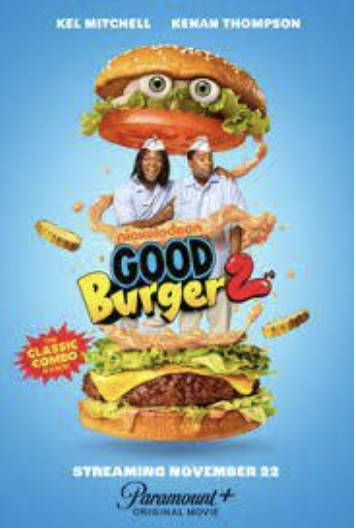
‘Good Burger 2’

By: Samson Belihu

*Warning: This article contains spoilers

This movie picks up over two decades after the first one. We start with one of the main characters, Dexter who is an entrepreneur with many ideas, and hopes of being rich in the future.

This movie shows us this dream become a failure due to him burning his home with a spray that can make any material flame-retardant. Turns out instead of a fire repellent, he made a fire spray. He tries to go to his sister, but his sister tells him he can’t live with her. That’s when Dexter is walking and he stumbles upon Ed, now a father and owner of Good Burger.

When Dexter asks if he could stay at Ed’s house Ed agrees due to their old friendship. Dexter then becomes an employee at Good Burger, and he starts getting his life back together.

Just when we start thinking it’s going great for Dexter, and Ed, a corporation called MegaCorps interrupts them by giving them a contract to sign. At first, Ed wants to decline, but she tells him that if he signs the contract his employees would get a huge raise. The once distrusting guy trusted the corporation when she told him her intentions. So, Ed signs the contract thinking it is a good idea.

But later on, they find out the true intentions of MegaCorps. In reality all MegaCorp wanted was to replicate the Good Burger’s secret sauce. If they managed to replicate the sauce they could eliminate any threats such as the Good Burger.

Once Ed signs the contract that’s when MegaCorps decides to leave thinking they have dealt with the threat, and would be back soon for the sauce. When they find out MegaCorps real intention, Dexter, Ed, and all the workers decide to create a plan to reclaim ownership back from MegaCorp, because they’ve beat them once and they’ll do it again.

Will they ever claim back GoodBurger?

The only way to know is by watching the movie on Paramount+.

In my opinion, the movie was good. I would give it a 4.2 out of 5.

I recommend watching the first one before the second movie though, so it makes more sense.

Seasonal recipes: Edible cookie dough

By: Austin Bailey-Zimmerman

This is by far the best edible cookie dough recipe I have ever tried. It isn’t grainy at all, it’s smooth and there is just the right amount of chocolate.

I got this recipe off of Pinterest from the Corrigan Sisters. Their page is all delicious desserts you can also try. You can use this dough for anything really. You can freeze it into balls and eat that as a dessert, you can put little chunks of it into your ice cream, or you could just eat it by the spoonful!

I made this recipe with my friends because we wanted a sweet dessert, but we didn’t have any, so we took the simple ingredients it takes to make this and we made it in 10 minutes! It’s very quick and easy. We were very satisfied with our results, so we ate all of it while watching a movie. This recipe isn’t very specific to a season, you can eat it whenever, and wherever you want! Enjoy!

Ingredients:

  • 1 cup of brown sugar
  • 2 sticks of softened butter
  • 1⁄2 tsp salt
  • 1 tsp vanilla extract
  • 2 cups of flour
  • 1⁄4 cup milk
  • 1⁄2 cup of chocolate chips

Directions:

  1. Gather ingredients
  2. Microwave butter for 30 seconds to soften
  3. Combine sugar, butter, salt, flour, vanilla extract, and milk in a medium sized bowl
  4. When all mixed together, add chocolate chips
  5. Optional: roll into balls and freeze for later!
  6. Enjoy!!

‘We Were Here’

By: Stephanie Caballero Benitez

*Warning: Contains game spoilers

‘We Were Here’ is a free, two player, puzzle game. ‘We Were Here’ is available on Steam and on the Epic Games Store with versions for PC and console. In this game, you and your partner begin in separate rooms both with clues to help one another get out of that room. To communicate with your partner, a radio is provided by the game, however the quality isn’t very good and I would recommend just entering a call with your partner through a different platform.

Both you and your partner get to decide which role you’d like to play; the two different roles are the explorer and the librarian. The librarian stays put in 1-3 rooms throughout the game and helps their partner by communicating all the clues to be able to do the puzzles that are given to the explorer. The explorer role goes through a variety of rooms and is more hands on compared to the librarian. Every time a puzzle is completed a door is opened and they get to move forward to the next puzzle.

One of my personal favorite rooms is the haunted theater. In the theater you are given a play to play out. The explorer’s responsibility is to communicate with the librarian as to what the play wants. In this play we are given 5 pieces, the king, the queen, the crowd, the killer, and the arch. Once the librarian knows what the play wants they crank the levers to pull out the correct pieces, and once the explorer verifies that all objects have been placed on stage the librarian may pull the scene lever.

After finishing all the puzzles, both the explorer and librarian get to leave the puzzle room and library. They meet up at the exit, but at the exit there is a lever. The lever requires for someone to keep it down for the door to stay open. You are given one last puzzle which is who will be left behind. No matter the role that you or your partner have, to be able to finish the game one has to be left behind while the other gets to walk out.

5 places to visit in Chicago

By: Cleo Newton

Image created with Wonder

1. The Art Institute of Chicago
This art museum is a great place to view many different artworks, writings, and is also a great place for research. The Art Institute of Chicago has artworks such as, “The Bedroom” made by Vincent Van Gogh in 1889, “Water Lilies” made by Claude Monet in 1906, and “The Old Guitarist” which was made in late 1903 and early 1903.

Tickets here are around $19 to $25. Last time I visited Chicago, my mom and I had planned on going here but we didn’t find time to do it.

2. Willis Tower
The Skydeck Experience is a fun activity to do here. It includes an interactive museum, and it’s both fun and educational. After that, you ride a huge elevator up to the 103rd floor. There you can take pictures in a glass ledge that overlooks the city and take pictures.

As fun as that last part sounds, I don’t recommend doing this on a rainy or cloudy day because the 103rd floor is pretty much in the sky and you won’t be able to see anything through clouds. Also, lots of people like getting their pictures taken here, so be prepared to wait in line for a while.

3. Buckingham Fountain
If you don’t want to spend money on anything, you should go see the Buckingham Fountain. It’s totally free and it’s very beautiful. This fountain is very large, and is located in Grant Park. I recommend visiting it at night because that’s when they turn on the lights to the fountain.

Last time I went, I didn’t have enough time to stay around until night time to see the lights, but next time I go, I’ll make sure to set aside time to do this.

4. Millennium Park
Millennium Park is near the Buckingham Fountain. It’s a great park for both kids and adults. According to Choosechicago.com, It has lots of green space and many activities such as ice skating, rock climbing, and it also has the Cloud Gate statue (a giant silver bean).

Although, last time I was there, that giant bean statue was closed, and I don’t know when it’s going to open or if it’s already opened again.

5. Chicago Children’s Museum
If you’re traveling to Chicago with a kid, Chicago Children’s Museum is a good place to visit. This museum has an art studio where you can make clay sculptures, a place called the Pritzker Playspace, and a tinkering lab where you can build buildings made of cardboard.

They are open Monday, Wednesday, Thursday, 10am-2pm and Friday through Sunday, 10am-5pm. I’ve never been there before but I think it would be fun, even if I’m not a little kid anymore.