Category Archives: Books/Art

History of Impressionism

By: Fletcher Pike

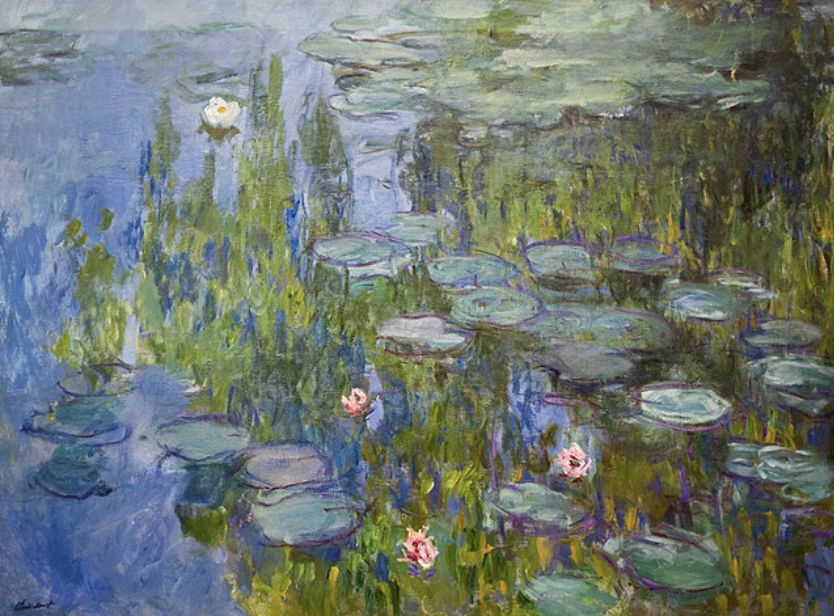
Monet’s ‘Water Lilies’ Image via Wikimedia Commons https://commons.wikimedia.org/wiki/File:Claude_Monet_-_Seerosen.jpg

Art comes in several different forms, many of which you have likely seen today. You might think of paintings from the Renaissance period like the ‘Mona Lisa’ or ‘The Girl With The Pearl Earring’, or maybe more abstract, modern paintings. But one art style in particular was formed as a result of one of the most popular movements in art history. That art style would be Impressionism.

Impressionism itself is a very recognizable style of painting, as the paintings featured bright, chromatic colors rather than the more dull palettes that were used for previous styles of painting. The colors also emphasized the contrast between light and shadows. These paintings very often depicted a mundane or realistic setting, rather than dramaticized historical scenes.

In 1874, a group of artists formed the ‘Anonymous Society of Painters, Sculptors, Printmakers, etc.’. Its founding members included popular artists such as Claude Monet, Camille Pissarro, Edgar Degas, Berthe Morisot, and several others. They created an art installation in Paris, France, where many unique paintings were displayed. 

However, these paintings were a bit different from other paintings at the time. These paintings included loose brush strokes, vivid colors, and featured scenes primarily of nature or the simple, everyday life. These were different from the grand, historical story-based paintings that were made during this time. This new abstract style brought a sense of realism in contrast to the art featured in this time period.

Claude Monet was a significant figure throughout this movement, as he was one of the trailblazers that popularized the style of Impressionism. In one of his exhibits, critic Louis Leroy gave Impressionism its name by stating Monet’s paintings were more of an uncompleted sketch, “an impression”.

The final independent exhibition of Impressionism was held in 1886, but the painters had begun shifting towards a new direction for the movement, which was Neo-Impressionism. This was an art movement characterized by small intricate dots, distinct brushstrokes, and bright colors. 

Though the final exhibition was so long ago, the Impressionist movement had a large impact on the art community by adapting to new art styles, and allowed artists to freely express themselves through their artwork.

For more information, please visit:

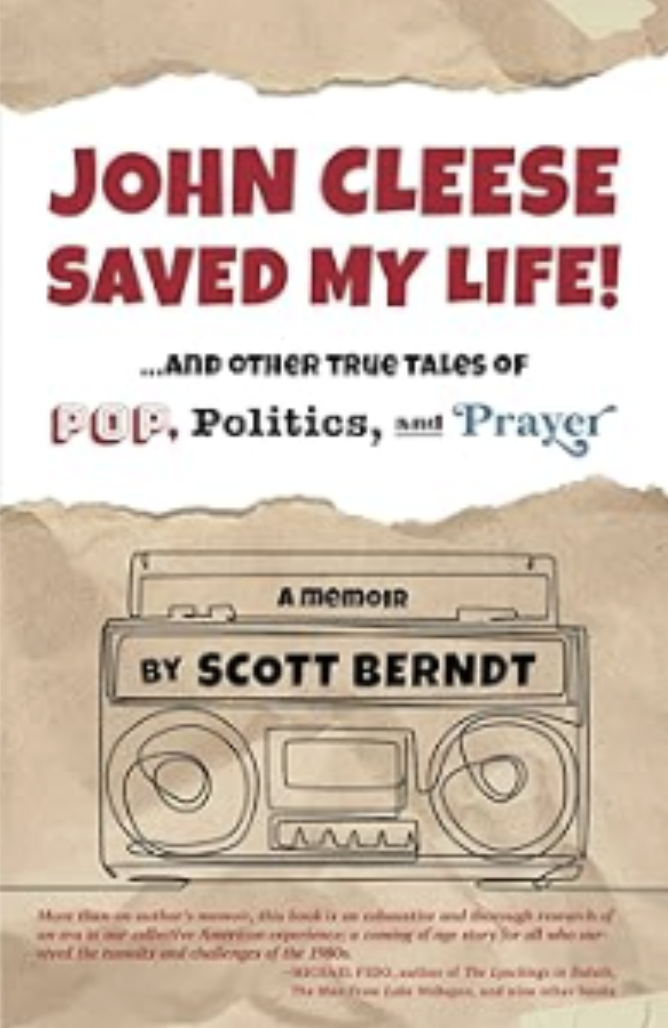
Review of ‘John Cleese Saved My Life…and Other True Tales Of Pop, Politics and Prayer’ by Scott Berndt

By: Evie Beaumaster

In the book ‘John Cleese Saved My Life… and Other True Tales of Pop, Politics and Prayer’, Berndt combines memories with past global events and songs, to teach not only his personal experience but the experiences of countless people. The book follows Berndt through many different times in his life and the spiritual and mental journeys that led him there.

I haven’t ever read a memoir quite like it. I believe that there are two types of memoirs, ones that share just experiences and ones that share experiences and wisdom. This book definitely shares wisdom more than just life experiences. All of the experiences that are shared here are shared in insightful ways that lead to us learning more about the bigger picture of the time period and the world. Berndt shares memories followed by quotes and song lyrics to help the reader grasp the bigger picture of the memory or the point that he is trying to share.

This book also gives insightful opinions about religion and religious beliefs, it also questions religion at its core. This book combines memory with facts about the time period and impacts of certain events, locally and globally. I think that Berndt successfully captured part of himself in the book.

This book was great, it was quick paced and cut up into short memories, and facts. This book took me approximately 3 hours to read and I finished it the same day I got my hands on the copy of the book that is available in the school library. This book is hard to put down and I only found myself stopping to eat, before I sat down and finished the entire book in one night. It was such an attention grabbing book and was an easy read.

Overall, I would recommend this book and in terms of memoirs, it is a great one. Berndt’s unique writing style helps capture the reader’s attention. I was skeptical at first, but I found myself captivated by the mix of songs, quotes and memories. Unlike some other memoirs, Berndt included research for timely events that relate to the book and this helps the reader think more deeply about the time period. I would recommend this book to older, less sensitive readers, as there are descriptions of violence and racism, as well as religious content and profanities that some readers might find offensive.

Overall, it is an excellent book that you should totally read!

For more information, please visit these websites:

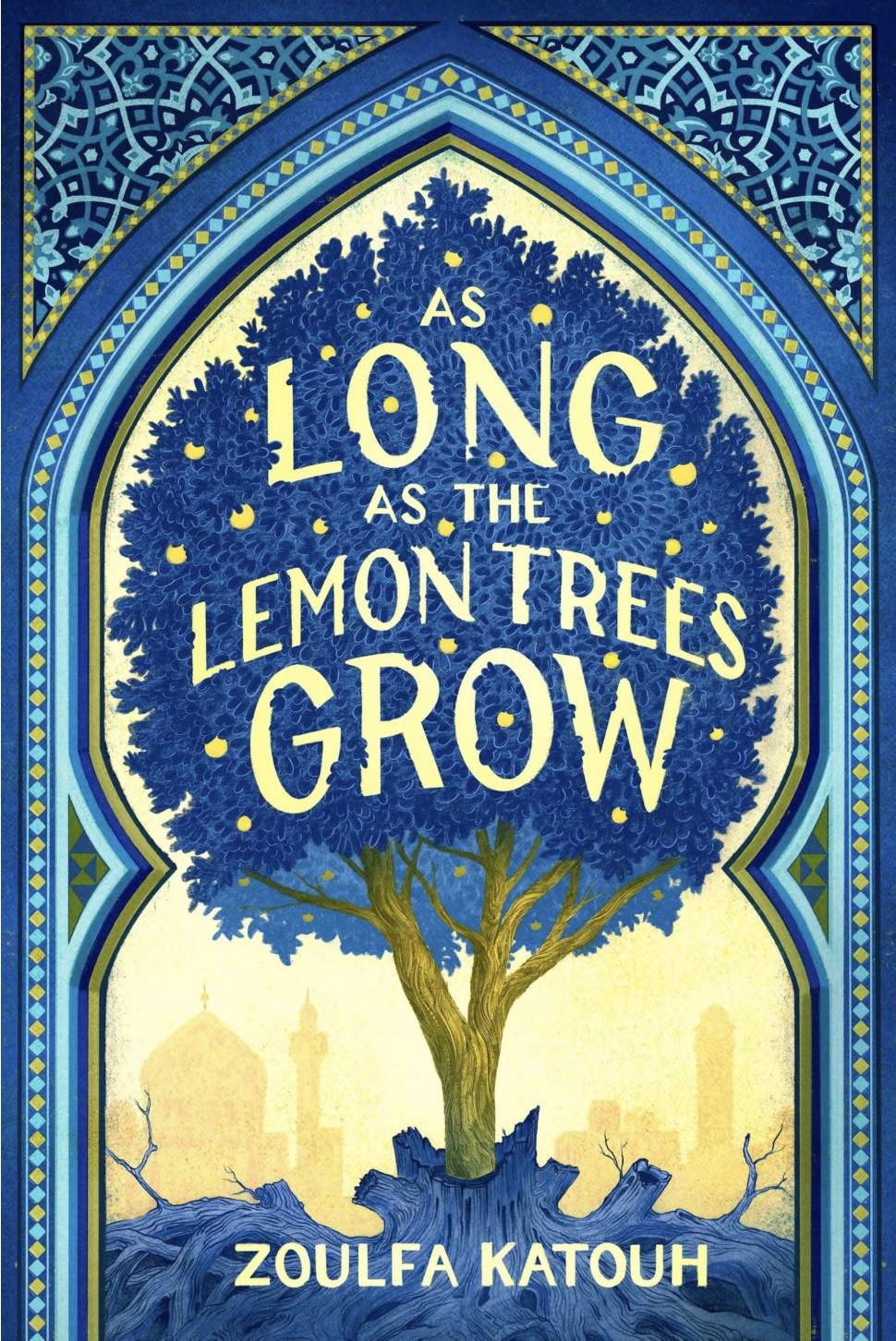
‘As Long as the Lemon Trees Grow’ review

By: Maggie Hong

‘As Long as the Lemon Trees Grow’ is a historical fiction novel by Zoulfa Katouh. It takes place during the Syrian Revolution, following the main character Salama as she fights for love, peace, and a way out of her wartorn country.

Salama is 18 years old and has only one year of pharmacy training, but she works every day as a surgeon at the hospital in Old Homs. She treats bombing victims, people caught in sniper fire, and children who had the misfortune of playing on a street set to be the next site of revolution. As these experiences shape Salama’s worldview, they also skew her perception of reality. She wants to escape Syria, but can’t bring herself to abandon her family, her history, and her country.

Katouh’s writing is lyrical and vivid, lacing the story with the scents of lemons and smoke on every page. Characters are strong and nuanced, speaking with unique voices and formed by pasts which are slowly revealed throughout the novel. As Salama survives war and tragedy, her relationships with Layla, her best friend, and Kenan, a boy she was almost engaged to, deepen and twist in expert form.

I cried, laughed, and learned as I read this book. Its final plot twist left me at a loss for words, and the book as a whole renewed my hope in the world and the ability of humans to survive.

This book is especially relevant now, as Syria enters a new phase of its revolution. With the fall of the Assad regime in December, the world is watching a victory for freedom.

‘As Long as the Lemon Trees Grow’ is an enthralling and beautiful reminder of how far we’ve come, and why it matters.

This book is definitely a favorite of mine, and I’d recommend it to anyone who loves historical fiction or a chance to slip into a new world. I would give this book a 9/10.

Book recommendation: ‘Tender is the Flesh’

By: Munira Ahmadad

*Warning: This book contains graphic descriptions of violence, includes depictions of sexual assault, and contains characters that may be considered to represent anti-semitic stereotypes.

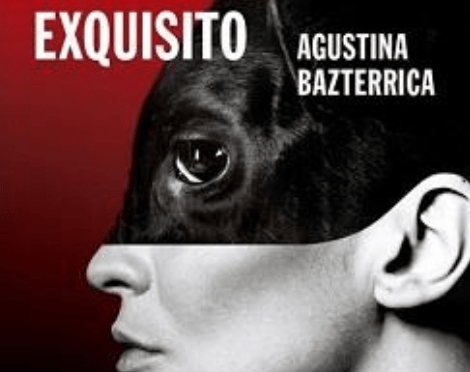
‘Tender is the Flesh’ is a horror novel by Agustina Bazterrica. The story takes place in a dystopian society where a disease causes humans to be unable to consume animal products or flesh anymore. Not that long after the event, the human population turned to cannibalism for an industrialized replacement of animal meat. This is referred to as “the Transition”.

Humans are bred for consumption identical to how animals were and are referred to as “heads”. The majority of the human product in first world countries is advertised as “special meat”, and the Transition is easier on those who have the privilege to not have to think about where and how they got their meat.

The protagonist is a man named Marcos who works directly in the industry who struggles with his relationship with his wife after the death of their baby. At his job, Marcos was given a first generation pure female head as a gift.

The novel aims to comment on the bleakness of real life society with how the Transition impacted marginalized groups first and the hardest. The message wasn’t that eating meat is bad, but it prompts the readers to consider their own internal ethical conflict and how we oftentimes think around discomforting knowledge and try to disregard it.

The story parallels the real life horrendous aspects in the meat processing industry. Not only do slaughterhouse workers operate in physically dangerous environments, the mental toll of having to constantly disconnect with what they are doing leads to emotional dissonance, and the abusive workplace causes slaughterhouse workers to often turn to maladaptive coping mechanisms according to the National Library of Medicine. The majority of slaughterhouse workers are people of color both in the book and in real life. Slaughterhouse employees are mostly migrants in real life, making up 70% of the workforce in the UK.

I recommend Bazterrica’s novel to anyone who enjoys splatterpunk horror in particular, but I would say that it’s relatively grotesque with its descriptions, and some readers might find it excessive enough for the book to be put down.

“We’re Alive” review

By: Munira Ahmadad

*Warning: this review contains spoilers for the short story “We’re Alive” (located in the PRIZM section of the Plaid Line)

“We’re Alive” is a short horror story written by HPSH student Daniel Kendle, and this article is a review of it and a discussion of my thoughts about the story.

The short story begins with an unnamed narrator in a jungle, they’re inside a garden sanctum when they watch a monstrous creature made of the jungle’s organic life become animated. Initially the being is referred to as the jungle’s newest creation which led me to think it never existed before, but it’s soon described as ancient and something of a folk story. The narrator watches, petrified and intrigued as it moves towards them. Spores surrounded them as they stared at each other. After the narrator’s reluctant escape, a month later, they remain haunted by the interaction with the garden’s monster and become unable to function normally. After dreaming of being with the creature in a physical and emotional loving bind, we see the narrator lose their grip on reality and by the end they harm themself with a crazed desire to return to the garden.

The story truly succeeds at providing the descriptions necessary to paint a detailed visualization of the scenes in the story. I don’t read much horror, but the narrator losing their grip on reality is a relatively common trope. After reading through, I wondered if the inspiration for this work was “The Tell-Tale Heart” by Edgar Allan Poe since both use obsession as its element and have narrators you know next to nothing about. The plot itself reminds me of “The Black Cat”, also by Edgar Allan Poe.

One of the very first things that made me feel iffy while reading through was the literary diction. Written in the narrator’s perspective, they describe how they felt, what they did and thought, and what was going on. Since it’s all in past tense, I assumed this was a retelling of what happened, which explained the dramatic storytelling style. But as the speaker describes their loss of sanity due to their growing obsession, it seems as though readers are going along with the scenes at the same time as the narrator. This makes the descriptive writing come off as pretty verbose. The flowery language is prioritized over the plot which makes the first time reading through unsatisfactory, especially since the goal of the story was to capture the essence of what an all-consuming obsession feels like.

Speaking of the goal of the story, the attempt at disorientating storytelling by the narrator did not invoke any feelings of repulsion, suspense, or horror in me. It’s very tell-not-show, like instead of showing us the fear the narrator was experiencing during their interaction with the monster via description (hands shaking, heart pounding, stomach churning), we’re just told directly by the speaker that they were afraid. The conflicting feelings the narrator had towards the garden creature was very clear, to the point it feels tedious. Scary stories aren’t supposed to hold the reader’s hand and walk them through the entire thing.

For all the time spent making sure the audience was absolutely certain the narrator had an obsession, they aren’t given much of a reason to care. When we have an unnamed narrator of unknown origin, you’d assume their narration would give you more information of who they are and their personality as you read along. However, in this short story the narrator’s identity didn’t seem to matter. We’re given vague ideas about the characteristics of this person, such as their acutely aware of their flaws, immediately scorning their humanity and views themselves as a “mangy ape” in the presence of the monster that becomes their obsession. They call themselves a hedonistic wretch, and we just kind of have to take their word for it.

Overall, though, I liked reading this. Because I have my own bias against horror, I wasn’t the target audience, and so I probably didn’t enjoy it as much as someone who likes horror. I think the author definitely is a skilled writer and has the descriptive skills to create vivid imagery for the reader to enjoy. I feel as though Kendle would be an excellent fantasy writer and I hope he continues to share more of his work. This review was for fun and from the perspective of a reader despite my criticism, which itself may be flawed.

Ohuhu alcohol marker review

By: Persephone Pond

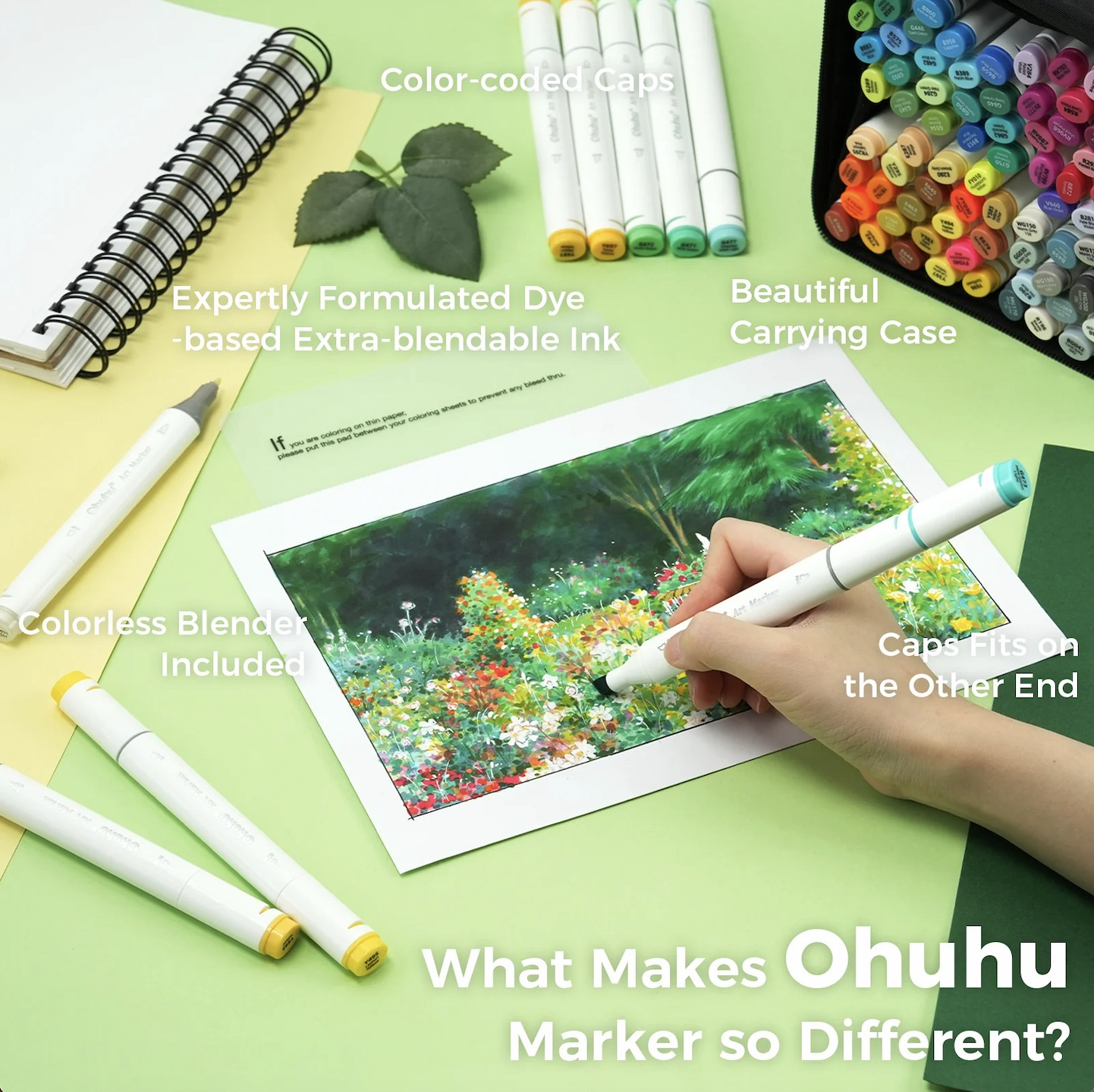
Ohuhu is a newer brand that produces all sorts of art supplies, from paints to markers.

Gaining traction in the early 2020s, Ohuhu quickly became popular for their lines of alcohol based markers. This article will be a quick review of all you need to know about these markers, and if they’re worth the money.

Ohuhu alcohol markers come with three choices of tips: chisel, fine, and brush. Each artist has their own preferences on which to use, and each set of markers purchased are double sided, including two of the three tips. My personal favorite is the brush tip doubled with the fine tip, which falls under Ohuhu’s Honolulu B Series. The combination of the brush and fine tips allow for easy coverage of larger areas, yet include the option of a smaller tip to fill in smaller details.

The quality of these markers are incredible. Coverage is smooth and consistent, and the life of these markers is impressively long. In addition to the long lifespan of these markers, Ohuhu also sells ink refills separately for about $5 each. These refills last even longer, and are a good investment if the markers are in use frequently.

The color options include a wide range of neons, grayscale, pastels, and more. With hundreds of colors to choose from, there isn’t a shade you can’t buy. The pressure control of the markers is also a big pro, creating an easy way to shade and blend colors together.

Price wise, Ohuhu markers are a good investment. Packs of markers are sold in wide ranges, from just 48 markers to up to 320 markers. For a pack of 48 colors, the price comes out to $39.99 (before shipping) from the Ohuhu website (but this pricing is consistent across retailers), which is about $1.20 per marker. Each pack comes out to around that same price per marker, which means buying in bulk doesn’t save money.

Overall, Ohuhu alcohol markers are a worthwhile investment, whether you’re a beginner artist, experienced artist, or just trying to learn how to use alcohol markers.

‘Thunderhead’ review

By: Samson Belihu

*Warning: This article contains minor spoilers

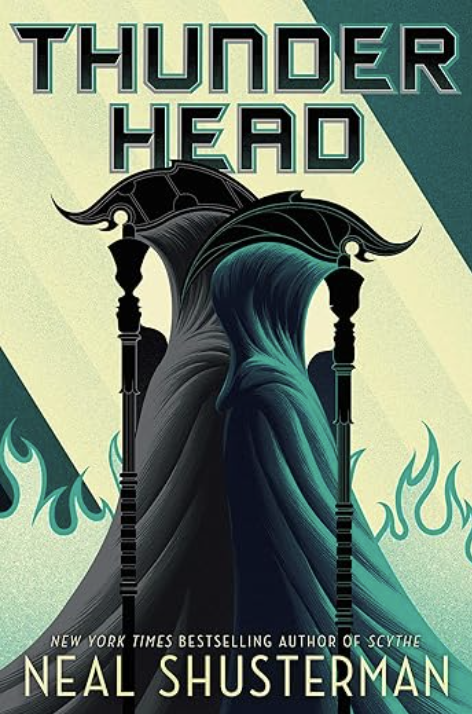
The book ‘Thunderhead’ was made by Neal Shusterman and is a sequel to ‘Scythe’.

To help better understand this review, if you haven’t read ‘Scythe’, it is important to know that in this book, they don’t say “kill,” they say “glean”.

Thunderhead is an advanced AI and a perfect ruler of a perfect world; it has its own agenda, which is to protect humanity and ensure their well-being, but it has no control over the Scythedom (in another word, Scythes).

This book is set in the future, where death is conquered. They cured all illnesses, so now they’re immortal, but to keep the population in control, they created Scythes. Scythes are an order of individuals who are responsible for killing, or should I say gleaning, to keep the world’s population in check; once gleaned, they’re unable to be revived by the law. 

In the last book we learned Citra became a Scythe and goes by the name of Scythe Anastasia who is trying to be a good Scythe but Rowan, on the other hand, has taken a dark path. He is now known as Scythe Lucifer, and he embraces a more ruthless method. He believes that the system is corrupted, that he needs to take extreme measures to bring about change, and he is willing to do everything that it takes to accomplish his goal. 

As the story unfolds, we can see conflict ruin the traditional sides and the rise of a new group called the New Order. This group of people believe in a harsher approach to gleaning, and their plan is to maintain control over humanity so they may be feared and have power over anything, which goes against Citra’s ideals of mercy and empathy. Scythes who disagree with their method face dangers and challenges.

Scythe Anastasia and Scythe Lucifer, who were once friends, find themselves in conflict with their different ideals. But as the New Order rises, their power poses a direct threat to traditional sides as they implement harsher methods of gleaning.

Will the New Order have full control over Scythes, or will Citra and Rowan fight back in their own way that we are not sure of as they left us on a cliffhanger?

I personally am invested in what’s going to happen in the next book and in my personal opinion, I give this book 8.75/10.

‘Scythe’ book review

By: Kimberly Mascote Rangel

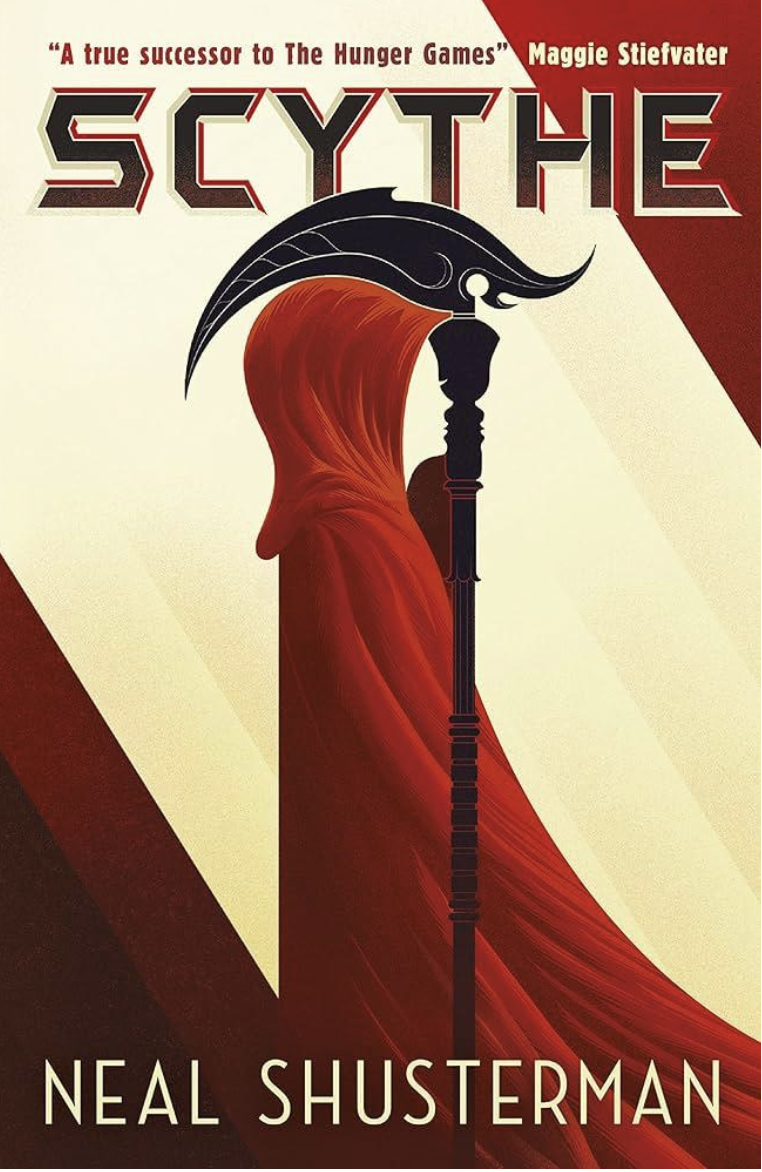
‘Scythe’ is a novel set in a future where humanity has conquered death. Disease, war and misery are things of the past and people can live forever. However, to control the population a group of people called Scythes are tasked with gleaning or killing others.

The story is about two teenagers Citra and Rowan, who are chosen to be Scythes. They must learn the art of killing and understand the weight of their responsibilities. Throughout their journey they do intense training.

Neal Shusterman creates a fascinating world with complex characters and thought-provoking themes. The book explores the value of life, and the nature of power, and the characters make their struggles feel real.

The plot is fast paced and full of twists, keeping readers intrigued. The writing is clear and engaging, making it easy to follow the story. Shusterman’s world building is detailed and imaginative, giving a vivid backdrop for the characters’ adventures.

Overall, ‘Scythe’ is a thrilling and thought provoking read that raises important questions about humanity and mortality. It’s a must read for fans of dystopian fiction and anyone looking for a story that challenges the way we think about life and death. I give this book an 8/10.

Gotham: One of the worst comic cities

By: Munira Ahmadad

The city that Batman resides and fights crime in was first given the name Gotham in the 1940 comic ‘Batman #4’. In real life, Gotham has been used as slang for New York City. Originally, the term Gotham comes from ‘The Merry Tales of the Mad Men of Gottam’,  a 16th century fictional English town. The residents of Gottam were incredibly stupid, and a potential translation of Gottam is “Goat town” as goats are associated with stupidity. Gotham became an insult for New Yorkers, and more modernly “Gotham” is more connected to New York’s nightlife or the darker side of the city.

Unlike Metropolis, who’s major threats are from space, Gotham is filled with street-level crime. Even without the Arkham supervillains, the city has several issues like political corruption and the Gotham City Police Department’s higher members being involved in drug trafficking and being bribed by crime groups.

Not only has Gotham’s economy been controlled by numerous crime families for generations, we see in the 468th issue of ‘Batman’ Vol. 1, (1991),  that by the 1990s Triads had managed to take a billion dollars out of Gotham annually. There’s gangs, mafia groups, and also there’s the Yakuza operating in Gotham, too. Gotham has always been cursed to suck since the city was apparently built on top of where an ancient evil dude was sealed and imprisoned. He later names himself Doctor Gotham.

The mayors are often either incompetent or also corrupt, and since its origin, Gotham has been structured so that those taking part in gang wars, drug smuggling, organized crime, etc. don’t have any real reason to fear the law or authority. That was until Batman.

After Batman’s rise as a vigilante, he quickly became something trigger-happy criminals on the streets learned to be afraid of. Because of this, political figures in Gotham were more interested in using the law enforcement for finding and bringing the Batman down due to him taking the city’s issues in his own hands and becoming pretty much the only effective direct role for taking criminals out. The reasoning presented is that Batman is a criminal himself and a threat, but as we know the police force and government take part and aid crime themselves. Batman is a threat to them too.

One good thing about Gotham is that the dark and eery vibe is great for Halloween.

HOW TO MAKE A FASHION BOOK/TEMPLATE

By: Charlotte Bistodeau

Many people want to get into fashion designing but don’t know where to start. You might think you need fabric, special notebooks, special pencils (which is all true eventually but not in the beginning). Here I’ll take you through some of the simple things that will make getting into fashion design easier overall.

The first thing you’ll want is a fashion book. Any notebook can be a fashion book, but there are many things I’ll suggest here that will make things simple.

  1. I suggest a notebook that has blank pages (think sketch books). Having lines on your paper may distract you from the final product.
  2. When choosing your sketch book you want to think about what art supplies you’re going to use most. Example, If you are going to be using a lot of watercolor then choose a sketchbook with watercolor paper.
  3. Your sketchbook does not have to be fancy, in fact you can purchase one at Five Below and you’ll be fine.
  4. Small sketchbooks are a great starting point especially if you have no clue what to do or design. Less space means less stress on the line and makes it seem like you’ve done more.
  5. A bigger sketchbook might feel like a nice idea (not filling it up as fast, having more room) but it can make you feel threatened by how little you seem to have drawn or how much you still have to draw.
  6. Don’t pick out your sketchbook for ascetic purposes. Just because it looks nice doesn’t mean you’ll like the feel of it. You should check to see if you like the feel of the grain and if it works with the main art supplies you choose to use. If you really are worried about it looking nice, you can always decorate the cover yourself with paint, paper, stickers, etc. and make it your own.

The second thing you might want to do is create a stencil to make it easier to draw your design. So, here are the steps to make a stencil.

First, you’ll want to sketch out a picture of a model template. After you finish your drawing and are happy with it, you should take a photo for a later step.

Second, you’ll want to glue your drawing down on a piece of cardstock or thin flat cardboard. Example, I used a side from a box of ice cream (taken out of recycling).

Third, you’ll want to use an exacto knife or box cutter to cut out the drawing from your template; make sure if you have extra pieces (example, for me it was the gaps between the body and arm) that you find a way to keep them connected to the rest of the stencil. Also make sure to have an extra piece of cardboard, cutting mat, etc, to make sure you don’t scrape whatever surface you’re cutting on.

Now you can take a pencil and trace it. Notice I drew on a lined sheet of paper; I did this as an example and if I am actually going to use the template I’ll draw it on a blank sheet. Going back to the first step, look at the photo you took of the original drawing and add anything you may have missed with just the basic stencil (Red is what I added to make it look better).

Now you have your fashion book and stencil and can start your fashion drawing experience!