Editor’s Note: The Plaid Line publishes editorials that contain opinions that are those of the student authors. They do not purport to reflect the opinions or views of the the Plaid Line, HPSH, or its staff.
Having a sister isn’t always easy. Having multiple sisters can be even worse. As the youngest to two older sisters, I can vouch for this. Even so, I have to admit that I would be lost without them.
Even though sisters can easily annoy one another, I think that a sister bond can be one of the strongest relationships a girl can have. Now, of course it has its flaws, such as stealing clothing, and passive aggressive insults being thrown at one another at the dinner table, but those things are easily overcome. One moment, two sisters could be screaming at each other till their throats are sore, and five minutes later they’re best friends again.
I think that’s what makes a sister bond so special; the knowledge that even though we can get frustrated with each other, we’re always gonna come back to each other and be friends. Some may say that not talking about an argument may not be the healthiest thing, which in some cases I agree, but I think in most sister fights it’s okay, and those feelings can be trusted to be acknowledged and validated through future actions.
As for heart to heart moments between sisters, I find those happen in the moments that matter the most. I can’t count how many times my mother has told my sister to get in here and help comfort her, which oftentimes leads to an awkward pat on the back that lacks what’s really important. That’s not to say that sisters can’t be vulnerable with each other though, I just think that those are rare moments where you and your sister can truly see each other, and that’s when you really need each other.
In a lot of ways, having a sister is like having your best friend also be your enemy, but in the best way possible. You can trust each other to call each other out when needed, but also to have each other’s backs and stick by their side when they need it most.
And even though I hate to admit it, my sister is my best friend. Though right now, I’m extremely annoyed by her.
In the United States today, an estimated 90 million families own some kind of pet. This is nearly 70 percent of households in the country. This included a wide variety of animals, the most popular being dogs, followed by cats, fish, and birds. The number of pet-owning households in the United States has been steadily increasing over the past few years.
The most popular pets in the world are dogs. There are endless options of diverse breeds of dogs, and they are commonly referred to as “man’s best friend.” Dogs have always been known for their loyalty, and playfulness. Aside from that, cats are another very popular pet, which are known for their calmer energy and self sufficiency.
When it comes to the impact of owning pets, I think it’s more of a personal topic rather than a general topic. Almost everybody you know probably has some connection to a pet, and each in their own way. For some people, they may recall gentle memories from their childhood with their first dog, others may look forward to laying with their cat after a long day, some people might even think of their last hamster from time to time.
If one thing is for certain, it’s the fact that the connection you have with a pet is an irreplaceable bond. It varies from person to person, but overall I’d say that having a pet is a very special thing that can be super beneficial for emotional wellbeing, and brings you to inevitably practice better habits. For example, learning how to be patient with your pet, taking care of them, or going out of your way to take them out for a walk can be ways that you practice better habits without even realizing it.
Overall, I believe that owning a pet has a very good lasting impact on someone’s life, and it’s honestly irreplaceable. I also believe that it’s a great thing how popular it’s become to have a pet as part of a family now, and would hope that it stays that way.
Over the past few months, the Trump administration claims to have deported over 100,000 illegal immigrants from the United States. Among them are 130 Venezuelan men, accused of membership with a Venezuelan gang, designated by the US government as a terrorist organization. However, the men were given no chance to dispute these accusations, and many of them live and work legally in the US. So, what gives Trump the power to deport them with no evidence of gang affiliation?
In 1798, a law called the Alien Enemies Act was passed by Congress. It was intended to protect the United States in the event of a war with France, a possibility which seemed likely at the time. It granted the President the power to detain or deport any citizen of an enemy nation without evidence of a crime or a hearing in their defense. It was created as a wartime authority; something only to be used when the US is in a state of war or enemy invasion. However, only Congress, not the President, has the authority to declare war on another nation.
Since its creation, the Alien Enemies Act has only been used three times: during the War of 1812, World War I, and World War II. Notably, it was used to intern Japanese Americans in prison camps during World War II. Many of them were native born American citizens, making them not considered alien enemies under the law. However, they were still interned along with the rest of the Japanese American population.
Trump has invoked this act for the fourth time in US history, the first time not during a major conflict or state of war. This is backed by the opinion that the US is being invaded by illegal immigrants, largely from Mexico and other Latin American countries. This could justify a use of the Alien Enemies Act, as it does provide for enemy invasion. However, this opinion is not backed by any evidence of ill intent or antagonism against the US. And, as Congress has not declared a state of war, this invocation is highly questionable.
The Supreme Court has ordered that one of the immigrants, here legally, be returned to the US. When Trump met with the president of El Salvador, though, he refused to return him, saying the US has no jurisdiction over his prison. As this case continues to develop, it sets precedent as to the power of our executive branch and the other branches’ power to check it.
To fight climate change, the world is shifting away from gas only cars and turning to electric vehicles. The alternatives to gas only cars are hybrid cars, which use a combination of electricity and gas to fuel the car, and electric cars, or EVs, that run on only electricity. Electric vehicles are essential to limiting the effects of climate change, but the shift to electric vehicles must be done smartly. Right now, the reductionist’s approach is creating climate crisis solutions that lack the very instrument that they are trying to achieve: sustainability.
In practice, reductionist thinking analyzes complex problems by breaking them down into more simple parts. The solutions that arise from this thinking lack complexity and they negate how change to an isolated part affects the system as a whole.
Reductionist solutions often show up in politics as a quick solution to a large problem, and yet are dysfunctional. In 2022, California announced that by 2035, all new passenger cars, trucks and SUVs sold within the state will be zero-emission vehicles. This absolutism policy fails to address how the world’s current production of EVs cannot support such a rapid shift while upholding ethical and climate obligations.
EVs and hybrid cars use rechargeable lithium ion batteries to power the vehicle in place of gas. Lithium and cobalt are metals that make battery subunits that are essential components to the efficiency and operation of these lithium ion batteries.
Unfortunately, the acquisition of lithium and cobalt used in the production of electric vehicles is not sustainable or humane. Nearly 70% of cobalt is mined in the Democratic Republic of Congo where workers rights and laws are nearly non-existent. The relaxed worker regulations enable child labor in dangerous mines and without safety equipment. The children who are forced to mine with their hands are constantly poisoned by cobalt and many are killed from mining accidents. Mining cobalt also produces hazardous tails and slags that can leach into the environment causing further negative impacts on nearby communities. These issues will increase over time without intervention especially given that according to the Washington Post, cobalt mining is expected to increase 2,000% by 2040.
Without lithium ion battery recycling there is not enough mineable lithium to supply all electric vehicles, phones, and other products. According to the U.S. Geological Survey, the Earth has 88 million tons of lithium but only ¼ is available to mine. That number may change as technology advances. There could be 2.8 billion EVs produced from 22 million tons of lithium and there are 1.4 billion cars on the road as of January 2023. The growing population and growing amount of other products that rely on lithium and cobalt needs to be considered.
With the extensive use of lithium ion batteries and the attached humanitarian issues with cobalt mining in the Congo, the world cannot stop producing gas-only cars until there are plans in place to prioritize resource diversification to rely less heavily on lithium ion batteries. A more holistic approach must be part of the discussion surrounding the electrification of the automotive industry for EVs to make a sustained impact on the course of climate change.
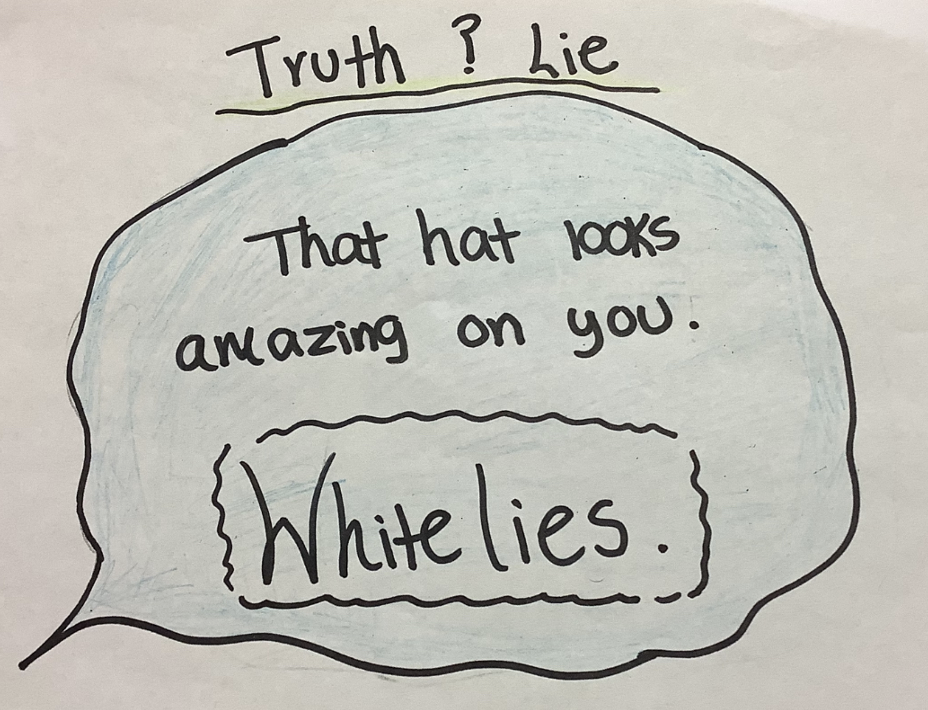
Lying. It is something we all do despite whether you’re aware of it or not. Lying is the substance that is used as a tool in order to avoid getting yourself and/or others in trouble, as well as being used for people’s own personal benefit. For years and years one big question has been asked: Is lying a good thing?
Well, many may consider the adverse effects of lying and disagree. And, besides lying in general, there is also something known as white lying. In our society, people also passionately debate upon whether white lying is ethical or not. Today, I will be giving you both sides of the argument and give you some insight on how it relates to psychology.
To be more specific, white lies are defined as small and trivial lies which people use in order to avoid hurting someone. For example: Imagine your friend comes up to you and asks you if you like their haircut. Let’s say that you indeed do not like it, yet in order to avoid hurting your friends feelings and make them self conscious about it, you just tell them that you love it, despite thinking otherwise. This demonstrates the act of you white lying in order to protect your friend from receiving any sort of mental hurt. But, many would argue otherwise.
There are many people who believe that a white lie does not “protect” someone from hurt, and in fact, that contradicts itself. Many argue that a white lie causes more harm than good, and instead of shielding someone from the dreadful grasp of truth, it only exposes them to more pain. And, despite it being in “good nature”, many consider that lying is still lying, and will only generate more distrust and hurt to the person who thought you were being sincere.
As well as this, because white lying is a form of lying, there is a possibility that it could become a bad habit. And, when more serious situations come about, this habit may have dire results. According to an article written by researchers Elena Svetieva and Leanne Ten Brinke, “Each time someone chooses to lie, no matter how small or seemingly inconsequential, a thread unravels. No big reveal that deception has occurred is necessary, no treachery named, no betrayal felt, no punishment to the deceiver doled out – it is the act itself that harms.” This demonstrates that although white lies have the intention of being “harmless”, the action of white lying will only ignite the fire of chaos.
But, on the other hand of the spectrum, there are many people who think otherwise. Like I have mentioned before, white lying has the intention of being “good natured”, and despite the adverse effects of it, many consider that white lying can improve relationships and in some cases, save people’s lives.
While although white lying can create this sense of distrust, it is also a way to maintain a sort of social harmony and always telling the truth can be more hurtful. They say that white lying does have the word “lying” in the term, yet it is far different from that. It has the intention of helping people avoid hurt, not steer them towards it.
In fact, under certain circumstances, white lies are just supposed to just overall bring peace and ease to someone. For example: Imagine your kid has cancer, and they are due to die soon, and they ask you one simple question, “Am I going to heaven?” Whether you believe in it or not, many would white lie and say yes. This overall brings ease to the child rather than telling them that you don’t know and or they are not. This sort of response may only drive them deeper down into the rabbit hole of depression, leaving them fearful for the rest of their days.
Now, to talk about how white lying relates to psychology. First of all, psychologists believe that besides some other factors that cause white lying, white lying may stem from a person’s own self-consciousness. In fact, it is derived from the factor of justifying oneself, also known as “Deceiver’s distrust”. According to the APA Dictionary of Psychology, “Deceiver’s distrust presumably reflects the assumption that interaction partners are similar to oneself; thus, one’s own deceitfulness leads to the inference that the other is, has been, or will be similarly deceitful. By assuming that others are also untruthful, deceivers can feel less guilt about having lied to them.” This demonstrates that someone may tell a white lie because they believe that others may also be telling lies, therefore justifying their actions of being unhonest to someone.
And, like many other crucial cognitive functions, whenever someone white lies, it is said that this may occur in the prefrontal cortex. More specifically, the medial prefrontal cortex (MPFC). According to JuYoung Kim and Hackjin Kim, researchers for the National Library of Medicine, “An increase in selfish motivation for Pareto lies was associated with higher mean-level activity in both ventral and rostral MPFC. The former showed an increased pattern similarity to selfish lies, and the latter showed a decreased pattern similarity to altruistic lies.” This suggests that the MPFC, which is responsible for processing emotions, values of behaviors, and lying, may have something to do with white lies of selfish intentions.
Thank you so much for following me along as I explain white lies! I hope you learned valuable information about what are white lies and a further analysis of the debate of whether they are good or not. What do you think, should white lies be allowed?
There are many differences between a private and public school. Both schools aim to provide education, but sometimes it’s hard distinguishing how they’re any different besides the cost.
There are key differences in class size, curriculums, teacher quality, extracurriculars, funding, and education experience.
Funding and Cost
Public schools are funded by the government through taxes, allowing students to attend for free within a specific district. The government provides fundings based on the student enrollment number and district property taxes.
Private schools however are funded by tuition fees which are paid by attending students’ families. Tuition cost can range from a few thousands to as high as $50,000 per year, depending on what institution. A friend of mine (Jooney) went to a Catholic private school and she paid $25,000 per year.
Private school’s tuition costs make them less accessible to families with lower financial status but scholarships and financial aid are possible.
Because the students’ families are more involved, there’s more regular/comfortable communication between teachers and parents compared to public schools.
Requirements for Enrollment
Public schools require no entrance exams or interviews and are typically obligated to accept students within the school district.
Private schools have a selective admission process containing interviews, academic performances, and entrance exams.
Previous report cards, teacher recommendations, and test scores/records are often required in many interviews as a part of the application process.
Class size and student ratio
According to Usnews.com, private schools have smaller class sizes, typically having a class size of 12-20 students. Public schools have bigger classes, typically consisting of 25-30 students.
The average student to teacher ratio in public schools can typically be 20:1 or 30:1.
Larger classes can make it harder and challenging for teachers to give individualized attention to students.
Private schools are smaller with a student to teacher ratio as low as 10:1 or 15:1.
This allows teachers to allocate individualized attention to students. It also allows teachers to get to know their students’ learning ability/challenges better as well as build a better relationship.
Smaller classes also tend to help students achieve better academically and have greater engagement in class.
Diversity and Accessibility
According to Nces.ed.gov, another difference is diversity.
Public schools have a more diverse student body because they’re open to all students of the local community, leading to a greater diversity in ethnicity, race, learning ability, and social class.
Diversity helps students learn more about different cultures and social skills.
According to Foothillcds.org, public schools are required to provide services such as gifted and talented programs to meet student needs. They also have teachers who help with one-on-one support for students with disabilities.
Private schools have less diversity due to their tuition cost and selective admission process; they often select and only admit students with certain backgrounds of specific academic successes.
A huge difference between the schools are the dedicated special education teachers. Private schools typically do not provide these services because of their limited spots.
Curriculum and Educational Choices
Public schools use a regulated curriculum for all their students and they are obligated to follow curriculum guidelines set by the state or the educational institution board.
Public schools are also required to administer standardized tests which measure student’s academic performances.
The core subjects like Math, English, Science, and History are mandatory which limits the flexibility of curriculum.
According to Nca.school, private schools aren’t obligated to follow mandatory programming, funding, and services. This gives them the freedom to adopt curriculum that go beyond the standard public school.
Private schools may offer curriculum that focus on specific values, such as religion/belief, arts, or a foreign language.
Private school teachers are often stricter in terms of academic expectations. There are higher expectations for class participation, homework completion, and behaviors.
Dress codes also tend to be more strict; many private schools require a uniform and a student may face consequences for getting a dress code violation.
After acquiring knowledge about the difference between public and private schools, the right choice depends on a child’s individual needs and a family’s educational wants/values and financial capacity.
Social media has a huge place in student’s lives today. Social media platforms like Instagram, TikTok, and Snapchat provide the opportunity to talk with friends, update people on their life, and stay up-to-date on the latest news. Whether reading posts or watching videos, social media is now an important part of the daily routine. Is it helping or hurting students, though?
On one hand, social media can be a really useful tool for learning and personal growth. Many students use YouTube to watch tutorials, watch educational videos, and even learn about new tips and tricks. Instagram and TikTok even have educational accounts that love teaching students new topics or skills. You can learn anything from historical data to math tricks. Students can also get involved in online study groups, connect with classmates, and be engaged in discussions that help with schoolwork.
Social media also allows people to stay in touch with friends even when they are occupied or cannot meet physically. These connections can provide emotional support, especially during periods of stress such as during exams or when there are deadlines for projects.
Social media, however, has its dark sides. One of the most common problems with social media is that it can negatively impact one’s mental health. Spending too much time viewing social media can lead to depression, anxiety, and low self-esteem. Watching others who share their “perfect” lives can leave you feeling inadequate or not good enough.
Social media also exposes students to cyberbullying, where nasty comments and negative interactions can affect a person’s emotional well-being.
Of course, there is the issue of misinformation and fake news being shared, which can confuse students and affect their understanding of important topics.
So, is social media ultimately helping or hurting students? The answer is that it depends on how we use it. If we use social media to support our learning, stay connected with our friends in a positive manner, and engage in helpful discussions, it can be an excellent tool. But if we allow it to distract us from our studies, drain our energy, or damage our mental health, then it may do more harm than good. We have to find the balance and also notice how we are spending our time online. If we recognize that social media is causing more stress than it is good, then taking a break can be the best thing that we can do for our minds as well as our studies.
As I step off the shuttle bus into a bright February morning, it is like something I have never seen before. A vast starting line with giant ribbons hanging across a span of 75 meters. Beyond that, crowds of racers decked out in race suits, buffs, and shiny glasses. They are all getting ready to head off on the journey to Hayward.
I was one of the 12,000 skiers to cross the finish line on Main Street in Hayward, Wisconsin over the weekend of February 19 to 22nd for the 51st annual American Birkebeiner cross country ski race.
But, before getting to Hayward, there were nerves to calm and kilometers to ski. People stand around helping each other put on glitter and fill the space with excitement.
As it gets closer and closer to the race starting, people begin to take off their warmups and head over near the race start. We all get lined up, then, boom! We’re off! The crowd erupts and the skiers emerge from the startline on their journey to Hayward. There are so many people that poles are being stepped on and people are tripping and falling over.
Once we found our rhythm, we were left in the calm and beautiful forest with 28 kilometers ahead of us. The sound of the poles digging into the snow flows as we all move up and down the hills. The thing about the race course is it is not just flat, it’s constantly rolling, with steep ups and sharp turns on the downs.
The quiet breaks when I make it to the first water stop. The crowd lines the course handing out water, energy drinks, and snacks.
The American Birkiebiner weekend started in 1973 and has continued until today. It is a yearly event that many skiers look forward to each year. There are a number of different races such as The Prince Haakon 15k, Korte 29k, and Birkie 50-53k depending on if you’re doing classic or skate. Each race has an eye-catching finish through Main Street Hayward.
After 15 miles of treacherous climbs and scary descents the course opened up onto frozen Lake Hayward. The lake stretches far ahead as you make your way closer and closer to Main Street Hayward. Fans lined the course as I finally made my way out onto the infamous Main Street. Cow bells ring and the much awaited finish is finally here.
Once the race was finished I was greeted with chocolate milk and warm soup back at the tents. Friends reconnect as they all come into the finish line. No frowns around; all smiles and excitement.
After a day of fun at the Korte, I went to the Birkie race the following day. There were many spots to cheer, such as OO Trailhead, Boedecker rest stop, and Mosquito Brook rest stop, as well as the finish on Main Street Hayward. This was such a fun and exciting weekend, and I am already looking forward to next year.
5 million dollars is the cost that Donald Trump put on his “Gold card”, which is an immigration visa that will be available for purchase. Trump recently announced these at a press conference in the Oval Office.
There is already a similar visa in place called the EB-5 Visa which is available for people to invest in businesses in America. These visas cost $1,050,000 or $800,000 in investment for businesses here. While this visa is strictly for businesses, it is available for anyone to buy if they meet the criteria.
Trump’s “Gold Card” visa would replace the EB-5 Visa but it is an astronomically high cost for a business visa. There are very few people in other countries that have enough money for this visa. The “Gold Card” would also not be an effective route to citizenship. 5 million dollars is a lot of money just to live somewhere.
Other countries have tried similar visas, often called golden visas; they have existed in many European countries but they are sparking concern about who exactly is spending that money for a visa, with people saying that many times it is people using the visas for criminal purposes. Some of the European countries that have these visas are: Spain, Italy, Greece, Portugal and Ireland. These countries started the “gold visas” as a way to make up economic shortfalls.
One of the negative effects of these visas was that richer immigrants came and bought out a lot of local housing and they drove up rental costs and home costs. Many of these countries have since stopped these programs due to the European Union’s warning about people fleeing from Russia as well as these visas being used for corruption, tax evasion, and money laundering. Many countries in the Middle East are considering these golden visas in addition to the US. These visas are raising concerns about how, and if, these will be used by criminals.
Trump has also voiced how the “Gold Card” would be extremely successful and he seems fully sold on the idea that wealthy people will flock here and spend money and pay taxes. When asked if Russian oligarchs would be able to come, Trump responded, with “Yeah possibly I know some oligarchs that are very nice people, it’s possible”. For people who may not know, an oligarchy is defined as a form of government where a very small number of people have power. There is a large number of oligarchs in Russia, so they might try to immigrate to America with this new visa. While he said that people coming here would be “vetted” he has not expressed any information about how this system would be happening, and he did not say how people would apply, and how these applications would be approved.
At the end of the day, the story that is being spread from the US government is that, if you are rich enough to pay millions to get to America, you are rich enough to stay. We must ask ourselves, is this the message we want to send to the world after our country was founded by poor immigrants. Because, after all, most people in America had a relative that came here at some point who was not rich enough to buy a ticket to a “better” life.
Volunteering is a really good way to give back to the community while also improving yourself. Whether it’s helping at an animal shelter, contributing or volunteering at a food bank, or cleaning up a local park, volunteering has many benefits that go beyond doing good deeds. It’s a rewarding experience that can help shape a person in more than one way.
One of the most significant benefits of volunteering is the good influence it has on mental health. According to research, helping others can increase happiness and reduce stress. Having a sense of purpose from meaningful work can boost one’s self-esteem and general well-being. Volunteering allows you to interact with people, which can help you overcome loneliness and develop a strong sense of belonging.
Another significant benefit is developing new and important skills. Volunteering can teach responsibility, teamwork, and communication skills that can help in school and in the future. It can also help people to gain more real-world experiences and adapt. Some examples could be volunteering at a hospital, which could give insight into medical fields.
Volunteering with children can help with patience and leadership skills, like I volunteer every Saturday and Wednesday at my church with the kids. Saturdays I do worship, where the kids join in following dances and singing to songs, it’s such a fun experience. Wednesdays I volunteer in the cafe during student groups for middle schoolers and high schoolers; this prepares me for future jobs with communication and teamwork skills.
Volunteering can introduce you to new people and expand your social skills. You get to work with people who have similar interests and goals, and you can also learn from them. This could lead to possible friendships and future opportunities. Most organizations can offer letters of recommendation or certificates, which could help you apply for college or future jobs.
Finally, volunteering can make a big impact on the world, and on the people you help. Even just small acts, like helping at community events, or tutoring younger students, can help in major ways. It helps to show that no matter your age, anyone can contribute to make a difference in someone else’s life, or even your own.
In the end, volunteering isn’t just about helping others, but also about personal growth. It helps people gain connections, and experiences, new life skills, and feel good about helping others. It doesn’t matter how or where you volunteer, because the benefits are endless.
The Official Online Newspaper, Literary Magazine, and Video News of the Highland Park Scots










 Plaid Line + PRIZM + Scottie News