All posts by HPSH Plaid Line

Impact of virtual reality on gaming

By: Hyde Moua

Image created with Openart.ai

Virtual reality is a multi-dimensional artificial environment for video games. This has transformed our imaginative worlds of gaming into existence through artificial environments that we can interact with using virtual reality headsets.

The purpose of virtual reality being made was to create an immersive experience that can be used to explore an environment that helps to educate or entertain the user that is playing. Because of this, virtual reality has revolutionized gaming by offering a more immersive experience when playing games, allowing players to physically interact with the environment.

Virtual reality transforms traditional gaming by allowing users to engage games with an unmatchable level of realism. Virtual reality games are usually task based games, with challenges similar to real world problems and the players are tasked with finding solutions or opportunities to finish their task for a reward. Other games are based around having you save your own virtual character. Virtual reality also brings opportunities for people to interact online; people have created games online solely to interact with other people.

Virtual reality is an ever-evolving field, with revolutions in the future that may enhance the immersive experiences of players and the potential to change the players’ engagement and gaming experiences of virtual reality. Virtual reality is playable on any electronic device, like phones, tablets, console devices, and pc’s.

In my opinion, virtual reality has drastically changed how gaming is today because we can experience realistic virtual spaces that act and behave similar to the real world. I really enjoy playing VR games because it feels much more immersive than traditional gaming which I can enjoy playing alone, or with friends. Either way, virtual reality is a huge step in gaming and I am really grateful that virtual reality was created because it is an experience that you could never forget.

Bear with a moose head

By: Pwe Doh Gay

This drawing is of a bear combined with a moose head. I made the drawing because I wanted to try to draw something new.

I like how the image turned out, because I did not think the two animals would look good together. I really like how the body and head look with the brown. Also, I like how the teeth look. I think the teeth look very good with the red on the inside.

But one thing that needs to be fixed are the claws. The claws do not look good. The claws need to be the same shape and sharper. Also, I think the ears need to be fixed because they do not look like ears.

I think this is one of the best drawings I have made this year.

Minnesota Legislative session: What a mess!

By: Charlie St. Dennis

Image taken from Wikimedia Commons

The Minnesota Timberwolves won their playoff game against the Denver Nuggets on Sunday, May 19th, successfully moving on to the Western Conference Finals against the Dallas Mavericks. While many Minnesotans celebrated at home, bars, or watch parties, a small group of Minnesotans were stuck at the State Capitol working tirelessly to pass as much legislation as they could before the end of the session, which occurred at 12am on Monday, May 20th.

For those who are unaware, Minnesotans are put into state legislative districts, which typically consist of roughly 85,000 people per senate district, and about 42,500 per house district. We elect these leaders, and the current state makeup is 70-64 with a DFL majority in the House, and 34-33 with a DFL majority in the Senate as well. Having such narrow majorities in both legislative bodies makes it incredibly difficult for legislation to pass, because it means you need *every* DFLer on board, or your legislation might die.

Unfortunately, that happens often. I’ll start reviewing this past legislative session with what I consider the *wins* for Minnesotans. Powerful bills challenging oppressive institutions, like the Minnesota African-American Family Preservation Act, introduced in the house by Rep. Esther Agbaje (DFL) gained bipartisan support from DFLers and Republicans alike, including Sen. Bobby Joe Champion (DFL) and Sen. Clare Oumou Verbeten (DFL), and Rep. Walter Hudson (R) and Sen. Jim Abeler (R), who ended up sponsoring this important piece of legislation. The goal of this legislation is to promote family reunification and appropriate social services for disproportionately affected African-American families.

They were also able to work with intergovernmental relations from the Minneapolis City Council and passed worker protections legislation for Uber/Lyft drivers. They also passed HR1989, a billed lovingly nicknamed the “Taylor Swift Ticketing Bill,” which was a bill basically saying that companies like Ticketmaster and AXS must disclose ticket prices with fees included, instead of just revealing right as people pay.

While this may not sound like a lot, you’re right, it’s not. I skipped over some of the really boring stuff, but mostly this year had a pretty blank slate, at least until the last day. The DFL realized they had a lot of work left to do due to some long, unnecessary debates from the Republicans. This leftover work notably included FairVote Minnesota’s Local Options Bill, which guarantees ranked choice voting as an option in local elections across the state. In addition to this, many activists and DFLers across the state were pushing for the Equal Rights Amendment to pass, which had been pushed to the last week of session for a second year now.

The DFL wanted to accomplish all of their legislative goals before that upcoming midnight deadline, so their solution was to make multiple omnibus bills, which means to combine pieces of legislation together and speed up the process. Once combing these omnibuses, they put it into one big omnibus: not so lovingly nicknamed “Omnibus Prime” or the “Megabus.”

This was appalling to Republicans. Despite admitting last year that they don’t read the bills (they accidentally legalized cannabis), now they suddenly care about having time to read this legislation. When Speaker Melissa Hortman (DFL) recognized a motion from Rep. Jamie Long (DFL) for a roll call vote, Minority Leader Lisa Demuth (R) began yelling “Madam Speaker!,” questioning her integrity as she thought she was not following the rules, along with several other Republican colleagues. This yelling went on for upwards of 30 minutes, which successfully left the legislature out of time to pass any legislation on to the Senate.

While I agree that the “Omnibus Prime” package was a lot to deliver on the final night of session, I also believe that Speaker Hortman, who has served in the House for 20 years now, is a reverent leader who knows what she’s doing. She recognized a motion, as she should, and they were going to begin a roll call vote, as they should. Because the *Republicans* didn’t understand the rules, we weren’t able to get nearly as much done this session as we could’ve. Although, despite not having the greatest record this past session, this has been the most productive biennium in 50 years.

My message for Republicans: you do not get to spin the rules just because they aren’t in your favor. You do not get to throw a hissy fit because you don’t want to progress our state. And lastly, the voters in November will look at the TV ads, campaign mailers, and lawn signs for your candidates and legislators and think of the way they acted like toddlers once given a position of power. And best believe they will vote accordingly.

‘When The Pawn…’ by Fiona Apple album review

By: Fletcher Pike

Fiona Apple’s unique album ‘When The Pawn…’ came out in 1999 and featured 10 songs total with a total length of 42 minutes. This album was released following Fiona’s hit album ‘Tidal’ which came out just a few years before in 1996. The full title of this album is actually a 90 word poem that is featured on an overlay on the album cover. In this album, Fiona Apple incorporates piano elements into most of her songs with pop-style jazz beats and features her distinct smooth alto voice.

Track 1: On The Bound

The first song on this album, “On The Bound” begins with a swing beat with a heavy piano melody accompanied with electric piano undertones. The chorus shifts into an elegant beat with added string instruments as Fiona howls echoed lyrics. I loved this song a lot and I think it was a great opening to this album. I think that this song deserves a 10/10.

Track 2: To Your Love

The following song, “To Your Love” features vibrating and scaling vocals with a classic drum beat and fast piano hits. I did like the melody but personally this song didn’t stand out as much as the other songs on this album. It was still a really enjoyable song and I would rate it a 9/10.

Track 3: Limp

“Limp” starts with a simple growing piano melody with increasing intensity that explodes into sections with loud drums and a note-descending saxophone. I really loved the drums on this song and how the intensity increased as the song continued. I thought that this song was very pleasant to listen to and I rate it a 9.5/10

Track 4: Love Ridden

“Love Ridden” is a solemn tune compacted with emotion including a mostly piano and vocal composed melody. Stringed instrument undertones add depth to the song. I found this song to be very touching, with Fiona’s emotive and powerful vocals. I really liked this song overall and I would rate it a 9.5/10.

Track 5: Paper Bag

“Paper Bag” begins with a slower scratchy drum beat with a vinyl-like effect over it, with Fiona’s scaling and staccato vocals entering shortly after. I loved how this song was put together and I found the lyrics to be very interesting, which talks about how hope can lead to disappointment. I think this song deserves a 10/10 for the melody and intriguing lyrics.

Track 6: A Mistake

“A Mistake” starts with an electric organ with scratchy brass elements. I overall thought that this song was pretty great, but it didn’t really stand out to me. I liked the melody and the electric organ that was used in the song, so I think that this song is a 9/10.

Track 7: Fast As You Can

“Fast As You Can” is the hit single from this album. The song includes a racing tempo with quick piano hits that stops at slow segments during the song that picks up as it continues. I enjoyed the faster tempo on this song, as it grabs your attention right away with the march-style drums and vibrant theme. I think that this track has to be one of my favorites on the album and I rate it a 10/10.

Track 8: The Way Things Are

The song “The Way Things Are” begins with a wavy synth instrument shifting into a roaring heavy guitar and a classic drum beat. I liked the addition of the heavy guitar since it made it stand out from the other songs on the album. I think that overall this song was pretty good to listen to, and that I rate it a 9.5/10

Track 9: Get Gone

“Get Gone” begins with a tranquil piano and an ambient brushed drum beat that transitions to a louder drum set and piano sounds with string instrument undertones. I was a big fan of Fiona’s vocals in this song and the duality between dynamics. I loved the melody of the song and the different instruments used in this track. Parts of this song reminded me of some vintage jazz songs, which I admired a lot. This is a really great song, and I think it’s a 10/10. 

Track 10: I Know

‘When The Pawn…’ ends with a slow and melancholy rhythm with an ambient piano under Fiona’s gentle vocals. I think that it was a fitting song to end this album, and I enjoyed the vocals in this song. This was a great finish to the album, and I rate it a 9.5/10.

‘When The Pawn…’ is by far one of my most favorite albums by Fiona Apple. I find that the creativity and uniqueness that she incorporates into her songs makes her stand out as an artist. These songs were full of different kinds of emotions that I found to be interesting to listen to. Overall, I think that this album is a 10/10.

Sports schedule for: Jun 3-8

ATHLETIC EVENTS SCHEDULE: JUNE 3 – JUNE 8  
MONDAYJUNE 3 
TIMEBUS TIMESEVENTLOCATION
    
TUESDAYJUNE 4
TIMEBUS TIMESEVENTLOCATION
    
WEDNESDAYJUNE 5
TIMEBUS TIMESEVENTLOCATION
    
THURSDAYJUNE 6
TIMEBUS TIMESEVENTLOCATION
10:00am Boys Tennis State TournamentBaseline Tennis Center
FRIDAYJUNE 7
TIMEBUS TIMESEVENTLOCATION
TBD Boys Tennis State TournamentBaseline Tennis Center
9:00amTBDTrack and Field State Meet PrelimsSt. Michael-Albertville High School
SATURDAYJUNE 8
TIMEBUS TIMESEVENTLOCATION
9:00amTBDTrack and Field State Meet FinalsSt. Michael-Albertville High School

What is the 2024 ‘Celebrity Blockout List’?

By: Fletcher Pike

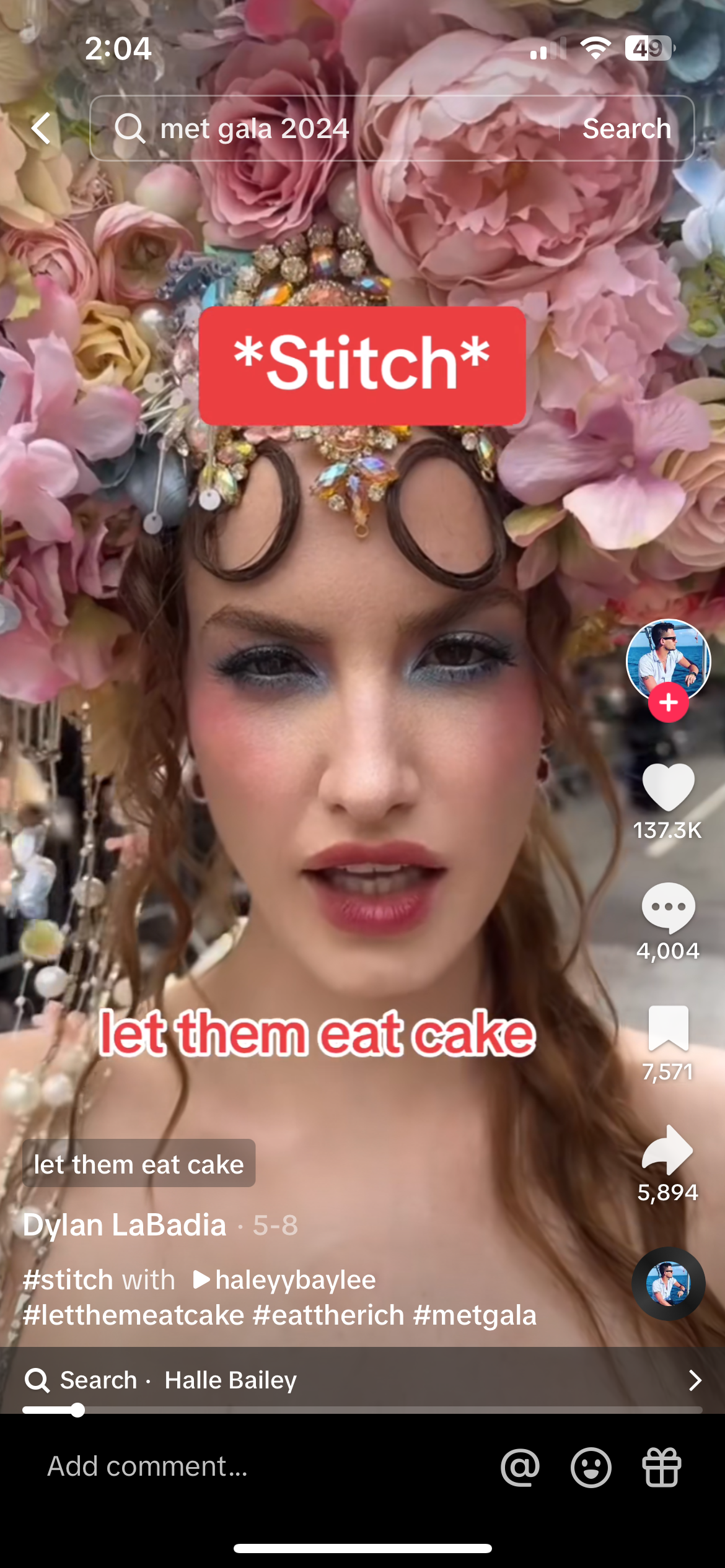
Screenshot of Dylan LaBadia’s repost of Haylee Baylee’s original post

The 2024 ‘Celebrity Blockout’ is a newly formed social media movement that has recently started in the past few weeks to bring awareness about the events that are happening in Palestine, more specifically Gaza. It was mostly formed on TikTok and has now spread to several other social media apps.

The movement initially began when a TikTok influencer and content creator, Haley Kalil, also known as Haylee Baylee, posted a video on her account, featuring her at the Met Gala. In the video, she wears an extravagant outfit with an audio over the video from the 2006 film, ‘Marie Antoinette’, saying “let them eat cake”. The famous sentence was supposedly said by the French queen Marie Antoinette in response when informed of the famines occurring in the country.

The video received severe backlash and angered many people at the lack of awareness about the Israeli-Palestinian conflict and how several celebrities and influencers have remained silent about it or brought awareness about the situation. People on TikTok began posting videos, suggesting that they should begin to block celebrities who have not spoken out about Gaza.

Several popular celebrities have been mass blocked, with some even losing millions of followers. Some of the celebrities that are being blocked include Taylor Swift, Travis Scott, and the Kardashians, with Kim Kardashian having lost about 3 million followers since the Met Gala.

People on TikTok have overall mixed opinions about the Celebrity Blockout, with many standing for it and blocking many celebrities, while others argue that blocking celebrities will not help bring awareness or help the situation in Gaza.

In my personal opinion, I believe that it is extremely important to bring awareness about Gaza or Palestine in general and do as much as we can to help, but I’m uncertain that blocking celebrities is necessarily relevant to helping Gaza.

Album review: ’14 minutes’ by Dominic Fike

By: Calla Fragassi

Dominic Fike is an American singer, songwriter, and actor. He is known for his role in the hit TV show ‘Euphoria’, but is also recognized for his music that falls under the Alternative/Indie genre. He released his fifth studio album on May 3, 2024, called ’14 minutes’. The 8 tracks on the album add up to 14 minutes exactly which is where the name comes from. Here is a quick review of each of these 8 songs, and the album as a whole:

The first song on the album is “megaman”. This song is one of the shorter ones on the album at 1:18 and focuses more on the instrumental aspects of the song. Throughout the entire song, he gently plucks the cords of an acoustic guitar to give it a sharper tone and uses a kick drum as the second instrument. He mumbles most of the words while singing, making the song more simplistic and relaxing. Overall, I usually like my music to be a little more upbeat, but I can still appreciate the sound and slowness of “megaman“.

The second song on the album is called “hi grace”. In “hi grace”, Fike uses sound effects to make his voice higher, as well as make his words sound glitchy. Throughout the song he uses piano, guitar, and drums which makes the song more upbeat than the previous song, but it’s still not super loud or intense. How he sings the chorus of the song reminds me of Bob Dylan’s voice in his music, and is one of the more popular songs on this album; I would rank this song in my top three favorites from this album.

The third song on ’14 minutes’ is “1.23.23”. This song reminds me of some of his older music from his previous album ‘Sunburn’ because he sings at a lower tone and uses a similar glitchy effect as “hi grace”. The lyrics in the chorus talk about scars and changing along with verses that are written about going back in time and fixing mistakes. This song gives a more hopeful message to listeners but is not one of my favorites on this album.

The fourth song on the album is called “THICKRICK”. This song sounds more like it is directed towards someone with anger based on the instruments and intensity of the song. Fike uses an electric guitar in this song and purposefully makes it the loudest sound in “THICKRICK”. This one is also not one of my favorites, but the lyrics in the song like “Don’t let the tattoos fool you, love” are full of anger and make it worth a listen.

The fifth track on the album is “Bowie Box”. The only instrument in this song is acoustic guitar. He only sings for a very short period at the beginning, making most of the song just him playing the guitar. This is one of the slower songs on the album and somewhat reminds me of the song “Skinny Love” by Bon Iver because of the tone of voice Fike sings with.

The sixth song on the album is “misses”. This is my favorite song of this album and is currently trending on Apple Music and social media platforms like TikTok and Instagram. This song is very upbeat and cheerful and has quickly climbed to Dominic Fike’s number-one song. It’s easier to understand and learn than some of his others on the album and is the perfect song for summer.

Number 7 on the album is “to say to say”. He again uses the same glitchy effect in this song as he did on tracks 2 & 3, but this song only has 10 verses in its 80 seconds. Although it’s a little different from some of the other songs, it still fits in with the indie alternative style Fike typically works with.

The last song on this album is called “coast2coast”. It’s another one of my favorites out of these tracks because of the instruments he uses and how fast it is. It’s only 1 minute long, but he manages to make a great song out of the small amount of time he uses.

Overall, I would recommend this album to anyone who enjoys a different play on traditional indie music. He uses different instruments and effects than what are normally seen and it’s super fun seeing what he’ll incorporate into each song. I do wish the songs I enjoyed like “misses” and “hi grace” were longer songs, but I think the idea behind the album only being 14 minutes long is very interesting and I haven’t seen it done before!

A summary of the feud between Kendrick Lamar and Drake

By: Hermekay Dehaney

The feud between Drake and Kendrick Lamar, who are two of the most prominent figures in hip-pop, has been building for years, marked by a series of indirect and direct disses throughout each other’s music careers. The feud has been growing in tension with both releasing back to back diss tracks aimed at each other for the past couple months.

But when did it start, and how did it escalate?

Well, for starters the two were once acquainted with each other and even  collaborated on different songs and albums, such as Drake’s album ‘Take care’ in 2011, and Kendrick’s album ‘Good kid, M.A.A.D city’ which was released a year later in 2012. 

The drama wouldn’t start until 2013 where Kendrick Lamar was featured on Big Sean’s song called “Control” where he dissed other artists including Drake, saying “I got love for you all, but I’m trying to m**der you.” Drake would then respond in an interview by saying “[I]t just sounded like an ambitious thought to me. That’s all it was. I know good and well that Kendrick’s not m**dering me, at all, on any platform. So when that day presents itself, I guess we can revisit the topic.” This would be the start of the decade-long feud.

The feud would escalate however, in March of 2024  when Kendrick Lamar would release his song “Like That,” which was produced by Metro Boomin’ and the rapper Future in an album called ‘We Don’t Trust You,’ in response to J Cole and Drake’s 2023 song “First Person Shooter.” In the J Cole verse, he said “Love when they argue the hardest MC Is it K-Dot? Is it Aubrey? Or me? We the big three like we started a league,” to which Kendrick responded by accusing the rappers of sneak dissing, and went on rapping by saying,  “big three —— it’s just big me.” What made that song significant was that the producer, Metro Boomin’  was a former producer for Drake but ultimately fell out with him.

J Cole would then respond by releasing a diss track, “7 Minute Drill,” rapping, “I got a phone call, they say that somebody dissing, You want some attention, it come with extensions,” and “He still doing shows but fell off like The Simpsons.” He also dissed Kendrick’s recent songs by saying it was “tragic.”

Only a couple days after releasing that diss, he would end up backing down by saying  “I ain’t gonna lie to y’all the past two days felt terrible,” which he would explain that he felt pressured because “the world wanna see blood.” And he ended up removing his diss from all streaming services, and apologized to Kendrick.

Drake would then release his diss track “Push Ups” on April 13, in which he clowns Kendrick for being 5’5″. He then went on to slam Kendrick for collaborating with mainstream artists such as Maroon 5, and Taylor Swift by saying “Maroon 5 need a verse, you better make it witty. Then we need a verse for the Swifties.” He then dropped another diss called “Taylor made freestyle.” Kendrick responded by dropping a 6 minute long diss track “Europhia,” on April 30, accusing Drake of getting plastic surgery as well as calling Drake a “master manipulator,” and saying “Let me say I’m the biggest hater,” and also “I hate the way that you walk, the way that you talk, I hate the way that you dress.”

I personally think this is where the feud reached its climax, because this was the start of the back to back disses.

 Kendrick dropped another song less than 72 hours later “6:16 in LA,” where claims that someone in Drake’s circle is leaking damaging information about him. Then on May 3rd Drake clapped back with “Family Matters,” basically accusing Lamar of cheating on his wife. Lamar hit back with another song just an hour after Drake’s diss “Meet the Grahams,” where he accused Drake of having a secret daughter, and calling him a “narcissist, misogynist, livin’ inside his songs.”  He also made a verse addressed to Adonis, Drake’s son, saying, ”Dear, Adonis, I’m sorry that that man is your father, let me be honest,” he also addressed Drake’s parents in the song. This feud would not stop there as Kendrick would drop yet another diss track “Not Like Us,” which alleges Drake being a p**ophiles, he raps “Certified Lover Boy? Certified p**ophiles.”

Drake would respond with a track called “The Heart Part 6,” where he basically denied all the serious allegations against him.

So far it’s been quiet from Kendrick and Drake dissing each other besides Drake dropping a remix of Metro Boomin’s recent diss track against him, but that’s another story for another day.

Let me know your thoughts and for more information, please visit:

What’s the ‘Thats Not My Neighbor’ game and why is it so popular?

By: Julia Yang

Warning: before watching/playing, this game may include trypophobia (fear of holes), ommetaphobia (fear of eyes), unsettling faces, mutation, blood, stitches, and drooping organs/skin. This is a mild horror game with horror elements.

‘That’s Not My Neighbor’ is a game developed and released by solo developer Nacho Sama.

‘That’s Not My Neighbor’ is a game where you are playing as an employed security guard by the Doppelganger Detection Department (D.D.D) for an apartment building. Your job is to detect and call in any Doppelgangers who are trying to enter. Scan through identification cards, call apartments, analyze the individual, ask questions, and protect the residents.

It’s a lot harder than it seems, a change even as small as a few numbers off of a 12 digit number on their card can lead up to your failure.
Keep a watchful eye and take your time.

As to why it’s a popular game is due to the increasing number of “spot the anomaly” games. Ever since the release of ‘The Exit 8’— the anomaly game took the internet by storm— other game developers have been picking up on the trend and giving it their own spin. Developers as popular as Puppet Combo have released an anomaly game.

If you don’t have a clue what I’m talking about, let me explain the premise of “spot the anomaly”: the point is to spot changes and differences in a person, place, or thing. You’ll be able to see the person, place, or thing in its normal form, afterwards, you’ll have to be able to tell if something has changed or not. One wrong move, one wrong “it’s probably fine” or “looks good to me” can completely ruin your run.

Anomaly games like ‘That’s Not My Neighbor’ are games that are going to be released— for what I think, a while. Since it’s such an interesting and interactive plot to a game, no one can really get tired of playing as every run is a new anomaly, new gameplay.

I myself have not played any anomaly games, but watching others play is fun too. Watching them miss things that you notice are different, and having the same “wait what did I miss” moment as them is super enjoyable since you’re also trying to look for any anomaly— even if you don’t really mean to.

The science of pollination

By: Trump Vang

Pollination is the process by which animals can transfer pollen from a male flower to a female flower. It produces most of the natural things that we eat today; everything from fruit to vegetables are all produced by this process, and it’s integral to our food resources today. Even some non-edible applications, such as seeds, are important for reproduction and the spread of species. Nonetheless, pollination is an important part of nature, though some may wonder what happens behind the title and definition of pollination. What is the Science of Pollination?

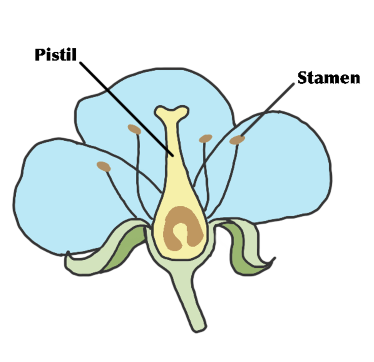
All pollination happens due to flowers. Their ability to produce pollen to spread to one another, allows for this process to happen as well as all of its side effects. What is in a flower though? Well there are two main structures within the flower. They’re specifically known as the stamen and the pistil. While the stamen produces the important pollen, the pistil contains genetic information in its ovaries. When pollen comes in contact with the pistil, the process of fertilization starts, and the plant starts to produce seeds for reproduction. 

Now, how does the pollen come in contact with the pistil? Well there are a few different ways that this can occur: wind can disperse pollen and birds, plus insects, can spread them from flowers. Wind is unpredictable, so plants are forced to adapt to the style of animals. Most plants will provide animals the benefit of nectar, a sweet substance, in exchange for having them spread their pollen.

All flowers have different structures, though the pollination happens in the same way. Usually, the animal comes in contact with the flower and attempts to get some of the nectar at the back of the flower. Through this process, pollen is able to get stuck on the animal and stays there until they pass it onto a pistil; this happens in the same process in which they attempt to get nectar from the flower. These processes allow for plants to get pollinated and spread their species.

While providing food (nectar) is the most common way for the process of pollination, there are other ways that plants have adapted to get pollinated. Some plants use visual cues, scents, mimicry and entrapment to get animals to pollinate their flowers. One example of these methods are found in the set of plants known as the Orchid. Often these plants will use scents to lure in their pollinators, just to trap them within their intricate designs. As the organism attempts to escape, it can run into the pollen that the flower’s produce, allowing for population to occur. After a while, the Orchid opens, and the bug is freed from its confines. There are reasons for why these plants differ in their requirements, but for the Orchids it comes in saving their energy in having to make nectar, and ensuring that their pollen is spread properly.

The first ever pollinators most likely passed pollen from one plant to another by accident. Ever since then, both parties in pollination have developed to coexist with one another and thrive together. From bugs like beetles to animals such as bats, they all are effective pollinators, and allow for plants to properly reproduce. The most popular pollinator is the common honeybee which pollinates around 80% of all flowering plants.

With global warming on the rise, pollination is becoming harder and harder. With the warming climates, plants are blooming earlier, which inhibits animal’s time to pollinate them. This change in time throws off all pollinators, leaving us with decreased pollination and starvation. Alongside this, regular pollutants are hurting plants and their pollinators, affecting their reproduction and pollination ability. Taking steps against pollution and global warming is integral to the safety of pollination. Pollination is an important part of our world and the science behind it allows for the world to grow and develop in its own way.

To learn more about pollination, please visit: