By: Alayanna Bouwens
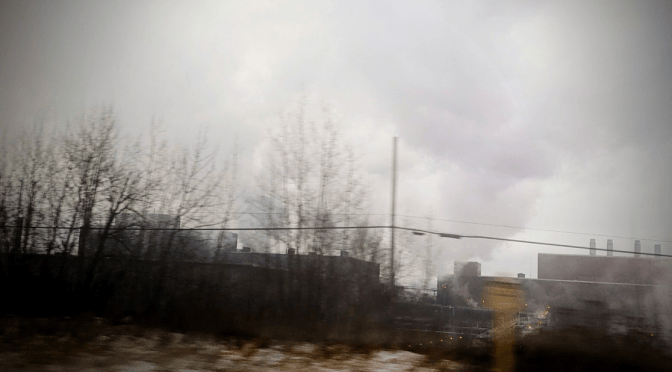
Polluted Winter
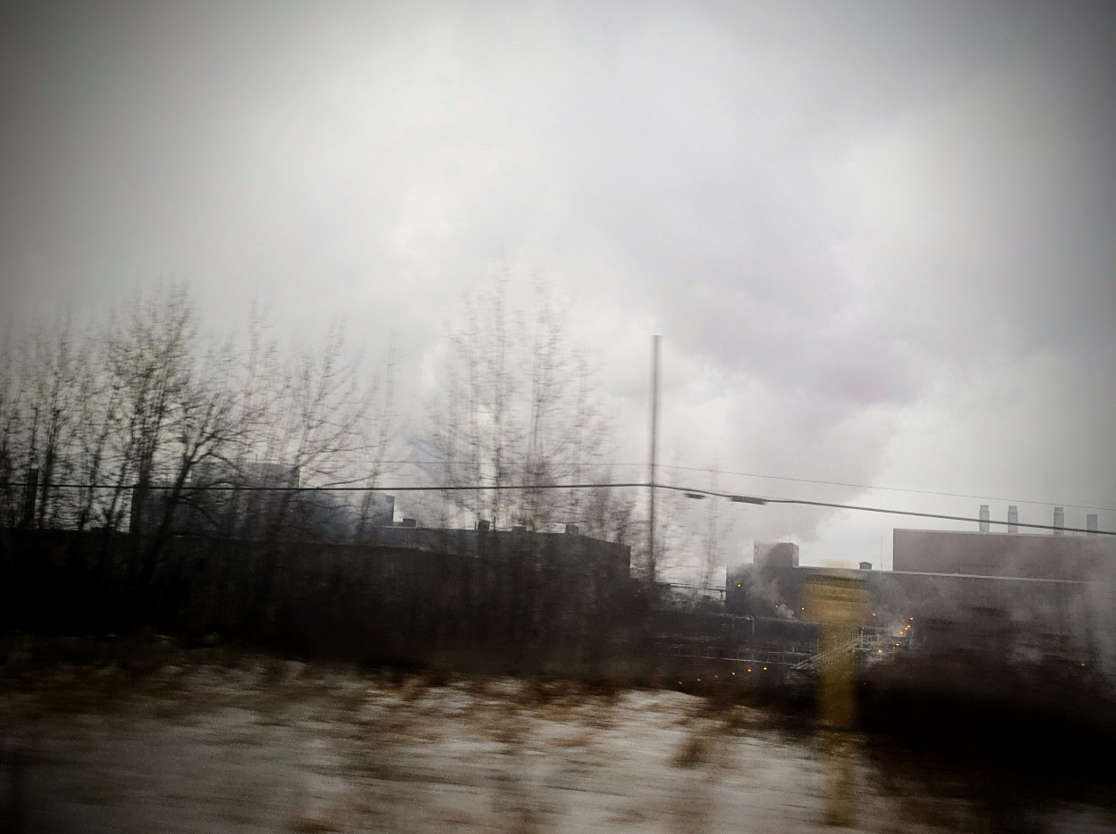
Snowy needles
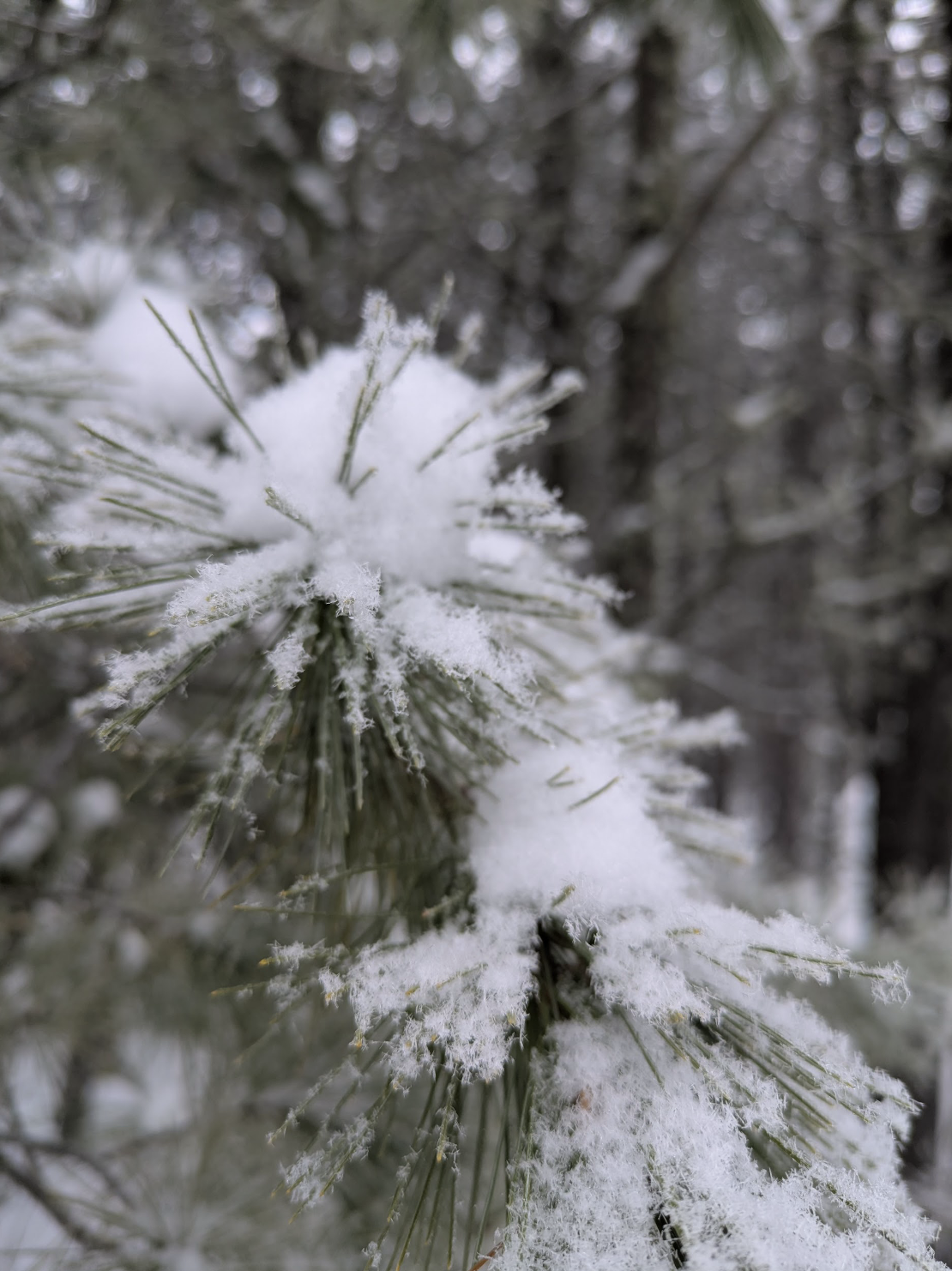
Snowy stalk
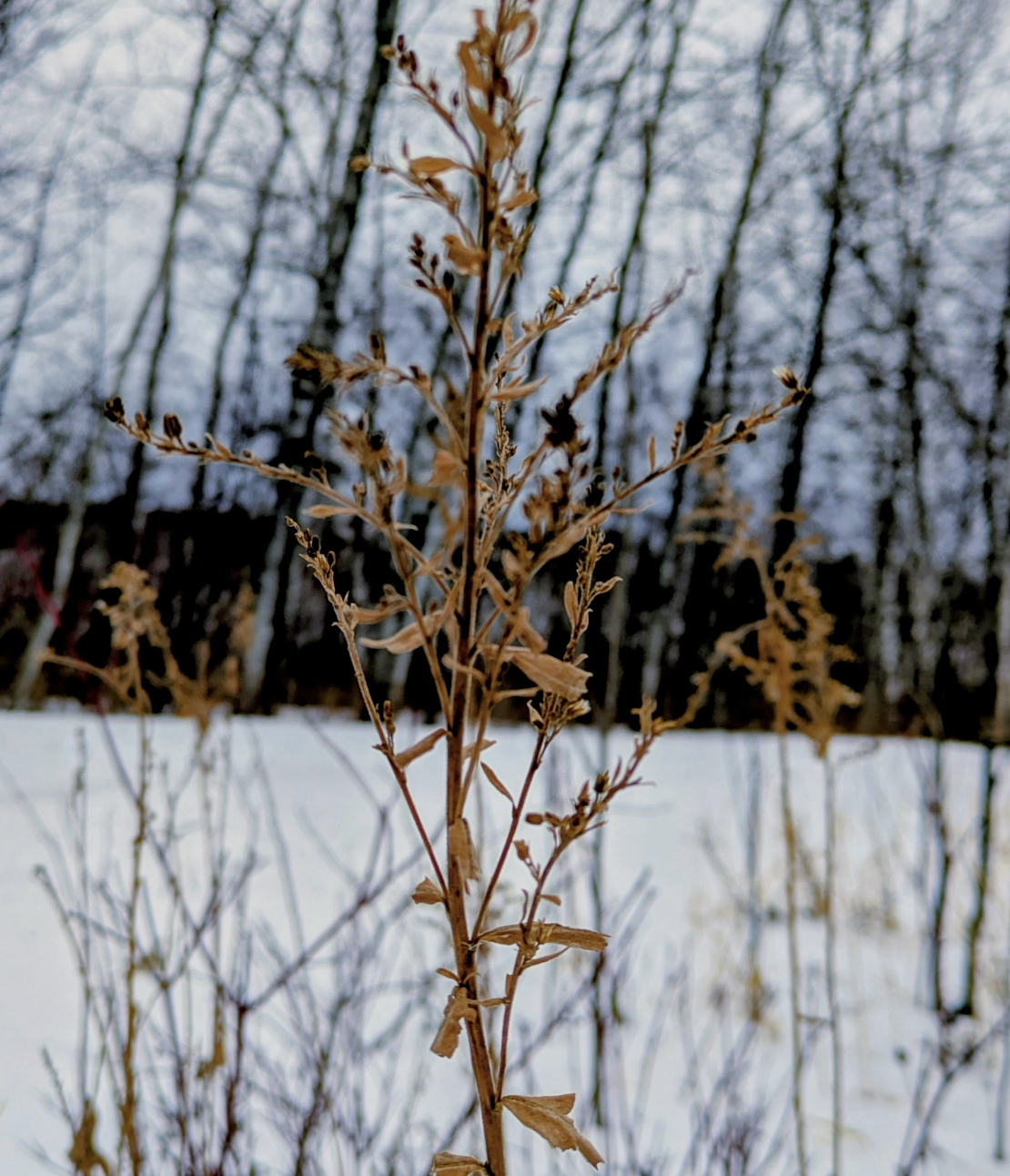
Frozen Alder

Frost bitten rose hip


By: Alayanna Bouwens
Polluted Winter
Snowy needles
Snowy stalk
Frozen Alder
Frost bitten rose hip
By: Charlotte Aver
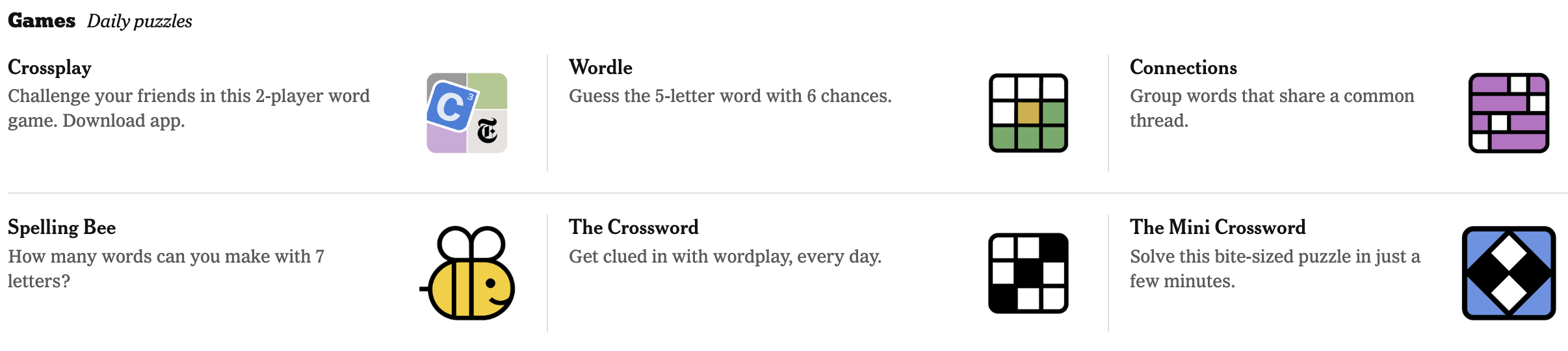
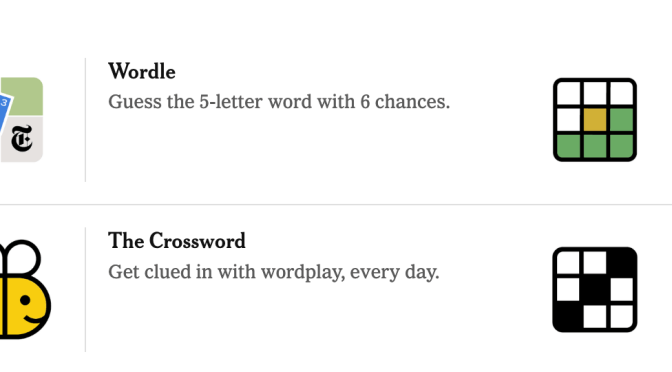
Wordle has been around since COVID when Josh Wardle created it as a gift to his partner. He was inspired by the Spelling Bee and Crossword by the New York Times. The game grew in popularity throughout the pandemic leading Josh Wardle to sell the game to the New York Times where it could join its inspiration to be played everyday. Wordle is a five letter word guessing game where you have six chances to get the word right, and as you play the game gives you hints as to whether or not you are close. I would rate this game a solid 9/10 because I play it most days and it is a fun way to wake up my brain.
Connections is probably my favorite New York Times game. It was developed for about a year before being released to the public in June of 2023, as time went on it rapidly gained popularity, and in 2025 it had 3 million daily players. It is where you have 16 words and 4 groups of 4 that you have to find. It varies in difficulty level but typically is not too hard if you think through it thoroughly. I would rate this game 10/10.
Spelling Bee is a game where you are given 7 letters to arrange into words all using the center letter. This game takes a long time and a lot of critical thinking to complete. I often start this game and continue going back to it throughout the day. I would rate this game a 7/10.
Sudoku is a previously existing game and needs no introduction, it is just digitized. I personally don’t like sudoku and this game doesn’t show the same creativity as the others so I will give this game a 5/10.
Strands is a very fun game that can be incredibly difficult and is probably only possible to work in the digital form. Strands is a game where you have a bunch of letters laid out in a grid and a theme. You need to find all of the words but the twist is that the words are not in straight lines and they wind around the grid making it harder than a plain word search. I would give this one a 7/10.
Pips is the newest addition to the New York Times’ games and is very fun. Pips is a game where there are dominos and certain spots for the dominos to go, but they have numbers on them to indicate where each domino goes. It takes a bit to understand but once you do it’s incredibly fun. I would rate this game a 8/10.
There are a few more games but you have to subscribe to have access to them so I will not be rating them.
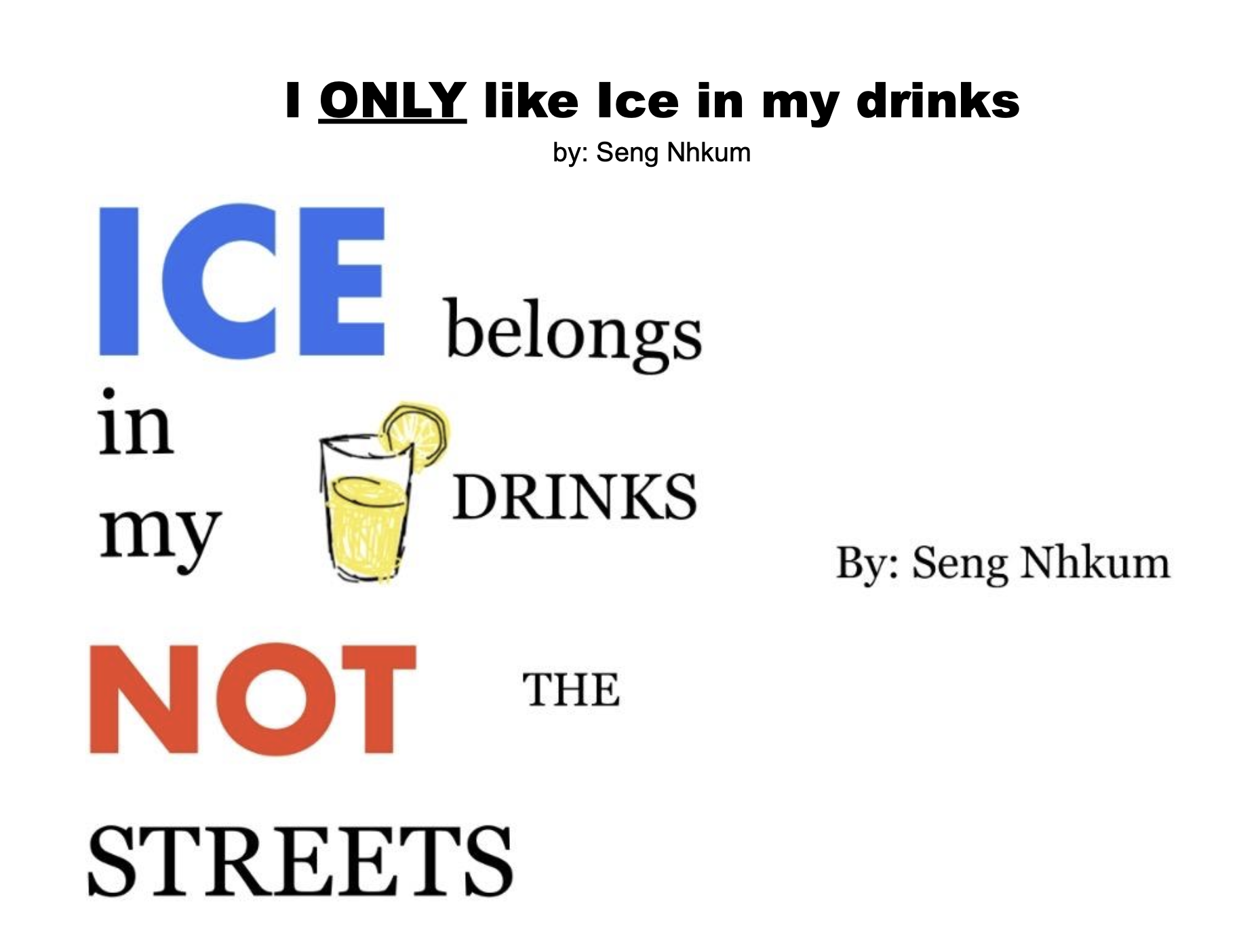
By: Seng Nhkum
By: Treshawn Ross
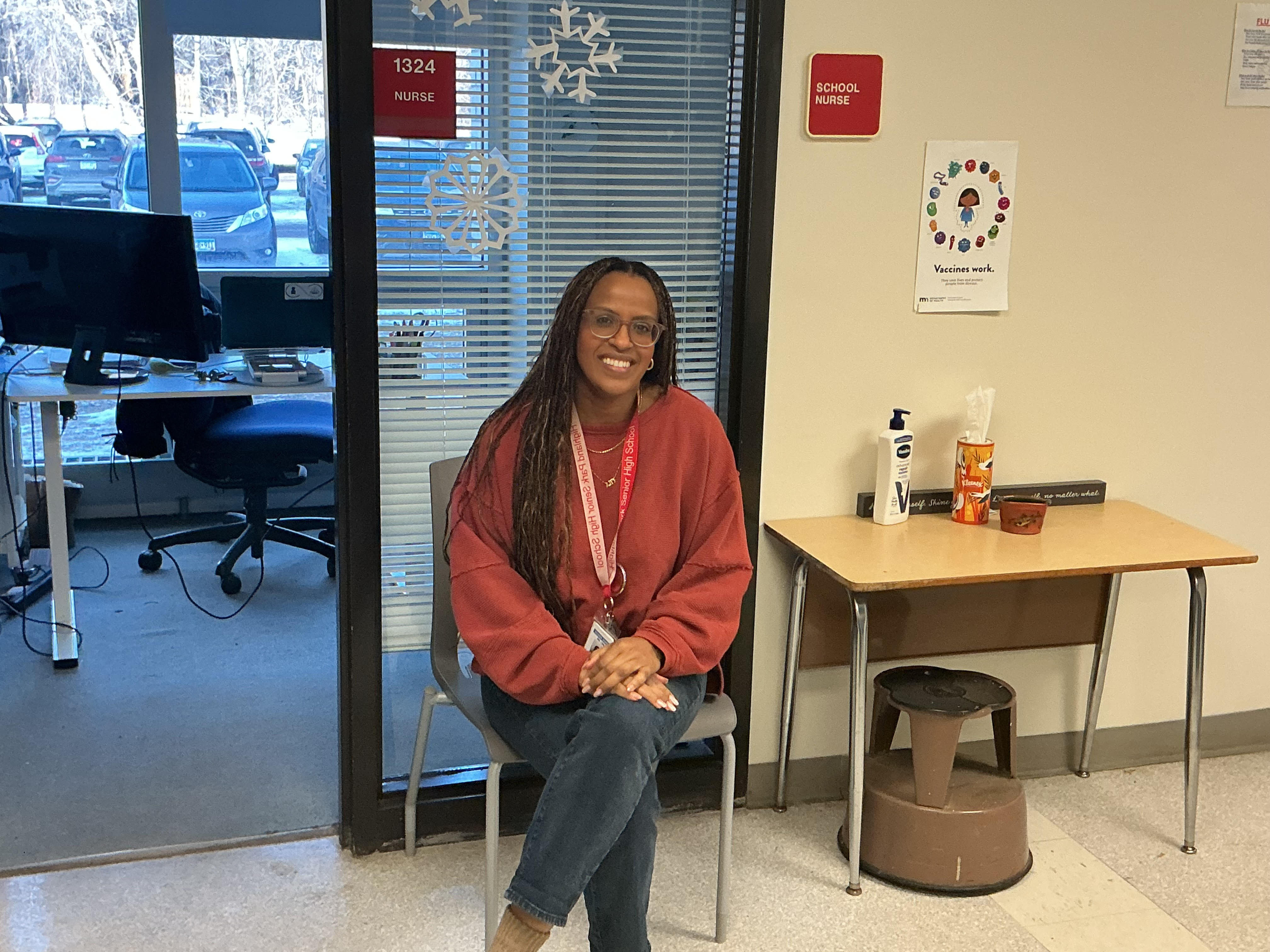
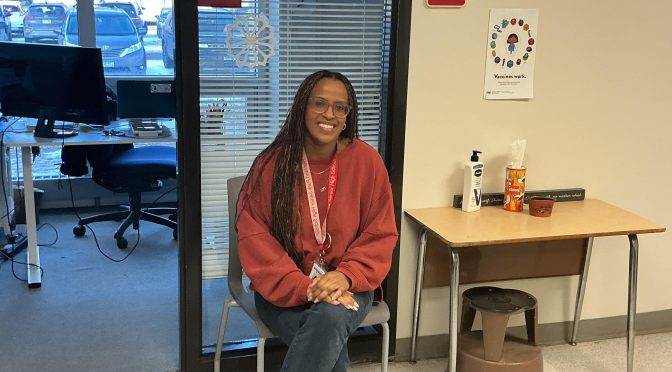
Introduction- Nurse Feven is our new school nurse for this year after our previous nurse retired. I had an opportunity to interview her, so our students could get a proper introduction to her. She’s been doing a wonderful job this year. Below are a series of job related questions and more personal questions.
Job related questions-
Treshawn: How have you enjoyed working at Highland so far?
Nurse Feven: ”I’ve loved it so much, I can see myself retiring from here and I’m not even close to retiring. This is really cool because it’s my first time working with high school students directly.”
Treshawn: Was there anything specific to Highland and its community that made you more interested in working here?
Nurse Feven: “The initial thought was that I lived close by, and I have personal connections with the school through family members. Part of it is also that we have a big East African population here and I thought I’d be a good fit for that reason.”
Treshawn: What type of job did you see yourself doing when you were younger?
Nurse Feven: “I’ve always seen myself in healthcare, my father had cancer and he had a personal nurse around our home and I saw the effects she had on our family and I was inspired by that.”
Treshawn: Have any staff members or students helped you adjust to your new work environment?
Nurse Feven: “Yeah definitely, a few staff members have helped me out with stuff like certain dates. Ms. Bonk helped me out a lot, and Sarita helped me out too.”
Treshawn: What do you enjoy the most about being a nurse?
Nurse Feven: “I enjoy helping people and making them feel better, and teaching them new things about their health. Also, teaching them about careers in healthcare. Also the wide variety of job types is one thing I enjoy too!”
Treshawn: Do you have any advice for the students at Highland? Medical advice or otherwise.
Nurse Feven: “Yeah, these are very important years as high school students. The choices you make now matter a lot more. Take advantage of every opportunity you can and if you like them you can stay with it or if you don’t it doesn’t hurt to try. Also have fun!”
Treshawn: What would you say is usually the highlight of your day while working here?
Nurse Feven: “Anytime I get to see students honestly, you guys brighten up my day.”
Personal questions-
Treshawn: How was your winter break? Did you do anything fun?
Nurse Feven: “Yeah It was great, I went to Boston with my family for Christmas and it was very nice.”
Treshawn: How long have you been a nurse and what was the process of getting into this work field?
Nurse Feven: “I graduated in 2010 from nursing school and there was a shortage of jobs. I wanted to get into a hospital straight away but that didn’t work out. I did home care first and then worked my way up to being in a hospital. In home care you really get to know the clients and that’s really cool.”
Treshawn: What type of music do you listen to and do you have a favorite artist?
Nurse Feven: “I really like Afro beats but I’ll really listen to anything. I love early 2000’s/1990’s music too like rap and RnB, even pop! I also like praise/worship music too.”
Treshawn: What are your hobbies and interests outside of work?
Nurse Feven: “I like dancing, not a particular kind, just anything. I also enjoy yoga and taking walks. Discovering new hiking places too. I also like to cook.”
Treshawn: What would you say is the most important thing needed to be a good nurse?
Nurse Feven: “Compassion for others and empathy. Also flexibility, you need to learn how to switch gears and use those critical thinking skills a lot.”
Treshawn: Is there anything else you would like the students of Highland to know about you?
Nurse Feven: “I’m also a part of the mental health team as well, I don’t only deal with physical ailments. If the social workers or other support staff is tied up I’m always available to help.”
By: Hannan Mohammed
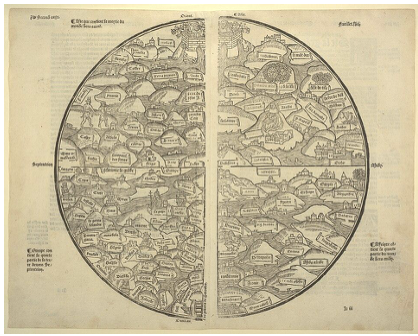
Today, maps are used extensively in many forms: in paper maps and globes, and in satellite systems and in global positioning systems (GPS) as well, which we use as a tool to help us navigate. But, how did maps evolve into what they are today? And what were they originally?
Historians don’t know what the ‘earliest map’ is; while some believe that the earliest surviving map is a mammoth tusk with markings that depict the landscape of the area it was found in from 25,000 BCE and others have suggested that rock art paintings with constellations from 17,000 BCE found in France are the earliest known star maps, the earliest known maps were usually credited to the Babylonians around 2300 BCE. These ‘maps’ were clay tablets with details etched into them and usually used for land boundaries and planning agriculture.
Around 600 BCE, more world maps were created in Ancient Greece with major scientific advances, but with no measure of scale. One such example is the map that the Greek philosopher Anaximander created around 600 BCE, which represented the world as a circular disk surrounded by oceans. In 200 BCE, Claudius Ptolemy, a Greek-Egyptian scholar, created his work Geographia, outlining latitude and longitude for accurate navigation as well as mapping thousands of areas with coordinates. He was also the first to display the world on a two-dimensional surface, and thus he’s commonly credited as the creator of cartography, or the study of mapmaking.
During the Middle Ages, Muslim travelers and scholars developed cartography based on their own experiences and earlier Greek and Roman works. For example, the geographer Muhammad al-Idrisi created the most advanced map of its time in 1154, known as the Tabula Rogeriana (The Recreation of Him Who Wishes to Travel Through the Countries). It showed areas with great accuracy and included information about those areas, and this map was known as the standard of cartography for many years, used by travellers in the region.
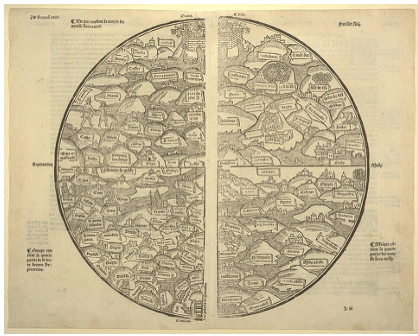
European maps, meanwhile, were created and used for educational and religious purposes rather than to be used for navigation. They were called Mappae Mundi, depicting landmasses and differences in climate. They were also heavily drawn from religious texts, and therefore many of these maps showed Jerusalem as the center.
As the Age of Exploration led to the discovery of lands in the Americas, existing maps were challenged. In 1569, Gerardus Mercator used these discoveries to create the Mercator Projection, a map still used today. It preserved the shape of landmasses while distorting size closer to the poles, allowing travellers to plan their journeys accurately by drawing a straight line to any point on it and using the direction of the line.
In the industrial revolution, mass-printing led to the production of smaller, more practical maps for tourism use, while maps were constantly being updated as transportation advanced further. In the 20th century, another major advancement was made with aerial photography and satellite imagery, allowing for greater detail even in obscure locations; one such satellite is Landsat, which was launched in the 1970s and produced real-time data on the Earth’s surface, again revolutionizing cartography with its greater degree of accuracy.
As computers and other devices have become more prevalent, cartography has advanced considerably in its accuracy, leading to us using maps more frequently than you might think: for example, you might use digital maps to navigate while you’re driving, or you might even create and share your own map to online platforms.
For more information, please visit:
By: Jannely Gomez Pacheco and Yalecxy Hernandez Lopez
By: Siri David
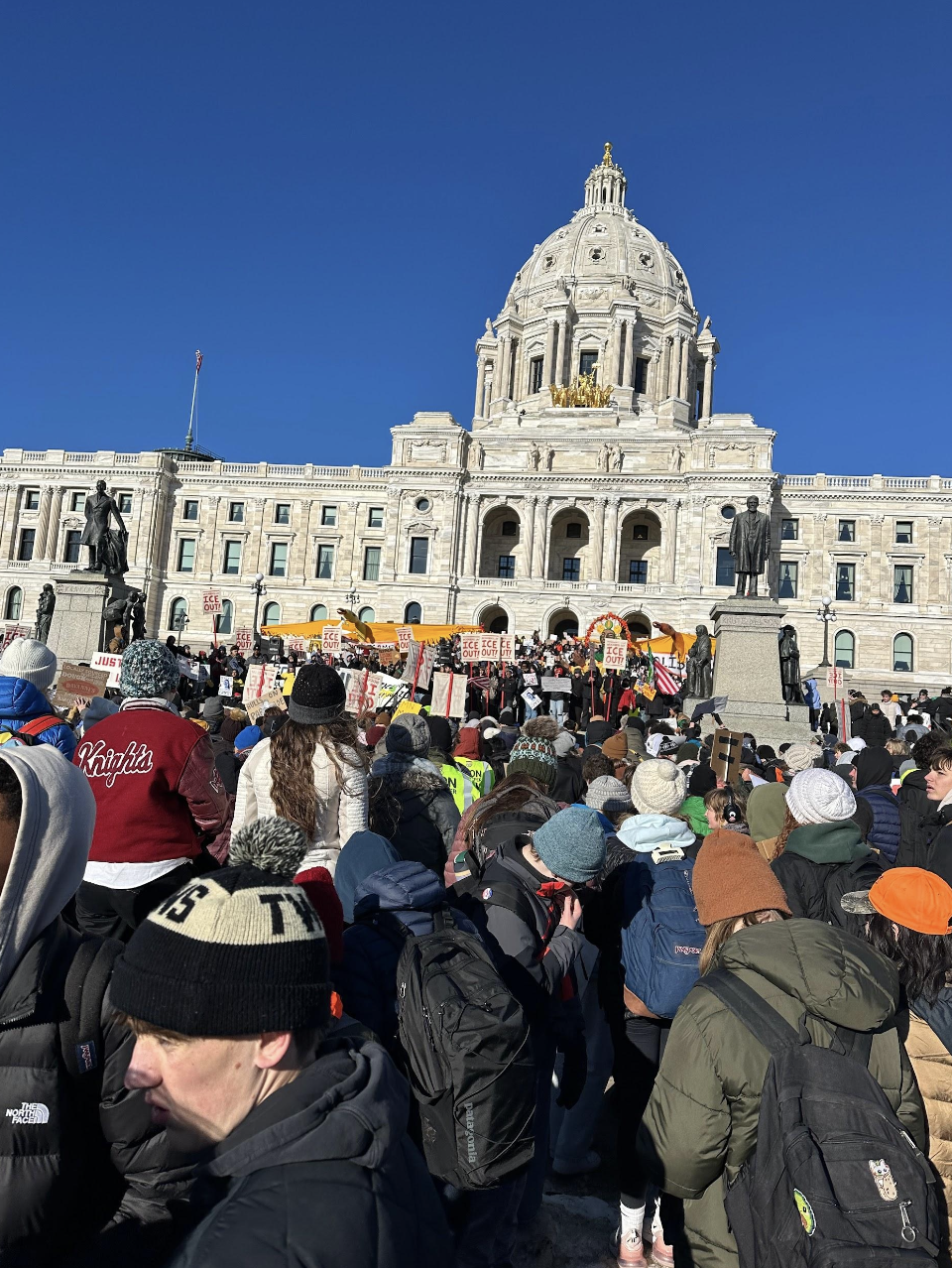
ICE has been showing up in the Twin Cities more than ever, and there are a lot of things to know and keep in mind during these hard times.
Trump has sent at least 2000 ICE agents to Minnesota to detain undocumented immigrants, but that is not what they have been doing. These agents have been racially profiling people all over Minnesota. They target specific neighborhoods, restaurants, and schools just based off of the diversity in each area.
There have been two fatal shootings in the month of January. The first shooting was of a 37-year-old white woman named Renee Good. Renee was shot on January 7th as she was trying to drive away from officers and help protect her neighbors. An officer shot her through her window while she was driving and she accelerated on the gas and crashed and died almost immediately after being shot. The most recent shooting was of Alex Pretti. He was a 37-year-old white man who was shot by an ICE agent while he was protecting his neighbors from ICE.
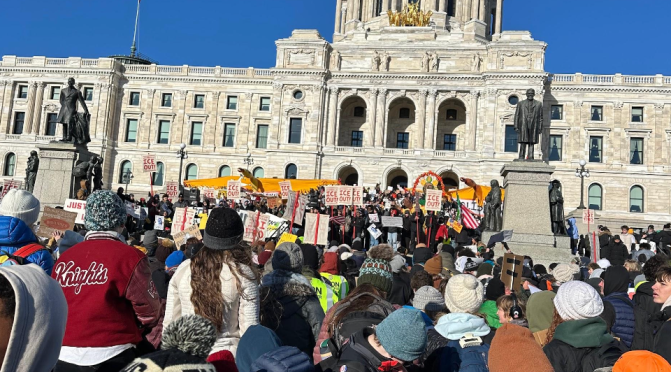
These horrific killings have led to Minnesotans taking a stand. The largest strike in the last 70 years happened in Minnesota last Friday. Over 10,000 Minnesotans marched in downtown Minneapolis in -20 degree weather. Schools, restaurants, and many small businesses were closed.
There are so many steps you can take to help during these hard times- whether it’s protesting, collecting food and money, or just helping protect your neighborhood. A lot of organizations and non profits in the Twin Cities are finding ways to help families who are struggling because they can’t leave their houses, so donating money, food, or household needs can be really helpful. At Highland, some of the club leaders came together and made a plan to help raise money and get necessities out to students and their families that go to Highland. There are so many ways to help during these times and anything is better than staying quiet.
During these difficult times it can be hard to find the good, but take the time to look around you and see the strong community that has come together to fight back. Minnesota is a strong example of what resisting and fighting back looks like. It is so inspiring to see and don’tbe afraid to strive to make a difference. Everyone’s voice matters and can make a change.
By: Liv Kleiber and Salome Meyer
By: Kendra Shanklin
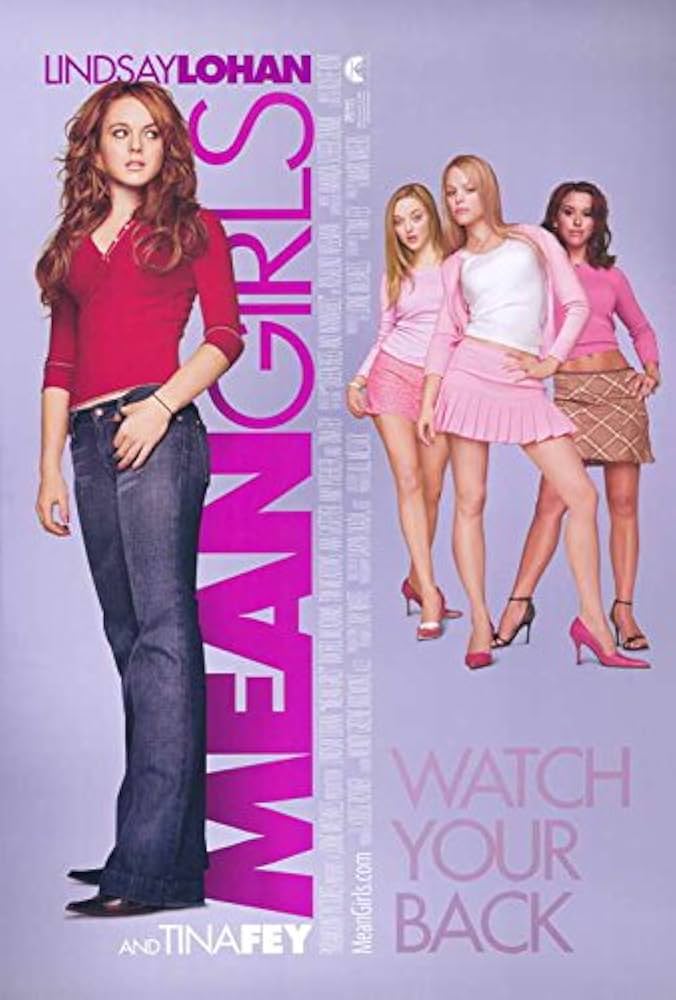
*Warning: This review contains spoilers
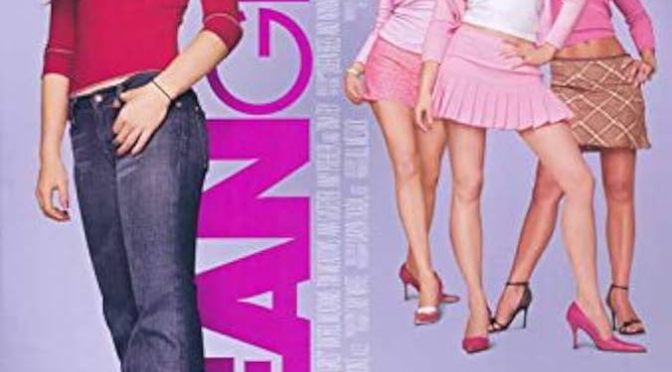
‘Mean Girls’ is about a girl named Cady who had been homeschooled while she was living in Africa but then her mom got a job which made her transfer to public school. Along with having to transfer schools, she also struggles with being friends with a few girls named Regina, Gretchen and Karen. This movie is rated PG-13 for its teen drinking and strong language.
*Recap
In the beginning of the movie, a girl named Cady, who was a transfer student from Africa, struggles to make many friends, but she keeps on trying. The next day, she meets two people named Jamison and Janis. She asks them if they can help her find her next class and they say “Sure”. After class they go to the class and Janis is telling Cady about everyone and who to talk to or who not to talk too.
While in lunch, Cady is trying to find somewhere to sit. While she’s doing that, a boy stops her and starts trying to make jokes, but Cady didn’t understand what was going on. Regina then steps in and tells the boy to stop messing with Cady, Regina then tells Cady that she could start sitting with them and how tomorrow she should come to her Halloween party.
Even though it seems like Cady had made friends with Regina and her friends, Regina was just trying to set her up to back stab her.
*My review
I love how this movie focuses on bullying and trying to fit in. This is my favorite 2000s era drama movie to watch, so if you love drama and comedy I recommend watching this. I rate this 10/10.
Thank you for reading my review and I hope you’re willing to watch this movie.
You can watch ‘Mean Girls’ on Paramount+, Netflix, and Amazon Prime Video.
By: Helen Aweke, Siyam Kedir, and Yasmin Roba
 Plaid Line + PRIZM + Scottie News
