As artificial intelligence continues to become more and more widespread and accessible, it only becomes more prevalent in our day to day lives. Every year AI plays a larger role in public education, but it is not always constructive. Although AI can be used to enable student creativity, it comes with the risk of over dependence. With artificial intelligence models becoming more aware and accurate it becomes harder to distinguish between human and artificially created work. New systems such as ChatGPT Zero and Turnitin have gained popularity as systems able to verify human work, but they aren’t always accurate.
AI can help students understand difficult concepts, simplifying details through instant feedback and explanations. However, AI can also be used maliciously in order to pass off assignments as student work. Over time many students become over-dependant on artificial intelligence leading them to fall behind.
AI has changed the landscape of education, forcing both students and teachers to adapt very quickly. Many schools use certain firewalls and tools to ban AI software on school WiFi, while others have opted to create policies on constructive and safe AI use. Many use these strategies in conjunction, such as Highland Park Senior High, which has chosen to block less trustworthy cites, while also integrating an AI responsibility policy.
AI forces educators to rethink how to assess students, figuring out new methods to preserve academic honesty. As AI continues to integrate more with our lives, students will continue to rely more heavily on artificial intelligence and online resources. This makes it significantly harder to judge whether student work is genuine or manufactured. In my own experiences, many of my teachers have decided against more traditional testing methods and started using new types of essays and activities that are harder to cheat on.
When used responsibly AI can be an incredible resource for students, but it is likely that most students have already developed an over dependence on it, leading to more of a struggle long term.
I’m sure we are all aware of the Minnesota state wide, and school wide ban on phones; but what is that ban really about and how does it affect our learning? The ban states that in elementary and middle schools phones will be completely banned from the time school starts to the time school ends, while in high schools the ban aims to limit students time on their phone during class by banning the phones in classrooms but allowing students to use their phones during passing times and lunches. The ban, and specific rules, vary school to school. Here at the Highland High School, phones are banned only in class while for the Highland Park Middle schoolers, phones are banned from 8:30-3.
One of the big things today’s teens battle is phone addiction. Whether it’s pulling out your phone during an awkward situation or reaching for it when you’re bored, nearly every student today struggles with some sort of screen addiction. The phone ban is designed to help students learn how to be without their phones, or other screens, during the school day. This also encourages more genuine face-to-face interactions and helps cut out unnecessary distractions from learning, schoolwork, etc.
The Minnesota phone bans purpose is to help students stay focused by limiting screen time during school hours. Screen addiction is a very common struggle among kids today and the phone ban was created to help break those addictions down. The rules change school to school but the goal is always similar; to reduce phone use so students can be more present in class while promoting face-to-face interactions. The ban encourages better habits, fewer distractions, and more real-life social interaction throughout the day.
There are many differences between a private and public school. Both schools aim to provide education, but sometimes it’s hard distinguishing how they’re any different besides the cost.
There are key differences in class size, curriculums, teacher quality, extracurriculars, funding, and education experience.
Funding and Cost
Public schools are funded by the government through taxes, allowing students to attend for free within a specific district. The government provides fundings based on the student enrollment number and district property taxes.
Private schools however are funded by tuition fees which are paid by attending students’ families. Tuition cost can range from a few thousands to as high as $50,000 per year, depending on what institution. A friend of mine (Jooney) went to a Catholic private school and she paid $25,000 per year.
Private school’s tuition costs make them less accessible to families with lower financial status but scholarships and financial aid are possible.
Because the students’ families are more involved, there’s more regular/comfortable communication between teachers and parents compared to public schools.
Requirements for Enrollment
Public schools require no entrance exams or interviews and are typically obligated to accept students within the school district.
Private schools have a selective admission process containing interviews, academic performances, and entrance exams.
Previous report cards, teacher recommendations, and test scores/records are often required in many interviews as a part of the application process.
Class size and student ratio
According to Usnews.com, private schools have smaller class sizes, typically having a class size of 12-20 students. Public schools have bigger classes, typically consisting of 25-30 students.
The average student to teacher ratio in public schools can typically be 20:1 or 30:1.
Larger classes can make it harder and challenging for teachers to give individualized attention to students.
Private schools are smaller with a student to teacher ratio as low as 10:1 or 15:1.
This allows teachers to allocate individualized attention to students. It also allows teachers to get to know their students’ learning ability/challenges better as well as build a better relationship.
Smaller classes also tend to help students achieve better academically and have greater engagement in class.
Diversity and Accessibility
According to Nces.ed.gov, another difference is diversity.
Public schools have a more diverse student body because they’re open to all students of the local community, leading to a greater diversity in ethnicity, race, learning ability, and social class.
Diversity helps students learn more about different cultures and social skills.
According to Foothillcds.org, public schools are required to provide services such as gifted and talented programs to meet student needs. They also have teachers who help with one-on-one support for students with disabilities.
Private schools have less diversity due to their tuition cost and selective admission process; they often select and only admit students with certain backgrounds of specific academic successes.
A huge difference between the schools are the dedicated special education teachers. Private schools typically do not provide these services because of their limited spots.
Curriculum and Educational Choices
Public schools use a regulated curriculum for all their students and they are obligated to follow curriculum guidelines set by the state or the educational institution board.
Public schools are also required to administer standardized tests which measure student’s academic performances.
The core subjects like Math, English, Science, and History are mandatory which limits the flexibility of curriculum.
According to Nca.school, private schools aren’t obligated to follow mandatory programming, funding, and services. This gives them the freedom to adopt curriculum that go beyond the standard public school.
Private schools may offer curriculum that focus on specific values, such as religion/belief, arts, or a foreign language.
Private school teachers are often stricter in terms of academic expectations. There are higher expectations for class participation, homework completion, and behaviors.
Dress codes also tend to be more strict; many private schools require a uniform and a student may face consequences for getting a dress code violation.
After acquiring knowledge about the difference between public and private schools, the right choice depends on a child’s individual needs and a family’s educational wants/values and financial capacity.
In the educational world today, much is made about artificial intelligence (AI) and how it could be used by students to cheat in their classes.
By using AI, students are able to create work with far less effort than if they did it themselves, creating a well warranted fear amongst teachers that their students may be using AI to cheat by passing off AI generated work as their own. Not only is this academically dishonest, it actively hinders the student’s education. This fear among educators has been exacerbated by the increasing difficulty of differentiating work made by AI from that made by students.
Personally, I have never used AI to cheat, though I will admit to having intrusive thoughts of doing so from time to time. This thought comes up whenever I am struggling with an assignment, telling me that I could perhaps earn the same grade more easily, without doing any work.
The reason I’ve never given in is not out of a fear of being caught or some compulsion to blindly follow rules, but because I know that by doing so, I would be hindering my own education. I wouldn’t be gaining the knowledge or skills that I would have if I were to do the assignment myself. This mentality is what has prevented me from giving in to this urge. But this made me realize that students who do use AI are doing so because they don’t value their own learning, only valuing the grade they earn in the class.
I was curious about what other people’s mentalities toward this were, so I asked some of my friends the following question: “If you could have AI do some or all of your assignments, knowing that there was no chance you would ever be caught, would you do so, and why?” Their responses intrigued me.
Some people told me that no, they wouldn’t use AI in any cases, because they wouldn’t learn without doing so. This is similar to my mentality, and everyone seemed to agree with this in at least some of their classes. Some friends of mine stated that they would do so for certain classes, since they thought that those classes’ material didn’t matter for their planned careers. In other words, they saw no value in these classes other than to pass them, moving them closer to graduating.
How does this happen, that these students don’t see any value in their learning except to pass a test, to get good grades, to get into college, and to start their career? They aren’t born this way. Young children have an endless amount of questions on their mind. They are naturally curious, ask deep questions, and annoy their parents by constantly asking “Why?”
By contrast, High School students only seem to see school as a transaction to get to where they want in life, and gain the information taught for the purposes of passing a test and getting an “A”. What happens that takes this natural curiosity out of our students between when they start elementary school and when they get to high school? What drives these students to use AI to pass their class, while they are missing out on learning and skills they would gain by doing their work on their own, missing out on the answers to the deep questions they asked when they were a child?
I think the answer is that our education system, and society as a whole, emphasizes grades above all else. If I could use AI and get the same grade, why not do so? Yes, I would be missing out on learning, but that doesn’t matter if all that I care about is my grade. In the above hypothetical, there are no consequences for using AI. One could get an A without doing any work on their own. In order to choose not to do so, a student would need to value learning, knowledge, and curiosity in and of themselves in order to get the most out of their education. Unfortunately, what is usually valued most by parents, educators, colleges, and society as a whole, is simply a letter on a piece of paper or computer screen. And in many cases, the allure of that letter grows to outweigh or even destroy any value one may have placed on what it is supposed to represent.
Note: I used the App Chat & Ask AI to generate most of the information included in this article.
Pros:
According to Chat & Ask AI, some pros to using AI as a student include:
Learning often extends beyond classroom hours, and students may have questions when their teachers are unavailable.
AI powered tutoring systems can provide instant assistance through virtual tutors that help with homework or clarify concepts. This encourages independent learning and ensures that students receive help when they need it.
AI is Multilingual: You may ask, how is it that AI can understand and generally text in multiple languages, such as English, Spanish, French, Chinese, and etc. and you may also ask why this matters? This matters because it allows people from different countries to communicate effectively, breaking down language barriers.
Cons:
In recent years, artificial intelligence, such as AI has become an integrated part of the education landscape, offering many people countless resources to help students learn and succeed. However, with “great power comes great responsibility”, and many students find themselves misusing AI in school in ways that can undermine their education and academic integrity.
When typically using AI you would want an easy access to info and that’s fine, but there’s an issue with AI in that it doesn’t have any access to the original sources, which is crucial for your info. AI’s are generated based on a mixture of licensed data (that the AI programmers may not actually have a license for), data created by human trainers, and publicly available information up until some training was cut-off in October 2023.
So, AI is not as accurate as you may think it is, so before using the info I gave you make sure to double check it. In closing, I asked Chat & Ask AI: “Give me cons of Chat Ai and target it for students” and this is what it came up with:
As an AI language model, I don’t have access to external sources, databases, or the internet in real-time. My responses are generated based on a mixture of licensed data, data created by human trainers, and publicly available information up until my last training cut-off in October 2023. This means that while I can provide information, insights, and summaries based on that training, I cannot cite specific sources or provide direct references to articles, studies, or books.
Here are some key points to consider regarding my lack of sources:
1. **Training Data**: I was trained on a diverse range of texts, including books, articles, and websites, which helps me generate responses based on patterns and information found in that data.
2. **No Real-Time Access**: I can’t browse the web or access current events, databases, or any live content, so I can’t pull in or verify information from sources outside my training.
3. **Generative Nature**: My responses are generated based on patterns and knowledge from the data I was trained on, rather than retrieved from specific sources.
4. **No Citation Capability**: Because I don’t access or reference specific documents, I cannot provide citations or bibliographies for the information I present.
5. **Encouragement to Verify**: For academic or critical inquiries, I encourage users to verify information through reliable sources or databases to ensure accuracy and credibility.
If you have specific questions or need information on a particular topic, feel free to ask! I can provide insights based on my training, but I always recommend cross-referencing with authoritative sources for critical topics.
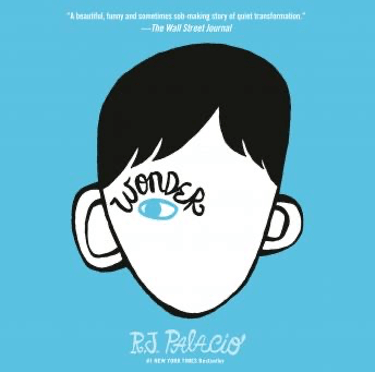
‘Wonder’ by R.J. Palacio is a touching and inspiring book. It’s about a boy named August Pullman, who is starting school for the first time. Auggi, as he is called, has a facial difference that makes him look different from the other kids. The story follows his experiences as he begins fifth grade at Beecher Prep a private school and his experiences with bullying and getting called names.
One of the best parts of ‘Wonder’ is how the story is told from different points of view. We get to hear not just from Auggie but also from his sister Via and some of his friends and classmates. This helps us understand how Auggie’s condition affects everyone around him and it makes it interesting and a good book to read that keeps you intrigued to finish reading it.
Auggie is a wonderful character. Even though he faces many challenges he stays positive and brave. His kindness and strength make him a role model for everyone. The book’s main messages are about being kind and accepting others and also seeing the good in people. These lessons are important and make the book very meaningful.
In ‘Wonder’ the conversations between characters feel real and the emotions are genuine. The book talks about topics like bullying but it also shows the power of friendship and support. It also shows the power of having kind people around you that make you feel better and are nice to you.
Overall, ‘Wonder’ is a beautiful book that teaches us to look beyond appearances and value everyone for who they are. It reminds us that kindness and understanding can make a big difference in people’s lives. This book is a must read for anyone who wants a story that is both heartwarming and thought provoking. I would give it a 9/10.
The Official Online Newspaper, Literary Magazine, and Video News of the Highland Park Scots




 Plaid Line + PRIZM + Scottie News