Scientists in Minnesota and around the world use WMI or the Winter Misery Index to show how severe that year’s winter season was after finding out how much it snowed and what the temperature was. Scientists give those certain categories a number ranking that determine where that year’s winter falls on a scale of moderate to severe.
Last year, the 2024/2025 winter season was called mild in the index chart. It was actually shown that it was one of the easiest and calmest winters that we’ve had in decades. The snow was very inconsistent. It would snow 7 inches one day and it would all melt and then it would be a 40° day for the next week and a half.
But this year, the 2025/2026 winter is already a lot different. We have had snow, cold weather, and the snow has stayed making this winter a lot more wintry than last year’s. Even if we end up with only 10 or 15 more inches of snow than last year, the big difference is that the snow will have actually stayed and not just until January like last year when we had the weird 50° days that melted everything in January. We’re now in March and there’s still snow on the ground this year.
The weather has been so steady that the temperatures have stayed and the snow is piling up and not melting, which for some people could be really annoying because they like spring or for some people that could be really enjoyable because they like looking at the snow.
I like winter, but this just shows that Minnesota winters can be very unpredictable and just because last year’s winter wasn’t that cold, and there wasn’t that much snowfall, doesn’t mean the winter after that is the same.
ICE has been showing up in the Twin Cities more than ever, and there are a lot of things to know and keep in mind during these hard times.
Trump has sent at least 2000 ICE agents to Minnesota to detain undocumented immigrants, but that is not what they have been doing. These agents have been racially profiling people all over Minnesota. They target specific neighborhoods, restaurants, and schools just based off of the diversity in each area.
There have been two fatal shootings in the month of January. The first shooting was of a 37-year-old white woman named Renee Good. Renee was shot on January 7th as she was trying to drive away from officers and help protect her neighbors. An officer shot her through her window while she was driving and she accelerated on the gas and crashed and died almost immediately after being shot. The most recent shooting was of Alex Pretti. He was a 37-year-old white man who was shot by an ICE agent while he was protecting his neighbors from ICE.
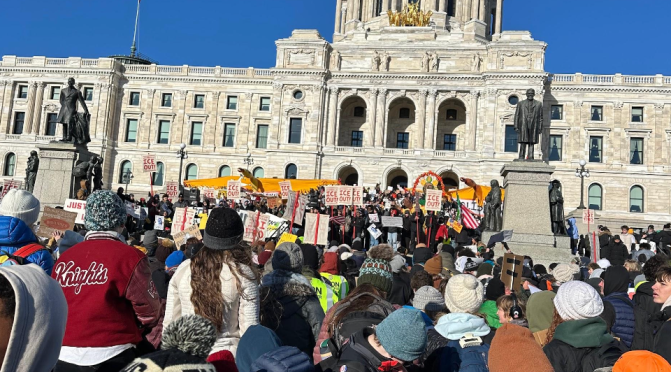
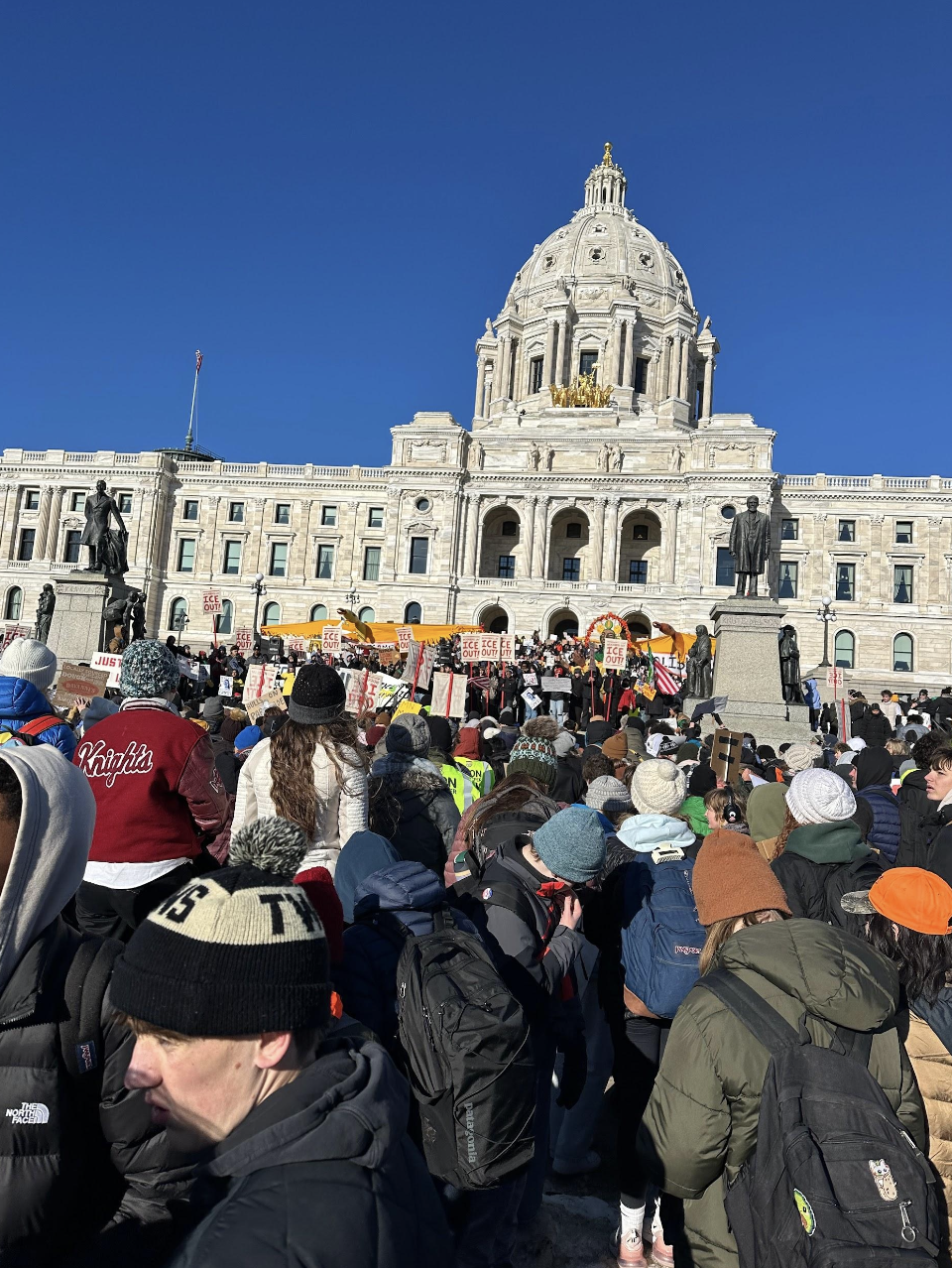
These horrific killings have led to Minnesotans taking a stand. The largest strike in the last 70 years happened in Minnesota last Friday. Over 10,000 Minnesotans marched in downtown Minneapolis in -20 degree weather. Schools, restaurants, and many small businesses were closed.
There are so many steps you can take to help during these hard times- whether it’s protesting, collecting food and money, or just helping protect your neighborhood. A lot of organizations and non profits in the Twin Cities are finding ways to help families who are struggling because they can’t leave their houses, so donating money, food, or household needs can be really helpful. At Highland, some of the club leaders came together and made a plan to help raise money and get necessities out to students and their families that go to Highland. There are so many ways to help during these times and anything is better than staying quiet.
During these difficult times it can be hard to find the good, but take the time to look around you and see the strong community that has come together to fight back. Minnesota is a strong example of what resisting and fighting back looks like. It is so inspiring to see and don’tbe afraid to strive to make a difference. Everyone’s voice matters and can make a change.
Are you bored with time to waste but can’t decide where to go? Saint Paul, Minnesota, offers a variety of indoor and outdoor venues where you can enjoy fun activities, eat delicious food, and create fun memories.
Puzzle Works – Located in the Twin Cities, offering the most exciting and intense escape rooms.
They provide a variety of rooms including The Loose Sleuth, The Vault, The Dungeons, The Hospital, and The Nightmare at the Museum, difficulty levels ranging from 5-10.
The game allows you to work together with a minimum of 4, and maximum of 10, people to solve puzzles located inside the rooms. Your mission is to complete objectives within a set time and escape.
The Vault: Assist an exiled prince into retrieving treasures from the bank.
The Loose Sleuth: Investigate the mysterious disappearance of a top detective.
The Hospital: Return a misplaced heart before the upcoming surgery.
The Dungeon: Escape execution after being caught stealing from an enchanted avocado.
Nightmare at the Museum: Bring an end to a doll exhibit that has been terrorized by a ghost.
A minimum of four participants are required for bookings. Tickets cost $32.99 per person Sunday through Friday and $34.99 on Saturdays.
Location: 755 Prior Avenue North, Suite 007A, Saint Paul, MN 55114
The Burrow – A multifaceted venue that offers a variety of entertainment that is suitable for different age groups.
They offer various entertainment like axe throwing, pickleball, a private karaoke room, rope courses, outdoor mini-golf, laser tag, and multiple arcade games.
Axe throwing allows you to throw axes on targets, engaging in sessions ranging from 30-60 minutes. $20 per person for 30 mins and $30 for 60.
Pickleball can be played on their indoor courts with a price of $15 per person for 2 hours. The private karaoke room rents for $55 an hour.
Rope Courses and Outdoor Mini-golf are seasonal, only being offered in specific weather conditions. Both activities are filled with their creatively designed courses and are set at a price of $15 per person.
Laser Tag is a fun elimination game where you get to shoot players with a laser gun, earning points for either yourself or your team, costing only $10 per person each round.
Not only does this place offer various entertainment options but they also offer dining areas with delicious food and an adult menu allowing people to relax and chill.
Location: 7053 10th Street North, Oakdale, MN 55128
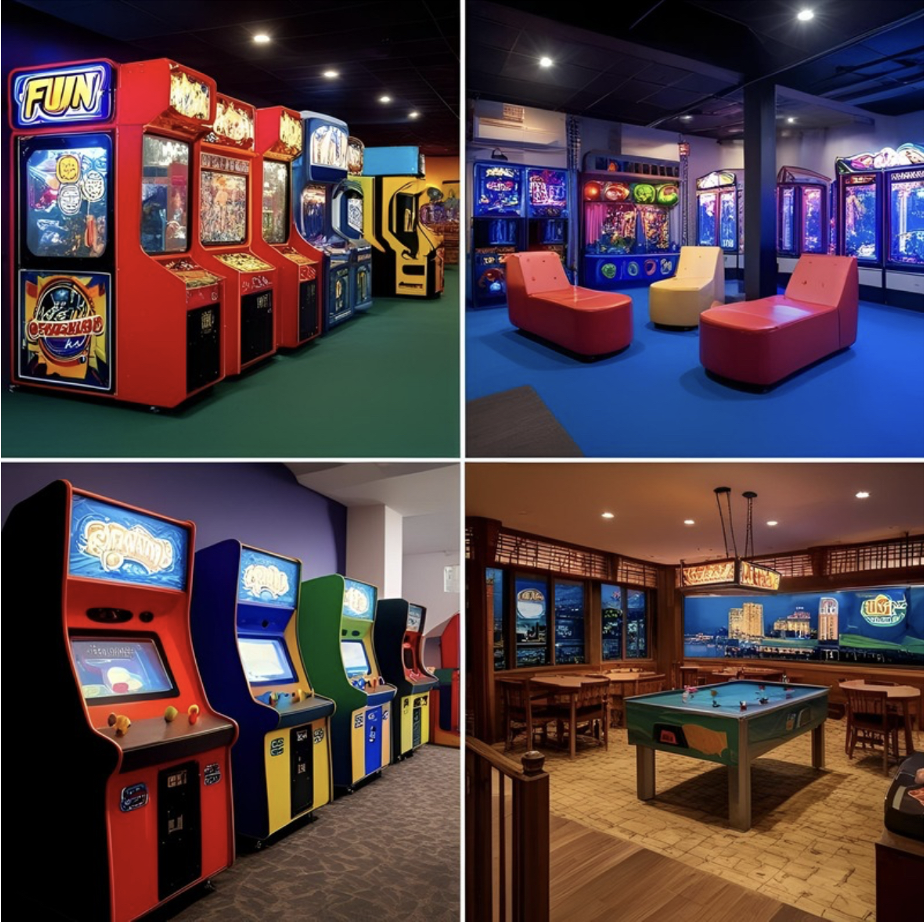
Can Can Wonderland – An artistic entertainment venue filled with vintage arcade games, live performances, a mini-golf course, and a unique food and drink menu.
They offer over 150 vintage arcade games along with modern arcade games that are free to play.
They include regular live performances including music, themed nights, and talent shows. The venue updates its event calendar with upcoming shows and performances.
Can Can Wonderland offers a diverse food and beverage menu that complements its whimsical and wacky atmosphere while also including an adult menu, making this place suitable for various age groups.
Location: 755 Prior Avenue North, Saint Paul, MN 55104
Spirit Mountain – Located in Duluth, approximately 150 miles away from Saint Paul.
They offer outdoor activities, including snowboarding, skiing, adventure parks, and mountain biking. They also include a jumping pillow attraction for young kids, making this place suitable for all ages.
Winter Sports: Include 22 ski runs, terrain parks, and snow tubing.
Mountain Biking: A lift-accessed trail that caters to various skill level courses, offering both smooth and rugged paths.
Adventure Park: Features a 3,200 track alpine coaster, a 700-foot zip ride, scenic chairlift, jumping pillow, and mini-golf.
These spots offer many different activities and entertainment that are suitable for all interests. Next time you’re wondering how to spend your free time, consider one of these places for a fun experience and memories.
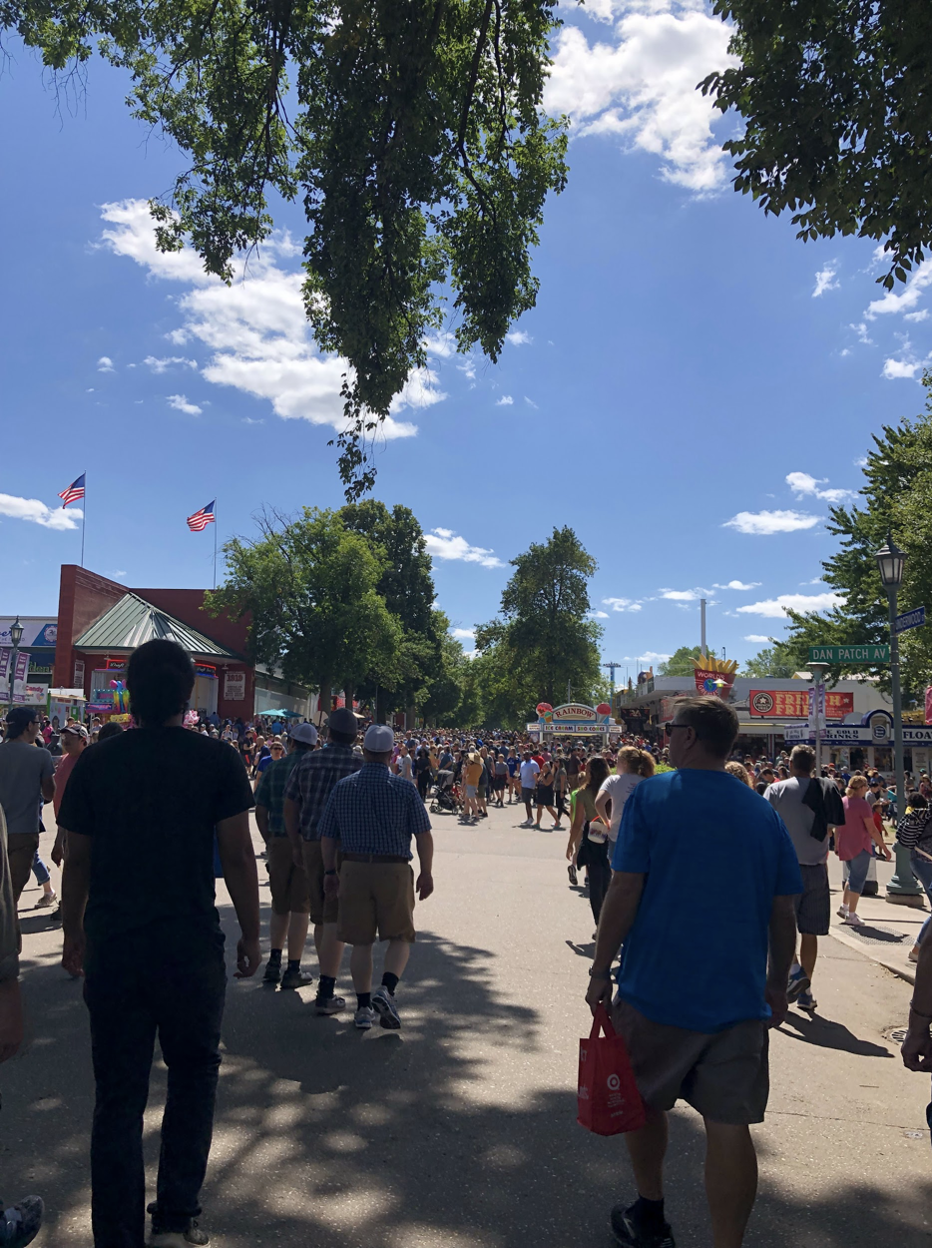
In 1854 the Minnesota Agricultural Society was founded and their goal was to help promote Minnesota agriculture. The first state fair was held in Minneapolis, 1858. For a while they didn’t have a set place; they would rotate from Red Wing, St. Paul, Rochester and a few more towns. Between 1870-1880 they worked to have a permanent spot for the fair. They finally found a spot when Ramsey County donated a 210 acre plot of land. It has now grown into 322 acres of land.
During the early days of the fair it was mainly agricultural attractions and competitions. This followed the theme of which the state fair was started for. Now, while agriculture is still a big part of the fair, it has now changed, with more food and rides for people to enjoy.
In 1966 the Fairchild gopher became the new official mascot of the Minnesota State Fair. His name is from Henry S. Fairchild, the man who said the fair should be put on the Ramsey county plot. His nephew, named Fairborn, later joined him in 1983.
The fair has been held almost every year since it was started but there has been a few years it hasn’t been. 1861-1862 because of the Civil War and the Dakota War, 1893 because of a conflict with an exposition show, 1945-1946 because of the U.S. restrictions with travel during World War II and also due to the polio epidemic. The most recent one was in 2020 because of the COVID-19 pandemic.
Some popular buildings are the 4-H buildings, which is where many youth come to show animals. The cattle barn is where you can see many different kinds of cows, there are versions of these for many more animals. The DNR is a log cabin-like building which has held the DNR during the state fair since 1934. The food building is many people’s favorite building because it has many different food stalls. The most well known one is the grandstand. The grandstand has many different levels with food and shopping on the second and third floors and showing rooms on the bottom floor. It is also where many concerts are seen in the two weeks.
The state fair sees 2 million people a year and employs over 2,000 staff members during the summer. The livestock is a big part of the Minnesota Fair. It brings more than 8,000 competitors, 20,000 animals and prizes can add up to 1.6 million in total.
I have been going to the state fair for many years now and I have also worked at a booth during the two weeks that the state fair has been open. Some of my favorite parts are the food. I always get Sweet Martha’s, which are very famous chocolate chip cookies, I also always get the turkey leg and lemonade. I would recommend going to the state fair if you ever get a chance there is something for everyone there. It is open for the 2025 season, August 21-September 1.
A view of the Mississippi River from the trails in Crosby Farm Regional Park in Saint Paul, Minnesota, United States, February 3, 2016. By: National Park Service-courtesy of Wikimedia Commons
During winter break many people will leave town or even the country to see family and friends or just for a vacation, but some people will stay home during break. And since many places are closed and friends are out of town, winter break can seem boring or lonely, so here are five things you can do during break to keep yourself busy and make the most of it.
Visit a local Christmas market:
Christmas markets are a great way to take in local Minnesota traditions and Christmas spirit. Here are some options: European Christmas market in St. Paul, which is held in Union Depot, has over 70 different vendors, holiday themed activities, and live entertainment. Another notable option is Dayton’s Holiday Market in Minneapolis. Located in the Nicollet Mall this market has a mix of festive decor, holiday treats, and local artisans. These markets are great places to visit during break.
Visit a llama farm:
There are a few great llama farms in Minnesota and many of these locations let you feed, pet, and take photos with them. Places like Carlsons’s Llovable Llama in Waconia and Pauley Alpaca company in Rochester are awesome places to hang out with some llamas!
Ice castles:
Minnesota Ice Castles have super impressive ice structures, the location changes every year and prices vary depending on what day you go. But no matter what, it’s a super fun experience with ice slides, caverns, tunnels, and many more exciting adventures in ice.
Art Shanty Projects:
The Art Shanty Projects is an immersive art program that takes place on the frozen surface of Minneapolis’ Bdé Umán/Lake Harriet.
Saint Paul Winter Carnival:
The Saint Paul Winter Carnival invites a great lineup of events to experience in Saint Paul. It is the oldest winter festival in the United States. Many events that the carnival offers are free, both traditional favorites and new attractions, that cater to all ages.
Minnesota is most commonly recognized for its drastic weather changes, harsh summers and winters alike. It’s also known for its diverse range of winter activities such as hockey, skiing, ice fishing, and more. Although in order to partake in these recreational hobbies, the most important factor is for there to be cold enough weather, and most importantly snowfall. In Minnesota this would normally never be much of a problem, however as of recent years, data is demonstrating that climate change is having a severe impact on not only these winter sports, but also local wildlife as well as our environment.
According to the Minnesota Pollution Control Agency, worldwide climate change is also leading to a warmer Minnesota. Their stats represent an increase in the daily minimum temperature of 7.3f in the northern regions of Minnesota, 6f in the central regions, and 4.9f in the southern regions (per data from 1895-2021).
Another major impact that climate change has is in our ice cover, with an observed 10-15 days less as of these past few years. With these changes, it is ultimately impacting Minnesota fish as well, considering they are losing necessary days of ice cover, which protect them from the harsh winters. With the lack of ice, it is also contributing to the inability to begin and prolong ice fishing, ice skating and other ice-related activities that many people participate in during our Minnesota winters. Along with this unpredictable ice cover, it’s affecting the amount of flooding that the state receives, as the ice forms and then melts soon after. It then continues to follow this repeating cycle throughout the winter months until late spring.
Another factor is the inconsistent snowfalls that have been recently scattered across the winters. One of Minnesota’s most notable aspects is their snow! Not only does this affect the ability to play certain winter sports such as skiing or snowmobiling, but it also impacts the enjoyment of participating in them as well.
Per stats from the EPA, carbon dioxide levels across the world have risen over 40% since the late 1700’s, which is what’s contributing to the immense amount of climate changes worldwide, as well as in Minnesota. Not only is this a serious issue which is affecting our environment, but Minnesota’s winters are progressively growing to be much shorter, warmer and unpredictable than ever before.
As a unified community I believe that we can make changes in our lives, even small ones, in order to begin to help the restoration and conservation of our Minnesota winters, as well as the environmental health of our world.
By now, you probably already know that Donald Trump has won the 2024 US Presidential election. What you might have missed, however, are the other races that defined this election.
The president cannot make laws and do things all on his own. He needs to work together with both houses of congress, the House of Representatives and the Senate.
These two chambers are responsible for creating the laws that the executive branch is in charge of putting into place. In addition, the president often has to petition congress in order to get his agenda passed and put into effect. For this reason, it is much more difficult for the president to enact their agenda if the party in charge of congress does not align with the president’s party.
Each state has two senators, who serve six year terms. Every two years, roughly a third of the senators are up for election. In this election, one of Minnesota’s senators, Democrat Amy Klobuchar, was up against Republican challenger Royce White. The Associated Press has called this race for Klobuchar, but they have also declared that Republicans will take a majority in the senate, having flipped a number of other Democratic seats. This is good news for president-elect Trump, since it means the senate will align with him as he attempts to enact his agenda as president.
In addition, the nation is divided into 435 congressional districts, each having one representative. These districts are distributed roughly proportionally to population, and redrawn every ten years in order to better represent groups of people as demographics shift. Highland Park is a part of congressional district MN-4, which has been represented by Democrat Betty McCollum since 2001. She has been elected to her thirteenth term in congress, easily defeating Republican challenger May Lor Xiong. AP has also projected that Republicans will win the house, having officially secured the 218 seats required for a majority. This is good for President elect Trump, as the house aligns with his party making it easier for him to pass legislation he wants enacted.
In addition to the federal government, each state also has their own government, which passes laws that only affect us in that state. Minnesota’s government works similarly to the federal government, with a governor and two chambers of congress. The Minnesota House of Representatives has elections every two years, while the Minnesota Senate holds elections every four years, with election years being the non-presidential even years.
This year, state senator Kelly Morrison stepped down from her position to run for US congress in district MN-3, which she has now won. This caused a special election to occur in her district, which had the potential of flipping the state senate. The Minnesota Star Tribune has called this race for DFL candidate Ann Johnson Stewart, meaning the DFL will retain control of the senate in Minnesota. Meanwhile, the state’s House of Representatives appears to be deadlocked with both major parties having 67 seats, but a recount of two seats could narrowly give the house to the republicans. If this occurred, it would make things difficult for our democratic governor.
There were also a few ballot measures in Minnesota and across the country. In Minnesota, the state asked whether state lottery funds should continue to be used to protect the environment, which passed with 77.5% of the vote.
Here in Saint Paul, two additional referendums were included. The first asked whether city property taxes should be increased to pay for childcare funding. This failed with 59.9% of the vote, according to the Star Tribune. The other ballot measure, asking whether city elections should be moved to presidential years, passed with 60.7% of the vote.
Minnesota has beautiful wildlife and nature which means it also has amazing places to go camping. Here’s a list of 3 of my personal favorite places to go camp.
Jay Cooke State Park is located in Carlton Country about 20 miles southwest of Duluth. Like most campgrounds they offer tent, RV, and camper cabin sites for a variety of ways to camp. They all Include a fire pit and you are able to buy firewood on-site. Why Jay Cooke stands out against other campgrounds is because of their famous swinging bridge which is now 100 years old. This bridge has stunning views over the St. Louis River and leads you to a bunch of amazing hiking trails. In total, there are 50 miles of hiking trails to explore and 34 miles of Nordic skiing trails in the winter. I would recommend Jay Cooke as a nice family camping trip or first time camper because of the variety of ways to camp and because of the many activities they provide.
If you are looking for a more secluded campground, Fenske is in my opinion the best place to go camping. Fenske Lake Campground is a small remote campground up in Ely, Minnesota. The campground has 16 campsites with 11 being RV accessible. The nicer sites have a walk in style meaning there is a small trail about 60 meters leading down to the campsite. This makes it harder to set up tents and bring stuff down, but it’s worth it when you’re in your own secluded campsite. Some campsites are connected to the lake. This means you can canoe, kayak, paddleboard or go swimming straight from your campsite. There are hiking trails, but they require a bit of a drive to get to. Overall, I would recommend Fenske for non-first time campers because it’s a bit rougher compared to other campgrounds like Jay Cooke.
The Boundary Waters 4.3 million acres of interconnected lakes and rivers with beautiful forests that are home to much wildlife including moose, loons, bears, deer and many other animals. Camping in the Boundary Waters is a much different experience than a state park campground. First of all, there are no motorized vehicles allowed in the Boundary Waters area. The only ways to get into the Boundary Waters is by portaging, canoeing or hiking. Inside the Boundary Waters there are 2,000 campsites, most accessible from the lakeside. These campsites have an area to set up a tent, a small pit toilet and sometimes have a fire pit. The Boundary Waters can be difficult to plan and hard to navigate, but the memories and experiences of them make it worth going.
Growing up in Rochester, MN is different from St. Paul in various ways: from the size of the city, to the activities you can do and the type of people you meet. We moved in October of 2021, so a majority of our life was spent in Rochester. For people unfamiliar with the Mayo Clinic’s birth place, we’d like to share some of our favorite places to get readers acquainted.
Apache Mall:
Apache Mall is like the centerpiece of Rochester. It is located in the SW portion of the city and has 114 stores. we’d say it’s the place teens and young adults hang out the most. The relatively small size is great for an impromptu shopping day, but sadly it is not as popular to actually shop as it was before COVID. When we visit Rochester, we mainly like to go to the food court and get Caribou coffee, since a large number of the stores that drew people in had to close. It is still a great place for teenagers to safely chill out and relax.
Soldiers Field pool:
If you’re looking for a place to cool down and have fun with your friends during the summer, Soldiers Field pool is the perfect place to go. We have had so many great memories at this pool from when we were toddlers to when we were teens. A lot has changed around Soldiers Field, but the pool remains open every season. We actually consider it to be nicer than the Highland Pool near Highland Park High School due to its larger children’s area and the length/number of slides. The pool is also located very close to downtown Rochester, so after you are done swimming you can go see any of the “tourist” stores and restaurants it has to offer.
Downtown Rochester/Peace Plaza:
The Mayo Clinic brings all walks of life to Rochester, which means it can be a source of “tourism”, if that word works. Things like restaurants, clothing stores, U of M merch stores, and countless hotels are due to the patients staying at The Clinic. The restaurants located here are very good in our opinion. For example, Chesters, which serves ‘upscale’ American food, Canadian Honker, a great family breakfast place (great for birthday brunch) and Victorias, an Italian style restaurant Mayo employees love, are some of our family favorites.
The Peace Plaza is in this same area, and is right in the center of all of the hotels. We highly recommend staying at one of these a couple times, even if you aren’t staying for the Clinic. Mayo Clinic history is also all over downtown, and you can walk through all the artwork/statues made for the hospital. Overall, this might be the second most popular place for anyone to spend time in Rochester.
Oxbow Park and Zollman Zoo:
Oxbow Park and Zollman Zoo is a campground and zoo that holds previously injured animals that have been inhibited from living in the wild. It houses 30 species of animals, from bobcats, black bears, foxes, porcupines, turkeys, chickens, bald eagles, insects like tarantulas, and amphibians and lizards. This was a lot of fun to go to as a young child and we still really enjoy it. It really is fun for all ages because of how diverse the animal selection is, and the walkable outdoors. Events also take place there, like holiday light shows and animal shows. Oxbow pPark also has great hiking trails, and forestry all around.
Quarry Hill:
Rochester Public Schools used to take us here the most out of any destination for field trips. Quarry Hill is a nature center with outdoor and indoor activities, and is primarily for younger children and elementary school events. Personally, the best part of any Quarry Hill trip was finally coming inside out of the cold and the forest, and seeing the T-Rex skull on display. In this room, they also had several large fish in a long tank, turtles, bees that lived inside of a hive within a see-through wall (and their queen which you would always try to find and when we were there for school, we used to get raw honey comb from the bees as well), snakes and lizards, and more large bugs. They also had things like animal pelts, antlers, bones, and fossils to put under microscopes and observe. There’s also a bird watch room behind the beehive. As said before, the T-Rex skull was always the most exciting, and being a little kid, it looked unbelievable. In the quarry there are more fun secrets like caves, rock climbing, trails, and rivers.
Even with the limited things we could do in Rochester compared to St. Paul, great memories were made and the connection Rochester has to nature is also evident. From the Apache Mall to Quarry Hill there are a variety of places to hang out and make memories with friends and family. We miss it a lot, and hope to go back soon!
Highway 61 in Fall, Minnesota by: Sharon Mollerus courtesy of Wikimedia Commons
Fall is a very colorful and festive time of year in Minnesota. Whether you enjoy the local festivals, hiking through the vibrant landscapes, or picking pumpkins, Minnesota offers something for everybody!
Seeing the colorful leaves by the North Shore
One of the best ways to experience Minnesota’s fall scenery is to go up to the North Shore of Lake Superior. The scenic drive across Highway 61 offers breathtaking views of the colorful trees against the sparkling lake. Popular spots like Split Rock Lighthouse and Tettegouche State Park provide many hiking trails and lookout points, perfect for spotting all of the beautiful colored trees and the wildlife Minnesota has to offer.
2. Visit a Pumpkin Patch
Fall in Minnesota wouldn’t be complete without a trip to a pumpkin patch. Many farms in Minnesota open their fields for pumpkin picking and offer a fun experience for the whole family to enjoy. Places like Afton Apple Orchard and the more northern, charming Pine Tree Apple Orchard not only provide pumpkins but also corn mazes, hayrides, and plenty of freshly baked goods.
3. Explore State Parks
Minnesota is home to many state parks that come alive with fall colors. Parks like Gooseberry Falls and Itasca State Park offer amazing views, animal sightings, and hiking trails. If you’re looking to hike, bike, or enjoy a picnic surrounded by the colorful leaves, these parks can provide the perfect day to experience the fall weather.
4. Attend a Fall Festival
Fall festivals in Minnesota are an awesome way to take in the fall season, celebrating everything from harvests to the local arts. The Minnesota Harvest Festival & Ghost Stories, in the Twin Cities, is a highlight, varying from farm activities to crafts and live music. Other festivals, like Applefest, in La Cresent, which mainly focuses is apples, also has everything from arts and crafts to pie eating contests. These events are a great way to immerse yourself in the local culture.
5. Experience State Fair’s Fall Activities
Though the Minnesota State Fair is mostly known for its end of summer fun, many of its attractions and vendors continue to celebrate during fall. Keep and eye out for events at the fairgrounds, like apple and pumpkin-themed dishes to local crafts. The fair’s iconic food vendors often showcase seasonal flavors.
The Official Online Newspaper, Literary Magazine, and Video News of the Highland Park Scots








 Plaid Line + PRIZM + Scottie News