
By: Fred Gallatin
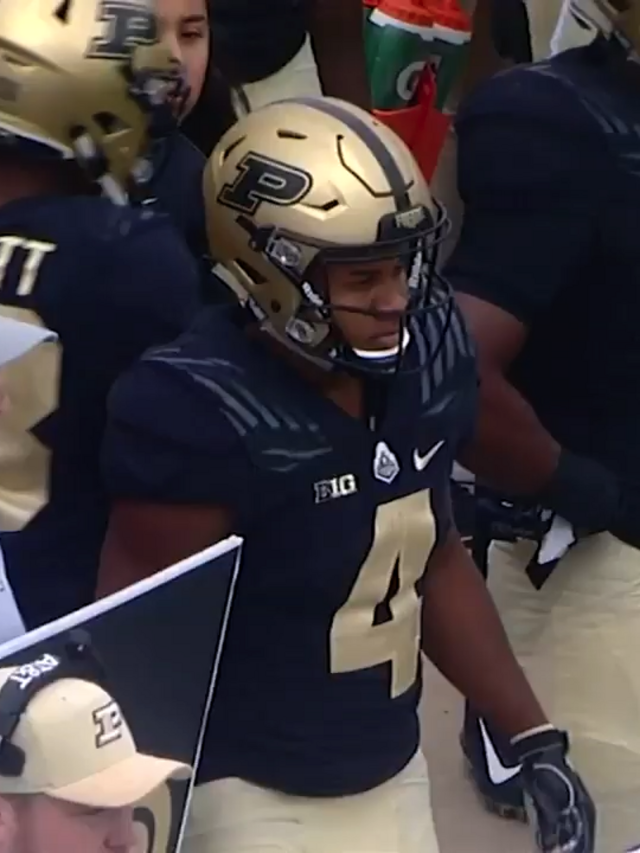
Source: YouTube: https://www.youtube.com/watch?v=mFseeuoyBAs. Author: FOX Sports. Via Wikimedia Commons
In a society where negative mental health impacts the lives of millions, it is easy to assume that money, fame, and achievements will keep these issues at bay. However, this was not the case for former Minnesota Vikings wide receiver Rondale Moore.
Born five weeks premature in New Albany, Indiana, Moore was the youngest of four children born to a single mother. Financial struggles and family issues highlighted his childhood, but he found an outlet in sports. At just 5 foot 7, Moore faced both mental and physical adversity throughout his athletic careers in both football and basketball.
Eventually, Moore chose to dedicate himself to football, a decision that led his family to move to Louisville, Kentucky. While navigating the uprooting of his life, Moore led Trinity High School to an undefeated season en route to earning Kentucky’s Player-of-the-Year title.
Highly sought-after due to his passion and freak athleticism, Moore chose Purdue University, in his home state of Indiana. As a true freshman, he was thrust into the national spotlight and did not disappoint. He recorded 114 catches, 12 touchdowns, and 1,470 yards in the ultra-competitive Big Ten conference.
In addition to dominating on the field, Rondale excelled in the classroom, graduating from Purdue in just three years. Teammates, coaches, and professors gushed over Moore’s work ethic, passion, and dedication in all aspects of his life.
After earning his degree, Moore declared for the 2021 NFL Draft. He was chosen in the second round by the Arizona Cardinals and cruised into the starting lineup. His lifelong dream had been accomplished, but he was not yet satisfied. His dedication drove him to expect perfection from himself whenever possible.
After his rookie year, injuries began severely affecting Moore. Although most were minor, he suffered a severe knee injury after being traded to the Atlanta Falcons in early 2024. After fighting through a grueling and isolating rehabilitation process, Moore earned another chance with the Minnesota Vikings in 2025.
In his first preseason game with Minnesota, while returning a punt, Moore was awkwardly tackled and pinned, bending his knee at an excruciating angle. He had completely torn his ACL, ending his 2025 campaign before it even started. The heartbreak caused by consecutive season-ending injuries is uncharted for most people, and was yet another difficult obstacle for Rondale.
After trudging through adversity, working for everything, and dedicating his entire life to football, Moore felt further from fulfillment than ever. Although dreading the hard work and emotional challenge, he chose to endure another rehab cycle in hope of returning to the field at some point.
After supporting his teammates from the sidelines in crutches for the second year in a row, Moore entered the offseason alone, in pain, and hopeless. His lifelong, seemingly invincible flame was flickering.
Back home, nursing his ACL, Moore could no longer bear the emotional and physical burdens of his injuries. On February 21st, 2026, Rondale Moore was found dead in his hometown of New Albany, Indiana. His cause of death was a self-inflicted gunshot wound. He was only 25 years old.
Rondale’s death left a void in the lives of teammates, coaches, fans, and family members. A contagious smile, competitive atmosphere, and high character followed Moore wherever he went. Additionally, he was a star in his community, purchasing a house for his mother and leading youth football camps around Indiana.
Although a tragic story, Rondale Moore’s legacy will be one of determination, grit, and hope. He will be remembered for his character and will, without a doubt, be honored by Trinity High School, Purdue, and the 3 NFL teams who were lucky enough to work with him.
Mental health is not something that should be ignored. Moore’s story demonstrates that wealth, fame, and achievement do not correlate to true happiness. Resources are out there for everyone, and it is important to seek help before hopelessness becomes overwhelming. Moore will be a motivation for many, and his tragic passing will serve as a reminder that mental health matters.
988 Suicide & Crisis Lifeline:
Anyone can call or text 988 if you need help or if you are worries about a friend or family member. 988 is answered 24 hours a day, 7 days a week. You are not alone, reach out for support.




 Plaid Line + PRIZM + Scottie News