Tag Archives: History

History of the National Parks

By: Grace Wright

Logo of the United States National Park Service

March 1, 1872 was the day Yellowstone National Park became officially approved by the U.S. congress. The founding of Yellowstone National Park helped start the wave of new parks in over 100 different nations and 1,200 parks.

After Yellowstone became a National Park there were many different monuments and new National Parks, but the issue was that depending on where it was located, it was managed by many different government departments; this made things complicated. The 3 departments involved were: the Department of the Interior, the War Department and the Forest Service of the Department of Agriculture.

On August 25, 1916 an act was signed by President Woodrow Wilson creating the National Park Service. It was a new department responsible for protecting the 35 parks and different monuments that the Department of the Interior was responsible for. It wasn’t until 1933, when an executive order transferred 56 monuments and military sites from the two other departments, that all of the National Parks fell under 1 department These steps have been most important to help build the National Park Systems we know today.

One person who was very important to these steps was Theodore Roosevelt. He was known as the “Conservation President”, he impacted the system well beyond his life. When he was president in 1901-1909 he doubled the number of parks known. He established 5 parks in his time, Crater Lake in Oregon, Wind Cave in South Dakota, Sully’s Hill in North Dakota, Mesa Verde in Colorado, and Platt in Oklahoma. Some of these are not here today but they have still made an impact.

The National Park system in the U.S. includes 400 areas that cover more than 84 million acres in the 50 states but also the District of Columbia, Guam, Virgin Islands and many more.

The National Parks still strive to meet the goals of protecting the diverse cultural and recreational resources, being an advocate and helping to preserve our natural world. The National Park Service employs more than 20,000 people and they care for 400+ National Parks and monuments. 

For more information, please visit:

History of Impressionism

By: Fletcher Pike

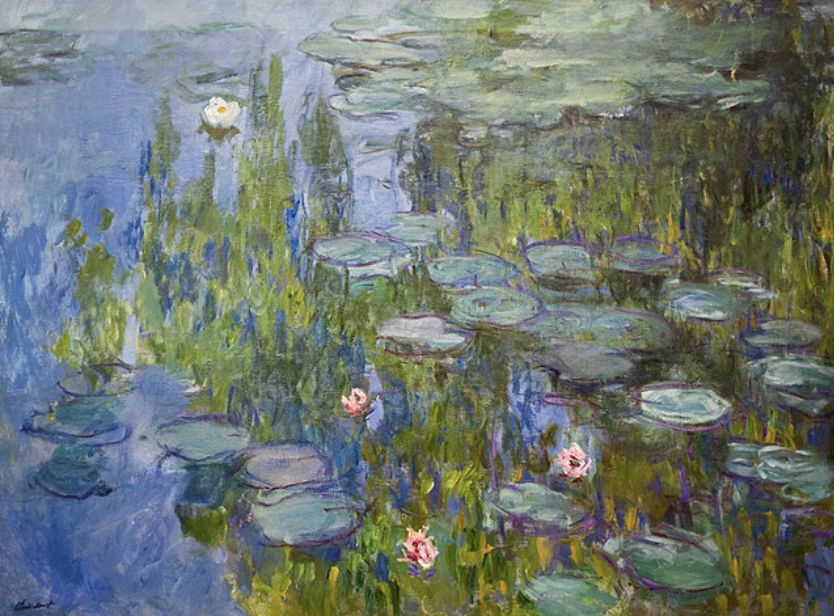
Monet’s ‘Water Lilies’ Image via Wikimedia Commons https://commons.wikimedia.org/wiki/File:Claude_Monet_-_Seerosen.jpg

Art comes in several different forms, many of which you have likely seen today. You might think of paintings from the Renaissance period like the ‘Mona Lisa’ or ‘The Girl With The Pearl Earring’, or maybe more abstract, modern paintings. But one art style in particular was formed as a result of one of the most popular movements in art history. That art style would be Impressionism.

Impressionism itself is a very recognizable style of painting, as the paintings featured bright, chromatic colors rather than the more dull palettes that were used for previous styles of painting. The colors also emphasized the contrast between light and shadows. These paintings very often depicted a mundane or realistic setting, rather than dramaticized historical scenes.

In 1874, a group of artists formed the ‘Anonymous Society of Painters, Sculptors, Printmakers, etc.’. Its founding members included popular artists such as Claude Monet, Camille Pissarro, Edgar Degas, Berthe Morisot, and several others. They created an art installation in Paris, France, where many unique paintings were displayed. 

However, these paintings were a bit different from other paintings at the time. These paintings included loose brush strokes, vivid colors, and featured scenes primarily of nature or the simple, everyday life. These were different from the grand, historical story-based paintings that were made during this time. This new abstract style brought a sense of realism in contrast to the art featured in this time period.

Claude Monet was a significant figure throughout this movement, as he was one of the trailblazers that popularized the style of Impressionism. In one of his exhibits, critic Louis Leroy gave Impressionism its name by stating Monet’s paintings were more of an uncompleted sketch, “an impression”.

The final independent exhibition of Impressionism was held in 1886, but the painters had begun shifting towards a new direction for the movement, which was Neo-Impressionism. This was an art movement characterized by small intricate dots, distinct brushstrokes, and bright colors. 

Though the final exhibition was so long ago, the Impressionist movement had a large impact on the art community by adapting to new art styles, and allowed artists to freely express themselves through their artwork.

For more information, please visit:

How fashion icons have shaped style throughout the decades

By: Kate Tabor

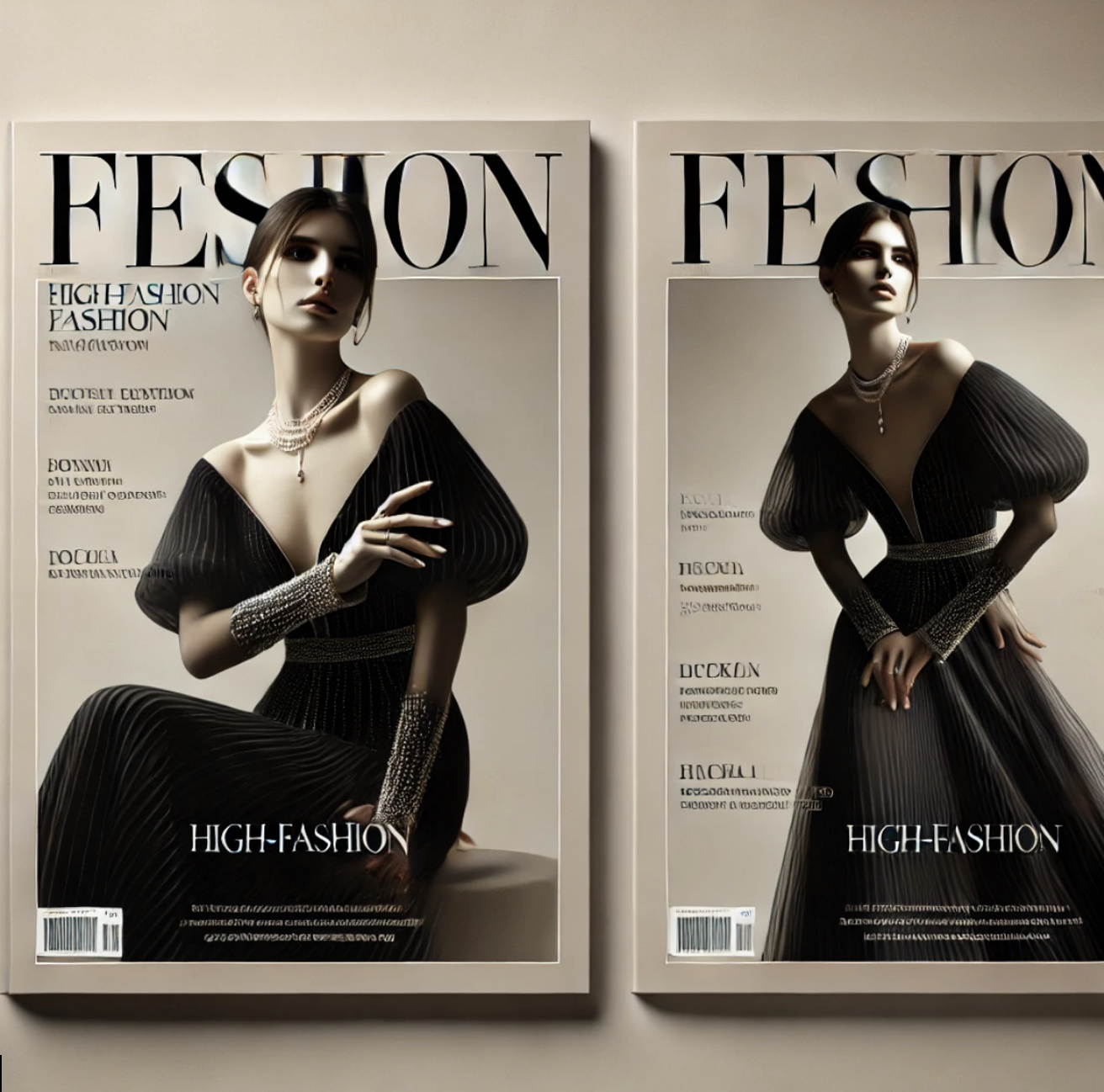
Image created with ChatCPT

The term fashion icon is used quite a lot, but what actually makes someone a fashion icon? Surely, everybody has their own opinion on what makes someone a fashion icon, but Google defines it as “a person whose unique and recognized style has a significant impact on fashion trends and culture…”. 

Going off of that definition, my mind immediately goes to Marylin Monroe, one of the most popular and classic fashion icons of her day. Marylin Monroe broke barriers back in the 1950s, where fashion for women was often very restricted and modest. She created a whole new world of opportunities for how women present themselves to the world.

I’m sure at the time, Marylyn’s style was critiqued for its boldness just as much as it was praised, but she truly did shift women’s fashion in such a powerful way. It was the start of women being able to embrace their own body and femininity in what they wear. She’s classic, and her fashion marks a turning point for women in history.

Another woman that comes to my mind when talking about fashion icons is Princess Diana. Diana’s fashion is known for being simple and modern, but there’s also a bit of rebellion to it.  Being a part of the royal family, expectations were obviously set on how she dressed and presented herself, and she challenged that by wearing a pant-suit set once.

A lot of people still take inspiration from her looks, and admire her fashion for how she subtly gave messages through it. One of her most popular looks, known as the  “Revenge Dress” is often labeled that way due to how her husband, Prince Charles, confessed his infidelity on national TV the same night she wore the dress.

Both of these icons have changed women’s fashion since their times, but what about modern fashion icons?

Zendaya Coleman is one of today’s most influential fashion icons, and beloved by many. Even though she started as a Disney Channel star, Zendaya has moved on to much bigger things in her career, and is often always wowing critics and fans alike with her looks.

Zendaya is always making a statement with her fashion, and has even won the Council of Fashion Designers of Americas Fashion Icon Award. Her fashion sense is constantly changing and evolving, but one thing that I think makes it stand out more is that she doesn’t label it. Zendaya herself has stated that she doesn’t have a personal style, and I think that’s what makes it so good. She doesn’t put herself in a box of what fits her style and her look, she just wears what she wants, and it’s always amazing.

For more information, please visit:

The history of Smokey the Bear

By: Grace Wright

Smokey the Bear started in 1941 in California because during World War II many of the able bodied men were off fighting. So, when wildfires started breaking out, there was no one to really fight against them; many communities had to fight them themselves or just let them burn. Protecting the national forests and other parts of the country became a big concern because many of these wildfires were damaging them. 

People thought using this worry would help people find something else to focus on instead of the war and also that it would actually get people to help. So, they started the CFFP, Cooperative Forest Fire Prevention. They started posting different slogans like “Forest Fires Aid the Enemy” “Our Carelessness, Their Secret Weapon”. This helped people get motivated to help because they made it seem like the wildfires would make the US look weak, which would allow the war to come closer to home.

They did this for a while without a mascot until Disney came out with the movie ‘Bambi’. They got the rights to use the animal from the movie for a year to help their campaign. Once the year was up they would have to find a new animal. They soon decided that nothing would fit better than a bear. On August 9, 1944 Smokey the Bear was authorized by the Forest Service. They soon started making posters and his popularity became huge.

A couple of years later they soon had a real life Smokey the Bear mascot. During a wildfire in New Mexico a baby bear was found after getting burned in a tree. They took him to Santa Fe to hopefully recover. He soon took over the country and many people loved him. He went to the National Zoo in Washington D.C. to live until he died.

Smokey the Bear’s iconic saying “Remember only you can prevent wildfires” proved to be very useful. It stayed like this for a few decades until they found research that said that some wildfires actually are useful for certain types of forests, so they changed it to “Only you can prevent wildfires”.

Smokey the Bear is very popular to this day, you can find his saying pretty much anywhere. It is also very popular in smaller towns to have a sign that shows the fire hazard for the day and him standing with it. Overall, Smokey the Bear is a very iconic symbol and he did celebrate his 80th birthday in 2024. 

For more information, please visit:

History of R&B music

By: Fletcher Pike

Photo by Nascimento Jr. on Pexels.com

Many might know about the popular music genre of R&B, popularized by several artists such as Lauryn Hill, Michael Jackson, and Whitney Houston. But some might not know of the history of this music genre and how it became so popular today. In this article, I plan to go over the basic history of R&B, and some notable figures who influenced this unique genre of music.

In the 1920s-1930s, a large number of African Americans migrated to urban cities and industrial areas such as Chicago, Los Angeles, and New York City, which created a brand new market for music such as jazz or blues music. “Race music” was the term that was used to initially describe music that was made by African Americans, but the term later acquired a racist interpretation.

In 1949, writer Jerry Wexler substituted the label “rhythm and blues” which would later become the title of R&B music, as R&B stands for rhythm and blues.

Ruth Brown (Jan. 12, 1928- Nov. 17, 2006), also known as “Miss Rhythm”, was a popular R&B singer who released music throughout the 1950s. After the release of her first recording, “So Long”, she became one of the most notable female R&B singers of the 1950s. She brought many pop genre elements to the R&B genres, which influenced many artists in the future.

In the 1960s, African American made music shifted from its primary theme of blues music and shifted to more gospel styled music. “Soul” was the title that many African Americans called this style of music in 1964, which captured the emotional value of this genre.

Since then, R&B has evolved to adapt more modern elements, especially in the 90s and 2000s, with artists such as Mary J. Blige, Aaliyah, Lauryn Hill, and Alicia Keys bringing modern-pop elements to the R&B genre.

The genre itself can be usually characterized by its combination of many different genres, such as blues, jazz, pop, and gospel, with slow rhythms and emotional lyrics. 

I hope that this article taught you about some of the history of the R&B genre as well as some of the different artists that popularized this genre. 

If you want to learn more about the history of R&B music, check out this link: https://www.britannica.com/art/rhythm-and-blues

The Northern Cities Vowel Shift

By: Maggie Hong

Image created using Canva AI

If you think the Midwest isn’t an important part of the English speaking world, think again. The largest change to the English language since the time of Shakespeare is happening right here, in the upper Midwest.

Think of a typical Minnesotan accent. Someone might say ‘bayg’ instead of ‘bag’, or ‘melk’ instead of ‘milk’. These aren’t just regional pronunciations; they are markers of a big change to the way we speak English.

When we pronounce words like ‘bag’, ‘milk’, ‘cat’, and ‘bit’, we form vowel sounds using a certain position of our mouth. All our vowel sounds, though they were in use for centuries before, were firmly established during the Great Vowel Shift throughout the 15th century. They’ve remained mostly the same since. Now, in cities surrounding the Great Lakes region, they are changing.

Vowels are organized in a sort of carousel, corresponding to where in the mouth they are pronounced. Vowels like the one in ‘bat’ are pronounced near the back of the mouth, while ‘bot’ is pronounced at the bottom of the mouth. When one vowel moves out of its spot, say from the back to the bottom of the mouth, the rest follow it. The vowel which was pronounced at the bottom of the mouth moves to the front, the one from the front moves to the top, and so on.

In the northern cities, this began with the vowel in ‘bat’, known as the trap vowel. The trap vowel, which was pronounced in the middle of the mouth, began to get longer, now sounding like the vowel in ‘yeah’ or ‘mia’ and resulting in the Midwestern pronunciation of ‘bayg’. As the trap vowel moves up, it occupies the space once held by the ‘kit’ vowel. ‘Kit’ moves down, now being pronounced with the vowel in ‘dress’, and resulting in the Midwestern pronunciation of ‘melk’. This continues until every vowel sound has shifted.

The resulting set of pronunciations defines the Midwestern accent. And although English speakers around the world have accents, the Midwestern accent is the most significant because it is a chain shift. In the British or Australian accent, vowels move one at a time. The change is small. In the Midwest, they shift in a chain reaction, each move prompting another. No such chain shift has occurred on a large scale since vowels were first established in the 15th century. So, the next time you hear someone say ‘melk’, you are witnessing a historic moment for the English speaking world: the Northern Cities Vowel Shift.

For more information, please visit:

What is the EA-6B Prowler?

By: Yohan Lee

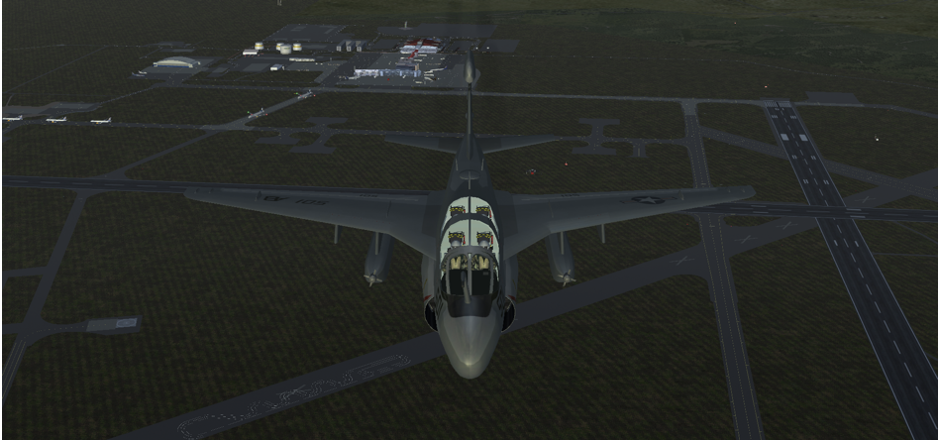
The EA-6B Prowler is an Electronic Warfare aircraft and was built by Northrop Grumman. The Prowler uses an A-6 Intruder airframe and was used in the Navy and Marines.

What is Electronic Attack?

Electronic Attack is used for tactical jamming and is also called Electronic Warfare or EW. The EA in EA-6B Prowler stands for Electronic Attack. The Prowler can disrupt enemy radar and radio communications. What makes the Prowler unique is that it can jam ground signals like mobile phones, garage openers and most importantly, improvised explosive devices or IED. Since it can jam IEDs and prevent them from detonating it makes the troops on the ground much safer with a higher success rate on their missions. The Prowler was so powerful that the Pentagon made sure that no U.S. aircraft carriers went into battle without the Prowler. “Since the Prowler technology was so advanced, the Pentagon had the technology and pilots classified,” said Capt. David Woods.

History

During the Vietnam War there were many anti aircraft weapons and the U.S. kept losing planes to them so Northrop Grumman made the A-6B Prowler to have 4 seats instead of 2. There would be 1 pilot and 3 electronic warfare officers, or EWO.

Naval Air Station Whidbey Island is known to be the home of Electronic Warfare. NAS Whidbey Island would receive the first EA-6B Prowler in 1971. The EA-6B Prowler was first put into squadron VAQ-129 for Fleet Replacement testing, then VAQ-132, or the Scorpions, for deployment. Then, later on, they would deploy the EA-6B Prowler to Vietnam in 1972.

But the first EA-6A was first brought to the Marines for Electronic Attack in December 1965. The EA-6A is an A-6 Intruder and unlike the EA-6B of having 4 seats, it has 2 seats. The avionics for Electronic Attacks were much smaller than the EA-6B Prowler. The Navy took 3 EA-6A from the Marines and made it into the EA-6B. Once the EA-6B Prowler was made, the Marines retired the EA-6A and serviced the EA-6B Prowler.

The Navy first retired the Prowler on May 27th, 2015 and transitioned the Prowler to the E/A-18G Growler which is an F-18F Super Hornet with more advanced jamming. The Marines retired their Prowler in March 2019 and also transitioned to the Growler. 

Not only was the Prowler deployed in the Vietnam War but it also was deployed in Syria, Afghanistan, and Iraq. The Prowler was also deployed in the Invasion of Grenada and Operation El Dorado Canyon. During Operation Desert Storm, 39 Prowler were deployed in the Gulf War and fired up to 150 HARM-88 missiles, and came back with no losses.

Avionics

  • AN/ALQ-218 Tactical Jamming System Receiver
  • AN/USQ/-113 Communication Jamming System
  • At the top of the tail is an antenna that receives radar and radio signals.

Armament

The Prowler can have up to:

  • 4x AGM-88 HARM Anti Radiation Missiles
  • 5x 300 Gallon External Drop Tank
  • 5x AN/ALQ-99 Tactical Jamming System External Pods
  • AN/ALE-43 Chaff Dispense System Pod
  • AN/AAQ-28 Litening Pod

Aircraft Specification

  • Length: 59 feet
  • Height: 16 feet
  • Wing Span: 53 feet
    • Wing Folded: 25 feet
  • Maximum Take off Weight: 61,500 pounds
  • Thrust: 11,200 pounds per engine 22,400 total
  • Airspeed: Max .99 or 659 mph / cruise .72 Mach or 481 mph
  • Maximum Range: 850 nautical miles
  • Service Ceiling: 40,000 feet
  • Crew: 4
  • Engine: 2x Pratt & Whitney J-52-P-408 Turbojet Engines

For more information, please visit:

‘Girlhood (it’s complicated)’

By: Kumari Wijetunge

Official poster of Girlhood (it’s complicated)

‘Girlhood (it’s complicated)’ is an exhibit that you can see at the Minnesota History Center that will be up from September 7, 2024 to June 1, 2025. This is an extremely well put together and powerful representation of the impacts made by women throughout history with themes like education, fashion, work, and politics. The exhibit explores how girls over the years have navigated growing up in a society that underestimates our voices and abilities.

The exhibit counters traditional narratives of girlhood by highlighting the struggles and complexity of girls’ lives. It emphasizes that being a girl is much more than society paints it to be but instead involves navigating multiple roles and identities. Through a collection of over 100 historical artifacts, personal diaries, and interactive displays, ‘Girlhood (its complicated)’ shows how girls have contributed to society in significant ways, often breaking down barriers that were set before us.

One of the main themes of the exhibit is girls’ access to education and how it has evolved over centuries, with many girls fighting for the right of education. The exhibit shows the historical struggle and the events that led to girls and women securing educational opportunities.

The work of girls and young women is also shown in the exhibit and how they balanced family responsibilities like chores with personal ambitions and activism. Artifacts like clothing, diaries, and toys highlight the way girls have navigated their roles in the household and beyond.

‘Girlhood (its complicated)’ also features an exclusive section dedicated to girls and women in sports, specifically basketball. This part of the exhibit showcases the growth of women’s sports and the stories of female athletes who empowered others. Through photographs, personal stories, and trophies, visitors can learn about the history of women’s sports and the ongoing fight for equality.

Throughout the exhibit visitors reflect on their own experiences and perceptions of girlhood. Overall, ‘Girlhood (it’s complicated)’ is a powerful reminder of how important it is to recognize the different experiences of girlhood throughout history and the present. By interacting with artifacts and stories, visitors can leave with a greater appreciation for the resilience and strength of girlhood.

Rebecca, the White House Racoon

By: Munira Ahmadad

First Lady Grace Coolidge takes Rebecca for a walk during the annual White House Egg Roll on April 18, 1927.
National Photo Company Collection/Library of Congress

Two things U.S. President Calvin “Silent Cal” Coolidge is known for is being straightforward and quiet, and having a pet Racoon named Rebecca.

Rebecca was initially a Thanksgiving meal gift. Coolidge had been gifted Thanksgiving meal gifts from farmers against his permission, his opposition to the tradition made news in 1923, in the New York Times article “Coolidge Refuses Gift Turkey; Wants to Discourage Custom”.

One of the unwanted gifts he received was a female Racoon. Rather than eating her, Calvin Coolidge chose to keep her as a pet and give her the name Rebecca.

Rebecca was given the title of White House Raccoon and had her own little house. She was given a collar for Christmas with her title on it, and was given free range in the White House.

The raccoon would go on to do whatever she pleased. First Lady Grace described Rebecca as a pet that lived with liberty and had a mischievous personality.

As Rebecca gained American popularity, the public began wanting her to have a partner. After being captured by a White House officer, a male raccoon was introduced to the White House to be Rebecca’s boyfriend. He was named Horace but Coolidge didn’t like that name and swapped it to Rueben.

Rueben was not very interested in being Rebecca’s boyfriend as he escaped several times and eventually when he could not be found after running away again, Rebecca’s life as the only White House Raccoon returned to usual.

After Coolidge’s departure from presidency, Rebecca was sent to live with other raccoons at Rock Creek Zoo.

For more information, please visit:

What is the E/A-18G Growler?

By: Yohan Lee

Photo by Jack Sequeira. Used with permission.

What is the E/A-18G Growler? The E/A-18G Growler is an Electronic Attack which means it can disrupt enemies radars and communications. The E/A-18G Growler was an F/A-18F Super Hornet that was built by Boeing for the U.S. Navy. The E/A-18G Growler is fitted with electronic warfare avionics. The avionics are the ALQ-218, CCS Antennas, Long Baseline Interferometer Antennas, Datalink and the AESA radar. The AESA radar replaces the gatling gun so the weight load can be less.

Its history. Development began in 2003 and the first prototype to ever be flown was in 2006. Each flight they worked to improve the avionics and reduce its air to air armament to accomplish its suppression of Enemy Air Defense or SEAD. Once the E/A-18G Growler was ready, it replaced the E/A-6B Prowler which was the Electronic Attack of the A-6B Intruder.

The first deployable squadron was the VAQ-132 “Scorpions”. There are about 9 deployable squadrons and one non-deployable squadron that holds the E/A-18G Grower. The E/A-18G Growler has its own Naval Air Station based at NAS Whidbey Island which is home of the Electronic Attack. The U.S. Navy gave 12 Growlers to the Royal Australian Air Force which is operated in No. 6 squadron at RAAF Base Amberley. But the U.S. Navy will not give any more Growlers out since it’s the U.S.’s Secret weapon.

Its Payload. The E/A-18G Growler can hold the AGM-88 HARM which means Air to Ground Missile 88 High-speed anti Radiation Missile which fires at a ground target. It also carries the ALQ-218 which receives radar warning. ALQ-99 which jams enemy radio and an AIM-120 which is an air to air missile.

The E/A-18G Growler has 2 crews. One is a pilot who flies the aircraft and one is the Electronic Warfare Officer or EWO. The EWO is responsible for some of the E/A-18G Growler’s most important duties. The EWO jams enemy radar and chaffs flares which is a bright and hot material that tricks the missile into thinking it’s the aircraft.

What makes it important to the U.S? The E/A-18G Growler is one of the best Electronic Attack aircraft. For one, it really doesn’t need to be stealth. The only stealth it has is jamming the enemy radio and radar and a special coating that makes enemy radar bounce off making it difficult to track the Growler. The Growler is also a 4.5 generation aircraft so it’s very modern. And if other branches or squadrons need help trying to be more stealthy they can get the E/A-18G Growler for support. The Growler is always first in the battle field so it can quickly jam before the enemy can see any other non jamming planes. Many other countries tried to replicate the Growler but can’t because the Grower is far more advanced than what they have. So, this is why the E/A-18G Growler is important to the U.S. Navy.

For more information, please visit: