Tag Archives: Editorial

The consequences of the 2024 election

By: Priya and Ruby Anderson

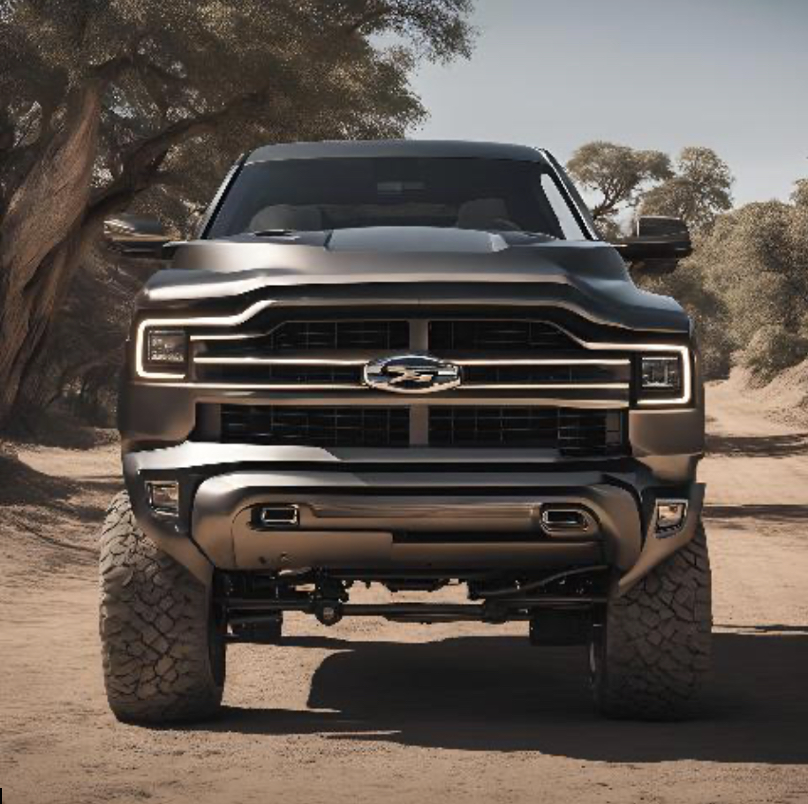
Source: Microsoft Designer AI Image Creator, prompt by us

Americans sat anxiously Tuesday night two weeks ago. It’s been 8 years since a female has run for president, and almost 12 years since a person of color has run. When asking around, people stated they were disappointed, but not surprised by these results. Trump is now the 47th president of the United States, serving for his last term.

We asked our good friend and community organizer, Charlie St. Dennis, his opinion on the matter. He mentioned how every swing state that turned blue in 2020 suddenly shifted towards red, and how all but 2 states had close margins. A lot of factors play into this shift, such as the undeniable factor of identity. Charlie stated, “The societal standard that a duly elected district attorney, attorney general, senator, and vice president who is a Black/South Asian-American woman, is less qualified than an old, White, male criminal.” Inflation and a troubled economy are also very important when looking at peoples’ voting choice. Many blame Biden and his administration for those issues, not looking at the bigger issue we are facing with Trump’s re-election.

The consequences of Trump being the president for a second term lies in Project 2025. According to the Project 2025 site, their mission statement is:

“To promote conservative and right-wing policies to reshape the federal government of the United States and consolidate executive power after Donald Trump is inaugurated as president in 2025.”

When reading the “about” section, it talks a lot about how the left has brought damage to America, and there needs to be an effective conservative administration. They are built on the “four pillars”: a policy agenda, personnel, training, and a 180-day playbook. What this means is they essentially want a broad coalition of conservative organizations to ensure the administration begins January of 2025. Project 2025 is also built by The Heritage Foundation, a conservative think tank, whose stated principles are free enterprise, limited government, and traditional American values.

Project 2025 may sound innocent enough, but this administration has some extremely concerning policies. These policies are concerning because they infringe on the rights of almost all minorities in this country. While they primarily target these minorities, this administration also affects the entire American population. According to the Project 2025 site, their policy suggestions are:

  1. Secure the border and deport illegal aliens
  2. De-weaponize the federal government by increasing accountability and oversight of the FBI and DOJ
  3. Unleash American energy production and reduce energy prices
  4. Cut the growth of government spending (this includes social security and essential title 1 school funding)
  5. Ban biological males from competing in women’s sports (and heavily limit the resources for trans health care)

And some other policies that are not included on the public page are:

  1. The Department of justice can rush to use death penalty
  2. National book bans, but also word bans, such as diversity, gender, and abortion
  3. Abortion care inaccessible and illegal to anyone no matter the circumstance

On page 6 of this manifesto, it states,

“This is just the beginning.”

Not only do these policies show the individualistic nature of America and its leaders, but it shows the fear people have for change and equality. Many can argue that traditional American values are extremely flawed and toxic, leaning heavily on white supremacy and the patriarchy.

While this policy does target the LGBT community, people of color, and women, this also affects men and White Americans just as much. Once the doors are open to banning and prohibiting rights, that only leaves room for more basic freedoms to be stripped from everyone, in order to secure the high-class, corrupt Christians who misinterpret the bible, and white supremacists a place in power.

To the White women, lower class/working class and people of color who surprisingly voted for Trump, they may have believed that he was on their side. That he would protect them. What they don’t realize is that while they may have gained lower taxes, they have also elected a false prophet: someone who is not fighting for you, but for the wealthy, White, male elites in our country. As we stated many times before, even White men are not safe from these policies. America has beaten down its citizens for so long that we are desperate for any way out, even if it means selling out our fellow Americans.

Trump has shown he is not a fitting president through his actions and words. All we can do now is create safe spaces within our communities, and stay close to our people. And while safe spaces are dwindling, the oppressed always remain strong and connected throughout human history. Some good can come out of this presidency, and while we are clearly biased, that is the truth. The good, however, will be in lower gas prices.

For more information, please visit:

The lack of change in schools

By: Ian Larson

Photo by Pixabay on Pexels.com

The American school system needs to change. According to Tahoe Expedition Academy the education system we are using today originated from the 1800s.

According to a poll by XQ institute, “93% of respondents feel like high school isn’t preparing students for the future”. The math and reading scores on the NAEP are getting lower and lower.

The Carnegie Unit was introduced in 1906 and became the standard system for education. You earn a credit for completing a class and if you get enough credits you can graduate. Most schools still have the same time in class, ~50 minutes, 5 days a week. The Carnegie Unit was helpful to standardize schools, however it doesn’t account for factors like how good the teachers are or at what speed the students learn.

Another big problem with the current school system is that a lot of students feel disconnected from their life at school. School increases mental health problems in students, making learning more difficult and causing some students to stop trying in school.

High school is the final thing preparing students for the real world of being an adult, but is it really doing a good job at doing that? Most schools in the US don’t encourage students to find their potential.

When students are just listening to a teacher when in class, they only use the left hemisphere of their brains. However, if they are being creative and solving problems they can learn with both hemispheres of their brain.

So, in my opinion, schools are in need of change these days as they still haven’t changed the way they teach from a long time ago.

Staff editorial – Phthalates, the controversial chemicals with the weird name

Cosmetics have become a prominent part of American culture, so much that few of us stop to think of the repercussions of constant usage, or even consider what exactly we are welcoming into our bodies. When I surveyed 280 Highland Park students, 79% admitted to not reading the labels before buying or using a cosmetic or beauty product. This is basically condoning the use of potentially harmful chemicals in our cosmetics. Now is the time to get informed and to stop this mindless consumption.

One particular group of chemicals, known as phthalates, have been in the news a lot lately. Of the students I surveyed, 95% responded “no” when asked whether they knew what phthalates were. Many have never heard of them, but everyone is likely to come in contact with them daily. Although these chemicals have been banned from products in the European Union, phthalates are still used heavily in American products. A study by U.S. Centers for Disease Control and Prevention tested 2,500 individuals and found 97% had molecules of at least one type of phthalate in their bodies.

Phthalates are a group of chemical compounds that are clear and oily, and used in almost everything from children’s’ toys to blood storage bags in hospitals.  Phthalates, or “plasticizers”, soften the texture of plastics and cosmetics. They also cling to skin, which allows products to last longer and retain scent or color for more time. A rule of thumb to go by is that basically any product with a fragrance, be it deodorant, perfume, body wash, or lip-gloss, is likely to contain phthalates. Of the students I surveyed, 95% said they use cosmetics or beauty products including shampoo, deodorant, and lotion on a daily basis.

So what could this cost us? Research on phthalates is varied. Phthalates are a possible carcinogen, meaning that research shows that they are related to cancer. They increase the amount of breast cancer cells in women’s’ bodies and they are endocrine disruptors that offset hormone balance, causing early puberty and breast development in girls. Two pediatricians, Dr Shanna Swan, an epidemiologist, and Doctor Howard Snyder, a urologist at Children’s Hospital in Philadelphia both studied baby boys and the relation of chemicals to abnormalities in their hormones. Dr Swan found that baby boys that had more reproductive organ problems and low sperm and testosterone levels consistently had mothers with higher levels of phthalates in their urine at the time of pregnancy. These developmental problems relate to reproductive organs, and low sperm and testosterone levels in adult men as well. Dr Snyder links hypospadias, a condition that has tripled in the last forty years, to chemicals, especially phthalates.

On a container, phthalates are labelled as DEHP, DBP, DMP, MEP, and most commonly, DEP. However, even if none of these chemicals are listed on the product, it may still contain phthalates due to loopholes in the law regarding product ingredients. Companies are not required to state ingredients in their trademark “fragrance,” so there is no way of determining if a product is completely phthalate-free.

According to the Food and Drug Administration and the Consumer Product Safety Commission, there is not enough solid scientific evidence that points directly at immediate negative outcomes of phthalates to spur legislation. Companies say that phthalates are relatively safe and pose no health risk. A prime concern is that if phthalates were banned, a substitute would have to be developed that would be new and untested, which could potentially be even more toxic. Furthermore, companies insist that phthalates are not harmful unless used in high dosage, and the small phthalate content in their products isn’t truly harmful. However, in 2008, congress passed a bill that outlawed phthalates in children’s toys, which seems to indicate differently. This legislation doesn’t seem to support the notion that phthalates are entirely safe.

The phthalates debate has still not yet been ended with conclusive data. Regardless, it is good to be informed. Because of the controversy, it would be safest to choose products that do not contain phthalates. It falls to the consumer to decided what they do and do not want in a product. Say no to phthalates by not buying products that clearly contain phthalates, at least not until more conclusive research is done.

Also, remember that phthalates are not the only potentially unsafe chemicals that find their way into our cosmetics. As the consumers, we have the power to change this.

To learn about skin products with safe ingredients visit: http://www.ewg.org/

Staff editorial – A world debate in Minnesota: Mining and the environment

NOTE: The following article won 3rd place in a contest put on by Young Reporters for the Environment.

It might seem as though the controversy over proposed sulfide mining plans in the Northeastern region of Minnesota doesn’t directly affect high school students. But in reality, this is the generation that will be feeling the effects of any decisions made, so it is crucial that we are involved in this process.

Recently, PolyMet, a Canadian corporation hoping to begin mining in 2016, released the Environmental Impact Statement of the proposed mine. The environmental review has received over 40,000 comments on a public comment thread. For those in support, the resulting economic growth and job creation are incomparable, while those opposed raise concerns about the environmental impact.

Sulfide mining, also known as hard rock mining, is the extraction of minerals like Minnesota’s vast reserves of copper, nickel, cobalt, and platinum from sulfide ore. Polymet workers estimate that the Duluth Complex in Northeastern Minnesota’s Mesabi Iron Range has 4.4 billion tons of minerals. The plan projected by PolyMet is to reuse existing infrastructure from Erie Plant, a 1957 taconite processing facility.

The proposed mine is in an ideal location of economic need. As stated by Ely resort owner Joe Baltich at a public hearing of the Polymet proposal, “I’m in the tourism industry, and I certainly don’t want to shoot myself in the foot. But we’re losing businesses right and left. We have 360 properties that are for sale, and no one is buying… We’re going to lose our schools, our grocery store. We’re going to lose everything, and it’s my hometown.” Baltich, and many others, support the mining project because they believe it could mean increased jobs and a revitalized Minnesotan economy. PolyMet estimates that mining could generate 360 jobs, and hundreds for construction workers, for 20 years. The University of Minnesota-Duluth calculated the mining would produce over 550 million dollars per year, clearly an economic stimulant.

Proponents of Minnesotan sulfide mining also emphasize the positives in obtaining metals locally, reflecting a problem that the United States as a whole faces: dependence on foreign minerals. Mining nationally has been promoted to reduce international dependence, and allow us to more closely monitor conditions for miners and for the environment where the metals are extracted, which are often unsafe due to few regulations. This Minnesotan mine could be a step away from foreign dependence and towards a self sufficient America.

But it isn’t this simple. The Great Lakes contain 18% of the world’s fresh water, and mining could be a threat to this valuable resource. 99% of the rock that is unearthed is waste rock or sulfides. When the sulfides are exposed to air and water, the waste could be subject to acid mine drainage, which would create sulfuric acid. This acid could be a potential pollutant for water, as well as for wildlife and fish. Water is difficult to contain and to treat, and the interconnected water systems in Minnesota are a concern if any pollution were to occur. Minnesota isn’t the only state that has undergone mining turmoil. “Other states have suffered because their leaders saw dollar signs when they should have seen question marks. Leaders believed promises that the mines wouldn’t pollute, but ignored all the times those promises had been broken,” stated Friends of the BWCA Executive Director Paul Danicic, in a Minneapolis Star Tribune editorial, referring to pollution in Colorado, Montana, and South Dakota mines. According to the project Mining Truth, there has not been a single sulfide mine that has not polluted.

Furthermore, environmentalists claim the PolyMet plan is riddled with gaping holes. The water treatment after the project could last for 500 years or longer in cases of high levels of pollution. Scott Helgeson of Bloomington spoke at a public hearing on January 28, stating, “What prevents [PolyMet] from going bankrupt 30 years from now and saying, guys, we just can’t pay the bills anymore. Are we insane?” Helgeson’s concerns echo those of taxpayers across the state. The cost of cleanup after the mining is complete could thrust Minnesotans into an economic deficit. For some, the risk of a costly cleanup outweighs the prospect of economic thriving for twenty years.

Of course, the economic gain could be very substantial, but here’s the question Minnesotans are asking: is any amount of money worth putting natural beauty at risk? The solution isn’t clear cut. Minnesota is undisputably host to a plethora of natural minerals, something Minnesotans should be able to harness to economic advantage. However, we need to know how to do this correctly, without environmental harm as a stipulation. Mining could leave Minnesota’s next generation–our generation– in an economic deficit. So we need to be involved. Aaron Klemz, communications director for Friends of the Boundary Waters Canoe Area, in a personal interview March 10, stated,

“When regulators know that tens of thousands, and hundreds of thousands of people are watching their decision-making process, they make better decisions, because they have to actually know that they will be held accountable for what’s happening. Part of it is about being involved in the process, and part of it too is making sure the DNR understands that Minnesotans want to preserve our water for the next generation, because it is probably our greatest natural resource.”

The Minnesotan debate is bringing to the surface decades of dispute that pit mining against the health of the environment. Japan, Spain, Peru, and Indonesia are only a few examples of the many countries dealing with mining pollution. Our world depends on minerals to make products, and countries need the money from this international trade. Together, we are going to have to work to find a balance to eventually obtain them in a safe manner, or risk trashing our environment.

Minnesota is going to be a leader, but whether for a successful or destructive sulfide mining project or an environmental victory, is a choice that Minnesotans are going to have to make.

IMG_1425

(Boundary Waters photos courtesy of Karl Boothman)

Staff editorial – Class color T-shirts: Harmless fun or creator of division?

I like wearing my class color shirt just as much as any student. It’s fun to get all decked out in green and be proud of my sophomore status. However, when I really think about it, wearing these shirts seems to contradict what we stand for as a school. The message we are sending, that Highland Park is separate, just isn’t right. With class colors, it isn’t about Highland Park as a school, it’s seniors against freshmen, sophomores against juniors, upperclassmen against lowerclassmen. I’m not saying a little class rivalry can’t be fun sometimes, but wearing these shirts ingrains a negative message into our minds.

Our grade differences shouldn’t be such an emphasis, especially during spirit week, when it is time for Highland Park to celebrate our school and show our Scot spirit. It isn’t about freshman, sophomore, junior, or senior spirit. “Instead of working as a school, we work as grades… Eliminating class color shirts could help unify the school instead of individual grade separation,” says Akira Callahan, a freshman. It seems to be contradictory that administration constantly reminds students not to yell the traditional “Go home freshmen!” or participate in marking, and yet grade separation is promoted through class color shirts. Freshmen are bright, yellow targets in their shirts. This sends a very confusing message to students if we are both encouraged to be inclusive, yet are so easily reminded of a difference that drives a lot of negativity.

Another problem with class color shirts is that they become outdated after a year. Most students will buy four shirts that they will never wear again. Jonas Buck, a Highland Park junior, does not buy a class color shirt for this reason. “It’s ten dollars for a shirt that you’re going to wear for maybe nine months. It’s just not worth it for me,” says Jonas.

I looked into the use of class color shirts at some other schools near Highland. The sophomore Jack McKenna transferred to Highland after a year at Nova Classical Academy. Nova does not have class color shirts. At Highland, he notices the grade conflict, especially surrounding freshmen. He agreed that class color shirts could be a contributor to this. Kate Grumbles, a sophomore at Cretin Derham Hall, says that CDH does not have official school-sanctioned shirts. In the past, class colors were a part of spirit week, but they are no longer encouraged by the administration. At Central High School, sophomore Brendan Tickle says there are no class color shirts. Kieran McDonald, a Highland Park sophomore, says his previous school, Saint Paul Academy, doesn’t have class color shirts either. According to Kieran, the school also has less problems with the negativity associated between grades. However, Kieran thinks this isn’t related to the shirts. He says, “I think it makes no difference. SPA and Highland are just different groups of kids.”

However, there are still schools that have class color shirts. Sam Sukar, a Highland sophomore, says the school she previously attended, Eastern Hills High School in Texas, had class color shirts. This leads a person to wonder whether grade barriers are as prominent of an issue, like it is at Highland, at schools that also have class color shirts. According to South High sophomore Izzy Rousmaniere, students at her school are discouraged, and even restricted from wearing class color shirts during pep fest because of the problems they have had with grade conflict in the past. She says, “I think they’re cool and fun and build solidarity I guess. But a lot of people use them to differentiate themselves from other grades, which is just rude and pointless.”

In previous years, we wore the class color shirts at the pep fest during homecoming week. However, similarly to South, the Highland Park Student Council made the decision to change this, so now all students wear red for pep fest. Senior Nguyen Lu, Student Council President explains. “Student Council executive board had a meeting with our administrators and we discussed how we could improve on school unity and spirit… We believed that class color created a barrier between the students. During every pep fest, the classes would be booing one another… After much more discussion we decided to make the first homecoming pep fest a school spirit day. We believed that homecoming pep fest should be about encouraging one another instead of dividing.”

I think that as a school, Highland needs to take the next step forward and rethink having class color shirts at all. Most teachers say these class color shirts have been a part of Highland for as long as they can remember. Maybe, it’s time for change. If we have to designate between classes, let’s just have class color shirts that are all the same color with the class’s graduation year written on the back because they would be reusable. Except, seniors should keep their special customized shirts as they deserve to stand out, and be recognized for their time at Highland.

Remember: we are ALL students of Highland Park! Every senior, junior, sophomore, and freshman make up our student body. We should stand united as a school. Think about this next time you wear your class color shirt.

Staff Editorial – School lunch and NAAPID collide

According to the Saint Paul Public Schools website, National African American Parent Involvement Day (NAAPID) is “a day for parents to come to their child’s school, see what their day is like and to support their child’s educational future.” The goals for NAAPID are:

Promote parent involvement in their child’s education.

Address the serious achievement gap facing African American students.

Promote and provide strategies for parents and students to take full advantage of the educational process at all levels of the educational system (preschool through college).

Now don’t get me wrong, I appreciate the effort by the district in taking serious steps to address the educational predicaments that impact the African American community. I myself identify as an African American and am proud of my racial identity. I was adopted at an early age and raised by middle class white parents in a loving and stable household. I don’t face many of the challenges that my African American peers do, however I am not blind to the factors within the public school system that disproportionally have a negative impact on people of my race. Having things like NAAPID are a good step in the direction of eliminating the achievement gap for African American students.

Screen Shot 2014-02-06 at 8.22.38 PM

(Image Source: https://ns.spps.org/uploads/2013-2014_menus_dblue_3.pdf)

That said, there is something about NAAPID that is bothering me. When it comes to school lunch, Saint Paul Public Schools has three main menus. One for SPPS elementary schools, one for the middle schools, and one for the high schools. On Monday on secondary campuses, the items being served for lunch are as follows: BBQ Chicken Drumsticks, Corn Bread, Herb Roasted Potatoes, Chicken Corn Dog , Baked Beans, and other offerings. At middle schools, BBQ Chicken Drumsticks w/ Corn Bread is the only option, where at the high schools who have more food serving capacity, the chicken drumsticks is the “Daily Dish” option. On Monday’s calendar square on the menu, there is text on the side that says “African American Parent Involvement Day.” As soon as I found this out, I got an uneasy feeling. As many know, a common stereotype of African Americans, among other things, is that they have a love of chicken and other soul food items such as corn bread. Immediately upon finding this out, I did an analysis of SPPS lunch menus on both secondary and middle school campuses going back to September 2013 and found that this meal has never been served previously, specifically the items cornbread or BBQ chicken drumsticks. “Rotisserie drumsticks” are served often, however I have never seen nor do the menus indicate BBQ chicken ever having been served. As a student who purchases school lunch almost every day, I have no recollection of ever seeing cornbread being served as a meal option, nor BBQ chicken drumsticks.

What makes me wonder even more is the specific inclusion of “African American Parent Involvement Day” on the physical menu. Why place that on a lunch menu alongside food offerings that coincidentally align with common stereotypes of African Americans? May it have been intended or not, the mere thought of racial stereotypes being provoked is something that shouldn’t be happening. During my research for this article, I stumbled upon a very recent case regarding school lunch and Black History Month that happened at a school in California (bit.ly/1bu28DH). The school announced it was planning on serving fried chicken, cornbread, and watermelon at lunch to celebrate Black History Month. Understandably, members of the community stood up and spoke out and as a result, administration apologized and the school is planning on holding a diversity assembly to further address the issue.

My hope is that this either was an oversight by the SPPS Nutrition Department or something that was well intentioned to celebrate NAAPID, however not in my opinion aligning with the spirit of celebrating and promoting African American student achievement. I hope that in the future, the school district continues to recognize African American students in a positive and celebratory fashion without accidentally perpetuating cultural stereotypes.

James Farnsworth is a member of the Class of 2016 at Highland.

You can contact the HP Plaid Line team at: hpshplaidline@gmail.com