We all got called down to the main gym and we had to sit down with our grades in separate corners. It was really packed with a lot of people and there was nowhere to sit and it was way too loud. For freshmen it was hard to get a seat because there were a lot of people sitting on the bleachers so half of us had to sit on the floor because of how packed it was.
Everything got settled down but when it was about to start everyone started to yell “Freshman go home!” I was really surprised about how loud it was and how funny it was people yelling at us, but it wasn’t that bad.
Then the cheerleaders had a performance for us and they did really well. After they were done some teachers were just talking about being respectful and kind but no one really listened.
After that, some kids explained some sports that they do at Highland and what it was about and all of that, and then they walked through the limbo and it was really funny.
Then the football boys and soccer girls and boys had a dance performance in front of everyone. They did really well and then the moment everyone has waiting for came: the homecoming queen and king.
The people that participated walked and did a dance and went in the middle of the gym. Everyone voted for a queen & king and one of the teachers got the microphone and said the winners for each grade. The winners got to sit in a special chair.
After all that was over, everyone started to yell once again “Freshman go home!” and it wasn’t that bad but it was just embarrassing. I guess it’s a tradition for American schools though.
And that was my experience for my first ever pep fest.
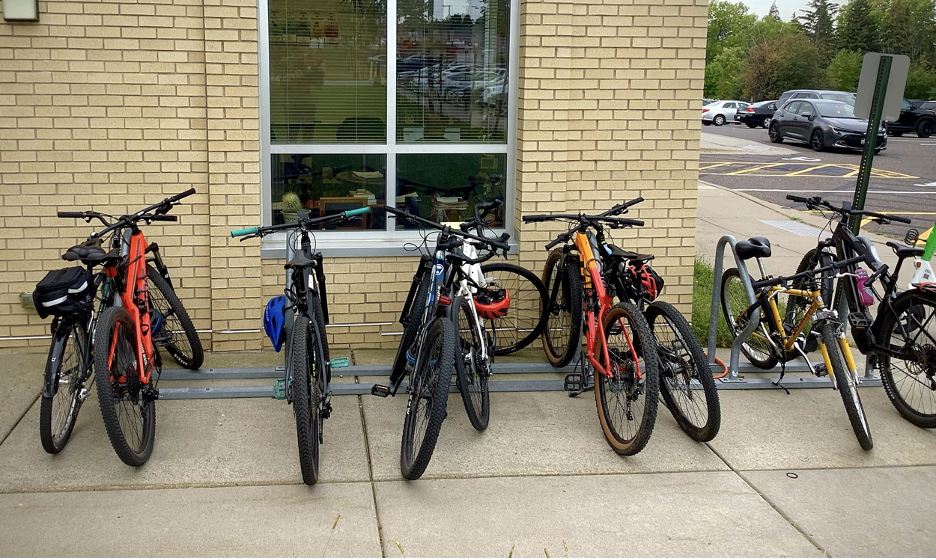
Children are raised differently around the world, but one experience that most kids share is school. How you get to school can vary greatly between students. Whether you bike, walk, take public transportation, carpool, or hike through the mountains, everyone arrives at the same destination.
According to Saferoutesinfo.org, “In 1969, 48% of children 5 to 14 years of age usually walked or bicycled to school.” This has dramatically decreased since then, and has fallen to only 13%. In 1969 89% of children who lived within a mile of school walked or bicycled. Now only 35% bike or walk. This decrease has been happening steadily over the course of the last 50 years. As more vehicles are on the road, biking and walking become inherently more dangerous. More and more parents see walking/biking to school as unsafe which may lead them to instead drive their kids to school. This feeds into the cycle.
However, not everywhere in the world is like this. For example, the city of Oulu, Finland has recently become one of the most pedestrian and bike friendly cities in the world. They did this by greatly increasing the amount of bike infrastructure, and plowing the bike paths immediately after the snow falls. According to BBC, “In one of Oulu’s biggest schools Metsokangas, more than 90% of the children get to school by bike or on foot.” Although the average for the city schools overall is 50%, it’s still incredibly impressive seeing that it’s the 4th most northern city in the world.
Biking to school in the middle of the winter may seem difficult, but it’s nothing compared to how strenuous of a journey some kids in China had to go through. Some kids had to hike almost half way up a mountain to get to school in Gulu Village, China. From 2005-2011 students in the Gulu Village would have to hike 3-5 hours to reach a school that stood atop the mountain. They had to take a windy path that is filled with many twists and bends. The narrowest part of the trail is 40 centimeters.
The school was first made of mud, but the principal Shen Qijun through support of the people living below transformed it into a somewhat safe building complete with five classrooms and a restroom. Soon the school lacked funding, and it was decided to relocate down below in the village. This is only a small glimpse into the different challenges school kids face around the world.
Priya’s Iphone, September 12, 2024. Two freshmen walking to class.
1. Go to orientation!
One of the first most important things for a freshman to do (especially rising freshmen) is to go to orientation. If you are already a freshman in school, skip this one, but those who are coming up, keep reading.
This is not only where you learn the school, you learn your schedule, who will be in your advisory, who you will be peers with for the rest of high school. The schedule you receive is usually paper, which is helpful for those with iPad issues (common among freshies). And at orientation, you see the teachers and office staff; obviously an important factor to becoming acquainted with your school. By attending orientation, the transitional process is much smoother and easy to cope with. It can be nerve racking, but is worth the 2 hours.
2. Get involved in school activities
School activities get you connected with more than students, but with opportunities for your sophomore, junior and senior years. You can make friends that last, and will always find someone on your team/in your club in your classes. Almost everyone is involved with a school activity, so participating in your community is a great way to allow yourself to become a part of your high school.
3. Make connections withupperclassmen
As I said in my last point, try to befriend or connect with upperclassmen! Try to find someone you can trust to get info about the school and about classes. This can be helpful when learning about the school and getting tips on big assignments. Upperclassmen can also help get you connected to more people. Of course, have boundaries with these kids, and make sure they are trustworthy friends.
4. Don’t procrastinate
Procrastinating is the number one way to fail. You should try to complete your work as soon as possible because it will help a lot with getting good grades. A good way to not procrastinate is to make a planner. Making a planner will help a lot with keeping track of what assignments you have to do and when they are due.
5. Sign up for drivers ed
Once you turn 15, you can get your permit. Even though driver’s ed is very tedious (30 hours), it is worth the time to learn to drive. You could even get your license as a sophomore! It is 3 hours for two weeks, and that is awhile, but what’s better? Freedom or having to hitch a ride every day?
6. Find a favorite teacher/class
Having a teacher that you like or a class that you enjoy will get you through the day a lot faster, especially if you can look forward to that class. It’s also good to have a teacher you trust so that you can go to them if you have a problem. Having a class that you like can also motivate you to do your work.
7. Do not skip class or be late
Skipping class or being late is a great way to get on a teacher’s bad side. As a matter of fact, too many absences and tardies will get you on a list and a call home. Coming to class at the correct time and always showing up will define you as a trustworthy student. It will also set a routine for you and habits will form out of those routines. Being late in the workforce is a BIG no, so starting early, come to class. For freshmen, this is very important to get used to.
8. Ask for help
Can’t find a class? Don’t have an iPad? Don’t know your bus, etc, etc? Ask for help. As a freshman, no one expects you to know what to do right away. There are always students and teachers there to help, and the counselors office is a great resource for freshmen. Not only can you get help with the issues above, but you can change electives and if necessary, move core classes around. Don’t be afraid to reach out to your friends and peers. Your teachers also expect you to ask for help, so please don’t hesitate.
9. Bring snacks/drinks
School days can get long and tiring and sometimes lunch is not enough. Especially if you have lunch really late or really early in the day you are going to get hungry pretty fast. You should make sure to bring a few snacks to school everyday as long as your teachers are okay with it. Bringing water is also important during hot days.
10. Relax
Don’t get too stressed out over school. If your only focus is school work you’re going to get stressed and burnt out. School is important but relaxing and enjoying time to yourself and spending time with friends and family is just as important. You also need to make sure you’re getting enough sleep every night so don’t stay up too late.
This Friday, students at Highland Park Senior High will gather for pep fest. Chants of “Go home freshmen” will roar through the gym. The nominees for homecoming royalty will march out onto the gym floor, hoping to be the ones who get to sit on their grade’s respective throne. That night, students will gather for the homecoming dance, and the next day Highland will have their annual homecoming football game.
But this tradition is not unique to our school. If you went to every High School in America, most of them will have similar traditions to these. Many colleges and universities have homecoming celebrations, too. Homecoming is an American cultural tradition, present in High School movies and TV, so ubiquitous that we often don’t consider how this tradition began.
While more associated with High Schools today, homecoming actually began as a college tradition. Three different schools claim to be the originator of homecoming. Many news outlets, including a piece on the history of homecoming from Active.com, give credit to the University of Missouri, which invited alumni back to their school to “come home” for a football game in 1911. The next year, they continued to do so and have for every year since.
However, there are other claims. The University of Illinois claims to have invented homecoming one year earlier, hosting their first “homecoming” in October of 1910 against their rival, Chicago. This homecoming was an experiment but was so popular that it returned the next year, and continuing ever since except for 1918 when it was canceled due to the flu pandemic (Illinois did host a homecoming in 2020, but it was scaled back and reworked).
Accolades however, for inventing homecoming may belong to Texas’s Baylor University.
The Baylor Alumni Association claims that Baylor has the oldest homecoming, which occurred in the fall of 1909 when alumni were surprised to receive invitations back to their alma mater for a special football game. However, Baylor didn’t call this homecoming at the time, referring to it as “good will week”, and wouldn’t host their next homecoming until 1915, and it only became an annual celebration in 1934.
High schools soon adopted homecoming as a tradition, starting in the 1930s. They adapted the tradition in some ways as well, inventing homecoming court and changing the opponent of the football game from the school’s biggest rival to a team the school would likely beat, keeping high spirits during the festivity.
Highland’s homecoming game this year will be at Humboldt High School at 1 PM on Saturday, September 21st. We will be playing against Harding. Before the game you can enjoy the Powerpuff game at 9 AM and tailgating at 10:00 AM, both at Highland.
The lack of mental health services in schools is a problem that has an immediate impact on youth and their overall mental wellbeing. Ever since the COVID-19 shutdown, we’ve been in a mental health crisis where diagnoses for mental health disorders have skyrocketed in younger generations. The lack of awareness of this issue can lead to these mental health conditions in youth growing worse and leading to problems later in life and even increased suicide rates. This article will cover how this problem came to be and ways we can help prevent it.
According to Pewresearch.org, just over 55% of public schools in the U.S. provided students with mental health services during the 2019–2020 school year, and that number barely increased in the following 2020–2021 school year. Even fewer schools in this time frame offered any treatment for mental health disorders, with only 42% of public schools offering any services in or outside of school.
Since the COVID-19 pandemic, many psychology professionals have stated we’re in the middle of a mental health crisis. Since returning to school in the 2021–2022 school year, prevalence of anxiety and depression in teens and youth increased by a whole 25% according to the World Health Organization.
Along with these devastating facts, so few youth who really suffer from mental health problems don’t seek help at all, since mental health isn’t talked about or discussed much in school curriculums and there’s so much stigmatism around this topic.
The stigmatism of mental health has been a problem in our society for generations, and we’re just starting to release some of that now. This stigmatism often stems from the belief that mental health disorders are overdiagnosed and the people who suffer from them are just being dramatic or are seeking attention. This is most commonly seen in older generations, as growing up, mental health wasn’t a talked about issue, and psychology was just first starting to emerge as its own valid science.
This stigma of mental health is very invalidating and hurtful to those who really do suffer, and spreading awareness of these inaccuracies can help release some of that stigma and help us understand what others may be dealing with so we can empathize with them and find ways to help them through it.
With the massive increase in mental illness comes the desire to see it treated and for youth affected by these illnesses to thrive again, which sort of forces some of this stigmatism to be pushed back. It’s not a very big step in eliminating the stigmatism around mental health, but understanding how youth are being affected is the first step to change.
Schools not providing enough services and resources to youth is a big problem, but even within those schools that do offer those services, there are many factors that still lead to youth not receiving the help they need and deserve.
Many of these services provided in schools aren’t always known to the students or sometimes they just don’t feel comfortable going to the counselors or professionals. One of the biggest problems within having counseling services is that the professionals often don’t do enough to reach out to youth who are struggling, or they don’t do enough to make meaningful connections so youth feel comfortable coming to them for help. This is one of the leading factors contributing to the uproar in mental illness, as so much goes unseen.
Youth who actively seek help and reach out for themselves are the ones who receive the services provided, but a major aspect of having a mental illness is not understanding how it affects you and not understanding the symptoms fully, which makes it significantly harder for some youth who don’t know or understand their conditions to reach out. Having counselors reach out to youth and try to form connections is a better strategy for helping those kids, as connection with a trusted adult may be just the thing that will help them receive the help they need.
The lack of awareness and available resources to youth who suffer with mental illness is astounding, especially in these years following a global pandemic. If you or someone you know is struggling with mental health issues, put yourself or the other person first. Find ways to help relieve some of yours or their pain, and reach out to someone.
With the end of the 2023-24 school year upon us, the Plaid Line/PRIZM would like to thank everyone that has supported our student contributors this year. There were a great many articles, stories and works of art that showed off the talents of many of HPSH’s students.
Amazingly, this was the 10th year that the Plaid Line has been online! Hopefully, we will be able to continue to bring student voices for many more years to come.
Again, thank you for your support. As always, we will be on hiatus until fall, but please check out our back catalog until we are able to provide new content in September!
Coming towards the last couple weeks of the school year, I’ve realized that there are a lot of things I either did, or wish I did, to help manage my stress throughout this school year. I’ve had to come up with ways to keep myself on task with school but also not let my work pile up too much to the point where it was more than I could handle. Here are a few of the best tips I’ve learned when it comes to managing school stress:
Staying organized
Staying organized is the key to keeping up with your schoolwork. Keeping a tidy and clean place to do homework like a desk or at a table will help you focus on finishing your assignments without distractions. This also goes for keeping your papers and notebooks organized; use folders and try to keep everything as put together as you can!
Use your school resources/ work time
One thing I’ve found extremely helpful with school is using the resources and time given to me in class. This includes asking for help from teachers and peers, using given class time to complete assignments, as well as using different places to get work done like the CCRC or the library. Focusing on getting your work done in school and asking questions will limit the amount of time you will have to spend outside of school on assignments.
Get good sleep
Getting a good night’s sleep before school will encourage you to be more engaged in school, and will improve your brain’s ability to focus and process information. Being deprived of sleep will make your body weaker and you will be more susceptible to becoming stressed. I try to get at least 8 hours of sleep every night to help reduce my stress levels during the school year.
Keep a schedule
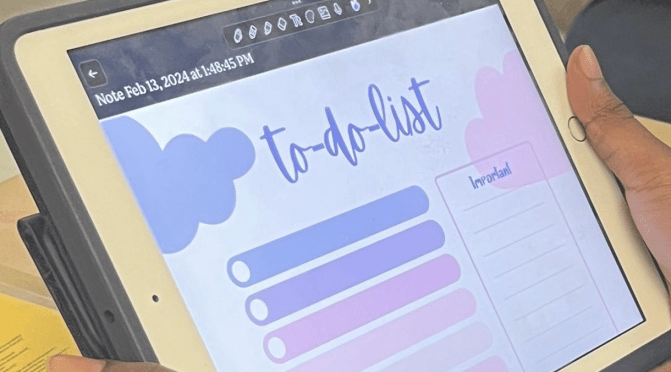
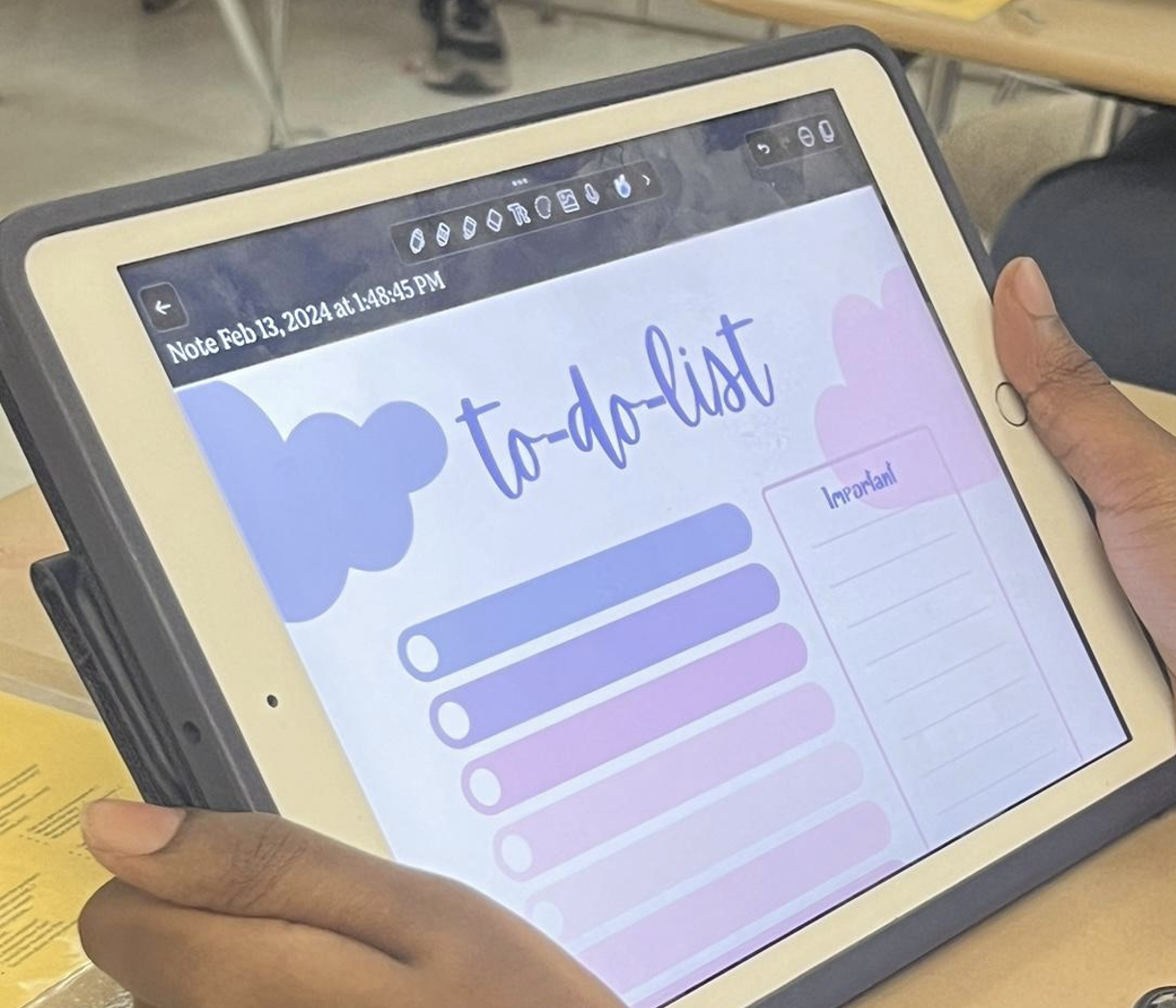
Last, but not least is keeping a schedule. This has been the most helpful thing for me this school year to stay on top of my schoolwork. Making a list every Monday of all the work I need to complete by the end of the school week, and the due dates of my assignments, is a great way to remember what I need to get done. This helps me plan out a schedule for which assignments will take more time/need more attention. I would also recommend getting a planner or downloading an app to help you visualize what work you need to finish by the end of the week or before the due date.
Overall, there are many different ways to reduce your stress levels during the school year to help enhance your academic performance as well as your mental and emotional well-being. Focusing on these different strategies is especially important because it can benefit you with lifelong stress management skills. Each of these has helped me this school year and I hope they can benefit you as well.
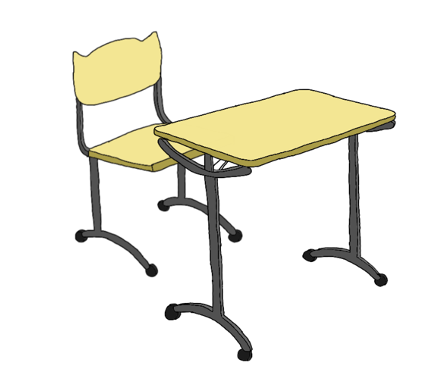
Imagine a school environment. What do you envision? A white board? A teacher? A computer? While those are parts of the school environment, you may be forgetting a common object that’s found within a classroom. Whether it be long lectures or taking tests, the common school desk plays an important part in our education today.
Over the years, school desks have developed alongside youth education. Originally invented in 1880, the desk was created by John D. Loughlin in Ohio. The first iteration created by Loughlin was known as “The Fashion Desk”, and was quite popular across the United States due to some of its aesthetic aspects. The American Desk has evolved since then, becoming the wraparound desk and the simple chair plus table set.
As of today, school desks have evolved in their own way to accommodate students and teachers needs. Across the world, students and teachers require different needs, and this is evident within their school desks. For example, in Finland, their classroom furniture is unlike the hard tables and chairs that we’re used to. Instead of the rigidity of the wraparound desk, schools in Finland mix a combination of comfortable chairs with movable tables. These aspects of their classroom allows for an easier collaboration between students and simpler applications of planned activities. Compared to American Education, Finland has a much more relaxed approach to learning, and this is reflected by their choice in desks and collaborative tables.
Taking a look at another country with different education standards, India is on the other side of the spectrum. In their classroom, students are expected to listen and follow their structure without interruptions or questions. To accommodate these standards, Indian school desks are made up of a long table accompanied by two school chairs. These desks are always made to face the front of the room and teacher to allow for more concentration. Through this, students are able to place their focus on the teacher and their education as a whole.
While being common throughout many classrooms, not all classrooms come along with desks. Many countries around the world face economic problems and are unable to properly provide facilities and school furniture. Some of the countries, such as Kenya, Nigeria and Uganda have overcrowding issues in classrooms, and these problems only become more exasperating. Though, not everything needs to have proper school furniture to function. Youth are still able to learn through the efforts of their teachers and their own efforts towards their education. In this instance, desks aren’t a necessary item and their absence in this instance shows that a classroom only requires a teacher to function.
Desks are an important part of the classroom and they help reflect on the style of education presented by their teachers. Though no matter the type of desk, the atmosphere of the classroom and the teaching style of the teacher, this is always true: Education is always prevalent no matter the environment that surrounds it. School desks are just a small part of a student’s days that help accommodate them towards the needs of their education system.
There are multiple apps students can use to assist them when doing homework, and studying for a test. These apps are convenient and accessible to use for a quick study session. In this article, I will tell you some recommended study apps to use that will hopefully help you to study.
Quizlet: Quizlet is a very versatile app that has a wide range of study tools. It offers different study modes, such as flash cards. Quizlet’s flashcard feature allows you to create custom flashcard sets or choose from millions of already pre-made decks that cover every subject.
In my opinion, I find customizing my flashcards very helpful, since it allows you to pick the term and definition, and create them yourself. This tool is a good way to study because it’s a good way to interpret your understanding of what you’re learning. It’s also a good way for friends to study together, which is very helpful if you want to do a quick 5-minute refresh on a topic you’re studying.
Quizlet also offers quizzes that allow you to test your knowledge in different ways using different quiz formats which include multiple-choice, true/false, and matching. After answering and submitting it gives immediate results which allows you to see what you need to improve on.
Quizizz: Quizizz offers a whole variety of different pre-made interactive quizzes for different subjects. They design the app to be engaging by including animated GIFS and memes to gain students’ attention.
One feature I love about the app is that the quizzes are self-paced. You can start and finish your quiz at any time, which is very convenient, and provides flexibility to study at any time, anywhere.
Similar to Quizlet, Quizizz offers instant feedback which lets you know what you get wrong and right which allows you to know what you need to improve on.
Duolingo: Duolingo is a good app if you want to improve and study languages. You can choose from different languages such as French, Spanish, Chinese and many more.
Each lesson includes listening , speaking, and writing which makes studying more productive. I also love how quick and flexible it is. For example, if you’re in an area where you can’t listen to the audio or speak, there’s an option that allows you to choose to skip the question.
Another feature I love is how it adapts the lessons based on what you need to improve on; it targets areas of weakness and provides additional practice where needed.
When studying, the right apps can help you improve whatever subject you want to improve on. These 3 apps recommended makes studying easier with their adaptable features, and quick lessons.
Being organized for school is one of the few keys to academic success. Knowing the different hacks on how to stay on top of school assignments can help reduce stress, manage your time, and help you prepare for the future. In this article, I will share some tips and strategies to help you stay organized for this semester and future semesters.
1. Make a planner: You can use digital or physical paper to make your planner. Making a planner is essential for staying consistent and keeping track of your many different assignments.
Start by writing down the days of the week, and write down the times you’re free, after that, you can start to write down the specific times for doing homework and studying. Make sure to include breaks in your schedule so you don’t get stressed out.
It’s okay to make a few changes to your schedule during the week, but try to stay consistent with your schedule as much as possible.
2. Time management: Time management I would say it’s one of the most important skills to learn if you want to stay organized. Avoid delaying assignments, and start setting realistic goals on ways to finish your assignments.
There are many different time managing methods. A few include the technique you might’ve learned in your Scot’s Strategy or AVID class and that is the SMART Goal which stands for: Specific, Measurable, Achievable, Realistic, and Time-bound. It’s a technique that helps you to create realistic manageable goals. This technique is useful for people who want to set long-term goals, and it’s a great method to track and manage your time.
3. Keep your study place clean: A messy study space can make it harder to stay productive in completing your assignments. Keep your space clean by removing unnecessary items, sorting, and keeping only what you need on your desk. Use folders, and notebooks to arrange your notes and assignments. This will make finding assignments when you need them a lot faster and easier.
4. Take organized notes: Writing clear, and organized notes can help you have a clear understanding of what you’re learning, and it’s also a good way to study. There are many different ways to take notes such as Cornell, bullet points, outline, mind mapping, etc. Find out which one works the best for you, and start writing.
No matter which method you choose to use to take notes, I suggest simplifying your notes and highlighting important things that you may need to retain.
Also, remember to use different notebooks for different subjects, or if you have those 5 subject notebooks, make sure you’re only using one section for one class.
Organizing, revising, and being consistent with your notes can help you understand the material better, and it’s especially useful if you have an upcoming test to study for.
5. Prioritize your time based on importance: Managing your time effectively is important for staying organized. A technique I use is that I divide my assignments based on the due date and their importance. If the due date is coming up, I prioritize that assignment first. If it’s a large summative project, I take some time out every day adding to the assignment little by little, so that by the time the due date is here, I won’t be stressed about completing it.
Staying consistent and organized takes a lot of hard work to do, but if you try to implement these 5 tips into your routine you’ll see much needed difference in your everyday life.
The Official Online Newspaper, Literary Magazine, and Video News of the Highland Park Scots
















 Plaid Line + PRIZM + Scottie News