Category Archives: Science/Nature

What is the Golden Record on Voyager 1 and 2?

By: Hannah Gliedman

Image created with Wonder

What is the Golden Record?

In 1977 spacecrafts Voyager 1 and 2 were launched into space. Their goal was to take pictures of Jupiter. Because this was going to be the first man-made thing to reach interstellar space the NASA team decided to put aboard a record that would encapsulate all human existence in 90 minutes. The record would be used to communicate with other life forms about planet earth. It showed images from our universe, our home, us and just about everything on earth. It played sounds from every generation from all around the world. This record is a symbol of the human condition, and it’s called the Golden Record.

Creation of the record?

NASA enlisted Carl Sagan, a committee chair, and his team, to create the record. They wanted to put aboard an object that, if found, would signal to the finder where it came from. A main problem the team had when creating the record was fitting the entire history of earth into a 30 minute frame, because at the time records could only hold about 30 minutes of playtime. The team at NASA figured out how to maximize the speed and get the playtime up to 90. Now all they had to do was figure out what they wanted to fill it with.

How it works

Because there is a very slim to none chance that beings that evolved completely separate from us would understand our language, NASA scientists had to create a way for aliens to understand. They used the most abundant element in the universe, hydrogen, this diagram shows hydrogen particles transitioning through parallel and antiparallel spins. When this happens electromagnetic radiation is released with a period of about .7 nanoseconds and a wavelength of 21 cm, so they hope that aliens will associate that tick with those measurements.

What’s on the record?

The record starts with sounds from planet earth telling the story of earth through sound: volcanos, thunder, crickets, birds, fire, laughter, Morse code, airplanes, a baby crying, and greetings from 55 different languages, and music from all sides of the globe.

The chances of an extraterrestrial being finding the spacecraft before its inevitable decay in a billion years is slim. The chances of it decoding it and sending a message back is even smaller, because by the time we receive their message humans will cease to exist, but that’s not the point. Yes, it would be cool to have communication with other living creatures in the universe, but that’s not the point. The point of the record is to have something, anything out in the universe that shows that we were here, so that when the sun expands and humans and earth are destroyed there is something out there to prove to someone that humans existed.

The world of Fungi

By: Trump Vang

Image created with Wonder

Fungi are a common occurrence throughout the world. They can resemble the common mushroom, with their round tops and cylindrical stems, or a branched mass of matter taking any shape possible. Although past their appearances, what are they actually?

Fungi are organisms composed of cells, and are a type of eukaryotic organism (Has an easily defined nucleus). They are a part of their own kingdom, known as Fungi, and differ from their commonly associated plant kingdom.

These organisms feed on deteriorating material or sometimes other living things. Through their efforts, they’re able to properly grow and reproduce in order to keep their species going. Just like some plants, Fungi release “seeds”, known as spores in the air to  spread their species. Unlike seeds from plants, their spores are often microscopic, with some even reaching 2 micrometers.

Species of Fungi:

There are many different types of Fungi, having evolved for their specific purposes in the environment today. Although, some stand out through their appearance, ways of reproducing and growing.

For instance, take the Devil’s Fingers Fungi. It’s a mushroom that has four to eight “fingers” that protrude from its base. Along with its appearance, it also shows itself to smell like rotting flesh due to its slime coating. Surprisingly enough, this type of fungi is actually edible, despite its appearance, although its taste is very bitter.

Adding onto appearances, is the Veil Lady fungus. This type of fungus is a mushroom, with its appearance resembling a mushroom with the addition of a skirt/veil that it surrounds itself in. The mushroom is able to spread its spores by attracting flies and insects to itself. Just like the Devil’s Finger, the Veil Lady is edible, being commonly used within cuisines and certain traditional dishes.

Another unique type of Fungi is the Ophiocordyceps camponoti-floridani. This fungus can infect ants, turning their behavior awry. It’s able to properly take over its host to put itself in a good position to grow and reproduce. When its host dies, the fungus releases spores, allowing for the cycle to reproduce when a spore comes in contact with an ant. Through this reproduction method, the fungus is able to spread, and grow in this process. 

There are a multitude of mushrooms that could be expanded on, but these three species show the diversity within Fungi as a whole.

Fungi are organisms that spread themselves through spores, whether it be through air, animals, etc. They’re unlike anything else that has grown, be it animals, plants, bacteria, etc. Their unique appearances and growth patterns have attracted us to them for what seems to be centuries. Along with this, their unique qualities through taste, mechanisms and structure, have allowed us to use them whether it be for cooking, technology or even construction.

Why are there so many mosquitoes this year?

By: Biftu Osman

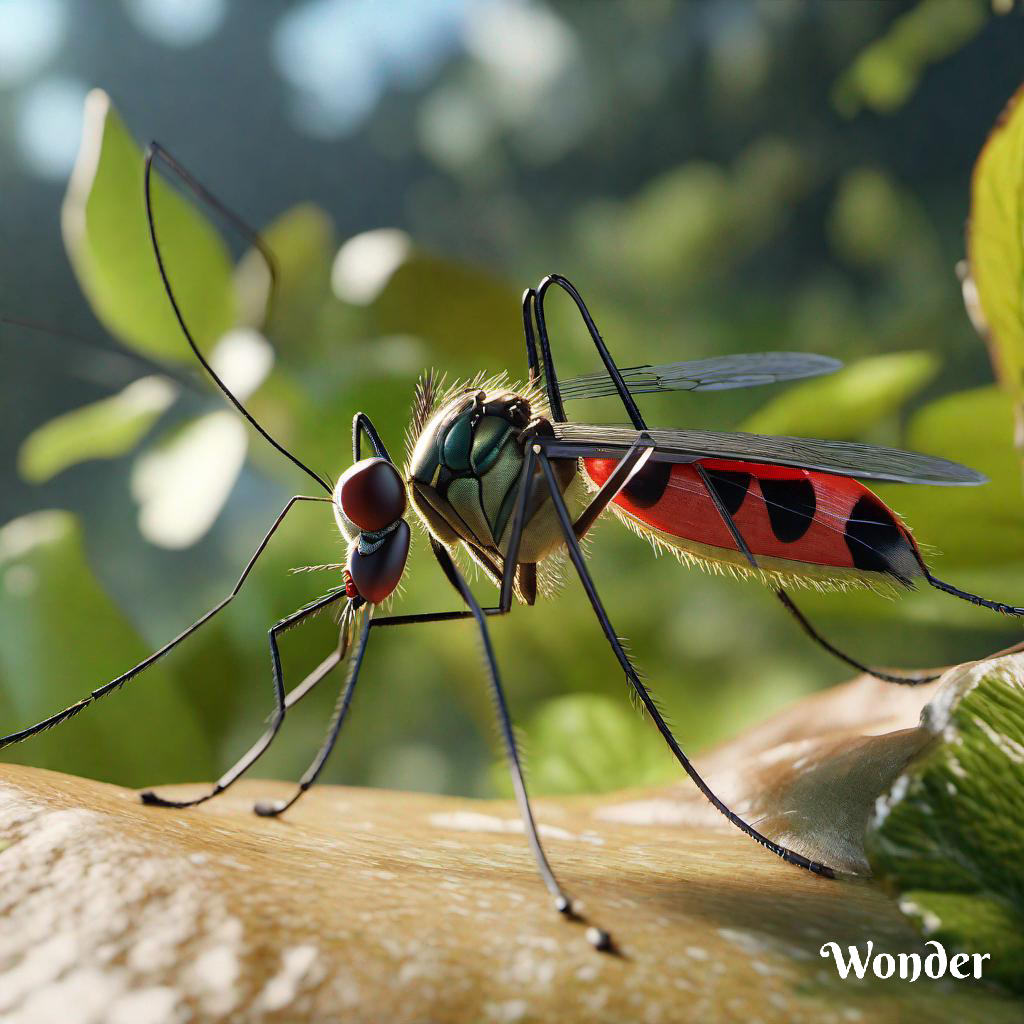
Image created with Wonder

As the weather began warming up, there has been a sky rocketing rise of mosquitoes in Minnesota. The big question is: Why are there so many mosquitoes this year compared to the past few years?

Mosquitos are born in water and typically live in moist and dark places. Due to the large amount of rainfall, and all the snow melt from this past winter season, mosquitoes have been given the perfect weather to breed and thrive in.

The Metropolitan Mosquito Control District predicts; “…this season is the biggest for mosquitoes in more than two years. Water samples are showing high counts of larva ready to blossom into bite-ready adults.”

The most common mosquito type in Minnesota is the floodwater mosquito. Their eggs can last as long as 7 years and due to the drought these past few years, they haven’t been hatching much.

This summer, due to the flooding in the Mississippi River, all the past year’s eggs as well as this year’s eggs are all hatching. Once floodwater mosquito eggs are placed in water, it only takes them about a week to be fully developed and hatched.

The Metropolitan Mosquito Control District says on the average peak days of summer, they receive around 100 calls a day in complaints about mosquito swarms. This season they’ve received around 350 calls in just one day.

The biggest hot spots where mosquitos have been thriving this year are in the Twin Cities area. Specifically, the big bodies of water like the Mississippi River and Minnesota River.

Although the mosquito situation this season makes it seem inevitable to get bitten by mosquitos, there’s multiple strategies to try and prevent it. One of the most effective ways to treat mosquito bites is using insect repellent.

If you’ve already been bitten, some efficient techniques to treat it are rubbing it with an ice cube/ice pack or applying anti-itch cream/lotion.

A brief history of ants

By: Isabelle Baidoo

Although ants are seemingly small and insignificant creatures; their history is quite interesting and lengthy.

The ant (Formicidae) evolved from vespoid wasp ancestors in the Cretaceous Period roughly 145.5 million years ago. Today there are more than 13,800 species of ants that have been discovered, but scientists estimate that there are 22,000 species in total.

Ants are a Superorganism meaning they are a group of living organisms that work together as one to grow and develop. All ants play an important role in the colony. There are the ants that look after the baby ants, others that collect and prepare food, then there are the ants that dig and clean the nest. Some ants are born for their job, but others will change roles as they grow.

They live in colonies all over the world in almost every continent. Ants have snuck their way into Antarctica where they can only survive around humans. They live in trees, soil, rocks, logs, and small acorns or pinecones.

Defending their colony and their nest is a common struggle for ants. All ants can bite, and some have bodies specifically made for fighting. There’s also ants with stingers similar to bees, ants that squirt acid out of their abdomen, or ants that emit a potent smell. Although this seems rather violent, there are certain ants who don’t feel the need to fight and just hide or remain very still.

These colonies are mostly made up of female ants. Worker ants are all related and their mother is the queen ant of the colony. Once a year when a new colony is ready to be made, male ants and new queens are born. Both males and queens are born with wings. The males use these wings to fly and mate with the new queens, but their lives are very short because their only job is to mate. There is at least one queen per colony and many worker ants. Ants can be smarter than humans when they work together as a colony.

Ants’ lives begin with the mother laying a round squishy egg; which will eventually hatch into an ant larva. The ant larva eats and grows, then develops all the necessary adult body parts within its body; this is the pupa stage. They then shed their old skin and become an adult ant.

Ants come in a very wide variety of colors. Not all ants are just red, black, or brown. There are species of ants all over the world that range from green, gold, yellow, and even blue. In Australia there are shiny blue ants called Blue Ants. They can be bright metallic blue or green and are often found in flowers.

Some ants are farmer ants such as the leafcutter. There is a specific group of ants called “fungus-growing ants” that are fully self-sufficient; they create gardens of fungi to eat, and feed their fungi leaves and soil to keep it fresh. Then there are “rancher ants” who herd smaller bugs like aphids from plant to plant to help them cross safely from weather and predators. In return, the aphids provide sugar water to the ants.

Ants are commonly consumed in Asian, African, and Latin countries. Some popular edible ant species are: leafcutters, weavers, honey, and black ants. This is because they’re such a plentiful species and are relatively easy to locate.

For more information, please visit:

What’s the deal with eels?

By: Caden Kipfmueller

Freshwater eels are widely regarded as one of nature’s great mysteries. The gender and reproduction habits of this species have perplexed scientists and great thinkers alike for centuries. Ancient Greek philosopher Aristotle was famous for his belief that eels did not conform to gender in the same way that most species of fish do, and Sigmund Freud once was pushed to the brink of insanity when hundreds of dissections led to absolutely no new information on the topic.

Eels are one of the few species of animal that still has more questions than answers in modern biology, and it has taken most of human history to produce what still amounts to an incomplete understanding of the creature.

The lack of information that scientists have about eel reproduction is extensive. Eels have never been observed mating, either in captivity or the wild. Additionally, sexual organs have never been spotted on the eel at any stage of its life. Given the abundance of the species and its prominence around the world, this is an unprecedented phenomenon, and one that has never occurred before. Naturally, there is a great degree of speculation regarding how exactly more eels are made, but the most widely accepted theory is rather strange.

As the current scientific consensus agrees, freshwater eels begin their lives in the Sargasso Sea, a part of the Atlantic Ocean that is almost a highway of ocean currents, all going in different directions. At this time, scientists do not know why specifically the Sargasso Sea is the point of origin for eels, but the youngest eel larvae recorded have been located there. From the Sargasso Sea, eels begin to migrate to other parts of the world, swimming to freshwater locations by going against the current in rivers.

During this process, the eels undergo a variety of metamorphoses, the first of which is the transition from larvae to glass eel (a stage in the life of an eel named after the almost see-through pigmentation they take on during this phase). Once the eel has found a home in freshwater, it will settle. Life doesn’t change much for eels at this point, but they do still undergo some additional metamorphoses.

After an indeterminate time, the eel reaches what scientists regard as mating age. This age is different for every individual eel, and the range for when it could occur is dependent on a variety of factors in the eel’s environment. Upon reaching maturity, the eel heads back to the Sargasso Sea to mate, dying shortly after. As said before, scientists do not know exactly how eels mate, just that sexual organs likely develop during an additional metamorphosis to prepare for reproduction.

Ultimately, the freshwater eel is still very much a creature shrouded in mystery. It may be hundreds more years before more information is discovered about them, but given the recent rate of discovery in science, many feel like it is just a matter of time before the secrets of the eel are eventually revealed.

Artemis 2 space exploration

By: Mushtaq Yonis

A new mission to the moon is coming up next year, the Artmetis 2 exploration. This exciting journey is going to happen in the Orion MPCV spaceship.

This mission will include a lunar flyby, which is when a spaceship orbits the moon without landing. The first flyby was the Soviet Union’s in 1959.

The Artemis 2 will have 4 crew members whose names are Jeremy Hansen, Reid Wiseman, Victor Glover, Christina Koch. Reid Wiseman as the commander, Victor Glover as the pilot, and Christina Koch and Jeremy Hansen as the mission specialists.

If you don’t know, there are 3 Artemis missions:

  • Artemis 1 – was an uncrewed test of the Orion spaceship on November of 2022
  • Artemis 2 – crewed flight that will take place in November of 2024
  • Artemis 3 – crewed flight that will land on the moon and will take place no earlier than 2025

The Artemis missions are a series of lunar exploration missions that have been designed to send humans farther into space than they have ever been before.

The crew will fly the Orion, which is an exploratory vehicle designed for longer flights beyond the moon. It will fly 8889 km beyond the moon and then return to Earth. The mission will take a minimum of 10 days.

This mission will be the first time with astronauts who are women and POC. For a reminder the crew will not be landing on the moon but instead will be doing a flyby.

NASA will also collect information about the moon’s environment and potential challenges astronauts might encounter. This will be used for NASA’s goals in establishing a permanent human presence on the moon.

For more information, please visit:

Jupiter: A world more than its size

By: Trump Vang

Looking at the night sky many objects shine brightly. The moon is easily the brightest out of these objects, followed by Venus and then Jupiter. Despite it being much farther away than most other visible objects, Jupiter still shines brightly due to its size.

Jupiter is known as a gas giant. This term refers to worlds that are mainly composed of gasses and other substances. These types of planets won’t have a solid surface, rather showing a mix of clouds and atmospheric storms.

A day on the planet lasts around 9 hours, being the fastest out of any object in our solar system. Although its year is much longer at a whopping 12 Earth years. In relation to Earth’s calendar system, it’s like having roughly 10,450 days within a year.

It stands as the biggest, largest and most massive planet within our solar system. In past times, humans named the planets after certain aspects they held; Jupiter was named after the king of the Roman gods due to its enormous size. Although, the planet has much more to show than just its mass.

Its appearance shows a multitude of colors in band-like layers created from its clouds. Although its most distinct aspect is a storm known as the ‘Big Red Spot’ on its ‘surface’. Unlike storms on Earth, the ‘Big Red Spot’ is more permanent, having lasted over 300 years. Its furousity doesn’t stop there, as its size is also unmatched, being nearly three times as big as the Earth in its entirety.

The planet also contains a strange relationship with the Earth. Earth has always been under attack by asteroids, or large space rocks. Often an asteroid may pass close to Earth, but as of this moment, it has been a long time since we’ve had a collision with them. One of the main reasons for this is Jupiter’s influence on them.

Without the planet, the existence of life could have never had a chance through the abundant asteroid collisions. So how does Jupiter affect the paths of these asteroids? Due to its large size, Jupiter is able to disrupt the orbits of asteroids, sending them out into far space, far away from the reaches of Earth. Through this, our planet was given the time to grow and produce life, bringing us to where we are today.

Jupiter is an interesting world with many quirks and aspects, from its storms to its presence and influence on other celestial objects. Taking a look at the massive planet, it stands as not only the giant in our solar system, but a world full of colors and gasses orbiting through space.

For more information, please visit:

According to science these 8 foods make you happy

By: Jasmine Williams

I don’t think you would say diets make you happy, but they actually can, and play crucial roles in our happiness. Whether we know it or not, they affect how we feel. Here are the top eight food favorites that make you happy, according to ‘CNET’.

1. Dark chocolate
This is personally not my favorite, or really anyone’s, but it is more healthy for the body because it has half the sugar than any other chocolate. Here are three components that correlate with feelings of happiness in chocolate. Serotonin is a messenger that brings satisfaction, happiness, and optimism. Theobromine is not as strong, but can boost your mood like phenylethylalanine. Phenylethylalanine is another amino acid but it creates dopamine, which acts like an antidepressant.

2. Bananas
Bananas are not everyone’s favorite fruit but they can maintain your mood. Bananas are rich in B6, a vitamin that creates serotonin. One medium size banana has around 0.4 mg.

3. Coconut
Many people have not tried coconut, I’m one of them, but it’s scientifically proven that coconuts can boost your energy. It is known to have medium-chain triglycerides, which are a type of fat.

4. Coffee
A lot of people drink coffee. About 1 million people, and a 2016 meta-analysis says that coffee can lower the risk of depression.

5. Avocado
Avocado has nutrients including choline, a component that is used to maintain your nervous system and mood. Avocados are rich in vitamin B. Vitamin B has shown to lower stress levels.

6. Berries
A 2016 study showed that eating fruits and vegetables in general can improve mental health. But berries are plentiful in flavonoids (antioxidants). They can reduce depression symptoms.

7. Fermented food
Foods like kimchi, kombucha and yogurt, go through the fermentation process. They create probiotics that lead to a healthy gut. Important because 90% of serotonin comes from healthy guts.

8. Mushrooms
Mushrooms are full of vitamin D which has been known to have qualities of stimulants that can increase your mood. To get the full effect, let your mushrooms get some sunlight before cooking.

For more information, please visit:

https://www.ncbi.nlm.nih.gov/pmc/articles/PMC4449495/

Pluto’s planetary status

By: Trump Vang

As of today, Pluto stands as a dwarf planet that orbits farther than Neptune. Many describe it as a cold and airless world, one with a year of 248 Earth years. Pluto hasn’t always been like this though, rather filling in a role much bigger than what it is today.

On February 18th, 1930, Pluto was discovered by Clyde Tombaugh. Previously there were eight planets in the solar system, and many anticipated the surprise of a ninth planet out in the edges of the system. Their suspicions were correct, and Tombaugh’s intense searching through the night sky would find this ‘planet’.

Many had expected the planet to have a similar size to the 8th planet, Neptune, but they were to be disappointed. As more information came about Pluto, estimates on its size soon shrank. From a Neptune sized object, Pluto was downsized to an Earth sized object, then all the way down to being even smaller than Mercury.

Although Pluto’s size had been properly found, it was still considered a planet. Nothing else would change that, until the discovery of another ‘planet’ within that area.

Pluto was in a region, known as the Kuiper belt. This area of the solar system contained many small icy asteroids, orbiting all together in the shape of a belt. The Kuiper Belt also contained other spherical objects, just like Pluto. Though due to the fact that Pluto still stood as the largest out of these objects, it held onto its planetary status.

This was until the discovery of another spherical object, Eris. Pluto and Eris were very similar in size, though Pluto still reigned bigger in the size department. Though once Eris’s weight (mass) was calculated, it was found that Pluto wasn’t exactly the largest in this group of objects anymore.

For some time, many accepted Pluto, Eris, and a few others as planets, but others saw the issue with this. If they kept accepting these celestial objects as ‘planets’, they would just keep finding more, and before they knew it, they would have a multitude of planets to sort through. To combat this, scientists knew they would have to put a stop to this planet
finding.

In 2006, the IAU (International Astronomical Union) set guidelines for classifying planets. There were three rules in specific that were used to determine an object’s classification:

  1. The object orbits around the Sun
  2. It has enough mass to keep a spherical shape
  3. The orbit that the object takes, must be cleared (So, the object orbits by itself, having enough gravitational mass to clear its orbit)

Pluto had passed the first two rules, though its classification as a planet was knocked down by the third rule. Orbiting in the Kuiper Belt, there were trillions of small objects, showing Pluto’s inability to clear its orbit. Due to this, Pluto’s status as a planet was removed.

Ever since that point, there have been just 8 planets in the solar system. Pluto and its other spherical friends were all demoted to the classification under the term, ‘Dwarf Planet’.

More dwarf planets have been discovered ever since the term’s creation. Pluto still stands as one of the largest objects within this classification.

Although not being a planet, the world is still interesting in many aspects. Recently, a spacecraft named New Horizons visited this world, showing its surface and moon system to us. Pluto is truly a fascinating world, showing what beauty can be found, even in the outer stretches of the solar system.

The importance of nature

By: Tasha Cudinski

Nature is all around us. There are 66 state parks in Minnesota and many other natural areas that are open for visitors. Even though we have all of this natural space it is rarely taken advantage of, instead choosing to spend time in cities made of concrete.

Studies have shown that there are massive benefits to people who spend time outside with others. According to several studies on visitors to parks, spending time outside can actually boost your immune system by doing things such as lowering your blood pressure and increasing the amount of white blood cells in your body.

There have also been studies that indicate that spending time outdoors can help with your mental health, such as one study which showed time in nature to help decrease symptoms of PTSD in military veterans by 21%. There is not much understanding about how nature is capable of this, but one theory is that this happens because of the awe that nature inspires in those that observe it.

Nature is a wonderful resource but it also has a long and dark history of racial violence and segregation. For a very long time minorities were kept out of the picture when it came to natural spaces. For the people who come from a background of racial bias and discrimination, nature is not associated with the same thoughts and feelings that it may be for white people. In many instances nature is associated with the idea of violence and even lynchings. Because of this there are significantly fewer people of color who visit outdoor areas.

Nature has been shown to be beneficial to people’s health and if you have the opportunity to, try and spend some time outside with people you care about. It will not only help you make some happy memories, but it will also help boost your physical and mental health.

For more information, please visit: