Category Archives: News

Hmong New Year

By: Ayamei Her

Hmong New Year is all about celebrating the culture and showcasing Hmong dance groups, fashion shows, cultural food and so much more. People sometimes ask why Hmong New Year happens at the time of year that it is celebrated, the reason for that is because Hmong New Year is celebrated during the time of the end of a harvest and it’s celebrated to honor our ancestors and spirits. Every year the River Centre is packed with people who are dressed up and are there to celebrate the culture. 

At Hmong New Year, there are tons of activities for people to do and the most popular activity is called “Pov Pob” which translates to “throw the ball”. This game was originally meant for women to find a husband. During this, you throw the ball to a boy you like in hopes he tosses it back, but it can now be played with your significant other or your friends and family. 

Also during this celebration, a singing and dancing competition is held. Each of these are based on traditional backgrounds, for example, the dancing is a traditional style of dancing which normally is showcased by all girl groups, and during the singing competition, every contestant (usually) sings an older Hmong song or a popular Hmong song. 

Now, for most people’s favorite part: the food. Every year the variety of food is different but some staples that show up every year are sticky rice, spicy papaya (which is a spicy salad) and egg rolls. Each of these are usually made by the community elders, or Hmong caterers, and everyone appreciates a good break for the food during the celebration. 

Hmong New Year is a great time to celebrate and give thanks to our ancestors and show off our cultural clothing. There are many activities to do during this celebration. 

Temperature fluctuations: How climate change is causing our recent record-breaking weather

By: Erin Moore

This November has had record-breaking storms and temperature swings, but why? Every possible answer can be linked back to one major factor: climate change.

In 2014, the number of geophysical events had tripled the number there were in 1980, but this isn’t too much of a shock for the general population to hear. We all know climate change is deeply impacting our animals and future, but its impact on our daily life is less apparent. We know it causes hot weather in the summer and natural disasters in other areas, but in Minnesota, it doesn’t affect us in any months other than July and August, right? Wrong. 

Hot summer days have become significantly more common than cold winter nights, as hot summer averages have doubled if not tripled their commonality, while cold winter temperatures have become a third of what they were in 1980. According to the EPA, “if the climate were completely stable, one might expect to see these highs and lows each accounting for about 50% of the records set. Since the 1970s, however, record-setting daily high temperatures have become more common than record lows across the US.” 

From 2000-2009, the record lows have been half as frequent as the record highs. However, 2022 has seen record lows in the past month, and they are expected to continue. In the areas and days where temperatures are significantly cold, their level of extremity is dangerously high. 

A 2018 NPR article stated, “New research suggests that global warming could cause temperature swings to get unusually extreme. Climate scientists already know that as the planet warms, there’s a bigger chance of extreme weather: bigger hurricanes, for example, or heavier rainfall. But a temperature roller coaster could be on the way as well, according to the study, which appears in the journal ‘Science Advances.’” This is due to drier soil from a warming hemisphere. Drier soil leads to temperature fluctuations and vulnerability. 

Clearly, we’re already seeing this play out not even five years after the article’s release.

On Kare 11, it was stated that this winter holds third place for temperature swings in Minnesota for the past fifty years with a 71º difference between the highest and lowest temperatures this month. This year is surpassed by only 1977 (77º) and 1978 (73º). 

Additionally, the 2nd of November was a record-breaking warm day in Minnesota. The highest temperature recorded was 79º at Theilman, and the Twin Cities reached 76º, according to the Minnesota Department of Natural Resources. 

November is one of the fastest-warming months in the state, gaining 4.2º yearly. However, January, December, and September respectively are all ahead of November in fastest warming months. 

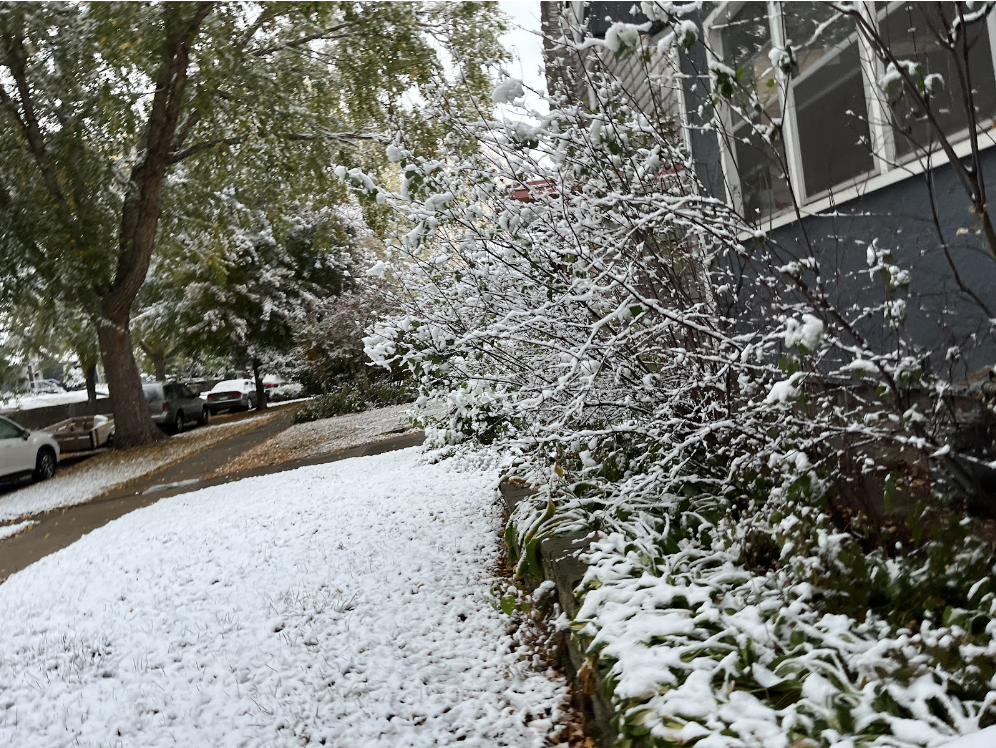
Just a week after November 2nd, a powerful storm occurred. In the Twin Cities, temperatures fell 20º in a span of four hours, reaching a 40º fall after twelve hours had elapsed. Additionally, Warroad received a total of 9.1” of snow on November 10th. 

On November 29th, the Twin Cities nearly matched Warroad’s level of snowfall with 8.4” Many schools in the state were canceled, released early, or had activities canceled. Additionally, transportation for many was delayed as vehicles struggled through the rough, slippery roads.

Next time you think about extreme weather, and the switches from warm to cool within mere days, don’t forget about the part we play in causing it.

Russia and Ukraine 9 months later. What’s changed? 

By: Brogan Frey

Almost 9 months ago, on February 24th, 2022, the country of Russia invaded its neighbor country, Ukraine, starting a war between the two countries. 

For a month or two, this war had captured the attention of the majority of people around the globe, but since then, the war has not been talked about nearly as much, except for in occasional discussions about the U.S. and how much aid it has provided, and how much more it should. 

Other than that, the war has pretty much fallen out of the global spotlight, letting daily news and other global issues fall back into their spots at the top of most news sites. 

Let’s quickly go over some of the major facts of the war that you may have missed in the past few months. 

This war has been called the biggest land war in Europe since World War II, claiming over 32,368 lives to date (according to Ukraine’s Interior Ministry), and the number is almost definitely going to rise until the war comes to an end. 

Another hard to believe number is the 7.8 million refugees from the war. (Data accurate as of 11/15/22) This number, although already big, seems even bigger when you know that the population of Ukraine was around 43.8 million before the war, meaning that 1 in every 5.5 Ukrainian residents has at some point left Ukraine as a refugee. 

Although the war is still ongoing, nearly 4.5 million Ukrainian refugees have since returned to their home country. 

These 2 statistics have been changing constantly since the beginning of the war, but one recent event relating to the war has brought some of the attention back to the warring countries. 

According to the New York Times, the country of Poland said that a Russian-made missile was likely to blame for the deaths of two Polish citizens in an explosion near Poland’s border with Ukraine on Tuesday, November 15th. 

This is the first time a member of NATO (the North Atlantic Treaty Organization) has been directly hit during the 9 month long conflict, at the beginning of which Ukraine was considering joining for the protection from Russia. 

It is not known, at the time of this writing, who fired the missile, or where it came from, but it has been described by the Polish Foreign Ministry as “Russian-made.”

Both Russia and Ukraine have used Russian made munitions during the conflict, which is why no one has been quick to assume where it came from. 

Although the war has been long-lived and taxing, I believe that we need to pay more attention to it as it has had an impact on millions of lives, and can affect many more if this war turns out to last for months or years longer. 

For more information, please visit:

The 2022 US Midterm Elections: Expectations vs. Turnout

By Erin Moore

On Tuesday, November 8th, 2022, the US Midterm Elections took place. How did it go and how did those results compare to what was expected to occur? This article is here to explain just that.

Before I begin, I will note that all the information in this article was gathered from multiple sources from each side (the exact numbers used agreed upon by both Fox News and the New York Times), thus is verified information and holds no bias.

This year, the elections held were mainly for senators, representatives, and governors. Around 86% of the combined number of seats were up for election this year.

Prior to the election, the Senate had a 50-50 split between democrats and republicans. However, the Vice President breaks any voting ties within the Senate, and the current Vice President is democrat Kamala Harris. This number gave democrats a very narrow majority since the last elections were held for (some) Senate seats during the 2020 election.

The House of Representatives also had a narrow democratic majority, with 222 democratic-held seats and 213 republicans, meaning around 51% of the House of Representatives was democrats following the 2020 election.

Additionally, the president elected in the 2020 elections was a democrat (Joe Biden). This means that from 2020 following the election to 2022 prior to the election, the Senate had a slim democratic majority, the House of Representatives also had a slim democratic majority, and there was a democrat in office. 

However, the 2022 midterms looked bad for democrats for two main reasons: party in power and redistricting.

The first is significantly more simple: whichever party holds office typically loses a large amount of their seats. Since the current president of the United States is a democrat, they were projected to lose several seats in these midterms simply because of the party Joe Biden is a part of. 

The second, redistricting, is more complex. Redistricting typically takes place after a census, and it is exactly what it sounds like: the border lines for districts are changed, which typically benefits one of the two major parties. 

The most recent redistricting affected both parties. New Mexico, Illinois, Nevada, and Oregon’s districts were drawn in a way that benefited democrats. However, Texas, Georgia, Ohio, Tennessee, and Florida’s districts were beneficiary for republicans. 

When asked who redistricting would affect more in an interview with NPR, Michael Li, redistricting expert, said, “Republicans have an advantage that I think will play out.”

However, democrats greatly overperformed expectations in both the Senate and the House of Representatives. 

In the Senate, democrats won the majority with 50-49 seats. Georgia will hold a runoff election later, which will determine whether the seats are 50-50 with the vice president as the tiebreaker or 51-49. Either way, the democrats will hold their Senate majority for at least the next two years. 

However, in the House, the republicans have taken control with 218 seats called by various sources and 210 for democrats, with 218 seats needed for control. 

Of the thirty-six governor elections and thirty-four called races, each party has seventeen governors. In Minnesota, our governor will remain Tim Walz, another democrat. 

All in all, the election did not go as expected, and is going fairly well for both parties, with democrats coming out a bit better currently. However, there are still races left to be called. 

Want to learn more? Visit the following websites: 

What is RSV, the third disease in the rumored “triple-pandemic?”

By: Ann McMullen

RSV refers to respiratory syncytial virus. This illness shares some similarities with the flu: they both affect the respiratory system (nose, throat, and lungs) and generally occur during late fall through early spring.

Who does this virus affect?

Anyone can be infected, but RSV is the most common and dangerous in children under two years old.

How do I know if I have RSV? Is there a cure?

The virus often presents itself as a cold, with symptoms such as fever, cough, and congestion. However, it can lead to more severe conditions. In fact, RSV is the leading cause in young children of pneumonia and bronchiolitis – a lung inflammation disease quite similar to bronchitis.

Patients can be tested for RSV, but there is no cure for it and antibiotics do not help treat the virus. Thankfully, it tends to clear up by itself within a week or so.

And, what is this “triple-pandemic?”

Americans are referring to influenza, COVID-19, and RSV as a “tripledemic,” as all three of them are quite prevalent in the United States right now. Flu cases always spike in the fall, but they’re even higher than usual this year. With COVID restrictions now greatly loosened, cases are expected to rise in the coming months. RSV wasn’t much of an issue for the past two years because a large portion of people still wore masks. This year, however, cases are greatly increasing, which is more than likely also a result of the lifting of COVID restrictions and people using less caution towards viruses overall.

To best protect yourself from RSV, the CDC advises that you should thoroughly wash your hands, cover your cough, and avoid close contact with people who appear to be ill.

For more information on RSV and the triple-pandemic, please visit

The Artemis Program: A multi billion dollar pipe dream

By: Reed Morris

Once again, we find ourselves revisiting an old topic. Much like my James Webb articles, this covers space exploration. The difference between the two is the successfulness. 

The Artemis Program is NASA’s newest project, hoping to get humans back on the moon. Conceived in 2010, the Artemis Program had a lot of support and dreamers behind it. It was initially scheduled for its first test flight in 2017, but here we are in 2022 with still no launch. The failures of Artemis and its SLS launch system have created an environment of high costs, short budgets, and many sad space fans like me. 

Where we run into problems

There are multiple issues with NASA’s current dream for lunar inhabitants. First off, we’ll have to cover the issues that are seen on paper. The rocket is NOT cheap. The SLS is a new launch system that is supposed to be able to carry the crew and supplies needed to start a lunar surface base, and a lunar orbital station. While it IS capable of such feats, flying it comes at a sizable cost. It runs off of several RS-25 rocket engines, which cost nearly 150 million dollars to make, for a SINGLE USE engine, in a time when private companies have cheaper multi-use engines. While the SLS is one of the heaviest lifting rockets in existence, its 4.1 billion dollar-per-launch price tag is something that cannot be ignored. 

The second and more severe problem is that Artemis 1 has been delayed over and over again due to malfunctions in the SLS’s overpriced engines. On August 29th, 2022, the Artemis 1 launch was supposed to take place. Before it was sent into space, leaks sprung up in the hydrogen fuel lines. Additionally, sensores stated that one of the four main engines was not cold enough to support fuel injection for launch. These problems were non-ignorable, delaying the launch for another week. When the problem was deemed fixed, it was set to launch once again on September 3rd. Surprise, surprise, it never left the launch pad. 

Similarly to the first failed launch, a hydrogen leak occurred, but this time it was much larger and much more dangerous. Cold liquid hydrogen is relatively stable, but when liquid hydrogen begins to mix with warm Florida air, it becomes gaseous, and VERY dangerous. This explosive hazard was deemed non-ignorable once again and the launch was postponed “to a later date”. 

That “later date” has been announced! Just recently, NASA announced that the new launch date for Artemis 1 is November 14th, 2022.

Hope for the future

While the Artemis program is over budget, riddled with problems, and yet to actually start, there is still hope. After dumping more than 23 billion dollars into a project, there is little chance that NASA will scrap the project. Even if there are more issues on the 14th, there will always be hope for future endeavors.

This can’t be promised, and can’t be stated as a fact, but I will anyway. Man will make it back to the moon whether it’s in the next several years, or the next several decades, the younger generations WILL see humans return to the moon. 

Ocean pollution and how to prevent it

By: Addison Strack

Ocean pollution is a major problem that is greatly affecting the world’s oceans, and this article will give information about how to prevent the issue.

There are two main types of ocean pollution that damage ecosystems in the ocean, and are harmful to the health of organisms in the ocean.

The first type of pollution is called chemical pollution. Chemical pollution is a result of runoff from the use of fertilizer and pesticides on farms, sewage, and more. An increased use of nitrogen and phosphorus in chemicals that end up in the ocean have promoted the growth of algal blooms, which can be toxic to wildlife and humans. These chemicals are also very harmful to ecosystems in the ocean.

The second type of pollution is trash pollution. The main type of trash that ends up in oceans is plastic items, such as shopping bags, beverage bottles and caps, food wrappers, and more. Plastics are the main type of trash pollution in the ocean, because plastic can take 100s of years to decompose, resulting in buildup of these items in the ocean.

Trash pollution is very dangerous to marine life, because they can get tangled in, and digest the trash. When small organisms eat micro plastics, which are very small pieces of plastics, they absorb the chemicals from the plastics into their tissues. When larger organisms consume these smaller organisms, the toxic chemicals then become a part of their tissues. Eventually, micro plastics will then reach part of the food that humans eat.

If we don’t do anything about ocean pollution, there will be multiple negative impacts. One of the most notable impacts would be that if ocean pollution continues, it will accelerate climate change. Mangroves, reefs, and other underwater ecosystems store large amounts of carbon, and because of this, the ocean contains the most amount of carbon in the world. Pollution can destroy these ecosystems, resulting in the carbon being released into the atmosphere, which contributes to climate change.

Ocean pollution also puts marine life in danger, and can lead to extinction and endangerment of underwater species.

There are multiple things that you can do to help prevent and reduce ocean pollution.

Reducing your waste is a major change that you can make in your everyday life, to help prevent ocean pollution. Avoiding singles use plastics, such as plastic bags, plastic bottles, plastic straws, and more will help to reduce the amount of waste ending up in landfills, which could eventually make their way into the ocean.

Respecting the ocean is another thing that you can do. You can do this by fishing responsibly, making sure you don’t litter, and following rules when you are on the water.

Volunteering for beach and ocean cleanups in your community also helps immensely. You could participate in international events as well, such as Global Ocean Cleanup or The International Coastal Cleanup.

As seen above, protecting the world’s oceans is critical if we want to do anything to avoid worsening climate change, and ensure that the ocean will be accessible for generations to come.

If you would like to read more about ocean pollution and cleanups, feel free to visit the websites below:

James Webb achievements

By: Reed Morris

The James Webb Space Telescope (JWST) launched on Christmas Day, 2022. At a cost of over 10 billion dollars, a project of this magnitude MUST have a worthwhile outcome. The JWST has only been operational and in position for three months, but has already surpassed expectations. 

Throughout the launch process, deployment, and calibration, everything went perfectly. All 300 some single points of failure deployed without issue, and the telescope was finally up and running by July of 2022. The first set of images was released on July 12th, showing the world what NASA’s bleeding edge technology could do. 

The first image released by NASA was a much more advanced and detailed version of Hubble’s deep field. The deep field is pictured below.

While this picture might seem like any other picture of space, it contains some of the most spectacular sights in our known universe. This image contains the farthest intergalactic objects humans have ever observed. It also shows many instances of gravitational lensing, where massive galaxy clusters warp space enough to bend the light from galaxies behind, to amplify and focus their light. 

This deep field is fascinating in many ways. First off we have to talk about its size. While this image seems large, the area that Webb viewed to take this picture was roughly the size of a grain of sand held at arm’s length. Another very interesting aspect about this deep field is the time it took to capture the image. While Hubble took weeks to capture a lesser deep field, James Webb took just hours to capture the spectacular image pictured above. With that sort of efficiency and processing power, the future of space exploration is in Webb’s pocket. 

One of the most important aspects of Webb that I mentioned a lot in my previous article is its ability to peer back in time further than we’ve ever dreamed. While we currently live just around 14.5 billion years after the theoretical Big Bang, the above deep field displays light captured back to under 1 billion years after the Big Bang. Webb’s large mirror and intense infrared capabilities allows us to view the warped and stretched light that has been traveling for eons through cold empty nothing, just to be absorbed by Webb’s censor and displayed in the spectacular deep field. 

As Webb continues to explore deeper into space and further back in time, keep an eye out in the news and here for further exploration into the James Webb Space Telescope’s achievements and discoveries. 

NASA hit an asteroid with a rocket. Why? 

By: Brogan Frey

On Monday, September 26th, 2022, at 6:14 pm Central Standard Time, a rocket launched by NASA on November 24th, 2021, made impact with an asteroid named Dimorphos. NASA has been planning this mission for years. 

The first thing NASA wants everyone to know is that this asteroid was no threat to earth, and it has not become one after this mission. This was a test to see if we can, in fact, redirect an asteroid by crashing into it, in preparation for a possible doomsday situation, like ones seen in movies like ‘Armageddon’ and ‘Don’t Look Up.’ There is no threat to earth from any asteroid at the moment. 

This mission was conducted by the Planetary Defense Coordination Office (PDCO), a NASA department. The mission was nicknamed “DART,” which stands for Double Asteroid Redirection Test, and was one of the first for the PDCO. 

When the rocket was just 19 minutes away from impact, scientists could finally see the moonlet Dimorphos for the first time. A moonlet is an object that has enough gravity to affect the dust and ice around them, but isn’t large enough to be classified as a moon. 

It will take a few weeks for NASA to tell if this mission actually had an impact on the direction of the asteroid, because this asteroid is over 7 million miles away, and it has a large orbit, so it will take a bit of time to notice any differences in the orbit. 

Before the crash, Dimorphos took about 11 hours and 55 minutes to complete one orbit, and this is expected to go down just a little bit. Even though we don’t know yet how much this affected the asteroid’s orbit, scientists are expecting the crash to shorten the asteroid’s orbital period by about 10 minutes. 

The asteroid weighs about 1.1 billion pounds, compared to the rocket’s 1200. It may seem too small to have any impact, and it sure does seem that way. Says NASA’s Elena Adams, “It’s basically like throwing a tennis ball at a 747 (airplane). If it goes fast enough, you’re gonna move it.” And this rocket certainly moved fast. It was going about 14,000 mph before crashing into the asteroid.

Overall, I think NASA is smart for testing this because there may be a day where we need to crash a rocket into an asteroid to stop what could be a catastrophic disaster. Because, although asteroids don’t crash into the earth every day, it has happened before, and being prepared is always ideal. 

For more information, please visit:

Its the end of the world as we know it

(Yes like the R.E.M. song)

By: Reed Morris

All around the world, we are facing disastrous natural phenomena. The magnitude of these events seem as though they are straight out of Hollywood movies. Here is a compilation, and explanation, of some of the most major events from the late summer of 2022.

To kick off the month of August, a major flood in Kentucky had a rising death toll, passing 37 on August 2nd. In the wake of the flood, lay 12,000 powerless homes, empty schools, and millions of dollars worth of damage to local infrastructure. There was a frantic mass exodus which saw excessive looting.

Because of these factors the state was put under curfew and was essentially locked down for a short amount of time. Intervention by the federal government was eventually deemed necessary, and Biden sent federal support to Kentucky to assist localized teams of rescuers and national guardsmen in the evacuation process. 

Another case of these extremely strange and sometimes deadly weather phenomena is the case of coasts, East vs West.

Recently, at least, the US has seen an increase in extreme weather. This year was the first time we truly realized how intensely different weather can be from one side of the country to the other.

In August and September of 2022, the west coast of the United States was under extreme stress from the absurd heat that it was experiencing.

Temperatures in LA flew into the triple digits. People were asked to turn off their lights and stop using electricity to try to keep the power grid alive. With everyone living in intense heat, the power grid was struggling immensely to support the AC units needed to keep the entire population cool.

Now, we move to the east coast. For almost a month straight, during August, there was torrential rain, hail, and flooding. A direct example of this is what happened to Kentucky, as mentioned before.

We usually think of our country as better than most, but when it comes to the wrath of the sky and earth, everyone is equally powerless.

The largest of these recent natural disasters struck the Middle Eastern country of Pakistan.

While American students begrudgingly returned from their summer vacations and turned back to a life at school, children and families in Pakistan were struck by a much worse predicament.

An excess of water struck Pakistan seemingly out of nowhere. With the countries fluid infrastructure not being modern, it was quickly overrun by the extreme load. Dams lost function, levees broke, and the agricultural artery of Pakistan was its ultimate demise.

Where this really becomes truly shocking is the number of real people that have been displaced by the disaster. Over 30 million Pakistani residents have been forced to move, and over 600,000 have been forced into relief camps. One third of the country’s population is in a dire situation. This is terrifying, but it’s just the beginning.

Deadly weather phenomena are something we as a species must learn to overcome. The only issue is, we don’t know how to. Natural disasters are like our planets version of a check mate. There is nothing we can do to stop it when it happens, we can only plan to make it more difficult for our opponent to get us into that position.

This is where I must bring up global warming. We are simply not doing enough to avoid the horrendous fallout our species has laid unto ourselves. I am not going to pretend to be an atmospheric fluid dynamic professor, or a well spoken well researched activist. I’m just someone who has noticed a problem and feels that not enough people are addressing it.

At the end of the day, there’s not much we can do as individuals. The only chance we have is by operating together. Writing legislation and finding new ways to do what needs to be done without killing this planet that has so graciously allowed us to thrive.

For more information, please visit: