It’s 2024, meaning we get to have an extra day in February this year. February 29th only occurs once every 4 years, making it the leap day. This rare day has different types of traditions and superstitions surrounding it, so here are some beliefs and practices about the day that you may have heard of.
February 29th is sometimes called Ladies’ Privilege, which comes from an Irish legend about women having to deal with men being too slow to propose. So, Saint Bridget made a negotiation with Saint Patrick that once every 4 years, women would be allowed to propose to a man on the 29th. If he rejected, he’d have to financially compensate her.
Febuary 29th is considered to be an incredibly unlucky day in European superstitions, the Scots believed that those born on the 29th were doomed to be sickly and go through suffering, and Germans believed that leap years in general were entirely void of luck. In Greece, it’s also believed that the 29th is cursed, and those who got married during leap years would certainly divorce.
My own birthday is on Febuary 29th, but I don’t think I myself am a particularly unlucky person. I mean, I can remember a few weird things, like the odd increase in evil clown attacks in 2016, causing the president of the WCA (World Clown Association) to be upset because people were giving the nice clowns a bad reputation. In 2020, COVID was hitting the population and there were mandated quarantine and distancing, and now currently in 2024 there’s an approaching threat of a government shutdown.
But, to be fair, major events happen in many years so there’s no real proof these things are because of a leap year curse of sorts. I hope those reading this have a healthy and safe rest of 2024 and years to come.
Now that we are approaching the holidays, everyone is in the holiday spirit, and they are preparing themselves for the happiest time of the year. We celebrate Christmas, but there are other holidays that are also being celebrated at this time. It is important to recognize and learn about different holidays and their traditions, so that you can understand how and why people celebrate the holidays they do. In this article we will be covering some different winter holidays, and their traditions.
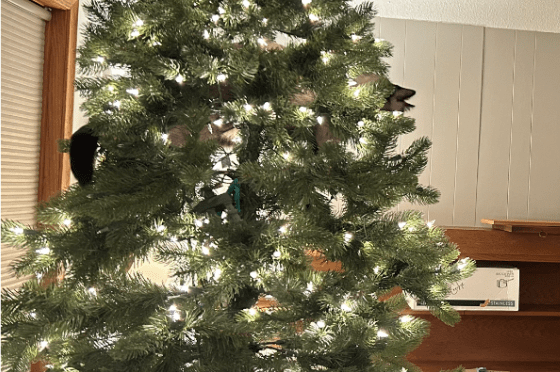
The first holiday we will be covering is Christmas. This is a holiday we celebrate, and it is our favorite holiday of the year. One of the most important aspects of Christmas is the Christmas tree. Every year in December, Christmas tree farms are filled with people who are in search of the perfect Christmas tree. Once the best tree is found and taken home, people will decorate it with string lights, ornaments, and a star.
Another huge tradition that is practiced on Christmas is gift giving. People buy gifts for loved ones to be opened on Christmas Day, to show how much they appreciate them. Gifts slowly fill underneath the Christmas tree creating more and more excitement for Christmas Day.
A third tradition that many young children participate in is leaving out cookies and milk for Santa on Christmas Eve. Young kids are filled with anticipation and excitement waiting for Santa to leave them gifts, and of course they need to return his favor, by giving him some fuel to finish his long journey around the world. These are only three traditions that many people participate in on Christmas, and there are so many more.
New Years is another holiday that brings a lot of excitement to the winter season. This holiday is celebrated worldwide and marks the start of a new calendar year. Traditionally, the celebration starts on December 31st and continues into the morning of January 1st.
Many people write New Year’s resolutions which are goals that they want to attain or achievements they want to make within the coming year. New years is the start of a new beginning for lots of people and it’s almost a reset or a refresh where people can start up new things or start over on things they need to try again.
One of the main New Year’s traditions in America is the countdown to midnight and then the New York Times Square ball drop. This period of counting down is also a way of saying goodbye to the past year and remembering the memories that happened. It is also a way of preparing for what is to come in the future.
Many different cultures celebrate this holiday differently while doing traditional things that will provide them with good luck and good fortune for the new year. Some of these include lucky grapes in Spain, smashing plates in Denmark and eating black eyed peas in the Southern US for good luck.
Hanukkah is a Jewish holiday that is celebrated from December 7 to December 15 this year. Hanukkah is celebrated by lighting a menorah, which is a nine candle holder. On each day of Hanukkah a candle is lit.
Religious rituals are also a way that people celebrate Hanukkah, for example many people will do daily readings of Scripture.
A third tradition is gift giving. Many families will exchange a gift each night of Hanukkah, and these gifts are often smaller thoughtful gifts.
Throughout the winter season, there are many holidays and traditions that families and individuals can look forward to all over the world. These three holidays are only a few examples of what a lot of people celebrate during this time. These holidays all include fun, giving and thoughtful routines that have been developed for centuries and will continue to be practiced for many generations to come.
According to an article by UUF.UK, the top 10 most endangered animals include the following:
Number 1: The Javan Rhino.
This rhino used to be found throughout South-East Asia. There are only around 75 of these rhinos left. Because they are so low in numbers, they are one of the rarest rhino species. Reasons for their decline include: habitat loss, and hunting.
Number 2: The Amur Leopard
There are about 100 Amur Leopards left in the wild. Because they are only found in a small region in the far east of Russia and north-eastern China, they have been critically endangered since 1996. Some threats that Amur Leopards face include: habitat loss, prey scarcity, and fragmentation (meaning they are spread far apart geographically).
Number 3: the Sunda Island Tiger
Also known as the Sumatran Tiger, they are the smallest tiger species: they weigh up to 140kg. These tigers are only found on the Indonesian island of Sumatra. There are only about 600 of these tigers left in the wild. Some things contributing to their population decline include: habitat loss, and the expansion of the human population.
Number 4: the Mountain Gorilla
These gorillas live in a landscape belonging to Virunga. The area they live in has a history of being politically unstable. Because there are already over 500,000 people living near the mountain the gorillas live on, it would be more harmful if more humans were to move there. They have a population of just over 1000 in the wild. The Mountain Gorillas have been doing better thanks to the conservation efforts and other help from through the International Gorilla Conservation Programme.
Number 5: the Tapanuli Orangutan
The Tapanuli Orangutan are the most endangered great ape species, with only 800 living in the wild. They live in a tropical environment. Unfortunately, the Tapanuli Orangutan have suffered from losing over 40% of their forests in the province of North Sumatra from: mining, agriculture, hydroelectric and geothermal development.
Number 6: the Yangtze Finless Porpoise
Back in 2018, there were still around 1000 of these porpoises in the wild. But because there haven’t been any sightings of these porpoises in a while, China moved them up to “first level protected” in 2021. Things that have impacted their population number include: water pollution and overfishing.
Number 7: the Black Rhino
Most Black Rhinos live in Kenya, Namibia, South Africa, and Zimbabwe. Their biggest threat is poaching; they are killed for their horn. Poachers kill them then take their horn for illegal horn trade. Over the last 10 years, almost 10,000 rhinos have been killed.
Number 8: the African Forest Elephant
Like the Black Rhinos, the biggest factor contributing the their population decline is poaching. Some other factors include: habitat loss and agriculture. Today, these elephants only take up about 25% of their original habitat space. People don’t actually know how many of these elephants are left, but they think that over the last 31 years, their population might have declined by about 86%.
Number 9: the Sumatran Orangutan
There are less than 14,000 Sumatran Orangutans left in the wild. They are critically endangered and deal with threats like: agriculture, logging and plantations. These apes have lost about 60% of their habitat between the years 1985 and 2007.
Number 10: the Hawksbill Turtle
Their population has decreased by at least 80% in the last 30 years due to: nesting habitat loss, illegal trade of their shells, accidental capture in fishing gear, plastic pollution, and climate change. People think there are about 20,000-23,000 of these turtles left in the wild
Animals play a very important role in the environment; they help keep a balance in the ecosystem. Remember, it is important to respect these animals because as they are important to the environment, they are also important to us. Hurting them may also negatively impact humans.
Hanukkah: Hanukkah is a Jewish holiday that is usually celebrated in December. Hanukkah is the celebration of the redecoration of the second temple of Jerusalem by lighting candles on every day of the festival. Jewish people light one candle for each of the 8 days of Hanukkah. For more information about Hanukkah, please visit: https://www.britannica.com/topic/Hanukkah
Christmas: Christmas is a Christian holiday that happens on December 25 every year. This holiday is in celebration of Jesus being born. Christians celebrate Christmas by setting up trees, giving presents, and going to church. Christmas music is super popular. In December you can go onto any radio station and find some sort of Christmas music. For more information about Christmas, please visit: https://www.rd.com/article/christmas-on-the-25th/
New Years: This is the celebration of the next year starting and the previous one ending. There is a huge party in New York City. A lot of people stay up until midnight to celebrate with family and friends. People write New Year’s resolutions which are things you want to do better the next year. For more information about New Years, please visit: https://www.history.com/topics/holidays/new-years
Kwanzaa: Kwanzaa is an African American holiday founded by Dr. Maulana Karenga, that is a nonreligious holiday that focuses on history, family and culture. Each day people light a candle to symbolize the meaning of the day. For more information about Kwanzaa, please visit: https://www.officialkwanzaawebsite.org/
St. Nicholas Day: St. Nicholas Day is a day to celebrate St. Nicholas who was a bishop in present day Greece. He loved to help the poor by giving them money. He is the inspiration for what we now call Santa. People celebrate St. Nick’s Day by leaving their shoes out and then the next day wake up to find them filled with little presents. St. Nick’s Day is celebrated on the 6 of December. Another way to celebrate St Nick’s Day is little acts of kindness because he was always kind to everyone he met. For more information about St. Nicholas Day, please visit: https://www.dynamiccatholic.com/advent/about-st-nicholas.html
Las Posadas: This is a Christmas festival celebrated in Mexico and other Hispanic communities. It starts on December 16 and lasts 9 nights. The children celebrate by having piñatas filled with candy. The children go to every inn in town looking for a place to stay and when they find one with room for them they break the piñata and celebrate. For more information about Los Posadas, please visit: https://mexicratecandy.com/blogs/blog/las-posadas-and-other-mexican-holiday-traditions-you-should-know
“Dre-del, dre-del, dre-del, I made you out of clay” is a song known by many. The lit menorah and latkes are loved across the world. People know these things as the celebration of Hannakkah but why is Hannakkah the only Jewish Holiday you may know?
Hannakkah is a Jewish holiday, celebrating the miracle of light! It takes place in early winter but dates vary because it follows the Hebrew calendar. In smaller communities all around the world Hannakkah is celebrated but why do we hear of this Jewish holiday more than anything else?
In Judaism Hanukkah is not a major Holiday; in fact it is not even written in the Torah (Jewish Holy Script). Hanukkah celebrates the story of the Makkabes taking place in the 160s BCE. The Makkabes had fought two battles and returned to their temple to reclaim it from the Greeks. When they got there they found the eternal light out (a never ending flame) and found only a singular jar of oil left to light the fire. A messenger was then sent to buy more oil and on the 8th day when he came back, the singular jar of oil was still burning, thus creating the miracle of light. Today Jews celebrate this story through lighting menorahs, symbolizing the eight days of lasting oil.
The holiday is well known by society because Christmas falls at around the same time every year. In every location aside from Israel, Jews make up a very small population of where they live and over time have acculturated into some of the traditions of the religions around them. For example, Jew’s gained the tradition of giving presents on Hanukkah from the celebration of Christmas.
Due to both Christmas and Hanukkah falling around the same time every year, stores started supplying decorations for not just Christmas but Hanukkah too. This was because there was money to be made, which opened people’s eyes to more cultures on the store shelves. Target, for example, sells both Christmas and Hanukkah decorations in the same area allowing customers to look at every sale as they shop.
Hannakkah is also known and loved for its traditional foods. Gelt (Yiddish for money) is a classic win in a Dreidel game. The only difference for the traditional meaning of gelt is that it’s chocolate money, not real. Sufganiyot are also very popular! They are jelly filled donuts eaten for dessert. While these are both popular foods, the most well known would have to be latkes. Latkes were originally a Polish dish before being taken on by the Jews, and are known in America as potato pancakes. A common thread you may have noticed is that two of these three foods are fried, which quite in fact has a purpose. To symbolize the miracle of oil, many Jews fry foods on Hanukkah to celebrate!
What causes people to dream? There is a theory that dreaming helps you consolidate and analyze your thoughts. According to HealthClevelandClinic.org some people see dreams as a way to “rehearse” various different situations and challenges that a person can experience during the daytime.
Dreams occur during the REM (rapid eye movement) cycle. During the night you cycle through this stage periodically. Studies show that someone’s brain waves during their REM cycles are almost as active as they are when they are awake. The forebrain is what generates the dreams but the brain stem is what generates REM sleep. If your brain stem is damaged then you will experience dreams but not go into REM sleep. But if it is flipped the other way, and your forebrain is damaged, then you won’t dream but you will go into REM sleep.
It is believed by experts that dreams can stem more from your imagination than from perspective. People living with post-traumatic stress disorder are more likely to experience nightmares when they are sleeping.
Most people dream every single night but they often don’t remember it every time. This is because you will be more likely to remember your dreams if you are awakened during, or just after, the dream. If you write down what you remember of your dream as soon as you wake up, that can help you start to remember them.
There is no good way to study dreams in people, simply because of the fact that the memory of the dream can fade so quickly. However, scientists believe that the relationship between space and time changes when you dream. During a dream, time may seem to last for a very long time or pass very quickly.
The neurotransmitters, or brain chemicals, is something that can have to do with the reasoning behind why dreams can be so strange sometimes. During REM sleep some neurotransmitters can be more pronounced while others are suppressed.
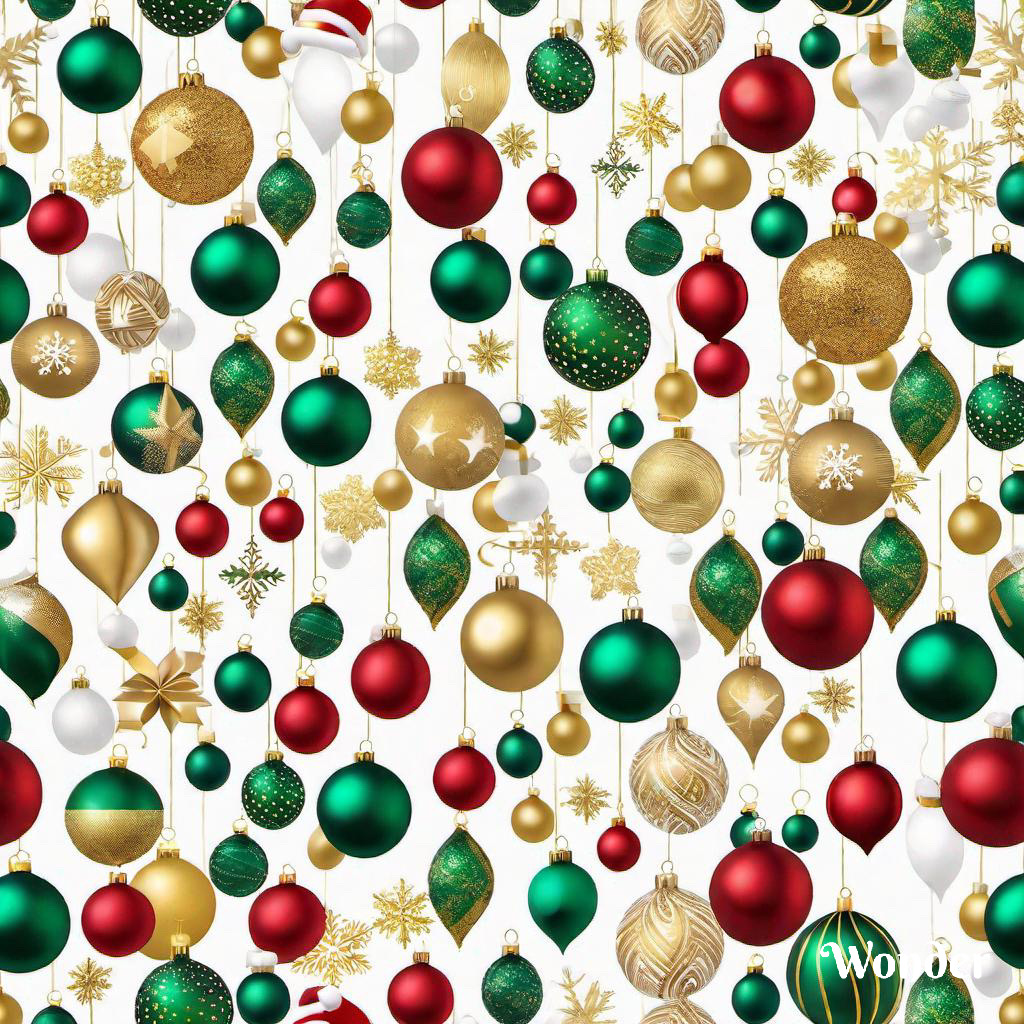
Christmas tree ornaments are more than just decoration. They can be symbols of love, or memories, and everything Christmas is about. So, next time you decorate the tree, you can remember each ornament has its own bit of Christmas mood.
First, the colorful glass ball ornaments are very common. Each color can have its own meaning too. Red is love, gold is wealth, and blue, is good health. The orbs are often colorful and shiny reflecting the bright lights on the tree. You can get them in every possible color and they bring the rainbow to Christmas.
Second, we have stars that top the tree. The star is a commonly used topper to the Christmas tree because it just finishes off the looks of the tree. It also shows love and kindness.
Third, tinsel garlands have been used for Christmas trees for a very long time, but they aren’t really an ornament, Their glittering rope makes them a really cool part of our tree though. Tinsel garlands shaking inside with the indoor breeze makes it look like the winter’s frost, bringing the season’s chill indoors as part of the Christmas spirit.
Fourth, are the candy canes. The red and white swirl is very classic at Christmas time. They are originally from the 17th century but these hooks are straight sugar and have been used in Christmas trees so many times. Candy canes have a sweet peppermint flavor and they give you a taste of Christmas. They’re also a fun addition, bringing back memories of Christmas baking and warm kitchens.
Finally, we’ve got family or personalized ornaments. They are normally anything from a paper snowflake made in kindergarten to a custom ornament with an important photo. They tell the story of something really big and bring lots of emotion to the tradition. Personalized ornaments are special hand me downs or heirlooms. The stories that the ornaments carry can remind people of old Christmases imprinting the personal moods and growth in the winter season.
Why did our ancestor fruits look so different? What did they look like? And what made ancient fruits transform into what we see and eat everyday?
When you go to the grocery store and you purchase some fruits for your next meal did you know that it took around 10,000 years of history to make it look like how it looks today? But how?
Selective cultivation has been a method to change our fruits to make them more tasty, colorful, and bigger.
For example, eggplant was named after the appearance of the egg shaped fruit when English speakers first discovered it, and it had more of a bitter flesh. But through selective breeding, it has transformed into a bright purple, less bitter, fleshy fruit.
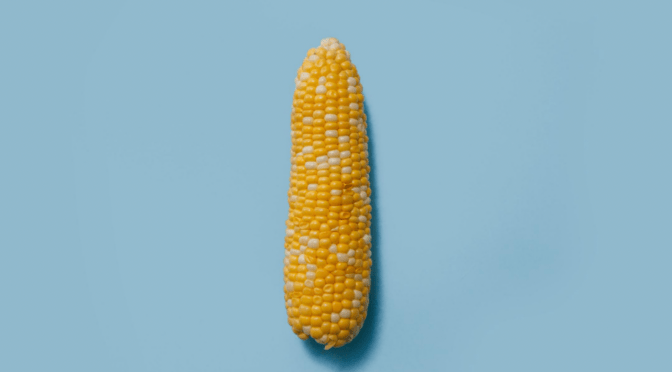
Did you know around 10,000 years ago in Mexico, people took the very first step to domesticate maize (corn). They did this by choosing which seeds to plant, and some were better than others, so they saved the better seeds for the next season’s harvest, and this is how corn has been selectively bred.
There has been a problem that occurred because fruits have been too sweet. For example, zookeepers have been feeding red-pandas and monkeys a fruit centric based diet to mimic their natural wild diet. But it has been discovered that the fruits were too sugary for their diets. The animals’ diet has been changed to a more healthier diet. But this implies that our fruits have been modified to the point that certain animals cannot eat them as they would damage their health.
“Some fruits, such as plums, have almost double the soluble sugar content than what they would have recorded 20 years ago,” said Ranadheera according to the Weather Channel. Which means that in this period of time fruits have been more modified because of improvements in technologies.
Fruits being modified have been the usual for us humans. It has been dated back to 8,000 BC. Today’s fruit have a very long history of small changes to make them bigger, tastier, and more colorful to satisfy our own pleasure.
As stated by Learn.Genetics, “Minor changes to influential genes can produce rapid evolutionary changes.”
Thanksgiving is a national holiday that takes place on November 23rd, and is celebrated mainly in the United States and Canada to celebrate the blessings of the year. According to Britannica.com, Americans believe that Thanksgiving is celebrated because it represents the 1621 harvest feast that was shared between the Wampanoag people and the English colonists known as pilgrims. It is also celebrated to give honor and show respect to the Wampanoag people for their support. Canadians though, believe that Thanksgiving has been celebrated in their culture since 1578, because of an expedition by Martin Frobisher in which he gave thanks for his safe voyage. In both countries, Thanksgiving is celebrated to share a meal with loved ones and be thankful for each other.
It takes place in the fall and this overall represents how it’s celebrated, mainly with pumpkin flavored things. Family’s decorate their household with pumpkins, leaves, and turkeys, along with colors such as yellow, orange, brown and red. The decorations provided with Thanksgiving make the feel of it a lot more comfy. Thanksgiving is also, for some people, the last day to celebrate fall, since almost a month later is Christmas, which many people love to start celebrating as soon as possible.
On Thanksgiving day, many traditions are celebrated such as the large meal that is shared and gathered with family members. The food provided on Thanksgiving is supposed to represent a feast. Foods such as turkey, pumpkin pie, ham, mashed potatoes, cornbread, vegetables and much more are usually provided, although it varies in each family.
In my household, everything on Thanksgiving is shared, which usually means my grandfather cooks the turkey and my grandmother makes mashed potatoes and pies. This is done in my household because we all provided something for dinner which makes us all more thankful for each other. Along with that, family members that live in other states and countries come to visit to spend time for Thanksgiving.
Not only on Thanksgiving is a meal shared, but family members also gather together to watch football. Usually on Thanksgiving, there’s many football games and especially in America, football is very important. In my family football is always being watched, so on Thanksgiving there’s a tradition to wear jerseys with fall decorations on them. Thanksgiving is special in my family because we love to cook and be together.
There’s many things about Thanksgiving that make it special. Gathering with loved ones to eat favorite and delicious foods, while being thankful for each other creates a special feeling for people. It gives people a moment to relax with family and friends.
Día de los Muertos is a celebration that happens every year on November 2nd. This celebration is most popular amongst the Hispanic community. Día de los Muertos is a celebration and remembrance of the life of loved ones. This tradition originates from Mexico, from the Aztec ancestors.
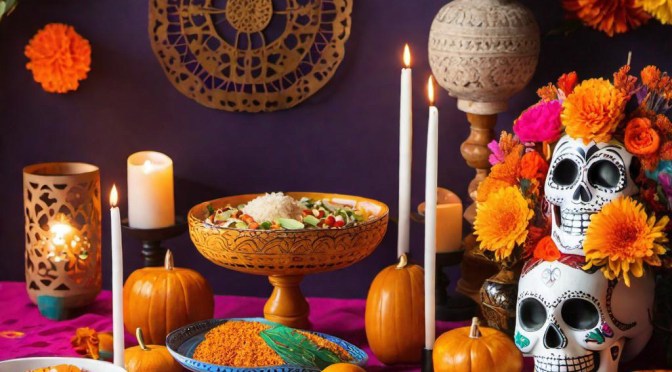
One of the most popular ways to honor and remember a person is by making them an ‘altar’. An altar is a decorated table with pictures of dead loved ones. These altars are usually decorated with things that the dead once enjoyed; it can consist of foods, books, and drinks.
Another way that people decorate these altars is by putting colorful candy skulls. Another thing you may notice in an altar are non edible skulls also known as catrinas and catrins.
A flower that is very popular in these altars are the golden marigolds. Usually people create small paths with the petals of these flowers to help guide the loved ones to the altar.
Another popular thing in these altars are lighting candles, with some even believe that the candles are a way to communicate with the dead.
Lastly, one of the things that is not often used here in the US but in other countries, music. People play their favorite songs to the dead, some even go to graves and take what is called a “mariachi’ or ‘banda’ to play them live music.
In Mexico, where this is more popular, the altars can stay up for weeks. Here in the US, it is not as common to see the altars up for that long. The longest an altar stays up for the public is only for a week.
This tradition is not only for the Hispanic community but for all. Many around the United States have taken up this tradition in remembrance of their loved ones; this even includes pets! Dia de los Muertos is sometimes confused with something evil, but not to worry, as once again this is only to celebrate and remember the life of ones who have passed.
The Official Online Newspaper, Literary Magazine, and Video News of the Highland Park Scots