
By: Jannely Gomez Pacheco and Yalecxy Hernandez Lopez
Category Archives: Events

A history of Halloween
By Hannan Mohammed
Today, Halloween is known as a holiday for people to dress in their scariest costumes and go door to door trick-or-treating, asking neighbors for candy to take home with them. Some people may even carve pumpkins into jack-o’-lanterns to celebrate the holiday. But, how did Halloween and its ways of celebrating it come to be, and what was this holiday originally?
Sanhaim
Originally, the holiday of Halloween was known as Sanhaim, a pagan festival celebrated by the Ancient Celtic people. According to an article by BBC, this festival was celebrated about 2,000 years ago, usually on November 1. This was also the first day of winter for the Ancient Celts, and so this festival was also seen as an important transition in the year. According to the World History Encyclopedia, this holiday may have even represented the Celtic New Year.
This holiday was seen as the day in the year where a gap between our world and the spirit world was open, so that the spirits of the dead could cross over into our world. And, according to the World History Encyclopedia, these spirits could pass freely through to the human world and be either good-natured or harmful.
To celebrate this festival, the Ancient Celts would wear their own sort of costumes made from animal skins and heads, a little similar to what we would wear today, and priests (called ‘druids’) would light large bonfires to offer animal sacrifices.
Hallowed Evening
Over time, the popularity of Sanhaim spread across Europe, becoming especially well-known in Ireland. However, Christianity was also spreading by the 5th century, and one way that the Catholic Church attempted to convert the Celts was to incorporate pagan holidays into their calendar.
To do this, All Saints’ Day was moved to November 1 by Pope Boniface IV in the 7th century, incorporating elements of Sanhaim into the holiday. Because of this, the day before became known as the ‘Hallowed Evening’. As the centuries passed and All Saints’ Day became more widespread, this name was shortened to Halloween, and more traditions that we associate with the holiday today became more prominent:
Carving Pumpkins
The holiday tradition of carving pumpkins to create jack-o’-lanterns came from Ireland, centuries ago. Using turnips rather than the pumpkins we use today, Irish people would carve scary faces into the turnips in order to ward off a spirit called Stingy Jack.
A famine in 19th century Ireland forced the immigration of millions of Irish people to the United States, and they brought this tradition with them, making this Halloween activity more well-known. Over time, pumpkins became more widely used as they were easier to carve than turnips.

Souling
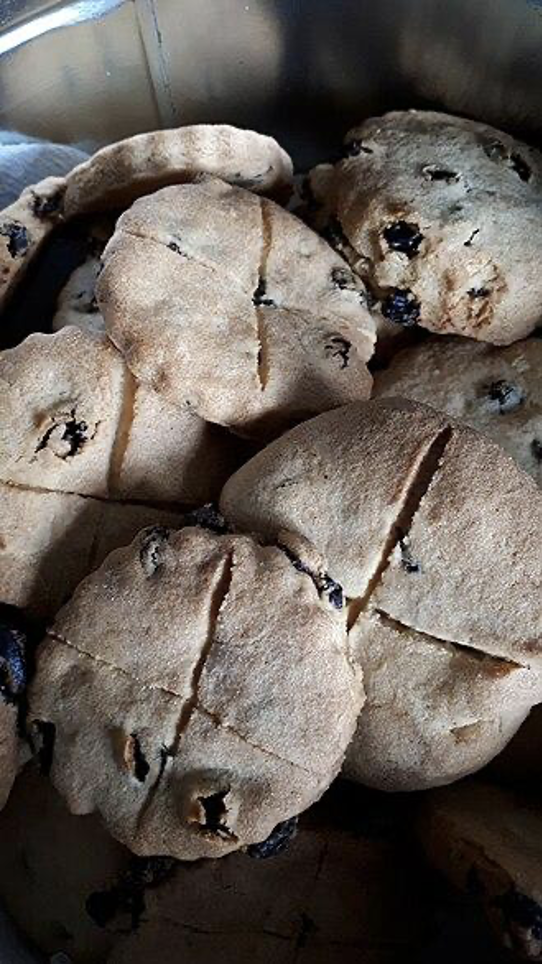
Trick-or-treating used to be an activity called souling, and it originated in medieval England as a tradition to take part in on All Saints’ Day. To participate, people would go door to door exchanging prayers for food. By the Victorian era, the food that was most often exchanged was a pastry called a ‘soul cake’. Today, people often exchange a greeting of ‘Trick-or-treat’ for pieces of chocolate and candy.
Conclusion
Overall, the holiday of Halloween was first celebrated by the Ancient Celts as the festival of Sanhaim, and the holiday was incorporated into the Catholic calendar as the ‘Hallowed Evening’. Over time, the spreading popularity of this holiday and other traditions such as souling and carving turnips and pumpkins turned this into the Halloween that many people celebrate today.
For more information, please visit:

Nationwide walkout
By: Siri David

On July 27th, at Annunciation school, Minneapolis Catholic school students were sitting in the pews of church during mass. Sitting outside of the windows was 23-year-old Robin Westman. Once mass started Robin shot through the window. Robin killed 2 kids and injured 19 other people. Robin shot a total of 116 rifle rounds. After Robin did this he then shot himself. Robin had attended Annunciation and was always known to be quiet and reserved to most people; it seemed he didn’t like school.
This shooting was heart breaking. Over the past decade school shootings have become a lot more common. They are the leading causes of death right now for teenagers and children. In 2025 there were a total of 90 incidents of gunfire on school campuses. It has become a nationwide issue that our schools need to be better protected and that kids should feel safe within their place of learning.
The shooting at Annunciation helped start the idea of doing a nationwide walk out. This walk out was put together by an organization called Students Demand Action. The organization used social media platforms to spread the event. Most schools had a club within their school that organized everything for them. Highland had our school’s Good Club organize the event. This club is led by three members who brought together Highland students by posting all over their social media.
The walk out lasted around an hour and a half. We met up with students from two other private schools (CDH and SPA). There were over 100 kids who were participating from Highland.
The whole goal of this walk out was to raise more awareness to the fact that students don’t feel safe in schools, and that gun violence is affecting our day to day life and whether students feel safe in school or not.

Highland’s 2025 Chinese New Year’s most significant performances
By: Jooney Freddieson and Aalovely Lor
Chinese New Year is one of the most important traditional holidays in Chinese culture.
It is typically between the end of January to mid February and in 2025, Chinese New Year was from January 29th to February 12th.
Every year, Highland Park Senior High School students and teachers celebrate Chinese New Year by performing dances as well as singing and showcasing a play.
( 舞獅 ) Lion’s Dance performed by Julian Falk & Liam Hefferan

The Lion’s Dance is not just a performance but it is a cultural tradition that traces all the way back to ancient China; evolving through each generation.
This dance is significant because when the lunar new year comes around the celebration is intended to ward off evil spirits.
The Lion’s Dance is not only filled with vibrant colors, but it is followed by loud noises, energetic music, and bright lights.
The lion represents a symbol of power, courage, good fortune, and protection in Chinese culture that chases away negative energy or “Nian”.
“Nian” is a mythical monster known to attack villages and leave negative energy in the beginning of the lunar new year, according to Kpbs.org. Which is why the Lion’s Dance is typically known to be performed at the beginning of the Chinese New Year event.
The monster is known to be scared of loud noises, bright lights, and bright colors, which is why the Lion’s Dance is a great tool to chase the monster away.
During the performance the dance was accompanied with loud drums played by two students, symbolizing the terrifying loud noises to scare away “Nian”.
The dancers mimic the lion by swaying, leaping, shaking, often in a playful manner. This adds an element of humor which entertains the audience.
It was cool to see how the music followed the lion’s movement as it got faster and slower.
Our favorite part of the dance was when the lion came close to the audience and interacted with them. The interaction between the lion and the audience created, and added, a more humorous atmosphere.
The Legend Of The White Snake was performed by Highland’s Chinese Immersion 11 class!

Their play gives us insight into the old Chinese folktale about an ancient white snake who transforms into a beautiful woman before quickly falling in love with a young man.
Despite getting married, he was still unaware of her true form until a monk told him he wasn’t married to a human being; he was married to a snake.
The young man gives his wife wine which transforms her into a big white snake, causing the man to die from shock.
Even though her husband had played that trick on her, she still revived him with her own potion. Once awakened, he realized she was still the person he always loved, someone who’d never do him wrong.
The significance of the Chinese Immersion 11 class reenacting this folktale is that the new year is the year of the snake.
They executed this play perfectly by bringing up beautifully painted sets and a perfect script in between the mix of humor and accuracy.
One highlight from the play was the humorous switch when she turned into the big white snake. The crowd was definitely excited to see the wife go backstage and switch out with the masked snake.
Our favorite part of the play was when the white snake was battling the monk and his two guards for her husband back after he’s been locked up. The music in the background played a comedic role in the fighting; intense but random.
Here is the amazing Chinese Immersion 11 class!


‘Girlhood (it’s complicated)’
By: Kumari Wijetunge

‘Girlhood (it’s complicated)’ is an exhibit that you can see at the Minnesota History Center that will be up from September 7, 2024 to June 1, 2025. This is an extremely well put together and powerful representation of the impacts made by women throughout history with themes like education, fashion, work, and politics. The exhibit explores how girls over the years have navigated growing up in a society that underestimates our voices and abilities.
The exhibit counters traditional narratives of girlhood by highlighting the struggles and complexity of girls’ lives. It emphasizes that being a girl is much more than society paints it to be but instead involves navigating multiple roles and identities. Through a collection of over 100 historical artifacts, personal diaries, and interactive displays, ‘Girlhood (its complicated)’ shows how girls have contributed to society in significant ways, often breaking down barriers that were set before us.
One of the main themes of the exhibit is girls’ access to education and how it has evolved over centuries, with many girls fighting for the right of education. The exhibit shows the historical struggle and the events that led to girls and women securing educational opportunities.
The work of girls and young women is also shown in the exhibit and how they balanced family responsibilities like chores with personal ambitions and activism. Artifacts like clothing, diaries, and toys highlight the way girls have navigated their roles in the household and beyond.
‘Girlhood (its complicated)’ also features an exclusive section dedicated to girls and women in sports, specifically basketball. This part of the exhibit showcases the growth of women’s sports and the stories of female athletes who empowered others. Through photographs, personal stories, and trophies, visitors can learn about the history of women’s sports and the ongoing fight for equality.
Throughout the exhibit visitors reflect on their own experiences and perceptions of girlhood. Overall, ‘Girlhood (it’s complicated)’ is a powerful reminder of how important it is to recognize the different experiences of girlhood throughout history and the present. By interacting with artifacts and stories, visitors can leave with a greater appreciation for the resilience and strength of girlhood.

Christmas is America’s most popular holiday
By: Isabel Strack

There is a survey on YouGov.com that shows that more than ⅓ of America stated that Christmas is their favorite holiday.
Christmas is celebrated to remember the birth of Jesus Christ who people believe in as the son of God. The name “Christmas” comes from the mass of Christ which is a mass service. Mass service is where Christians can remember that Jesus had died for us then came back alive. Christmas was a holiday in the mid-1800s. It was seen as a day of peace and rest.
Many people also enjoy celebrating Christmas because that is when you can see your loved ones that you may not have seen in a while. Some people will celebrate with just their immediate family and others will celebrate with their extended family. It is very common for people to have family reunions over the holidays. It’s a perfect time to spend with family, as you can decorate your Christmas tree with ornaments or make some Christmas baked goods. It is a celebration of love. The Christmas season provides great opportunities to strengthen bonds with friends and family.
You could also get gifts for yourself and other people. If you love giving gifts to other people this is a perfect opportunity to do that. It’s also a perfect time to do secret Santa with your friends, family cousins, etc. Secret Santa is like another word for a gift exchange, but Secret Santa can be a little bit different. In Secret Santa you don’t know who’s giving you your gift or what you are getting. You only know who you’re getting a gift for. You can pick names out of a hat or find an app that can pick the names for you.
Christmas falls on a different day every year so sometimes it’s hard to plan a time to get together with your family, but if you are able to plan it right it is always worth it. Christmas is a perfect time to pause and spend quality time with loved ones.

Turkey Trot
By: Kara Fini

For many families the Turkey Trot is an annual Thanksgiving tradition. Usually held on Thanksgiving morning, people of all ages and running ability participate in local fun runs held all over the United States. The races differ in lengths, but the most common length today is a 5k.
The Turkey Trot originated in Buffalo, NY back in 1896. Only 6 people ran, all men, and they ran five miles in downtown Buffalo. Only 4 of them finished after one dropped out in the first two miles and the other couldn’t keep down Thanksgiving breakfast. They continued to hold this race as it gained more and more popularity over the next couple years. They thought it was a way to burn off calories before eating a bunch for Thanksgiving.
Every year since then, the Turkey Trot in Buffalo has been held. It reached cities like New Orleans in 1907, and Cincinnati in 1909. Even with the quick growth of the race, it wasn’t until 1972 that a woman raced the Buffalo Turkey Trot.
Now the Turkey Trot is a family fun run in many local neighborhoods and towns. From toddlers and babies in strollers to grandmas and grandpas, there are nearly 1 million people in the United States who run this fun run every year.
If you want to participate in the future, Highland Park hosts their own Turkey Trot that is 5k long. It costs around $35 for adults and $15 for kids under 17 to participate. The route starts and ends on the north side of Highland Catholic School. It goes south on Cleveland road and then turns to the west where you will run on River Road. Then you follow Highland Parkway back up to the start. Afterwards you are able to stop at Tiffany’s, a local restaurant, and have a free breakfast for participating.
For more information, please visit:

Top 5 Christmas activities
By: Isabel Strack

Putting up Christmas decorations
Whether you decide to get a fake Christmas tree or a real one, making a perfect tree is a classic Christmas activity. Many people think that putting up Christmas decorations in November is too early, but studies show that people who put Christmas decorations up early are happier. A lot of people enjoy putting decorations up with their family, especially when you’re decorating your Christmas trees. Christmas trees are some of the most popular and traditional symbols of the Christmas season.
Building gingerbread houses
Many people enjoy building gingerbread houses during the Christmas season, but outside the holiday season it doesn’t get much recognition. You can make your own gingerbread house by scratch, or like many others you can buy a gingerbread kit from a store if you want things to be easier.
Exchange gifts/Secret Santa
During the holiday season it’s very popular for friend groups or family to do gift exchanges. If you aren’t aware of what a gift exchange or Secret Santa is; it’s basically where you and your group of family friends draw a name out of a hat and whatever name you get is the person you buy the gift for. There will usually be a budget you have to stay in for the gift.
Bake Christmas cookies
A classic Christmas tradition for families during the holiday season is to bake festive Christmas cookies together. Many people will use Christmas cookie cutters for the cookie dough to make it into holiday shapes like trees, bells, stars, wreaths, etc. Once your cookies are out of the oven you should let them cool down and then you can decorate the cookies with whatever color icing you like and any sprinkles you’d want to use.
Build a snowman
It’s like a tradition every Christmas season for kids to build a snowman right after it snows. Once you throw your jacket on and gloves to build your snowman you can use carrots for the nose, blueberries for the eyes, buttons, and mouth. If you have old hats and scarfs laying around your house you can add those to your snowman. This is a great activity to do in the winter when you’re bored and want to feel festive.

Mid Autumn Moon Festival
By: Cleo Newton

The Mid Autumn Moon Festival is a Chinese festival that celebrates the unity and harmony among loved ones. There’s a well known legend/folktale that goes with this holiday: 嫦娥奔月 (Chang’e Ben yue). The story (according to my memory of hearing it every year) goes like this:
There once were ten suns in the sky, the suns would go around burning up the earth and causing droughts. People were dying because they couldn’t drink any water or grow any crops to eat. To solve this problem, Houyi, being a very experienced archer, was given a special set of bow and arrows to shoot down the suns. He shot down the suns one by one until there was only one left remaining. The last sun was left in the sky to keep the earth from going cold.
As a reward for shooting down the suns, a goddess came down and gave him an elixir (in some other versions it’s a few pills). Drinking (or eating) half this (these) elixir (pills), would make you live forever, eating all of them would allow you to ascend to heaven and become a deity. Houyi gave the medicine to his wife, Chang’e and told her about the effects of drinking (eating). Overjoyed, Chang’e and Houyi agreed that they would both drink (eat) half (I’m not sure why they didn’t just do that right away).
Chang’e was left to guard the medicine while Houyi left to hunt for food (I thought all the animals were still burned up and dead from just the other day 🤔). PengMeng (who in some versions of the story is a student of Houyi, and in others he’s just some guy), had heard Chang’e and Houyi talking about the pills, and decided that he wanted to steal the elixir (pills) for himself. He broke into their house while Houyi was out and threatened Chang’e with a knife, saying that he would kill her if she didn’t give him the elixir (pills). In some other versions of the story, there is no PengMeng and Chang’e was a greedy person who took the medicine for herself. To keep the medicine safe, Chang’e drank (swallowed) the elixir (pills) and flew up to the moon.
Houyi saw his wife flying off and chased after her to no avail. Once Chang’e arrived on the moon, she threw up the medicine and it turned into a rabbit. The rabbit supposedly can be seen on the face of the moon trying to make a new kind of medicine so Chang’e can come back to earth.
Houyi would frequently leave out fruit and mooncakes for his wife (in case she came back) and that’s why every year during the Mid Autumn Moon Festival, people sit outside to look at the full moon, and eat Mooncakes and fruit (Chang’e’s favorite foods).
After reading this I hope you’ve learned a bit about the Mid Autumn Moon Festival.

Big events in Minnesota you will not want to miss in February/March 2024
By: Brennan McMahon

There are a lot of events this February/March, and here are the ones you will not want to miss. This list includes: sports, a convention, anda festival.
Hockey Expo: This event takes place on March 8-9 in the St. Paul RiverCentre. The event is where hockey players and fans come together to enjoy the sport. There is gear for purchase and free games you can play. Some pros and content creators will be there that you can talk to, watch them compete in competitions, and film content.
‘Dancing With the Stars’: ‘Dancing With the Stars’ is a TV show that will be hosted in Prior Lake on February 9th. This is a TV show where couples do a dance each week and the one that is voted the worst by a combination of audience votes and judge votes are eliminated until there is one winner. The amount of money you earn is based on how many rounds you make through it.
Hockey state tournament: This tournament lasts from March 7-9. Hockey teams that made it past sections will compete at the Xcel Energy center. These teams will compete for the state champion title. There are many different schools that will compete. Last year Edina won against Minnetonka with a score of 3-1.
 Plaid Line + PRIZM + Scottie News

