Category Archives: Getting To Know/History

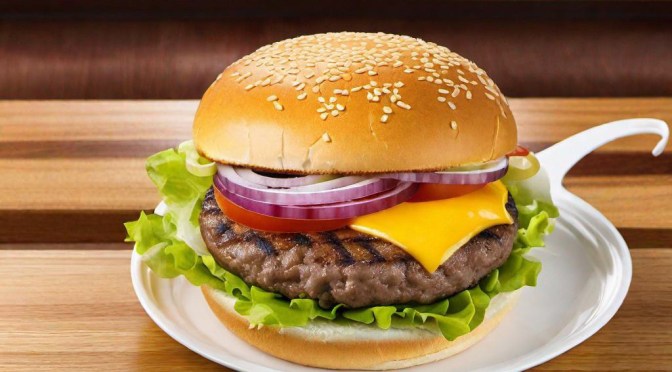
Breaking down the cost of each part of a McDonald’s burger will surprise you

By: Oak Berg

Image created with Wonder

Breaking down the cost of each part of a McDonald’s burger will surprise you.

The main ingredient, the beef patty, is the main reason of the cost. the meat might taste good to some people and might taste bad to others, which changes the overall taste of the burger. the patty is around 15-20 cents adding up to the total price

Fresh lettuce and tomatoes also add to both the flavor and price of the burger. Some people prefer to take lettuce and tomatoes off their burgers (price doesn’t change), lettuce and tomatoes at McDonald’s averagely cost 5-10 cents.

Cheese adds to the flavor and price of the burger, some people may like hamburgers more than cheeseburgers, this doesn’t effect the price for the buyer but the average slice of cheese costs 6 cents.

The labor price is high with the workers for preparing and making the burger needing a lot of pay. With employee wages, training programs, etc, the average McDonald’s hourly wage is $15 for a new worker.

Facility price includes paying for the building, land, and food stock. All of these things add to the overall cost of making a burger.

Marketing and advertising prices also contribute to the burger’s cost. They need to make the brand big and grow their customer base. This also adds to the price of the McDonald’s burger.

Even though the cost breakdown and the components may change, the normal price of a McDonald’s burger to be manufactured is around 40 cents and to buy one it costs around $3-4 for the buyer depending on where you live in the US. McDonald’s needs to make a profit or they would go out of business, so they raise the price on their burger by many times the original price.

Leap years

By: M. Ahmadad

It’s 2024, meaning we get to have an extra day in February this year. February 29th only occurs once every 4 years, making it the leap day. This rare day has different types of traditions and superstitions surrounding it, so here are some beliefs and practices about the day that you may have heard of.

February 29th is sometimes called Ladies’ Privilege, which comes from an Irish legend about women having to deal with men being too slow to propose. So, Saint Bridget made a negotiation with Saint Patrick that once every 4 years, women would be allowed to propose to a man on the 29th. If he rejected, he’d have to financially compensate her.

Febuary 29th is considered to be an incredibly unlucky day in European superstitions, the Scots believed that those born on the 29th were doomed to be sickly and go through suffering, and Germans believed that leap years in general were entirely void of luck. In Greece, it’s also believed that the 29th is cursed, and those who got married during leap years would certainly divorce.

My own birthday is on Febuary 29th, but I don’t think I myself am a particularly unlucky person. I mean, I can remember a few weird things, like the odd increase in evil clown attacks in 2016, causing the president of the WCA (World Clown Association) to be upset because people were giving the nice clowns a bad reputation. In 2020, COVID was hitting the population and there were mandated quarantine and distancing, and now currently in 2024 there’s an approaching threat of a government shutdown.

But, to be fair, major events happen in many years so there’s no real proof these things are because of a leap year curse of sorts. I hope those reading this have a healthy and safe rest of 2024 and years to come.

Holiday traditions

By: Addison Strack & Sophie Johnson

Now that we are approaching the holidays, everyone is in the holiday spirit, and they are preparing themselves for the happiest time of the year. We celebrate Christmas, but there are other holidays that are also being celebrated at this time. It is important to recognize and learn about different holidays and their traditions, so that you can understand how and why people celebrate the holidays they do. In this article we will be covering some different winter holidays, and their traditions.

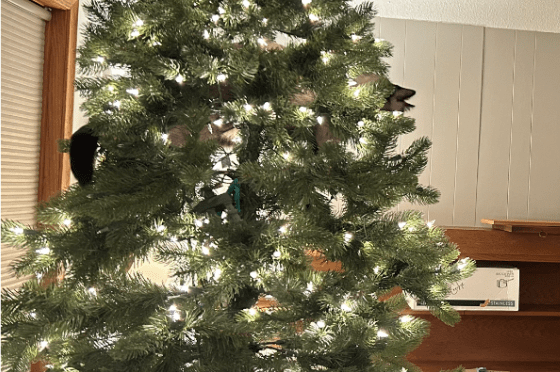
The first holiday we will be covering is Christmas. This is a holiday we celebrate, and it is our favorite holiday of the year. One of the most important aspects of Christmas is the Christmas tree. Every year in December, Christmas tree farms are filled with people who are in search of the perfect Christmas tree. Once the best tree is found and taken home, people will decorate it with string lights, ornaments, and a star.

Another huge tradition that is practiced on Christmas is gift giving. People buy gifts for loved ones to be opened on Christmas Day, to show how much they appreciate them. Gifts slowly fill underneath the Christmas tree creating more and more excitement for Christmas Day.

A third tradition that many young children participate in is leaving out cookies and milk for Santa on Christmas Eve. Young kids are filled with anticipation and excitement waiting for Santa to leave them gifts, and of course they need to return his favor, by giving him some fuel to finish his long journey around the world. These are only three traditions that many people participate in on Christmas, and there are so many more.

New Years is another holiday that brings a lot of excitement to the winter season. This holiday is celebrated worldwide and marks the start of a new calendar year. Traditionally, the celebration starts on December 31st and continues into the morning of January 1st.

Many people write New Year’s resolutions which are goals that they want to attain or achievements they want to make within the coming year. New years is the start of a new beginning for lots of people and it’s almost a reset or a refresh where people can start up new things or start over on things they need to try again.

One of the main New Year’s traditions in America is the countdown to midnight and then the New York Times Square ball drop. This period of counting down is also a way of saying goodbye to the past year and remembering the memories that happened. It is also a way of preparing for what is to come in the future.

Many different cultures celebrate this holiday differently while doing traditional things that will provide them with good luck and good fortune for the new year. Some of these include lucky grapes in Spain, smashing plates in Denmark and eating black eyed peas in the Southern US for good luck.

Hanukkah is a Jewish holiday that is celebrated from December 7 to December 15 this year. Hanukkah is celebrated by lighting a menorah, which is a nine candle holder. On each day of Hanukkah a candle is lit.

Religious rituals are also a way that people celebrate Hanukkah, for example many people will do daily readings of Scripture. 

A third tradition is gift giving. Many families will exchange a gift each night of Hanukkah, and these gifts are often smaller thoughtful gifts. 

Throughout the winter season, there are many holidays and traditions that families and individuals can look forward to all over the world. These three holidays are only a few examples of what a lot of people celebrate during this time. These holidays all include fun, giving and thoughtful routines that have been developed for centuries and will continue to be practiced for many generations to come.

Why is Hannakkah popular?

By: Mira Kaufman

“Dre-del, dre-del, dre-del, I made you out of clay” is a song known by many. The lit menorah and latkes are loved across the world. People know these things as the celebration of Hannakkah but why is Hannakkah the only Jewish Holiday you may know?

Hannakkah is a Jewish holiday, celebrating the miracle of light! It takes place in early winter but dates vary because it follows the Hebrew calendar. In smaller communities all around the world Hannakkah is celebrated but why do we hear of this Jewish holiday more than anything else?

In Judaism Hanukkah is not a major Holiday; in fact it is not even written in the Torah (Jewish Holy Script). Hanukkah celebrates the story of the Makkabes taking place in the 160s BCE. The Makkabes had fought two battles and returned to their temple to reclaim it from the Greeks. When they got there they found the eternal light out (a never ending flame) and found only a singular jar of oil left to light the fire. A messenger was then sent to buy more oil and on the 8th day when he came back, the singular jar of oil was still burning, thus creating the miracle of light. Today Jews celebrate this story through lighting menorahs, symbolizing the eight days of lasting oil.

The holiday is well known by society because Christmas falls at around the same time every year. In every location aside from Israel, Jews make up a very small population of where they live and over time have acculturated into some of the traditions of the religions around them. For example, Jew’s gained the tradition of giving presents on Hanukkah from the celebration of Christmas.

Due to both Christmas and Hanukkah falling around the same time every year, stores started supplying decorations for not just Christmas but Hanukkah too. This was because there was money to be made, which opened people’s eyes to more cultures on the store shelves. Target, for example, sells both Christmas and Hanukkah decorations in the same area allowing customers to look at every sale as they shop.

Hannakkah is also known and loved for its traditional foods. Gelt (Yiddish for money) is a classic win in a Dreidel game. The only difference for the traditional meaning of gelt is that it’s chocolate money, not real. Sufganiyot are also very popular! They are jelly filled donuts eaten for dessert. While these are both popular foods, the most well known would have to be latkes. Latkes were originally a Polish dish before being taken on by the Jews, and are known in America as potato pancakes. A common thread you may have noticed is that two of these three foods are fried, which quite in fact has a purpose. To symbolize the miracle of oil, many Jews fry foods on Hanukkah to celebrate!

How fruits have been modified to make them more pleasurable.

By: Jefferson Palma

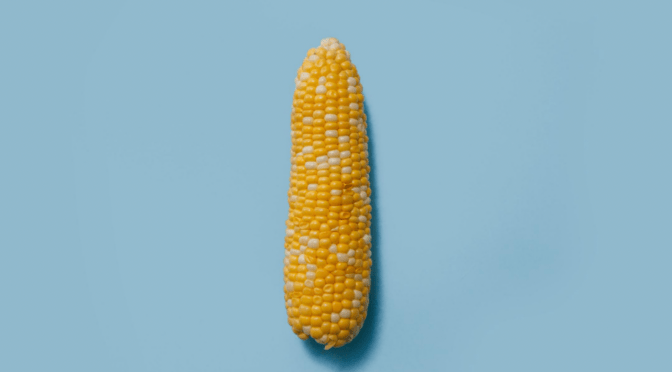
Image by charlesdeluvio via unsplash.com

Why did our ancestor fruits look so different? What did they look like? And what made ancient fruits transform into what we see and eat everyday?

When you go to the grocery store and you purchase some fruits for your next meal did you know that it took around 10,000 years of history to make it look like how it looks today? But how?

Selective cultivation has been a method to change our fruits to make them more tasty, colorful, and bigger.

For example, eggplant was named after the appearance of the egg shaped fruit when English speakers first discovered it, and it had more of a bitter flesh. But through selective breeding, it has transformed into a bright purple, less bitter, fleshy fruit.

Photo by Charlesdeluvio on Unsplash

Did you know around 10,000 years ago in Mexico, people took the very first step to domesticate maize (corn). They did this by choosing which seeds to plant, and some were better than others, so they saved the better seeds for the next season’s harvest, and this is how corn has been selectively bred.

There has been a problem that occurred because fruits have been too sweet. For example, zookeepers have been feeding red-pandas and monkeys a fruit centric based diet to mimic their natural wild diet. But it has been discovered that the fruits were too sugary for their diets. The animals’ diet has been changed to a more healthier diet. But this implies that our fruits have been modified to the point that certain animals cannot eat them as they would damage their health.

“Some fruits, such as plums, have almost double the soluble sugar content than what they would have recorded 20 years ago,” said Ranadheera according to the Weather Channel. Which means that in this period of time fruits have been more modified because of improvements in technologies.

Fruits being modified have been the usual for us humans. It has been dated back to 8,000 BC. Today’s fruit have a very long history of small changes to make them bigger, tastier, and more colorful to satisfy our own pleasure.

As stated by Learn.Genetics, “Minor changes to influential genes can produce rapid evolutionary changes.”

For more information, please visit:

The history behind Thanksgiving and traditions

By: Aliana Romo

Thanksgiving is a national holiday that takes place on November 23rd, and is celebrated mainly in the United States and Canada to celebrate the blessings of the year. According to Britannica.com, Americans believe that Thanksgiving is celebrated because it represents the 1621 harvest feast that was shared between the Wampanoag people and the English colonists known as pilgrims. It is also celebrated to give honor and show respect to the Wampanoag people for their support. Canadians though, believe that Thanksgiving has been celebrated in their culture since 1578, because of an expedition by Martin Frobisher in which he gave thanks for his safe voyage. In both countries, Thanksgiving is celebrated to share a meal with loved ones and be thankful for each other.

It takes place in the fall and this overall represents how it’s celebrated, mainly with pumpkin flavored things. Family’s decorate their household with pumpkins, leaves, and turkeys, along with colors such as yellow, orange, brown and red. The decorations provided with Thanksgiving make the feel of it a lot more comfy. Thanksgiving is also, for some people, the last day to celebrate fall, since almost a month later is Christmas, which many people love to start celebrating as soon as possible.

On Thanksgiving day, many traditions are celebrated such as the large meal that is shared and gathered with family members. The food provided on Thanksgiving is supposed to represent a feast. Foods such as turkey, pumpkin pie, ham, mashed potatoes, cornbread, vegetables and much more are usually provided, although it varies in each family.

In my household, everything on Thanksgiving is shared, which usually means my grandfather cooks the turkey and my grandmother makes mashed potatoes and pies. This is done in my household because we all provided something for dinner which makes us all more thankful for each other. Along with that, family members that live in other states and countries come to visit to spend time for Thanksgiving.

Not only on Thanksgiving is a meal shared, but family members also gather together to watch football. Usually on Thanksgiving, there’s many football games and especially in America, football is very important. In my family football is always being watched, so on Thanksgiving there’s a tradition to wear jerseys with fall decorations on them. Thanksgiving is special in my family because we love to cook and be together.

There’s many things about Thanksgiving that make it special. Gathering with loved ones to eat favorite and delicious foods, while being thankful for each other creates a special feeling for people. It gives people a moment to relax with family and friends.

Dia de los Muertos

By: Stephanie Caballero Benitez

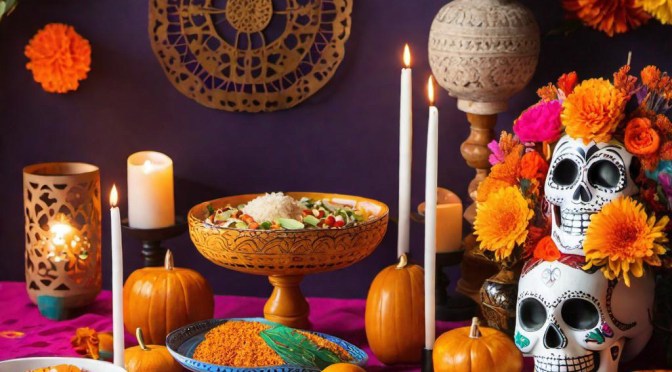
Image created with Wonder

Día de los Muertos is a celebration that happens every year on November 2nd. This celebration is most popular amongst the Hispanic community. Día de los Muertos is a celebration and remembrance of the life of loved ones. This tradition originates from Mexico, from the Aztec ancestors.

One of the most popular ways to honor and remember a person is by making them an ‘altar’. An altar is a decorated table with pictures of dead loved ones. These altars are usually decorated with things that the dead once enjoyed; it can consist of foods, books, and drinks.

Another way that people decorate these altars is by putting colorful candy skulls. Another thing you may notice in an altar are non edible skulls also known as catrinas and catrins.

A flower that is very popular in these altars are the golden marigolds. Usually people create small paths with the petals of these flowers to help guide the loved ones to the altar.

Another popular thing in these altars are lighting candles, with some even believe that the candles are a way to communicate with the dead.

Lastly, one of the things that is not often used here in the US but in other countries, music. People play their favorite songs to the dead, some even go to graves and take what is called a “mariachi’ or ‘banda’ to play them live music.

In Mexico, where this is more popular, the altars can stay up for weeks. Here in the US, it is not as common to see the altars up for that long. The longest an altar stays up for the public is only for a week.

This tradition is not only for the Hispanic community but for all. Many around the United States have taken up this tradition in remembrance of their loved ones; this even includes pets! Dia de los Muertos is sometimes confused with something evil, but not to worry, as once again this is only to celebrate and remember the life of ones who have passed.

The rise and fall of Blockbuster

By: Manuel Avalos Mateos

Founded in 1985, Blockbuster went from being a king in the entertainment industry, and thriving in the era of physical movie rentals, to filing for bankruptcy in 2010.

Blockbuster was widely known for its chain of movie rental stores. They offered a wide variety of different movies and video games that customers could rent, take home, and later return them.

Blockbuster was booming during the 1990s and early 2000s when renting movies meant taking a quick trip to a store. People loved going to Blockbuster, especially on Friday nights. Families and friends would rent movies for the weekend making it a big deal. Blockbuster was also a community that connected all sorts of people with movies. People would talk about new releases and grab copies of popular films during that time, which would be all a part of the experience.

Blockbusters blue and yellow signs were iconic, easily recognizable, and everyone was familiar with it. The best times for Blockbuster was when new movies were released and people would rush to their local Blockbuster for a copy of the movie. Blockbuster however, would not last for very long.

Netflix, at one point, when it was still a small company and still growing, offered to sell their company to Blockbuster for 50 million dollars. The CEO “laughed them out of the room”, rejecting their offer.

Its fall can be attributed to the rapid growth of digital streaming services. Blockbuster had always stayed with having physical stores instead of having to change or create their own online service.

Blockbuster would continue to show its downfall as the digital age for watching movies began to grow and gain more and more popularity. The quick shift to digital streaming services, and the decline of physical movie rentals caused Blockbuster to face major challenges and eventually file for Chapter 11 bankruptcy in 2010. Blockbuster eventually had no choice but to close all of their locations through 2014 which left under 100 stores sitting globally.

Blockbuster, at its peak, had roughly over 9,000 stores worldwide. Today, only one store remains in Bend, Oregon.

History of cameras

By: Cleo Newton        

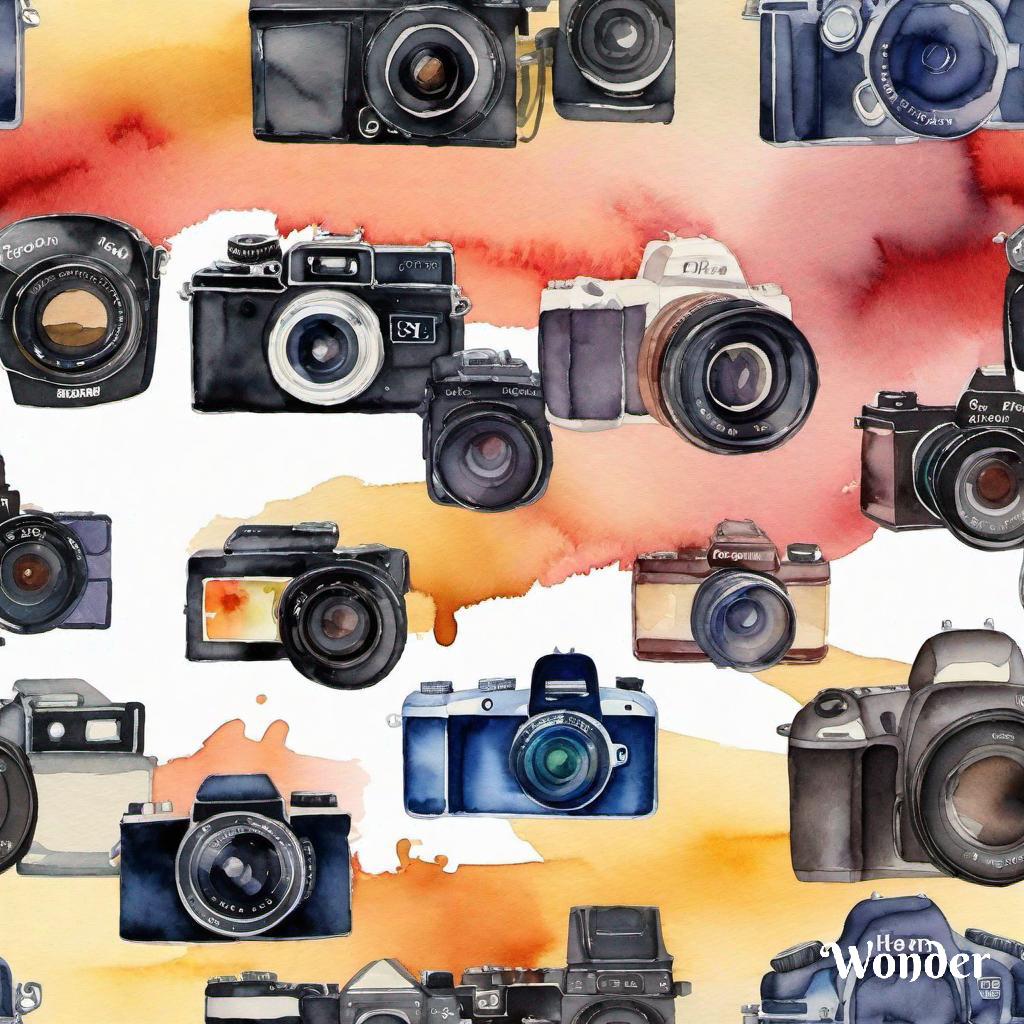
Image created with Wonder

Whenever anyone wants to take a picture, they can use their phone to do so, but that hasn’t always been the case.

According to an article from NFI, the camera obscura is probably the first camera made. This camera was just a little room with light coming out of a small hole, and an inverted image from outside was projected on the adjacent wall. This camera didn’t take pictures, light just came through a  tiny hole and projected on a surface. Manuscripts of this kind of camera were traced back to China in 400 BC. These records were written by a Chinese scholar of the Han Dynasty, Mozi.

Designs for the  handheld handflex reflex camera was proposed by a German author Johann Zahnn in 1686. It wasn’t until 1816 when Joseph Nicéphore Niépce created a prototype of this that people actually started realizing this camera. The images that Niépce made were made on silver chloride-lined paper; the oldest photo he made was in 1826. This image is on display in an exhibit in the University of Texas in Austin.

Louis Daguerre created a more efficient camera. Although his camera could produce better images, the pictures would vanish quickly.

A box camera named the Kodak was marketed by George Eastman in 1888. These cameras came with 100 exposures, and they had to be developed at the Eastman Kodak plant in Rochester, New York. A cheaper version of this camera, Kodak’s Brownie Camera, replaced it in 1901. In the following years, 1905-1913, camera companies would sell 35mm film which people could buy to load their cameras with.

Sasson was the first digital camera and was invented in 1975 by Eastman Kodak American engineer Steve Sasson. This camera was 8 pounds, it required a Kodak’s movie lense, 16 nickel-cadmium batteries, and a digital recorder. It could create black and white pictures in about 23 seconds.

The first DSRL camera was created in 1999, this camera could produce high quality images and many photographers liked using this camera. The DSRL camera allows you to see what you are taking a picture of through the viewfinder, which was considered impressive and convenient at the time. People could now take better pictures.

So, looking back, you can see how the camera has developed over time.

For more information, please visit:

Snowy winters

By: Oak Berg

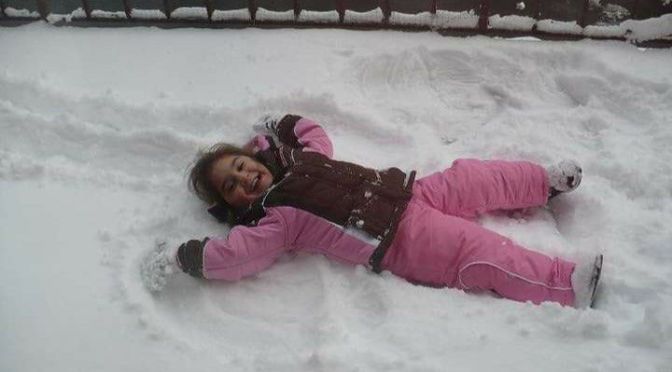
Minnesota which is known as the Land of 10,000 Lakes, is also known for its crazy winters. In the past few years, the state has seen an increase in snowfall, causing lots of snowy winters. Here are some the reasons behind the snowy weather and its impact on the people and environment of Minnesota.

One of the main reasons to the snowy winters in Minnesota is the increase in dampness and water in the atmosphere. As global climate changes, Minnesota will/has been affected by more intense winter storms. These storms bring a lot of snowfall, covering the state in a world of snow.

The snow also leads to colder temperatures, with the snowy conditions. Continuing, the location of Minnesota adds to its snowy winters. With it being placed in the northern part of the United States, the state is near the cold weather coming from Canada. The frosty air adds to the moisture, resulting in a lot of snowfall. The combination of cold air and moisture creates perfect conditions for heavy snowfall within the winter season.

The snowy winters in Minnesota have both positive and negative impacts on the people and environment. Positive impacts include the snow has opportunities for a lot of winter fun like skiing, snowboarding, and ice fishing. These activities add to the local economy and provide a lot of options for residents and tourists.

However, the heavy snowfall also has bad things, transportation slows down, energy is being used more for heating, and there are some risks to public safety like slippery driving conditions and dangerously cold weather that can lead to frostbite.

Minnesota has had noticeable gain in snowy winters over the past few years and and this will continue in the upcoming years. Things like climate change and location add to this. While the snowy weather offers opportunities, it also bring bad to the people and the environment of Minnesota. Adapting to these changing weather patterns will be needed to deal with the state’s winter and cold.