Category Archives: Tech/Games

‘Overcooked’ review

By: Natalia Gercheva & Persephone Pond

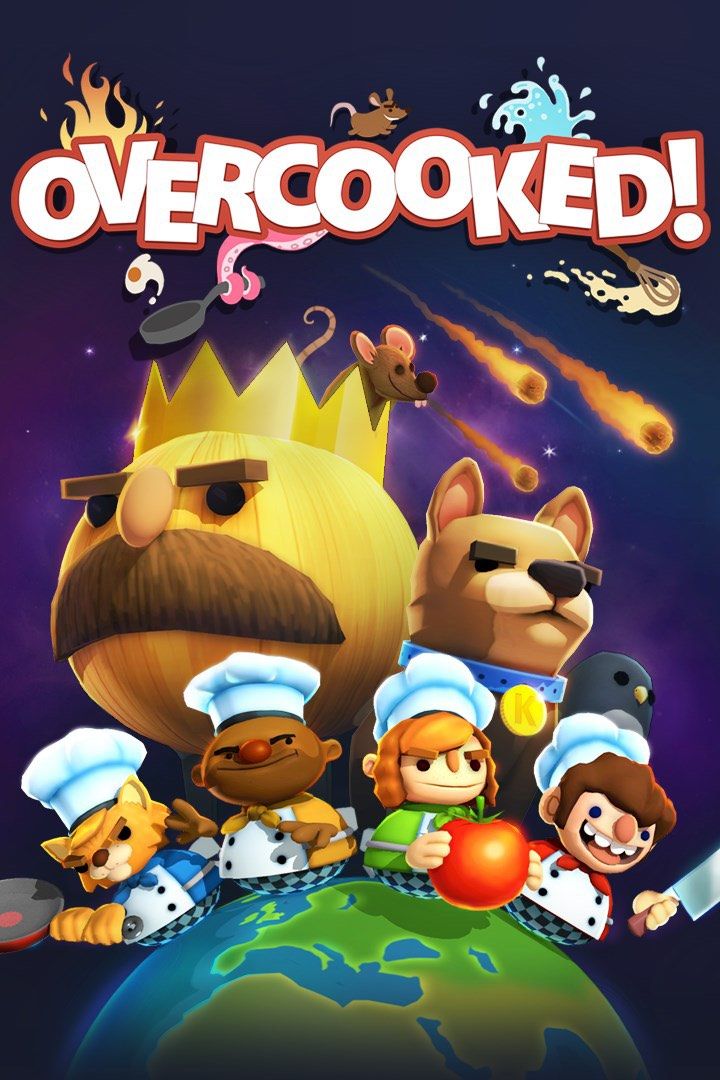
‘Overcooked’ is a cooperative multiplayer game (up to four players, split screen or online) in which you work together to cook delicious recipes for hungry customers. ‘Overcooked 1’ was released in August in 2016, and just 2 years later in 2018, the sequel came out. Over the course of these two years, and a few years after, Ghost Town Games, the developers of the ‘Overcooked’ games, steadily released extra levels to extend and provide more ‘Overcooked’ content. In this article, we will be analyzing and informing you about the levels, strategies, and overall story of these fun games.

The plotline In ‘Overcooked 1’ includes a giant spaghetti monster, an Onion King, and a dog named Kevin. In the prologue/tutorial level, you face the Flying Spaghetti Monster, but to your dismay, you and your fellow chefs are unable to feed him enough to extinguish his appetite. The Onion King and his loyal dog Kevin are present at this initial event, and when they see you’re losing, they teleport you back in time to improve your culinary skills in hopes you’ll be capable of conquering this ancient evil.

‘Overcooked 2’ starts off with the same Onion King and his dog Kevin, who discovered the Necronomnom-icon, an ancient cookbook full of evil curses and recipes. By reading from this book, the Onion King accidentally summons an army of undead bread: the Unbread. You and your fellow chefs must cook your way through the dystopian land in order to defeat the Unbread Army.

The games consist of a multitude of levels that change based on the theme of each recipe included. As you travel the lands, there are different biomes, and in each biome, the recipe you’re cooking changes. The game uses a 3 star point system and each level is timed, and your score coincides with how many stars you get on any given level. All your stars from prior levels add up, and some levels further on have specific star requirements for you to play, thus the importance of doing well. Each biome also includes a specialized type of obstacle, such as sliding counters or rotating platforms. There are also a few different game modes you can choose from, such as campaign, verses, and arcade.

There are 6 biomes in ‘Overcooked 1’, and for the most part, each biome consists of 6 levels, with a few exceptions. The first biome is a basic desert/restaurant, mostly for tutorial reasons. This biome consists of many rising and falling floors, which prove to be difficult. The recipes you make in this biome consists of soup and burgers, which are the more basic and simple recipes.

The second biome is a pirate ship, in which the recipes don’t change from the first biome. The pirate ships cause counters to slide back and forth, making it difficult to access cutting boards and ingredients.

The third biome is an ice-y sea, where the kitchen is on an iceberg. The icebergs are incredibly slippery, and it’s very difficult to move without falling into the water, in which case you die and take five seconds to respawn. The recipe for this biome is fish and chips.

The fourth biome is a dark forest, where the kitchen is located in a haunted mansion. You learn to cook pizzas, and continue practicing making burgers and soup. The counters love to fly around and block your path, making navigation frustrating.

The fifth set of levels is a trade off between a space station, and a lava filled volcano. The space station introduces a new obstacle, which is the passing of ingredients through a small room controlled by a button, and the lava level has you running across small bridges to get to parts of the kitchen, and you have to be careful to not fall into the lava. You learn how to make burritos.

The sixth and final set of levels is a bit different – you travel to the hardest kitchen from each biome stated, and the sixth level in the set is the boss fight, in which you cook everything you’ve learned, and (hopefully) defeat the Flying Spaghetti Monster.

In ‘Overcooked 2’ there are quite a few similarities and differences with the first game. There is less organization in terms of biome matching to the set of levels, as there are more biomes and variation in the second game. The new biomes consist of: a sushi restaurant with converter belts where you learn to make sushi, a hot air balloon where you learn the ways of pasta, rapids in which the kitchen is located on a raft where you make chicken and fries, the mines where you make burritos, a magical wizard world with portals where you make delicious pancakes and cakes, and an alien planet where you practice former recipes. There are also two swamp biome levels where you continue practicing the same recipes, while being faced with new obstacles such as wind pushing you.

Each set of levels consist of a variety of these biomes and recipes. In addition to these normal levels, ‘Overcooked 2’ provides an extra six levels which are secret and have to be unlocked. These levels are Kevin levels. Kevin, the dog, wants you to suffer greatly, as he introduces dumplings in very well designed kitchens that make these levels very difficult. These secret levels aren’t required for the completion of the game, but they’re a fun add on that makes the game fun.

Both ‘Overcooked 1’ and ‘Overcooked 2’ are available for purchase on Steam, PlayStation, Xbox and Nintendo Switch. You can buy these games separately, but there’s also a package deal, ‘Overcooked: All You Can Eat’, which includes both games and all sixteen DLCs.

The major difference between buying the two games separately and the package is that in ‘Overcooked: All You Can Eat’, you get twenty-two DLC packages, each containing six to ten new levels to play. With the extended package, you also get more and new chefs to play as, new game modes, and more versus levels. ‘Overcooked: All You Can Eat’ contains so much more material than the two games separately, the only downside is that ‘Overcooked 1’ tends to run easier. In the extended version, ‘Overcooked 1’ adapts some of the graphics and aspects of gameplay that makes it feel a bit easy compared to buying the game separately, which is much more challenging to play through. This is a minor difference, and it doesn’t affect the game other than a slight change in difficulty level.

Overall, the ‘Overcooked’ games are both great unique video game options to play. Working collaboratively with your friends to advance through levels in a non-violent, yet competitive atmosphere is a really fun experience. ‘Overcooked’ might just even teach you how to better communicate with your teammates, or teach you something about cooking too!

In the end, both ‘Overcooked’ games get a 10/10.

Apple’s bestselling iPhone to date: iPhone 6

By: Manuel Avalos Mateos

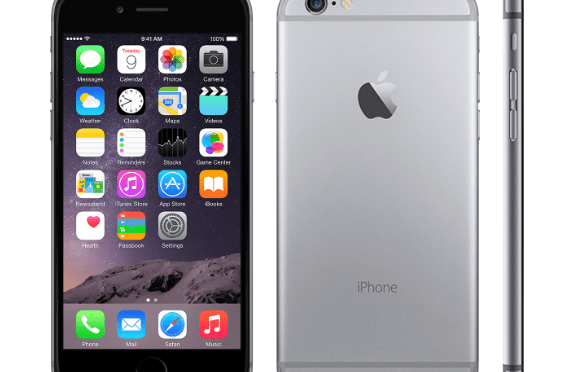
On September 9, 2014, Apple revealed their eighth generation iPhone: the iPhone 6 and iPhone 6 Plus. They were released on September 19. The iPhones received both positive and negative reviews from critics and customers. Within the first 24 hours of preorders becoming available, over 4 million preorders for the iPhones were made, which far exceeded the supply that was available. In the very first three days, ten million iPhone 6 and iPhone 6 Plus units were sold.

The new iPhones introduced a new larger screen which users had previously hoped for in the iPhone 4 and 5. It had a new design and featured Touch ID on both devices. It had antenna strips on the back and  a brand new display branded as “Retina HD Display”.

The iPhone 6 had a 4.7 inch display and the iPhone 6 Plus had a 5.5 inch display, making it the largest at the time. Both phones had the ability to shoot 1080p video at 30 and 60 fps and slow motion video at 720p at either 120 or 240fps.

The iPhone models are one of the thinnest iPhones to date. This of course, came with it’s own issues.

The iPhone 6’s are famous for their hardware issues. Users were quick to notice how easily the iPhone 6 Plus was able to bend. In a video which can be found on the YouTube channel “Unbox Therapy” they put the iPhone 6 Plus to the test to see how easy it was to bend the phone with bare hands. The video currently has nearly 75 million views. Users also reported the phone bending in their pockets when they went to sit down. The frame was designed to be light and thin and this caused the phone to bend nearly 3 ½ times easier than the iPhone 5. Famously known as Bendgate, some suggest Apple had already been aware of this issue before launch, but never decided to address it.

Regardless of the many issues it had, they are currently the best selling iPhones Apple has ever made to date. Total sales of around 223 million units globally.

Review of ‘FIFA 23’: A step forward in the world of virtual soccer

By: Jafar Abdi

Football fever has returned, and ‘FIFA 23’ from EA Sports is the latest game in the  FIFA series. Fans look forward to revised lineups, improved gameplay, and new features every year. So does ‘FIFA 23’ live up to the hype? Let’s get started with this in-depth review.

Graphics (9/10): ‘FIFA 23’s’ stunning visuals continue to improve year after year. With lifelike facial expressions and meticulously crafted kits, player models nowadays are a showcase of detailed details. Even grass and mud stains are created with the finest of care. The stadiums are amazing to see because of the changing weather and receptive crowd. Although the improvement in graphics isn’t revolutionary compared to the previous version, the gradual improvements make the game visually captivating.

Gameplay (8/10): Cleaner and sharper animations are the outcome of improved ball physics. Players move more fluidly, which improves the sense of dribbling and ball control. However, there are times when the players can glitch out, which definitely earns a minus from me. It does become more complex though, with the addition of First Touch Control; making perfecting ball reception techniques essential.

Ultimate Team (7.5/10): The pinnacle fantasy squad-building mode continues to be a fan favorite. “FUT Heroes,” a new feature in ‘FIFA 23’ , adds illustrious players from the past to the mix. The squad-building tasks are still addicting, leveling up your team as you progress. But microtransactions and RNG mechanics continue to cast a long shadow, worrying some players about pay-to-win aspects.

‘FIFA 23’ enters the field with improved visuals, refined gameplay mechanics, and significant upgrades to all of its game modes. Although some problems, such as hackers and game bugs still exist, the experience is rewarding and compelling. Whether you’re a die-hard soccer fan or just a casual player looking for some virtual soccer action, ‘FIFA 23’ is a significant addition to the brand that is sure to keep you occupied for days on end.

Overall, I would give ‘FIFA 23’ 8.5/10. You can play ‘FIFA 23’ on: PC, PS4/PS5, XBox.

Why are AirPods so popular?

By: Manuel Avalos Mateos & Jefferson Palma

Image by John Smit via unsplash.com

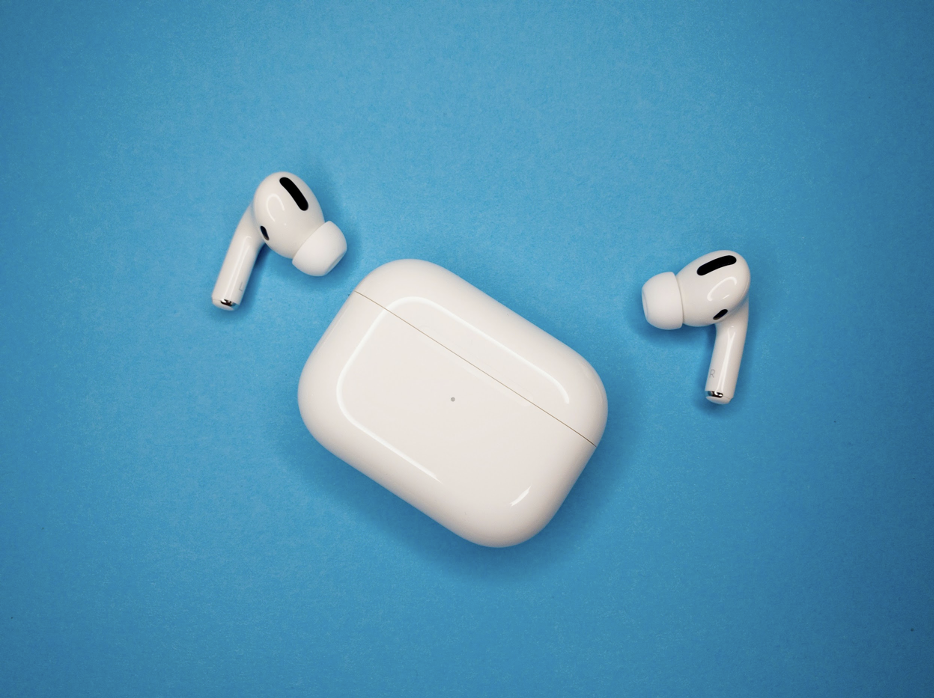
Whether you’re on the subway, or at a library, at your local gym, almost anywhere you go, you will almost always find a person walking by casually with a pair of white glossy pods attached to their own ears floating as if it were in the air. That’s where the name came from, AirPods, they are in Air and are Pods.

AirPods can easily be ranked as a top 10 most used wireless headphones as of 2023.

AirPods were invented pretty recently for modern technology as the first generations of AirPods were introduced alongside the iPhone 7 in 2016 by Apple.

It’s been estimated that 150 million AirPods were sold throughout its history. And it hit their 10 million milestone sales in 2019. Its revenue has been increasing since 2017 by almost 3 billion dollars each year to 2021.

Now that you’ve seen the data to show you its remarkable sales, we’ll now tell you why they’re so popular.

According to ‘The Strategist,’ high schoolers admit that second to their phones, AirPods are essential to their day to day lives and cannot live without them.

In the beginning of 2023, celebrities like Kyle Jenner, Timothée Chalamet, Sarah Jessica Parker, Dua Lipa and many more have become new users to the very recent headphone style AirPods, AirPods Max. The outfits of the celebrities were casual laid-back street outfits, which these headphones serve as a statement.

In TikTok, many people had posted TikToks of them reviewing it with many TikTok influencers suggesting outfit styles with them. Although these headphones are around $500, the bubbly plain look with these make a chill low-effort type of style and many people are trying it.

AirPods are most compatible with iPhones. As of the current time we live in, iPhones are one of the most used phones globally. Furthermore, it will be more adaptable on iPhones and have exclusive features like Siri.

Apple recently introduced the second generation to the popular AirPods Pro in early 2023. Apple has released 6 different models of AirPods: AirPods (1st Gen), AirPods (2nd Gen) AirPods (3rd Gen), AirPods Pro (1st Gen), AirPods Pro (2nd Gen), and AirPods Max (which are wireless headphones).

AirPods have a variety of features, such as having noise cancellation, and transparency mode. Noise cancellation being a feature that reduces unwanted background noise and therefore improves a user’s listening experience. This feature is exclusive to the AirPods Pro and AirPods Max.

Transparency mode is a feature that lets sound in so you’re able to hear what’s going on around you. Similar to this is adaptive transparency mode, which was a feature introduced with the second generation of the AirPods Pro. It reduces any sound over 85db (decibels).

AirPods are a very common sight here at Highland. So common it’s starting to become a problem. With how easy it is to use AirPods students have used it to their advantage. It’s no suprise that these bluetooth devices are so popular since nearly half Americans own or have owned an iPhone at least once in their life. AirPods can currently retail up to $250 depending on the model. (AirPods Max being the most costly).

For more information, please visit:

Opinions on the use of AI

By: Cleo Newton

Image created with Wonder

AI has been developing over time and has recently started to become more prominent. With more people becoming more aware of AI and its use, they’ve started to use it for things such as image generation, writing tools, and for other personal uses.

Many people have different opinions on it. From the Pew Research Center, 18% of Americans view AI as a benefit while 37% view it as something to be concerned about. The other 45% are somewhere in between. Those who are worried are mostly concerned about the possibility of job loss, and their privacy. Some people think AI can allow work to be easier and more efficient.

Self driving cars have always been something people have dreamt of, and now that AI has improved, it’s a thing companies have been testing. Most Americans see this as risky and dangerous as people could get killed or injured. There are other people who think that self driving cars could be convenient because it would make getting around less stressful. Then again, those who make deliveries in cars or any other vehicle have the chance of losing their job.

AI generated art has been something many people and artists have been talking about recently. An article from IDS News says that because the AI cannot feel like humans can, it can’t really incorporate emotions into art the way humans can. While AI can be useful for making quick art, If people were to use AI to generate images more often, artists may not be able to make enough money to support a stable home life.

All in all, it seems like people have mixed feelings about the use of AI. It can take on tasks that some people wouldn’t want to do or would find inconvenient. Despite the fact it can be helpful, for some people, it can be a problem. I think that people’s biggest concerns around the use of AI are about privacy and job loss. I think that while AI can be helpful for some things, it can be a problem if people abuse it.

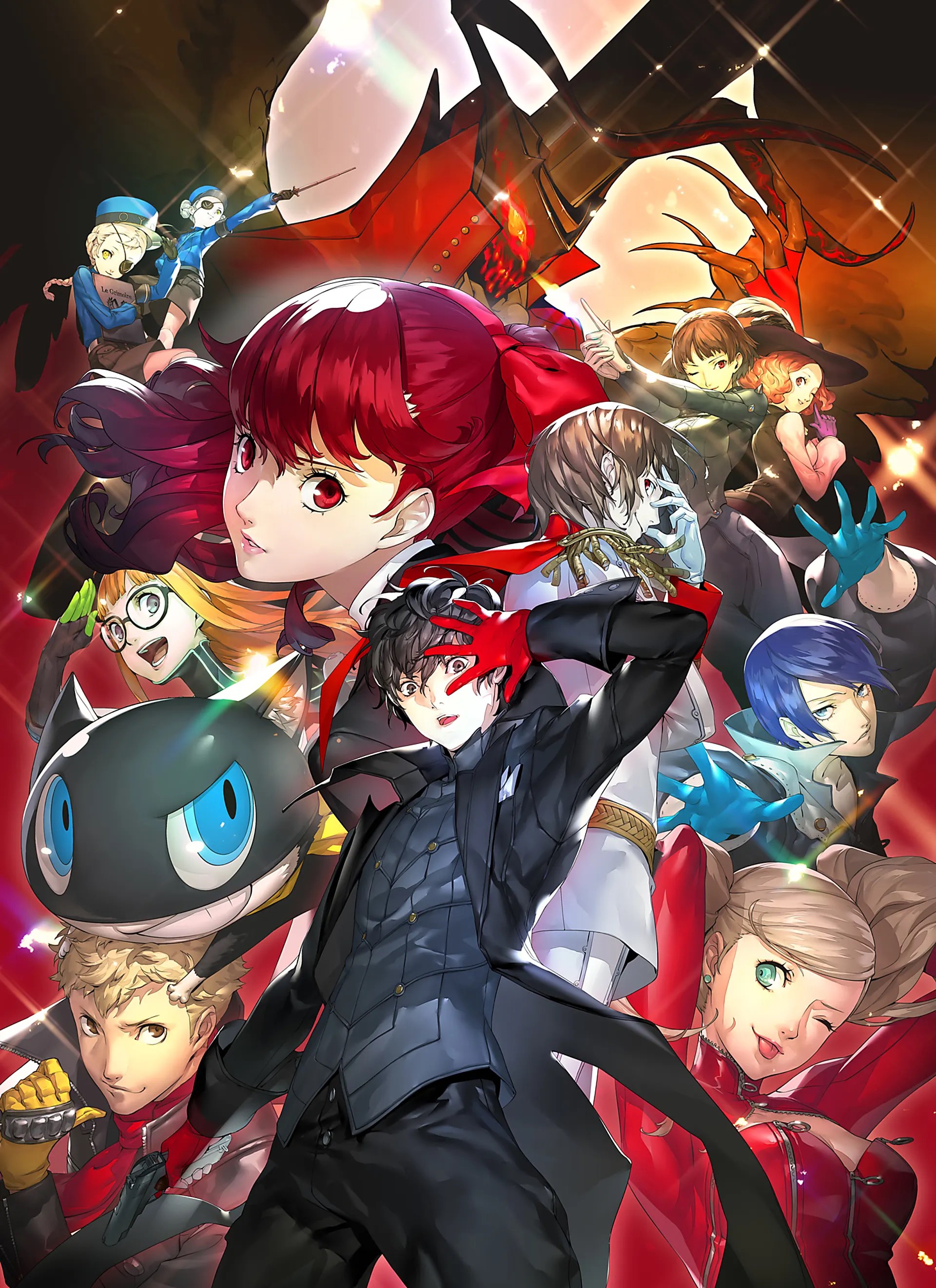
‘Persona 5 Royal’ game review

By: Persephone Pond

*Note: This article contains spoilers

‘Persona 5 Royal’ is a Japanese RPG style game that was initially released in Japan in 2019 as a newer rendition of the original game, ‘Persona 5’, in which there were small updates and included improvements. In 2020, ‘Persona 5 Royal’ was released in western countries such as the U.S., and immediately gained popularity as the 5th game in the ‘Persona’ series. Each game in the series follows its own characters and plot lines and is completely separate from each other, but the world and lore of the universe is the same. Today I’ll be writing about the newest release, ‘Persona 5 Royal’.

To summarize the lore to better understand this game, in addition to taking place in modern day Japan, there is another reality referred to as the Metaverse, in which people can form what’s referred to as a palace. A palace is a place in the Metaverse made up of a person’s distorted thoughts and values. Not just anyone has such distorted desires to create their own palace, so the general public’s distortions make up the bulk of the Metaverse. Within a person’s palace, at the core, is their treasure. Taking a person’s treasure from their palace will cause the palace owner to have a “change of heart”. As the palace is destroyed because of the treasure being stolen, this causes the person’s distortions to disappear and they become a changed person in the real world.

The Metaverse is more of just a name for this reality of palace’s made up of distorted thoughts and desires. If you walked out of a palace owned by one person, you’d find what’s referred to as Mementos.

Mementos is a palace by all literal standards, but it’s different from the palaces that are made up of one given person’s distorted desires. Mementos is the palace of the public, and it’s made up of the general public’s distorted thoughts and desires. Everyone has some variety of distorted thoughts, but no normal citizen could have these thoughts and desires to the degree where they’d have their own palace, but they still have an impact on the Metaverse, thus the creation of Mementos. The Phantom Thieves can’t only target big figures, they need to help the people directly too, so Mementos is basically the world you go to for side quests. On the Phantom Thieves official website, monitored by Shujin’s star male volleyball player Mishima—who is blissfully unaware of the Phantom Thieves being students at his same school—people will leave the names of others who are doing wrong, and that’s where you receive side quests, and when you’re able to visit Mementos.

Traveling to the Metaverse can be difficult. A navigation app is automatically downloaded on a persona wielder’s phone, and traveling to Mementos just requires a tap of a button, but it’s more complicated than that to get to a bigger person’s palace. You need the person’s full name, their location, and the form the distortion takes in the Metaverse. The form is basically the theme of the palace, whether it’s a bank, museum, or castle.

Not just anyone has the abilities to travel between the real world and the Metaverse. Specific people have the ability to awaken a persona, which is one’s true self. When in the Metaverse, these persona wielders transform into versions of themselves that reflect their inner/repressed selves, and gain great power that can be used to fight enemies and steal palace treasure.

A little more about personas; as they’re a reflection of their wielder, there’s one exception. You, the protagonist, has the incredibly rare ability to wield more than one persona at any given time. Personas give their wielder great and a wide variety of powers and damage types, including physical, gunshot, wind, fire, ice, curse, light, electric, nuke, and psychic. Each Persona has one strong damage type that typically are the abilities you get, and one weakness. This is especially helpful because as everyone in the group only has one damage type they can deal, with the exception of you, the protagonist, who can wield multiple personas, thus can switch between as you wish and can deal any damage type your personas allow.

This game is centered around a second year highschool student that you play as. As you navigate through life at Shujin Academy, you make lots of allies. Some of these allies end up finding out about the metaverse, and palace after palace, a new member is added to your team.

The first palace you gain three members to your team (each team member get’s their own code name, as to prevent any unseen circumstances where their identities would be revealed); Morgana, a cat-like creature who you discover in the first palace, and who turns into a cat when in the real world, code name Mona. Second, you meet Ryuji Sakamoto, a delinquent who formally was a track and field star, code name Skull. Third, Ann Takamaki is added to your team. Ann is an international model who’s a victim of the first palace’s owner, code name Panther. These three allies make up the core of your group of justice, the Phantom Thieves of Hearts.

Over the course of the next four palaces, you pick up four new members for your team, each bringing their own unique assets to the group.

The second palace belongs to a very famous and corrupt artist by the name of Maderame. Maderame is a huge figure to the public, but behind the scenes, he has a habit of plagiarizing his pupil’s work. In his palace, you meet Yusuke Kitawaga, one of Madarame’s star students. At first, Yusuke is oblivious to his master’s actions, but with the help of the Phantom Thieves, he awakens his own persona and gains the code name Fox.

The third palace is one of an underground mafia boss, Kaneshiro. Kaneshiro has his underlings go out and drag unsuspecting highschool students into laundering money and drugs for him, and this gets these students in huge debt and trouble. The Student Council president of Shujin Academy, Makoto Niijima, is already on the protagonist’s trail and suspects him to be a Phantom Thief, and once she finds out about the dangerous environment for students, she threatens the Phantom Thieves into finding Kaneshiro’s identity and changing his heart. Though Makoto was introduced as an obstacle, she later awakens her own persona and joins the Phantom Thieves in bringing Kaneshiro down, and earns the code name Queen.

The fourth palace introduces you to a new concept; someone asking for their heart to be changed. Futaba Sakura is a young hacking prodigy, and as she’s consumed in guilt and grief over her mother’s death, she anonymously requests for the Phantom Thieves help, as she already knows their true identities. In return, Futaba will shut down a huge network of hackers threatening to bring the Phantom Thieves down. Futaba is accidentally transported to the metaverse, and while in her own palace, she awakens a persona, joins the Phantom Thieves, and gains the code name Oracle.

The fifth palace belongs to a rich business owner, Okumura. Okumura is incredibly ambitious in his ventures, but his greed to grow his company completely blinded him, and he doesn’t realize how much his ambition is hurting his employees, and his daughter. Haru Okumura is a sheltered girl, who, in a similar manner to Yusuke, is enlightened with the truth about her role model’s actions. Haru joins the Phantom Thieves at the beginning of her father’s palace, and is given the code name Noir.

Now to actually get into the review of the game, ‘Persona 5 Royal’ is a wonderful and creative game. The aspects I’m going to be talking about in the rest of this article will cover the gameplay, storyline, and character development and relationships.

Starting off, the gameplay in this game is always an adventure. Within each palace, there are enemies called shadows, and these are the enemies you defeat to gain experience and level up. Their difficulty levels change depending on where in the palace you are, and finding any given shadow’s weakness and strong points can be surprisingly difficult. The fighting mechanics are always appropriately challenging and it’s always really rewarding to defeat a higher level shadow.

The palaces themselves are always built and disguised in such clever ways, and the overall layout and puzzles contained in the palaces are super fun to work through. The developers did a great job of making sure the puzzles are always in the right places and are never too easy, and these puzzles with the addition of shadows and mini bosses scattered throughout the palace make the appropriate difficulty level, and it really adds to the feeling of a job well done when you get through an especially difficult part.

The world building is also incredible, as the game play isn’t restricted to just the palaces. When you have free time, the game allows you to wander around the neighboring districts and cities around where you live. Going to different stores allows you to buy items that can be used to heal teammates, and you can buy items that up your stats and relationships with people. The ability to run around the city wild really adds to the illusion of choice within the game, and makes you feel like the story really is under your control.

The actual story and plot the game revolves around is also incredible. The game really has the lore and world building down, partially because this is the fifth game in the series, and they’ve had a lot of time and published games to really get that down. The complexity of the plot really elevates as time goes on, and the more you play, the more layers you find there are to everything. There is so much to learn about the game and the world you’re playing in, and at first it might sound like a lot, but the game really does an incredible job of slowly letting you learn so it’s not a huge dump at the very beginning.

As a lot of good games do, there’s so much story and plot to get to, but this is done very well. The first five palaces are mainly there to introduce you to new characters so you can gain as many confidants as possible, and to get you used to the gameplay and the flow of the game. These first few levels ease you into the overarching plot, but still drops many small hints and allow you to try and piece everything together by yourself. It’s a good way to get you hooked and invested in the game before throwing the real problems at you, and giving you a real challenge.

The characters and relationships you can build are probably my favorite part of ‘Persona 5 Royal’. In this game, making allies, or confidants, strengthens the powers of specific personas that the protagonist can wield, therefore meeting and strengthening your bond with different characters is a must.

There’s a very wide variety of characters in this game, and each has their own unique characteristics and personalities. For the sake of time, I’ll be covering the Phantom Thieves and main characters and their attributes.

The main team consists of eight members total, gaining three allies right away and then one more for each of the next four palaces, as stated above. First you meet Ryuji while starting at Shujin, and when you first get transported to the metaverse, he’s accidentally transported there with you. Ryuji is a sort of outcast. After he stood up to the abusive track and field coach, the team was disbanded and all Ryuji’s teammates blamed him. As you hang out with, and strengthen your bond with, Ryuji, you learn more about his relationship with his mother, and that there’s more to him than just a shallow delinquent. As Japanese games and shows go, Ryuji is the romantically inclined guy in the group who wants to use his status to go out with girls, but looking past this archetype, he truly is an interesting and complex character.

Morgana is the brains of the group, and the only character with background knowledge on the Metaverse. Morgana is introduced at the beginning of the game, as the protagonist and Ryuji are in the Metaverse for the first time. We don’t know what Morgana truly is, as in the real world, he takes the form of a cat, and only people who’ve awakened a persona can talk to him. His character is shrouded in mystery, and is one of the core members of the team. Despite Morgana being an incredible asset, others in the team never fail to make him feel unwanted and useless by joking about him. Morgana has an incredible character arc later in the fifth palace, while the others learn his significance to the group.

Ann joins the team a little later in the first palace, after she’s forced to face reality and confront the fact that she’s suffering abuse from one of the teacher’s at Shujin. Ann has a wonderful arc where she realizes she’s more than just an object to be sexualized by others, and continues to help others who were suffering from the same abuse. Growing your bond with Ann allows you to learn more about her life as a model and absent parents. Her story is unique and she grows so much between the first palace and just a few months later.

In the second palace you’re introduced to Yusuke, and he’s kind of the odd one out in the Phantom Thieves. Yusuke attends an art school, in contrast to everyone else in the group (with the exception of Futaba) who attends Shujin academy. Yusuke was orphaned at a young age, and he was taken in by the second palace’s owner, Maderame, and his artistic talent was honed and shaped by the master. It was hard for Yusuke to accept that Maderame wasn’t a good person, and even months after learning this life changing information, Yusuke struggles to accept that his role model wasn’t who he thought. Despite this, Yusuke strives to be a mentor to others and through his hang out events, you grow much closer.

You’re introduced to Makoto pretty early on in the game, as she’s the student council president at Shujin. At first, Makoto is introduced as an obstacle in the way of the Phantom Thieves. She managed to learn the identities of the growing group after being asked to investigate the matter by the school’s principal. Instead of ratting the Phantom Thieves out, Makoto turns her attention to a mafia boss in the local area, and blackmails the Phantom Thieves so they would change his heart. After being transported to the mafia bosses’ palace, Makoto herself has a change of heart, and she awakens a persona and joins the Phantom Thieves. Makoto’s change of sides is really natural and it really showcases a lot of her incredible character. Enemy to friend is always a really nice trope, and Makoto was definitely the correct character to do this with. There’s also quite a bit more to her character than what you get within this palace. As you hang out with her, you learn that the top honor student really doesn’t know why she works as hard as she does.

There’s quite a few levels to Makoto’s character, and she’s really a great way to showcase how to write an interesting, complex character.

Futaba breaks the trend of these palaces, as she asks for her own heart to be changed. Futaba’s mother was incredibly kind and gentle raising Futaba, but unfortunately, she was said to have committed suicide by jumping in front of a fast moving car. The men who reported this news to Futaba said that the reason her mother died was all because Futaba was a burden, and Futaba’s mother couldn’t take it anymore, but it was all a lie. Futaba lived with this guilt for years while being cared for by a man called Sojiro Sakura, and the weight of this trauma caused Futaba to figure out the identities of the Phantom Thieves and offered to help them if they could change her heart. Futaba was accidentally transported to the metaverse and awakened her persona there, and after figuring out the truth, she let go of that weight and joined the team. Futaba doesn’t know much about the world, as she had been a shut-in ever since her mother’s death, so strengthening your bond with Futaba allows you to learn more about her hacking abilities and teach her about the outside world.

Haru is a very awkward and reserved person. She has serious trust issues due to the fact that most of her friends from her childhood were only using her for her dad’s status. Haru’s father is incredibly wealthy and influential, and as an outcome, Haru has been surrounded by fakes for most of her life. Initially, Haru doesn’t want to join the Phantom Thieves once she learns about the metaverse because she’s still reluctant to oppose her father. Once the rest of the Phantom Thieves showed her her father’s true intentions and distortions, Haru’s mind was changed. Haru is very different from the rest of the group as her character is more reserved and less out there, but that isn’t a bad thing, and it brings a sense of balance to the group. Haru quickly bonds with the team, and as your bond strengthens with her, you get a better window into her modernity secluded yet interesting life.

All of the team members are so unique and interesting, and the way they all interact makes the game feel so much more real. The characters aren’t limited to these seven, but these are definitely some of the most important, and best written. One of the highlights of ‘Persona 5 Royal’ is definitely the characters and their development, and there really isn’t a character worth hating for lack of good writing reasons.

Overall, ‘Persona 5 Royal’ is very much worth the money. There are hours upon hours worth of entertaining and thought provoking characters and plot, and if you’re looking for a story driven game that you won’t finish to easily, ‘Persona 5 Royal’ is a wonderful option.

‘Persona 5 Royal’ is available on Steam, Playstation 5, Xbox, and the Nintendo Switch.

Why social media is bad for teenagers

By: Lauren Kottke & Ella Sutherland

Image created with Wonder

*Note: This article was written at the end of the 2022/23 school year.

Social media has been consuming the lives and minds of teenagers and young adults. All of our friends have some type of social media platform and account. We use this as a way to see what each other is up to, keep in touch with distant friends, but mostly we get bored and we just scroll. Many times people we know, including us, have felt really down and our solution to these problems is to start scrolling on social media apps. This creates unhealthy habits and there are many problems with doing this.

In order to prevent social media from consuming teenagers the creators of social media platforms should restrict the amount of time teenagers can spend on social media.

The rise in mental illness within teenagers has skyrocketed since the rise in popularity of social media. COVID and the pandemic affected how often people used social media and the amount of time people went on these platforms and apps per day.

We were inside all day and we couldn’t go out and hang out with friends or go out to eat. We relied heavily on social media to keep us occupied and we resorted back to that when we were bored. Because we had access to this at the tap of a finger, we became lazy and we stopped doing creative things like crafts and projects, or even simple things like reading a book or journaling.

According to Statistica.com, a survey conducted between July and October 2020 revealed that 61 percent of Generation Z and Millennials were watching more videos on social media apps during the COVID-19 pandemic.

People spend too much time on social media per week which can lead to many negative things. There are many studies that show that being chronically online can affect your mental health and you can develop mental illnesses like depression and anxiety. Social media can also affect teenagers self esteem. When you see your friends posting together you might end up feeling very left out wondering why you weren’t invited.

Social media also sets very unrealistic beauty standards for teenagers, and when you see them and feel like you don’t look as pretty as the people that post edited photos, you start to feel terrible about how you feel.

“Those who find themselves in this category often make toxic comparisons between themselves and those they follow online, and they come face-to-face with society’s perceptions of perfectionism, which is never truly obtainable.” – Selecthealth.org

Social media can be dangerous. On social media when you post things for the public you can become a target for bullies, stalkers, or unsolicited pictures. There are many instances where people have felt uncomfortable online whether that be from creepy messages or pictures of yourself getting exposed, or even receiving inappropriate photos that were not wanted. This can make it very scary for teenagers, especially young girls online.

Onlinedegrees.unr.edu reported, “The Pew Research Center’s 2018 survey of U.S. teens determined that one in six teenagers have experienced at least one of six different forms of abusive behavior online:

  • Name-calling (42%)
  • Spreading false rumors (32%)
  • Receiving unsolicited explicit images (25%)
  • Having their activities and whereabouts tracked by someone other than a parent (21%)
  • Someone making physical threats (16%)
  • Having explicit images of them shared without their consent (7%)”

The creators of social media apps need to restrict and limit the amount of time that teenagers are allowed to spend on social media. The consequences of social media outweigh the rewards greatly and in the end, is not worth it for anyone. It is unsafe, it is mentally draining, and it is how we spend too much of our time.

The life of a S.T.A.L.K.E.R.

By: Hoaseng Thao

Note: This is a student generated work of short fiction based upon an online game

In-game screen shot

Hello my friends, if you are reading this, then this is a message to the outside world from within The Chernobyl Exclusion Zone. Why am I writing this? Well I wanted to show to the world what life is like in the Zone as a S.T.A.L.K.E.R.

My name is Uni, I am a S.T.A.L.K.E.R. and if you do not even know what a S.T.A.L.K.E.R. is, then I will tell you. S.T.A.L.K.E.R. or Stalker, is an acronym containing the words, Scavenger, Traveller, Adventurer, Loner, Killer, Explorer, and Robber, all of which describes the basic Stalker who of course, stalks The Zone.

I originally came to Ukraine to enter the Chernobyl Exclusion Zone, or most widely known by all Stalkers as “The Zone”. The reasoning for my entrance into The Zone was of course, for the wonders of adventure and the money that I can get from it, but of course, all of that baloney was just to lure unprepared Stalkers into entering The Zone so they can feed it’s inhabitants.

Originally, I entered The Zone as a Mercenary Stalker, a faction that has its headquarters in the Dead City, just south of Limansk and north of Yantar. In the first few days in The Zone, I was inexperienced with the surreal wildlife and the anomalous creatures that made their home in such a terrible spot on the planet. My first few missions as a trainee Mercenary, was to help deliver packages from Mercs in Dead City, to members of either the Freedom faction or the Bandits, the latter I am not so fond of.

But as I gained more experience in The Zone, the better reputation I had with fellow Mercs and other Stalkers, and the better I was at fighting both The Zone’s wildlife alongside the countless brainwashed Monolith soldiers that scatter The Zone. If you don’t know already, the soldiers within the Monolith faction are essentially brainwashed into worshiping a shiny rock in the heart of the Chernobyl Power Plant, and I personally like to refer to them as the “Shiny Rock Lickers” because of that.

After a few weeks of surviving in, and doing tasks within, The Zone, I decided to head to Yantar to help pay for an ecologist that I already forgot the name of, for an exquisite piece of headwear known by many Stalkers as the Psi-Helmet. After paying the guy 20,000 roubles or something like that, he told me to wait two full days for the damn thing, but being a goodie two shoes of a Mercenary, I decided to sleep in his little research laboratory for a couple of days before receiving the headgear.

After receiving the Psi-Helmet, I was then told by the ecologist to turn off the Miracle Machine that could be found inside a laboratory known as Lab X-16 which couldn’t be turned off because of the Psi emissions that would fry the minds of any Stalker trying to enter that place. Knowing that I had the Psi-Helmet on me, I decided to enter the Lab as a favor for that Scientist. I’m not going to explain what happened in that lab as it was quite easy to get through besides the many Blood Suckers that somehow found their way into the lab.

After turning off the Miracle Machine, I was then ordered by the same ecologist, to turn off another machine known as the Brain Scorcher in order to stop the strong Psi Emission it blasted. Apparently, from what many Stalkers I came across told me, is that the Brain Scorcher was actually turned off at some point by Ukraine’s Chief Scientist Consultant, Strelok, but after a few years the Stalkers of the Monolith faction decided that they should turn it back on again.

In preparation for the mission, I decided to buy and upgrade a Mercenary Exosuit to prepare for the retaliation Monolith would already have for me when I finish the mission. Armed with a Rifle and Shotgun, and armored with one of the best equipment The Zone has to offer, and as I descended down to the labyrinth that held the Brain Scorcher, I could already feel the Psi-Emissions that the Brain Scorcher was blasting out.

With a limited amount of time before the Psi-Emissions would kill me, I bolted through the many Bloodsuckers that lived in that labyrinth and turned off the Brain Scorcher before the thing could kill me. After turning off the machine, I quickly exited the labyrinth as Monolith Stalkers began to rush my position, and as I exited the area, I breathed a sigh of relief knowing that it was finally over.

After some time, I decided to rest near a campsite as the moon began to shine down upon me, and there I was able to eat a can of Tuna before looking at my PDA for any new messages, and there was one that caught my attention: “Loners have declared a ceasefire with the Mercenaries” it said on my messages.

I made my way down to Rookie Village, the supposed headquarters of the Loner faction, a faction that was originally hostile to us Mercs but when I turned off the Brain Scorcher, they became more friendly to us. There in the Rookie Village, I met a trader named “Sidorovich” who scammed me of a few Artifacts and a female Stalker named “Hip”.

I was able to talk to Hip, who then asked me to find a TOZ-34 Bizon for her client, I accepted thinking that it would be easy but in reality I found myself running across The Zone, aimlessly looking for this weapon when I then asked other Mercenaries on the PDA where I can find a TOZ-34 Bizon.

Apparently, I had to go to the flea market to buy it, but when I went there, I had to pay around 90,000 roubles for the thing, and after paying for the damn thing and returning back to Hip, I later learned that her client died a few days ago, and knowing that, she decided to pay me back before asking me to help her with finding a couple artifacts for our good ol’ friend Sidorovich.

Hip needed help finding a Moonlight artifact, a Fireball artifact, and a Wrenched artifact, all of which I had to find as she watched me get sick from both radiation and a lethal dose of bullets. During our hunt for these artifacts, I decided to help a faction known as Clear Sky to help defend their pump station from an enemy faction, but as I entered the pump station and readied their defenses, I aimed my rifle scope at the enemy, and realized who we were fighting. We were fighting bandits, a friendly faction to us Mercs.

I can not describe what happened later but all I could say was that my reputation was ruined and the trust I had with fellow Mercs and Bandits was now faltering. I was left distraught and my morals seemed to be fleeting, but I knew that I had to move forward and rebuild my reputation from the ground up.

After that mission, me and Hip found the last remaining artifacts and we gave them to Sidorovich who gladly accepted and told me that the Freedom faction asked that Hip do another mission for them. After finishing Hip’s mission, she then told me to meet her at Rookie Village tomorrow night to which I told her about the mission from Freedom and she then told me her story of being a former Freedom member and how she doesn’t trust them as much as before.

After talking for a few bits, we decided to do a simple task of transporting medical supplies for Freedom before returning back to Rookie Village where we then parted ways. I returned back to Dead City, and looked at myself in the mirror and only saw a blood stained person across from me. I knew I couldn’t stand being a part of the Mercenaries any longer, so I returned to the Great Swamps to join the Clear Skies faction, to help their mission of healing The Zone.

Well, that is the story of my life as a S.T.A.L.K.E.R. and if you are thinking about entering The Zone, then I highly recommend entering it via this link:

Loot Boxes versus Battle Passes in games: Which is worse?

By: Daniel Kendle

In a lot of multiplayer video games you’ll find 2 types of micro-transactional models: loot boxes and battle passes. They both have good qualities, but both also have negative ones as well. As someone who has experienced both, I’m here to answer the burning question: which is worse? Or, more importantly, which is better?

On that note I must say that I’m not the biggest fan of FPS shooters, in which these two models are most commonly found across gaming. I’m more of a fan of single-player games, and online battle royales aren’t really my thing, so take this article with a grain of salt.

To start, let’s give an overview of both options. Both loot boxes and battle passes involve you spending real-world currency to purchase various items that either affect gameplay or are purely cosmetic. However, how you go around receiving those items differs.

Loot Boxes are 1-use purchases that automatically give you some item or cosmetic. There are different types of boxes, with some games having a randomized system of boxes, and others not. When buying one, they usually only have 1 or 2 items, so you can expect to have differently-priced boxes for different rarities of stock.

Battle Passes are much different in that after taking your money, you don’t receive some reward immediately. Instead, you have a roadmap of unlockables that, after playing more of the game, you can unlock more for free. Many passes have free roads that have less items and lower quality in terms of looks. Also, many games have different “seasons” of battle passes, where you’ll get a new set of unlockables, sometimes themed around something different. These don’t come at any extra cost if you want the free gimmes, but if you want the road with the higher-quality items, you have to pay again.

Now that we have an idea of what each of our options look like, we can get into their upsides – and issues.

Starting with loot boxes, the one big upside they have is that they don’t take time to get. Battle passes have you play more of the game in conjunction with the pass, and therefore take a lot of time to keep progressing. Meanwhile, loot boxes are simple, automatic transaction models that either give you exactly what you want or a chance to, getting something else instead.

However, the issues stemming from these boxes are from this simplicity. One big thing is that for a lot of games you can’t necessarily get the exact item you want. This’ll be the last time I discuss this, but a bunch of loot boxes have a loot pool that the game randomly chooses from for your item, which can make your spent money either wasted or used for something you didn’t need. It’s also not that fun; a 1-1 purchase for whatever you want – or something close to that – doesn’t provide much in the way of interacting with the game more so than your wallet.

Next is battle passes. I’d say that there are 2 big pluses to these systems. The first is that having to work through the game, playing matches and whatnot, has you actually using the game. This is in contrast to loot boxes’ transactional module. The second is that you get more content for generally less-expensive prices, even if the cosmetics and items you earn aren’t able to be hand-picked.

However, there’s also a couple of problems with battle passes. For one thing, while the dull currency exchanging of loot boxes doesn’t give much in the way of game interaction, the ease can’t be understated. Imagine if a game you’re playing has you get weapons by defeating enemies, dropping only every few hundred kills. Well then, it’d be a slog to get through, and being able to simply buy the desired item is too convenient. This is the big obstacle with battle passes; playing the game over and over to work your way to nodes on a path can be monotonous and lengthy.

Nowadays we see battle passes more often used in games than loot boxes, so I’d say that the gaming industry has chosen their favored model. Personally, I’d say that both are better in different games, with loot boxes being best in games with gameplay focused more on repeatable gameplay loops, like many mobile games. Meanwhile, battle passes are seemingly best in longer campaigns, like shooters and open-world systems. Not that you can’t have a battle pass in a mobile game or loot boxes in longer campaigns, as hundreds have proven they’re perfectly viable options. However, I find that loot boxes are best in shorter experiences that can be easily picked up, and battle passes in either longer narratives or more complex systems.

If I had to pick a favorite, I’d say I prefer battle passes due to their inherent allowance of game interaction. I mean, why did you buy the pass in the first place? To play the game!

Of course, you can have instances where boxes and passes don’t work at all. A loot box in a single-player RPG would be decently-strange, and as for battle passes…

Yikes.

Best ‘Wii Sports Resort’ game

By: Caden Kipfmueller

The Nintendo Wii is widely regarded as one of the best video game consoles of all time. Released in November of 2006, the console has been home to a number of iconic games, notably ‘Wii Sports Resort’. ‘Wii Sports Resort’ is known for its family friendly games, stunning graphics for the time, and its fun, chipper music. Additionally, ‘Wii Sports Resort’ is known for having an expansive repertoire of games. The best of these games is surprisingly Island Flyover, the lone game on ‘Wii Sports Resort’ that cannot be played by more than one person at a time.

The premise of Island Flyover is simple. The player controls a small biplane and flies around the island that ‘Wii Sports Resort’ takes place on, maneuvering around the island’s many obstacles and attempting to locate the 80 key points of interest, marked by green and white “i points”.

While the main objective is straightforward, the game itself manages to remain challenging. Many of the i points are located in difficult to reach areas, and some are hidden as well. Additionally, each game has a time limit of 5 minutes, which makes the last few seconds of each flying session a stressful occasion.

Island Flyover thrives in its customizability and the way that it empowers its players to explore. As the game progresses and more i points are collected, the player unlocks more and more features. In time, they are allowed to control the time of day, pop balloons that are littered around the resort, and more.

Additionally, the island is a blast to explore, and since there is no map each new thing that the player discovers feels truly special and secret. As the player grows more comfortable flying the plane, intense aerial maneuvers, in order to get to the hidden parts of the island, become a possibility. The game encourages players to try these maneuvers, as the penalty for crashing is very minimal.

‘Wii Sports Resort’ has a variety of exciting and engaging games, but Island Flyover is undoubtedly the best. It provides the player with a unique experience, blending challenge, exploration, and customizability in order to create engaging gameplay and turn the game into a timeless classic that still holds up today.