Category Archives: Tech/Games

‘SIGNALIS’ | A review about love and horror

By Hoaseng Thao

WARNING” This article contains spoilers about the game ‘SIGNALIS’.

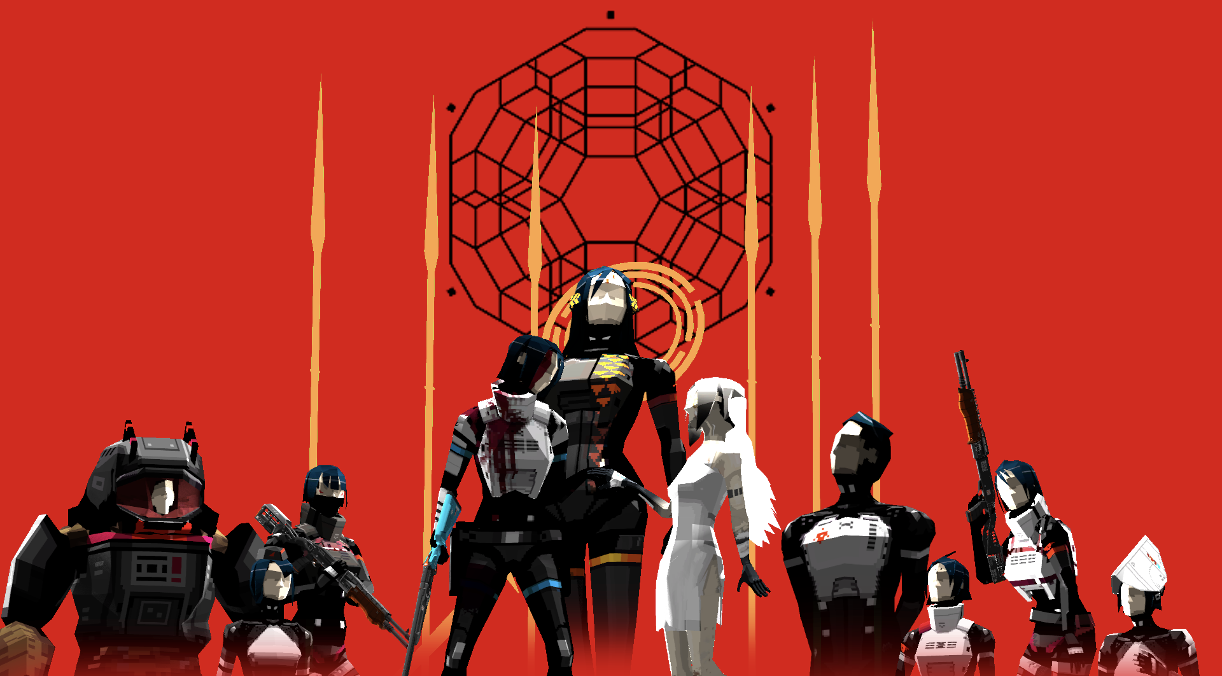
‘SIGNALIS’ is a survival horror game created by Rose Engine Games, being released on October 27th, 2022, and has since then won many awards for its unique story and overall theme of cosmic horror.

Personally, I love this game to death for not only its gameplay and aesthetic but for its story, which sent me down the rabbit hole of cosmic horror and in a deep state of depression from finishing the game’s story over and over again.

PREMISE

Set in a dystopian future where humanity has ventured far into space and into the unknown a Replika or Humanoid Android named Elster, is awakened from cryostasis from having crash landed on a cold planet. She must find a missing crew member in an underground facility being overrun by corrupted Replikas and the memories of a mysterious girl in white.

VISUALS

Do not let the low polygon style dissuade you into thinking that the game is just one of many PS1 style games in recent years that you play once and refund after finishing it. Personally, I believe this low polygon style really portrays the overall feeling of desolation the further you go in the game.

The visuals of the facility intrigues the sci-fi nerd in me, mostly because of the similarities it has with the game ‘Dead Space’ by Motive Studios as well as the movie ‘Alien’ by Ridley Scott. They also intrigue me with how the visuals make the facility a character in the story, with little details such as propaganda posters being laid out around the facility to seeing the aftermaths of bloody battles and last stands.

GAMEPLAY

The gameplay plays just like the classic of the PS1 era, and plays similarly like the early Resident Evil’ games by Capcom, but it adds its own touch to it. Instead of having a complex inventory system, the game forces you to use six inventory slots (you can change this in the settings) which effectively forces the player to decide how you manage your items in your runs.

The shooting in the game feels very smooth, as you have to aim at your target first to get a shot out, and with the brilliant sound designs of each weapon you use, adds to the overall action when playing the game.

Puzzles are found throughout the game and are not that particularly hard to solve, and most of the time in my playthroughs where I had difficulty trying to solve the puzzles, came out of my own faults and not from the game.

The enemies you face in the game are relatively easy to handle once you get a hang of what items you have in your inventory, with guns being used to knock down the enemy while consumable items allow you to heal or take down an enemy without wasting ammo. One key thing to note is that “killing” an enemy won’t stop it from getting back up unless burnt with a flare or flare gun, which forces the player to consider using a flare to insure the enemy is destroyed or to secure chokepoints for backtracking.

Bosses in this game are relatively easy to defeat once you get a hang of each of the bosses movement mechanics, added with that you bring enough ammo to defeat them.

Ammo/items are scattered across the facility, and are very small in number when found, forcing you to have to take in account how many bullets/items you should bring when solving the mysteries of the facility.

STORY

This part of the article will summarize the story of ‘SIGNALIS’ and contains spoilers to the story and ending, skip over this part if you have yet to play ‘SIGNALIS’.

Following a forced wake up sequence, Elster finds herself in the desolate interior of the Penrose spaceship, a spaceship created by the Eusan Nation, and finds a photograph of a white haired female crewmember, sending her onto a journey to find this crewmember. Stepping outside, the Penrose is a total mess as it crash landed on a cold planet before entering a hole that leads into someone’s personal room, and on a table lies the book ‘THE KING IN YELLOW’. After opening the book, Elster receives flashes of memories that are not hers.

Elster then finds herself inside an abandoned facility in which she explores to only find out through one of the survivors, a STAR unit Replika, that the facility has been overrun by corrupted Replika units and the person she’s looking for could be at the bottom of the facility. Elster is also met by an actual human or Gestalt, whose name is Isa, she too is in search of someone, however Elster would venture on alone to find the person she’s looking for.

The more Elster goes down the facility, the more corrupt it becomes as the halls become grittier and messier with each floor she descends revealing the true nature of the facility. The facility the game takes place in is known as S-23 Sierpinski, on the planet Leng, and has been used as a mining facility for the Eusan nation. Through the many readable files scattered across the facility though, it shows that life in the facility was harsh and cruel.

The Eusan Nation was facing a massive shortage of food and materials as it fought a war against the Eusan Empire, leading to many human colonies to starve including S-23 Sierpinski, and it doesn’t help that the Eusan Nation is a repressive totalitarian regime that conducts cruel experiments and punishments on its people.

Following an encounter with a corrupted Mynah Replika, Elster is confronted by a non-corrupted Adler Replika, who warns her that she should’ve never returned before pushing her off an elevator, only to be saved by a mass pile of other Elster units. Elster would continue to scour across the facility, getting flashes of someone else’s memories as she helps Isa along the way (Isa is back).

After a near death experience in the deepest parts of the facility, Elster finally escapes the facility and finally reaches the surface but it is no longer a frozen landscape, but an open red mass that can only resemble that of blood. Confronted by Adler again, he remarked about how his commander, Falke had fallen ill, sending the entire facility into disarray and subtly hinting to a repeated cycle of Elsters journey. Elster crosses the red landscapes, seeing the remains of her previous attempts before reaching the Penrose again, but this time going unconscious as she fails to open the hatch.

Following a forced wake up sequence, Elster finds herself in the interior of the Penrose spaceship again, this time more lively in lighting and color, a clear memory of the past. Onboard the ship is key information as to why Elster is on the ship. She had taken a part on the Penrose program to find a habitable planet for the future of the Eusan Nation, and a part of this program was the missing crew member, Ariane Yeong.

After finishing her chores, she presents herself to Ariane’s quarters where it is revealed that the two are in a romantic relationship established out of isolation and the necessity for human interaction. After this memory sequence, Elster wakes up again, back onto the cold landscape but this time motivated to find Ariane as she reminds her of a promise they both swore to.

Returning back to the Sierpinski, Elster would find herself not on Leng but in a colony on the moon Rotfront. Here, Elster would meet Isa again, but this time Isa apologizes for not finding the person she’s looking for, before eventually becoming corrupted. It is hinted throughout the memory sequences that Isa was looking for her sister, Erika.

Elster would eventually meet the person in charge of Sierpinski, Falke, who remarks to Elster that Ariane will never dance with them again and that both she and Elster are incomplete, before engaging in battle with Elster. As Falke kneels defeated, she would remark to Elster that they are now one.

Elster would return back to the red landscape, this time, a corrupted Adler awaits her and belittles her for continuing the cycle before ultimately meeting his fate after a failed attempt at killing her. Returning back to the Penrose, Elster finally opens the latch and gets back inside, this time revealing what happened on the Penroe’s demise.

The Penrose program was a last ditch effort for the Eusan nation, essentially both Elster and Ariane were doomed to die in space as the Penrose ship began to deteriorate from leaking radiation, which had slowly been poisoning Ariane and had forced her inside a cryo chamber, but before she went into cryo, both she and Elster promised to die side by side so that one would never be alone.

Entering the cryo room, Elster is finally reunited with Ariane, who asks Elster to keep her end of the promise to which Elster hesitates but ultimately concedes to. Placing her hands on the neck of Ariane, Elster would end Ariane’s suffering before eventually succumbing to her wounds.

CONCLUSION

I love this game to death, its story, gameplay, and visuals are by far one of the best I’ve seen so far and is definitely a game everyone must play once in their lifetime. From the horrors that are the corrupted Replikas to the sad but bittersweet story, ‘SIGNALIS’ is a brilliant game that will forever stay in the hearts of many including myself.

You can buy ‘SIGNALIS’ on their official Steam Store Page here: https://www.google.com/url?sa=t&rct=j&q=&esrc=s&source=web&cd=&ved=2ahUKEwinlZ6cgZqEAxWqAHkGHRnYDSUQFnoECCIQAQ&url=https%3A%2F%2Fstore.steampowered.com%2Fapp%2F1262350%2FSIGNALIS%2F&usg=AOvVaw0uwdgI22Owy-MiAc1sbdta&opi=89978449

JOYSTiCK Empirical Ep. 10: ‘Pokémon Scarlet and Violet’ – Magikarpal Tunnel (PART 2)

By: Daniel Kendle

And now, the saga continues…

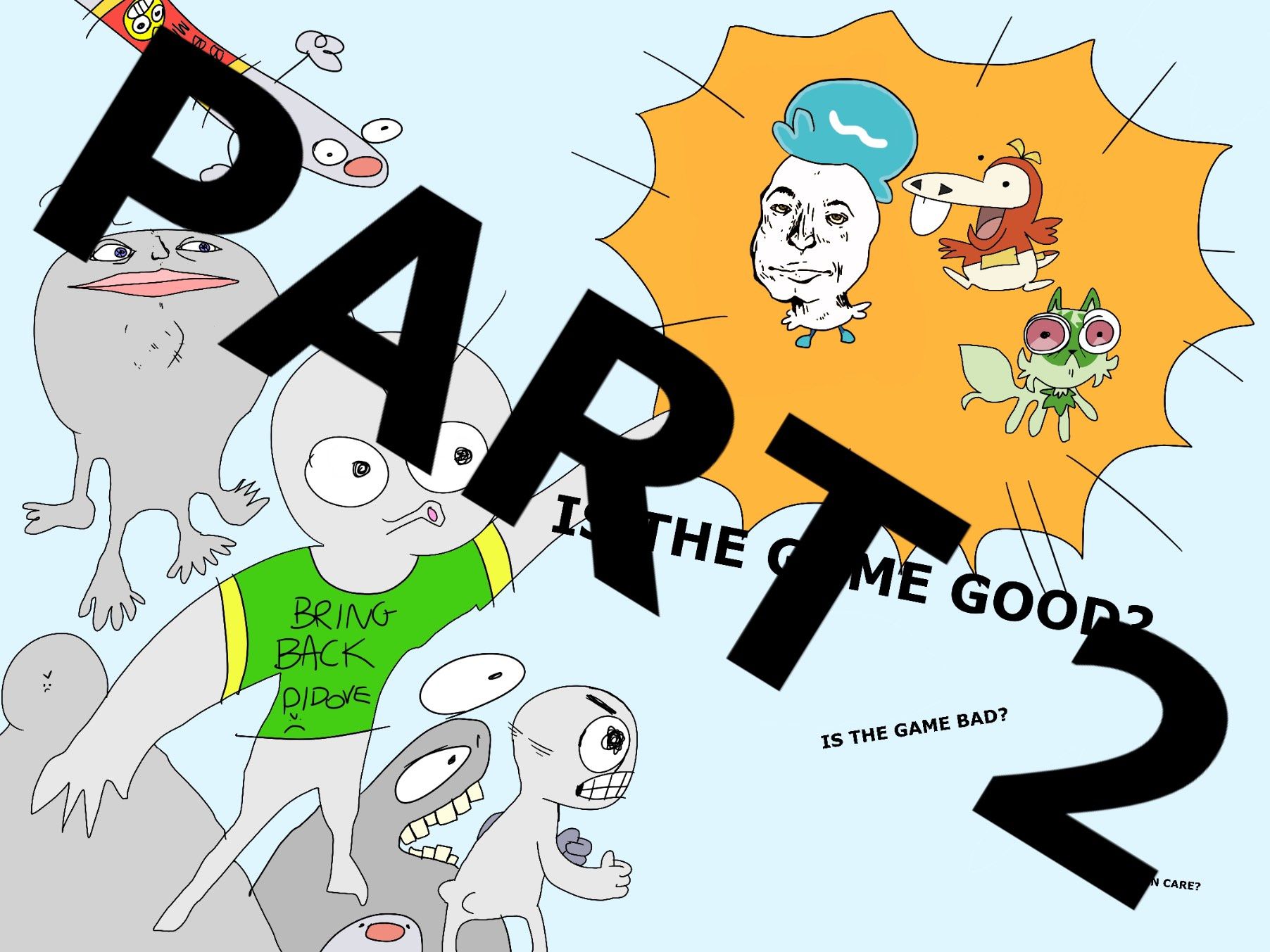
CHAPTER TWO: I LOVE (HATE) LOOKING AT SAWDUST!

The Nintendo Switch, the console that ‘Pokémon Violet’ exclusively runs on, is turning 7 years old soon, being first released in the US in early March of 2017. So, that means that it’s a pretty dated piece of hardware, relatively. I love the Switch, but I can’t deny that it’s seen a lot, and it might be time for the next console successor from Nintendo soon.

When ‘Violet’ released in November of 2022, it was over 5 years past the Switch’s launch, and we’d obviously seen some very high-end graphics from the platform’s games in prior games, especially open-world ones. The Switch was never the most powerful console; it had the visual fidelity for games rivaling early 2010’s systems. Then again, for a handheld-stationary console hybrid – something not seen very often – it was perfectly fine, in my opinion.

On that note, ‘Pokemon’s’ ranged in terms of their games’ graphics. The pixel-art era is a revered time for the series, featuring some of the best visuals shown on their respective consoles. Then in the 3D era, we’ve had some… mixed results, to say the least. Nothing terrible, but nothing really looking like “the pinnacle” of their visual possibilities. Just kind of generic scenery all-around.

We’ve had a good few other 3D Pokemon games on the Switch who’ve – again – ranged in quality. Some games look really great! Some games look like dog water! It’s all up in the air, frankly. The only other ‘Pokémon’ game I’ve reviewed looks like the latter, and I can safely say that ‘Pokémon Violet’ is definitely in the middle of the scale.

To begin, we’ve had models for the actual creatures themselves remodeled. Now, instead of looking plastic-y and fake. They have bumps and grooves, more natural proportions, and realistic textures. For instance, a Pokémon made out of metal will have a bright sheen to it, reflecting light like an actual shiny iron object. Furry ‘mons now have a faint fur texture to them, instead of solid colors. It’s like the difference between a stock image drawing of a sunflower and an actual sunflower.
This is overall a net-positive, and I haven’t seen many people complaining about this change.

As for the graphical representation of the world, things become murky. Human characters look alright; the artists went in a [slightly] more-realistic direction in designing them. Models look alright, but the animations for them are very stilted, and are very limited in how they move and express themselves. A lot of the time an important character will have 1 or 2 key poses that they’ll strike every now and then and it looks real stinky. Other than that though they’re fine.

Then we come to the actual environments, and they’re… interesting-looking. Like, they’re all-around better than the only other Pokemon game I’ve reviewed, ‘Pokemon Legends: Arceus,’ but comparing the 2 is like comparing a pile of literal garbage and a pile of sawdust. Either way, you’re kind of screwed.

Textures are very muddy and of low quality; any detailed sign lets you count the pixels it’s made up of. THAT’S how bad it is. This also holds true for more natural textures, with grass and leaves being flat, monochrome images spread across a field. Rock faces aren’t as bad, but you notice the fact that they only use one repeating image for the cliffs, as you’ll get the same image in a grid-like pattern and it breaks immersion.

Buildings look fine, but they suffer from an adjacent problem to the pixelated signs, in which being a few meters away from a texture causes it to look blurry and unrendered, but moving closer causes it to become crisper. This is a mild headache and makes certain areas of the region a pain to get through. Also, I don’t know if this’ll sound strange but if you’re out in the wilderness and walking near a hill, the hill will terraform around you (not on purpose, of course) and it’s physical model will warp and bend at the base, making for an odd optical illusion that gives me an ACTUAL headache.

You might be able to tell that I don’t have a lot of energy in this chapter, mainly because, other than the “highlights” above, there’s honestly not a lot to talk about in terms of ‘Violet’s’ visuals, because while some parts of the game look bad, there are other parts that look pretty good, honestly, like the Pokémon models or the User Interfaces (UI). These look good, but the mix of good and bad make this a middling experience to look at. Like, I’ve seen much worse – even from Pokemon – but then again, I’ve seen better. Compared to the franchise’s other 3D outings, ‘Pokemon Scarlet’ and ‘Pokemon Violet’ land around the middle of the pack. They don’t look good, but hey, they don’t look bad! Just sawdust, that’s all.

Gosh, I can’t believe I didn’t hate the graphics of the game as much as I thought I would. Despite what I’ve said so far about the region’s just-okay region design and middling graphics, I’m feeling pretty good about this review so far! What could possibly bring down its score now?

CHAPTER THREE: THE THING THAT BRINGS ITS SCORE DOWN NOW

If you haven’t heard already, there are some notable glitches in this game. If you’ve searched up some of said glitches online you’ll find some interesting results. I can’t show anything because of the wonderful world of the US copyright system, but I assure you that they’re bad. REALLY bad. Say, here’s a [short] list of notable bugs and issues in ‘Violet.’

  • Rendering issues with come textures
  • Shadow problems (shadows of large cliffs or buildings will appear and disappear at will)
  • Sometimes hair on people will flicker and move around weirdly
  • Problems with the aliasing on objects in water, where the object’s borders will appear pixelated and gross
  • Sometimes when riding your bike-dragon (more on this later), if you jump with it into a small-enough gap it’ll become frozen in the air and cause you to be teleported back onto solid ground after 10-or-so seconds
  • Lag spikes
  • The FPS (frames per second) drops to single-digits if you’re in the giant lake area
  • Sometimes when setting up a picnic table, it won’t appear. If you try to do anything that interacts with the table, like making a sandwich, you won’t be able to see it.
  • During one cutscene your character is supposed to be talking to someone else, but instead they’ll awkwardly continue walking in a strange fashion, almost walking off-screen until teleporting back to where they were supposed to originally be, letting the cutscene commence. It’s hard to describe this bug in words but it’s one of the most bizarre bugs here.
  • Pokémon disappearing into walls
  • You’re actually able to escape the first area in the game and bypass the opening tutorial. Simply go to the left corner of the first area and chuck one of your Pokémon at another wild ‘mon from a cliff beyond, and if you’re lucky you’ll be teleported into the battle menu, with your character now in the new area. You can then run away and explore the whole map. I haven’t done this myself, so I don’t know if there are any notable changes before the tutorial is completed.
  • Music not appearing in some instances

And there’s much more, I could go on!

But for the sake of speeding along in this review I’ll cut it here and say this: remember the metaphor in the beginning? Here, these glitches, these obstructing bugs and problems, this is the weasel. This is the snake in the kitchen, the problem that gives these games such a controversial guise.

And honestly, the people who call out these issues are in the right, in my opinion. I think there’s a line between “the developers being rushed for time and not being able to fully-polish their game” and “the developers programming ‘Sandwich Simulator 2042’ instead of making a working product.” Like, I’d rather have a bland-as-sand game that runs relatively-well over a (somewhat) packed title that makes me reminisce about the days when video games looked about the fidelity of a ketchup packet filled with salt.

Why did ‘Pokemon Scarlet and Violet’ come out like this? The most astute and probably-correct answer is time. The ‘Pokémon’ franchise operates with a new generation of games coming out every 3 years. You’ll get a game with a new region and creature designs to kick off the generation, usually a follow-up package the following year being either a second, similar pair of games that act as an “enhanced package, or DLC.

Then next year they’ll have a separated package, either being a remake of a past game or something else entirely.

Then, the generation ends with the next leading game for the NEXT generation.

This means that, for one company, this is a lot of stuff to do, and especially in the 3D era of games has caused the franchise to have a select few half-baked end products from the lack of time. This has caused a lot of people to say that the series should relax and maybe take some time between games, letting developers put more content – and better content, frankly – into future games, as well as higher-quality graphics that don’t make me want to chug quicksand.

This problem comes with that the games essentially “lead” the series forward: with each new generation of games comes a new batch of creature designs and characters, and so forth new trading card lines, plushies, clothing and apparel, movies, the on-going TV show… the Pokemon franchise is so large and has so many facets of entertainment that taking time to iron out and not rush a new game brings a detriment to the rest of the show.

The television series can’t run new seasons in the new region forever, the trading cards can’t print new sets forever, and merch lines won’t last. It’s an ever-repeating cycle of new content becoming old, and eventually being filtered out by the newer, which is then filtered out by the newest, each having a 3-ish few years to shine.

The Pokémon franchise is the kitchen, and these glitches are the irritable animals. However, instead of being inside one’s minute apartment, the kitchen is a part of a network reality cooking show. Just because you’ve got some pests in the kitchen doesn’t mean you can slow down; you’ve got an audience waiting for you, judges to value your dish within an hour’s fray. Just because you’ve got some glitches in the game doesn’t mean you can slow down; you’ve got an audience waiting for you, players waiting to buy your products within 3-years’ time.

And that is the leading issue with ‘Pokemon Scarlet’ and ‘Pokemon Violet,’ as well as the Pokemon franchise as a whole: time is the enemy, and your audience – and surrounding cooks – will not wait for a better dish.

…But YOU can! That’s right kids, this here article’s, again, a 4-parter, due to several factors such as the inevitable heat death of the universe looming closer and also length. We’ll pick up with the gameplay section in this review of a video game in the third part.

JOYSTiCK Empirical Ep. 10: ‘Pokémon Scarlet and Violet’ – Magikarpal tunnel (PART 1)

By: Daniel Kendle

Let’s start off with a metaphor. Again.

Okay, so you’re at home one day watching TV, and you get the sudden urge to do something productive with your life. So, you naturally head on over to the kitchen to try and create the next great American dish, only to open up the sugar jar and have a rabid weasel pop out. Oh, the horror! It bites you in the upper-most vertebrae (somehow) and runs away.

Being immortal (and the subject of an already-strained metaphor), you magically-shrug off the blistering wound and pop off the lid to the salt shaker and out pops one of those fake rubber snakes magicians use, except replace “fake” with “real” and “rubber” with “blood-driven.” It – again – bites you and also runs off (?).

At this point you’re feeling hopeless, and in one last ditch attempt to eat you open up your patented… bean drawer, and see it: a shining beacon of light, being a glistening can of ‘Jean’s Beans’ is waiting on the shelf. ‘Huzzah!’ You think to yourself, ‘I have found the light at the end of a tunnel of suffering!’

But… Why is your kitchen like this? This new flat you bought has weasels and walking snakes in it, yet also contains some normal stuff too, like beans. Why is that? Why aren’t there either just normal kitchen items instead of animals, or some kind of hydraulic torture device instead of beans? Why are there genuinely good parts of this kitchen, yet also stuff that inflicts great pain onto your physical body? Why is this kitchen so lopsided in terms of quality?

…..

‘Pokémon Scarlet’ and ‘Pokémon Violet’ are the (relatively) most-recent games within the franchise of the same name. Being the first truly “open-world” entries in the 28 year-old series, the games have garnered a very desicive reaction. Selling over 10 million copies in just 3 days, they’ve become one of the fastest selling games in recent memory, but with that success comes the large amount of generally-negative reviews and returns of the product.

But why? Why do these 2 games carry such a degree of inconsistency? We’ve had controversial ‘Pokemon’ games in the past – especially on the Nintendo Switch – but none to this scale. These games are different from past entries in not just their contents, but their reception.

So, to solve this mystery, it’s time we take a deep look into the pair. This is my first open-world game (I’ll explain what that means soon) that I’ve reviewed here, and I want to give it my all. I’d like to go in-depth into every meaningful mechanic and element of these titles that I cared about.

The only part I’m not touching is the story, because I’m not really the kind person to talk on that matter; I don’t focus a lot on a game’s story in my articles because I just don’t care as much about plot in games as I do gameplay, personally. I just don’t think I’m fit to speak on the matter. However, I will be mentioning story beats whenever needed to explain something better.

So, with introductions out of the way, let’s put on our detective caps and sleuth our way into ‘Pokémon Scarlet’ and ‘Pokémon Violet:’ the most middling experiences I’ve had in a while.

CHAPTER ONE: THE PROSPECT OF AN OPEN REGION – ON THE HALF SHELL

I think that we need to start by having a look at past games in the franchise, and how they’ve tackled their regions – the fictional settings where the games take place in. We’ll also briefly glance at the linearity in previous ‘Pokemon’ so we can therefore talk more about ‘Pokemon Scarlet’ and ‘Pokemon Violet’s’ region, and how being open-world implements new changes and impacts the series. I’ve had to rewrite this entrance a few times now, but I think this’ll help paint a good picture of the most subversive part of these games.

Most ‘Pokemon’ games since the very beginning have released 2 versions, which is why I’ve been discussing the newest games as a unit (I personally bought ‘Pokémon Violet,’ however, so I’ll just be talking about that game for the rest of the article). Each game in a pair is structured about the same, with minor differences between each, such as the types of Pokemon that you can find there. Pokemon exclusive to each version of the pair of games are called version exclusives, a whole sort of “is the sky blue” kind of label.

The regions, however, generally stay consistent between the pairs of games. To summarize, a region in these games is basically a fictionalized landmass where the story takes place in, usually being vaguely based off of real-life areas. For instance, the first games in the series, ‘Pokemon Red’ and ‘Pokemon Blue,’ have their regions based off of the Kanto region of Honshu, Japan, the biggest island making up the country (funnily-enough, the region in the games is also called Kanto, the only time in the series where the IRL and fictional locations are under the same name).

Regions before ‘Pokemon Violet’ were made up of 2 main types of locations: routes and towns. Towns are what you think: locations with buildings, roads, the like. Routes were the connecting lines; small or large paths that contain the Pokemon for you to actually catch and train with to use for battle. Combined, they formed a structured path for the player to follow as they went about their journey.

However, different games varied in their linearity. From generations 1-5 of games, routes and towns were usually very complex: structured trails and cities that had lots of depth to them, and routes especially were essentially point A to point B concepts, but had branching cutoffs and split paths. They weren’t maze-like, but instead each route in a game was a deeply-layered and invigorating experience. That’s not even to mention extra unique locations in routes or towns, such as towers or ruins, which often had even more content of their own.

Then, in generations 6-8, it felt like some major shift happened – for the worse. Routes eventually turned into small, short, simple paths that almost-never tried to divert off the main trail. You could even traverse an entire route in a matter of seconds; THAT’S how bad it got. No cool extra locations, barely-to-no unique mechanics… if there’s one thing to take away from the regions of newer games, its that they’ve become far more cramped, dumbed-down experiences.

This goes for towns as well: before they could reach giant sizes, but even smaller settlements were still full of lore and content, stuff to see and do. Now some “towns” were merely 2 houses right next to each other. Both acting as copy-pasted mirrors of one-another. It was miserable.

But with ‘Pokemon Violet,’ we’ve now gotten the exact opposite: a large, sprawling map to traverse in any way we desire. But now that we’ve gotten some history out of the way, how does this new formula impact the region design? How does ‘Pokémon Violet’s’ region stack up against both past and modern region design?

To start, routes aren’t actually a thing anymore! After a few minutes of slow buildup, we’ve now got “areas” instead, which are basically ways to split up the north, south, east and west parts of the map. Each directional province has multiple areas, and each is usually different from one another. For instance, “South Province, Area One” is a humid meadow-y land, with twisting hills and a small marsh. Meanwhile, “South Province, Area Two” is an olive orchard, with aged, beige grass and populations of olive trees.

Then there are areas that aren’t just called “Area #.” For instance, the western Province of the island has multiple Areas, but also a desert called Asado Desert. There’s a lake called Cassaroya Lake. There’s a foggy wood called Tagtree Thicket. I could list more (including one I’ll save for later), but we’ll talk more about the entire region itself for now.

In comparison to past ‘Pokémon’ games, this new region’s a lot more realistic-looking than others. Past games’ regions had mushroom forests, electric caverns and the like, whereas Paldea (apparently the name of the island) is lacking those. We’ve instead got [relatively] average roads, a quarry, some grasslands, a mountain, stuff like that. Nothing out of the ordinary for these games, but it’s missing a lot of the mystical locations of prior titles.

And that segways into a problem I have with Paldea as a region: it’s very bland. Unlike other open-world games which usually have varied landscapes and memorable places, ‘Violet’ instead has mostly biomes, with towns occasionally. In the game, there’s a set of 10 sights that operate similar to our world’s wonders of the world, though when you go to one they’re literally just a big waterfall or some rocks or whatever, it’s boring. The whole world is boring, actually, and that’s one of ‘Pokemon Violet’s’ biggest problems.

In terms of landmarks and locations, you’ve got these watchtowers that give you a nice view of the surrounding area, as well as some assorted items. They also function as waypoints for you to zip to at the press of the button. These are alright; most games with a sizable setting have things like these, and it’s no different here. You’ve also got 4 lighthouses in the 4 corners of the island that function almost-identically.

And really, besides towns and squad bases (something we’ll take a look at in the “gameplay” section of this article) that’s kind of… it? Like, you’ve got some ruins with unique collectibles and ‘mons, ancient stakes to find and pull out of the ground (another prospect for “gameplay”), and… bridges, but overall the world’s pretty empty with its main attraction being its biomes. But other than having different species of Pokemon and maybe some geographical variation, they don’t really do a lot of other stuff. I think having geographical differences of biomes impact gameplay would be super fun, honestly.

For instance, maybe in the mountains you could be stuck in a permanent light snow that causes fog to appear. You could bring a Pokémon that could breathe fire and the fog could dissipate, revealing items you couldn’t find before. Or, maybe the desert could be filled with quicksand, and you could traverse it normally, or breeze across it with a critter that could dig around and surf you across the sand.

The franchise did something like this before with HM’s, moves that you could teach your Pokémon to bypass certain roadblocks preventing you from continuing the game. These were generally annoying nuisances, so we don’t want a repeat of that. They were annoying because you had to replace a move first to teach a creature the HM, so instead of prohibiting the amount of moves you can have, just have a Pokemon meet the standards required (ex. fire-breathing, “diggable”) in front of your team. You could also just ignore the benefits provided and play the game normally.

To end this section, we’ve talked about the emptiness of the region and the missed opportunities with Areas, so let’s talk about cities. In ‘Pokémon Violet,’ there are a good few towns to its name, each pretty different from one another. You’ve got a small olive-farming town, a super-modern city, a multi-leveled waterfall town, one with cool art pieces and natural sights, and so forth. Each town has multiple shared buildings: a place to heal your team of ’mons, a battle court, some shops, and the gym. We’ll look deeper into the latter later.

I’m generally mixed on how I feel about the towns in ‘Violet.’ On one hand, they generally look alright and all feel unique from one another, normally for the better. On the other hand, they’re pretty void of content. One port town has an auction area, which is cool. Another has a game where you roll this giant olive into a goal, and you’ve got some other sparse games to try out in a couple others, but besides those you don’t have much to do in them. They’re pretty, but are mostly just set dressing for the story.

In the end, Paldea is fairly-okay, with some alright sights but very dry amounts of stuff to do. It doesn’t sustain itself enough to provide content after beating the game (or during it, to be frank), and almost-definitely needed some more time in the oven before the game’s release to add more. It’s a good start, but an okay final product.

This may be the end of going over Paldea in general, but stay tuned as PART II will delve into graphics and glitches in the game.

Everything we know about the upcoming Little Nightmares Game: ‘Little Nightmares III’

By: Julia Yang

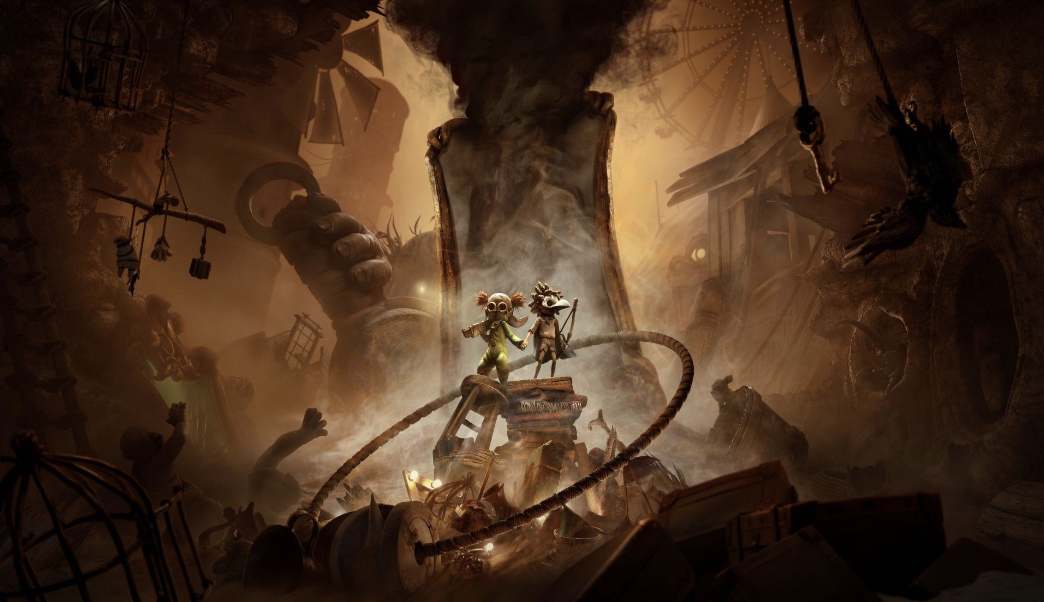
Official image of game from Bandai

Are you a fan of ‘Little Nightmares’, or just interested? Well, you’re in luck, today I’ve decided to explain the situation to you in full form! Shall we?

As of last year, ‘Little Nightmares III’ was revealed with a new trailer as part of Gamescom Opening Night Live 2023.

Unlike ‘Little Nightmares I’ and II, ‘Little Nightmares III’ seems to take away our beloved girl in a yellow raincoat: Six. Fans are mildly upset about this news as they’ve grown so attached to Six, but are ecstatic nonetheless and can’t wait for this game to come out.

Instead of Six and Mono, this third game stars two completely new characters: Low and Alone. Low seems to be a dark skinned boy with a white plague mask, beige shirt, grayish brown shorts, a blue cape, a bow and arrow, and a colorful bracelet around his ankle. Alone has paler skin with ginger hair and wears a green jumpsuit, a brown helmet, goggles, and a belt around her torso to hold a wrench. Low and Alone are two children exploring the place called ‘Nowhere’.

Here’s the official description for ‘Little Nightmares III’:
“Embark on a new adventure in the unique world of Little Nightmares.

In Little Nightmares III, you follow the journey of Low & Alone, as they search for a path that could lead them out of the Nowhere.

Trapped within the Spiral, a cluster of disturbing places, the two friends will have to work together to survive in a dangerous world full of delusions and escape the grasp of an even greater threat lurking in the shadows.

For the first time in the franchise, face your childhood fears together with a friend using online co-op, or solo with an AI companion.”

Yes, you read that right. For the first time ever in the ‘Little Nightmares’ games, you’re able to play with a friend in co-op! Fans are extremely happy about this news, as they expected ‘Little Nightmares II’ to be co-op with Mono and Six but were let down when they announced it was still a single-player, and Six would be controlled by AI.

I will link all trailers, the quick sneak peek gameplay, and the Bandai Namco website for ‘Little Nightmares III’ below.

‘Little Nightmares’ doesn’t have a release date, but is expected to be released this year in 2024. So, be ready, and be excited, for the brand new game!

Official Bandai Namco ‘Little Nightmares III’ Website:

https://en.bandainamcoent.eu/little-nightmares/little-nightmares-iii

Official ‘Little Nightmares III’ Trailer

https://youtu.be/XFHOsobwFrA?feature=shared

Gamescom Opening Night Reveal Trailer

https://youtu.be/UjrtoFazU1U?feature=shared

‘Little Nightmares III’ Necropolis Gameplay Walkthrough:

https://youtu.be/zrMLhz17l-Y?feature=shared

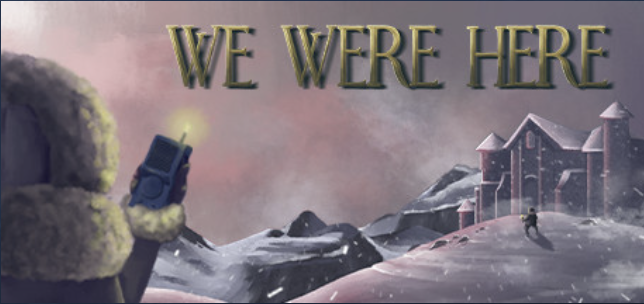
‘We Were Here’

By: Stephanie Caballero Benitez

*Warning: Contains game spoilers

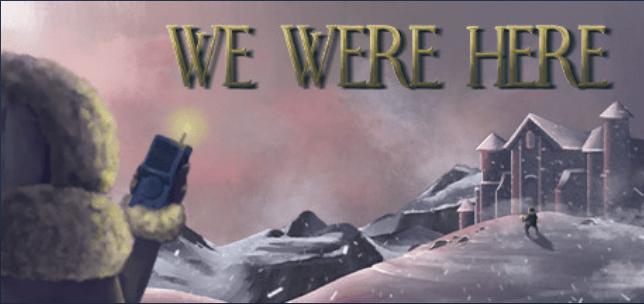
‘We Were Here’ is a free, two player, puzzle game. ‘We Were Here’ is available on Steam and on the Epic Games Store with versions for PC and console. In this game, you and your partner begin in separate rooms both with clues to help one another get out of that room. To communicate with your partner, a radio is provided by the game, however the quality isn’t very good and I would recommend just entering a call with your partner through a different platform.

Both you and your partner get to decide which role you’d like to play; the two different roles are the explorer and the librarian. The librarian stays put in 1-3 rooms throughout the game and helps their partner by communicating all the clues to be able to do the puzzles that are given to the explorer. The explorer role goes through a variety of rooms and is more hands on compared to the librarian. Every time a puzzle is completed a door is opened and they get to move forward to the next puzzle.

One of my personal favorite rooms is the haunted theater. In the theater you are given a play to play out. The explorer’s responsibility is to communicate with the librarian as to what the play wants. In this play we are given 5 pieces, the king, the queen, the crowd, the killer, and the arch. Once the librarian knows what the play wants they crank the levers to pull out the correct pieces, and once the explorer verifies that all objects have been placed on stage the librarian may pull the scene lever.

After finishing all the puzzles, both the explorer and librarian get to leave the puzzle room and library. They meet up at the exit, but at the exit there is a lever. The lever requires for someone to keep it down for the door to stay open. You are given one last puzzle which is who will be left behind. No matter the role that you or your partner have, to be able to finish the game one has to be left behind while the other gets to walk out.

The rise and fall of ‘Fortnite’

By Jafar Abdi

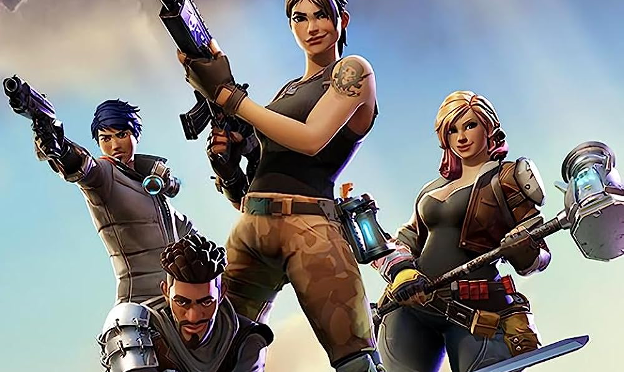
‘Fortnite’ is a battle royale made by Epic Games initially released as a survival game back in July of 2017. Seeing as how expensive the game was and how unoriginal it was, no one was really playing it until 2 months later, on September 26th, 2017, when it was rebranded as a free to play battle royale game. But it didn’t skyrocket immediately to become the game that we all know it as today; its peak came when  Epic Games released its 3rd season in February of 2018.

This was probably the most influence a game had on a generation, there were celebrities like Drake and Travis Scott streaming with the games biggest creators on Twitch like Ninja and Dr. Lupo. The game had reached the top of the mountain. The servers were crashing because there were too many people playing the game. People were wearing clothes with ‘Fortnite’ characters on it, and everyone at school was talking about ‘Fortnite’. It was all ‘Fortnite’ and would be all ‘Fortnite’ for the next year.

The game just kept getting better and there were more players each day, but its downfall would come on August 1st, of 2019, when Epic came out with its 10th season, “Season X”. With the new update it brought lots of new aspects and different items to the game and most of which were not received well by the players. This is when people started complaining about how unbalanced things were, the developers were not listening, and the numbers took a massive nose dive.

For the next couple of years, more and more people stopped playing the game and people thought that would be it. The numbers were still great for a video game but it was nowhere near what it once was.

But then on November 3rd, of 2023, the makers of the game finally listened after so long and they released “Fortnite: Season OG”. This was the highest the numbers of players had ever been, the game was exactly like it was 5 years prior, and the game was flourishing. Everything was back to how it was and people who had long ago stopped playing started up again. It was the biggest comeback a game had made and it was great again.

‘Princess Peach: Showtime!’ is Princess Peach’s new game; the 1st in 18 years

By: M. Ahmadad

During the Mario segment of the June 2023 Nintendo Direct, Nintendo had unexpectedly announced and teased a brand new Mario game, which wasn’t a follow-up or remake of an older one, for once. Another game where Princess Peach was the main character was unexpected, but pleasant enough to the point it was actually almost worth watching a Nintendo Direct in 2023.

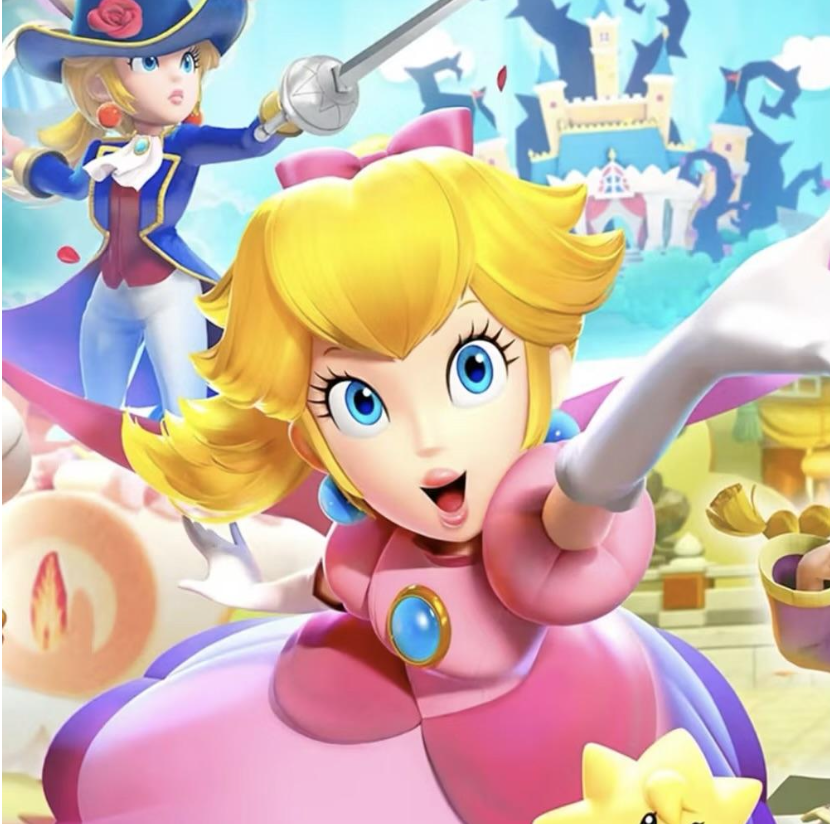
‘Princess Peach Showtime!’ is the next upcoming spin-off title from the main Mario Brothers franchise, and it is not a sequel to ‘Super Princess Peach’ that was released in 2005. Showtime has settings, characters, and a new villain that were created for this game’s plot, instead of branching off from the cast and goal often reused for the majority of the Mario games…Bowser.

Though we don’t have much beyond a teaser and the 1st trailer, we see that the game is about theater. A basic description of the plot is that Princess Peach attends a show, only for the institute to be hijacked by some grape villain (who asked for someone called “The Wicked Grape” to be the next Nintendo villain?). The theater’s guardian, a magic ribbon named Stella, asks for Peach’s help to take back each performing arts set, in which Peach would need to become the main actress in each one.

From a martial artist, to a swords-woman, to a detective, or to a baker, Peach takes on a very versatile role as a main character, allowing players multiple game mechanics so they won’t easily be bored.

‘Cats & Soup’ review

By: Stephanie Caballero Benitez

The game ‘Cats & Soup’ was released on October 12, 2021. Originally, this game did not receive a lot of attention but later on received more attention due to being posted on TikTok.

In this game you begin with an island, located in what seems to be the middle of woods. You receive your first stand, the soup stand. With every stand you receive, or buy, you also get a cat. The first cat and stand you receive will give you what is known as bland soup; it is called that because nothing has been added to it yet. By selling the soups the cats create you are able to buy more stands. The first few stands you will be able to buy are vegetable stands that will be added to the soup. Adding vegetables to the soup will make soup prices go up earning you more money.

Once you have received every stand for the soup you unlock the juice stand. The juice stand allows you to make juice from any vegetable that you have. The juice will also earn you a greater amount of coins.

The cats you will receive will all have a special ability which will give them a small boost. For example, if you get a cat that is very skilled at chopping carrots, placing that cat in that stand will give a small boost of coins.

By earning coins you are also able to unlock more fun stuff for your cats and yourself such as fishing ponds, arcade games, clothing, room decorations, and even pets for the cats.

The game also gives out daily gifts if you log in every day; these gifts can be anything from coins to furniture and clothes.

A new addition to the game are baby kittens. You are able to send the kittens to other countries to explore and take pictures, but be aware that the kittens’ energy takes a while to recharge from their previous adventure. Although, right now, you are limited on what you can do with the baby kittens, I think it’s a great addition.

Overall, this game is a really relaxing and fun game. The sounds of this game are my favorite as you are able to hear the cats meow and the bubbling, chopping, and blending noises they make when they are cooking. The music is also very enjoyable. I think they do a great job creating a nice calming ambience. I would give it an 8/10.

You can get this game is available for both Apple and Android products.

Positive impacts of social media

By: Aliana Romo

Social media has had a major impact on society since it became more popular in the early 2000s. There’s many different opinions on if social media has had a negative or positive impact for people. Harvard EDU says “In more general terms, these findings suggest that as long as we are mindful users, routine use may not in itself be a problem. Indeed, it could be beneficial.” This means that as long as you have self control when using social media, and not being on it for too long, it could be beneficial for mental health.

Being active on social media is beneficial for learning more about the world and being introduced to new cultures. This is important because without seeing new cultures, it would be harder to learn and understand most things about the world. This overall helps to be exposed to new things. Being able to see posts from other countries makes it easier to be informed. Along with this, social media also helps with the spread of news. Most importantly, news in other countries, or worldwide knowledge. Without social media I would not know most about what is happening in other countries since I don’t watch the news. There’s also many different opinions that really help with seeing other perspectives and understanding both sides point of view.

It is also beneficial for creativity and being introduced to new fashion, ideas, recipes, etc. I mainly use Pinterest to find new recipes and outfit ideas. Personally, I think that this really helps to try out new things and go out of comfort zones. It also helps seeing other people step out of their comfort zones and can be used as a way to help yourself try new things. Along with something more commonly known as trends, which are important for younger generations. Overall, trends help show the evolution of society through history.

Another way that social is helpful, is for staying in touch with family and friends that live out of state or the country. Oftentimes, it gets hard to constantly stay in touch with loved ones that aren’t around as often, although with social media, it’s easy to stay involved in their life and communicate easier. This is also important for getting news to spread quicker around families; in many cases my family has posted on social media to try and get a family reunion together. This has worked many times, and overall a good way to stay in touch.

Social media is positive in many ways, it helps people stay connected with other people and learn new things about the world. Without the use of social media, the world would become very unconnected and out of touch.

Game opinion: ‘Splatoon 3’

By: M. Ahmadad

‘Splatoon 3’, released last year on September 9th, is the third installment of the Splatoon franchise developed by Nintendo. It’s an online player-versus-player multiplayer game, with a single player story mode.

The fan base has been active for 8 years now, and the newest seasonal update known as “Chill Season” was announced just a few days ago.

The multiplayer gameplay is about humanoid cephalopod characters participating in popular sport competitions surrounded around shooting ink and cartoon violence. The story mode uses the same mechanics but it’s player-versus-enemy and levels that are race courses/challenges. The story mode is mainly about explaining the background history of the players, the current in-game power source of the multiplayer city, and the conflicts that arise from it.

I like the general style of ‘Splatoon”’ the bright characters, art style and music genre are easily recognizable, and they’re fun. The world setting is full of life, but the gameplay does get really boring after a short while; you can only shoot paint/ink for 3 minutes at a time so many times. They don’t add much to play for after you start getting most of the objectives finished, like story mode and unlocking all weapons. That doesn’t take long to finish either, so being a “fan” of the game really just means waiting for more.

The only real reason I can imagine playing it consistently for more than a month is if you’re hyper-competitive or if you just really, really, really like funny sounding squids. While the game is made and enjoyed by people of all ages, I think it’s fair to say that based off the dialogue and 3-minute matches, it’s best fit for people who enjoy short and colorful gameplay that doesn’t require too much attention or focus (I don’t know how people take the competition seriously).

‘Splatoon 3’ is not much different from the previous installments. It’s more enjoyable to use because of improved features and better quality animation, and the only person who could really tell the difference would be a fan of ‘Splatoon’ or ‘Splatoon 2’. I love the art style and music from the game, but there’s really not much to love when I’m actually playing the game.