Category Archives: Tech/Games

‘Sky: Children of the Light’

By: Cleo Newton

Screenshot

For about the last year, ‘Sky: Children of the Light’ has been my favorite mobile game.

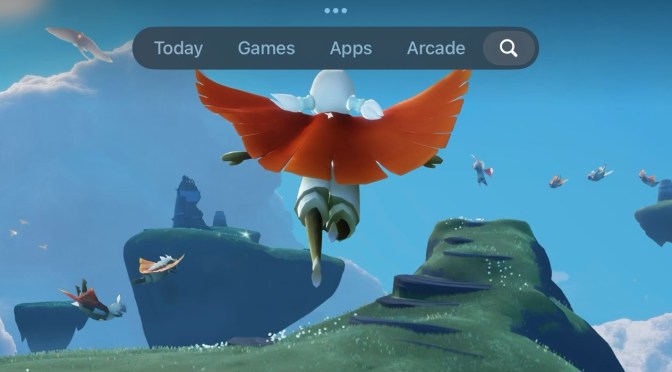
It’s a game where you have to find and gather winged light (which take the form of glowing children). After acquiring your first winged light, you form a cape and your first wedge. This wedge is the amount of times you can flap in a row before having to recharge when flying. The amount of times you can flap is displayed on your cape to other players. The cape in this game is key when flying, without one, you can’t fly. Flying is crucial in many parts of this game; you may not be able to get to certain places if you can’t fly. The animation for the capes in this game mimics the way wings flap.

You can gather more winged light as you explore the world and discover new places. In each place, there’s a shrine where you can log down the new area and add it to your map.

There’s a reason why this game is called ‘Children of the Light’, in the game, there are supposedly no adults (they have all passed). All the adults are spirits. Spirits are another important aspect in this game. As you find more spirits, you get to relive a short but important part of their life. After finding out their story, you gain an emote, or in some cases, a new voice (The voice changes every time you “honk”).

Honking can be used to find other players in the game or to summon nearby butterflies. These butterflies can be used to recharge your cape. Another use for honking is to flip over crabs. The crabs in the game are hostile and will attack you, “yelling” to flip them over keeps them from hurting you.

Throughout the game, you’ll find red candles with bits of light/wax floating above the flame. You can collect these and use the wax to forge candles; these candles are your main form of currency in Sky. You can use it to buy cosmetics from the spirits or from temple elders. Cosmetics include pants, masks, hair, capes, and props.

In this game, you can light up other players with your candle to see what they look like; it’s kind of like saying hi. After this, you can spend a candle to either talk to them on a nearby bench (if available) or friend them. If you don’t want to spend a candle to friend someone, you can send them a code which then can be typed into a bar (in settings).

Sky has annual events that last a few weeks. During this time, you can buy limited time cosmetics and props. You can also do this with the seasons Sky hosts. The seasons are like events but last longer and have more things you can buy.

Lastly, there are different realms you can explore. The last one being “The Eye of Eden”. Here, you climb a mountain before giving your winged light away to statues. I think these statues represent fallen skykids. After giving away all your winged light, you die and then get reborn. Part of getting reborn means you get ascended candles, a more difficult form of currency to acquire.

After getting reborn, you will lose all your winged light but you will also gain a new winged light which will be added onto the total count after you regather all your winged light again.

After reading this, I hope you’ll consider playing ‘Sky: Children of the Light’. I would give it a 4.5/5.

You can play ‘Sky: Children of the Light’ on multiple platforms including, the Switch, Steam, and mobile devices (Android & Apple IOS).

‘Marvel Rivals’: Squirrel Girl

By: Munira Ahmadad

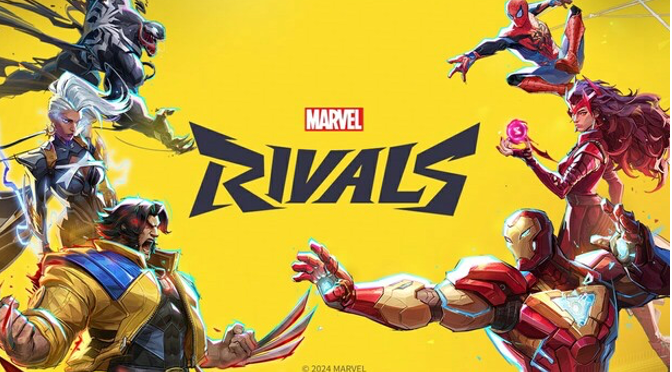
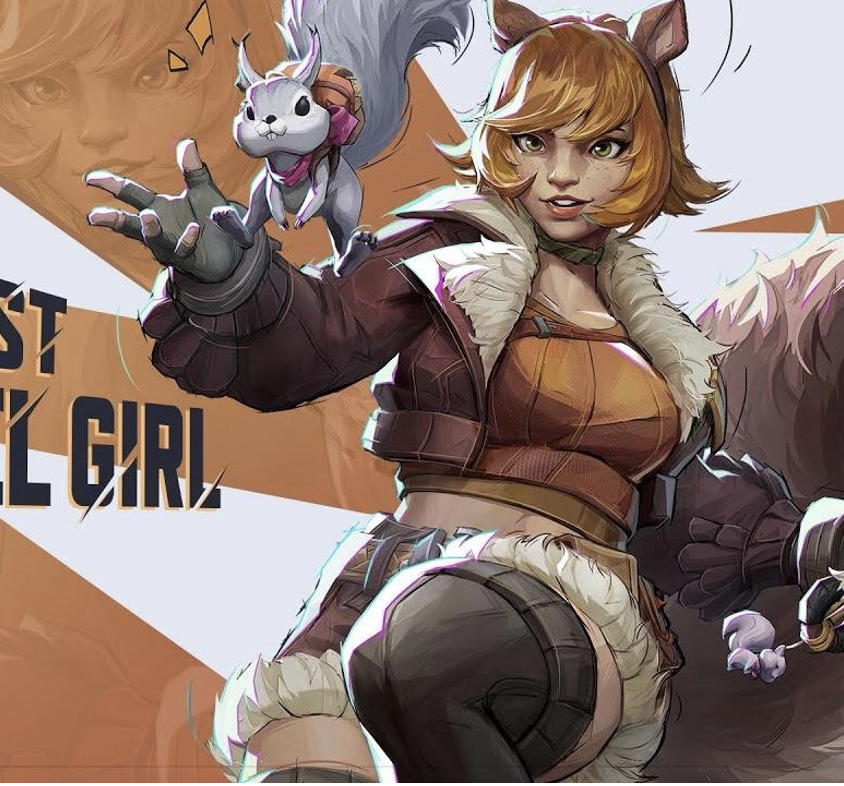
‘Marvel Rivals’ is a 3rd person shooter game developed by NetEase Games. On December 6th, it was released on Xbox, PlayStation, and Windows. On release, ‘Marvel Rivals’ has 33 Marvel comic characters to play as, including the Unbeatable Squirrel Girl.

Doreen Green, better known as Squirrel Girl, is a Canadian Marvel heroine in New York who debuted back in 1991. In her first appearance, she is a girl who has various squirrel-like abilities caused by a genetic mutation. Some of her powers are super strength, a strong bite force, retractable claws, and she’s good at tracking things. Similar to other characters like Wolverine, she has regenerative healing.

Squirrel Girl is a character readers find funny, as on her first appearance in the comics, she’s a 14-year-old who teams up with Iron Man, saves him, and defeats Doctor Doom. She didn’t defeat a Doombot, she defeated the actual Doctor Doom. Victor von Doom is one of the most threatening villains in the comics, so people found it a bit odd how a teenager with no training managed to beat him.

Unfortunately for Doreen, Iron Man did not take her as a sidekick and he tells her she’s too young to be a superhero.

Being a character who’s powers surround talking to squirrels and being a squirrel, she’s considered a silly and lighthearted hero. Her beating numerous characters who are definitely stronger than her is a recurring joke. They often work around the strength difference by making the fights off-page/only showing the aftermath. One of her most iconic victories would be her against Thanos, though later it’s revealed by Thanos she actually defeated a perfect clone of him (even though the Thanos who said that is a clone himself with altered memory). Another popular victory would be her convincing Galactus, the Devourer of Worlds, not to eat earth.

Squirrel Girl’s strength level has been a topic of discussion and personally, even though I’m not into her in the comics, she’s been one of my favorite characters since I played her in Lego Marvel Superheroes (2013) as a little kid. I haven’t played ‘Marvel Rivals’ yet but when I do, I’m planning on main-ing Doreen.

Explaining ‘Life Series’ curses

By: Julia Yang

Yet again, another ‘Life Series’ article, but this one should be interesting! In the ‘Life Series’, some members are given what fans call “curses”. Curses are what fans discover are repeating to a member in each season, like how Jimmy is always the first one out (putting aside the past 2 seasons).

These curses can get complicated and may sometimes make no sense, so I’m here to save the day and explain them all to you to the best of my abilities!

This one was explained in a past article about “fan designs”, but it’s back again for this article too: the Canary Curse. Jimmy, as spoken about above, has somehow been on a streak of being the first member out for 4 seasons in a row! It’s impressive, really.

The Canary Curse is in reference to when coal miners would bring canaries into caves to warn them of gas/oil leaks (danger) as canaries are very sensitive to gas/oil leaks and would die first before the coal miners. Jimmy, the canary, would die before all of the other members, warning them that things are soon to be in utter chaos.

In connection with the Canary Curse, Mumbo has something called the Coal Miner Curse.

Mumbo is the coal miner to Jimmy’s canary, as in every season Mumbo has been in— minus the most recent one, Mumbo has managed to die minutes after Jimmy. I really hope that makes sense because I’m not sure how else to explain this one.

Grian has the Widow’s Curse. This curse was assigned to him because Grian has always ended up betraying his close teammates or being the direct cause of their death. For example: in ‘3rd Life’, Grian and Scar, who had been allied and teaming together throughout the entire season, had a fight to the death, where Grian won, making him the winner of ‘3rd Life’. In ‘Last Life’, Grian and Mumbo had a dispute, sparking a fight. Grian, knowing full well that Mumbo was the one that he had the strongest connection to in all of his alliances, goes on to take Mumbo’s last life.

These next few ones aren’t really well known throughout the ‘Life Series’ community, as they’re not as “official” as the others, but I thought it’d be fun to include them too.

Impulse has the Winners Ticket Curse. Impulse, in more than half of the seasons, has managed to get his last life taken by the soon to be winner of the season. In ‘Last Life’, Impulse gets shot by Scott at his base, losing his last life and forcing him out of the season. Scott will then later on that same episode go on to win the whole thing. In ‘Limited Life’, Impulse, Scott, and Martyn were discussing a way to have an even deathmatch. Martyn would then go on a killing spree, killing Scott first, and Impulse second. Making Martyn the official winner of ‘Limited Life’, and rendering Impulse as second place.

“Winners Ticket Curse” as in whoever takes his last life, is almost a guaranteed season win. If I’m being totally honest, if my curse was basically the saying “so close, yet so far” I think I’d lose my mind.

Ren has the Blinded Curse. He often dies to things that he doesn’t see. This can mean a trap, an arrow to the back, an axe to the head, or a stone to the skull. Whatever it is, it’s something that he hadn’t seen.

There are many more curses to be given out to the members, some of them blessings. Of course these curses “aren’t real” but they are fun, aren’t they? They’re just things fans came up with to keep themselves entertained and keep a creative mind.

All channels:

JOYSTiCK Reviews Ep.14A ‘Super Smash Bros. Ultimate’ (S.)M.A.S.H.

By: Daniel Kendle

…because why not have 2 shacks?

Hello, hello, welcome back to JOYSTiCK Reviews, and today I have a special treat for you: a 2-parter episode! Upon closer inspection of the title, you’ll likely notice a sly “A” next to the episode count. That’s not a misspelling, but instead a notice for you to check out the companion article to this, instead with a “B” next to the 14, along with a new phrase.

Before diving into today’s topic (‘Super Smash Bros. Ultimate’) I should specify that this article will be about general gameplay and characters, while the “B” article will revolve around the game’s “World of Light” campaign, and related items of interest to it. There may be some overlap between the 2 articles, but for the most part they’re separate entities, conjoined at the hip. I do hope you read part 2, right after this 1st part, of course.

Anyways, with that context out of the way, you might be wondering why I’m currently standing in the middle of a field.

Image by Keith Evans via Wikimedia Commons

I don’t know, really; it’s a slow week, and seeing as comedy’s a dying art form, a common substitute for true humor is to put a character in a random place, then have both them and the writers flail their arms around in desperation (just ask SNL). Also, it just so happens that a witch in a gingerbread house beat me up, inflicted a magical curse on me, and then teleported my unconscious body thousands of miles from my house, which explains the odd choice of locale. And the antlers.

Boy, it’s hot out here.

Anyways, I’ve got nothing better to do than hitchhike home, so I might as well flap my gums a bit longer. Prior to my home invasion of a candy house and subsequent banishment from Minnesota, I was playing a lot of ‘Super Smash Bros. Ultimate,’ a fighting game exclusive for the Nintendo Switch. The 5th game (or 6th, depending on who you ask) in the series, its primary claim-to-fame is its character roster, containing over 80 different fighters to choose from. With every past character in the series returning, this is an extraordinary feat of game design, resulting in the title being a true celebration of video game history.

Meanwhile, I’ve been a little late to the party: I only picked up the game this year. So now, just over 3 years after the final DLC character dropped, I have to ask this: does the game hold up? Is ‘Super Smash Bros. Ultimate’ still the ultimate package, or have the sands of time eroded the marble column this bastion of human effort once rested upon? Like clockwork, let’s find out.

To begin, let’s review the basics: ‘Ultimate’ is a 2D fighting game where your main objective is to knock opponents off a stage using various attacks and button combos. When attacking a foe, instead of losing health, they take a certain percentage of damage. This percentage, located at the bottom of the screen, causes them to take higher knockback as they stomach more and more hits.

The title’s mostly designed around multiplayer, similar to most fighting games. You can play in local or online matches, and in multiple different formats. You could have, say, a 1-on-1 match, a 2-on-2 team match, or a battle royale-style match where a group of players duke it out without alliances.

This isn’t to say anything of the game’s other types of fun. Like I mentioned earlier, the “World of Light” campaign offers bosses, collectibles, and a storyline to follow. There’s also Classic Mode, where each character in the game has their own individual campaign where they fight some pre-selected AI fighters, play through a bonus obstacle course-like mode, and fight 1 of the game’s bosses at the end. Then, there’s the ability to relisten to music, create your own custom stages, practice fighting against CPU’s…there’s a lot!

Before going into any of the extra junk, I believe it’s best to give my impressions of fighting, the main crux of gameplay as a whole: it’s wonderful. I’ve dabbled in fighting games in the past, but ‘Ultimate,’ as well as the rest of the ‘Super Smash Bros.’ series, excel in tight matches and smooth controls that help aid the flow of combat with other players.

There’s a lot of different control types, so I’ll list them here. These might not be all of them, but I’ve tried to culminate as many as I can remember into a handy-dandy chart to reference when reading this article:

  • Movement– Left Joystick (Up, Down, Forward). Sprinting, running, and walking options available. Tilt up to jump, and down to pass through a thin-enough platform.
  • Standard Attacks– A Button (Neutral, Forward, Up, Down).
  • Standard Air Attacks– A Button when midair (Neutral, Forward, Up, Down, Back).
  • Dash Attacks– A Button while sprinting forward.
  • Get-Up and Ledge Attacks– A Button while getting up from being knocked down or hanging off a ledge, respectively.
  • Special Attacks– B Button (Neutral, Forward, Up Down).
  • Special Air Attacks– B Button when midair (Neutral, Forward, Up Down). These attacks are often identical to their grounded variants.
  • Grabs and Throws– L or R Button to grab, A to jab, and the right Joystick to throw (Up, Down, Forward, Behind).
  • Jumping– X or Y button, or Left Joystick Up to jump, with most characters getting 2 max (some more). Also, most characters’ Up Special functions as a third ascension option.
  • Shielding– L, R, ZL, or ZL to shield, with the former 2 options activating after the grab animation plays. The shield functions as a way to block damage, but is depleted and shrunken per hit. Does not protect against grabs.
  • Dashing– While shielding, tilt the left stick.
  • “Smash” Attacks– Right Joystick (Up, Down, Forward). Can be held for a short amount of time.
  • Taunts– D-Pad. Pressing the up, left and right, or down buttons features 3 different taunts for each fighter. Rarely, taunts can damage opponents.
  • Short Hop Attack– Quick Press of X or Y for a shorter jump than normal. Combine with A Button for Short Hop Attack.
  • Final Smash– Once a gauge near your percentage icon is fully-charged, press B without tilting the stick to prepare a powerful, all-out attack that often K.O.’s the opposing player. The caveat, however, is that most smashes for each character rely on timing and physically connecting with the foe.

Hopefully, that gets you acquainted with what we’re dealing with here. Virtually every fight you have, computer or real player, will be unique each and every time. The vast amount of moves, while maybe not anything radical compared to other fighting games like ‘Tekken’ or ‘Street Fighter,’ is certainly ripe with creativity to be found from its user base.

It’s hard to critique this system, really: the games have abided by these controls for decades, so if it works, then what’s to complain about? If there was anything really heinous about it, then it probably would’ve been addressed by now, in my opinion. So yeah: fighting’s great, matches are awesome. I’ll be talking more about stuff like items, assist trophies, and spirits during part 2, so you’ll have to wait for my stances on those later.

I will say that I think that a more viable, more easily-accessible tutorial for your full moveset in game would be great. If you head to ‘Ultimate’s’ official website, clicking on the “How to Smash” prompt takes you to a page that basically sums up fighting as “hit the opponent off the stage to win!” Unless your age is in the triple digits, I think that telling someone this is practically-pointless. Like, imagine if you go to college for, say, astrology, and your first class there just has the professor say “um, just look, like, UP , ya loons!” In-game, there is a video that shows basic controls, but is only accessible by going to…the cutscenes menu?

This is a weird fluke in the title’s accessibility measures that makes me question things, but really, it’s a small nitpick. But with that aside, I think my verdict for the titular fighting in this fighting game is clear: it rocks. Good controls, good learning curve for both new players and old, and an impressive assortment of fighters to choose from makes fighting others always engaging. And speaking of fighters…

I think that talking about combat leads us to ‘Super Smash Bros. Ultimate’s’ infantry of potential paladins, and what a roster it is! 82 characters, each* with unique movesets for millions of players to pick their poison with. This is a ludicrous total, and requires some delving into in order to examine the roster’s highs and lows for me.

First, the * next to “each” is no typo: “Echo” Fighters, a concept prevalent throughout the series but only formally-named in ‘Ultimate,’ are characters who’s moves (and sometimes animations) are near-identical to another fighter’s. Their main differences come down to occasional move variations, a new coat of paint through a different model, and an alternative play style to their original root character, providing players a change of pace to their possible mains. I like these guys; obviously, seeing the little E next to an Echo Fighter’s name makes their existence just a little less interesting compared to new, original combatants, but just the fact that people have alternatives to some characters helps the game’s meta remain interesting.

For example, Ryu, a fighter from the ‘Street Fighter’ franchise, has an Echo Fighter in Ken, hailing from the same games. Their playstyles, while similar, are varied enough to give 2 players different potential identities in how they use each, and execute attacks. Echo Fighters, while not the most “exciting” or “insane” parts of the games, have their place in ‘Ultimate’ as different choices for people who like playing their non-Echo counterparts, making gameplay and matches more interesting.

Moving away from Echo Fighters, the majority of the roster is composed of video game characters whose movesets are completely original to themselves, often referencing aspects of their series. There’s far too many to go over individually, but I will mention some of my favorites, or “mains,” as most players say.

There are several types of fighters when it comes to how they fight. Grapplers are characters who specialize in grabs, throws, and even carrying opponents around. Heavyweights are unsurprisingly heavy in the air and fairly bulky, while their opposites, Lightweights, excel in movement and fast aerial attacks. Zoners specialize in projectiles and fighting players from a distance, All-Rounders are universally good and balanced at everything, and Trappers focus on defense and luring players into – you guessed it – traps. These are only a handful of possible archetypes you can choose to spec into, but I think they cover a wide range of different players’ styles.

Personally, I lean more towards Zoners and Trappers; I like characters who use non-physical moves (of which are usually reserved to the Special Attacks) and unique button combinations to pressure others. My mains are Steve (my primary main) from ‘Minecraft,’ Piranha Plant, Ridley, and occasionally Greninja, though I can imagine myself eventually learning to play with Joker, Sora, Pokemon Trainer, and Kazuya. This is just an example of someone’s preferred playstyle, and goes to show that, with over 80 different options to choose from, the vast collection of characters present makes ‘Ultimate’ a spawning ground for creativity in its user base.

. . .

Image by Tim Harrison via Wikimedia Commons

I’ve been walking for a while now, and have come across a lovely field of flowers! It’s quite lovely, and makes you wonder how such a perfect little spot of sunshine can exist only a few miles from the barren wasteland I once skulked in.

My journey’s only just begun, though – it’ll be a while before I’m anywhere close to St. Paul again. After that nice break in the field, let’s continue walking, and this review as well.

After talking about characters and gameplay, let’s rapid-fire through some non-combat related parts of ‘Ultimate, accessible through the main menu!

Clicking on the “Games & More” icon on the Home Screen brings you to a few different game modes to fiddle with. The most prominent is “Classic Mode,” an alternative to the game’s main campaign that harkens back to the series’ initial entries, and how they tackled a story-based option for players.

Classic Mode is a mode that allows each character a small selection of curated CPU matches that players are able to complete for rewards. Each fighter gets their own route and customized CPUs, of which often reflect parts of the games they come from. For example, Donkey Kong’s route has players fight alongside a computer-controlled Diddy Kong teammate, referencing ‘Donkey Kong Country’ and its sequels. Each route has 7 fights and a special bonus stage: 6 normal matches with CPU fighters, a fight at the end with 1 of the game’s bosses from its campaign, and just before the final stage, the bonus stage, where players run through an obstacle course, collecting points as they try to reach the end while escaping a growing black hole behind them.

To be short, I love Classic Mode, maybe even more than the main campaign! Treating routes as individual miniature story modes gives further incentive to play as different characters other than your select few mains, and the variety of unique fights in each is just the icing on the cake. The references are fun, the bosses are a blast, and it’s a great time overall. While I’d still recommend completing “World of Light” before tackling Classic Mode, it’s a wild ride that’ll keep you enthralled for hours.

The other game modes in “Games and More” are less grand, but still fun. Century Smash and its variants have you fight against 100 AI opponents, increasing in the CPUs’ intelligence and difficulty as you progress. It’s fine, but honestly more annoying than interesting.

Home Run Contest also isn’t very fun, in my humble opinion. You get 10 seconds to beat up a Sandbag (a unique character to the ‘Super Smash Bros.’ franchise), racking up damage before Side-Smashing it into the horizon. Depending on how far it goes, you get a score and potential rewards along the way. It’s more fun than Century Smash, but still not super engaging for me.

The Mii Fighter creator is much more fun, though. Mii’s are little Nintendo people that were introduced with the Wii console years ago, taking part in a character creator for it and subsequent systems. In ‘Ultimate,’ not only are you given a portal to create more Mii’s, you can also give them customizable movesets and costumes to play as in-game. It’s really fun to make your own and see others’ Mii’s. On my Switch, I’m literally able to have Hillary Clinton fight Charlie Brown; it’s great. I haven’t tried out Stage Builder, but it looks fun. You’re seemingly able to make your own stages to fight on, which looks cool.

Finally, Training allows you to simply test out any characters, items, and stages you want, letting you practice combos and whatnot. It’s super useful to have, and is a great feature for both newcomers and veterans to the series.

In the end, Games & More is a super fun hub for players who might not want to fight online with actual players. There’s a good selection of fun side activities, and topped-off with the main course of Classic Mode, I recommend checking it out once you’ve gotten used to the game’s controls.

Image by “angys” via Wikimedia Commons

O-oh, my gosh! Finally, this iPad’s working again. Um, yeah, if y-you haven’t deciphered already by my, uh, unfortunate location inside of a moving vehicle, I’ve been kidnapped.

Yeah, I was walking along the side of the road, when this white van pulled up and offered me candy. Me, a sensible, venerable fellow, obviously said no, but it turns out that refusing to follow a stranger’s orders is considered null and void in the face of a lead pipe to the skull.

So, now with a swelling welt, broken left antler, and lowered morale, I guess I’ll just have to wait and see where, or who, I’m being taken to. I’ve been Mr. Whatshisname, and this review – and story – isn’t over yet.

Will Mr. Whatshisname escape his captors and return home? Will ‘Super Smash Bros. Ultimate’s’ main campaign be fully discussed? And who exactly is this mysterious vigil that requests our annoying narrator’s presence? All of these questions and more will be answered in the next episode of JOYSTiCK Reviews, coming to you soon!

AI hallucinations: Why and how AI makes mistakes

By: Karl Salkowski

Photo by Miguel u00c1. Padriu00f1u00e1n on Pexels.com

It is very well known that AI isn’t perfect; even simple questions can confuse AI, leading it to spread misinformation. These mistakes have become so common that they have earned their own moniker, “AI Hallucinations”.

Some of these famous “Hallucinations” include using glue to stick cheese to pizza, misspelling words, and the health benefits of eating rocks.

AI formulates answers based on data from all over the internet. There is no way to filter correct information from misinformation, so AI is trained on everything. When AI answers your question it attempts to replicate data it was trained on. AI makes observations on the data it was trained on and forms its answers based on the patterns it finds.

Along with the inability to tell correct and incorrect information apart, AI also has biases regarding race and gender. According to Bloomberg.com when AI was asked to generate pictures of people in different professions, the photos it generated showed harmful biases. For example, AI generated more photos of people with lighter skin tones in higher paying jobs, and more people with darker skin tones in lower paying jobs.

AI also generated more perceived men than perceived women in many high paying jobs including: engineering, architecture, CEO, Doctor, Lawyer, and Politicians. Out of the 100 images AI generated for the prompt “Engineer” only two were not of perceived men. 

There are large disparities between the images AI generates and the people in those careers. These images construct a distorted viewpoint of the world. According to Bloomberg.com, by 2025 30% of marketing materials by large corporations will be created using AI like this.

These mistakes and biases will reinforce a lot of these stereotypes. The misinformation AI spreads can undermine education and people’s world views if left unchecked. If people stay poorly informed on AI then there will be negative repercussions in society.

For more information, please go to:

Screen addiction in China

By: Cleo Newton

Technology has been advancing faster than ever in the last couple years. With these advancements, the amount of teenagers developing screen addiction has also gone up. Because of this, there have been many policies set and many discussions taken place.

Two Israeli directors filmed a documentary called ‘Web Junkie’, this documentary talked about the screen addiction. They tell us that China is the first country to recognize screen addiction as a medical issue. According to the report, these teenagers spend an average of 6 hours online playing games a day. The parents of these children have tried many different things to try and help their kids with their screen addiction but it never got better. In the end, they sent their kids to a rehab center for screen addiction.

To help teenagers with screen addiction, China has opened over four thousand rehab centers managed by the military. Medical treatment, family therapy, and military exercises are included when treating internet addiction. Sending kids to these rehab facilities costs a lot of money. Every month costs double the average monthly salary. Many households can’t afford this and have to take out loans to meet these expenses.

According to the press (according to my Chinese packet), teenagers have received abuse in forms such as getting shocked or being hit in these rehab centers. This impacts their physical and mental health negatively, making them scared and hate more. As a result of this, some teens who come out of these rehab centers have either killed themselves or others.

There are reasons for the development of screen addiction though, the first is China’s one child policy (which ended in 2016), and the second is the strict education system. Because most families only have one child, that child feels a lot of pressure to “honor” their family. It’s typically the family that places this pressure on the kids to do good. On top of this, some of the kid’s parents fight a lot at home. I think that neglectful parents can also cause screen addiction as well as abusive parents.  Turning to video games has become a way to escape the burdens of life for many people.

As technology continues to advance and be used in day to day life, it becomes harder and harder to avoid the screens. I hope after reading this that you’ve learned more about screen addiction and its causes.

The new ‘Life Series’ season: ‘Wild Life’

By: Julia Yang

Warning: this article will of course include spoilers for ‘Wild Life’

The ‘Life Series’ is back, and more chaotic than it’s ever been! This season, Grian brings back every member that has ever been in the series and throws them all for a loop!

‘Wild Life’ isn’t actually about animals, it’s about how everything in this series is going to be wild. Every session, a “wild card” will activate. Wild cards are the random ongoing mods, events, and/or changes. No player knows what the event is and will have to figure it out on their own— except Grian; Grian is the one who creates the wild cards. These wild cards will disappear in the next session, and a brand new one will occur. One other change is that all players start with 6 lives and red and yellow names will gain a life by killing dark green and yellow names.

Now that we have the gist of the season, let’s do a recap of sessions 1 and 2!

Session 1

In the first session, there was a change that everyone seemed to find super fun, and barely caused any deaths: players were able to change size! If someone were to crouch, they would shrink, if someone were to jump, they would grow, but only ever so slightly over time. Players could grow up to 5 blocks tall and shrink down to half a block.

The poor souls to die this session were Scar and Pearl. Funnily enough, they both died due to falling off the same mountain.

Scar died because he was in F5 mode facing himself (F5 changes a players POV) obscuring his view of what was in front of him, and was walking down the mountain. Sadly with his luck, he walks straight off the steep end and falls to his death. His death doesn’t even have anything to do with the wild card, that was literally just him.

Pearl on the other hand was shrunk down to half a block and was crouching overlooking a dangerous cavern. The mod for whatever reason thinks that players are bigger than they actually are in this circumstance and thinks she’s off of what she should be standing on, thus making her walk off the block, falling to her death.

No other deaths occur this session and I will be showing you the groups that were formed as well as each player’s death count:

Session 2

The next session happens, and the wild card is dramatically worse than the previous one. In this session there were 11 deaths. Things were bad.

The wild card this session was that players would be quickly and passively losing hunger and would need to eat anything they could, and I mean anything. Players for this session are able to eat blocks, flowers, buckets, armor, tools— anything they could pick up could go into their mouth. Even so, only a few select things would actually fill their hunger bar. For example, they could eat a grass block, but it may not fill up their hunger bar. The players had to scavenge for what would fill their hunger bar so that they didn’t die of starvation, which was a pretty hard thing to do considering the fact that this mod included every single item in the game.

Not only did they have to scavenge for what fed them, they also had to make sure that they didn’t eat anything with extreme consequences.

You see, the things they ate could also have potion effects. They could eat oak planks and get levitation, or maybe they’re a little more unfortunate and eat an iron shovel that poisons them.

A smaller more minor thing is that sometimes the things they ate would make weird and loud sound effects after consumption. There were no consequences for this.

To make things worse, what you ate that would hurt you, feed you, and benefit you would be re-rolled every, what I think is, 30 minutes. So, everything that you would have learned about your food would go to waste and you’d be back to square one. Most of the deaths this session were caused by lack of food; dying of starvation. A few of them, though, were caused by players and other unfortunate events.

Skizz, for example, ate some dirt that made him levitate up probably around 50 blocks in the air. He was over a river, so he wasn’t worried about dying or fall damage (landing in water cancels out fall damage), but he had an audience. There were 3 players watching him fly up and fall down, one of them being Tango. As Skizz was falling down into the river, Tango placed 3 dirt blocks underneath where Skizz would land and killed him. Because of this, Skizz’s group had then deemed Tango their number one enemy and would attempt to get him killed multiple times.

Tango, though, died later on due to his own mistakes. He gets word from Martyn that spruce leaves are a great current food source, so Tango headed over to a cluster of spruce trees and collected the leaves. Tango then opened his inventory to grab them and try them out, but a creeper came up right in front of him and exploded. He actually tried to shield the blast because he had a shield in his off-hand, but since the right mouse button is to eat and shield, he instead started eating what was in his hand.

Pearl was mining on her own earlier this session when she died to a creeper as well. Swimming in an underwater cave, a creeper landed right on top of her from a hole above, causing an immediate death. Just like Tango, she tried to shield, but instead consumed her diamond sword.

For the last creeper death of the session: Jimmy would die from a creeper whilst attempting to steal from the Swole Patrol (Ren and Martyn). Jimmy decided to trap Ren in his own base while Martyn was away and stole two sheep from their pen because they had stolen from him in the previous session. This would end horribly. As Jimmy is confidently walking away, speaking all cocky to Ren, a creeper came up to him and exploded both him and the stolen sheep.

Cleo died from a skeleton. As Cleo was coming home to the Final Girls, she was bombarded by a load of hostile mobs, one of them being a witch and another being the skeleton. The witch threw a potion and poisoned her, and at the same time she was taking arrow shots from the skeleton. The poison effect brought their health to half a heart, only then would the skeleton take the final shot and kill her, right beside their base.

For the final unique death of this session, Mumbo would die due to fall damage. Mumbo was testing out things to eat since the effects were just re-rolled, and ended up eating cobble slabs that brought him up 50 blocks. Levitating was of course an accident, unlike how Skizz was seemingly prepared, so there was no source of water nearby that he could get to quick enough. Mumbo fell down and died.

Those are all of the deaths that weren’t connected to starving (explaining all of the starvation deaths would take a while and usually they’re all the same), so here are the results for this session:

New episodes come out every Saturday, so don’t miss them!

All channels:

JOYSTiCK Reviews Ep. 13 ‘Pokemon TCG Pocket’ – Poke(r)mon

By: Daniel Kendle

Hey everyone, welcome to JOYSTiCK Reviews, the only gaming serial to specify that the “i” in our logo IS meant to be in undercase. Now, normally I like to write my articles in a calm, relaxed location, like a farm, or a lakeside resort. But today, in celebration of my subject matter, I’m currently writing these words whilst sitting in my newest point of interest: a casino!

Call me Mr. Pachinko Machine (and soon to be homeless), ‘cause I and others are hitting big here. I mean, you’ve got the man over at the baccarat station, a group of old ladies playing poker, a guy on the floor who’s probably more booze than human at this point…all the makings of a playground of wonder, magic, and cholesterol-induced heart attacks.

However, you may have connected the dots so far, and are currently expecting me to say that today’s subject endorses these barbaric practices. Well, I can’t say my verdict yet, as today we’re going to find out the answer to this controversial question: “Is ‘Pokemon TCG Pocket’ a form of gambling?”

Well, let’s find out! Readers, make sure to lock your wallet with an iron chain and throw away the key, because today we’re examining the game ‘Pokemon TCG Pocket.’

Prior to its release, the app was compared to the relatively-recent fad of NFT’s (non-fungible tokens). These were digital pieces of art that could be bought, and basically became exclusive to that person. They could fluctuate in price, and had the lovely distinction from other forms of art of being real dumb.

The fad died down after a year or 2, thankfully – prices plummeted, and most people stepped away from the practice after realizing this. The fact is that paying for digital pictures of monkeys in hats when you could just take a screenshot of one for free is a bad idea. But in its wake comes this app, which has caused many to wonder whether or not the Pokemon franchise has finally tossed its hat into the NFT ring.

If you’re still confused as to what the game’s contents are, they’re trading cards. The Pokemon Trading Card Game’s been kicking since the 1990’s, equal to the video games in terms of popularity. They’re a global phenomenon, so much so that even your’s truly has collected them.

This year I began collecting the physical cards again; I don’t play the card game itself (though I might try to after playing today’s subject), but I just really like the art on the cards. It’s a hobby that I carefully regulate: I prefer buying randomized booster packs, so it’s important to not dish out ludicrous amounts of dough for a chance at some pricey cards. I’ve seen people get addicted to buying packs, and I don’t want to go down that path.

That leads us to ‘Pocket’ once again. Some already accuse the physical card game of promoting child-friendly gambling, so when you take the medium to a digital front, it’s not a very good look. But today I’m on the defensive, here to explain that things aren’t always black and white.

Never mind.

Let’s take a look at ‘Pocket.’ The game – or software, as I’ll use alongside synonyms interchangeably – is a 2024 title released to mobile devices this October. It centers around opening packs of Pokemon cards, collecting them, and using them to build decks. These decks can be used in a simplified version of the physical card game, only now able to be played against both online players and computers.

Along with these fundamentals, you can also finish missions by completing specific parts of the prior activities listed, gaining rewards from doing so. Finally, you can use the Wonder Pick feature to see what other people around the world have pulled from packs. Using one of the game’s “currency” systems, you can spend a few points to be able to randomly select a copy of 1 of the person’s 5 pulled cards. This means that both of you get a card; you don’t steal cards from other people.

To start, I think that the act of opening booster packs is…fine? Every 12 hours you get a free pack, meaning that you get 2 per day. When you select the expansion you want to pull cards from (for now there’s only 1), you select 1 of 3 types of packs, each with different cards.

Finally, you get a circle of packs, in which you choose 1 to open, receiving 5 cards. This system works fine, I suppose. I think that having 3 different types of booster packs in each set is weird, though – in the physical card expansion, each has multiple different packs with different art on the front, similar to the digital ones here. The difference is that each booster, despite the different cover art, has a random assortment of the same pool of cards, which is much larger than the 3 mini-pools in ‘Pocket. ’ It’s a strange choice, and I can’t say I’m a fan; it just makes collecting cards take much longer, since you’re more likely to get repeats. There is overlap with more common cards between the 3 types of packs in the expansion, but the rarer cards are exclusives.

I’ve heard conflicting reports on whether or not the packs generate the cards inside before you open it or after. I’d prefer if they were generated upon opening the booster, but since the game’s so new, I’ll need more time to look into this. If they generate before opening packs, then I guess having the circle of packs you get to choose from makes more sense, but I like that less.

Still, I wouldn’t say any of this equates to gambling necessarily – you can’t directly pay for packs, and the cards you get aren’t exclusive to you; theoretically, there’s an infinite amount of cards a person can pull. They’re not the same as normal memorabilia, where eventually an artificial item of any kind stops being produced. Until the inevitable wheel of time ends, or – more unlikely – ‘Pocket’ and Pokemon as a whole stops being profitable, digital cards will be procured forever.

Going back to the first point for a second, you can’t spend money on the packs. The closest you can do is buy a membership that allows you a 3rd pack every 24 hours. I don’t have it, but I still hold my tongue on calling it immoral. Really, breaking down the software’s transactional components reveals its relative innocence. If people are to accuse ‘Pocket’ of enforcing betting, then they might as well do the same for the physical card game, which, seeing as it’s been around since the late 90’s, is likely a dead argument. The only difference between the digital and physical card games is in the mediums.

In short, the game endorsing gambling is, in my opinion, not true, and never really has been for the card game. In order to be defined as such, the packs would’ve needed to not reward players with anything; basically just taking their money in exchange for a chance at a prize. Instead, we get cards, and on top of that can use them to play a game. And rounding it all off, you can’t buy packs with money and get them for free, with an added option to buy the ability for more free packs.

Collecting the cards is fun, though – it’s part of the reason I have issues with getting them in the first place. A fair amount of card art was recycled from older, physical sets for the digital game’s first expansion, but both the old and new art for cards looks wonderful. In particular, I quite like the Lapras Illustration Rare card, since it’s my favorite generation 1 Pokemon.

This veers into complaining about the booster opening again, but I do think that 5 cards for each pack is much too small. Completing each expansion and trying to pull cards in order to create a deck is hard when the chance for duplicates is high. For some reason, I’m drawn to there being 7 in each pack: the extra 2 would go a long way in helping obtain deck material-monsters. But overall, collecting is a part of the game that I enjoy a ton. It’s fun seeing my count go up, scrolling down my grid, and hyping myself up to try and pull a rare card. Those rare cards often have effects in battle that make them stronger than other comparable cards, so they’re not just pretty, but very useful in ‘Pocket’s’ PVP (player vs. player) meta!

Speaking of which, I said earlier that I don’t know how to play the physical card game, but surprisingly-enough, I think my favorite part of the game is battling others! The simplified mechanics work well for a mobile experience, and it’s clear that the developers intended matches to be quick and exciting, something that you could play in between classes, for example.

I’m not going to go over the rules due to the time, but in short, it’s a lot of fun. If you get the mobile game, you unlock the ability to battle others when your account reaches level 3, so by opening a few packs and completing the built-in tutorial for the match system, you’ll be able to quickly get into battling. I’ve never played them, but I can imagine ‘Pocket’s’ battling system being reminiscent of a slimmed-down version of ‘Hearthstone, ’ or the now-deceased ‘Artifact.’

But again, since it takes so long to obtain a substantial amount of cards to build a solid deck with, it can take a while to get into online matches. Sure, you get some starter decks, but you don’t actually get the cards from them, just a limited amount of times you can rent them.

Despite that hiccup, battles are enjoyable, along with the rest of the game. ‘Pokémon TCG Pocket’ is a software that, even with flaws, is a fun way for someone to collect and play the card game without necessarily having to spend money. With its simpler battle system that creates quicker matches, the game is a great way for people, whether they’re veterans or newbies to the franchise, to connect with and have fun with friends and family. ‘Pokémon TCG Pocket’ is out now for Android and iOS devices, and is free to play – unlike these here casino games. In the time you’ve been reading, I’ve been kicked out. Turns out that puppeteering and hacking a digital poker game into always folding each turn warrants defenestration. It’s not my fault I couldn’t see the big red sign at the building’s entrance reading ‘DO NOT CHEAT:’ I’m colorblind!

But you know, maybe all of this talk about gambling and “rigging the system” is futile. As I sit here, wet and glass-covered while a troupe of rats gnaw on my left big toe, I think that maybe getting into hysterics about the humanity of casinos is pointless. Maybe instead of arguing for or against this fallacy of the human experience, we can enjoy life for what it is, ignore it, and live on stronger without the temptations of greed. And maybe we can enjoy battling with and collecting cards in ‘Pocket’ without delving into frantic eulogies about NFT’s and the safety of the children. I give ‘Pokemon TCG Pocket’ a 7/10, and look forward to continuing enjoying it – now without the burden of guilt, and instead the hedonism of connection with others.

I’ve been Mr. Whatshisname, thank you for reading today’s JOYSTiCK review, and since my bank account’s digits have receded into the negatives, for dinner tonight I’ve got a pair of rats who’ve got a skillet and oven with their names on it. Take care, and I’ll see you next time.

Explaining all of the fan-made character designs for ‘Life Series’ and ‘Hermitcraft’

By: Julia Yang

The ‘Life Series’, as previously stated in a past article, is a Minecraft server where the members have a certain amount of lives and must be the last one standing in order to win.

The ‘Hermitcraft SMP’ is a server where around 27 friends/YouTubers/stream-ers come together and play Minecraft. That’s basically it.

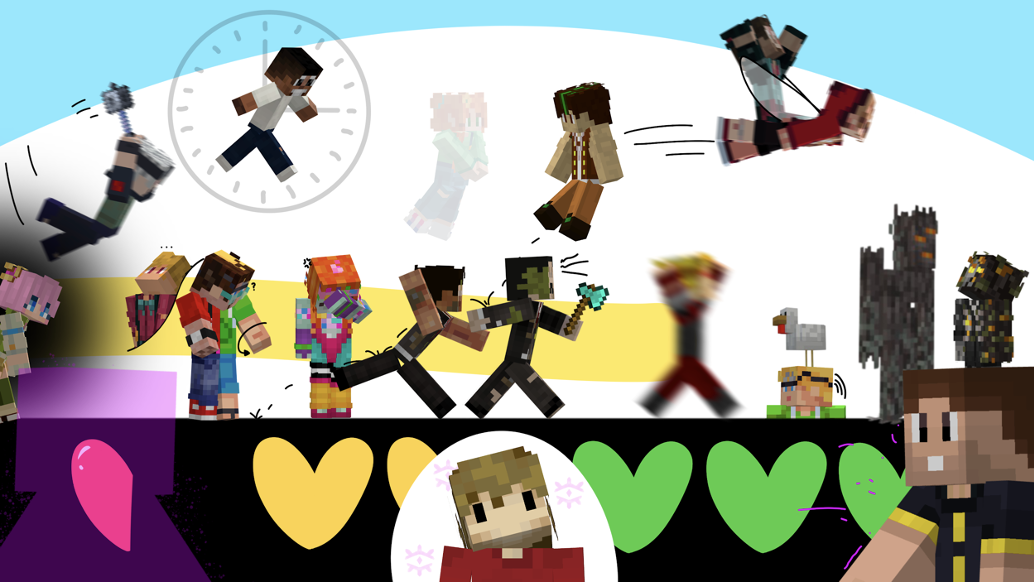
The fan artists enjoy taking aspects of the events in those series’ and seasons and input them into what they think the Minecraft skins should look like, or just have fun with it. Today I’m explaining each fan design for those who don’t know what they are or why they’re there.

First, what’s up with Jimmy and yellow feathers/wings? Most people who are fans know this already, but the yellow wings and feathers are a callout to the canary bird. The reason why fans draw Jimmy with canary wings is because they’ve all collectively decided that he has something called the “canary curse”. This curse is rooted from the fact that in every season of the ‘Life Series’ he’s the first to die. I know, “well what’s the connection to the canary?” It’s a canary because in the past, canaries were used by coal miners to tell if danger or hazard was near because there would be potential gas leaks that would kill the canary first before the miner. Jimmy is the canary of the server as he dies first, which always signifies in the server that things are going to go downhill very fast.

Grian is often drawn with rainbow parrot wings; the reason for this is actually very simple. One time Grian was being annoying in the ‘Hermitcraft SMP’ and was called a “pesky bird”. That’s about it for this one.

Another thing you may see on Grian is purple eyes and wings. This one ties back to lore and a complicated story, but to put it short, Grian is a “watcher”, hence the eyes, and the purple wings I believe just tie back to the parrot wings. Both however, people like to draw as biblically accurate angels, because why not?

BigB will sometimes be seen drawn with dog ears and tail, or very recently, as the creaking creature in the new Minecraft update. The dog ears and tail is because he was Ren’s soulmate in ‘Double Life’; Ren’s full YouTube name is RenDog, and his skin has dog ears and a tail. BigB changed his skin to match Ren (giving him ears and a tail), which fans found adorable and ran with it.

BigB is drawn as the creaking creature in Minecraft recently because in the new ‘Wild Life’ season, he lives in the Pale Garden (where the creaking resides), and fans thought it would be so cool to draw him as the terrifying creature.

Doc will be drawn with goat horns and sometimes legs, basically all the time. This is because he calls himself the G.O.A.T. Usually when people call themselves the G.O.A.T. it stands for “Greatest Of All Time”, but in Doc’s case, it stands for “Grind. Optimize. Automate. Thrive”. You see, Doc loves making automated machines, grinding for materials, and doing some of the most absurd activities like bringing the Ender Dragon to the over world just to have it as a pet.

Mumbo is sometimes drawn as a moth, this one is because of ‘Hermitcraft’ season 8. In season 8, the moon started to grow at an alarming rate, and to “calm down” the moon, Mumbo decided that he was going to never sleep. Fans then thought of Mumbo as a moth because, well, moths love their moon.

Tango is sometimes drawn with fire for hair and a tail, and this one doesn’t really have a solid reason. Tango’s skin has slicked back blonde hair that fans just interpreted as fire since it was cool, and the tail is because Tango’s skin has red eyes and used to be drawn with horns too. They used to make him into a demon/devil type creature because of his red eyes, but then Tango said at some point “just because I have red eyes doesn’t mean I’m a demon”, so fans took away the horns and made him have a tail, making him his own species of creature.

Impulse is drawn with horns and a tail, just like how Tango was, but for a very different reason. Skizz, Impulse’s friend of 20 years, nicknamed him “Impy”. Of course Impy is short for Impulse, but fans immediately thought of the type of demon “Imp” and made him an Imp. You can thank Skizz for this one.

Scar is drawn with scars on his face. I think this one is self explanatory, but I’ll explain anyway— Scar is drawn with scars on his face because of his name, and because it’s easier to differentiate between him and another player (Scar’s skin looks like a normal person otherwise).

I’ll admit, this may not be all of them, but it’s definitely the most recurring ones. Just keep in mind that if you ever see one of the members drawn with a characteristic that isn’t on their Minecraft skin, there’s always a reason for it.

The pros and cons of AI according to AI

By: Samson Belihu

Note: I used the App Chat & Ask AI to generate most of the information included in this article.

Pros:

According to Chat & Ask AI, some pros to using AI as a student include:

  • Learning often extends beyond classroom hours, and students may have questions when their teachers are unavailable.
  • AI powered tutoring systems can provide instant assistance through virtual tutors that help with homework or clarify concepts. This encourages independent learning and ensures that students receive help when they need it.
  • AI is Multilingual: You may ask, how is it that AI can understand and generally text in multiple languages, such as English, Spanish, French, Chinese, and etc. and you may also ask why this matters? This matters because it allows people from different countries to communicate effectively, breaking down language barriers.

Cons:

In recent years, artificial intelligence, such as AI has become an integrated part of the education landscape, offering many people countless resources to help students learn and succeed. However, with “great power comes great responsibility”, and many students find themselves misusing AI in school in ways that can undermine their education and academic integrity.

When typically using AI you would want an easy access to info and that’s fine, but there’s an issue with AI in that it doesn’t have any access to the original sources, which is crucial for your info. AI’s are generated based on a mixture of licensed data (that the AI programmers may not actually have a license for), data created by human trainers, and publicly available information up until some training was cut-off in October 2023.

So, AI is not as accurate as you may think it is, so before using the info I gave you make sure to double check it. In closing, I asked Chat & Ask AI: “Give me cons of Chat Ai and target it for students” and this is what it came up with:

As an AI language model, I don’t have access to external sources, databases, or the internet in real-time. My responses are generated based on a mixture of licensed data, data created by human trainers, and publicly available information up until my last training cut-off in October 2023. This means that while I can provide information, insights, and summaries based on that training, I cannot cite specific sources or provide direct references to articles, studies, or books.

Here are some key points to consider regarding my lack of sources:

1. **Training Data**: I was trained on a diverse range of texts, including books, articles, and websites, which helps me generate responses based on patterns and information found in that data.

2. **No Real-Time Access**: I can’t browse the web or access current events, databases, or any live content, so I can’t pull in or verify information from sources outside my training.

3. **Generative Nature**: My responses are generated based on patterns and knowledge from the data I was trained on, rather than retrieved from specific sources.

4. **No Citation Capability**: Because I don’t access or reference specific documents, I cannot provide citations or bibliographies for the information I present.

5. **Encouragement to Verify**: For academic or critical inquiries, I encourage users to verify information through reliable sources or databases to ensure accuracy and credibility.

If you have specific questions or need information on a particular topic, feel free to ask! I can provide insights based on my training, but I always recommend cross-referencing with authoritative sources for critical topics.